 By
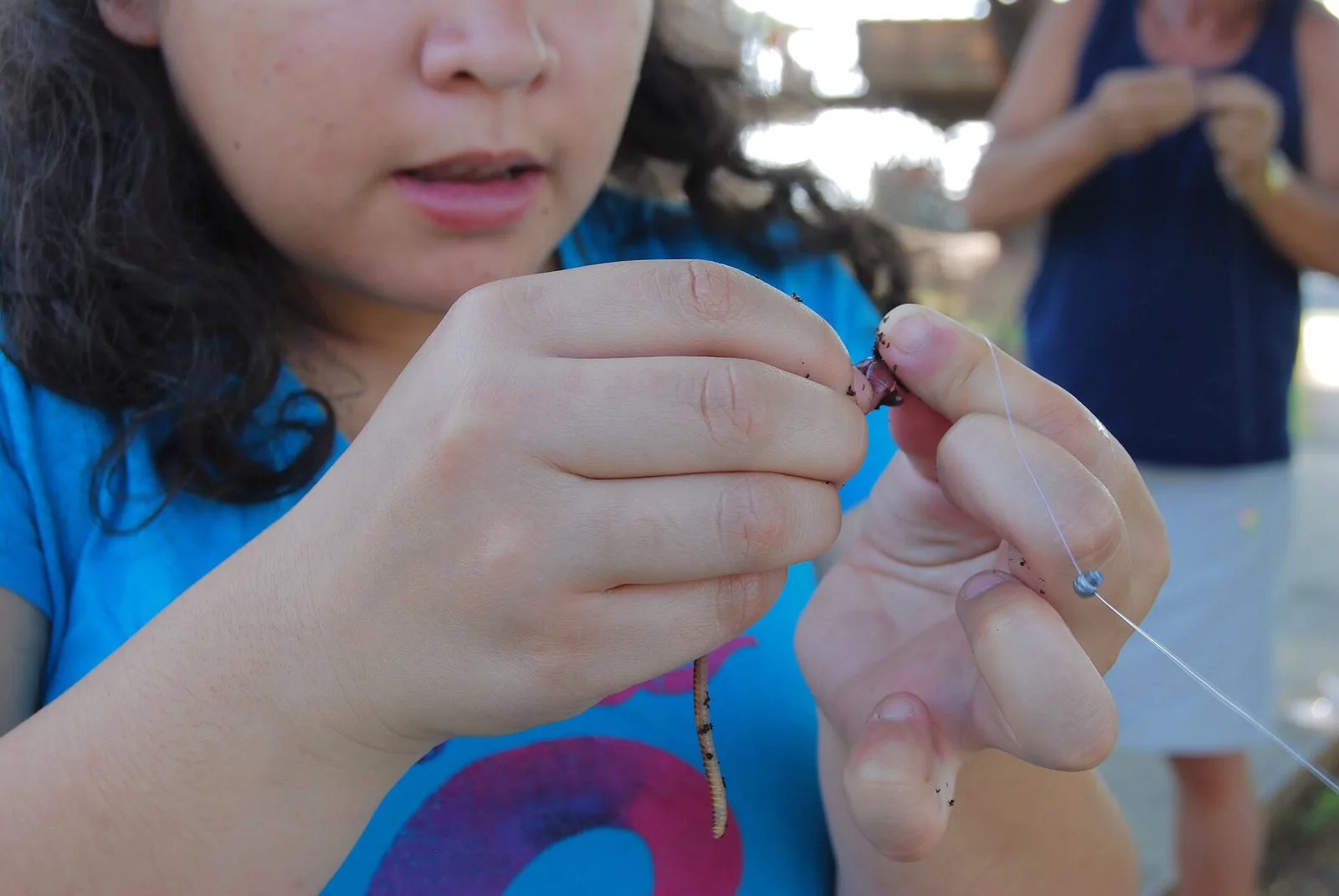
The best fishing bait for most people is a live worm in fresh water and shrimp in salt water. A worm under a bobber is the most common panfish bait, Utah’s wildlife agency says. In the Gulf, as one saltwater writer puts it, “everything eats shrimp.” Put either one on a small hook and you’re fishing. The rest of bait is about matching what a certain fish likes to eat.
Minnesota’s DNR says every common bait worm is non-native, night crawlers included. Leftovers go in the trash, never in the woods.
What is the best bait for fishing?
Start with one of these two, and buy nothing else on your first trip.
- Fresh water: nightcrawlers. A nightcrawler is just a very large worm. Pinch off a piece, thread it on a small hook, and hang it under a bobber, the float that shows you the bite. Bluegill, trout, walleye, perch, catfish, bass and carp all eat them.
- Salt water: shrimp. Discover Boating ranks shrimp and cut bait among the top natural baits in salt water. Live bait generally gets more bites, inshore and off. Frozen shrimp is sold in most grocery stores, so it’s the easy backup.
Why does it work so well? A real worm or shrimp smells like food and moves like food. A fish that won’t chase anything will often still eat it. The catch is that it spoils. Discover Boating’s line is the plain truth: live bait “only works well when it’s fresh.”
You don’t need scents, special sprays or a bag of plastic worms yet. A dozen crawlers and a pack of hooks is a full kit.
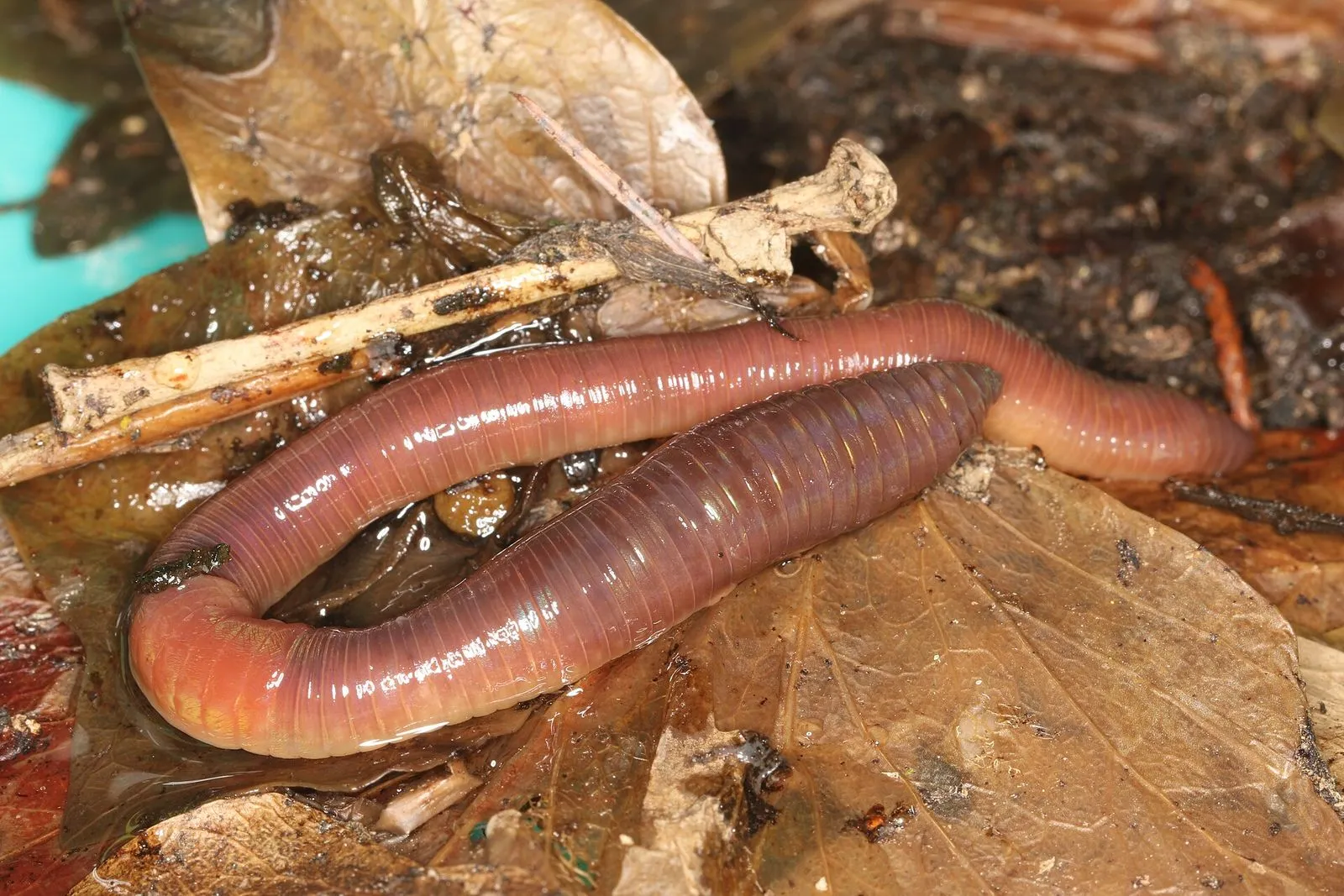
The nightcrawler, the one bait nearly every freshwater fish will eat. Photo: Donald Hobern (CC BY 2.0).
Start here
Each of these pages takes one fish, or one first trip, and goes much deeper.
- Fishing for beginners gets you from the store aisle to your first fish.
- Best catfish bait sorts cut, live and punch bait by the three big catfish.
- Bass bait matches shiners, crawfish and shad to the lures that copy them.
- Carp bait has the corn, bread and doughball recipes, with amounts.
- Walleye fishing tells you when to switch from minnows to crawlers and leeches.
- Perch fishing shows how to find the school and what to put in front of it.

Free PDF · Water temperature chart Which fish are biting at today's water temperature?
One reading, and the 16-page chart shows which of 26 fish are spawning, feeding hard or slowing down; for bass, crappie, bluegill and walleye, where they sit and what to throw. Every number sourced.
No card, nothing to buy, and the PDF is yours to keep. Confirm with one click and it's on its way. Then a few short emails and one a week on what's biting. Unsubscribe anytime. Privacy.
Live, cut or prepared: what’s the difference?
Bait comes in three kinds, plus whatever is in your kitchen. The kind decides how you store it and which fish it suits.
| Kind | What it is | Best for |
|---|---|---|
| Live bait | Still alive on the hook: worms, minnows, crickets, crawfish, shrimp, eels | Most fish, and any day the fish won’t chase |
| Cut bait | A dead fish or squid, in pieces | Blue catfish, big channel catfish, saltwater bottom fish |
| Prepared bait | Made to last: punch and dip bait, dough bait, boilies | Channel catfish, stocked trout, carp |
| Kitchen bait | Canned corn, bread, chicken liver, hot dogs | Carp, pond catfish, bluegill used to being fed |
One word trips up almost everybody. In a store, “baits” often means lures: pieces of plastic, wood or metal that only look like food. This page is about the real thing, and the prepared stuff that smells like it. For the fakes, the fishing lures page lays out all six kinds, and the types of fishing lures page shows what each one does.
Which bait for which fish?
Fish eat what lives where they live, so that’s the bait to use. This is the whole chart on one screen. Take a picture of it. Use the first column to pick your fish, then buy the bait in the middle. Buy the last column only if you want a backup.
| Fish | Start with | Then try |
|---|---|---|
| Bluegill | A piece of garden worm under a bobber | Crickets |
| Crappie | A small minnow under a bobber | A tiny jig, 1/32 to 1/16 oz |
| Yellow perch | A live minnow near the bottom | A piece of worm or a wax worm |
| Trout | A worm on a small hook | Floating dough bait on a size 12 to 16 treble |
| Walleye | Minnows, late fall to early spring | Nightcrawlers and leeches, late spring to early fall |
| Largemouth bass | A live golden shiner | A nightcrawler |
| Smallmouth bass | Crawfish, where legal | A nightcrawler |
| Channel catfish | Punch or dip bait, for numbers | Fresh cut shad, for size |
| Blue catfish | Fresh cut shad or skipjack herring | Cut carp, drum or bluegill |
| Flathead catfish | A live bluegill or sunfish, where legal | A big live shad |
| Carp | Canned sweet corn or bread | Boilies on a hair rig |
| Striped bass | Live menhaden, also called bunker | A live eel |
| Redfish and snook | Live shrimp | Live mullet |
| Sheepshead and black drum | Crab | Live shrimp |
| Almost anything else in salt water | Shrimp | Cut bait |
Two things to notice. Worms show up for six of the eleven freshwater fish, which is why they’re the first thing to buy. And the big fish on this chart mostly want other fish, live or in pieces. A bass can swallow a shad about half its own length, so a bigger bait gets you fewer bites and bigger fish, as the bass bait page shows with the numbers.
River smallmouth have one more favorite. It’s the hellgrammite, a dark bug with pincers that hides under rocks in fast streams.
The best way to read the chart is to ask what the fish in your water eat. Where catfish eat shad, use shad.
How do you put live bait on a hook?
The goal is simple. Hold the bait on, keep it alive, and leave the hook point clear. A good hook job does all three.
| Bait | What it catches | How to hook it |
|---|---|---|
| Worm or nightcrawler | Almost every freshwater fish | Pin a small worm, or thread on a piece of a big one. On a whole crawler, go through the head end |
| Minnow | Crappie, walleye, bass, perch | Through the lips, or behind the top fin. Keep it swimming |
| Crawfish | Smallmouth bass, walleye, trout, even bluegill | Through the lower edge of the tail, hook point facing up |
| Cricket or grasshopper | Bluegill, trout, “most any game fish,” Missouri says | Run the hook under the plate on its back, so it stays locked on |
| Live shrimp | Nearly everything inshore | Through the head, under the horn and in front of the dark spot. Or through the tail |
| Menhaden | Striped bass | Just ahead of the top fin, or sideways through the nose |
| Eel | Striped bass, cobia | Under the jaw and out the eye socket, with no weight |
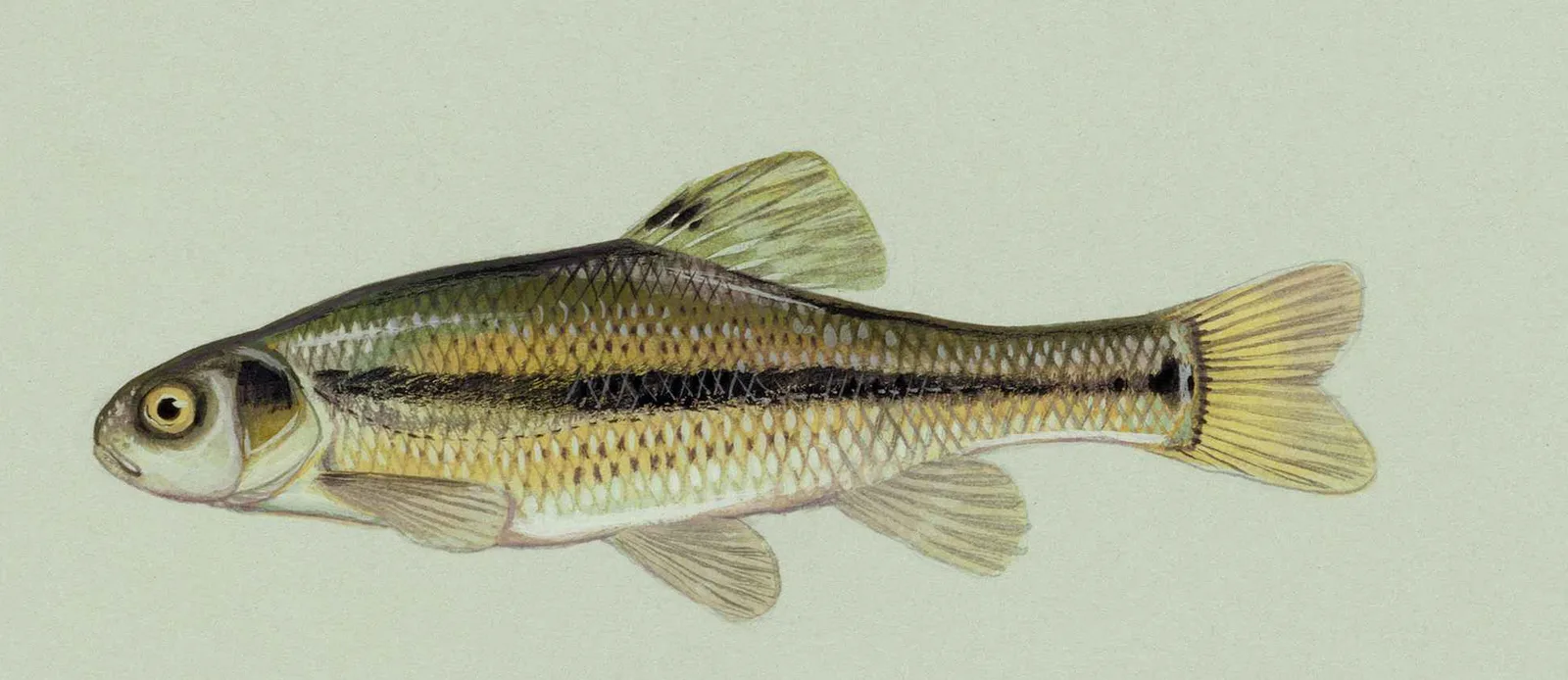
The fathead minnow, a small minnow used as bait for crappie and walleye. Illustration: Duane Raver, U.S. Fish and Wildlife Service (public domain).
Size the hook to the bait, and to the mouth of the fish. A bluegill’s mouth is the size of your fingertip, so a whole crawler on a big hook gets you nibbles and nothing else. The hook size chart shows what the numbers look like, and they run backwards: a size 8 is smaller than a size 6.
Then set the hook early. A fish can swallow a worm or a minnow deep, and a deep hook is what hurts it. In a Texas test on largemouth bass, fish hooked in the throat died at 48 percent, while the kind of bait made no difference. If you plan to let fish go, watch the line, reel up the slack and lift as soon as it moves. A circle hook cut deep hooking in half in an Illinois test on bass. It also landed only half as many fish.
The simplest rig for all of this is a hook, one split shot and a bobber. To fish on the bottom in current, slide a sinker on the line above the hook, the way a Carolina rig does.
When should you use cut bait?
Use it when you’re after a fish that eats other fish and finds food by smell. Blue catfish are the classic case. Guide Chad Ferguson’s rule is that fresh beats frozen “almost every day of the week and twice on Sunday,” and oily fish beat lean ones. Shad and skipjack herring come first.
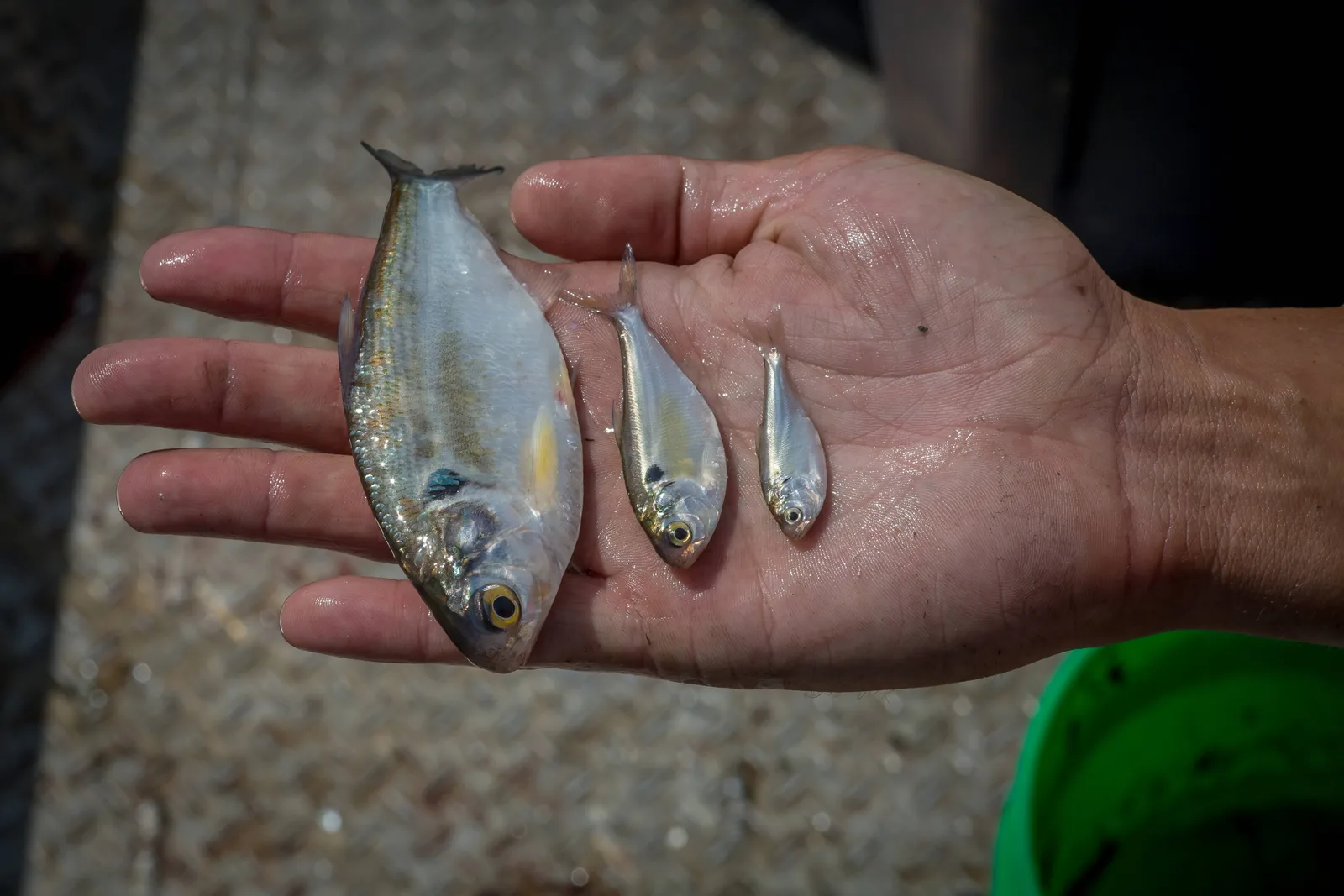
Gizzard shad, the cut bait blue catfish are built to eat. Photo: U.S. Fish and Wildlife Service (public domain).
What ruins cut bait is heat and time. A heap of shad turns to mush within an hour, says Steve Douglas of Monster Rod Holders. Lay the fish on ice and salt, one fish thick, as soon as they leave the net.
In salt water, pieces of fish or squid go on a fish-finder rig, a sliding sinker with a leader below it, and sit on the bottom from a pier or a beach. The surf rods page covers what it takes to cast one past the waves.
What is the best saltwater bait?
Shrimp first, then whatever the fish in that spot are already eating. Discover Boating’s list of saltwater live baits is short: eels, crabs, shrimp, sea worms and pieces of squid or fish. Which one you pick depends on where you’re standing.
- Inshore, around docks and mangroves: live shrimp. Mullet is the step up for snook, redfish and tarpon, FishingBooker says, and small pilchards work on snook and snapper.
- Rocks and pilings: crab. Sheepshead and black drum both eat it.
- Off the beach or a pier: cut bait or shrimp on the bottom. It’s simple and it stays put.
- Stripers along the coast: live menhaden or a live eel. Eels catch cobia as well.
- Offshore: this is a boat game with its own baits, such as ballyhoo for sailfish and marlin. You don’t need that yet.
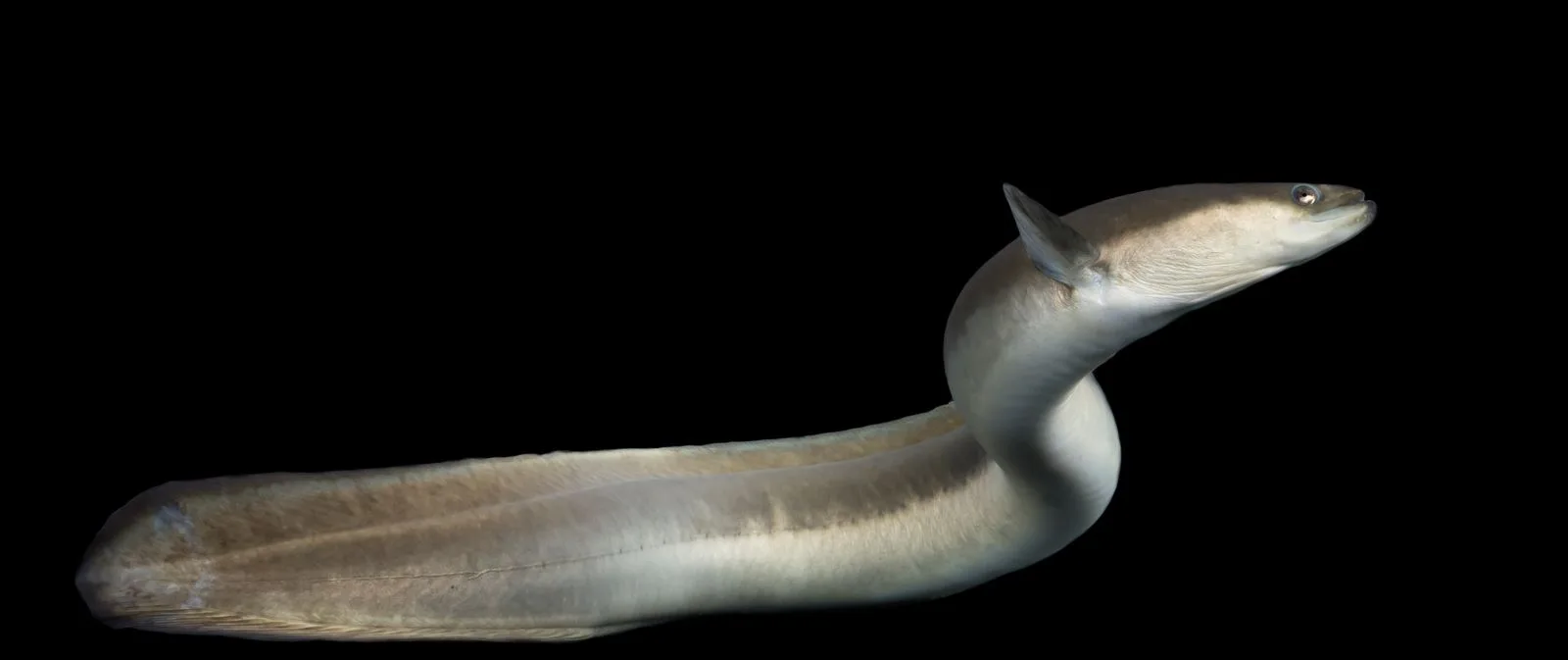
American eel, a live bait for striped bass and cobia. Photo: Sam Stukel, U.S. Fish and Wildlife Service (public domain).
Don’t overthink the size. Match the hook to the bait, so a live bait can still swim. A local shop can tell you what people are using this month.
When is prepared bait the right call?
Reach for it when you want something that sits in the tackle box and doesn’t die. It’s also the answer for a kid who won’t touch a worm.
- Punch bait is a thick, fiber-filled paste for channel catfish. You push a bare treble hook into the tub with a stick and pull it out loaded. The fibers hold it on, so you never touch it.
- Dip bait is a thinner paste for channel catfish. It needs a sponge, a tube or a ribbed plastic worm to hold it on the hook.
- Dough bait, PowerBait being the famous one, is soft and molds onto a hook. Utah’s agency says to use a marble-sized piece of the floating kind on a size 12 to 16 treble for trout.
- Doughballs and boilies are carp baits. New York’s agency publishes a simple one, the 1-2-3 doughball: 1 cup sugar, 2 cups flour, 3 cups cornmeal, boiled 20 minutes in a cloth bag. Boilies are hard round baits that ride on a hair rig, a small loop beside the hook.
On catfish, prepared bait catches numbers, not size. It sorts for eating-size channel catfish, and that’s fine for a day with the kids. For a big one, switch to fresh cut bait.
Check the water first, though. Some trout streams allow artificial lures only, and a dough bait is still bait.
Does kitchen bait really work?
Yes, on the right fish. A carp will take canned sweet corn straight from the can, three or four kernels on the hook. The American Carp Society calls a loaf of bread the easiest way to catch one. Start where people feed the ducks, it says, because those carp already eat bread.
Catfish are the other kitchen fish. Utah’s agency lists shrimp, chicken breast and nightcrawlers, on the bottom or under a bobber. Chicken liver and cut-up hot dogs catch channel catfish and bullheads too. Liver is soft and flies off on a hard cast, so use a small hook and lob it gently.
Bluegill under a dock will eat corn and bits of hot dog too. Those fish are used to being fed. In open water, a kitchen bait is poor at finding fish, so go back to worms and crickets.
Is bait better than a lure?
Neither one wins outright. Florida’s TrophyCatch program logged 168 bass of 13 pounds or more, and 53 percent came on lures and 47 percent on natural bait. At the top end, that’s close to a coin toss.
So choose by the day. Bait sits still and smells right, which beats a lure when fish are cold, deep or won’t move. Lures cover water quickly, which beats bait when you don’t know where the fish are. Worms and crawlers also get stolen by every small fish in the pond, and a lure doesn’t. For what to throw instead, start with the best fishing lures.
Does the best bait change with the season?
For some fish, yes, and the water temperature is what moves it. Walleye are the clearest case. Iowa’s DNR says to use minnows from late fall to early spring, then nightcrawlers and leeches from late spring to early fall.
Catfish follow the thermometer too. A channel catfish all but stops feeding below about 50 °F (10 °C). Under the ice, panfish anglers go small: a wax worm or maggots on a tiny jig.
The easy version is this. In cold water, fish slower. In warm water, keep your bait cold, because it dies faster than you think. The water temperature pages give the numbers fish by fish.
How do you keep bait alive?
Most bait dies from heat or from running out of air. Here’s what each kind needs, and what kills it.
| Bait | How to keep it | What kills it |
|---|---|---|
| Nightcrawlers | 45 to 50 °F (7–10 °C), in the fridge or a cold cellar. A foam box of worm bedding, with air holes | A hot garage. Crowding. Change the bedding after about 30 days |
| Minnows | An insulated bucket with an aerator, a pump that puts air in the water. A little ice on warm days | Warm water and low oxygen. Give them a bigger bucket |
| Crickets, grasshoppers | A cricket basket in a cool place, with a potato slice | Overcrowding. With good care they last several days |
| Crawfish | A cool bucket with an inch or two of water and plenty of tall grass | Standing water. They use up the oxygen and suffocate |
| Cut bait | On ice and salt, one fish thick | Heat, and fish piled on top of fish |
| Gulf menhaden | A livewell, recirculating its own water | New water pumped in. Recirculated, they last longer |
| Eels | A bucket with drain holes, under wet seaweed | Drying out |
For crawlers, buy commercial bedding rather than garden dirt, and use worm food instead of kitchen scraps, which can mold, says Justin Hoffman of Bass Pro. At the water, keep worms and crickets cool and in the shade. Bait left in the heat dies fast.
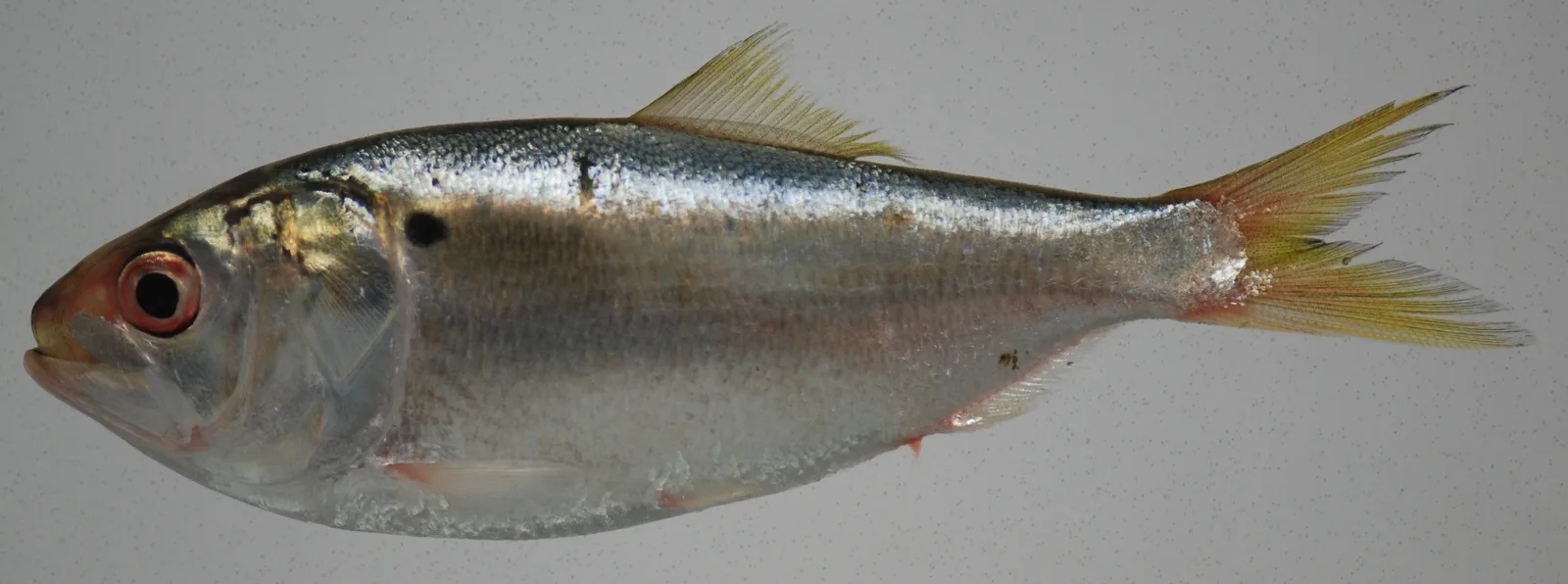
Atlantic menhaden, the bunker that striped bass anglers fish live. Photo: Robert Aguilar, Smithsonian Environmental Research Center, Wikimedia Commons (CC BY 2.0).
Can you catch your own bait?
Yes, and it’s half the fun with kids. Check your state’s rules first, because catching bait has its own limits. In Missouri, live bait other than fish can be taken by hand.
- Nightcrawlers: walk the lawn after dark with a flashlight, right after rain. Go slowly and keep the light low, because crawlers pull back at noise and light.
- Minnows: set a trap in shallow water overnight, baited with bread, salted crackers or dry dog food, Outdoor Life says. A seine, a net you sweep in a wide arc toward the bank, also works.
- Crickets: sprinkle sugar on stale bread, leave it by a woodpile in the evening under a piece of cardboard, and pick them up in the morning.
- Grasshoppers: walk through tall grass with a butterfly net in the daytime.
- Crawfish: net them in rocky riffles in low light, or use a trap baited with cut oily fish.
- Gizzard shad: throw a cast net in the tailrace below a low dam in summer. One throw can bring up hundreds.
Keep what you catch in the water it came from unless your state clearly says otherwise. Moving live bait from one lake to another is how diseases and invaders travel.
Where do you buy bait, and what does it cost?
Bait shops, tackle stores, marinas and some big-box stores sell it. The best place is the shop nearest the water, because they know what’s been biting this week. Call first if you need live minnows or shrimp, especially on a holiday weekend.
Prices move with the season and the region. At the time of writing, Walmart listed an 18-count pack of nightcrawlers from $4.47, and CJ’s sold a 14 oz tub of punch bait for $7.99. Frozen shrimp is in most grocery stores. Hang on to the receipt: some states want proof of where your bait came from if you carry it to another water.
What are the rules on live bait?
Bait law is state law, and it changes more than most people expect. Here are seven states, so you can see how far apart they are. Your state’s rules may be different again.
| State | The rule | What it means for you |
|---|---|---|
| Texas | “It is unlawful to use any game fish, or part of a game fish, as bait” | Sunfish are legal there. A chunk of catfish isn’t |
| Missouri | “Game fish or their parts may not be used as bait” | The state also says unused bait goes in the trash, not the water |
| Washington | Live aquatic animals can’t be used as bait in fresh water, with narrow exceptions | Read the exceptions before you bring live bait |
| Wisconsin | Live crayfish are banned as bait on inland waters, Mississippi River excepted | Don’t carry them with your tackle |
| Maine | Live fish bait is banned in the North Zone unless a special law allows it | You also can’t bring live baitfish into the state without a permit |
| New York | Bought baitfish must be on its Green List. Baitfish you catch yourself stay on the water they came from | Bought, certified bait comes with a receipt good for 10 days |
| Minnesota | No bringing in live minnows or leeches from another state. Releasing bait into the water is illegal | To keep leftover baitfish, drain the bucket on shore and refill it with bottled or dechlorinated tap water |
Read your own state’s bait page once a year, and do it before you go. A bait shop is a good place to ask, but the rule is still yours to follow.
Never dump your leftovers
This is the one rule that holds almost everywhere. “Throw unused bait in the trash,” Missouri says. A University of Alberta earthworm site says the same thing: “DO NOT dump your bait on land or in water.” Worms are the sneaky part. They look harmless, and Minnesota’s DNR warns they damage forests when people release them. Rusty crayfish are thought to have reached new states in anglers’ bait buckets.
So finish the fishing, then tip the leftovers into a garbage can. Or keep your worms cold and use them next weekend. That’s cheaper anyway.
If some of these words were new, the fishing terms page explains them, and the hook hub will help you match a hook to your bait.
All articles
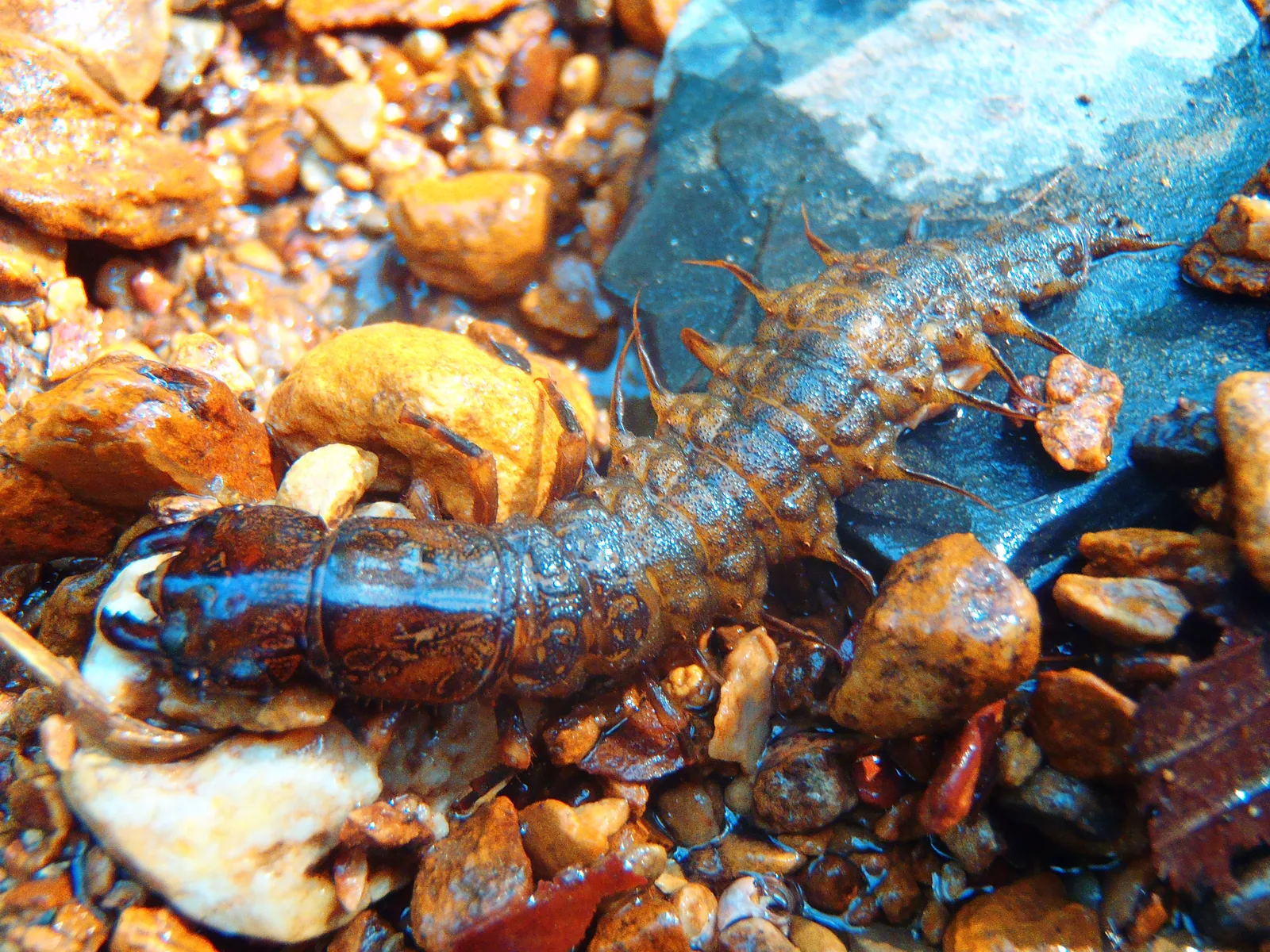 Hellgrammite: What It Is, Where to Find It, How to Fish It
A hellgrammite is a dobsonfly larva up to 4 inches long and a top smallmouth bait. How to find one, hold it without a pinch, hook it and fish it.

Free PDF · 16 pages
Stop guessing. Know what's biting before your first cast
A whole Saturday on the water with nothing to show for it. One reading tells you who's feeding.
The Water Temperature Fishing Chart. Take one water temperature reading, find it on the chart, and see which of 26 freshwater fish are spawning, feeding hard or slowing down.
- Where bass, crappie, bluegill and walleye sit, and what to throw. Trout: the reading where you stop.
- Why a 3 ft drop beats a cold front, and what to throw each day of the front
- The three thermometer mistakes that make a reading lie
The chart's numbers come from state fish and wildlife agencies and fisheries research: 61 sources, each listed on the site.
No card, nothing to buy. Confirm with one click and the PDF is on its way, one version for your phone and one to print, yours to keep. Then a few short emails and one a week on what's biting, with an unsubscribe link in every one. Privacy.
Sources (42)
- Missouri Department of Conservation, Live Bait Basics (Mark Goodwin, Missouri Conservationist, 2009)
- Missouri Department of Conservation, Live Bait Regulations
- Missouri Department of Conservation, MDC reminds anglers of regulation change regarding use of live bait
- Utah Division of Wildlife Resources, Learn to fish: lure and bait selection
- Discover Boating, What is the Best Fishing Bait?
Show all 42 sourcesShow fewer sources
- Wisconsin DNR, bluegill (baits, seasons)
- Iowa DNR, Walleye
- Missouri Department of Conservation, crappie: tips for fishing
- MeatEater, Perch Fishing Tips and Tricks (Ross Robertson, 2024)
- American Carp Society, Intro to carp angling (canned sweet corn, bread, boilie flavors, hair rig)
- New York DEC, Let's go carp fishing (1-2-3 doughball, hooks, resistance, eating carp)
- Catfish Edge (Chad Ferguson), Best catfish bait
- In-Fisherman, Catfish bait preservation tricks and tips (quoting Steve Douglas)
- CJ's Bait Co., punch bait and fishing tips
- CJ's Bait Co., shop (tub sizes and prices)
- Team Catfish, Secret 7 dip bait
- Capt. Vincent Daniello, A Guide to Saltwater Live Baits, Sport Fishing
- Robert Sloan, Fishing With Live Bait, Salt Water Sportsman
- FishingBooker, Best Bait for Saltwater Fishing: A Beginner's Guide for 2026
- Wired2Fish (Jason Sealock), best baits for bluegill fishing
- Justin Hoffman, Become a Worm Picker, Bass Pro Shops 1Source
- John J. Woods, Be sure minnows are alive and kicking, Mississippi Sportsman
- Chad Mason, Catch These 6 Live Bait Species to Land More Fish This Summer, Outdoor Life (2026)
- Lindelien, S. and Cimbaro, J. (FWC) (2026), Want fishing tips? Consult the data, The Florida Specifier, Jan. 19, 2026
- Myers, R. A. and Poarch, S. M. (2000), Effects of bait type and hooking location on post-release mortality of largemouth bass, Proc. SEAFWA 54:39-45
- Cooke, S. J. et al. (2003), Injury rates, hooking efficiency and mortality potential of largemouth bass captured on circle hooks and octopus hooks, Fisheries Research 61:135-144
- Wired2Fish, Secret recipes for homemade catfish bait (Kade Gewanter)
- Northland Tackle (Mike Frisch), heavy jigs for heavy panfish
- Mississippi State University Extension, biology of catfish (feeding and temperature)
- 58 Pa. Code § 65.5, Catch and release artificial lures only
- Texas Parks and Wildlife, general fishing regulations (bait)
- Washington WDFW, Statewide Freshwater Regulations (eRegulations): live aquatic animals as bait
- Wisconsin Administrative Code, NR 19.27, Seasons, limits, restrictions on taking crayfish
- Wisconsin DNR, Wild bait harvest (live crayfish as bait)
- Wisconsin DNR, Rusty crayfish
- Maine Department of Inland Fisheries and Wildlife, Baitfish and Smelt Information
- Maine Department of Inland Fisheries and Wildlife, Maine Fishing Laws 2026 (general fishing laws, North Zone)
- New York DEC, Baitfish regulations
- Minnesota DNR, Aquatic invasive species: anglers
- Minnesota DNR, Earthworms (bait worms are non-native)
- University of Alberta, Earthworms are not native to most of Canada and are invading our forests
- Walmart, nightcrawlers (retail listing, price moves)