 By
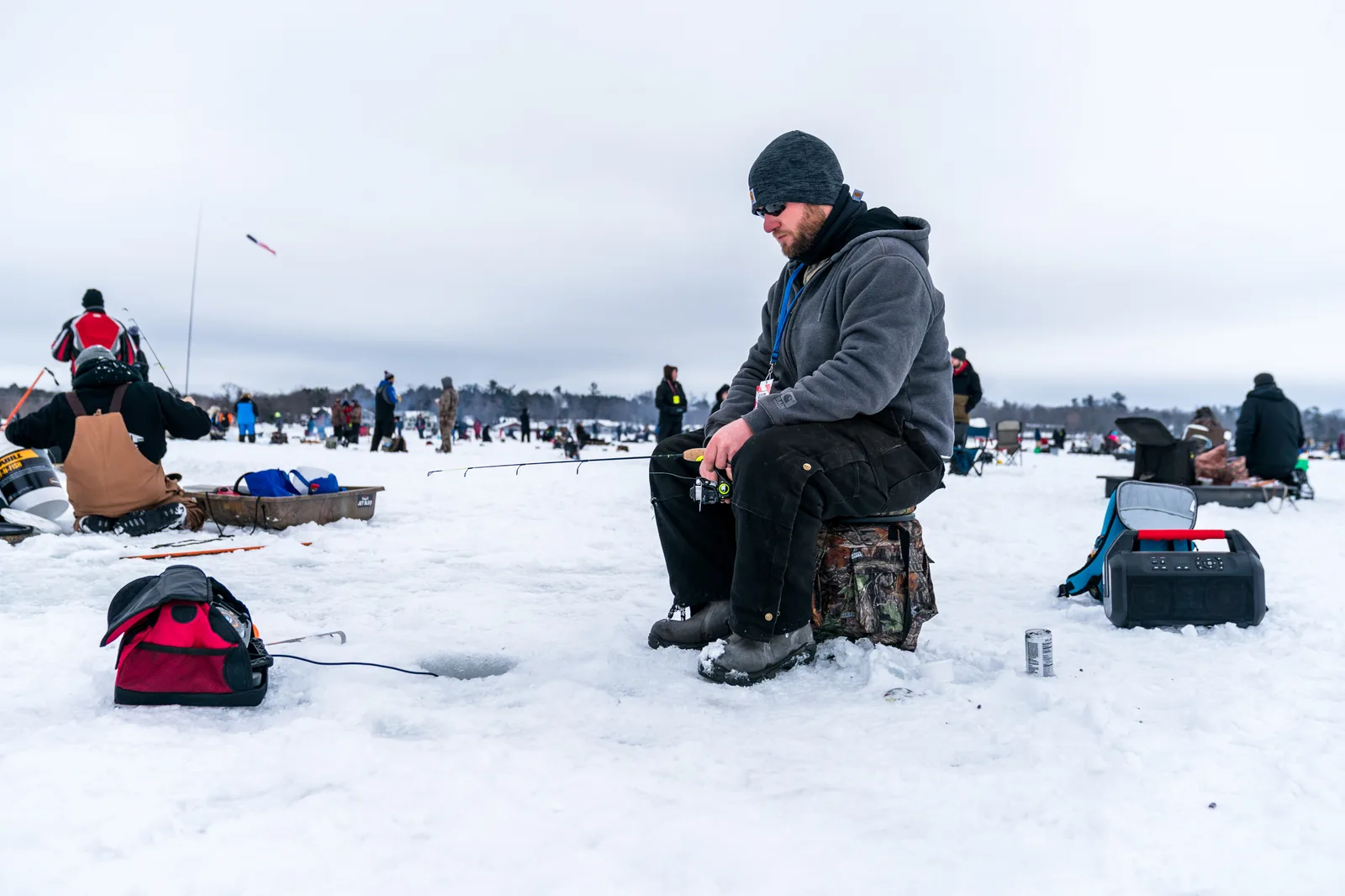
The ice fishing gear you need costs about $320 at makers’ prices. That buys safety gear, a hand auger, a skimmer, a short rod and reel, jigs and a bucket. The safety gear is a foam life jacket, ice picks, a spud bar and a rope. They’re nearly half the bill, and they’re the half you don’t skip. A shelter, a flasher and a power auger can wait until you know you like it.
Most people who fall through the ice drown. They don’t die of the cold. That’s why Minnesota DNR says a foam life jacket or float suit may be the No. 1 item that keeps you alive.
Start here
- Ice thickness: wait for at least 4 in (10 cm) of new, clear ice before you walk out, and check it as you go.
- Ice augers: hand, drill or battery, from $77.99 at the maker.
- Ice fishing clothing: three layers and no cotton, OSHA’s advice for the cold.
- Ice fishing words: tip-up, spud bar, flasher, flip-over and the rest, in one line each.
- Fishing gear: the open-water rods, reels and line your ice kit borrows from.
What are the must-haves for ice fishing?
Michigan DNR boils it down to three things: something to make a hole, something to clear that hole and keep it open, and something to fish with. Its own list and Iowa’s add safety gear, and Minnesota ranks it: flotation first, ice picks second.
Pick a column. Bare minimum gets one angler on the ice. Comfortable adds a battery auger, a flasher and a shelter, with rods for two. Serious is what more money buys.
What the safety gear costs
| Item | Why | Bare minimum | Comfortable | Serious |
|---|---|---|---|---|
| Life jacket or float suit | Keeps you afloat if you go through | Onyx foam vest, $29.99 | Onyx foam vest, $29.99 | Clam Sub-Zero float bib and parka, $459.98 |
| Ice picks, cleats, whistle | Picks pull you out, cleats help prevent falls | Eagle Claw Ice Safety Kit, $34.99 | Same kit, $34.99 | Same kit, $34.99 |
| Spud bar | Tests the ice ahead of each step | Eskimo Economy Chisel, $49.99 | Eskimo Economy Chisel, $49.99 | Eskimo Two-Piece Chisel, $74.99 |
| Throw rope | Reaches a buddy who goes in | Mustang 50 ft (15 m) throw bag, $35.00 | Same bag, $35.00 | Same bag, $35.00 |
| Safety total | $149.97 | $149.97 | $604.96 |
Prices as listed on makers’ sites, November 2026.
The Onyx vest is foam and Coast Guard approved, and it costs $29.99. The float suit in the serious column is warmer, but Clam sells it as flotation assist, not as a Coast Guard-approved life jacket. Its men’s float bib was also sold out in most sizes in mid-November 2026. No float suit? Wear the vest over your winter clothes, Canada’s Lifesaving Society says.
What the fishing kit costs
| Item | Why | Bare minimum | Comfortable | Serious |
|---|---|---|---|---|
| Auger | Cuts the hole | StrikeMaster Mora 7 in (18 cm) hand auger, $77.99 | Eskimo E40 Steel 8 in (20 cm) battery auger, $499.99 | Jiffy Model 60 8 in (20 cm) battery auger, $699.99 |
| Skimmer | Scoops slush out of the hole | Eagle Claw plastic, $3.99 | Clam 12 in (30 cm), $6.99 | Clam 20 in (51 cm), $9.99 |
| Rod and reel | Jigs straight down the hole | Eagle Claw CRYO 26 in (66 cm) rod, Clam Straight Drop reel, $54.96 | Two Clam TS rods and SR-ICE reels, $239.96 | Three of the same, $359.94 |
| Jigs | Small jigs for panfish | Eagle Claw Bakers Dozen Ice Kit, $12.99 | The kit and five tungsten jigs, $22.98 | The kit and five tungsten jigs, $22.98 |
| Tip-ups | A second line with a flag | None | Two Frabill Pro Thermal, $79.98 | Five Frabill Pro Thermal, $199.95 |
| Bucket | Carries the gear, then you sit on it | Clam 5-gallon, $19.99 | Clam 5-gallon, $19.99 | Clam 5-gallon, $19.99 |
| Flasher | Shows the bottom, your jig and fish | None | Vexilar FL-8SE pack, $259.99 | Vexilar FLX-28 ProPack II, $619.99 |
| Shelter | Keeps the wind off | None | Otter Vortex Pro Cabin hub, $425.00 | Eskimo Outbreak 450XDP hub, $629.99 |
| Heater | Heats the shelter | None | Mr. Heater Portable Buddy, $155.14 | Clam CH-16000vh, $179.99 |
| Sled | Hauls it all out | None | Eskimo E-Hauler XL, $149.99 | Otter Pro Medium Sled Combo, $319.99 |
| Total, safety included | $319.89 | $2,009.98 | $3,667.76 |
Prices as listed on makers’ sites, November 2026. Totals are our sums. They leave out bait, line, your license, warm clothes, a carbon monoxide alarm and a drill.
How much does a starter ice fishing kit cost?
About $320 for the bare kit, safety gear included. Read that column as the real minimum. Minnesota DNR says the small open-faced spinning reel from your open-water rod works on the ice, so you can skip the Straight Drop. That takes the kit to about $285. Bait, line and a fishing license come on top. The comfortable kit comes to about $2,010, and the serious one to about $3,670.
Most of the money in the comfortable column goes to three things: a battery auger, a flasher and a hub shelter for two or three. If you already own a good cordless drill, an 8 in drill bit takes the place of the battery auger. Eskimo’s Redneck Bit costs $169.99, and with it the comfortable kit comes to about $1,680. Check your drill first. Eskimo asks for an 18-volt, 4-amp battery or bigger and a brushless motor. The drill also needs a 1/2 in chuck, a side stabilizer arm and at least 725 in-lb of torque.
The serious column buys speed, finer detail and room. Jiffy rates its auger at up to 4 in of ice a second, against up to 3.2 for Eskimo’s 8 in E40. Vexilar says the FL-8SE shows targets down to 1 in apart, and the FLX-28 less than 1/4 in apart. The Outbreak hub is made for four or five people, the Otter for two or three.
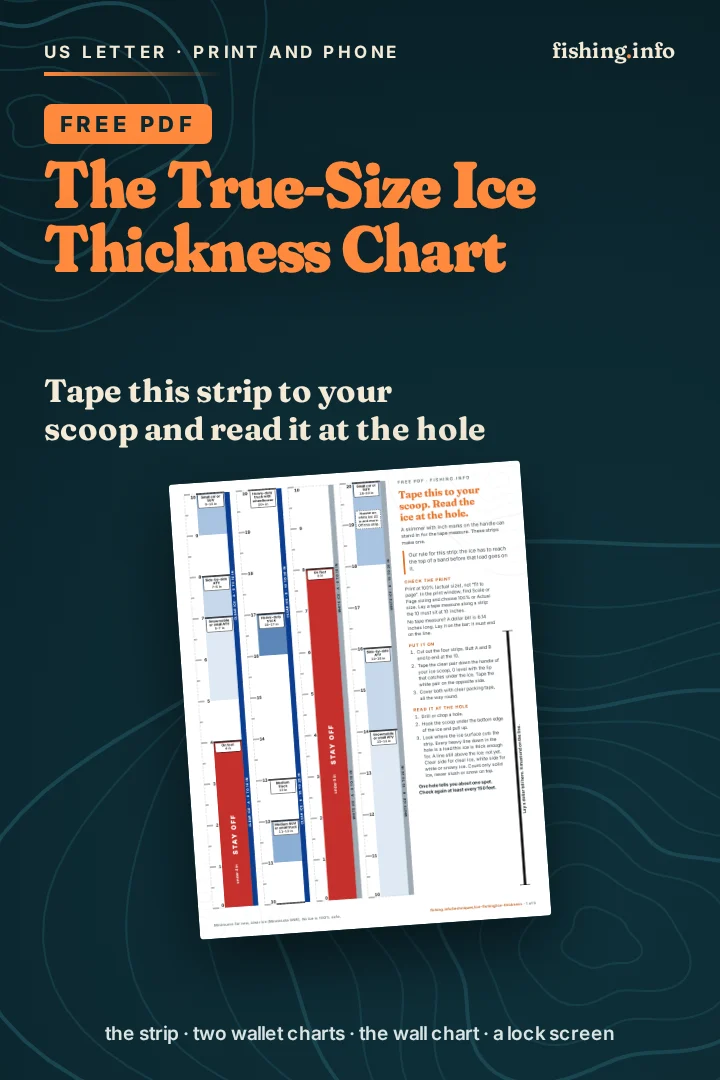
Free PDF · Ice thickness chart How thick is the ice? Read it at the hole.
Print the free chart, tape the strip to your scoop and hook it under the ice. It shows what that ice is thick enough for, clear or white. Two wallet charts and a wall chart come with it.
No card, nothing to buy, and the PDF is yours to keep. Confirm with one click and it's on its way. Then a few short emails and one a week on what's biting. Unsubscribe anytime. Privacy.
What safety gear do you need?
Put the life jacket on before you step off shore. Buy foam, not an inflatable. An inflatable may not inflate in the cold, Minnesota DNR says, and foam keeps you warmer while you climb out. Don’t wear it while you drive a closed vehicle on the ice, Minnesota adds.
Ice picks come second. Wear them around your neck, or thread them through your jacket sleeves like a kid’s mittens. Then they’re in your hands the moment you need them. Pulling yourself out onto smooth, wet ice with numb fingers is extremely difficult, Minnesota says.
The spud bar checks the ice. Wait for at least 4 in (10 cm) of new, clear ice before you walk out. Then stab the bar into the ice ahead of you with every step. If it goes through, the ice won’t hold you. That matters most at first and last ice, when the ice is thinner than in midwinter. A snowmobile or small ATV needs 5 to 7 in (13 to 18 cm), by Minnesota’s ice thickness guidelines.
Bring a rope that floats, or a throw bag, for a buddy who falls through. Cleats help prevent slips and falls on slick, new ice, Minnesota says, and a whistle saves the energy you’d burn yelling. Carry your phone in a waterproof case. Phones don’t always get service out there, so Minnesota suggests a personal locator beacon if you fish alone.
Which ice auger: hand, drill or battery?
Start with a hand ice auger unless you drill a lot of holes. It’s the cheapest way through, and it’s light. Most hand augers come in 4.5, 6 or 8 in, Minnesota DNR says, and the bigger the hole, the harder you work. A 6 in hole is plenty unless you’re after big pike or lake trout.
| Auger, and what turns it | Price | Weight |
|---|---|---|
| StrikeMaster Mora 7 in, by hand | $77.99 | 7 lb (3.2 kg) |
| Eskimo Redneck Bit 8 in, your cordless drill | $169.99 | 8.2 lb (3.7 kg), drill not included |
| Eskimo E40 Steel 8 in, 40-volt battery | $499.99 | 17.5 lb (7.9 kg) |
| Jiffy Model 60 8 in, 60-volt battery | $699.99 | 19.9 lb (9.0 kg) |
Battery augers are where the makers have gone. On November 15, 2026, StrikeMaster, Eskimo and Jiffy sold no gas auger on their own stores. Gas has a fishing cost too: Minnesota says the roar of a gas auger can scare fish away for a while.
Eskimo and Jiffy count a battery charge in inches of ice. Eskimo’s 8 in E40 cuts up to 1,300 in of ice on a charge. In 12 in (30 cm) of ice that’s about 108 holes by our math, and “up to” means the best case. Its 10 in model cuts up to 800 in of ice. A bigger hole costs battery, but Jiffy points out that boots and gloves fit a 10 in hole more easily. That counts when you fish with kids.
What rod, reel and line do you need?
Use the reel you already own. Minnesota DNR says your small open-faced spinning reel works on the ice, and you only need a short rod because you aren’t casting. A short ice fishing rod is all you add. Eagle Claw’s 26 in CRYO costs $19.97, and Clam’s TS rods run from 24 to 48 in at $59.99 each.
How short? Outdoor Life’s Jim Edlund rarely has trouble with a 32 in rod, and sizes down to 28 or 30 in when a shelter gets cramped. Most all-round ice rods should be medium-light to medium power, he says.
An inline reel is the upgrade: it hangs under the rod like a spinning reel but winds line straight onto its spool, like a baitcaster. Clam says its $34.99 Straight Drop gets rid of line twist, coil and memory, so a jig falls naturally and hangs straight under the hole. Spool 2 to 4 lb fishing line, Iowa DNR says, and go lighter as the rod gets lighter.
What tackle and bait do you use for ice fishing?
Go small. Iowa DNR’s pick for panfish is tackle of 1/64 oz or smaller. Its list of ice fishing lures is short: small jigs and spoons. Here’s what it puts on the hook.
| Fish | What to use | Iowa’s note |
|---|---|---|
| Bluegill, crappie | A wax worm or a wiggler, a mayfly larva, on a small teardrop jig | A great combination for both |
| Crappie, perch, yellow bass, walleye | Small minnows | Keep them in an insulated bucket |
| Walleye | A small metal jigging spoon | Commonly used for walleye |
| Crappie after dark | Jigs that glow in the dark | Crappie tend to feed after dark |
Tungsten jigs sink faster and keep your line tighter, Iowa says. Tungsten is about 1.7 times as dense as lead, so a tungsten jig is smaller than a lead one of the same weight. Eagle Claw’s Bakers Dozen Ice Kit costs $12.99, and five tungsten jigs cost $9.99 more.
Keep your ice fishing bait from freezing. Wigglers go in a container next to your body, Iowa says. Iowa’s list adds needle-nose pliers, line clippers, a towel and a light if you stay after dark.
Do you need tip-ups?
Not on day one, but they’re a cheap way to fish a second line. A tip-up sits over its own hole. It holds a spool of line under the water and a flag that springs up when a fish takes the bait. Bait it, set it, and jig your other hole while you wait for the flag.
Clam’s Blue Ice costs $19.99. Frabill’s Pro Thermal, $39.99, is round and covers the whole hole to keep it from freezing over. How many lines you may fish, and how far you may walk from a tip-up, is up to your state. Minnesota wants you within 200 feet of your tip-ups, and never leaving them unattended. Have your state’s fishing regulations with you on the ice, Minnesota adds.
Do you need a flasher?
Not at first. Minnesota DNR lists a sonar unit with the auger and shelter as the big-ticket items you can hold off on. When you buy one, you choose between a flasher, a graph and live sonar. A flasher shows the bottom, your jig and any fish under the hole as bands of light on a dial, in real time, Vexilar says. You see a fish come up to your jig while it happens.
| Type | Price range at makers | What it shows |
|---|---|---|
| Flasher | $259.99–$699.99 | A dial of what’s under the hole right now |
| Graph ice kit | $249.99–$1,069.00 | A scrolling picture, often with a flasher view and GPS |
| Live sonar | $999.00–$3,299.99 | A live picture, straight down or out ahead |
Outdoor Life’s Cory Schmidt calls Vexilar’s $259.99 FL-8SE “the best ice fishing fish finder for beginners to learn the ropes.” Garmin’s STRIKER 4 bundle costs less and has a built-in flasher view. It lists at $249.99 and was on sale for $229.99 in November 2026. Graph kits and live sonar are fish finders packed for the ice, with a transducer that hangs in the hole.
Do you need a shelter and a heater?
It can wait too, by Minnesota’s list. When the wind blows, though, a shelter keeps it off you. Two kinds sell. A flip-over is a sled with a seat and a fabric top that flips over you. A hub is a pop-up tent whose walls snap out around a hub in each side. Flip-overs are mostly built for one or two anglers. Eskimo’s one-person Wide 1 Thermal gives 14.8 sq ft and weighs 65 lb.
Hubs give more room for the weight. Otter’s Vortex Pro Cabin gives 48 sq ft for two or three people at 36 lb, by Otter’s feature list. Clam’s X-400 gives 64 sq ft at 50 lb, for three anglers. Buy insulated if you can. Outdoor Life’s Jim Edlund doesn’t think uninsulated shelters are worth it: they may cost less up front but more in propane over time. When you compare ice fishing shelters, compare square feet and pounds: every maker prints both.
Remember: A heater comes with a carbon monoxide alarm, every time.
Minnesota DNR says every ice shelter should have a carbon monoxide detector. Every shelter heated with propane needs a vent near the top and one near the bottom, and snow can block them. Mr. Heater’s Portable Buddy manual asks for at least 9 sq in (58 sq cm) of vent and says never to run it while you sleep. Don’t count on a heater’s low-oxygen shut-off to save you, Minnesota adds, and never use a sunflower heater inside.
What sled do you need?
A plastic ice fishing sled hauls the rest. Buy it longer than your shelter is when packed. The Vortex Pro Cabin folds to 56 in (142 cm). Eskimo’s E-Hauler XL is 64 in (163 cm) long, 36 in wide and 12 in deep, for $149.99. Without a shelter, a smaller sled does it. Eagle Claw’s Jet Sled Jr is 43 in long and costs $49.99 in All Terrain Camo, the color in stock in mid-November 2026.
What do you wear ice fishing?
Wear three layers, and no cotton. That’s OSHA’s advice for the cold. It’s written for workers, but the reason holds on the ice: cotton loses its warmth when wet, while wool, silk and most synthetics keep it. Start with wool, silk or synthetic next to the skin to keep sweat off you. Then add a middle layer of fleece or wool, and a wind- and rainproof shell that lets some air through so you don’t overheat.
Remember: No cotton on the ice. It loses its warmth when it gets wet.
Add insulated, waterproof boots, a hat and insulated gloves, and pack spare socks and gloves. The rest of your ice fishing clothing comes down to staying dry, because damp clothes from sweat lose heat faster, OSHA says.
What can wait until your second winter?
Most of the comfortable column. Minnesota DNR says ice fishing doesn’t need a big first investment. The big-ticket items are an auger, a shelter and a sonar unit. You can hold off on them until you know ice fishing is for you. Its two money tips: rent before you buy, and you don’t have to buy new.
So fish your first trips with the bare kit, on a calm day. Go with a friend who owns a flasher and a shelter, and see which one you miss when you’re out alone. Buy that one first.
Keep the safety gear out of that plan. The life jacket, the picks, the spud bar and the rope go out on the first trip and every trip after.
All articles
 Ice Auger: What Size, Which Type, and How Many Holes per Charge
Most anglers need an 8 in battery ice auger. Hole sizes, electric vs. drill vs. hand, holes per charge in 12 and 24 in of ice, and 7 augers compared.
 Ice Fishing Rod and Reel: The Length for Each Fish, and the Picks
Which ice fishing rod length and power for panfish, walleye and pike, inline or spinning reel, which line, and seven picks with the makers' prices.
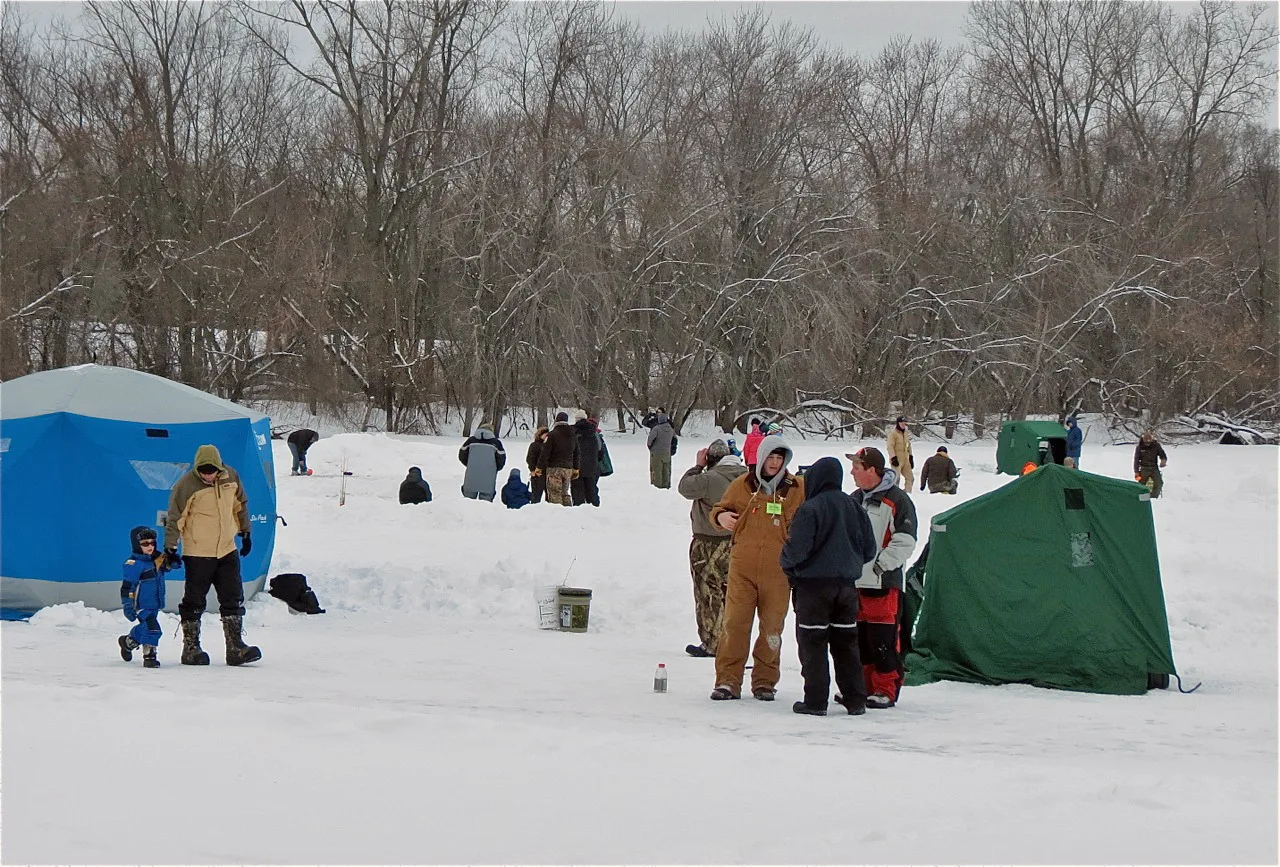 Ice Fishing Shelter: Hub or Flip-Over, and 7 Picks by Floor per Pound
Ice fishing shelter or tent: a flip-over to fish alone and move, a hub for two or three. Square feet per pound from maker specs, 7 picks, safe heat.
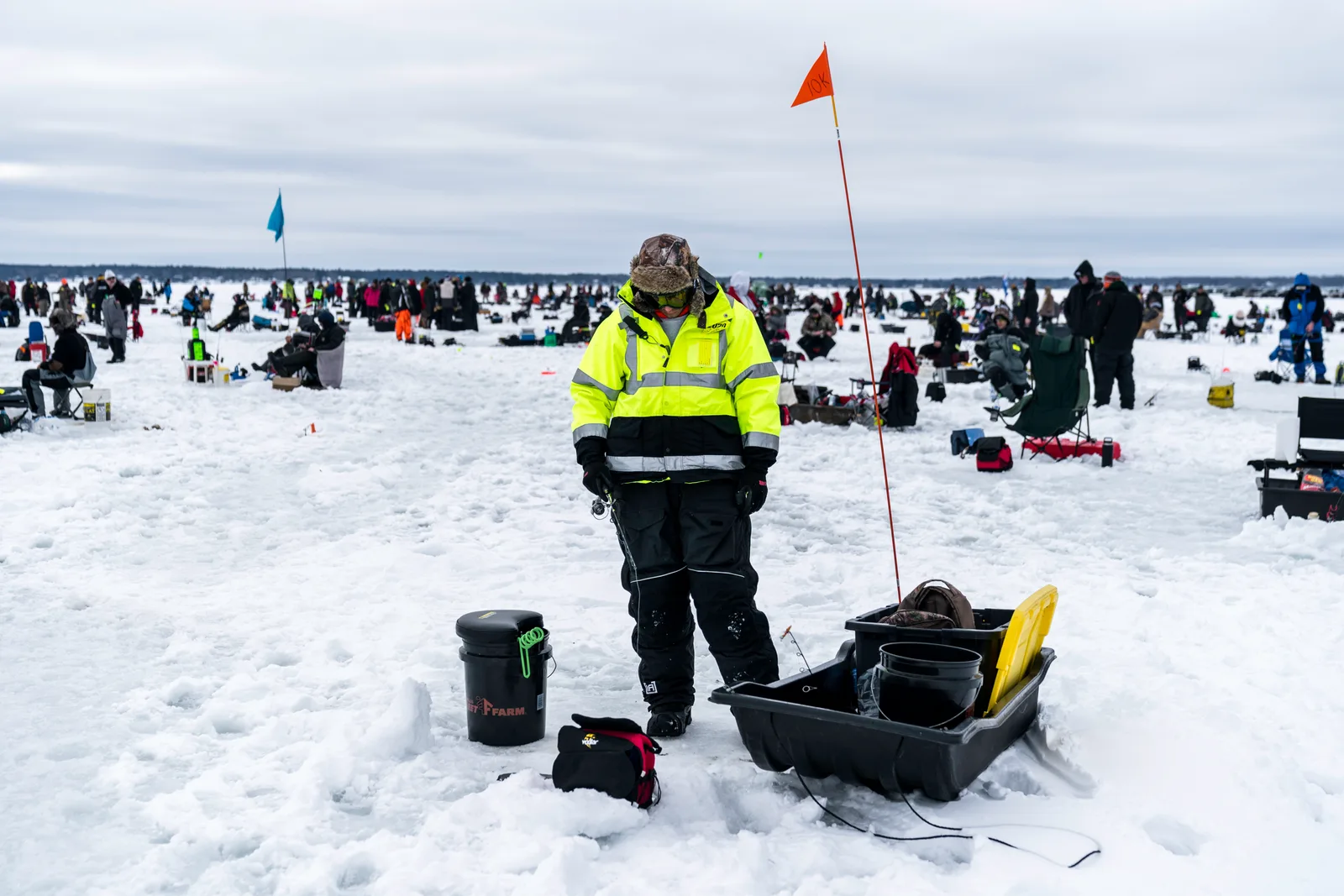 Ice Fishing Sled: What Size You Need, Hitches, and 9 Sleds Compared
An ice fishing sled sized to your shelter: three-person hubs pack 52 to 65 in long. Hand-pull or ATV sleds, hitch load limits, and 9 sleds compared.
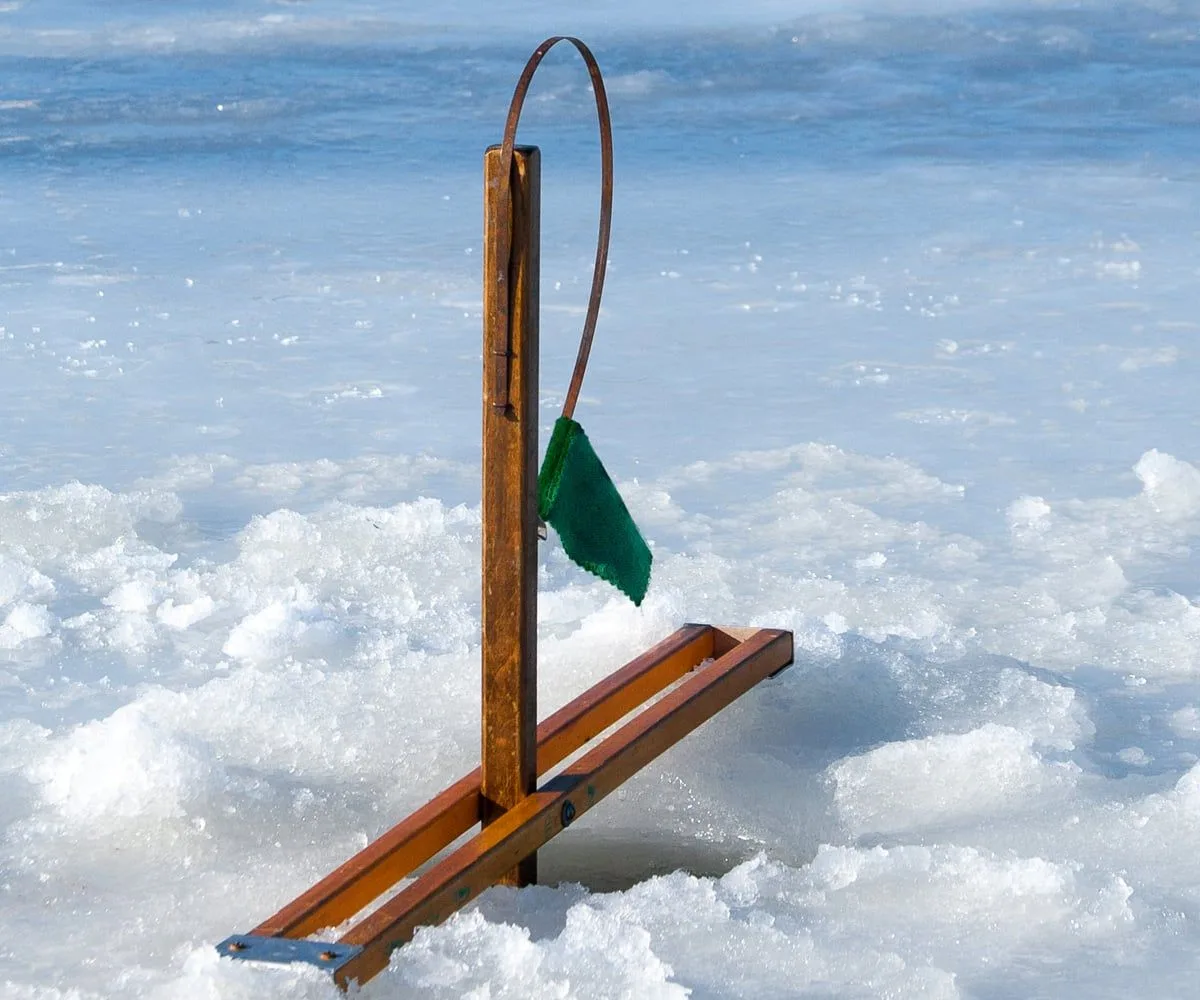 Ice Fishing Tip-Ups: How to Set One, and Which to Buy
Ice fishing tip ups: what one is, how to set it in eight steps, how many your state allows, and five to buy at the makers' own prices.
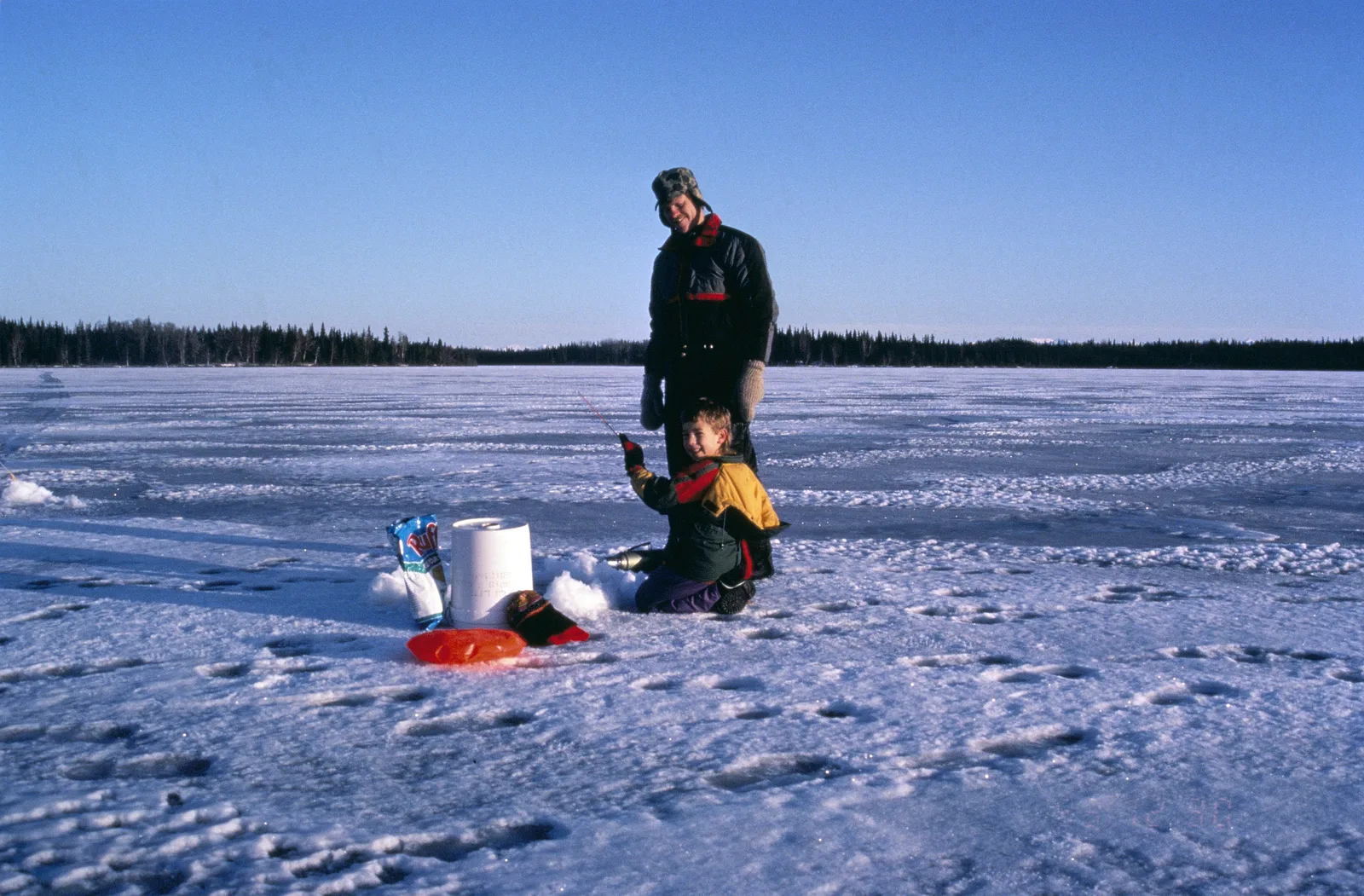 What to Wear Ice Fishing: Layers, Bibs, Float Suits and Boots
What to wear ice fishing: three layers and no cotton, ice fishing bibs or a float suit, boots by their rating and gloves, with makers' prices.

Free PDF · 5 pages
Stop guessing the ice. Tape this strip to your scoop and read it at the hole
Ice that is 6 or 7 inches thick in one spot can be 2 inches close by. You can't tell by looking.
The True-Size Ice Thickness Chart. Print it, tape the strip to your ice scoop, hook it under the ice and read the band at the surface: on foot, sled or truck. One side for clear ice, one for white.
- A true-size strip for your scoop handle, marked from "stay off" to a truck with a wheelhouse
- Two wallet charts, one for your buddy, with five moves that get you out if you go through
- Why 8 inches of white ice counts as 4, and the ice to stay off at any thickness
Every clear-ice number is the Minnesota DNR's, set beside the 29 sources on the page, the Army Corps of Engineers among them.
No card, nothing to buy. Confirm with one click and the PDF is on its way, one version for your phone and one to print, yours to keep. Then a few short emails and one a week on what's biting, with an unsubscribe link in every one. Privacy.
Sources (30)
- Minnesota DNR, Learn to ice fish (big-ticket items, rent before you buy, reels, augers, chisels)
- Minnesota DNR, Ice safety gear (flotation, ice picks, cleats, whistle, rope)
- Minnesota DNR, How to check ice thickness
- Minnesota DNR, General ice thickness guidelines
- Minnesota DNR, Carbon monoxide poisoning in ice shelters
Show all 30 sourcesShow fewer sources
- Minnesota DNR, Hook-setting devices allowed starting with the 2025-26 ice fishing season (November 17, 2025)
- Lifesaving Society (Ontario), Cold Water and Ice (a life jacket over winter clothing)
- Michigan DNR, Ice fish (the gear list)
- Michigan DNR, Showcasing the DNR: Ice fishing part of year-round Michigan angling (January 5, 2017)
- Iowa DNR, The 9 Things You Need For Ice Fishing (February 6, 2015)
- Take Me Fishing (Tom Keer), An ice fishing gear list (January 2015)
- US Army CRREL, Safety on floating ice sheets (picks, a rope that floats)
- OSHA, Cold stress guide (layers, cotton, boots, gloves)
- Mr. Heater, Portable Buddy MH9BX operating instructions and owner's manual
- Vexilar, FLX-12 operating manual (how a flasher reads) and online store (FL-8SE, FLX-28, FLX-38 prices)
- Outdoor Life (Cory Schmidt), The best ice fishing fish finders
- Outdoor Life (Jim Edlund), The best ice fishing rods
- Outdoor Life (Jim Edlund), The best ice fishing shelters
- Onyx Outdoor, Adult General Purpose Life Jacket
- Mustang Survival, Bailer Throw Bag, 50 ft
- Eagle Claw online store (Ice Safety Kit, CRYO ice rods, skimmers, Bakers Dozen Ice Kit, tungsten ice jigs, Jet Sled)
- Eskimo online store (E40 Steel auger, Redneck Bit, chisels, Outbreak 450XDP, E-Hauler XL sled)
- StrikeMaster (Rapala), Mora hand auger and Lithium 24V auger
- Jiffy, 8-inch Model 60 electric auger
- Clam Outdoors online store (TS rods, SR-ICE and Straight Drop reels, skimmers, bucket, X-400, float suits, heaters, tip-ups)
- Frabill online store (Pro Thermal tip-up)
- Otter Outdoors, Vortex Pro Cabin and Pro Medium Sled Combo
- Mr. Heater, Portable Buddy heater (price)
- Garmin and Lowrance, ice fishing bundles (STRIKER 4, LiveScope Plus, Eagle Eye, Elite FS 7)
- Royal Society of Chemistry, periodic table (densities of tungsten and lead)