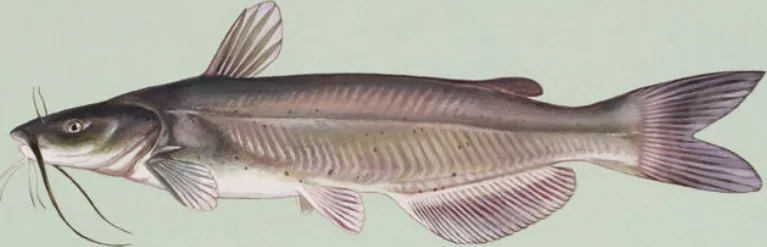
Three catfish species matter most to anglers: the channel catfish, the blue and the flathead. The channel is the most fished catfish in the United States, the blue is the largest, and the flathead eats only live fish. That difference decides the bait: cut shad for blues, scent baits for channels, a live bluegill for flatheads.
Channel catfish spawn at about 75 °F, warmer than any bass, which is why the best catfishing of the year starts when the bass fishing slows down.
Start here
- How to catch catfish: bait, rig and hour for each catfish, step by step.
- Channel catfish: identification, spawning, baits and how to catch the most fished catfish.
- Blue catfish: the giant, its season and the Chesapeake invasion.
- Flathead catfish: size, live bait and where they live.
- Best catfish bait: what channel, blue and flathead catfish eat, and the bait that follows.
- Catfish rigs: the five rigs that matter and when to use each.
- How to hold a catfish: small to big, without getting stung.
Which catfish is it?
Count the anal-fin rays. Every state agency uses that field mark, because color lies: a large channel catfish loses its spots and a small blue catfish is not blue.
| Channel | Blue | Flathead | |
|---|---|---|---|
| Anal fin rays | 24–29 | 30–35, always 30 or more | 14–17 |
| Anal fin shape | Rounded, curved along the bottom | Straight-edged, squarish | Short and rounded |
| Tail | Deeply forked | Deeply forked | Squared off with a slight notch |
| Jaw | Upper jaw longer | Upper jaw slightly longer | Lower jaw projects beyond the upper |
| Color | Olive to slate blue, scattered dark spots on young fish | Pale bluish silver, no spots, wedge-shaped back | Pale yellow to brown, heavily mottled |
| Common size | 12–32 in (30–81 cm), 1–15 lb (0.5–6.8 kg) | 20–44 in (51–112 cm), 3–40 lb (1.4–18.1 kg) | 15–45 in (38–114 cm), 1–45 lb (0.5–20.4 kg), to about 100 lb (45.4 kg) |
Behind the big three come the three bullheads, the white catfish of the Atlantic slope, and two saltwater cats that pier anglers meet. Bullheads are separated by the chin barbels: white on the yellow bullhead, dark on the black and brown. The brown bullhead also has sawlike teeth on its pectoral spine. In salt water, the gafftopsail is told from the hardhead by its long fin filaments. Both carry a mildly toxic slime on three sharp spines.
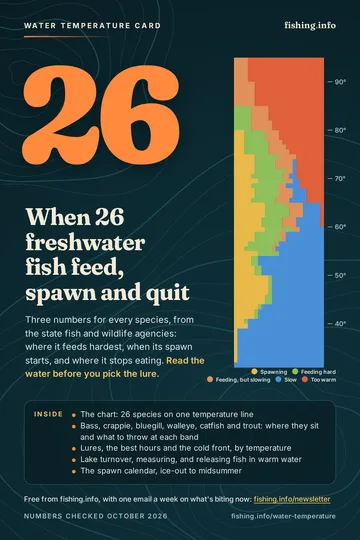
Free card: what 26 species do at your water temperature
Plus one email a week on what's biting now. No sales pitches. Privacy.
When do catfish bite?
Feeding follows water temperature. Channel catfish stop feeding below about 50 °F (10 °C) and grow best at 75–85 °F (24–29 °C). The water temperature thermometer sorts all three catfish by what they do at your reading.
The guides’ calendar follows from that. Blues are the winter and early-spring fish, with the trophies caught from December to March on cut bait in 20–45 ft (6–14 m) of water. Channels bite all year, and best in summer. Flatheads feed hardest in September and October before going dormant.
When do they spawn?
Catfish spawn between late spring and August, each species at its own temperature. Channel catfish start in late spring and early summer, once the water reaches about 75 °F (24 °C); the aquaculture literature puts the optimum near 80 °F (27 °C). Their eggs hatch in about a week, and the fry stay in the nest another week. Blue catfish spawn at 70–75 °F (21–24 °C), late May into June, the females producing 2,000 to 4,000 eggs per pound. Flatheads spawn from late May through August at 75–80 °F and lay up to 100,000 eggs.
All three are cavity nesters: they spawn in undercut banks, hollow logs and drift piles. The male guards the nest without feeding. That is why spawning males rarely take a bait, and why noodlers can catch them by hand.
What bait does each one want?
Diet studies say what the bait shops sell. Channel catfish are omnivores that eat fish, insects, crayfish, mussels and plant matter, so prepared scent baits, chicken liver and cut bait all work. Blue catfish eat mostly fish once past about 8–13 in. Fresh cut shad and skipjack herring are the consensus for them, and fresh beats frozen. Flatheads over 10 in eat fish and nothing else, and they want it alive: bluegill, sunfish, goldfish or bullheads.
The standard tackle is a circle hook on a slip-sinker or Santee Cooper rig; catfish anglers use circle hooks more than anyone. Go 5/0 to 8/0 for blues, smaller for channels, and up to 10/0 with big live baits for flatheads. A catfish rod wants a soft tip on a strong butt, and the rods page explains why. The reels page and the line page cover the heavy spinning and casting setups.
How big do catfish get?
The all-tackle blue catfish record is 143 lb, taken by Richard Anderson at Kerr Lake, Virginia, on June 18, 2011, on a piece of chicken. Ken Paulie’s 123 lb flathead came from Elk City Reservoir, Kansas, in May 1998 and was later aged at 22 years or more. W. H. Whaley’s 58 lb channel catfish from Santee-Cooper, South Carolina, has stood since July 1964. It was caught on a bucktail jig. The world record catfish page has the full stories, and the giants abroad.
Why are blue catfish invading the Chesapeake?
They were put there. Blue catfish were stocked in Virginia’s tidal rivers in 1974 and 1985 for sport. By 2023 they were in every Virginia tributary of the Chesapeake. In parts of the James, Rappahannock and York they make up as much as three quarters of the fish biomass, and they are harvested commercially by the millions of pounds. The blue catfish page covers what that means for anglers.
The names, if you want them
The channel catfish is the state fish of Missouri, Kansas, Nebraska and Tennessee. Trotline, noodling, mudcat: the fishing terms page explains the words catfish anglers use. For the other freshwater pillar, which shares most of the gear advice, start at the bass hub; every other fish is in the species section.
All articles
 Best Catfish Bait: What Channel, Blue and Flathead Catfish Eat
The best catfish bait by species: cut shad for blues, punch and dip baits for channels, live bluegill for flatheads, and which prepared baits to buy.
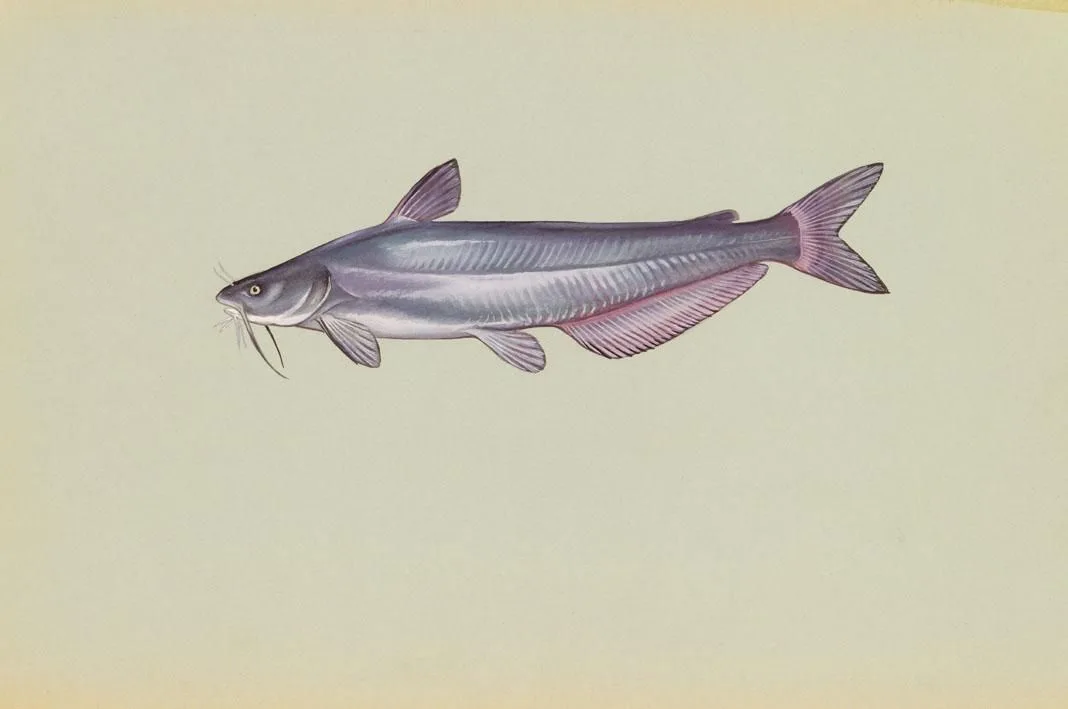 Blue Catfish: Identification, Size, Season and the Chesapeake Invasion
Blue catfish from the agency data: the 30-ray anal fin, how big and old they get, a month-by-month season from a river guide, and the Chesapeake invasion.
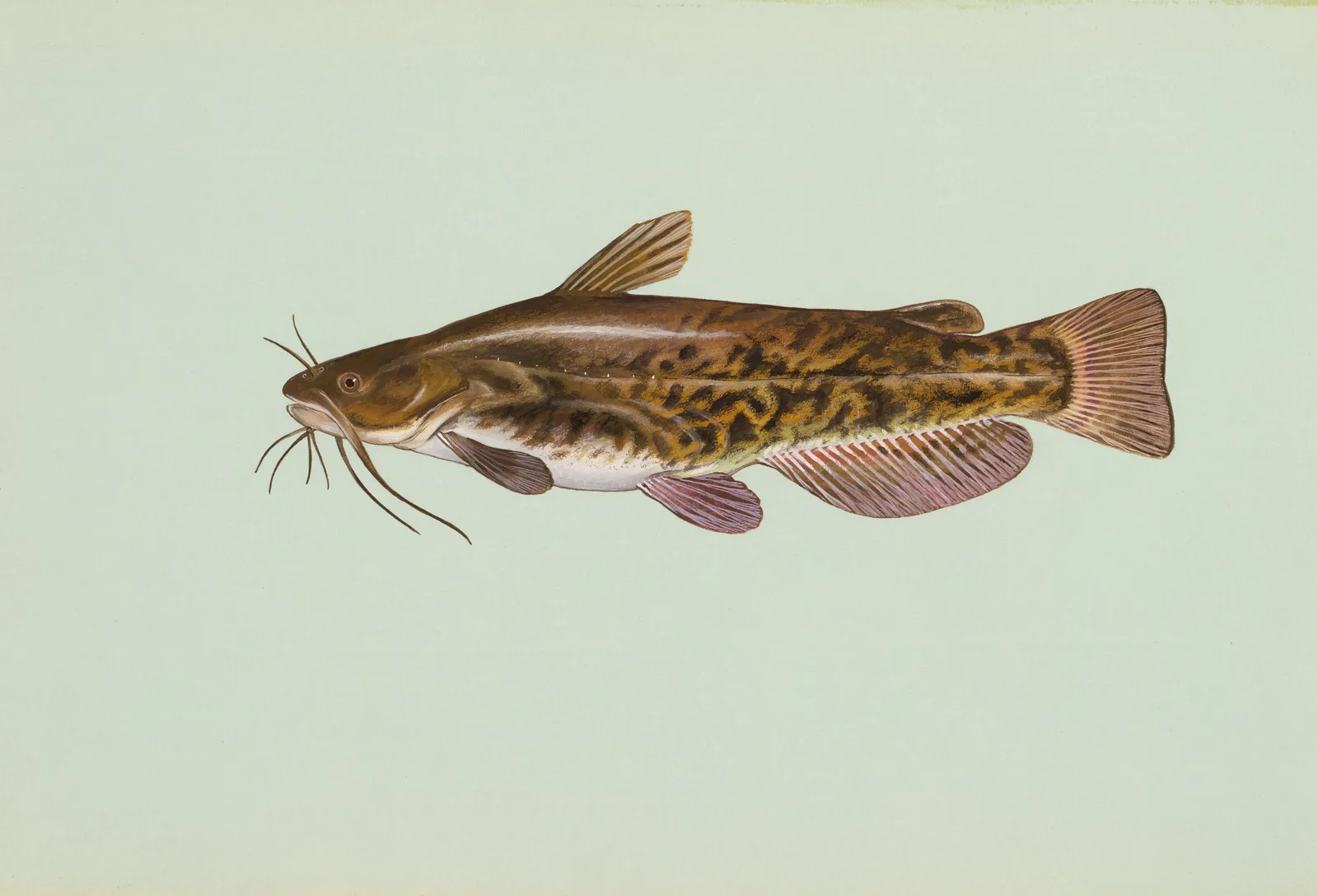 Bullhead Catfish: Black, Brown and Yellow Bullheads Compared
Bullhead catfish come in three kinds: black, brown and yellow. Tell them apart by chin barbels and spine teeth; catch them after dark on half a nightcrawler.
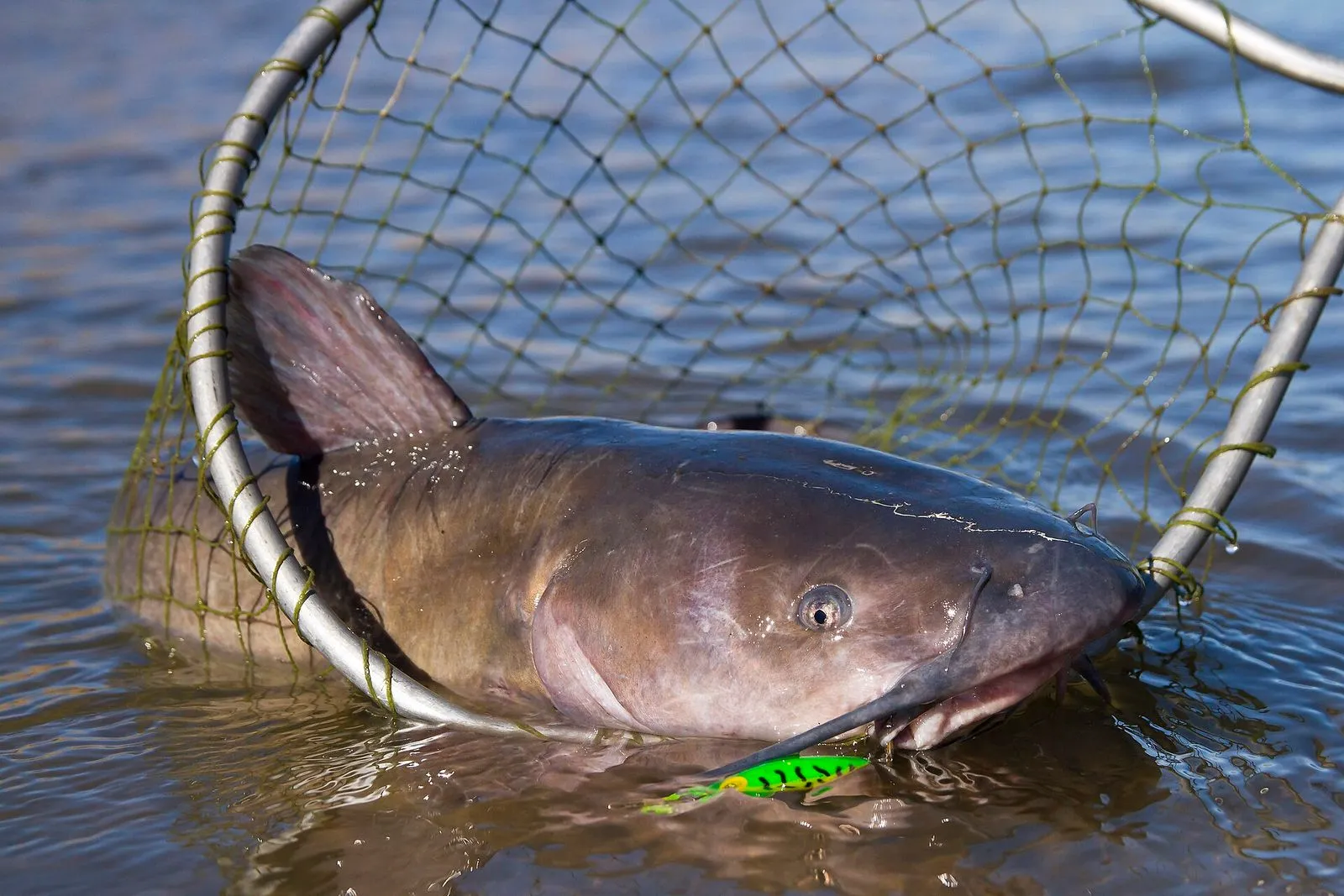 Catfish Rigs: The Five That Matter and When to Use Each
The five catfish rigs the guides use, slip sinker, Santee Cooper, three-way, slip float and bottom rig, with sinker weights, hook sizes and when to use each.
- Channel Catfish: Identification, Spawning, Baits and How to Catch Them
Channel catfish from the agency data: the anal-fin count that separates them from blues, habitat, spawning at 75 °F, what they eat, and the 58 lb record.
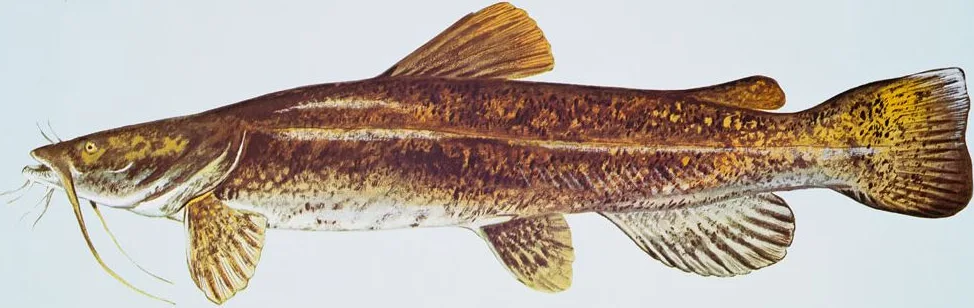 Flathead Catfish: Identification, Size, Live Bait and Where They Live
Flathead catfish from the agency data: square tail and jutting jaw, deep-pool habitat, spawning at 75–80 °F, why only live bait works, and the 123 lb record.
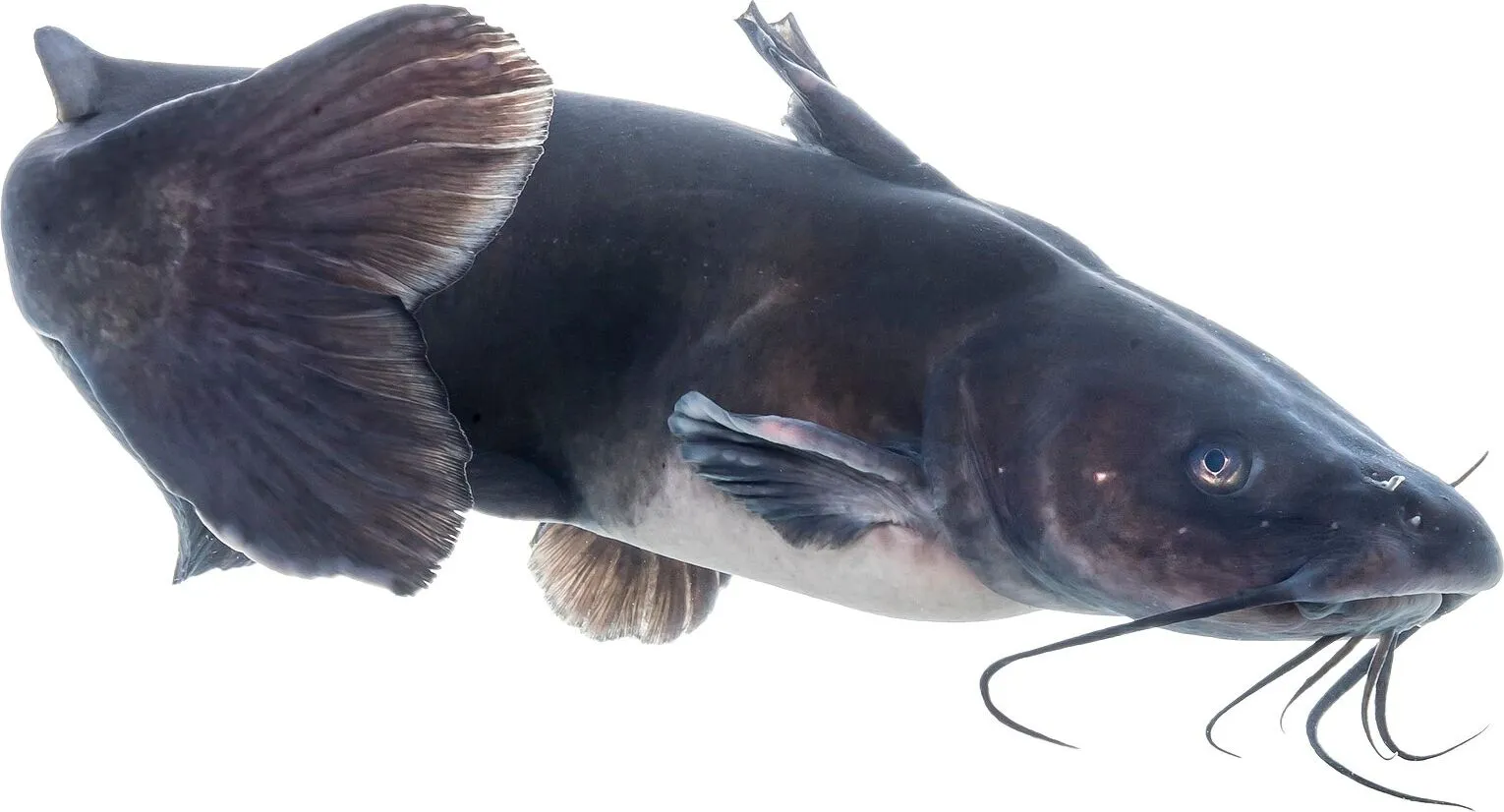 How to Hold a Catfish Without Getting Stung, Small to Big
How to hold a catfish safely: where the three spines are, the grip behind the pectoral fins for small fish, the lip grip for big ones, and first aid for stings.
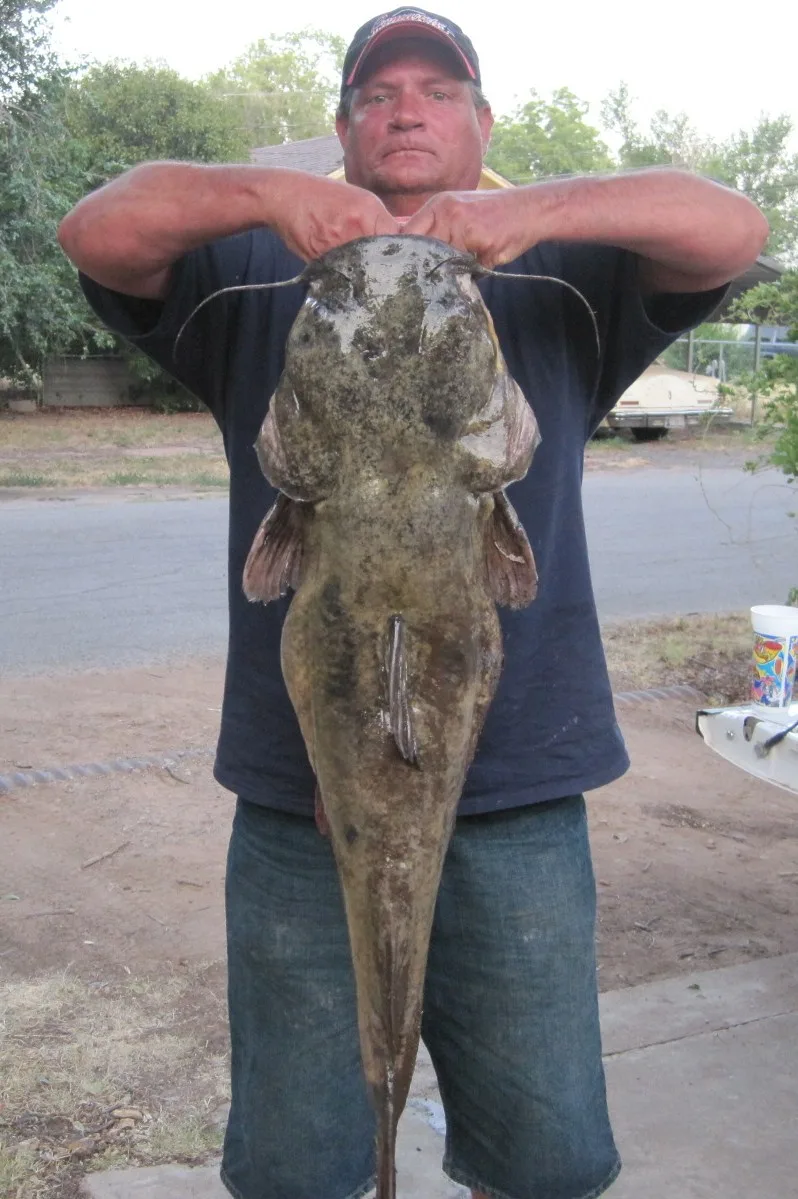 Noodling Catfish: How It Works, Where It Is Legal, Staying Safe
Noodling catfish means pulling a nest-guarding flathead from its hole by hand. How it is done, every state's season and rules, and what hurts people.
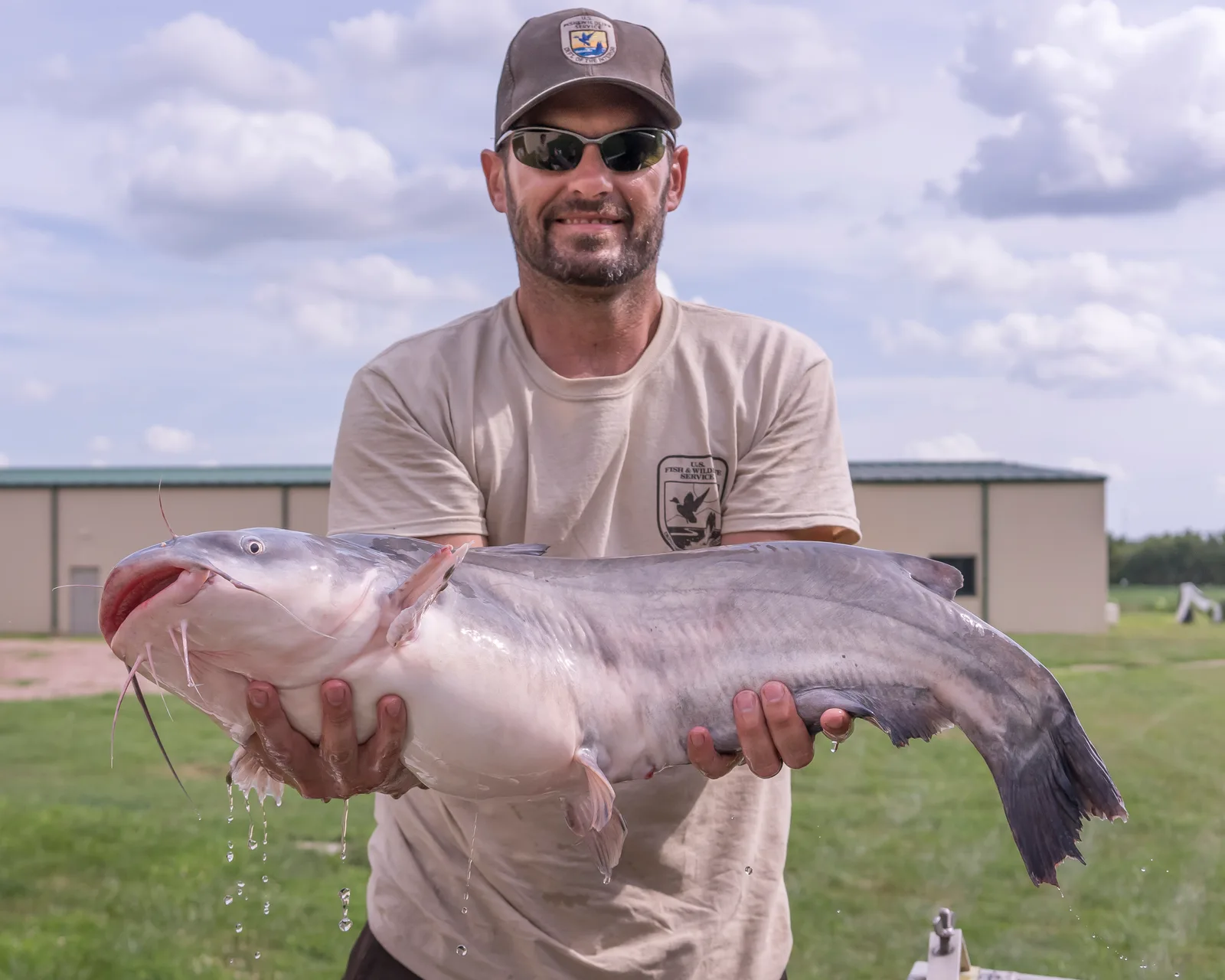 World Record Catfish: Blue, Flathead, Channel, Wels, Mekong Giant
Every world record catfish: the 143 lb blue, 123 lb flathead, 58 lb channel of 1964, 297 lb wels and 646 lb Mekong giant, and how a record is certified.
Free download
The water temperature card
Read your water temperature and the card tells you who is spawning, who is feeding and what to throw. 26 species, 16 pages, for your phone and the tackle box.
Plus one email a week on what's biting now. No sales pitches. Privacy.