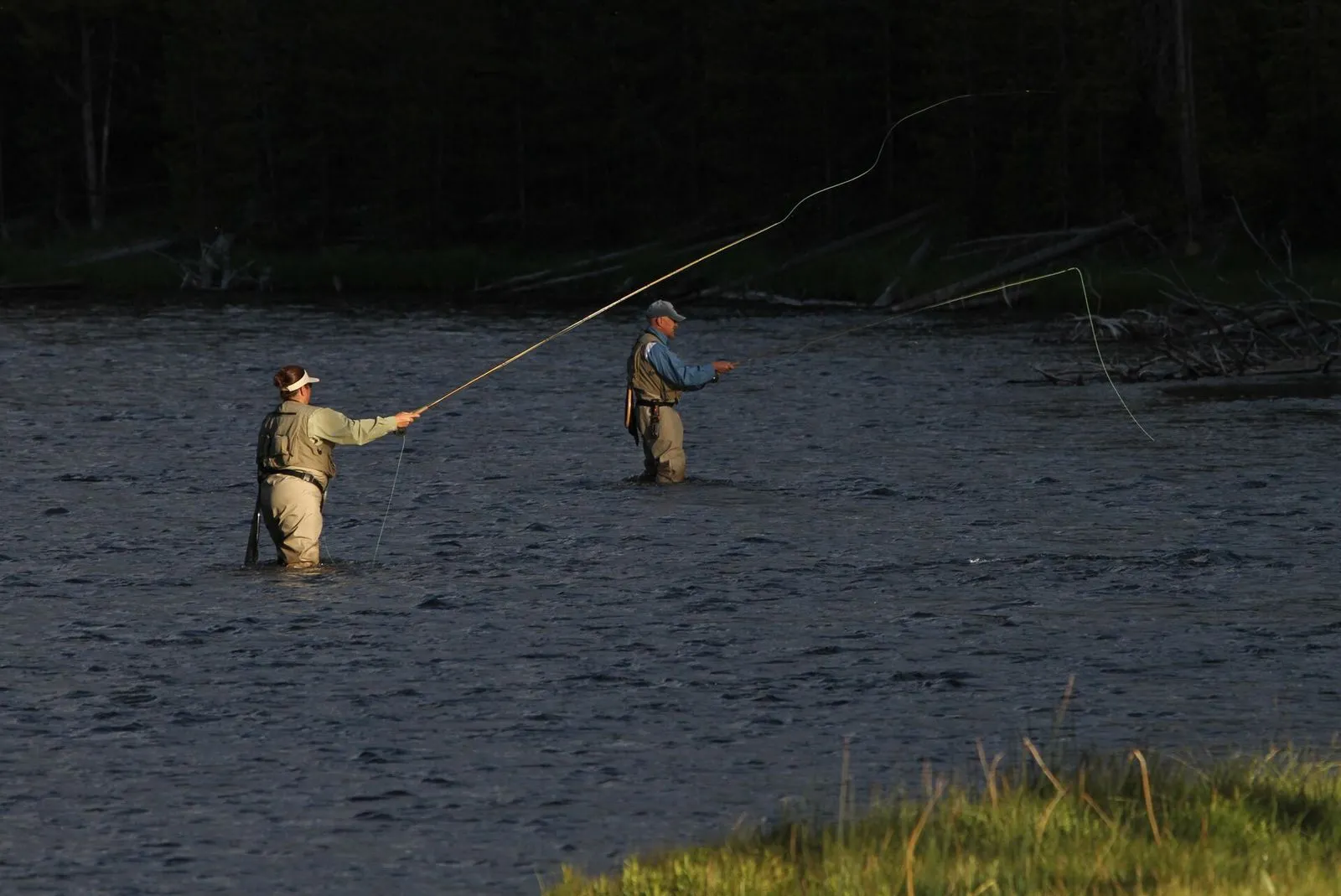
Fishing techniques are the part of the sport no tackle can buy, and there are four of them: knots, rigs, casting and handling. Every discipline, from a farm pond to a surf beach, runs through the same four. Each one has numbers behind it: pull tests for knots, survival studies for catch and release. And each can be practiced at the kitchen table before you need it on the water.
The knot that holds a fish the line could have held, the rig that puts a bait where the fish is, the cast that lands it there, and the handling that sends it back alive. Four skills, and every kind of fishing runs through them.
Start here
- Fishing knots: which knot for which line and job, each with a numbered tying procedure and the strength tests that exist.
- Catch and release: how many fish survive by species and hook, and the ten-step release that raises the number.
- Fishing rigs: the Texas rig, Carolina rig, drop shot, Ned rig and wacky rig, each with its weight, hook and the water it is for.
- Catfish rigs: the five bottom rigs the guides use, with sinker weights and hook sizes.
- Fishing terms: what flipping, pitching, trolling and 690 other words mean, sorted by tackle, technique and water.
Which technique for which job?
| You want to | Method | Where it is covered |
|---|---|---|
| Tie line to a hook or lure | Palomar on nylon, uni on braid | Knots |
| Join braid to a leader | FG knot; Alberto when in a hurry | Knots |
| Fish a soft plastic through cover | Texas rig, hook point buried | Texas rig |
| Fish a bait on the bottom for catfish | Slip-sinker rig, circle hook, lightest sinker that holds | Catfish rigs |
| Reach fish that will not pick a bait off the bottom | Drop shot | Drop shot |
| Put a fish back so it survives | Wet hands, hook out in the water, ten seconds of air at most | Catch and release |
| Learn to cast a baitcaster without backlash | Spool tension, half brakes, thumb | Baitcaster |
| Spool a reel with braid | Arbor knot over mono backing | Arbor knot |
Two numbers are worth carrying to the water. In one published pull test, the FG knot held 17 lb where the Albright held 9, on the same 10 lb braid. And a review of 53 studies put average catch-and-release mortality at 18 percent. Release works when the hook is in the jaw and the fish is back in the water inside ten seconds.
Fly, ice, surf: what changes?
Everything but the four skills. Fly fishing, ice fishing, surf casting, pier fishing, kayak fishing and trolling are each a world with its own tackle, knots and rules. A fly angler joins tippet to leader with a blood knot a dozen times a day and never touches a baitcaster. A surf angler ties a shock leader with an Albright and casts a rod twice the length of a bass rod. An ice angler’s whole technique is a hole, a jig and a spring bobber.
The knots and the basics come first because every discipline needs them. The gear section carries the tackle each discipline calls for, and the species pages say which fish it is for. Each discipline also has its own language. The fly fishing and ice fishing word lists are the quickest way in.
Why practice at the kitchen table?
Because the water is where a technique is used, not where it is learned. Tie the knot with heavy line and a pen for a hook until you can do it without looking. Then tie it with the line you fish, then in the dark. Rig a Texas rig on the kitchen counter and pull it through a hairbrush to see why the point is buried. The difference between anglers who catch and anglers who lose fish is mostly what they practiced on dry land.
Topics
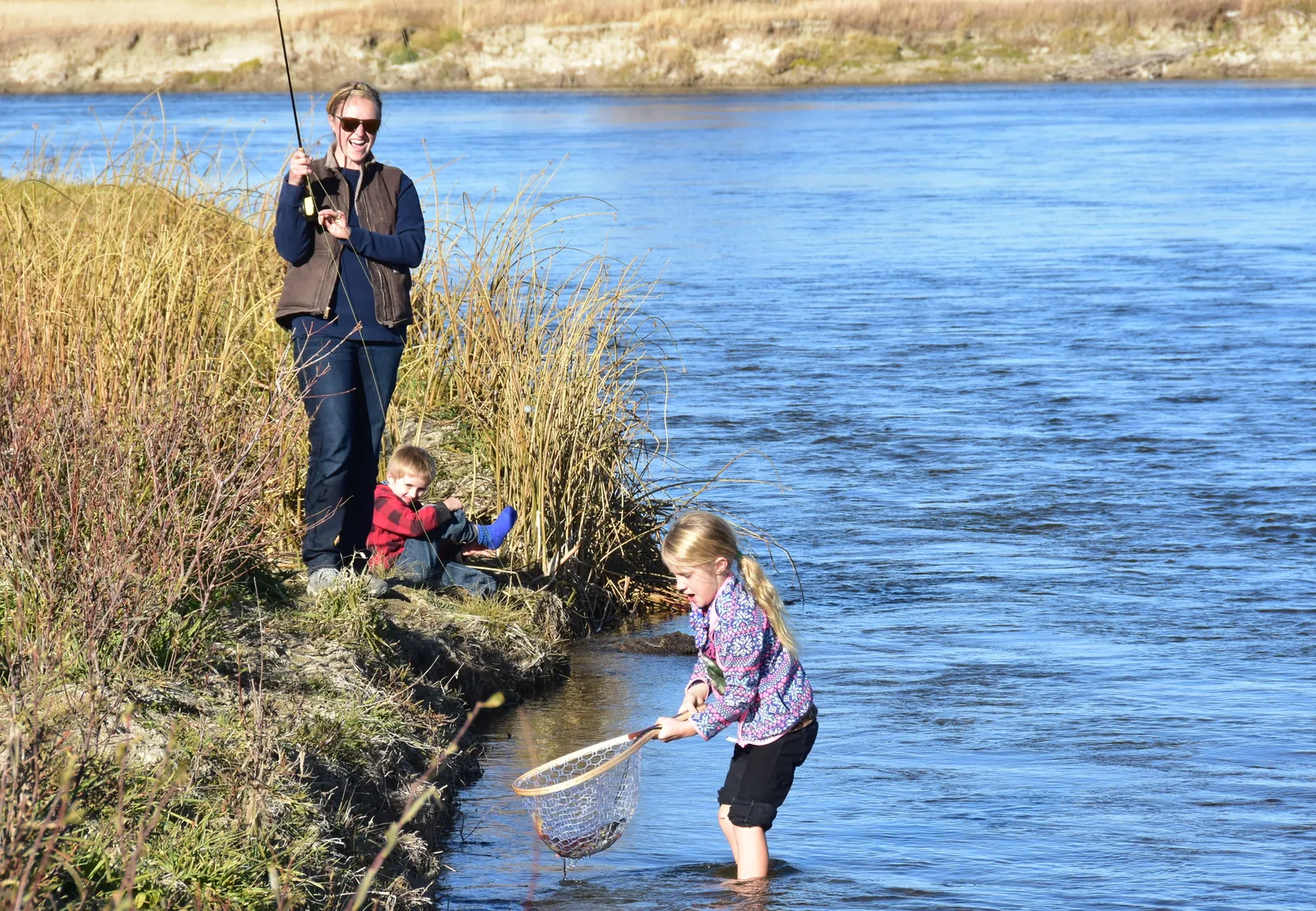
Fishing Basics: Handling, Releasing and the First Day on the Water
The fishing basics every angler needs before the first cast: handling fish, catch and release with the survival numbers, licenses, and the first-day kit.
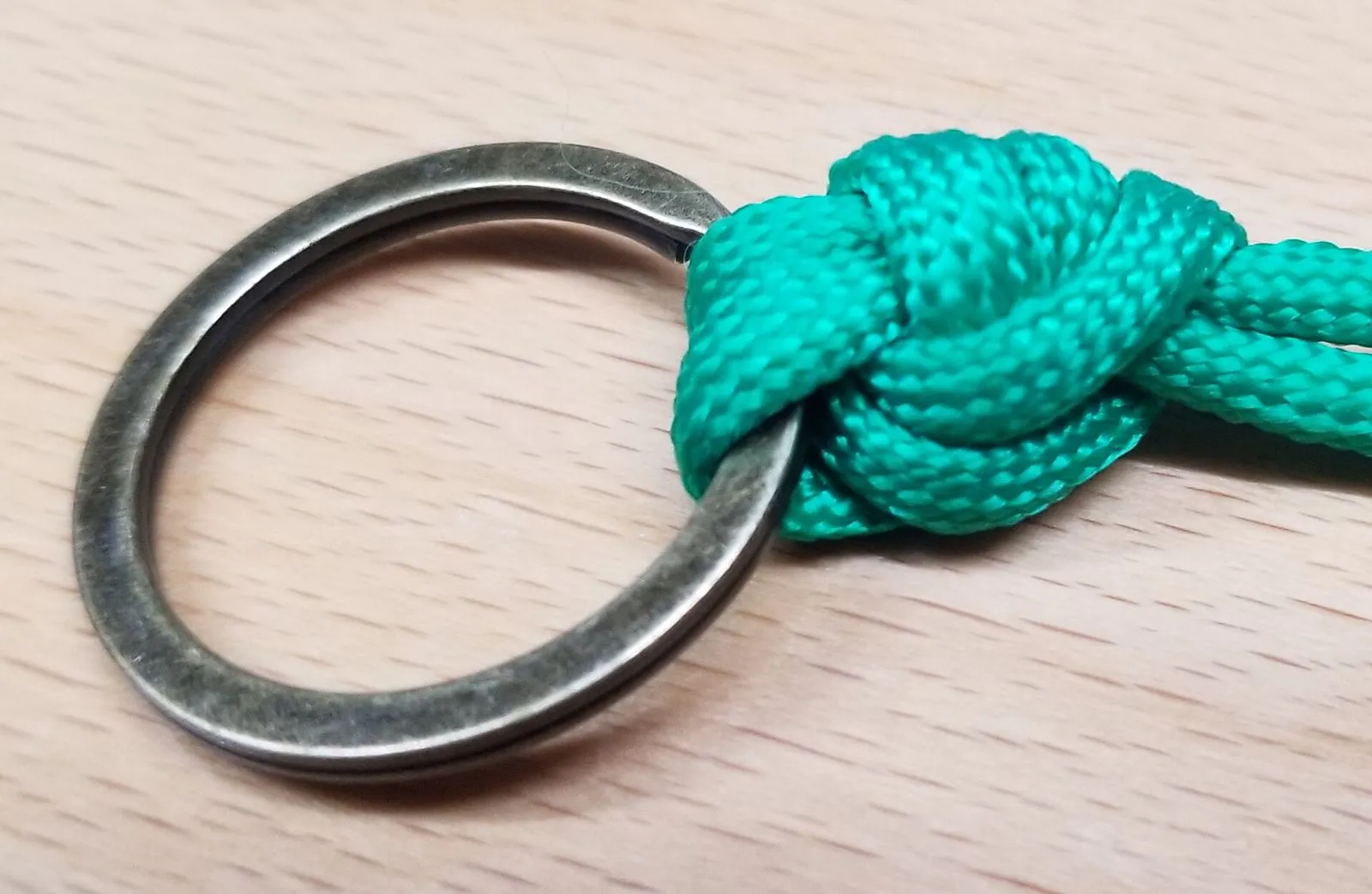
Fishing Knots: Which Knot for Which Line and Job
Fishing knots by job and line: hook knots, braid-to-leader joins, line-to-line knots, loops, snell and arbor knots, and what the pull tests show about each.
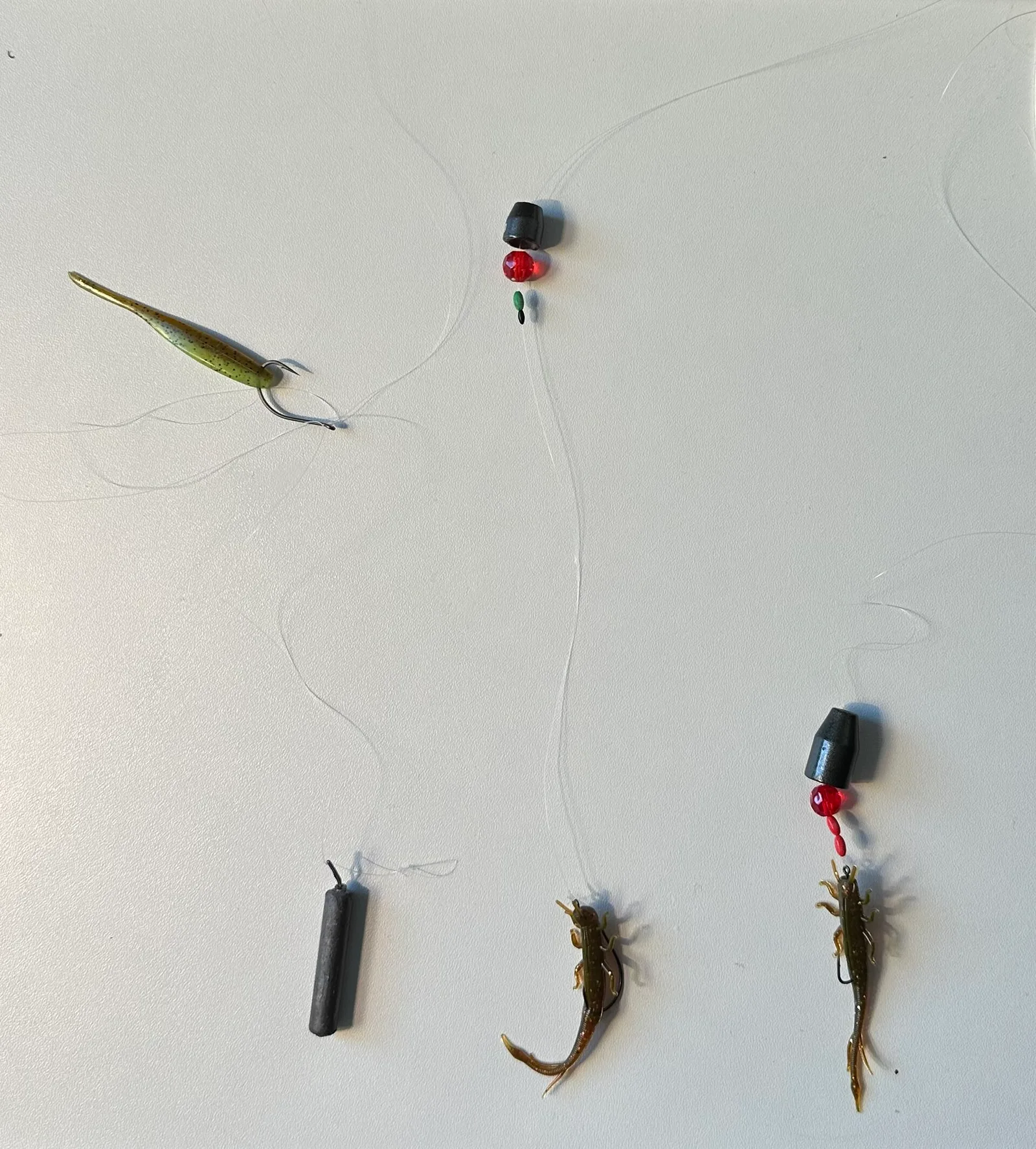
Fishing Rigs: Texas, Carolina, Drop Shot, Ned and Wacky
Fishing rigs explained: the Texas, Carolina, drop shot, Ned and wacky rigs, the weight for each depth, and which rig fits which cover and fish.
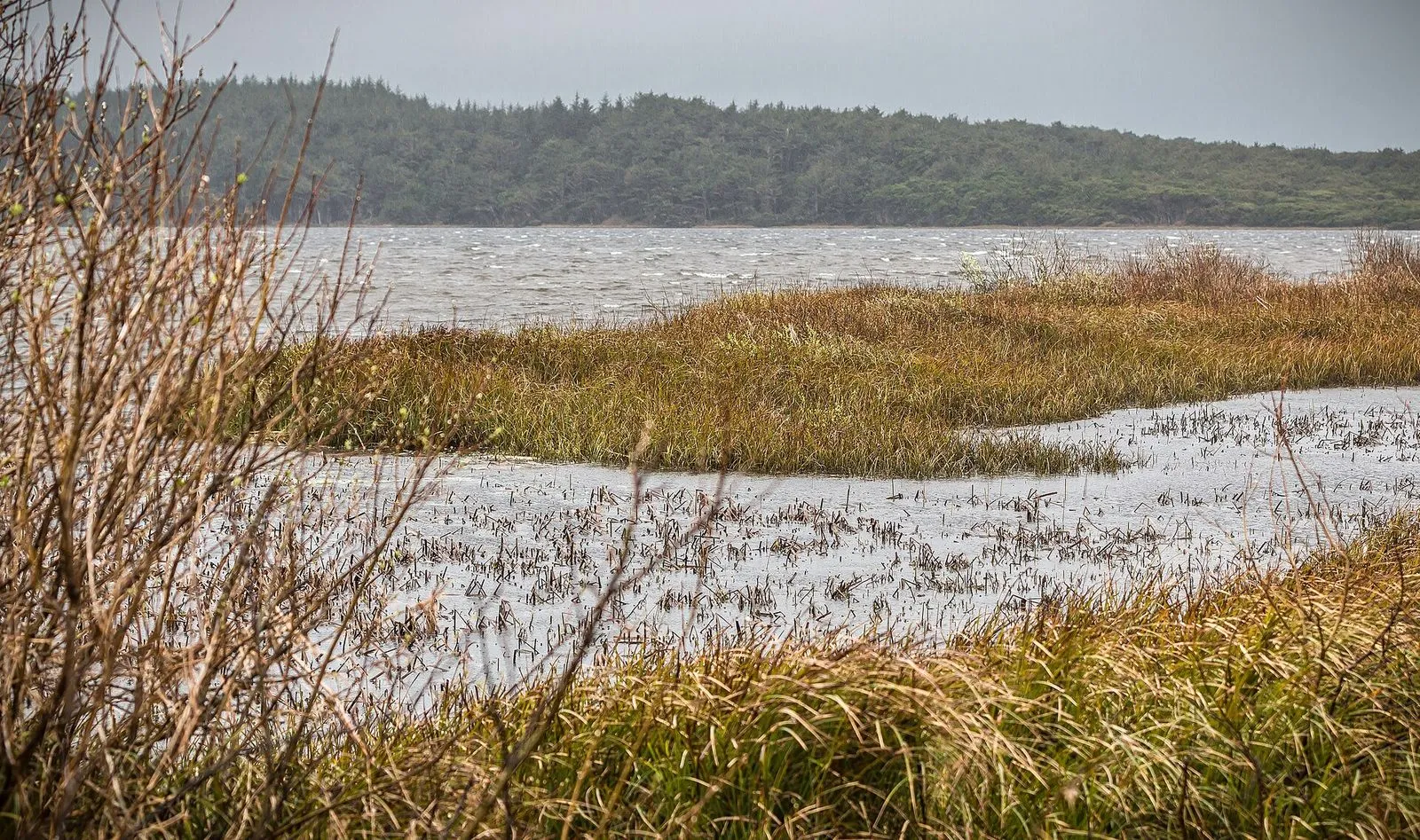
Fishing Weather: What Wind, Cloud, Pressure, Rain and the Moon Really Do to the Bite
What weather is good for fishing, ranked by the evidence: light and hour first, then temperature trend, wind and cloud, the moon, and last the barometer.

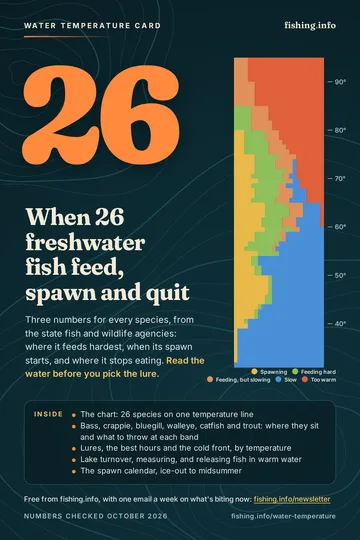
Ideal Water Temperature for Fish: The Chart for 26 Freshwater Species
Most freshwater fish bite best at 65–75 °F, trout at 50–65 °F, catfish at 75–85 °F. One chart for 26 species: feeding range, spawn and shutdown.
Free download
The water temperature card
Read your water temperature and the card tells you who is spawning, who is feeding and what to throw. 26 species, 16 pages, for your phone and the tackle box.
Plus one email a week on what's biting now. No sales pitches. Privacy.