 By
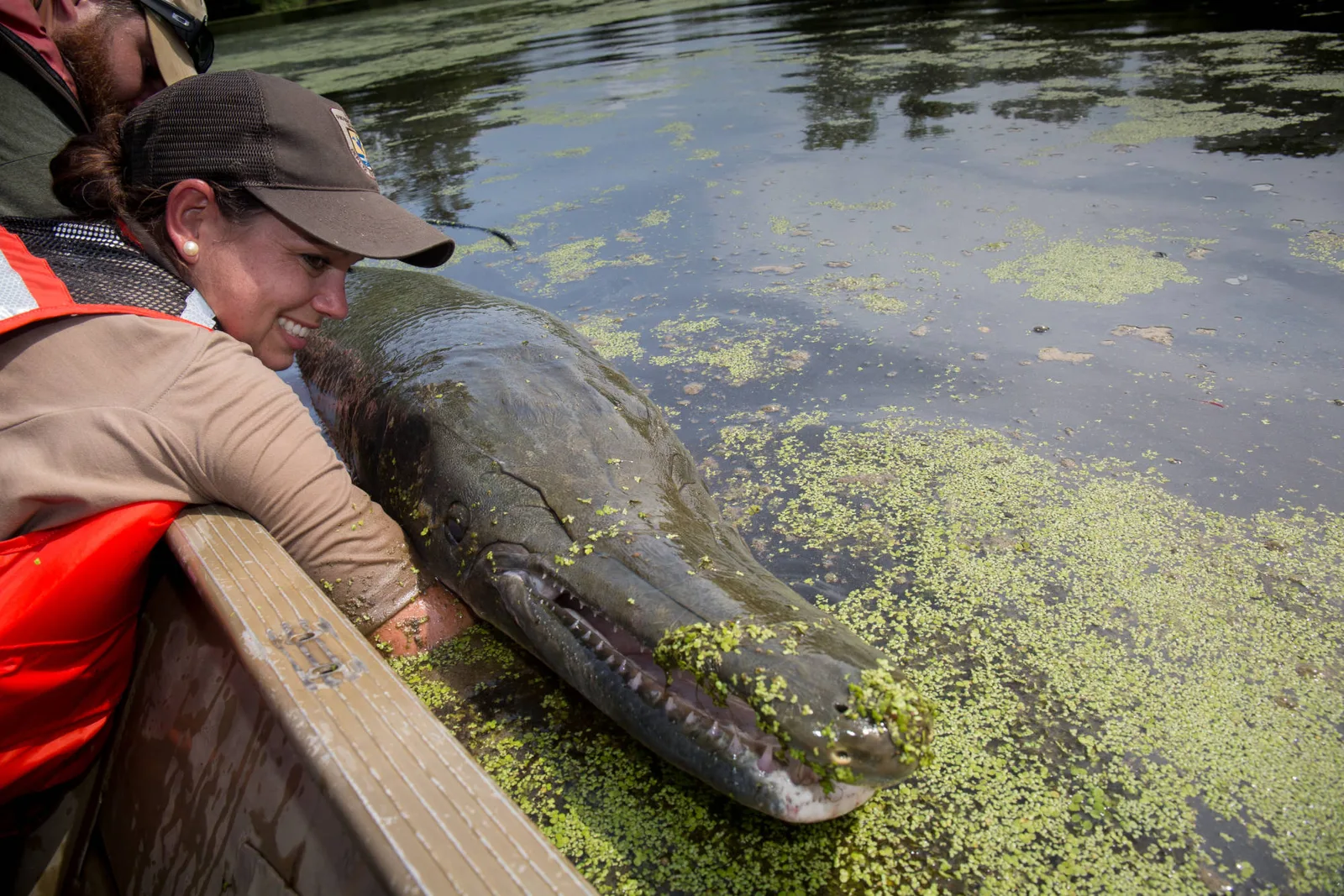
The freshwater fish species most anglers cannot name are the ones outside the bass, trout, catfish, pike and perch families: sturgeon, gar, bowfin, burbot, drum, eel and paddlefish. Every angler meets some of them sooner or later. A few are among the largest freshwater fish in the world: a white sturgeon passes 10 ft (3 m), and an alligator gar can top 300 lb. The arapaima of the Amazon, an air-breathing giant of about 3 m, is the one you travel for. So is Africa’s Nile perch, the 230 lb record fish of Lake Nasser. The Congo’s goliath tigerfish has teeth up to an inch long.
A Texas rule of thumb for alligator gar: every extra foot doubles the fish’s age. Three feet at two and a half years, four feet at five, seven feet at about forty.
Start here
- Burbot: the freshwater cod that spawns under the ice and tastes like lobster.
- Lake whitefish: when it spawns, how to tell it from cisco, and why the Great Lakes catch has halved.
- Arctic grayling: the sail-finned trout cousin of Alaska and Montana, and the Western lakes that hold stocked ones.
- Pike, muskie and pickerel: the toothy ambush hunters, told apart.
- Types of salmon: the five Pacific salmon and the Atlantic salmon.
- Candiru: the tiny Amazon catfish of the urethra legend, and what it really does.
- Pacu: the piranha cousin with teeth like yours, and what to do when one turns up in a US lake.
Which fish is it?
The first column is what you see with the fish in the net; the fish-body terms explain the barbels and fins.
| Fish | Recognize it by | How big | Where |
|---|---|---|---|
| Burbot | One chin barbel, two dorsal fins, slimy mottled skin | 15–28 in; record 25 lb 2 oz (11.4 kg) | Cold, deep northern lakes and rivers |
| Lake sturgeon | Shark-like tail, bony plates, four barbels | 4–6 ft, 30–80 lb; record 168 lb (76 kg) | Great Lakes, Hudson Bay and Mississippi basins |
| White sturgeon | The same armor, far larger | Over 10 ft (3 m); record 468 lb (212 kg) | Pacific rivers, Alaska to California |
| Paddlefish | A paddle-shaped snout a third of its length | To 7 ft; Missouri record 164 lb 13 oz (74.8 kg) | Mississippi basin |
| Alligator gar | Broad snout, two rows of teeth in the upper jaw | To 8 ft and 300 lb; record 283 lb (128 kg) | Lower Mississippi and Gulf coast |
| Longnose gar | Snout ten times longer than wide, diamond scales | Michigan record 18 lb (8.2 kg), 53 in | Eastern states into Quebec |
| Bowfin | One long back fin, scaleless head, ringed tail spot | Michigan record 14 lb (6.4 kg) | Warm, weedy water in the East |
| Freshwater drum | Deep silver body, long two-part dorsal fin | Texas fish pass 30 lb (14 kg) | Appalachians to the Rockies |
| Alewife | Small silver herring, one dark spot behind the gill cover, saw-edged belly | 4–9 in; sea-run 9–11 in | Atlantic rivers; landlocked in the Great Lakes |
| Gizzard shad | A long thread off the back fin, dark spot behind the gill | 9–14 in typical | Large rivers and reservoirs, warm and fertile |
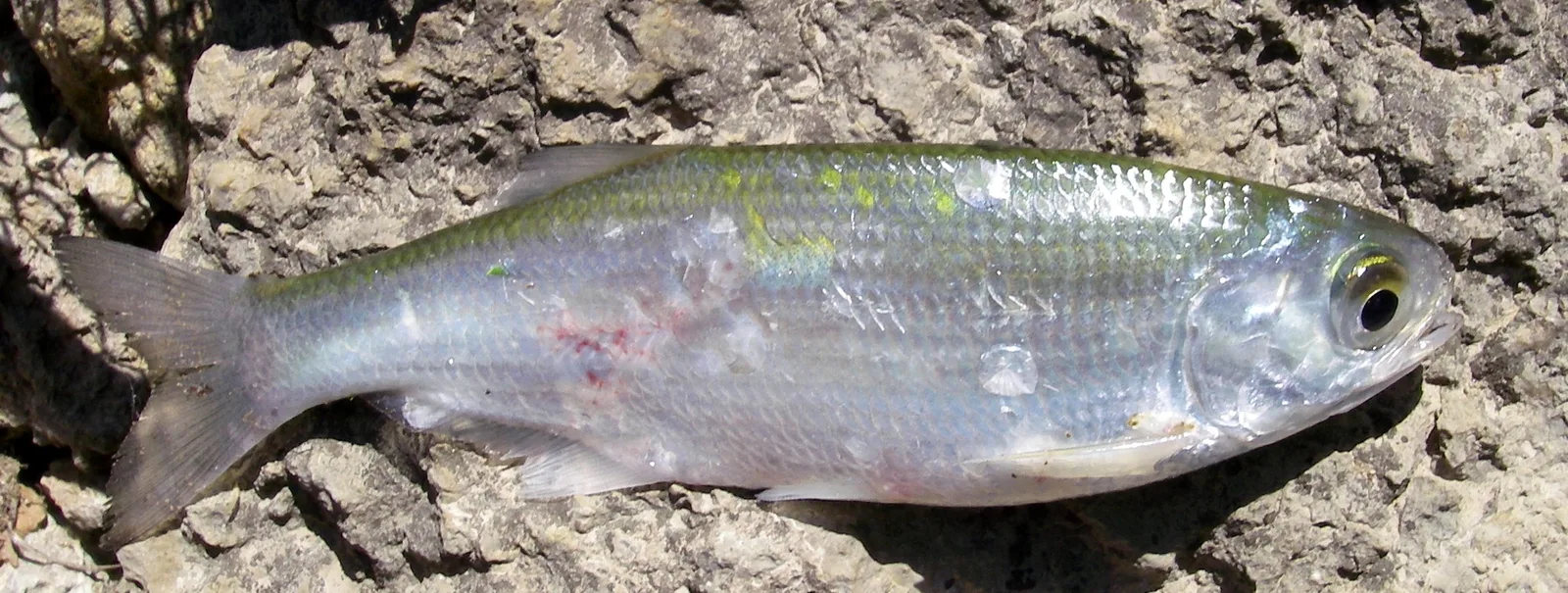
| Mooneye and goldeye | Silver and flat-sided, a huge eye, teeth on the tongue, no saw-edged belly | Mooneye 9–11 in; goldeye 14–16 in | Big rivers from the Great Lakes to the Missouri |
| Round goby | Small invasive bottom fish, one suction-cup belly fin, black spot on the front back fin | 3–6 in typical | All five Great Lakes and their rivers |
| American eel | Snake-shaped, small fins | Females to 4 ft (1.2 m), about 9 lb | Atlantic and Gulf rivers |
| Lake whitefish | Silver cousin of the trout | Michigan record 14.28 lb (6.5 kg) | Great Lakes, Canada, Alaska |
| Arctic grayling | Tall, spotted sail of a dorsal fin; tiny mouth | Mostly 12–16 in in the lower 48; IGFA record 5 lb 15 oz (2.69 kg) | Alaska, Montana’s Big Hole, stocked mountain lakes |
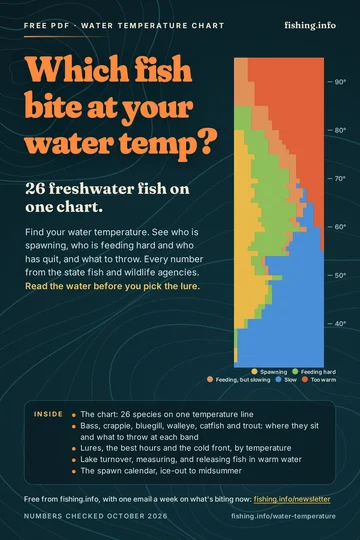
Free PDF · Water temperature chart Which fish are biting at today's water temperature?
One reading, and the 16-page chart shows which of 26 fish are spawning, feeding hard or slowing down; for bass, crappie, bluegill and walleye, where they sit and what to throw. Every number sourced.
No card, nothing to buy, and the PDF is yours to keep. Confirm with one click and it's on its way. Then a few short emails and one a week on what's biting. Unsubscribe anytime. Privacy.
How big do sturgeon and paddlefish get?
The white sturgeon of the Pacific coast is North America’s giant: more than 10 ft long, some past 100 years. Its rod-and-reel record of 468 lb was caught at Benicia, California, in 1983. The beluga sturgeon of the Caspian and Black seas grows bigger still. Where you can still fish for one, and what the keep-it-in-the-water rules say, is in sturgeon fishing.
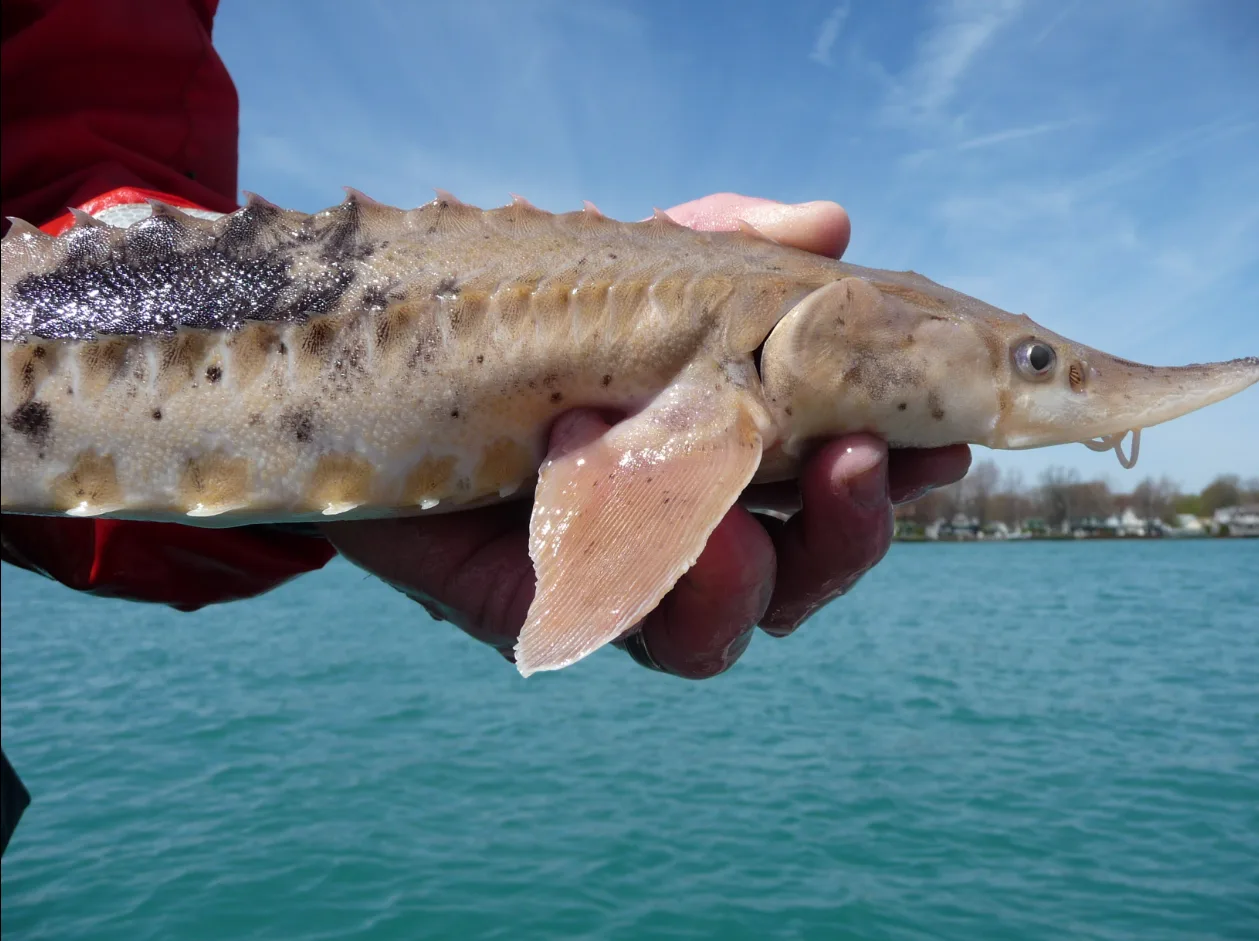
The lake sturgeon belongs to a line at least 150 million years old. A typical adult is 4 to 6 ft long, 30 to 80 lb and 50 to 100 years old. Its record, 168 lb, came from Ontario’s Georgian Bay in 1982, on a spinner and 12 lb line.
The paddlefish is the odd relative. It eats only plankton, swimming with its mouth open, and its paddle can be a third of its body. The heaviest on record weighed 164 lb 13 oz, snagged at Lake of the Ozarks, Missouri, in March 2024; it edged Oklahoma’s 164 lb Keystone Lake fish of June 2021. The IGFA keeps no paddlefish record, so these state records are the top marks.
How big does an alligator gar get?
Texas Parks and Wildlife gives alligator gar of 8 ft and more than 300 lb. A 327 lb gar netted in Mississippi in 2011 was probably at least 95 years old. The current IGFA record is 283 lb, caught by Art Weston on Sam Rayburn Lake, Texas, in September 2023 on 6 lb line. It replaced a Rio Grande fish that had stood since 1951.
The number: Texas Parks and Wildlife gives alligator gar of 8 ft and more than 300 lb.
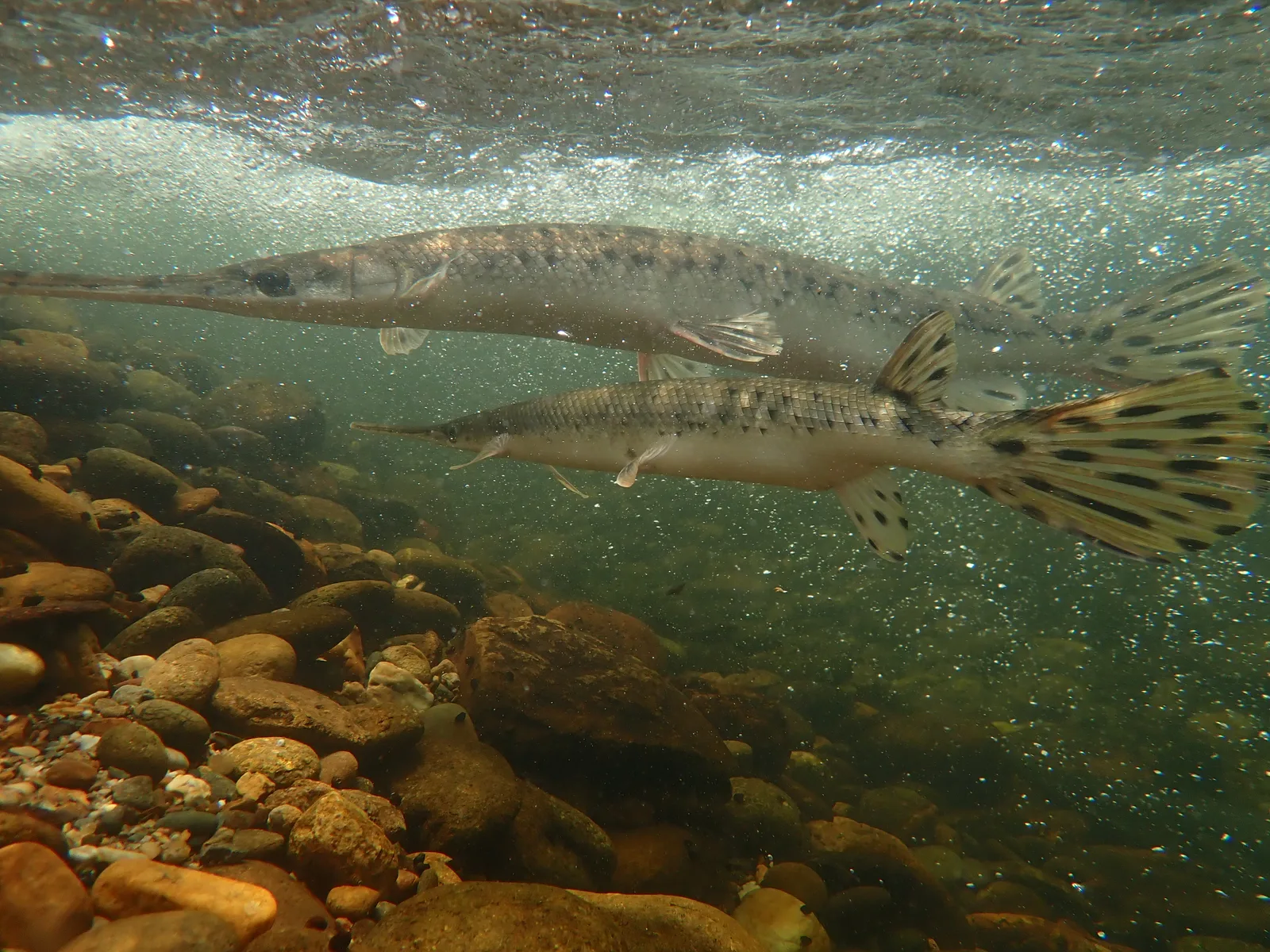
The longnose gar is the common one, across the eastern states, and its needle of a snout is unmistakable. To catch one, the gar fishing guide covers the hookless rope lure, live bait and the bow.
Is a bowfin a dogfish?
Much of the Midwest calls it one, but the bowfin is no shark: it belongs to an old family of its own that was around when dinosaurs roamed. It gulps air and survives in murky, oxygen-poor water, and in 2022 scientists split it into two species. It is often mistaken for a burbot or an invasive snakehead; the burbot page has the three side by side.
Which fish grunts, and which one crosses an ocean?
The freshwater drum, or sheepshead, is named for its sound: grunniens is Latin for grunting, and the fish can be heard doing it. It ranges from the Appalachians to the Rockies and eats zebra mussels in Lake Erie.
The American eel is the only freshwater eel in North America. Every one of them was born in the Sargasso Sea, in the middle of the Atlantic, and goes back there once to spawn.
Carp or buffalo?
The common carp came from Eurasia and is now recorded in every state except Alaska. The buffalo fishes look like carp but are native suckers. One of them holds an age record: a bigmouth buffalo has been aged at 148 years, the oldest known for a freshwater teleost, the group that takes in nearly every freshwater fish except the sturgeons, paddlefish, gars and bowfin.
Is a burbot a cod, and a whitefish a trout?
Relatives of both. The burbot is the only cod relative that lives its whole life in fresh water. The lake whitefish belongs to the trout and salmon family, though few anglers think of it that way. It has been the commercial fish of the Great Lakes for generations, and it carries more omega-3 fat than Atlantic cod.
How many freshwater fish species are there?
North America has 1,453 freshwater fish species, by the 2023 count of the continent’s two fish-science societies. About a third of the native species are minnows and a fifth are darters and perches. A Virginia Tech extension paper puts the familiar sport fish at about 5%. For the bass, trout and every other family, start at the fish species page.
All articles
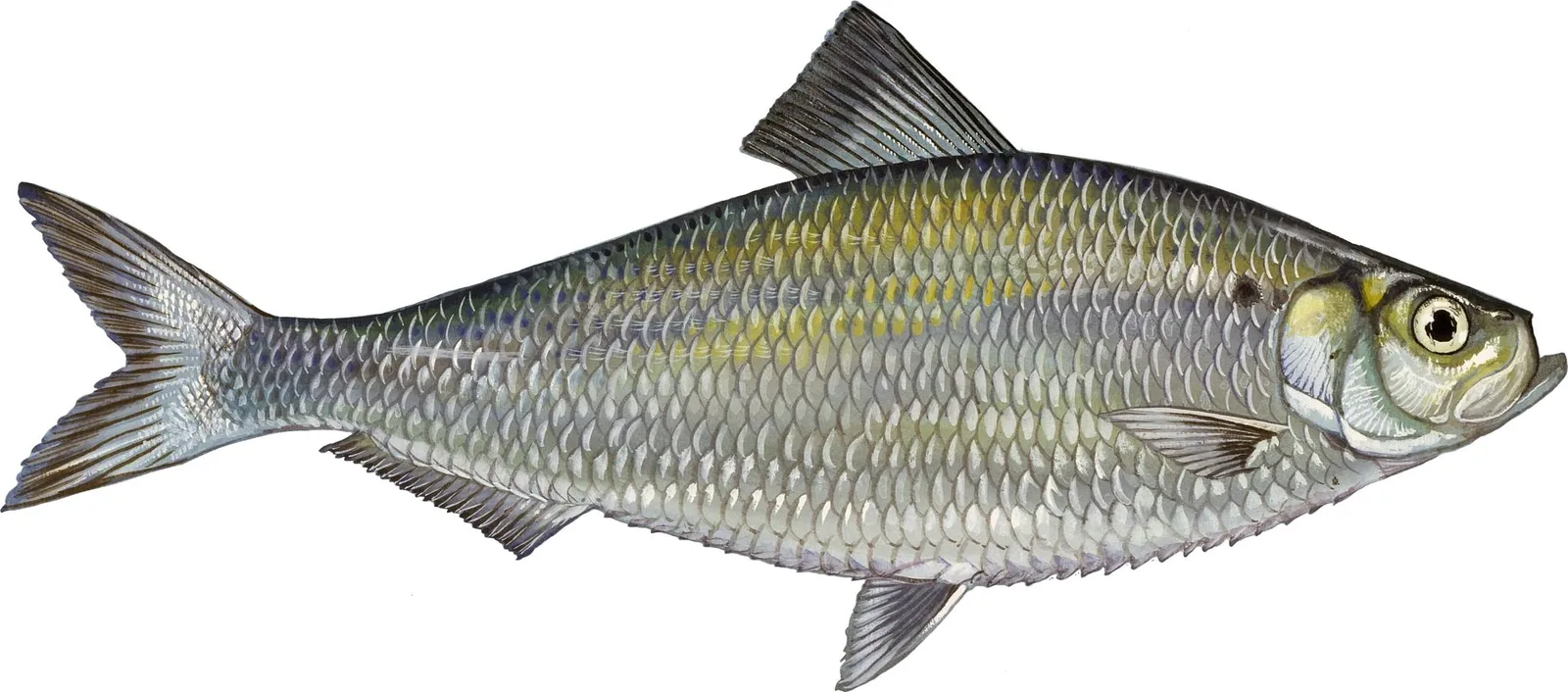 Alewife: How to Identify It, Where It Runs and Why Anglers Care
The alewife is a small silver herring: sea-run on the Atlantic, landlocked in the Great Lakes. How to ID one, where it runs, and where you can keep it.
- Alligator Gar: Size, Teeth, Records, and How to Catch One
Alligator gar reach 8 ft and 300 lb and can live past 90 years. How to tell them from other gars, how to catch one, the records and the rules by state.
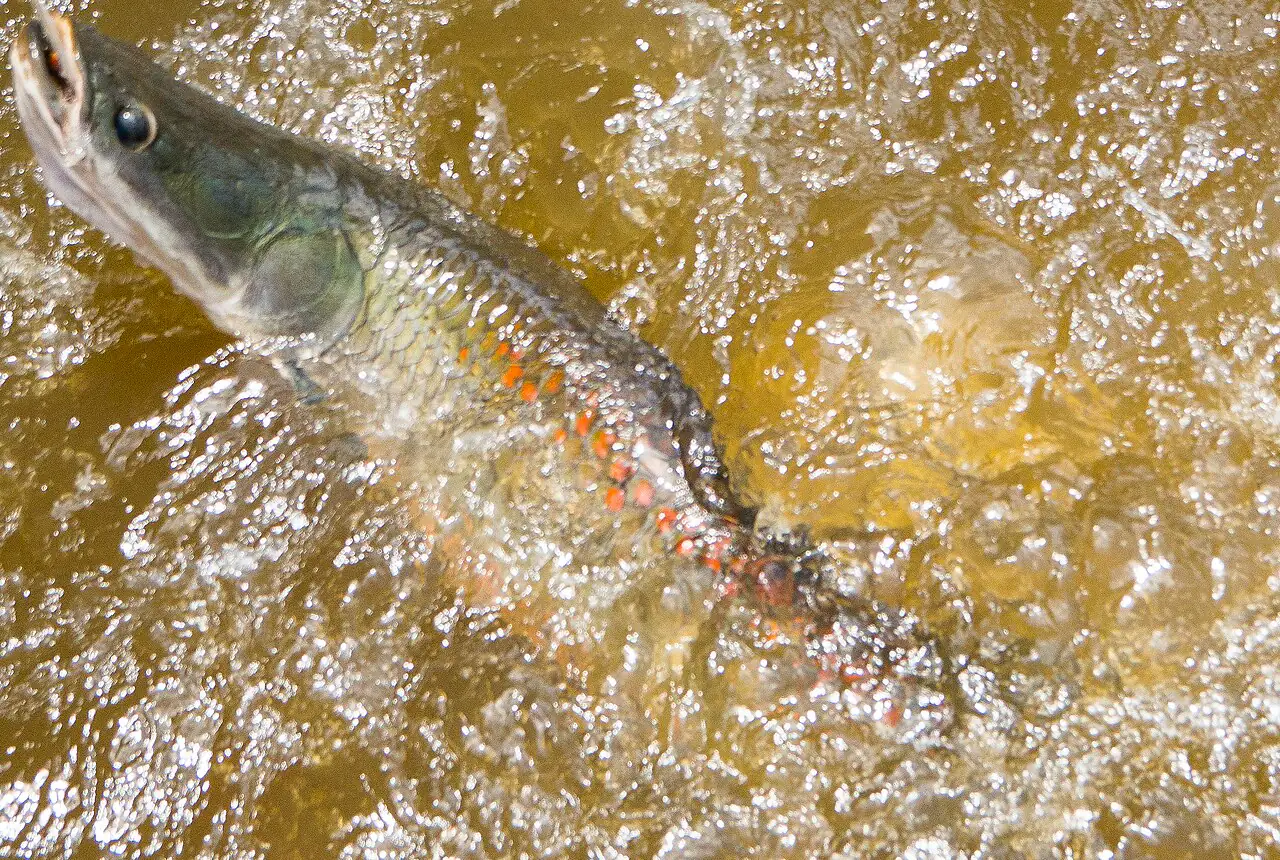 Arapaima: How Big They Really Get, and Where You Can Catch One
The arapaima breathes air, tops out near 10 ft and 440 lb, and is legal to catch in only a few places. Its real size, the record, and where to fish.
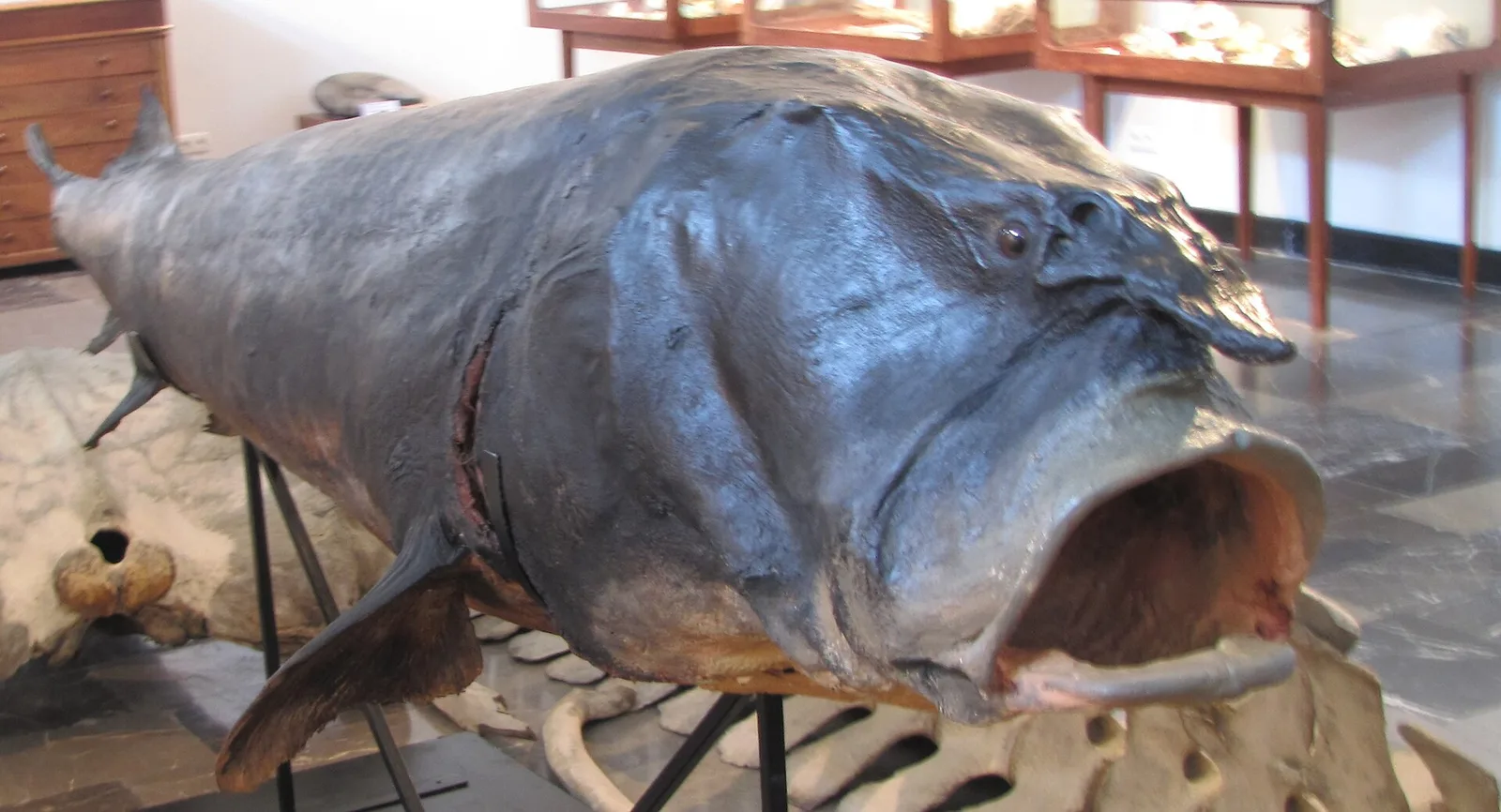 Beluga Sturgeon: How Big It Gets, Where It Lives and the Caviar Ban
The beluga sturgeon reaches 26 ft on the books and lives only in the Caspian and Black Sea basins. Its size, record, status and the US caviar rules.
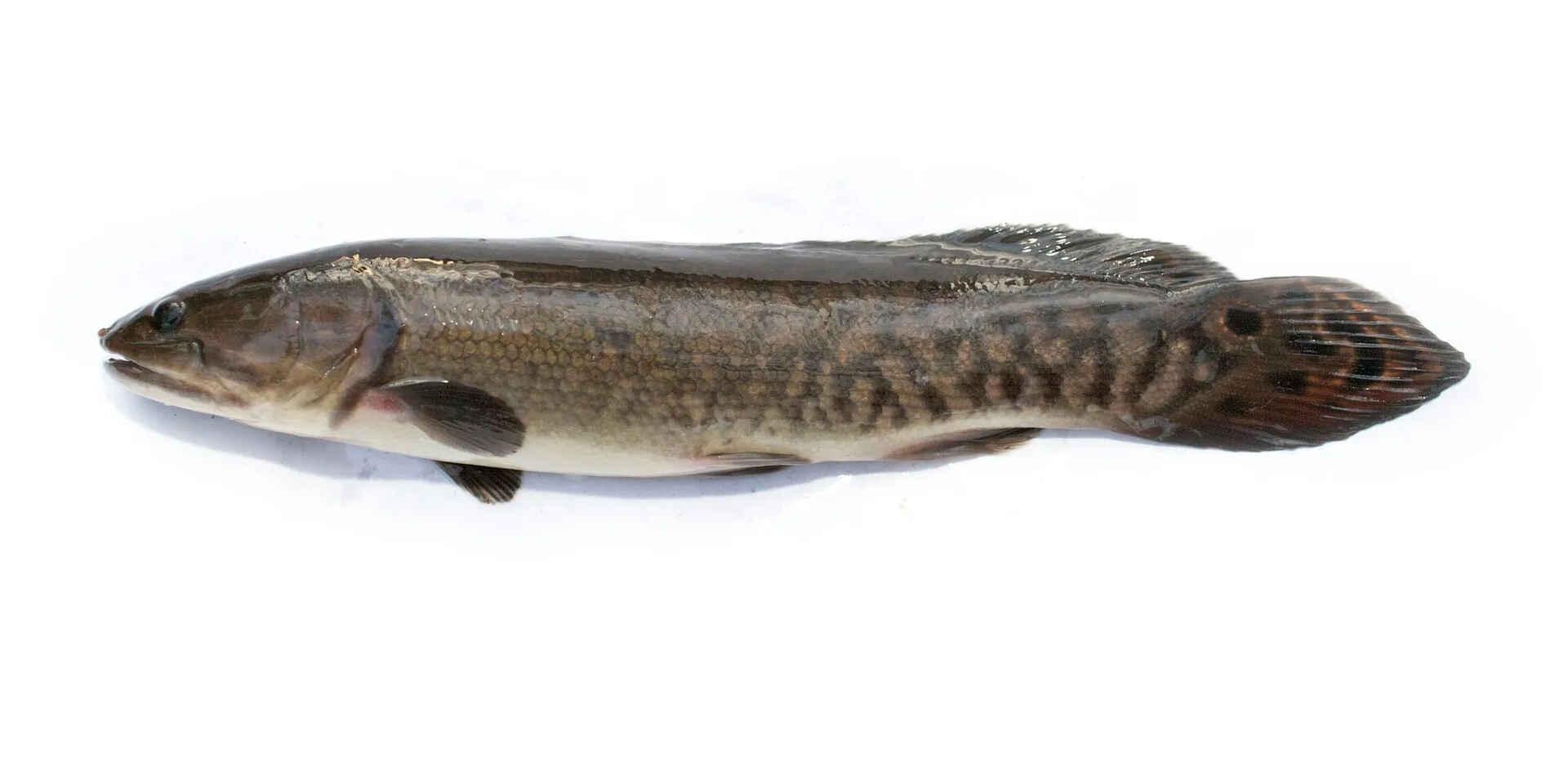 Bowfin: Identification, Bowfin Fishing, and the Snakehead Look-Alike
The bowfin is a native, air-breathing predator with a 21 lb 8 oz world record. How to identify one, tell it from a snakehead, and catch one.
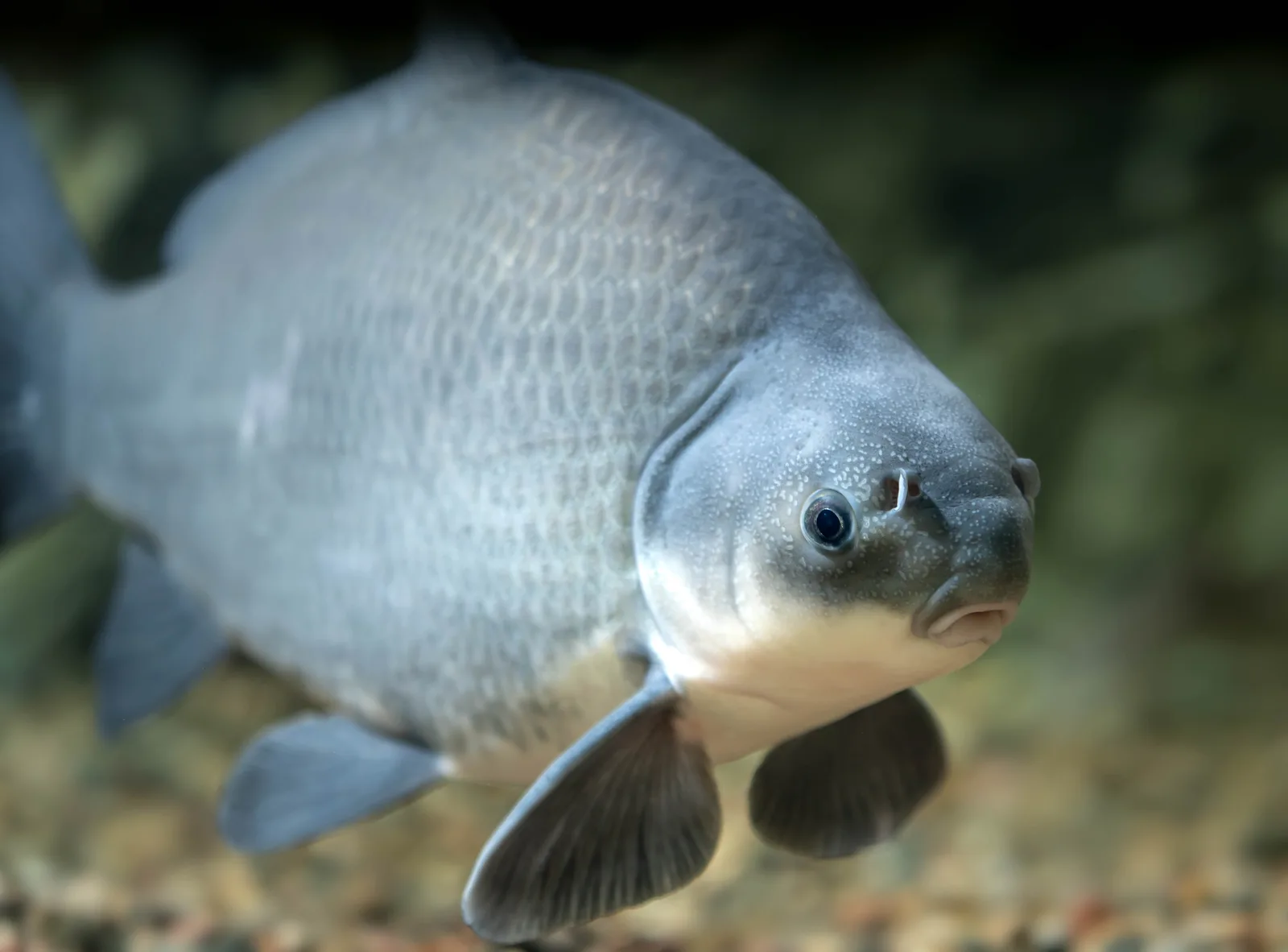 Buffalo Fish: Not a Carp, and How to Catch and Eat One
Buffalo fish are native suckers, not carp. How to tell bigmouth from smallmouth buffalo, the bait that catches them, and how to cook around the bones.
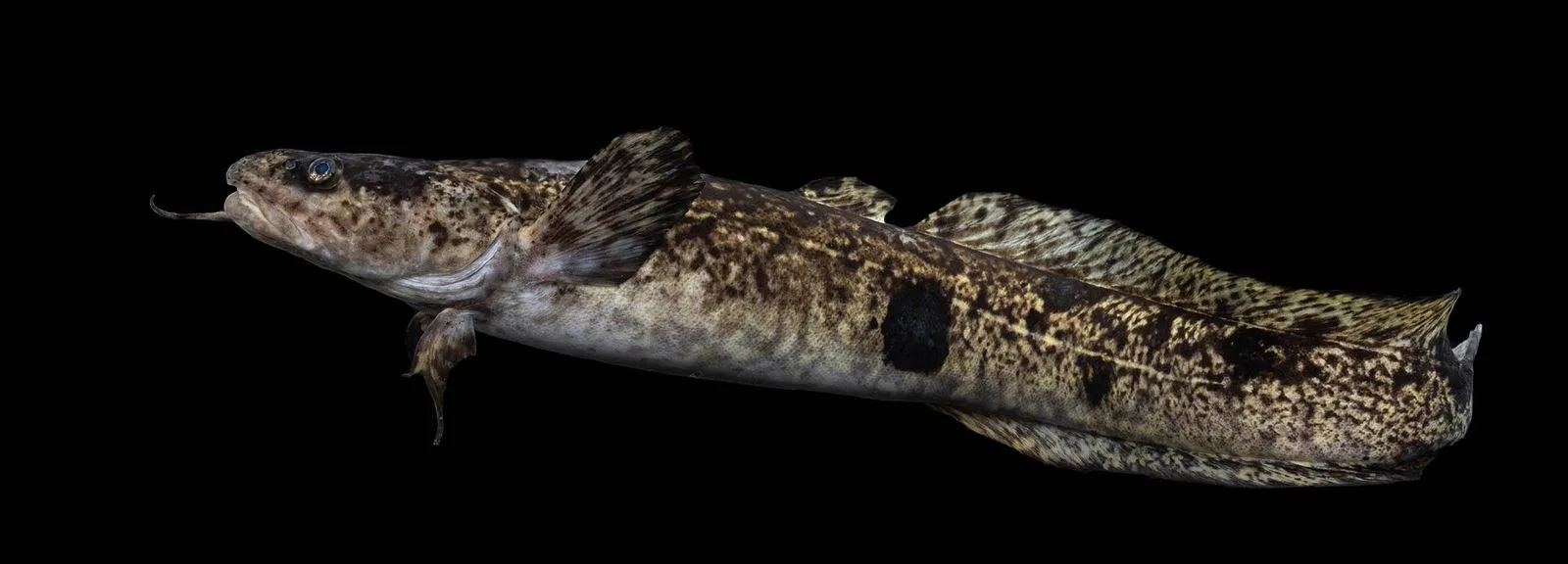 Burbot: The Freshwater Cod That Spawns Under the Ice
Burbot, the only freshwater cod: one chin barbel, 15–28 in, 1.5–5 lb. When and where they bite through the ice, the glow jig that works, and the rules.
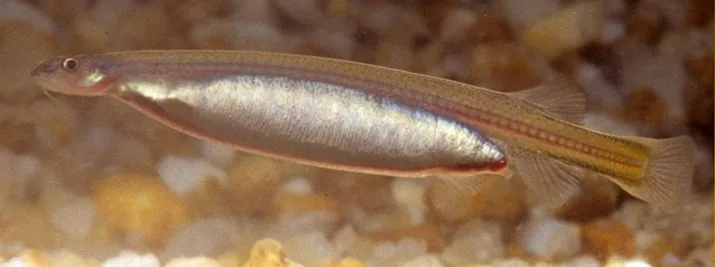 Candiru: The Amazon's Vampire Catfish and the Urethra Myth
The candiru is a tiny see-through Amazon catfish that drinks blood from fish gills. What it really does, its size, and the urethra story checked.
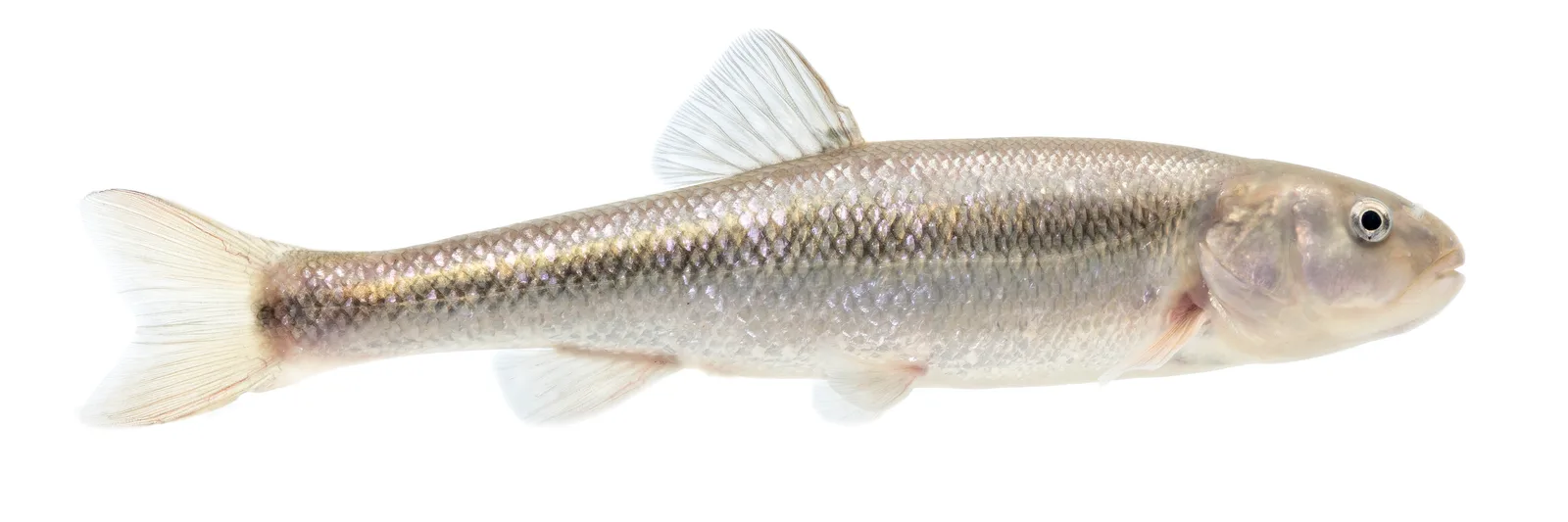 Creek Chub: How to Identify, Catch and Use Them as Bait
A creek chub is a 5 to 7 in minnow with a black spot on its back fin. How to identify one, catch it on light tackle, and rig it as live bait.
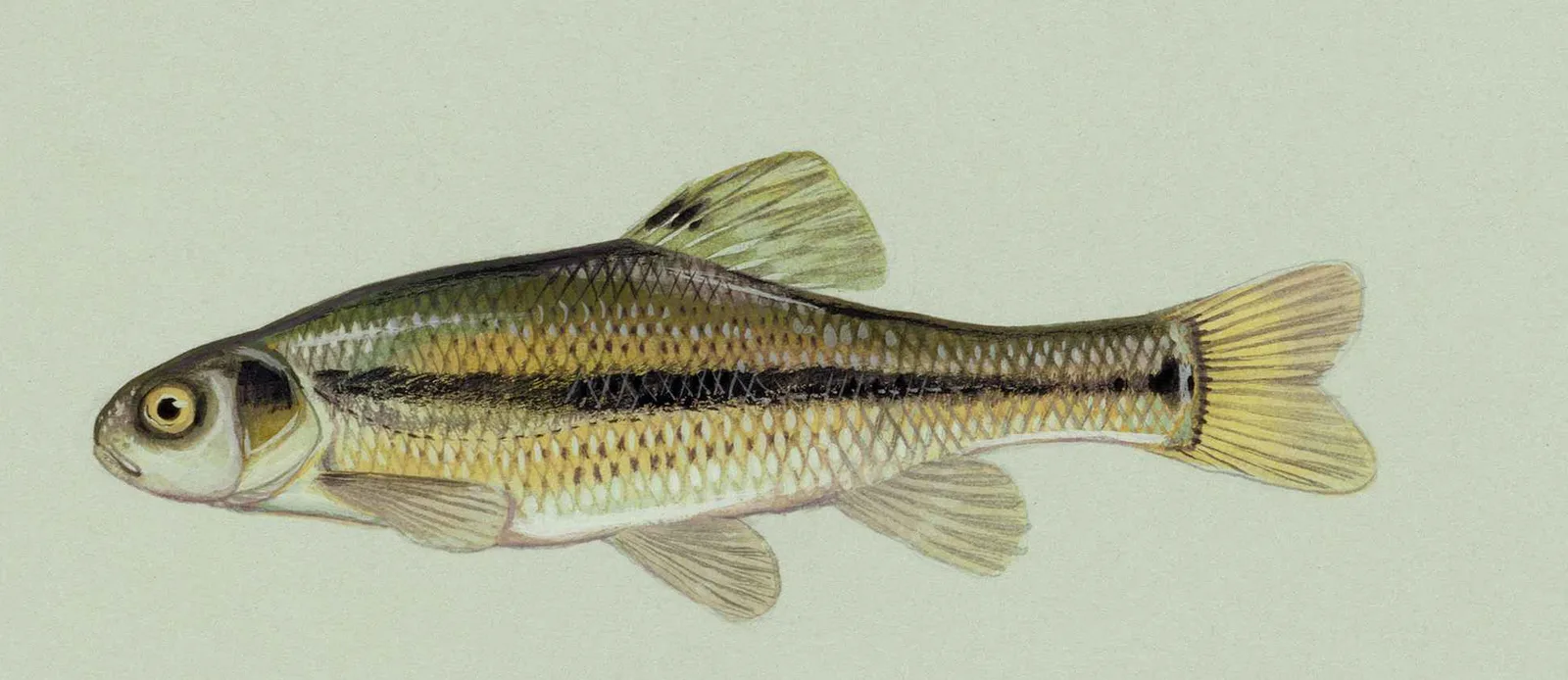 Fathead Minnows: ID, Bait, Pond Stocking and Rosy Reds
Fathead minnows are tough 2 to 3 in baitfish. How to identify them, keep them alive in a bucket, stock a pond by the pound, and spot a rosy red.
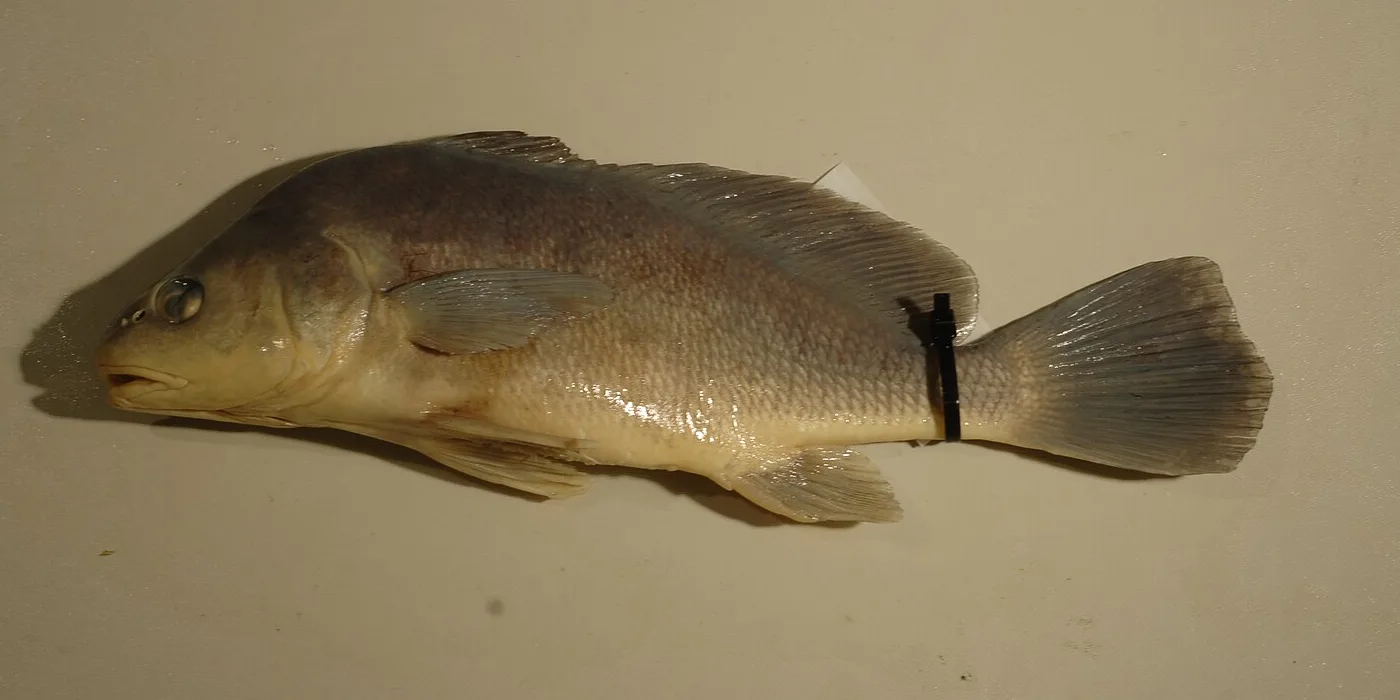 Freshwater Drum: Sheepshead, Gaspergou and How to Catch Them
Freshwater drum, or sheepshead, mostly run 1 to 5 lb; the record is 54 lb 8 oz. How to tell one apart, the rig that catches it and how to cook it.
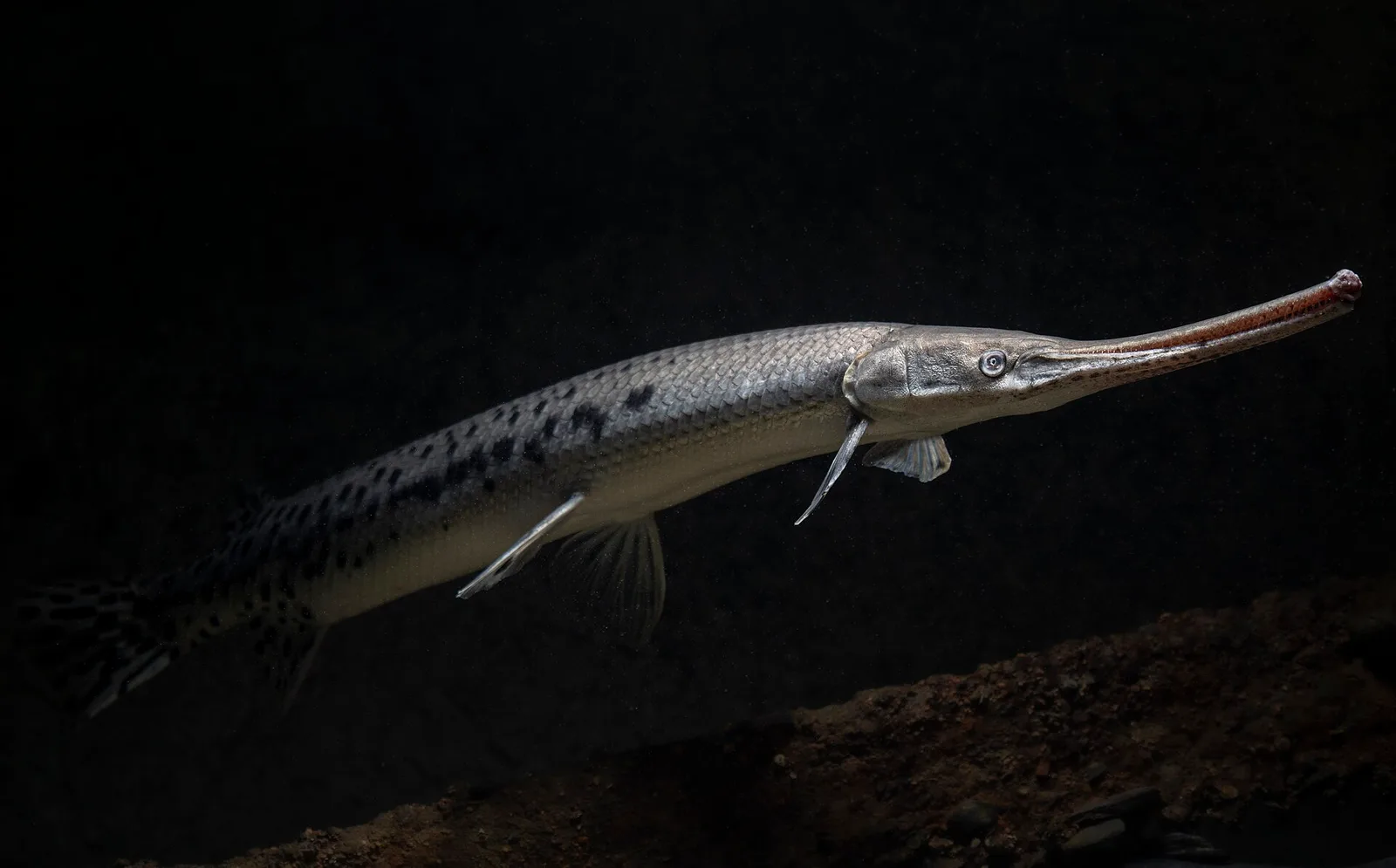 Gar Fishing: Rope Lures, Live Bait and Bowfishing for Every Gar
Gar fishing for all five US gars: hookless rope lures, live bait, fly and bow, the alligator gar rig, and how to handle a mouth full of teeth.
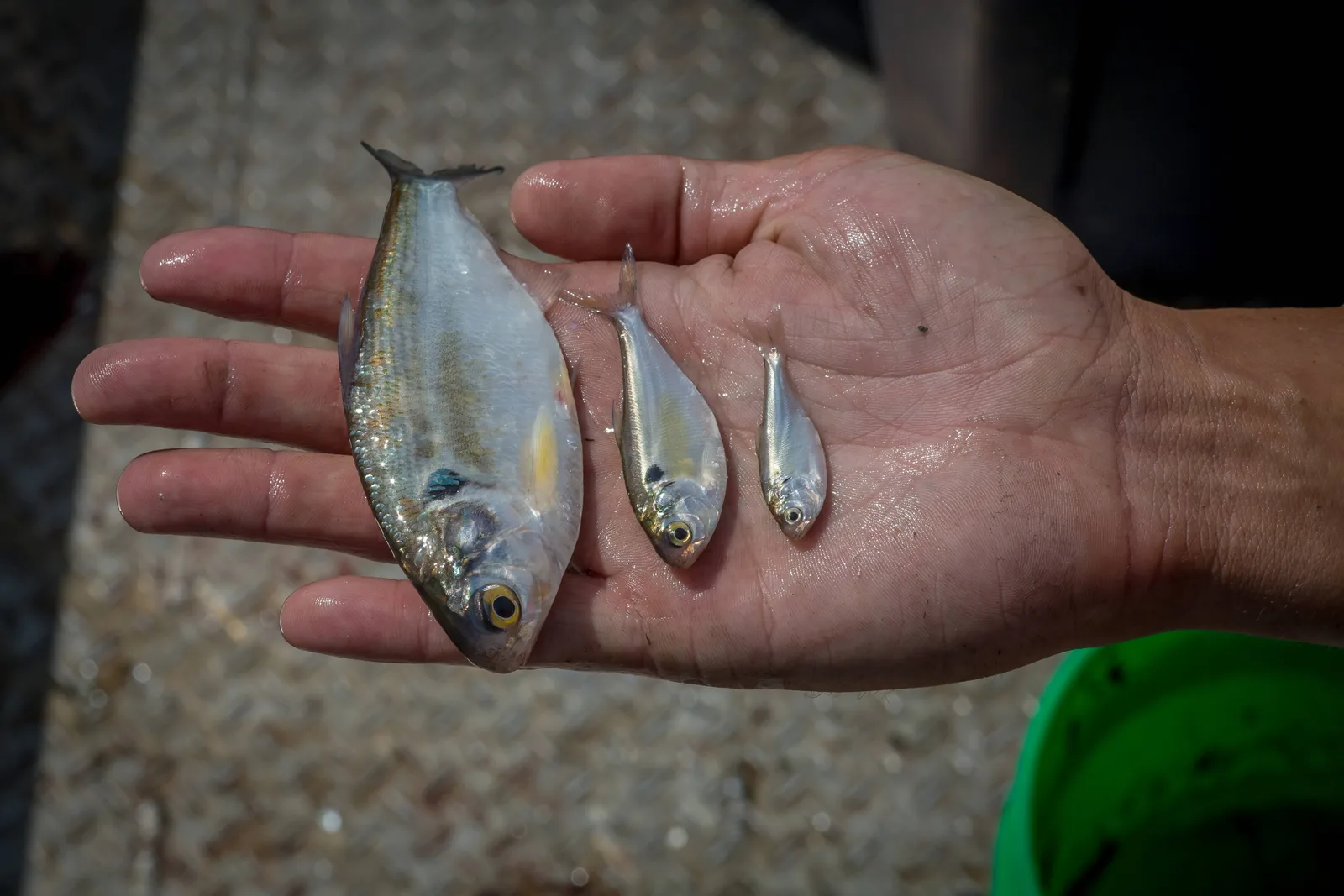 Gizzard Shad: How to Identify, Catch and Use Them for Bait
Gizzard shad commonly run 9 to 14 in. How to tell one from a threadfin, net it, keep it alive, and which states ban it as live bait.
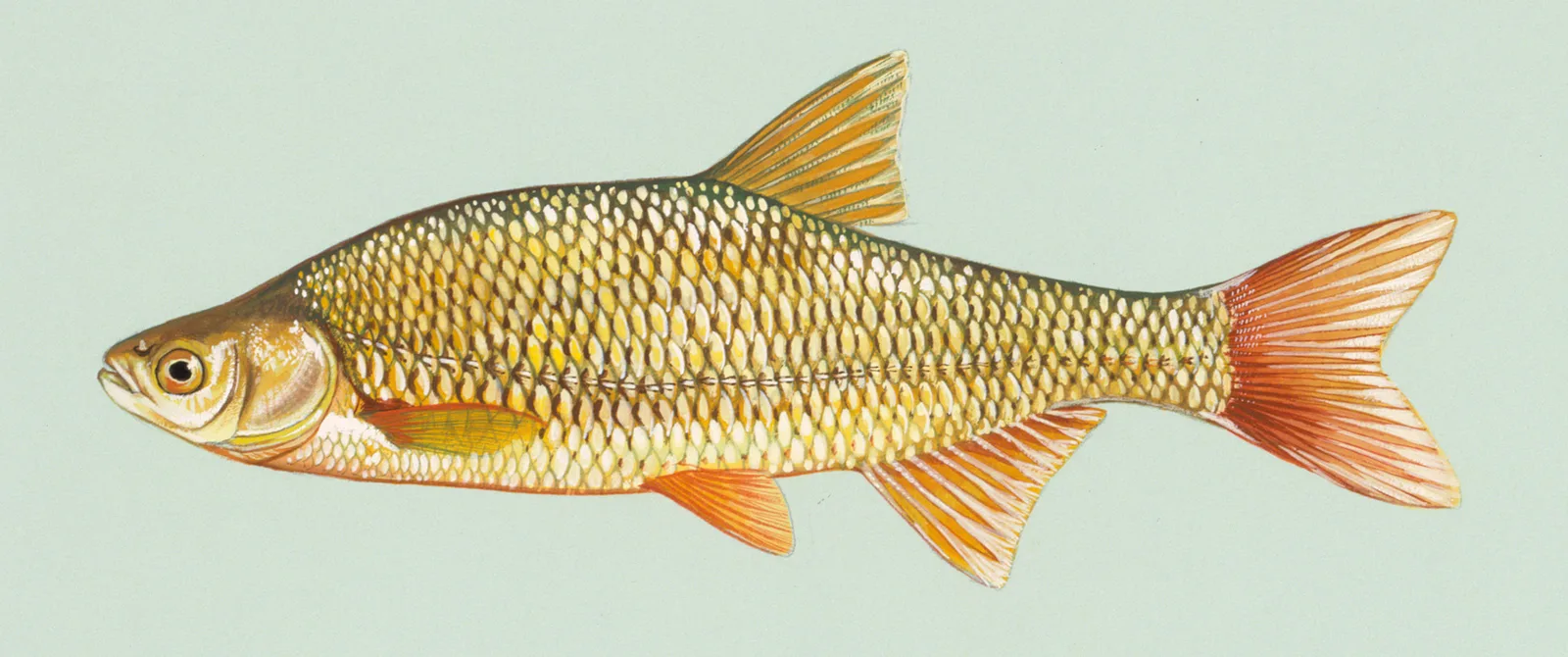 Golden Shiner: How to ID, Catch and Fish This Trophy Bait
Golden shiners are deep-bodied minnows and Florida's top live bait for big bass. How to tell one from a rudd, catch your own, and hook it right.
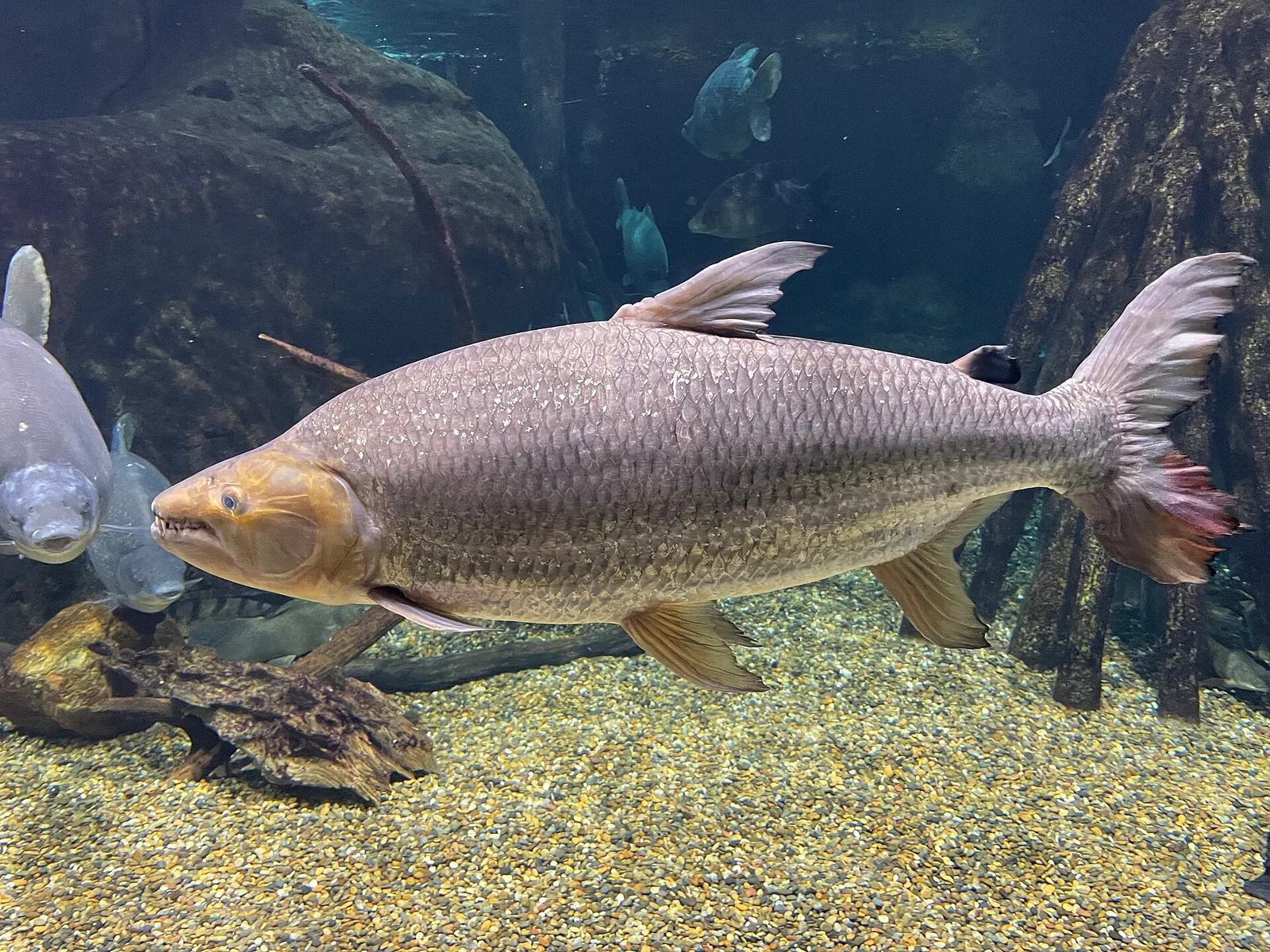 Goliath Tigerfish: How Big They Get, Teeth, and the Crocodile Stories
Goliath tigerfish facts that hold up: the 97 lb IGFA record, real size, the teeth, the attack and crocodile stories, and where anglers go.
 Lake Sturgeon: Size, Age, Where They Live and When You Can Fish
Lake sturgeon grow to 7 ft and may live centuries. How to identify one, where they live, the Winnebago spearing season and where you may keep one.
 Lamprey: What It Is, and What to Do If You Catch One
A lamprey is a jawless, eel-like fish that feeds on blood. How to tell a sea lamprey from a native one, what to do if you catch one, and the rules.
 Longnose Gar: Identification, Size, Records, and How to Catch One
Longnose gar commonly reach 3 ft and 5 to 6 lb; the IGFA record is 43 lb, yet four states certify bigger fish. How to ID, find and catch one.
 Mooneye and Goldeye: How to Tell Them Apart and Catch Them
A mooneye is a silvery, big-eyed river fish with teeth on its tongue. How to tell it from a goldeye, where both live, how to catch them, and how they eat.
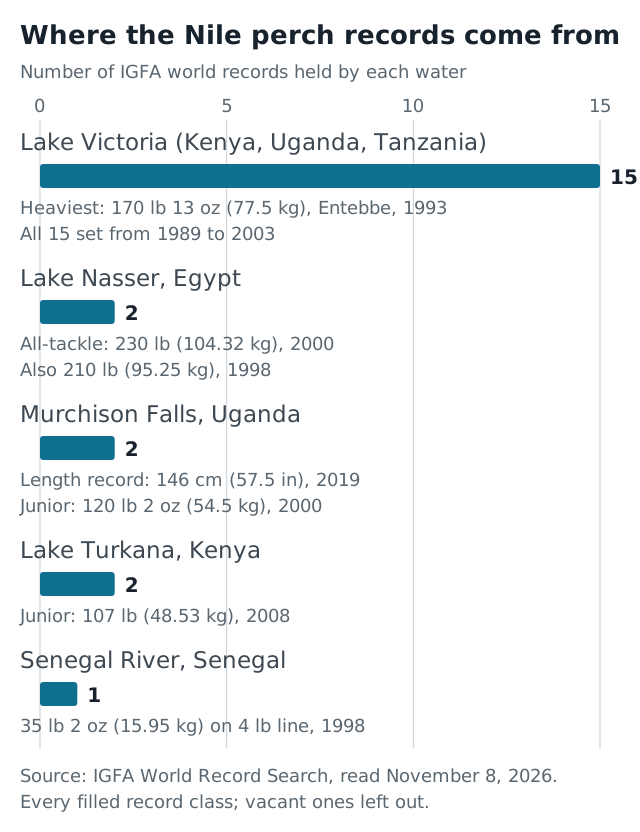 Nile Perch: How Big They Get, the Record, and Where to Catch One
Nile perch grow to about 2 m and 200 kg, and the record is 230 lb from Lake Nasser. Where to catch one, why the US bans it, and the Lake Victoria story.
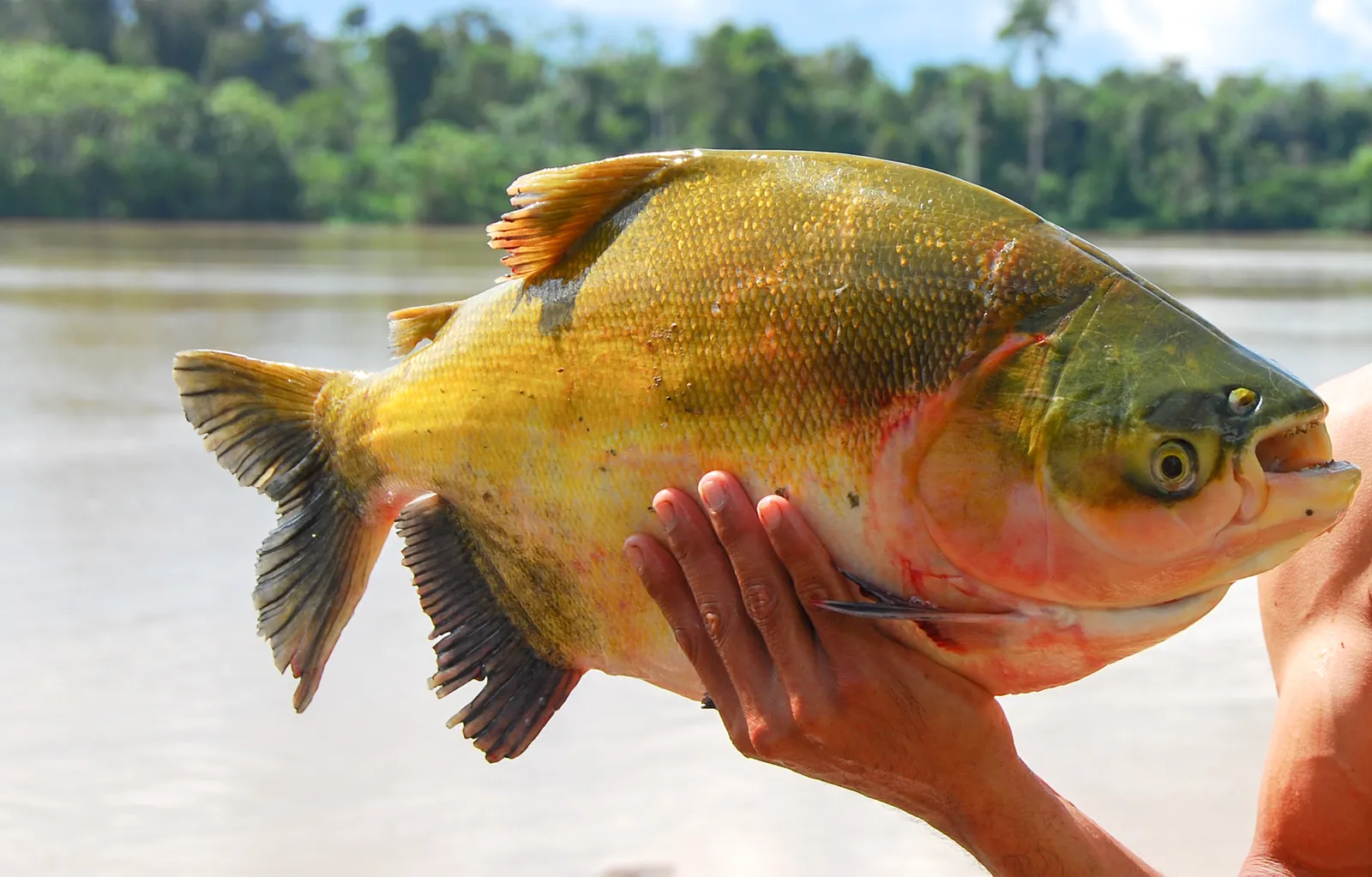 Pacu Fish: Human-Like Teeth, and How to Tell One From a Piranha
A pacu fish is a piranha cousin with flat teeth like human molars. How to tell it from a piranha, how big it gets, and what to do if you catch one.
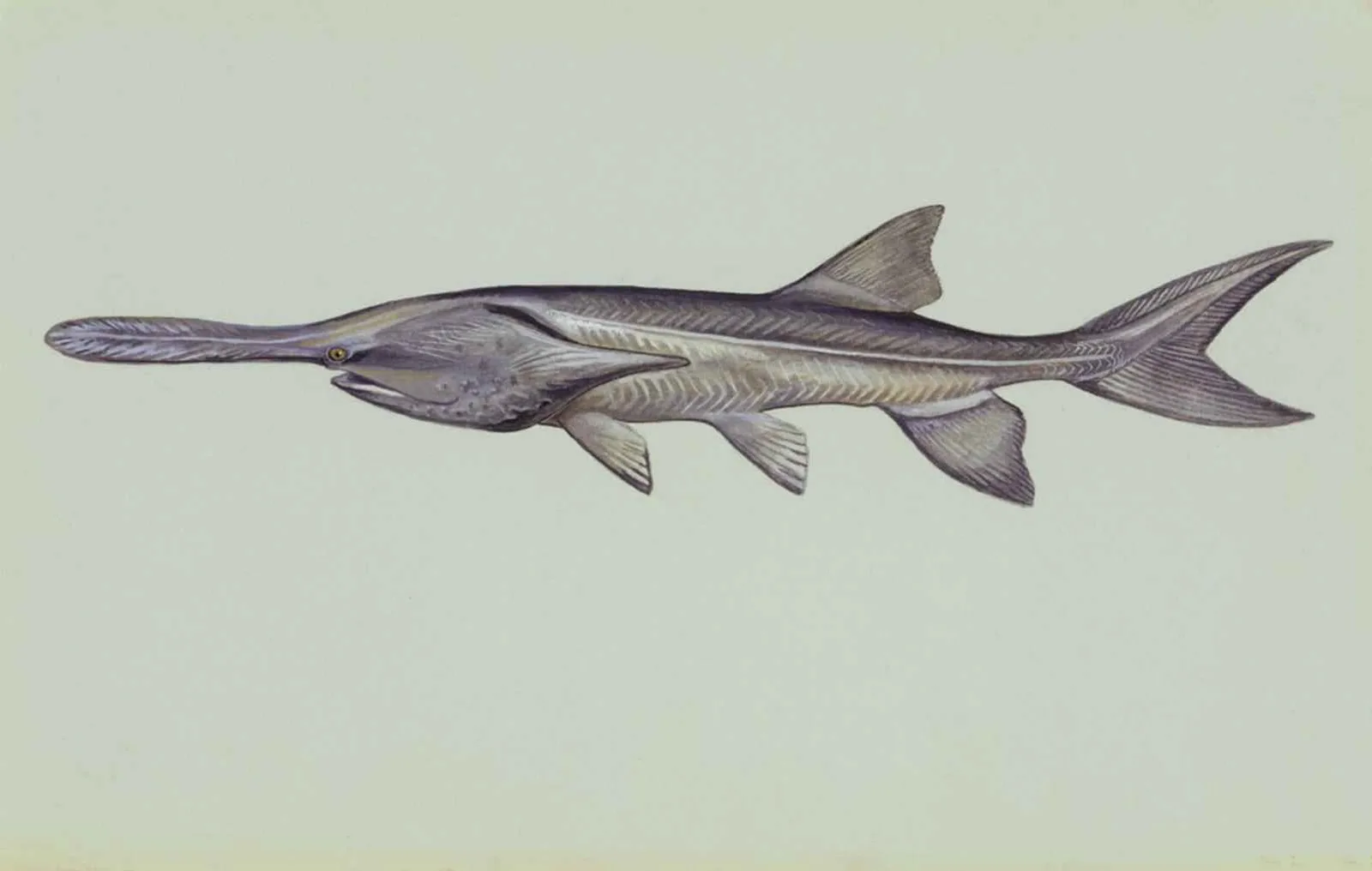 Paddlefish (Spoonbill): Facts, Snagging Seasons, Records and Rules
The paddlefish, or spoonbill, eats only plankton, so anglers snag it. Size, age, the 164 lb record and the snagging seasons state by state.
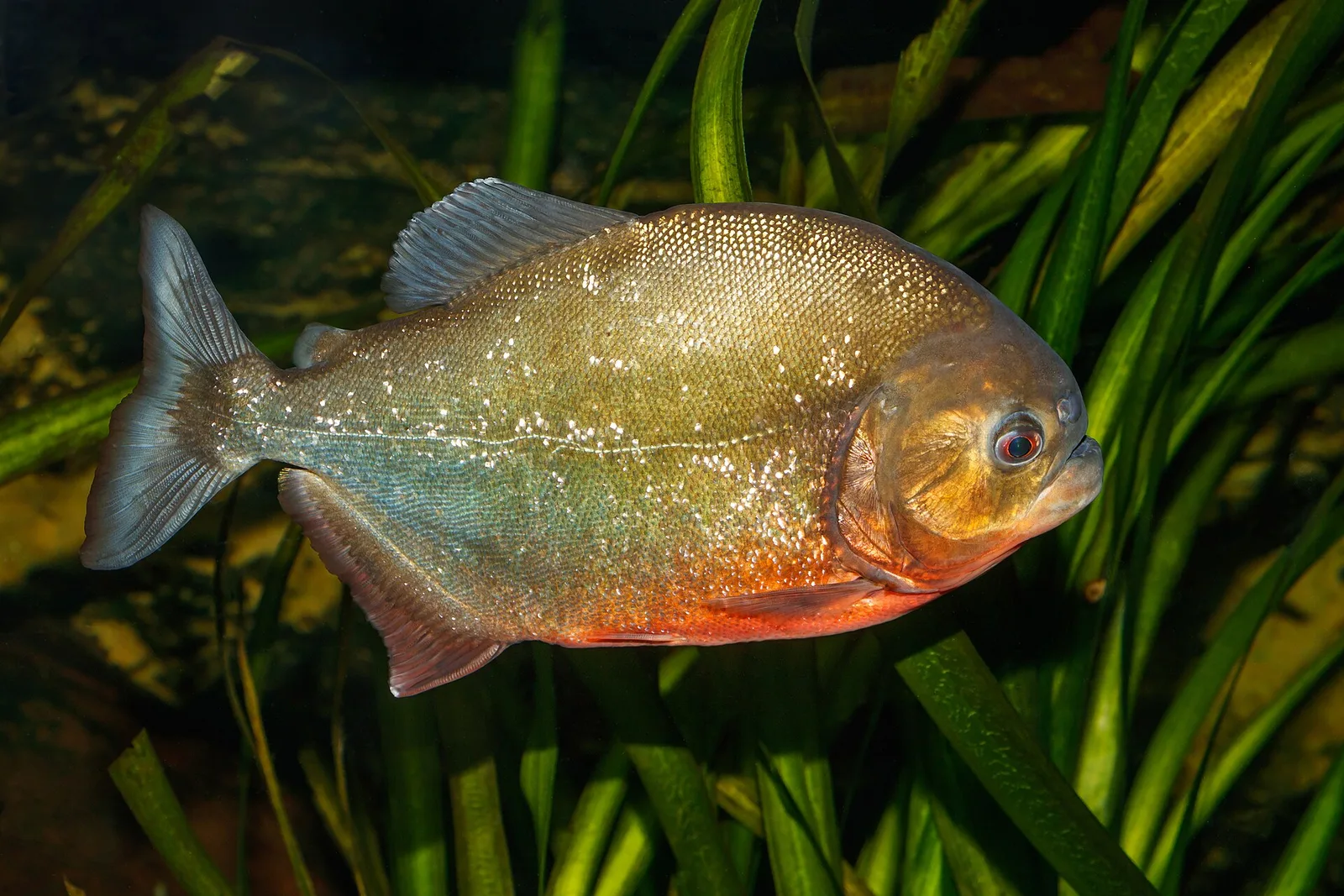 Piranha: Are They Dangerous, and Are They Illegal in the US?
Piranhas bite swimmers, but it's unclear one has ever killed a living person. Their real size, the pacu look-alike, how to catch one, and US state law.
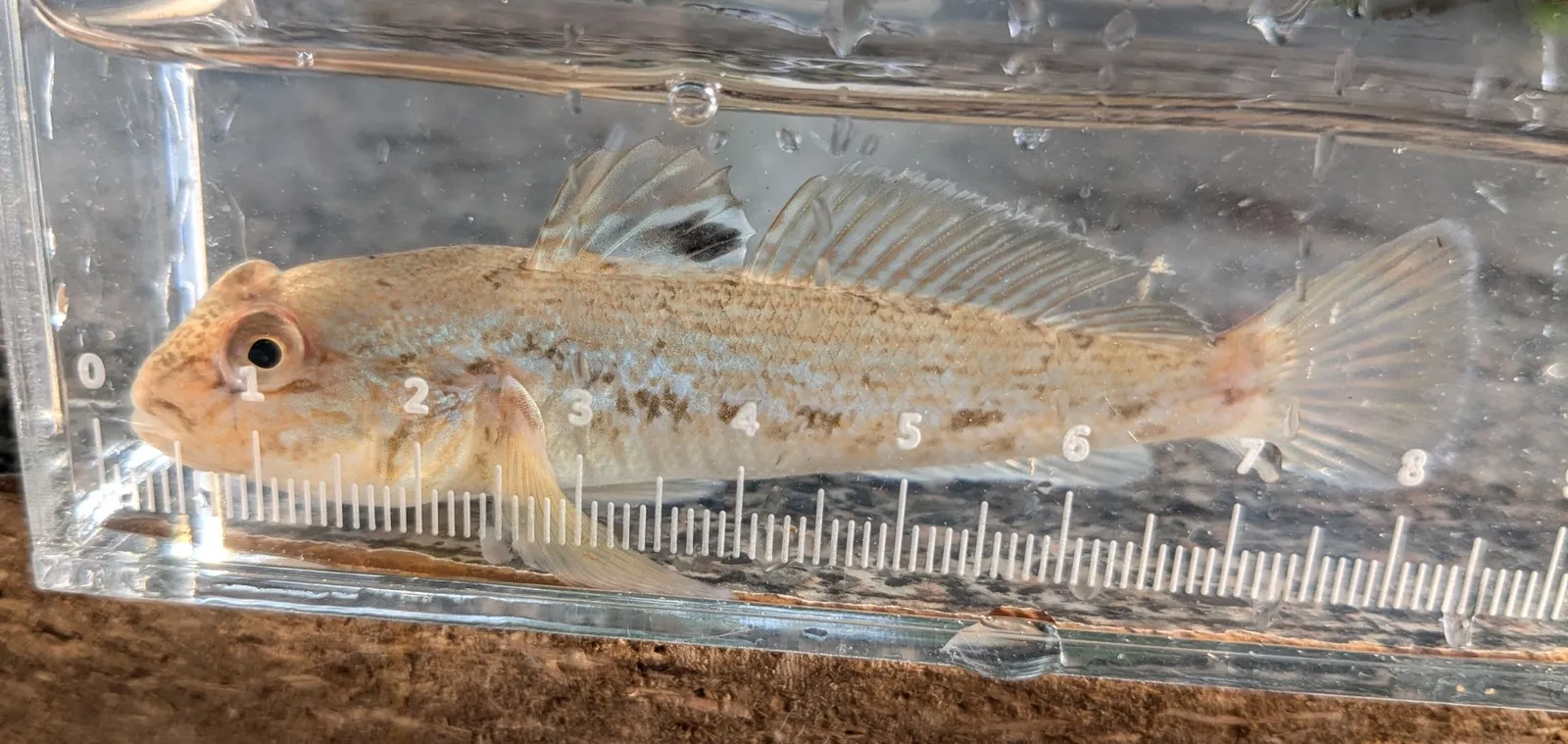 Round Goby: How to Identify It, Why It Matters, and the Bait Rules
The round goby is a small invasive bottom fish of the Great Lakes. How to ID one, what each state says about goby bait, and why smallmouth love them.
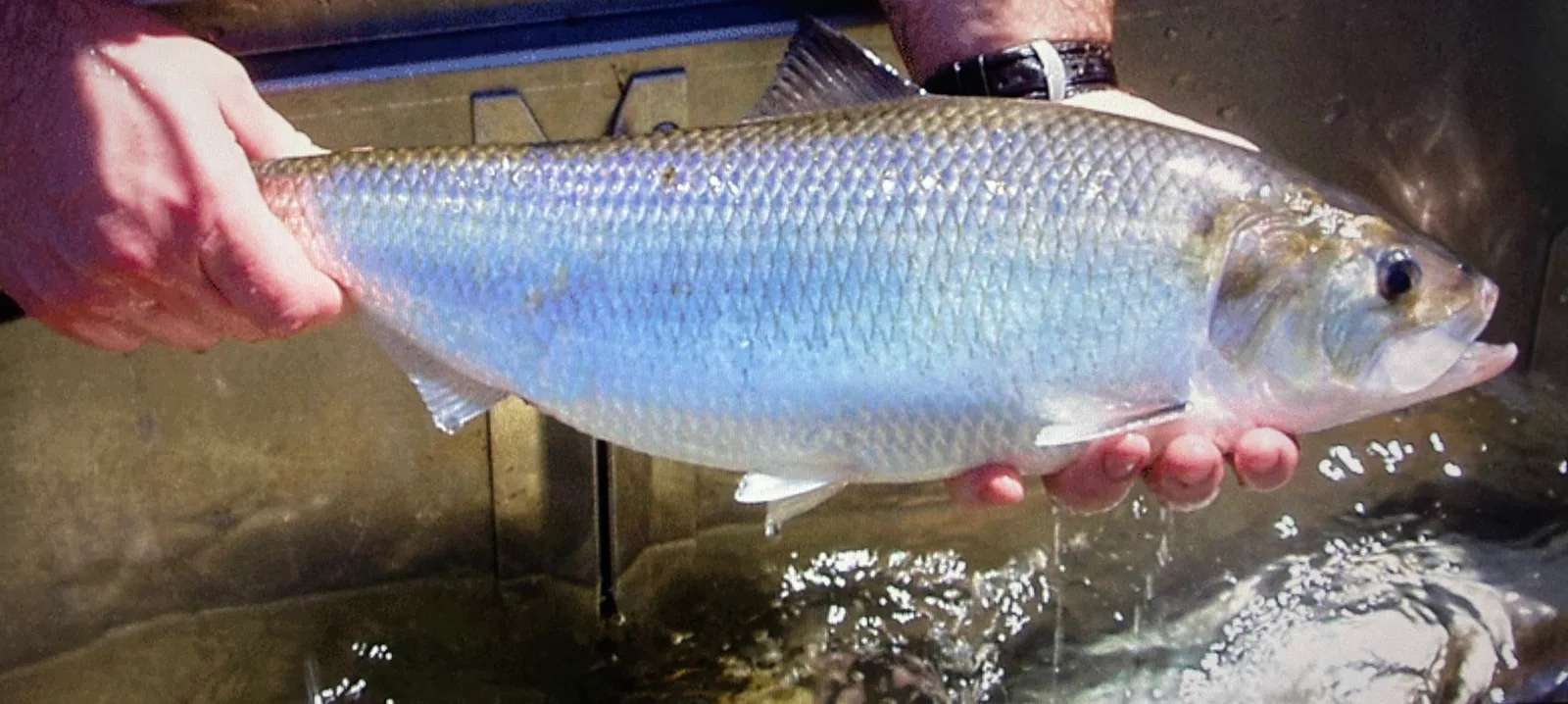 Shad Fishing: When the Run Hits, What to Throw, What You Can Keep
Shad fishing for American and hickory shad: when the spring run hits each river, the darts and spoons to throw, and which states let you keep one.
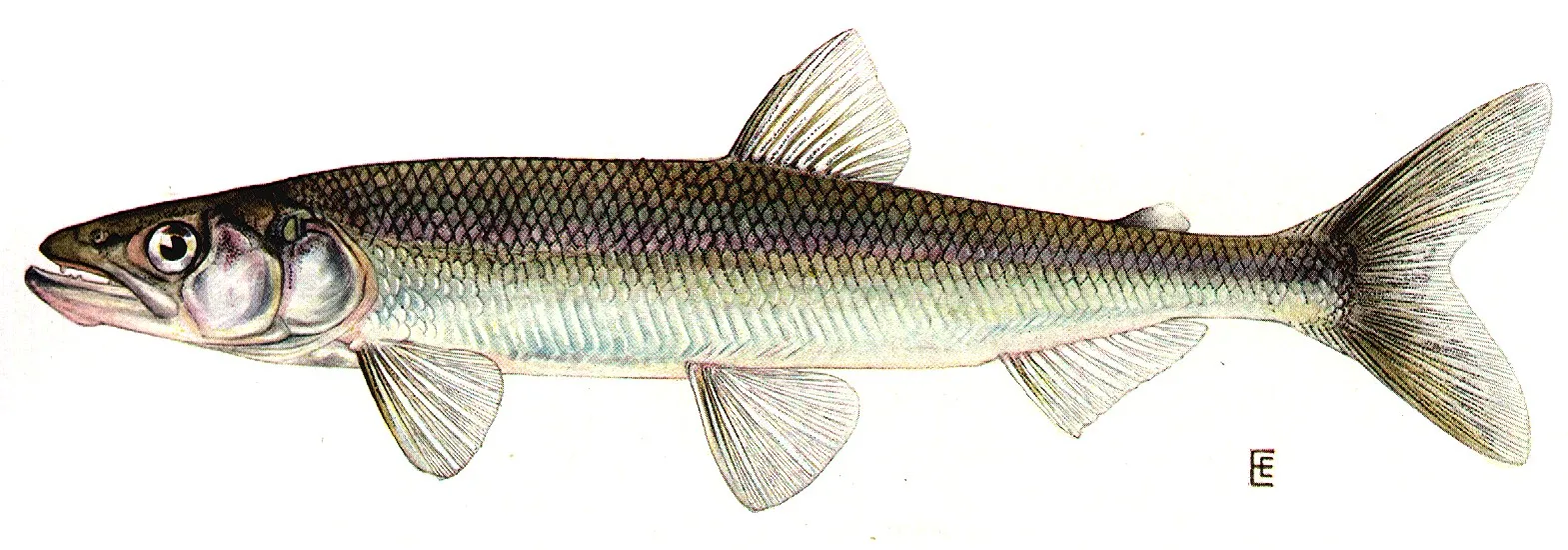 Smelt Fishing: Net a Spring Run or Jig Them Through the Ice
Smelt fishing two ways: dip a spring run at night or jig them through the ice. When the run hits, the gear, and each state's rule.
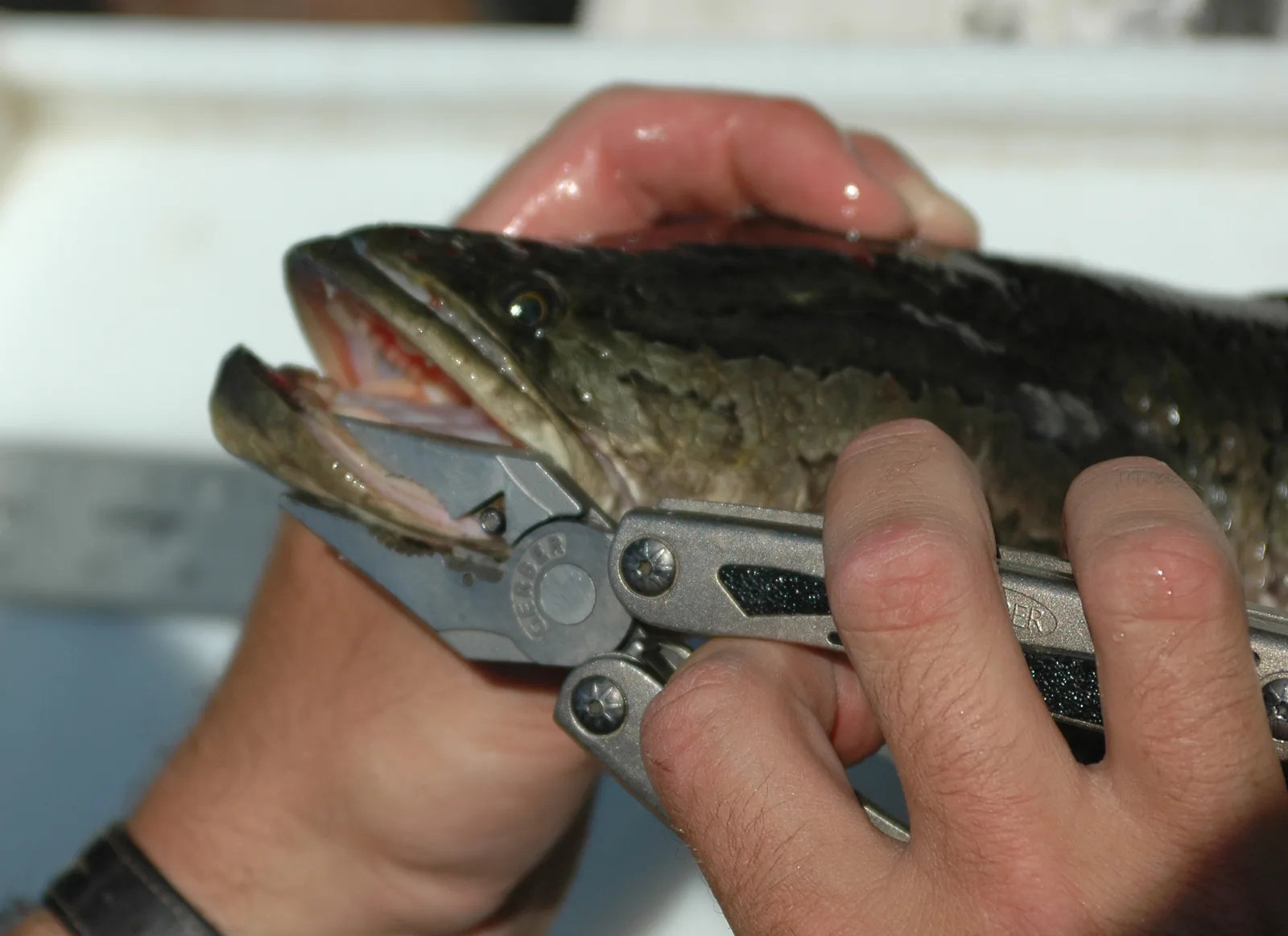 Snakehead Fish: How to Identify, Catch, and Handle One
The snakehead fish is an invasive, air-breathing predator. How to identify one, catch one on a frog, and what each state says to do with it.
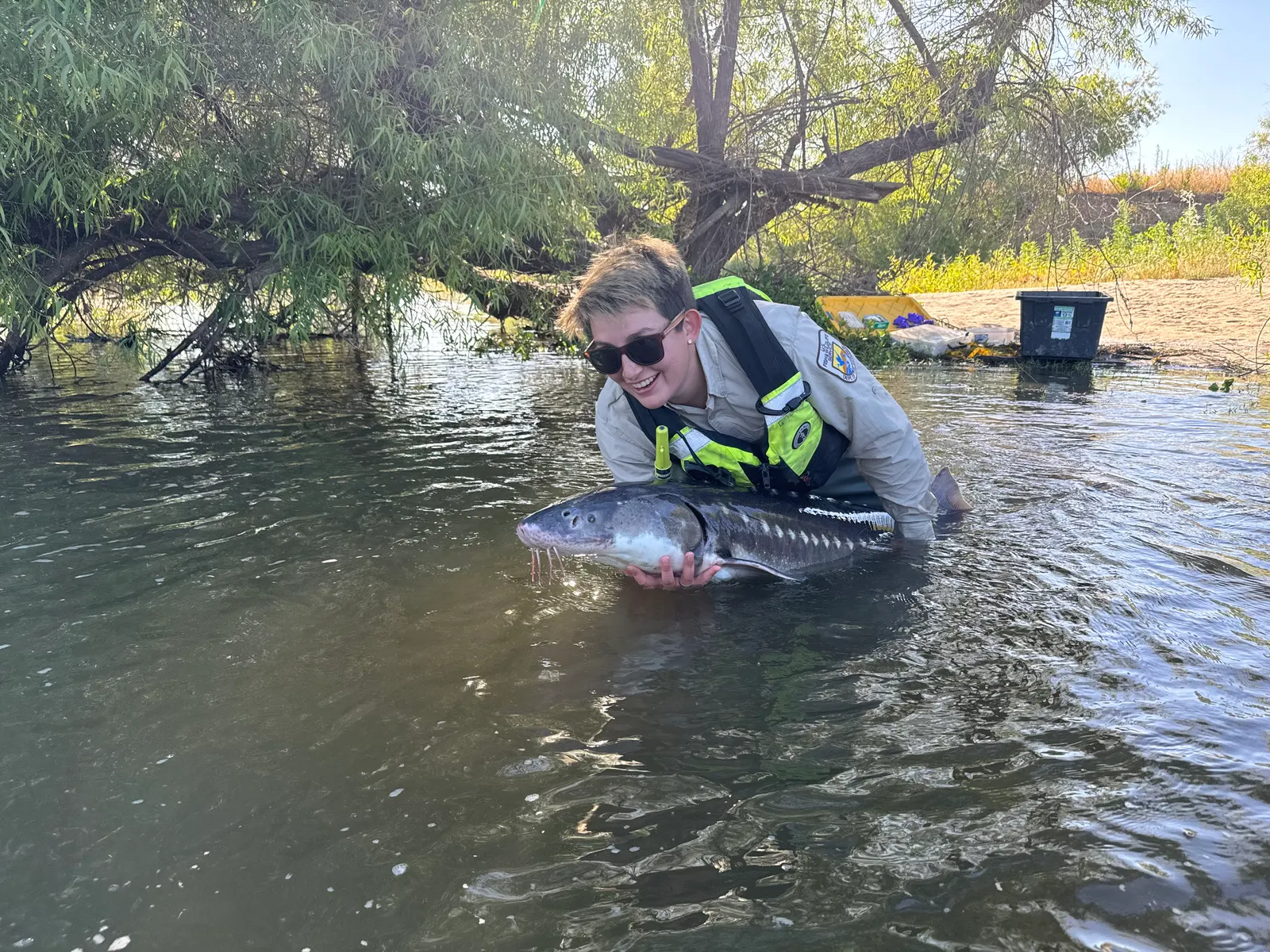 Sturgeon Fishing: Where to Go, the Rig, the Bait and the Rules by State
Sturgeon fishing for white and lake sturgeon: where it is open, when to go, the sliding-sinker rig, the best baits and the keep-it-in-the-water rules.
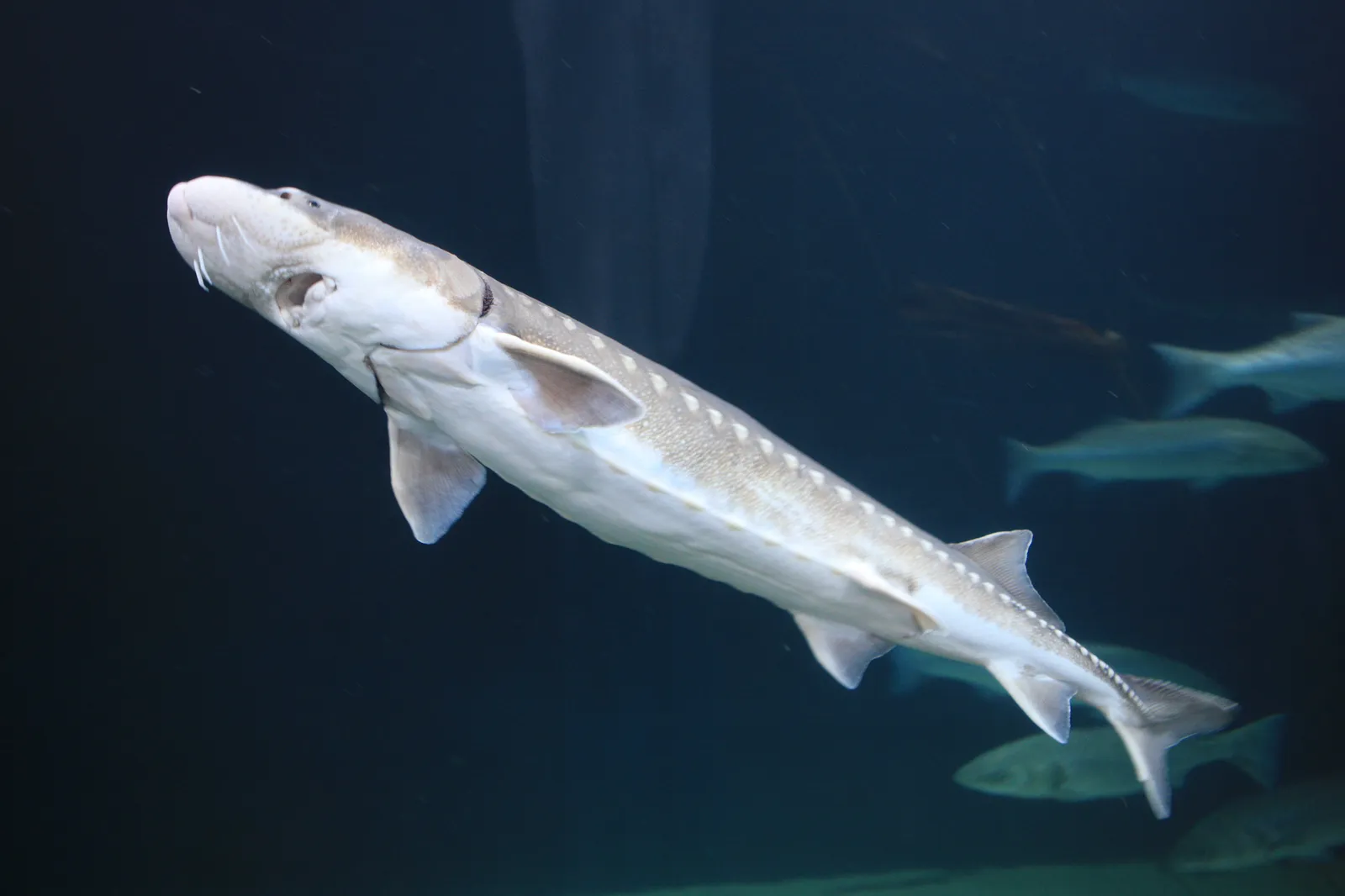 Sturgeon: The Nine US Sturgeons, How Big and Old They Get, and the Rules
Nine sturgeons live in US waters and six may never be kept. How to tell them apart, how big and old they get, the records and where you can fish.
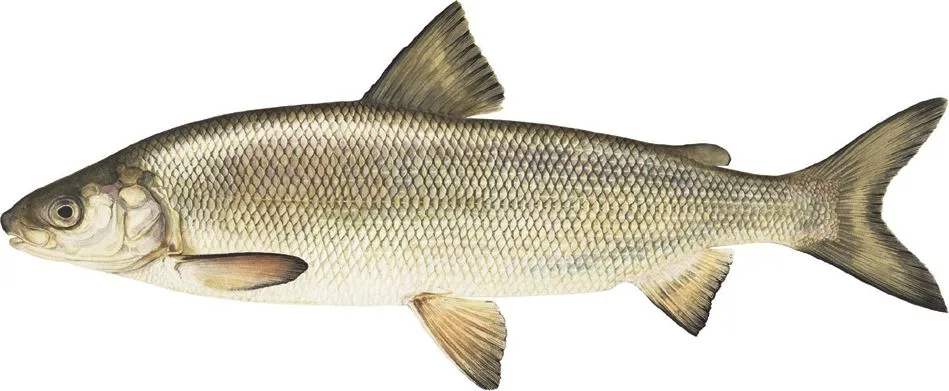 Whitefish: What It Is, When It Spawns, How Big It Gets and How to Catch One
Lake whitefish run 17–22 in and spawn at night in November–December at 43–46 °F. How to tell one from a cisco, catch it through the ice, and the records.

Free PDF · 16 pages
Stop guessing. Know what's biting before your first cast
A whole Saturday on the water with nothing to show for it. One reading tells you who's feeding.
The Water Temperature Fishing Chart. Take one water temperature reading, find it on the chart, and see which of 26 freshwater fish are spawning, feeding hard or slowing down.
- Where bass, crappie, bluegill and walleye sit, and what to throw. Trout: the reading where you stop.
- Why a 3 ft drop beats a cold front, and what to throw each day of the front
- The three thermometer mistakes that make a reading lie
The chart's numbers come from state fish and wildlife agencies and fisheries research: 61 sources, each listed on the site.
No card, nothing to buy. Confirm with one click and the PDF is on its way, one version for your phone and one to print, yours to keep. Then a few short emails and one a week on what's biting, with an unsubscribe link in every one. Privacy.
Sources (23)
- Schmitter-Soto, J. J. et al. (2024), How Many Fish Species Are in North America?, Ichthyology & Herpetology 112(4) (AFS/ASIH names list, 8th edition)
- Virginia Cooperative Extension, Freshwater fish biodiversity and conservation, publication 420-525
- U.S. Fish and Wildlife Service, Lake sturgeon
- Washington Department of Fish and Wildlife, White sturgeon
- Wired2Fish, World record sturgeon (IGFA lake and white sturgeon records)
Show all 23 sourcesShow fewer sources
- U.S. Fish and Wildlife Service, Paddlefish
- KOKH Fox 25 (2021), World-record paddlefish caught at Keystone Lake, quoting the Oklahoma Department of Wildlife Conservation
- Labor Tribune, Angler snags world-record paddlefish during snagging season opening weekend (Missouri Department of Conservation release)
- U.S. Fish and Wildlife Service, Alligator gar
- Texas Parks and Wildlife, Alligator gar: teeth, age and size
- IGFA (2023), The catch heard 'round the world: the 283 lb alligator gar
- Texas Parks and Wildlife, Longnose gar
- Texas Parks and Wildlife, Bowfin
- Minnesota DNR, Bowfin (dogfish)
- Missouri Department of Conservation, Emerald bowfin: the 2022 species split
- Texas Parks and Wildlife, Freshwater drum
- USGS Nonindigenous Aquatic Species, common carp
- Lackmann, A. R. et al. (2019), Bigmouth Buffalo Ictiobus cyprinellus sets freshwater teleost record as improved age analysis reveals centenarian longevity, Communications Biology
- Lackmann, Sereda, Villeneuve, Foley, Pollock, Bryshun, McCallum, Englot, Zak, Rehbein, Bielak-Lackmann and Clark (2025), Within-Ecosystem Comparison of Bigmouth Buffalo Ictiobus cyprinellus and Common Carp Cyprinus carpio Reveals Diverging Population Trajectories, Declining Recruitment, and a Lifespan of 148 Years, Ecology and Evolution 15(11):e72483
- U.S. Fish and Wildlife Service, American eel
- Wisconsin Sea Grant, Eat Wisconsin Fish: lake whitefish
- Alaska Department of Fish and Game, Burbot species profile
- Michigan DNR, State record fish table (2024 copy)