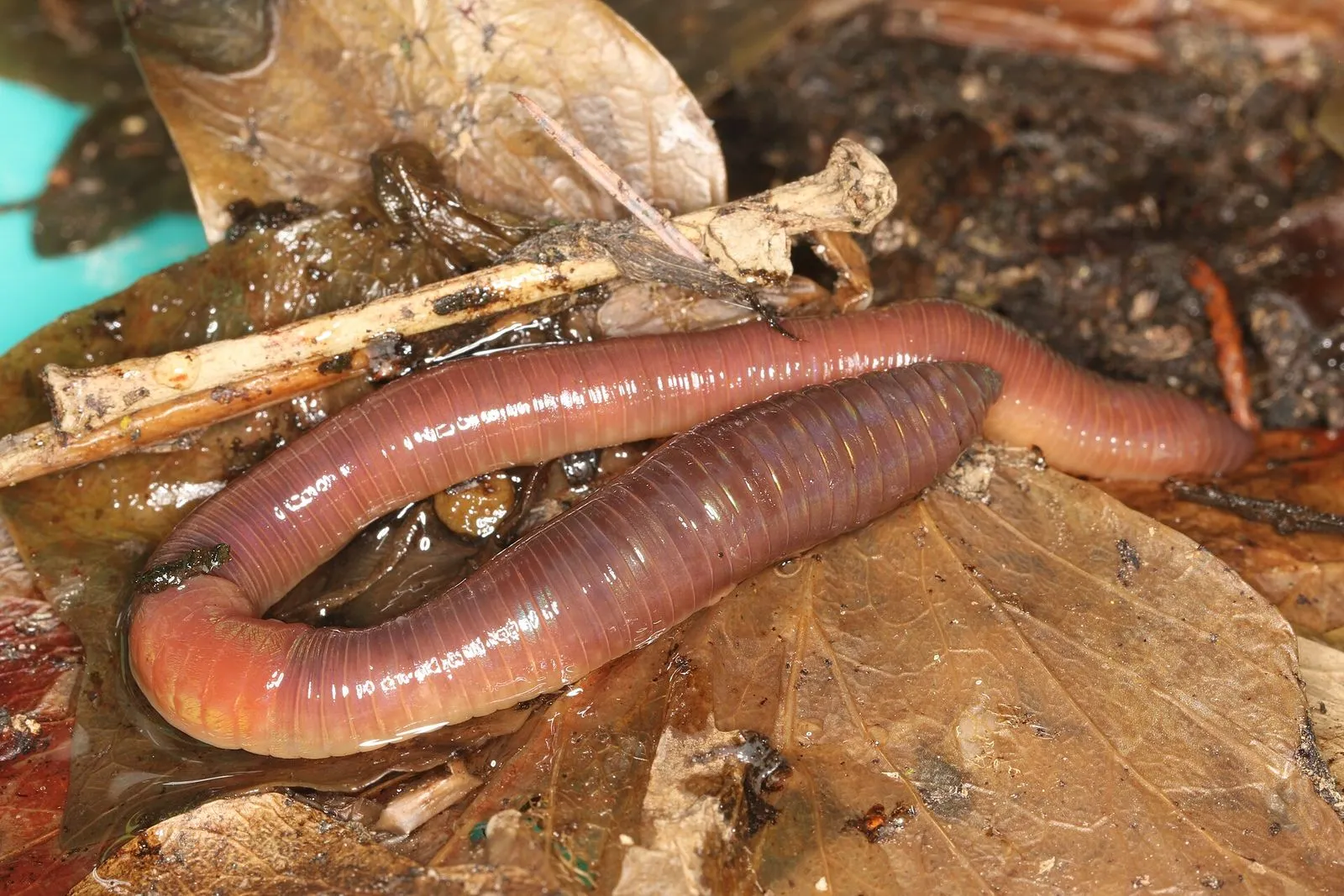
The best catfish bait depends on which catfish you are after: fresh cut shad for blues, punch or dip bait for channels, live bluegill for flatheads. The three big species eat differently, and the bait follows the diet. The picks are research-driven, from manufacturer specifications, the guide literature and owner reviews; we have not tested them.
A blue catfish hunts fish, a channel catfish smells its way to anything, and a flathead over ten inches eats nothing that is not alive. Every bait argument is a version of that sentence.
Which bait for which catfish?
The state agencies’ diet data draws the lines. Missouri’s field guides have the channel catfish eating fish, insects, crayfish, mollusks and plant material: a scavenger that finds food by taste and smell. The blue catfish eats “mostly fish” above 8–13 in. Above 10 in, a flathead’s “diet consists entirely of fish,” in Texas Parks and Wildlife’s words.
The guides fill in the baits. Chad Ferguson’s bait rankings at Catfish Edge and Jim Moyer’s blue catfish calendar in In-Fisherman agree with each other and with the biology, and the quoted phrases in the table are Ferguson’s.
| Species | First choice | Second | Avoid | Why |
|---|---|---|---|---|
| Blue catfish | Fresh cut shad or skipjack herring, “the oilier the fish the better” | Cut carp, drum, buffalo, perch, bluegill; live shad in the spawning month | Prepared stink baits, frozen bait | Blues hunt fish; fresh cut bait lays an oil trail, and Ferguson’s rule is that live bait “offers no advantage” over fresh dead bait |
| Channel catfish (numbers) | Prepared punch or dip bait | Chicken liver, nightcrawlers, shrimp | – | Channels scavenge by scent; a bait that dissolves and trails wins |
| Channel catfish (size) | Fresh dead shad, bluegill or perch, cut or whole | Live minnows | Prepared baits, which sort for small fish | Big channels eat fish |
| Flathead catfish | Live bluegill, sunfish, perch, goldfish, bullheads, “good hearty and lively” | Big live shad | Cut bait except in moving water; any prepared bait | Flatheads are not scavengers; one or two fish a night is a good trip |
| Bullheads | Nightcrawlers | Anything: liver, corn, bread, hot dogs | – | Not selective; feed at night on the bottom |
Two rules cross the table. The first is that fresh beats frozen, in Ferguson’s words “almost every day of the week and twice on Sunday.” The second is to match the hatch. Where the catfish eat shad, use shad; where they eat bluegill, use bluegill. Where they have learned to eat what falls off a fishing pier, chicken liver works for a reason. The what do catfish eat page has the diet studies behind each row, and the catfish hub has the three species side by side.
How do you cut and keep cut bait?
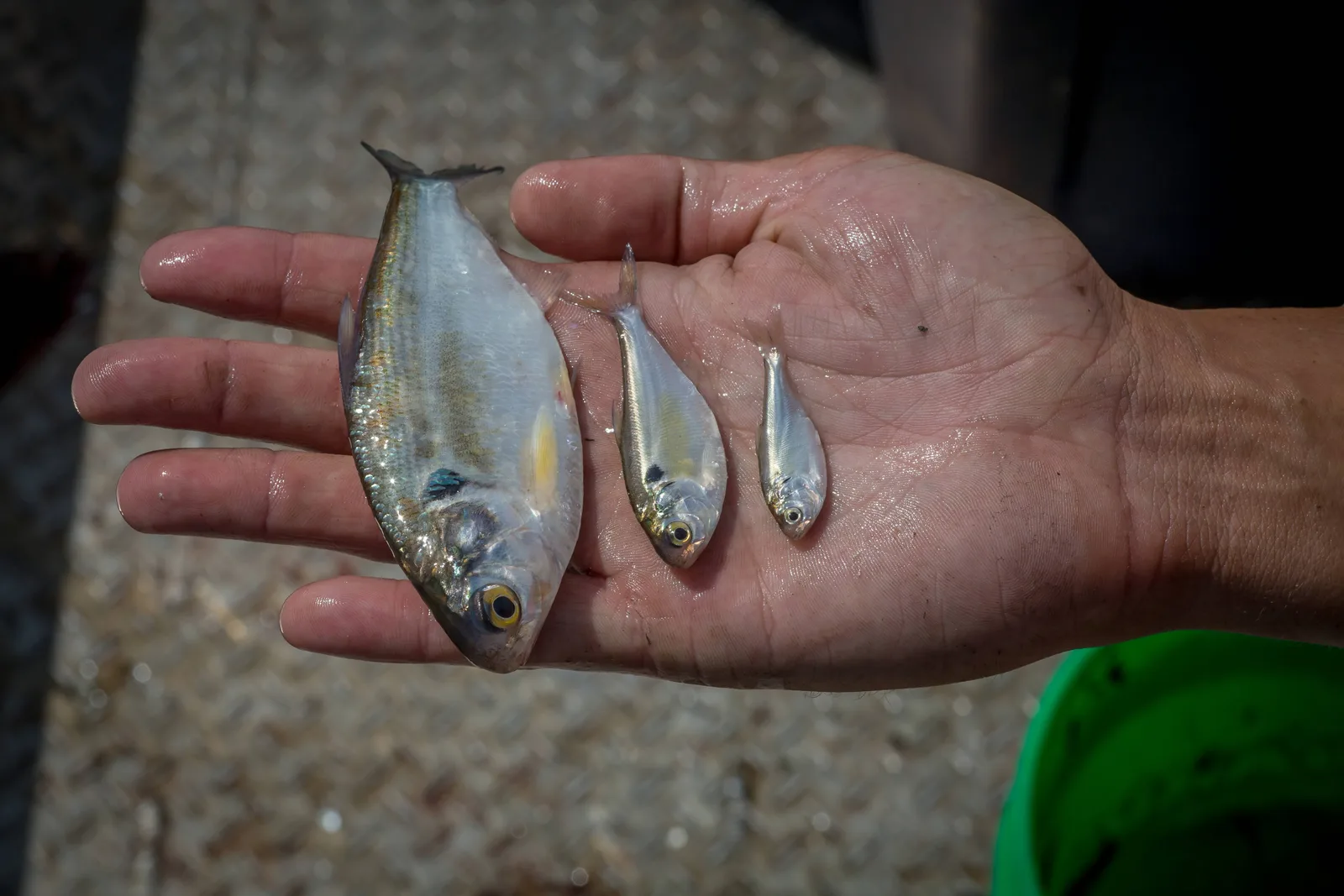
Gizzard shad, the cut bait blue catfish are built to eat. Photo: U.S. Fish and Wildlife Service (public domain).
Cut bait is a dead fish in pieces, and the piece is chosen for the fish you want. Gizzard shad, threadfin shad and skipjack herring come first because they are the oiliest fish in the water; the rest of the table’s second column is for when shad are short.
- A threadfin of about 4 in (10 cm) goes on whole, hooked through the eye socket.
- A bigger gizzard shad is cut in half.
- A skipjack, the biggest of the three, is fished whole for a trophy blue and in strips or chunks for the rest. The head goes on the biggest hook in the box, 8/0–10/0.
Catch your own with a cast net, or skipjack on a light rod and a Sabiki rig. Ferguson puts catching your own bait ahead of every other thing a blue-cat angler can do.
What ruins cut bait is time and heat. Steve Douglas, a tournament angler quoted in In-Fisherman, puts ice and kosher or sea salt in the cooler before the first throw of the net. A layer of ice, a sprinkle of salt, a layer of fish, and so on to the lid: salted ice makes a colder brine than ice alone. His rule is never to pile them: “Don’t pile baitfish on top of one another so fish are laying on fish.”
A heap of shad turns to mush within an hour. A dead shad in a warm livewell at 70–80 °F (21–27 °C) is rotting by the time the rods are out. Shad layered dry in salt for two weeks, in a box with holes in the bottom, keep for a year. All of it is second best to fresh. A salt-chilled bait still beats a plain frozen one, because it bleeds red when it thaws.
Live bait for flatheads: what does the law allow?
The flathead’s bait is alive because the flathead’s diet is alive. Use bluegill, green sunfish, perch, goldfish and bullheads: 4–6 in (10–15 cm) for an average fish, 7 in (18 cm) and up for a trophy. Hook them through the back behind the dorsal fin or through both lips, on a 7/0–10/0 circle hook. Hold the bait on the bottom or under a float, against the wood the fish lives in. In-Fisherman singles out the green sunfish as the prime flathead sunfish. A live bait that stops swimming is a cut bait, and a flathead does not want one.
The catch is the law, which differs by state in ways a bait shop will not always tell you. Three state codes show the range:
| State | What the code says about live bait | What it means for catfish anglers |
|---|---|---|
| Texas | “It is unlawful to use any game fish, or part of a game fish, as bait.” Only goldfish, common carp, native shrimp, crabs, crawfish and nongame fish may be used; live bait may not leave the water it was caught in | Sunfish are nongame, so a bluegill is legal; a chunk of catfish is not, because all three catfish are game fish in Texas |
| Kansas | Bluegill and green sunfish from waters not designated for aquatic invasives “may be possessed or used as live bait anywhere in the state”; baitfish may not exceed 12 in; possession limit 500 | The most permissive of the three; other baitfish stay in the drainage they came from |
| Missouri | Bluegill, green sunfish and bullheads over 5 in taken as live bait must be released at once; “invasive fish may not be used as live bait but may be used as dead or cut bait” | A bait bluegill is a 4-in bluegill; silver and bighead carp go on the hook dead, in chunks |
Read your own state’s bait paragraph once a year, keep the receipt for bought bait, and never move live fish between waters.
Which prepared bait for channel catfish?
Prepared baits are for channel catfish. They come in three forms, punch, dip and chunk, and the form decides how they are fished.
| Bait | Type | How it is fished | Best conditions | Species |
|---|---|---|---|---|
| CJ’s Punch Bait | Punch (fiber-loaded paste) | Push a bare treble into the tub with a stick; the fibers hold the bait | Current, warm water; no refrigeration needed | Channel |
| Danny King’s Punch Bait | Punch | As above, on a #4 treble | Warm water | Channel |
| Team Catfish Secret 7 | Dip (sticky paste) | Dip a tube, sponge or ribbed worm into the tub | Cool water, moderate current | Channel, small blues |
| Team Catfish Sudden Impact | Fiber | #6 treble, like punch bait | Hot weather, where dip baits wash off | Channel |
| Sonny’s Super Sticky | Dip | Sponge or tube | Cool to warm | Channel |
| Berkley PowerBait Catfish Chunks | Chunk / dough | Thread a chunk onto a hook | Still water, clean hands, kids | Channel, bullheads |
The choice between punch and dip is the weather. Punch and fiber baits stay on a treble hook in heat and current; dip baits work when the water is cooler and the current lighter. Every prepared bait sorts for eating-size channels; that is what they are for.
The maker pages add the numbers that decide between them:
| Bait | Tub and price | Hook | Scents | Maker claim |
|---|---|---|---|---|
| CJ’s Punch Bait | 14 oz $7.99; half gallon $22.99; gallon $44.99 | Bare treble on a stick | Shad, Monster, Crawdad, Minnow, Wilder Hopper | Catfish feed “from sundown until midnight” |
| Danny King’s | 12 oz | #4 treble | Original, garlic, blood (retail listings) | Stays on without sponge or spring |
| Secret 7 | Pint $8.99; half gallon | Dip tube | Not listed | “Never have to refrigerate”; Big Cat Quest wins |
| Sudden Impact | 12 oz $8.99; 24 oz; gallon | #6 treble | Not listed | Fibers hold “even when temperatures reach 100+ degrees” |
| PowerBait Chunks | 6 oz pouch | Bait hook or treble | Six, from chicken liver to cut shad | Scent 185% stronger than natural bait |
The picks in detail
CJ’s Punch Bait
A fiber-based punch bait that packs onto a bare #4 or #6 treble and stays there in current, with no refrigeration and no hands. The maker’s tip is to pull the hook out of the tub at an angle so it carries more bait. The maker’s page and the guide literature agree that it is the numbers bait for channel catfish in warm water. It will not catch blues or flatheads in any number, and does not claim to.
Team Catfish Secret 7
The dip bait with the tournament record: twice bait of the year at the Big Cat Quest, fished on a dip tube, a sponge or a ribbed worm. Owners report fast action on channel catfish and, in the company’s own claim, blues. It works in the cooler water where fiber baits go stiff.
Team Catfish Sudden Impact
The same company’s fiber bait, for a #6 treble, made for the hot months when a dip bait washes off in minutes. The maker says the hair-like fibers hold past 100 °F (38 °C), and one owner review reports a bait lasting about half an hour on the hook. Forum anglers run it in summer and Secret 7 the rest of the year.
Danny King’s Punch Bait
The other name in every punch-bait argument, sold in 12 oz tubs and fished on a #4 treble the same way. There is no maker page to quote, so the specs come from retailer listings. Owner reviews praise how it holds the hook in heat; one says a recent batch ran thinner. Buy a tub of each and let the fish vote.
Berkley PowerBait Catfish Bait Chunks
Pre-formed chunks in a resealable 6 oz bag that thread onto a bait hook with clean hands, the whole appeal for a family on a pier. Berkley claims a scent 185% stronger than natural bait; owner reviews split between “caught fish like crazy” and nothing at all. A starter bait and a backup, not a guide’s first choice.
Do chicken liver and hot dogs work?
The honest verdict on grocery baits comes from the two camps that disagree about them. Ferguson, the guide, lists chicken liver, hot dogs and shrimp and steers you away from them. “While there are times these can be good baits,” he writes, a channel cat that will not take a good punch bait is a channel cat you are not sitting on. For a bigger fish, in his view, the natural baits win.
Kade Gewanter at Wired2Fish, writing for the farm pond, calls a chunk of chicken liver the most effective bait he has found. His rigging is what makes it true. He uses an ultralight octopus hook from #8 to #2, through the liver once, no sinker and a soft lob cast, so the liver sinks under its own weight instead of flying off the hook.
Both are right. Liver and hot dogs catch eating-size channel cats and bullheads in ponds and below fishing piers, where the fish have learned what people drop. They do not catch big blues, and they do not catch flatheads at all.
The details that make them work:
- Hot dogs. Cut them in half-inch (13 mm) sections. Buy the cheapest natural-casing dogs, because they smell strongest and hold the hook. Fish them on the bottom on a circle or octopus hook.
- Soap. A chunk of plain tallow soap, Zote by name, is a real bait in moving water and lasts about 20 minutes in a strong current.
- Kool-Aid and Jell-O. They add color and nothing else; in Ferguson’s words, “you don’t need to add jello or Kool-Aid to catch fish.”
- WD-40. It is not a catfish bait. There is no evidence it attracts fish, it is a petroleum product, and putting it in the water is illegal in most states.
Which bait for the water temperature?
Catfish feed by the thermometer. The channel catfish stops feeding at about 50 °F (10 °C) and grows fastest at 75–85 °F (24–29 °C). The blue keeps feeding into the 30s; the flathead goes dormant in the deepest holes. The bait follows the band, and the water temperature page for catfish has where to fish each one.
| Water | Blue catfish | Channel catfish | Flathead catfish |
|---|---|---|---|
| Below 50 °F (10 °C) | Fresh cut skipjack or shad on the bottom in 20–45 ft (6–14 m); the biggest fish of the year, December to March | Almost nothing; a river channel in a warm spell takes a cut bait | Nothing; dormant |
| 50–70 °F (10–21 °C) | Cut bait on the flats and channel edges that warm first | Cut bait and nightcrawlers; punch bait from about 65 °F (18 °C) | Live bait starts to work in the 60s, pre-spawn |
| 70–75 °F (21–24 °C) | Live shad under a float on the spawning banks, the one month live beats cut | Punch or dip bait for numbers, the easiest fishing of the year | Live bluegill beside the wood; the pre-spawn peak |
| 75–85 °F (24–29 °C) | Live 6–8 in (15–20 cm) gizzard shad at night in June, Moyer’s “best month to fish with livebait”; live shad under the white-bass schools in July | Punch or fiber bait on a treble at night; fresh cut shad for size | Live bluegill or bullhead at night |
| Above 85 °F (29 °C) | Jugs and shrimp in the backs of the bays; August is Moyer’s “real bad month” | Fiber bait, which holds in the heat, at dawn, dusk and dark | Live bait in current, where the oxygen is |
How do you rig each bait?
The bait is half the rig. Cut bait and live bait go on a circle hook, fished on a slip-sinker rig or, for drifting, a Santee Cooper rig with a peg float:
- Channels: 2/0–4/0.
- Blues: 5/0–8/0.
- Flatheads: 7/0–10/0 with live bait.
- Prepared baits: a #4–#6 treble or a dip worm on the same slip-sinker rig.
- Liver: a #8–#2 octopus hook with as little weight as the water allows.
The catfish rigs page ties the five rigs, and the hook size for catfish page has the size for every bait and species in one table. The soft-tip catfish rods show the bite. For the seasons of each fish, see the channel catfish, blue catfish and flathead catfish pages.
How we chose
The species table rests on the diet data in the state agency profiles and on the guide literature, chiefly Ferguson’s rankings and Moyer’s calendar. For the prepared baits, the criteria were how the bait is fished (punch, dip or chunk), what the maker page says about tub, hook and heat, and what owners report. The bait laws come from the state codes, not from forum memory. None of the baits was fished for this page.
Related
Section guide
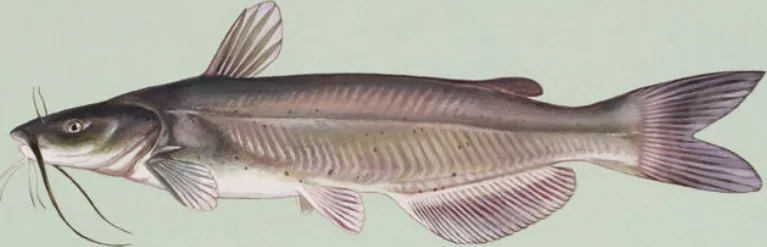
Catfish: Species Identification, Baits, Seasons and RecordsThe catfish species anglers catch most, channel, blue and flathead first: how to tell them apart by the anal fin, when they spawn, what bait each wants.
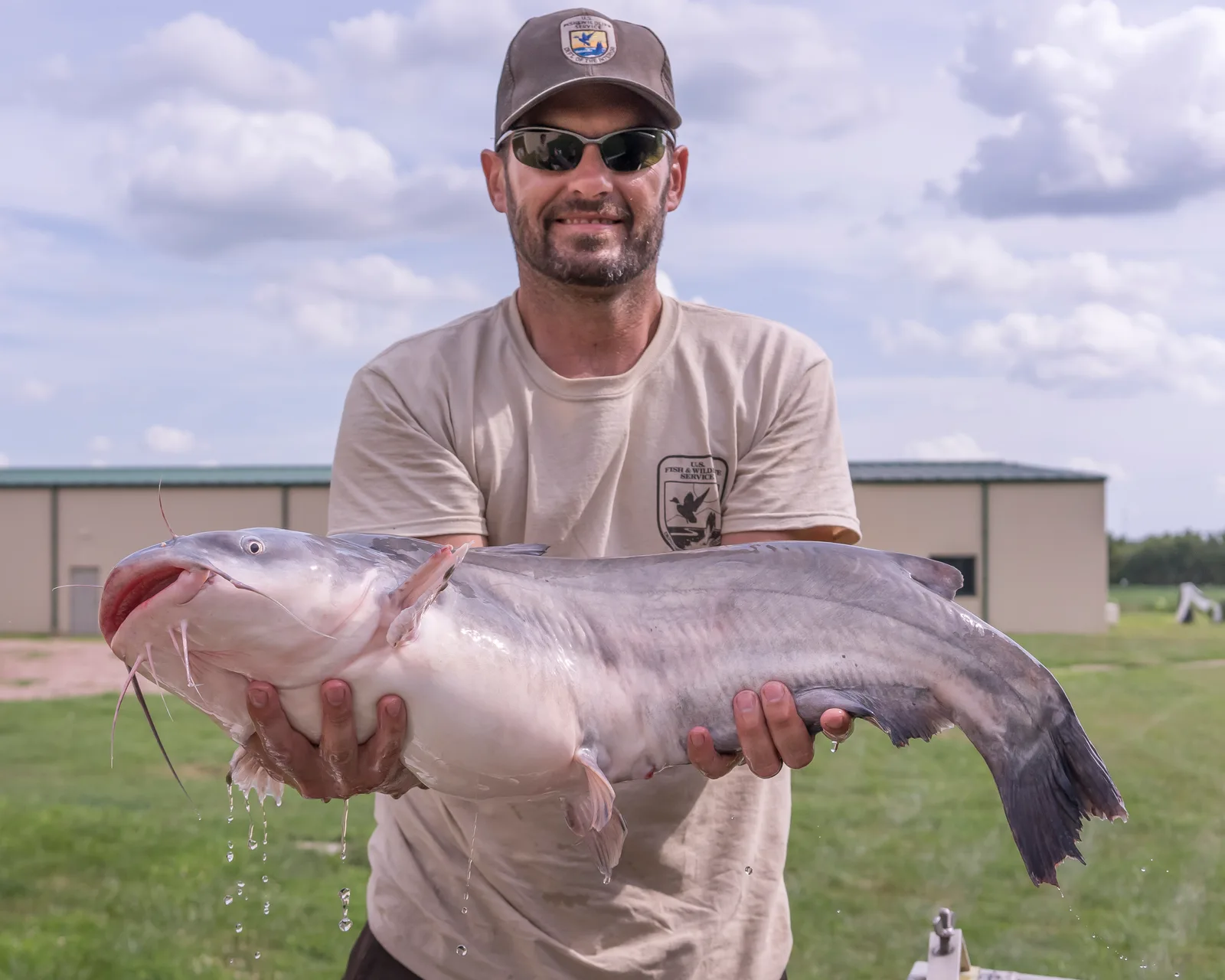 World Record Catfish: Blue, Flathead, Channel, Wels, Mekong Giant
Every world record catfish: the 143 lb blue, 123 lb flathead, 58 lb channel of 1964, 297 lb wels and 646 lb Mekong giant, and how a record is certified.
 How to Hold a Catfish Without Getting Stung, Small to Big
How to hold a catfish safely: where the three spines are, the grip behind the pectoral fins for small fish, the lip grip for big ones, and first aid for stings.
 Catfish Rigs: The Five That Matter and When to Use Each
The five catfish rigs the guides use, slip sinker, Santee Cooper, three-way, slip float and bottom rig, with sinker weights, hook sizes and when to use each.
 Bullhead Catfish: Black, Brown and Yellow Bullheads Compared
Black, brown and yellow bullheads told apart, a season table on water temperature, the worm rig, the sting, skinning in three cuts, and the state records.
 Blue Catfish: Identification, Size, Season and the Chesapeake Invasion
Blue catfish from the agency data: the 30-ray anal fin, how big and old they get, a month-by-month season from a river guide, and the Chesapeake invasion.
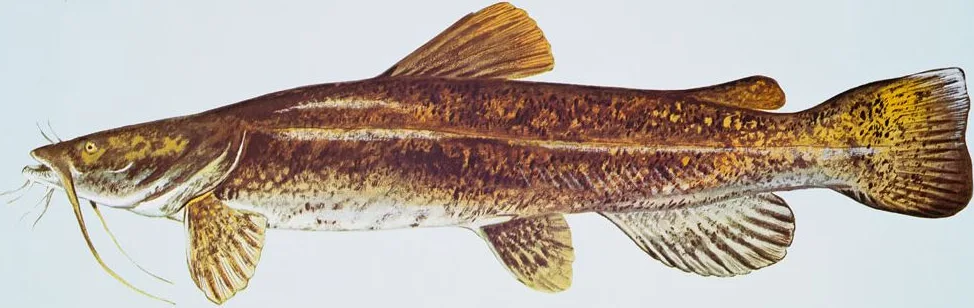 Flathead Catfish: Identification, Size, Live Bait and Where They Live
Flathead catfish from the agency data: square tail and jutting jaw, deep-pool habitat, spawning at 75–80 °F, why only live bait works, and the 123 lb record.
Sources
- Catfish Edge (Chad Ferguson), Best catfish bait
- Texas Parks and Wildlife, flathead catfish (diet)
- Missouri Department of Conservation, channel catfish and blue catfish field guides (diet)
- Mississippi State University Extension, biology of catfish (feeding and temperature)
- In-Fisherman, Blue catfish seasons (Jim Moyer)
- In-Fisherman, Catfish bait preservation tricks and tips (Steve Douglas, Matt Davis, Steve Lynch)
- In-Fisherman, Best catfish baits
- Wired2Fish, Secret recipes for homemade catfish bait (Kade Gewanter)
- Texas Parks and Wildlife, general fishing regulations (bait)
- Kansas Administrative Regulations 115-7-3, taking and use of baitfish
- Missouri Code of State Regulations 3 CSR 10-6.605, live bait
- CJ's Bait Co., punch bait and fishing tips
- CJ's Bait Co., shop (tub sizes and prices)
- Team Catfish, Secret 7 dip bait
- Team Catfish, Sudden Impact fiber bait
- Academy, Danny King's 12 oz catfish punch bait (retailer listing)
- Berkley, PowerBait Catfish Bait Chunks