 By
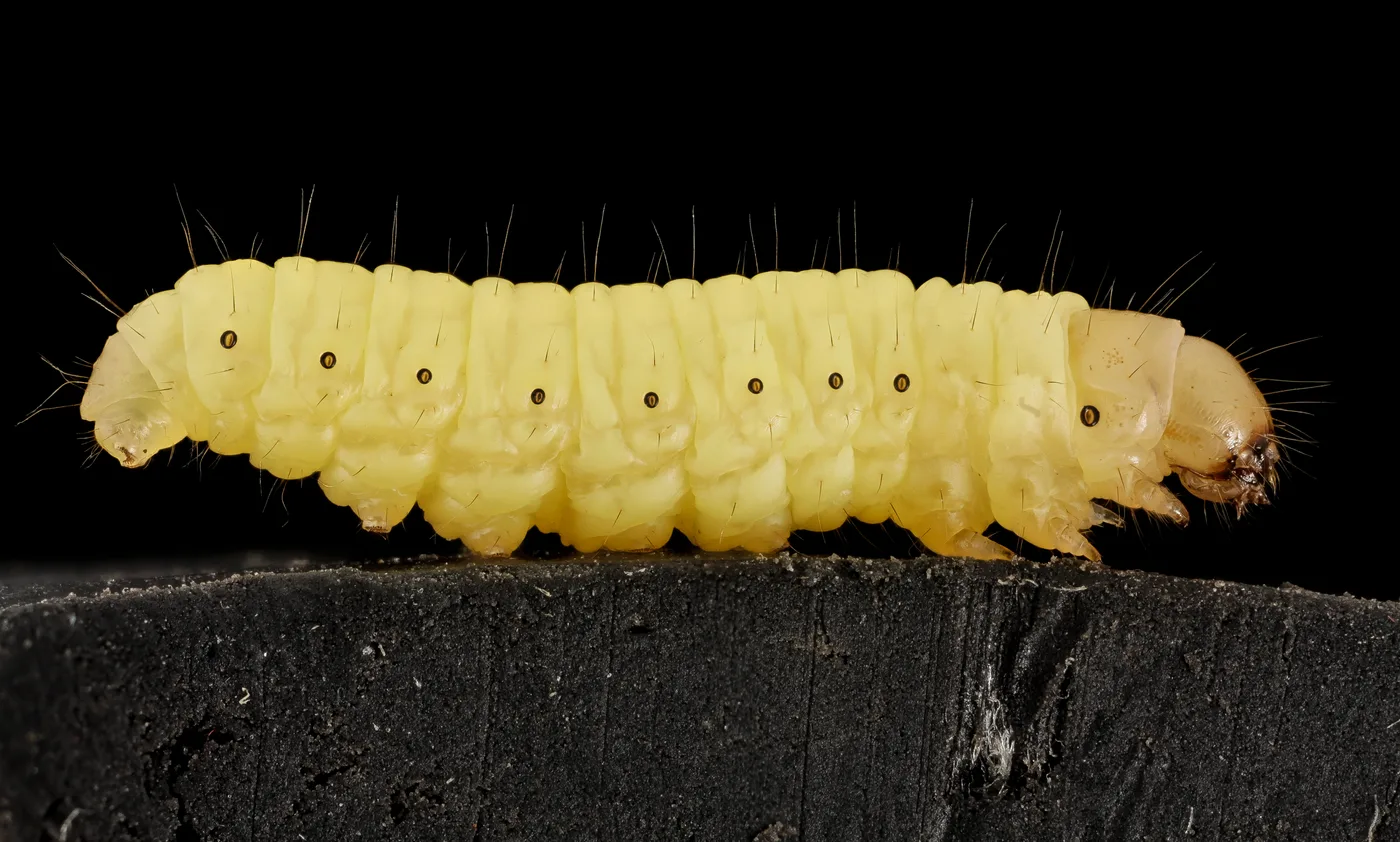
Wax worms are moth caterpillars, 1/2 to 1 inch long, cream with a brown head. They’re among the most effective ice baits for bluegill, crappie, perch and trout, and they work in summer too. Put one on a tiny jig or a size 8 or 10 hook. Keep the cup cool and dry, and never let it freeze.
Most fridges are too cold for wax worms. Fluker Farms says to keep them at 55 to 60 °F, and the fridge door or a wine cooler usually works.
What are wax worms?
A wax worm is the caterpillar of a wax moth. In the wild it lives in beehives and chews through the wax, which is where the name comes from. Beekeepers call it a pest. Outdoor Life puts it at 1/2 to 1 inch long, with a cream body and a brown head. Bait shops call them waxies.
Two wax moths are bred for sale, the greater and the lesser. The four sellers we read, two bait and two pet, all name the greater wax moth. So the cup sold as reptile food and the cup at the bait shop usually hold the same bug. Pet stores sell them as a fatty treat for lizards and birds. You only care that fish eat them.
What do they turn into? A moth, in the end. In the cup they’ve stopped eating and live off their own fat, Fluker and DMF Bait both say. Kept cool, they stay dormant. Some will still spin a cocoon, and Fluker says to pick those out.
They’re the most popular of the grubs you fish through the ice, Outdoor Life says. Fish seldom see insects like these in nature, it adds, and the grubs still rank among the most effective ice baits for panfish and trout.
What fish can you catch with wax worms?
Mostly panfish and trout. Start with bluegill and crappie, then perch. A wax worm also goes on a walleye jig through the ice. Here’s who uses them on what, and how.
| Fish | How it’s fished | Who says so |
|---|---|---|
| Bluegill and other sunfish | One on a small teardrop jig through the ice. A jig with a size 8 or 10 hook in open water | Iowa DNR, Walt Mattan (Custom Jigs & Spins) |
| Crappie | On a small teardrop, or under a bobber on a short ice rod | Iowa DNR, Minnesota DNR |
| Yellow perch | Small, colorful teardrop jigs tipped with wax worms | Wisconsin DNR, Minnesota DNR |
| Walleye | Tipped on the jig. Small minnows or cut smelt are the other choices | University of Wisconsin Sea Grant |
| Trout | A plain size 8 or 10 hook, or on a tiny jig | Outdoor Life |
| Any fish you jig a spoon for | Tip the spoon, drop it to the bottom and jig it 1 to 3 ft (0.3–0.9 m) up | North Dakota Game and Fish |
Speedy Worm, a bait seller, adds bass, whitefish and small channel catfish to the list. For perch and crappie, Mattan says small minnows are what they prefer. For bluegill, wax worms top his list. That makes them a bluegill bait first.
Free PDF · Water temperature chart Which fish are biting at today's water temperature?
One reading, and the 16-page chart shows which of 26 fish are spawning, feeding hard or slowing down; for bass, crappie, bluegill and walleye, where they sit and what to throw. Every number sourced.
No card, nothing to buy, and the PDF is yours to keep. Confirm with one click and it's on its way. Then a few short emails and one a week on what's biting. Unsubscribe anytime. Privacy.
How do you hook a wax worm?
Go small. Outdoor Life says a plain size 8 or 10 hook works, though most anglers tip a tiny teardrop or jig instead. A teardrop is a small lead jig shaped like a drop. The hook size chart shows how small a size 10 is.
- Pick the hook or jig. A jig with a size 8 or 10 hook in open water, Mattan says. A small teardrop through the ice, says Iowa.
- Use a sharp hook. Terry Tuma, a Hall of Fame angler, starts there.
- Hook it through the tip or the middle. Tuma does it that way for better movement.
- Start with one. On some days fish want a hook crammed with larvae, Outdoor Life says. On others a single wiggling one does it.
- Then try a hookful. If one gets no bites, put on two or three. Outdoor Life’s whole rule is to experiment.
That last step is the one to remember. Switch from one to a hookful and back until the fish choose.
How do you fish wax worms through the ice?
On a small jig, with a little life in it. A wax worm on a small teardrop is “a great combination for catching bluegill or crappie,” Iowa’s DNR says. Minnesota’s DNR puts wax worms in its basic kit for crappie and perch, and Take Me Fishing calls them one of the best natural ice baits for panfish.
You can tip a spoon too. North Dakota’s rig drops the spoon to the bottom and jigs it 1 to 3 feet up, tipped with a wax worm or a minnow. The ice fishing lures page covers the jigs and spoons you’d put them on.
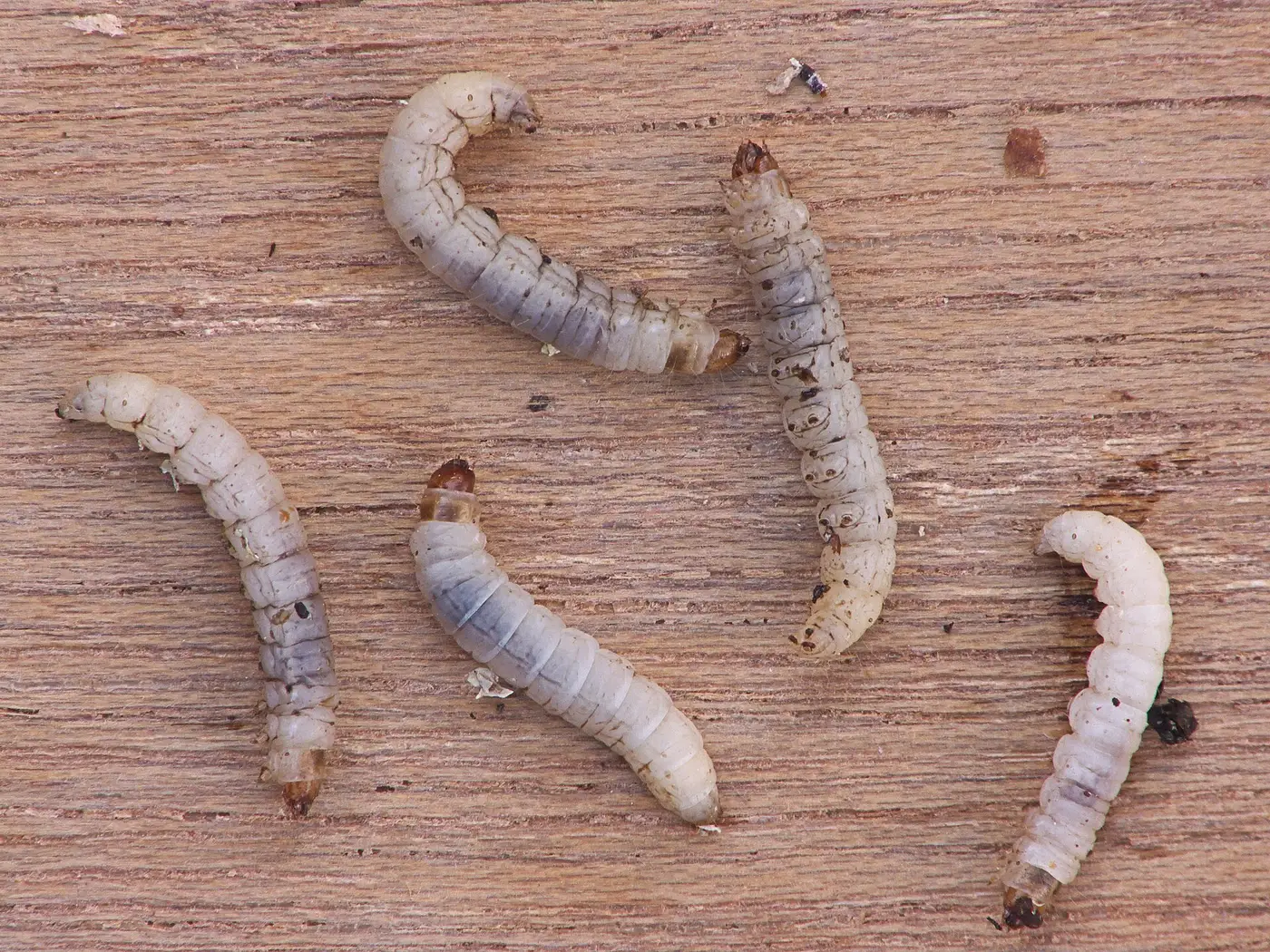
Caterpillars of the lesser wax moth, the other wax worm bred for sale. The sellers we read sell the greater wax moth’s larva, the one at the top of this page. Photo: Rasbak, Wikimedia Commons (CC BY-SA 3.0).
The cold is the danger. Iowa says to keep wigglers “in an insulated container kept next to your body to keep them from freezing.” Do the same with your wax worms. Outdoor Life’s key to lively bait is the same: don’t let it freeze.
For the full setups, read perch through the ice and crappie through the ice. The other ice baits, from spikes and mousies to minnows, are on ice fishing bait.
Can you use wax worms in summer?
Yes. Most anglers think of them as ice bait, but they work in open water too. Mattan’s pick for bluegill is “waxworms, spikes, or half a redworm.” In open water he fishes jigs with size 8 and 10 hooks.
There may even be an edge in summer. Speedy Worm says fewer anglers use wax worms then, so bigger panfish see something new. That’s a seller talking, so treat it as a tip, not a rule.
In summer, try one under a small bobber on a size 8 or 10 hook, the way you’d fish a piece of worm. Keep the cup in a cooler. DMF’s range for keeping them tops out at 65 °F.
How do you keep wax worms alive?
Cool, dry and in their own cup. They don’t need food. The temperature is what matters, and every seller gives a slightly different number. Here they are side by side.
| Temperature | What it means | Who says so |
|---|---|---|
| 32 °F (0 °C) and below | Frozen bait. Keep them next to your body on the ice | Iowa DNR (on wigglers), Outdoor Life |
| Below 40 °F (4 °C) | Too cold. Room temperature with low humidity is better than this | Timberline |
| 45 to 65 °F (7–18 °C) | The range for the longest shelf life | DMF Bait |
| 55 to 60 °F (13–16 °C) | Keeps them dormant for several weeks | Fluker Farms |
| 55 °F (13 °C) | A couple of weeks | Timberline |
So aim for about 55 °F. In most homes that means the fridge door or the butter tray, which run warmer than the shelves. A wine cooler works too, Fluker says.
Four more things keep a cup going:
- Keep them dry. Low humidity is “extremely important,” Fluker says. If the bedding feels damp, take the lid off and let it dry. DMF adds that no moisture is needed.
- Don’t feed them. At this stage they don’t eat, Fluker, DMF and Timberline all say. They do shrink the longer you keep them, Timberline notes.
- Pick out the dead ones. Dead wax worms turn black. Take them out every day, along with any that are spinning a cocoon.
- Don’t crush the cup. Speedy Worm warns against freezing and crushing both. Don’t pack it under the cooler.
Wax worms, spikes or mealworms?
All three are pale grubs in a cup. They’re different bugs, though, and they fish differently.
| Bait | What it is | On the hook |
|---|---|---|
| Wax worm | A wax moth caterpillar, 1/2 to 1 in (1.3–2.5 cm), cream with a brown head | The bigger, softer bite. Tears off more easily |
| Spike | A housefly or blowfly maggot, a little smaller than a wax worm | Tougher skin, so it stays on the hook better |
| Mealworm | The brown larva of a mealworm beetle, a darkling beetle | Minnesota DNR lists meal worms for crappie and perch on the ice |
So are wax worms maggots? No. A maggot is a fly larva, and a wax worm is a moth caterpillar. The spike is the maggot.
Which do you start with? Our pick is wax worms, with a cup of spikes as backup. When small fish keep stripping your wax worms, switch to spikes, because their tougher skin holds on. Outdoor Life calls spikes especially good for panfish and trout.
Where do you buy wax worms, and what do they cost?
Look in bait shops first. DMF Bait calls them a popular ice bait in the northern U.S. and Canada. If there’s no bait shop near you, try a pet store, where they’re sold as reptile food. They’re the same insect.
Mail order sells them by the cup. Speedy Worm listed 250 for $12.50 and 1,000 for $36 on November 18, 2026, before shipping. That’s 3.6 to 5 cents a worm. Order more than you need only if you can keep them near 55 °F.
There’s also a fake one. Berkley’s Gulp! Alive! Waxies sell for $7.99 a pack. Berkley calls them a “panfish favorite” for year-round use. You put them back in their liquid to recharge the scent.
What are the rules on wax worms?
Wax worms can cross a state line that minnows can’t. North Dakota says “Terrestrial bait such as nightcrawlers and waxworms can be legally transported into North Dakota.” Leeches and minnows can’t come in.
Bait is still bait, though. Some trout water is lures only. On Pennsylvania’s catch-and-release lure water, “Use or possession of any other lures or substances is prohibited.” That covers a cup of wax worms in your vest. Check your state’s rules before you fish a special-regulation stream.
Remember: Never dump leftover wax worms. Freeze them sealed for 24 hours, then trash them.
Leftovers go in the trash. Fluker’s way: seal them in a bag or container, freeze it for at least 24 hours, then throw it in the garbage. “Never release live feeders into the wild,” it adds. The other live baits, with their own rules, are on live bait.
Mistakes that cost you fish
- A cup left in the truck on an ice day. Frozen bait isn’t lively bait. Keep it in your coat.
- A cup on a fridge shelf. Most fridges are too cold. Use the door.
- A damp cup with the lid on. Wax worms need it dry. Take the lid off and let it dry out.
- A hook too big. Stay at size 8 or 10, the sizes Outdoor Life and Mattan use.
- Leaving the dead ones in. Black ones come out every day, Fluker says.
- Never trying a hookful. Some days one isn’t enough. Try two or three.
When does something else beat a wax worm?
When the fish want minnows. For walleye, Iowa’s DNR says small minnows are great. For crappie and perch, Mattan says they prefer small minnows. When small fish strip every wax worm, spikes stay on longer. And in summer, half a redworm is on Mattan’s bluegill list too. The rest of the aisle is on fishing bait.

Free PDF · 16 pages
Stop guessing. Know what's biting before your first cast
A whole Saturday on the water with nothing to show for it. One reading tells you who's feeding.
The Water Temperature Fishing Chart. Take one water temperature reading, find it on the chart, and see which of 26 freshwater fish are spawning, feeding hard or slowing down.
- Where bass, crappie, bluegill and walleye sit, and what to throw. Trout: the reading where you stop.
- Why a 3 ft drop beats a cold front, and what to throw each day of the front
- The three thermometer mistakes that make a reading lie
The chart's numbers come from state fish and wildlife agencies and fisheries research: 61 sources, each listed on the site.
No card, nothing to buy. Confirm with one click and the PDF is on its way, one version for your phone and one to print, yours to keep. Then a few short emails and one a week on what's biting, with an unsubscribe link in every one. Privacy.
Related
Section guide
Fishing Bait: Live, Cut and Prepared, and Which One to UseFishing bait made simple: live, cut and prepared bait, what to use for each fish, how to hook it and how to keep it alive until you fish.
 Fiddler Crabs for Sheepshead: How to Catch, Keep and Hook Them
Fiddler crabs are the classic sheepshead bait. Where to dig them at low tide, how to keep them alive, three ways to hook one, and when to set the hook.
 Bloodworms for Fishing: How to Hook Them and Avoid the Bite
The bait-shop bloodworm is a Maine marine worm with four venomous jaws. How to hook it, which fish eat it, how to keep it alive, and what a bite does.
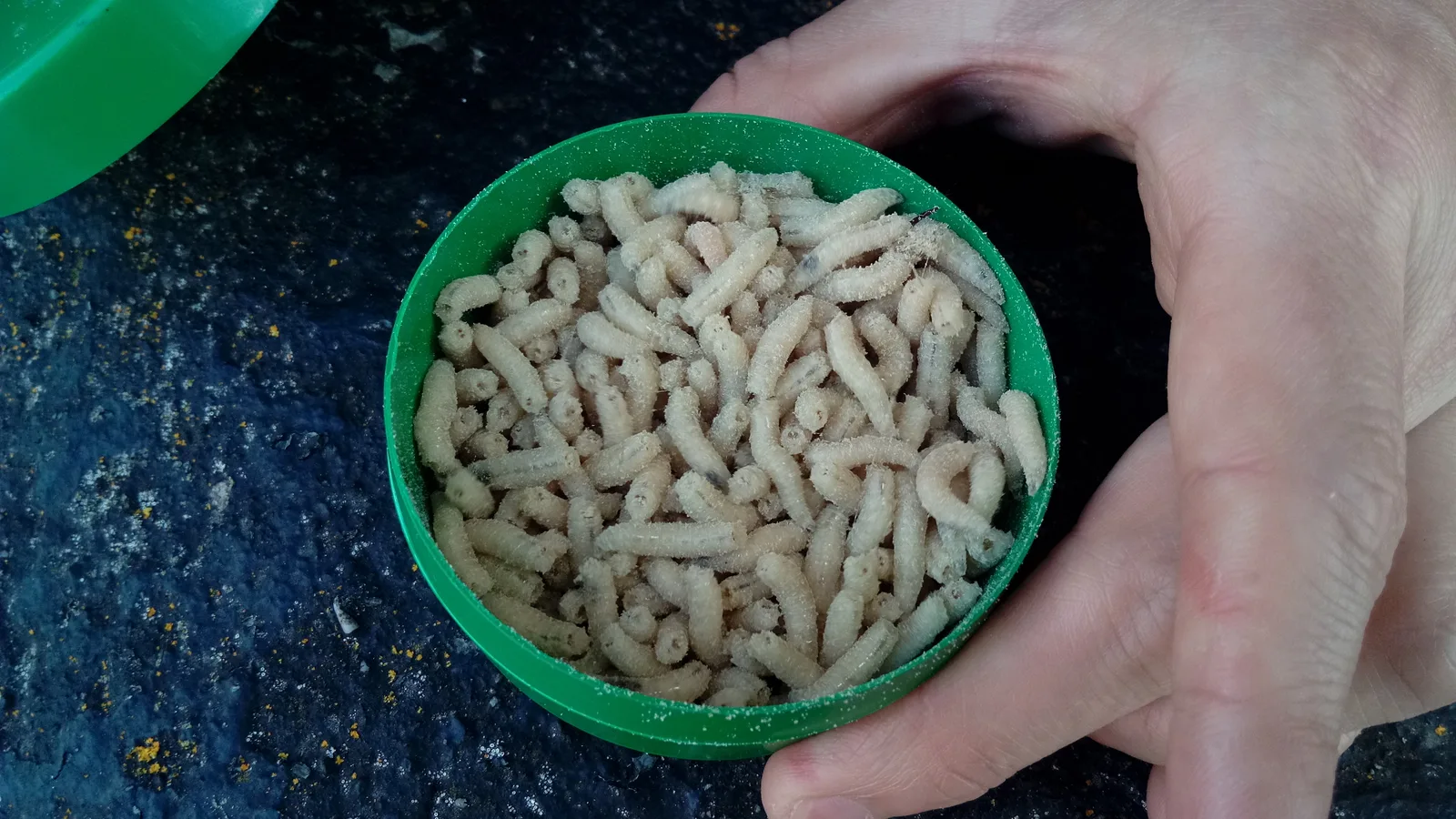 Ice Fishing Bait: The Live Bait for Each Fish, From Wax Worms and Spikes to Minnows
Live ice fishing bait, fish by fish: wax worms, spikes, mousies and minnows, how to tip a jig, keep bait from freezing, and the minnow rules.
 Live Bait: Which One to Use, How to Hook It and Keep It Alive
Live bait made simple: which bait for which fish, how to hook it so it stays alive, the rigs, how to keep it alive, and the rules on moving it.
 Minnows: What They Are, Which to Buy and What Size to Use
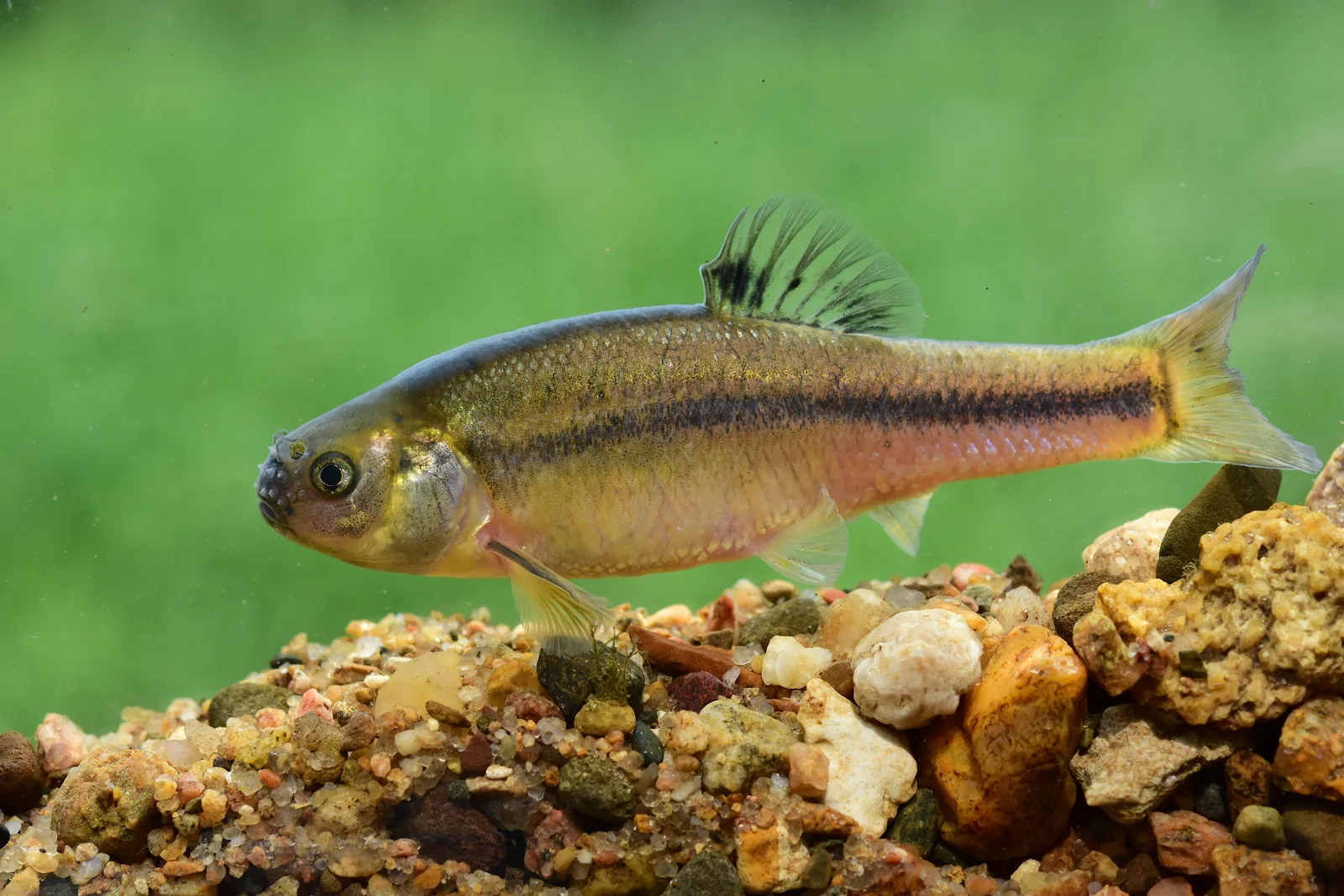
Minnows are small fish of the minnow family, and the top live bait. Which minnows bait shops sell, what size for each fish, and when they work.
 Sand Fleas: What They Are, Do They Bite, and How to Catch Them
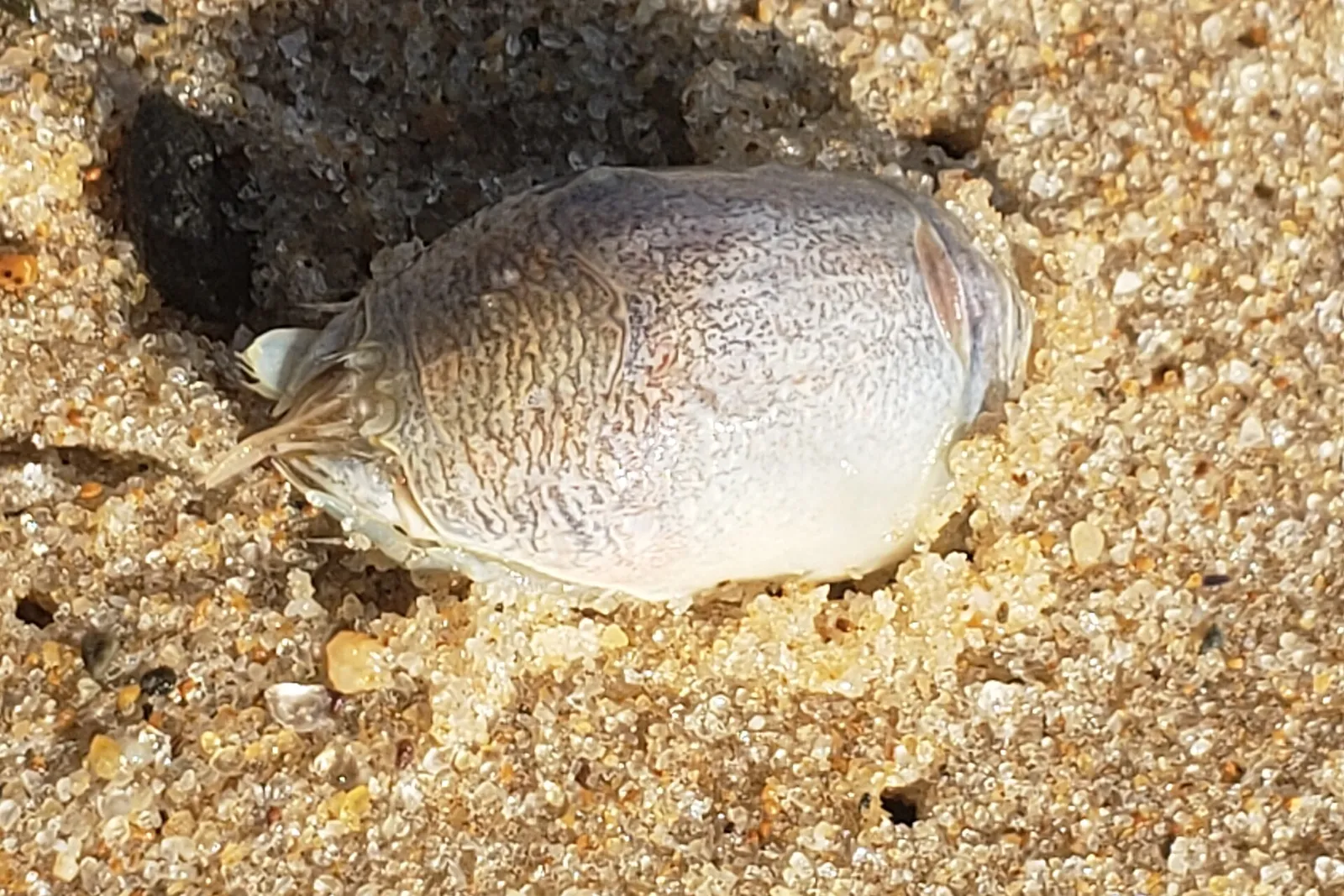
The sand flea surf anglers dig is a clawless mole crab, not an insect. What bites you instead, and how to rake, keep and hook sand fleas.
Sources (19)
- Dick Sternberg, Icefishing Tips: Guide to Live Bait, Outdoor Life (January 11, 2013)
- Wikipedia, Waxworm
- Iowa DNR, Ice Fishing
- Minnesota DNR, Ice fishing for crappie
- Minnesota DNR, Ice fishing for perch
Show all 19 sourcesShow fewer sources
- Wisconsin DNR, Yellow Perch (PUBL-FM-710 08, August 2008)
- Warren Downs, Ice Fishing, University of Wisconsin Sea Grant Institute (revised October 2005)
- North Dakota Game and Fish, Ice fishing tackle
- CCX Media, Terry Tuma Ice Fishing Tip: Hooking Grubs for Crappies and Sunfish (January 16, 2025)
- Walt Mattan, How to Jig for Bluegill and More, Custom Jigs & Spins
- Debbie Hanson, Ice Fishing Basics: 5 Guidelines to Get You Started, Take Me Fishing (December 2022)
- Speedy Worm, Wax Worms (seller's page, prices move)
- DMF Bait Co., Wax Worms (seller's page)
- Fluker Farms, Wax Worm Care Sheet
- Timberline, Waxworms
- Timberline, Mealworms
- Berkley, Gulp! Alive! Waxies (product page)
- North Dakota Game and Fish, Can I bring nightcrawlers, waxworms or leeches from Minnesota or another state into North Dakota?
- 58 Pa. Code § 65.5, Catch and release artificial lures only