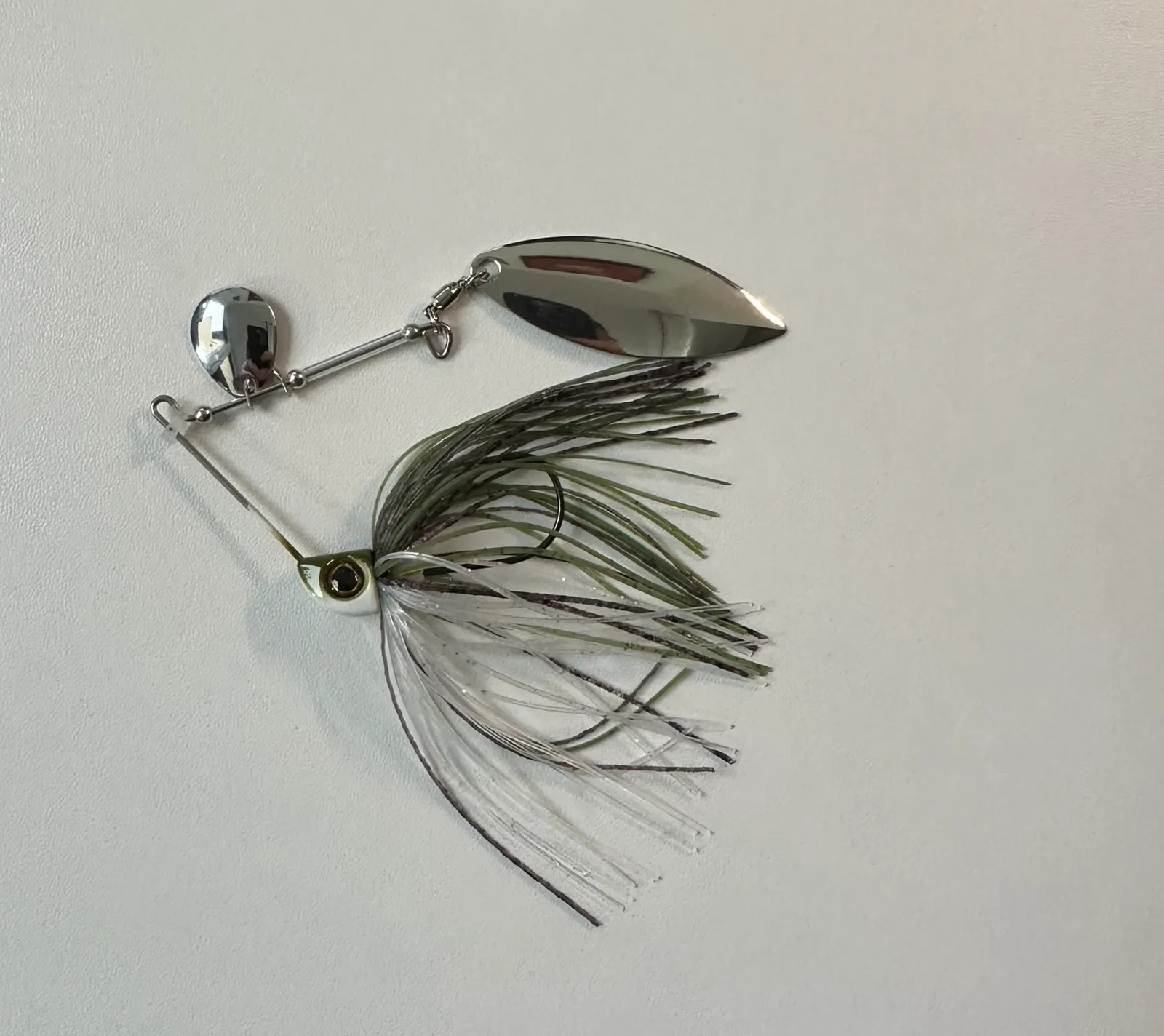
A spinnerbait is a lead-head jig molded onto one arm of a bent wire, with one or two blades spinning on the other arm, above and ahead of the skirted hook. The bent wire makes it nearly weedless, so it goes through grass, wood and docks where a treble-hooked lure would snag. A buzzbait runs the same frame on the surface. An inline spinner puts the blade on a straight shaft, and it is the standard lure for trout and small streams.
Colorado blade for thump in dirty water, willow leaf for flash in clear water, Indiana in between. Choose the blade before the color.
Start here
- Buzzbait: how to fish it, the trailer hook, and when it beats a frog.
- Chatterbaits: the bladed jig that answers the spinnerbait-or-chatterbait question.
- Rooster Tail: Yakima Bait’s inline spinner, all nine sizes, the swivel and the retrieve.
- Topwater lures: where the buzzbait also belongs.
- Bass fishing: VanDam’s seasons put spinnerbaits in pre-spawn, post-spawn and fall.
- Fishing lures: the section hub.
Colorado, Indiana or willow?
The blade decides how the lure talks to the fish: thump or flash, slow or fast.
| Blade | Shape | Vibration | Flash | Retrieve | Water |
|---|---|---|---|---|---|
| Colorado | Round, deep cup | Most; a heavy thump | Least | Slow; slow-rolled on the bottom | Dirty, stained, cold; night |
| Indiana | Teardrop | Medium | Medium | Medium | Stained; the compromise between thump and flash |
| Willow leaf | Long, pointed | Least | Most | Fast; burned over grass | Clear water; comes through vegetation |
A small Colorado in front of a willow, the tandem, is the textbook setup: Wired2Fish’s pick for stained water between 55 and 75 °F (13–24 °C). Weights run 1/4 to 1 oz. A 1/2 oz bait suits midrange blades; go to 3/4 oz or heavier with small blades, #6 blades or water deeper than 10 ft (3 m). A trailer hook behind the main hook catches short strikers.
The retrieves have names:
- Slow-rolling: a Colorado-bladed bait ticking along the bottom in cold water.
- Burning: willow blades run just under the surface in summer.
- Waking: the bait held so high that the blades bulge the surface.
The spinnerbait was designed as a bass lure, and it is written up as one here. The same blades in bigger sizes are pike and muskie lures; the best pike lures page covers those.
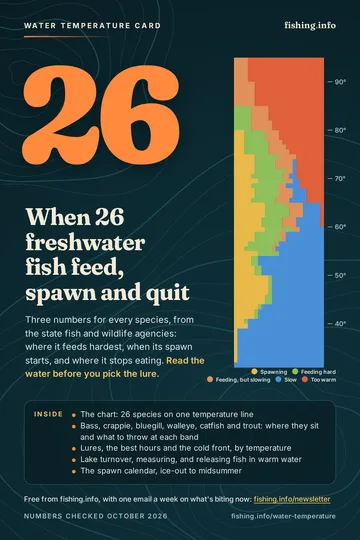
Free card: what 26 species do at your water temperature
Plus one email a week on what's biting now. No sales pitches. Privacy.
What does a buzzbait do?
A buzzbait is built on the same J-shaped wire, but the blade up top is a propeller with cupped wings. It lifts the lure and holds it on the surface as long as you reel. It throws a bubble trail and a squeal from the blade rubbing on the wire.
It does not float. The retrieve starts the instant it lands and stays fast enough to keep it up. Fish it over shallow grass, along docks and wood, and in the low light that suits every topwater.
The first buzzbait was the Lunker Lure of 1976, which Jack Lewis’s 1999 BassResource history called probably the most popular ever. A trailer hook catches the bass that slap and miss; secure it with a trailer keeper.
Spinnerbait or buzzbait? Throw the buzzbait over shallow cover in warm water and low light, when bass will hit on the surface. Throw the spinnerbait at any depth and in colder water, when they will not come up.
Where do inline spinners fit?
Inline spinner or spinnerbait? The spinnerbait’s bent wire guards its single hook, so it is the bass lure for grass, wood and docks. The inline spinner’s exposed treble snags in cover, but it is the better lure for trout and panfish in open water and current.
An inline spinner is a blade turning on a clevis around a straight wire shaft, with a weighted body behind it and a treble hook at the back. Trout sizes are 1/16 to 1/4 oz; bass and pike sizes are 1/4 to 1/2 oz.
André Meulnart, a French engineer, invented the Mepps Aglia in 1938 and named it for the Latin word for butterfly, after the blade’s flutter. Todd Sheldon, a Wisconsin tackle-shop owner, brought Mepps to the United States in 1951 after a day on the Wolf River.
The other names each have a signature:
- Rooster Tail (Yakima Bait): a feathered hackle tail.
- Panther Martin: the blade spins directly on the shaft.
- Blue Fox Vibrax: a two-part brass body that the maker says virtually eliminates line twist, and a free-turning brass gear that rattles.
Inline spinners twist line, from the torque of the blade. The fix is a size 12 or 14 barrel swivel about 12 in (30 cm) above the lure.
What rod, reel and line?
Spinnerbaits and buzzbaits are baitcaster lures. Use a 7 ft (2.1 m) medium-heavy or heavy rod with a moderate-fast to fast action, or 7 ft 6 in (2.3 m) to slow-roll deep.
The line differs. Tackle Warehouse’s gear guide puts a spinnerbait on 12–20 lb fluorocarbon in open water and 40–50 lb braid in grass and muddy water. A buzzbait takes 20–30 lb braid tied direct, Brandon Cobb’s choice on BassResource, or monofilament. Skip fluorocarbon on a buzzbait: it sinks and drags the nose down.
The reel is 6.1–6.5:1 for a spinnerbait, 5.1–5.4:1 to slow-roll and 7:1 or faster for a buzzbait; the reels hub explains why.
Inline spinners go on light spinning tackle: a light to medium rod and 4–8 lb line. In current, cast upstream and across, and reel just fast enough to feel the blade turn.
Where next?
The chatterbait hub explains the bladed jig that took the spinnerbait’s place on many tournament boats. The jigs hub covers the skirted jig the spinnerbait grew from.
All articles
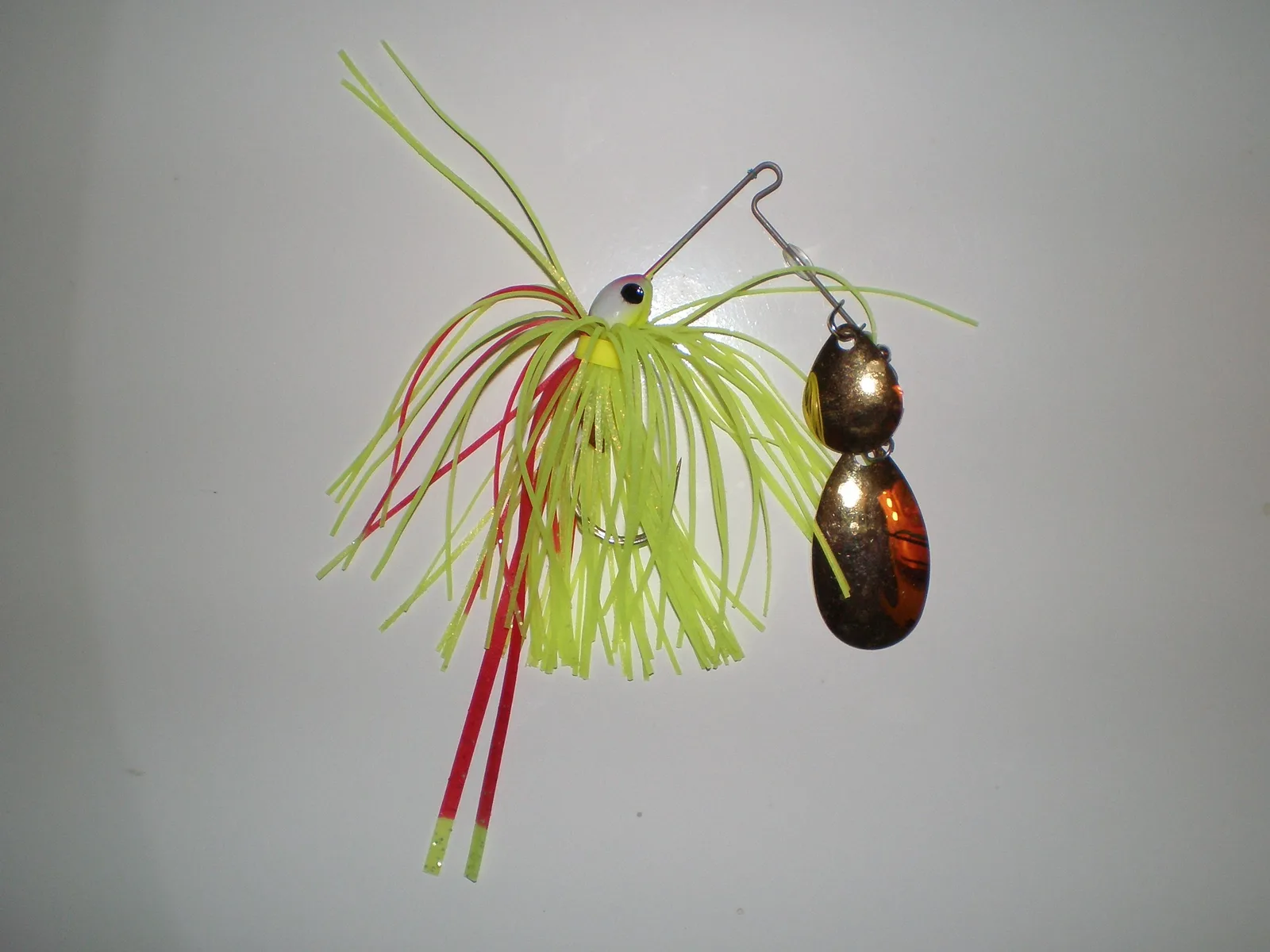 Buzz Bait: How to Fish It, the Trailer Hook, and When It Beats a Frog
A buzz bait is a wire-frame topwater with a propeller blade that squeals and churns; it sinks at rest, so it must keep moving. Retrieve, trailer hook, when.
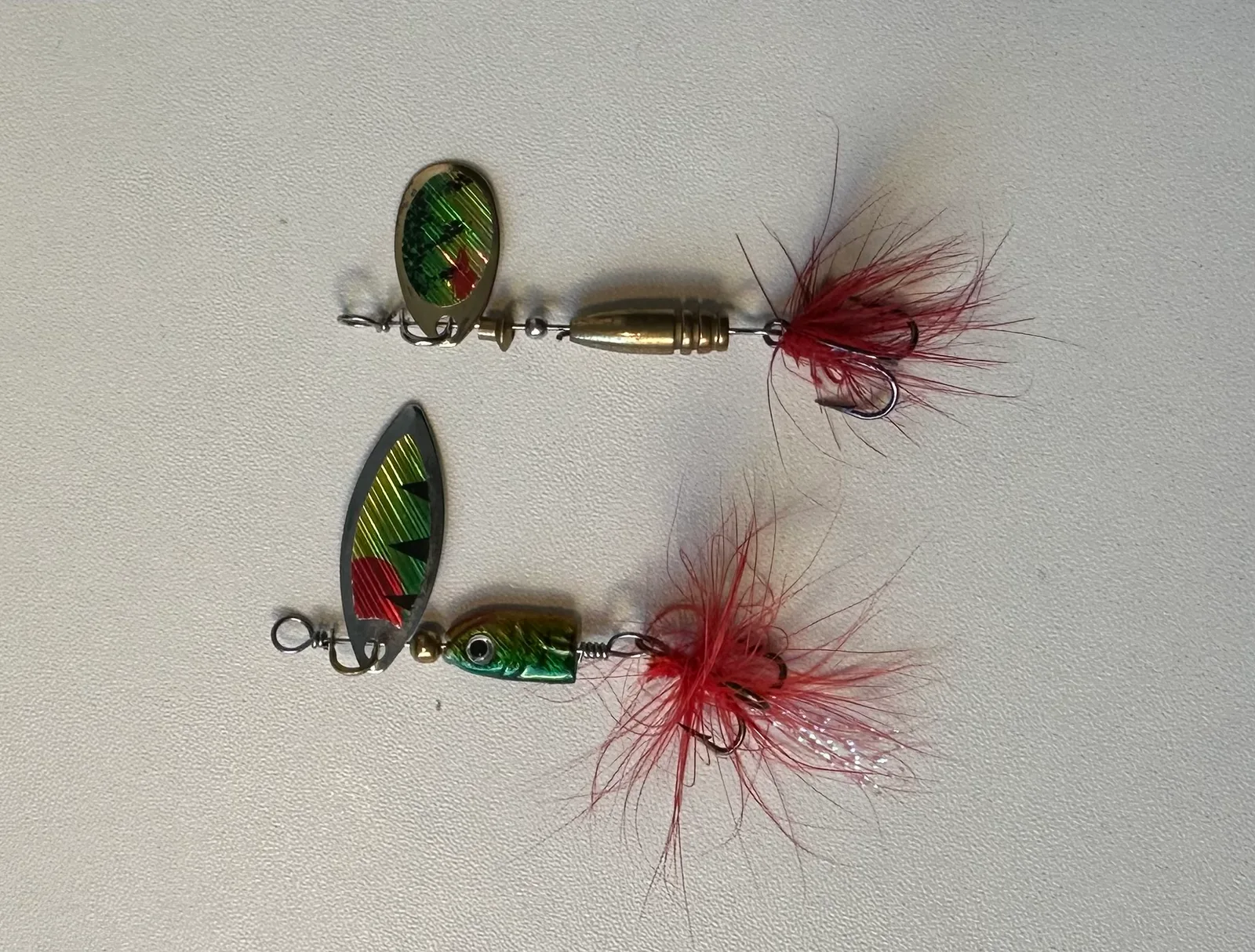 Rooster Tail Lure: Sizes, How to Fish It for Trout and Bass
The Rooster Tail lure is Yakima Bait's inline spinner with a hackle tail: all nine sizes with hook and length, the retrieve by water, the swivel, colors.
Free download
The water temperature card
Read your water temperature and the card tells you who is spawning, who is feeding and what to throw. 26 species, 16 pages, for your phone and the tackle box.
Plus one email a week on what's biting now. No sales pitches. Privacy.
Sources
- Wired2Fish, How to choose the perfect spinnerbait
- Field & Stream, How to fish a buzzbait
- BassResource, Buzzbait history
- On The Water, The best spinners for trout
- BassResource, Spinnerbait blade types (Hank Parker, 2018)
- Tackle Warehouse, A thorough spinnerbait gear guide for bass anglers
- Major League Fishing, How to fish buzzbaits for bass (Curtis Niedermier, 2018)
- BassResource, Churn up more bites with a buzzbait (Pete M. Anderson, 2022)
- Wired2Fish, Best buzzbaits for bass (Shaye Baker, 2024)
- Tackle App, How to use inline spinners: setup, swivel, trout and bass
- Rapala (Blue Fox), Vibrax Original