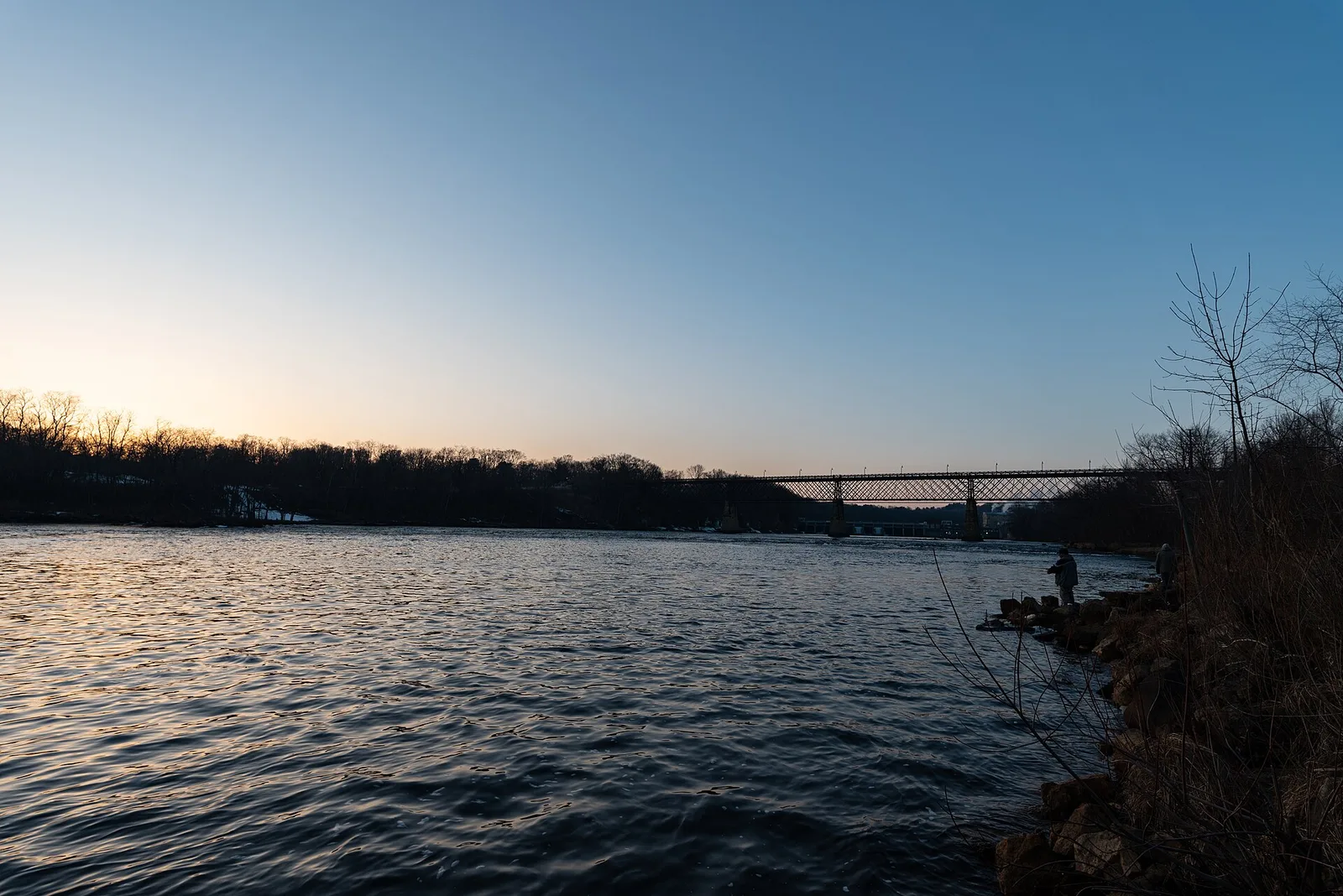
Wisconsin fishing runs on one date: the first Saturday in May, when the general inland season opens; in 2026 that was May 2, and the season runs through March 7, 2027. Panfish never close, and trout streams opened on April 4 this year, a month earlier than they used to. The muskie, the state fish, can be kept only from May 2 to December 31, at 40 in (102 cm) or more. From late December to March the lakes freeze, and a second season starts on top of the first.
Kids 15 and under fish Wisconsin without a license every day of the year, and so does anyone born before 1927.
Start here
- Ice fishing the Madison chain: five lakes around the capitol, Lake Mendota’s 171-year freeze record, and the rules that differ from the rest of the state.
- Muskie: the state fish, how old a 50-incher is, and how to tell it from a northern pike.
- Northern pike: the fish of the winter tip-up, two a day at 26 in (66 cm) in the southern zone, five of any size in the north.
- Yellow perch: Lake Mendota’s winter fish, and why a jumbo is nearly always a female.
- Panfish: the daily limits of seven states side by side, and what Wisconsin’s cut from 25 to 10 bluegill a day did to their size.
When does each season open in 2026–27?
This is the DNR’s season table, effective April 1, 2026. The northern zone is inland water north of Highway 10; the southern zone, with Madison, Milwaukee and the Mississippi bluffs, is everything south of it. County tables override these dates and limits on named waters, so the guide is the last word for the lake you are on.
| Season | 2026–27 dates | Daily limit, minimum length |
|---|---|---|
| General inland fishing | May 2, 2026 – March 7, 2027 | by species, below |
| Early inland trout, catch and release | January 3 – April 3, 2026 | release all; artificials only |
| Inland trout, streams and spring ponds | April 4 – October 15, 2026 | per trout guide |
| Inland trout, lakes and ponds | May 2 – October 15, 2026 | per trout guide |
| Largemouth and smallmouth bass, southern zone | May 2, 2026 – March 7, 2027 | 5 in total, 14 in (36 cm) |
| Smallmouth bass, northern zone | June 20, 2026 – March 7, 2027 | 5 in total with largemouth, 14 in |
| Muskellunge, inland | May 2 – December 31, 2026 | 1, 40 in (102 cm) |
| Northern pike | May 2, 2026 – March 7, 2027 | south: 2, 26 in (66 cm); north: 5, none |
| Walleye and sauger | May 2, 2026 – March 7, 2027 | 3 in total; 15 in (38 cm) on most waters |
| Panfish (bluegill, pumpkinseed, sunfish, crappie, yellow perch) | open all year | 25 in total, no minimum |
| Lake sturgeon, Winnebago spearing | February 14 – 23, 2026 | by tag |
| Free fishing weekends | June 6–7, 2026; January 16–17, 2027 | no license; all limits apply |
Bass outside their harvest dates are catch-and-release only. Fishing for a species in its closed season is illegal even if you release it. That matters most for muskie: from January 1 to May 1 there is no muskie fishing at all, through the ice or otherwise. Walleye in the ceded territory of the north carry a slot, 15 to 20 in (38–51 cm) with one over 24 in (61 cm). The glossary’s rules section explains a slot limit, a bag limit, a possession limit and the other words the guide uses.
What does a license cost in 2026–27?
Licenses run April 1 to March 31. They are sold through the DNR’s Go Wild system, at license agents and at DNR service centers.
| License | Resident | Nonresident |
|---|---|---|
| Annual | $20 | $55 |
| First-time buyer | $5 | $28.75 |
| One day | $8 | $15 |
| Four days | – | $29 |
| Fifteen days | – | $33 |
| Junior, 16 and 17 | $7 | – |
| Senior, 65 and over | $7 | – |
| Family annual | $31 (spousal) | $70 |
| Inland trout stamp | $10 | $10 |
| Great Lakes trout and salmon stamp | $10 | $10 |
A one-day license can be upgraded to the annual later in the year for the difference, $12.75 for a resident. The trout stamp is needed on inland trout water, the Great Lakes stamp on Michigan and Superior and their tributaries; a two-day Great Lakes license for $14 includes the stamp. The states hub sets Wisconsin’s fees beside eight other states’ and explains which rules come from Washington instead of Madison.
Which fish get rules of their own?
Three fish get rules of their own. The muskie is the state fish, and the guide guards it closely: 40 in (102 cm) statewide, 50 in (127 cm) on Monona, Waubesa and Wingra, and a season that closes on New Year’s Eve. The walleye gets its own lines in the county tables, with Lake Mendota at 18 in (46 cm) and the northern slot above.
The panfish are bluegill, pumpkinseed, the other sunfish, crappie and yellow perch. Their limit is 25 in total, and it drops to 10 on lakes where the DNR wants bigger fish, Mendota among them. Rock bass are open all year with no limit at all. Every other fish starts from the species hub.
When is the ice safe?
Never fully, in the DNR’s own words: there is no such thing as 100 percent safe ice. The department does not monitor thickness anywhere, and points anglers to bait shops and fishing clubs for the day’s conditions.
Lake Mendota in Madison, watched since 1855, has frozen over on a median date of December 21 and opened around April 3. But the last 30 winters averaged 81 days of ice, against 118 in the first 30 years of the record, and the winter of 2023–24 managed only 44. The January free fishing weekend falls inside that window, and the DNR’s loaner sites lend everything but the auger.
The Madison chain page has the lake-by-lake detail: depths, access, the perch, walleye and panfish, and a first trip step by step.
All articles
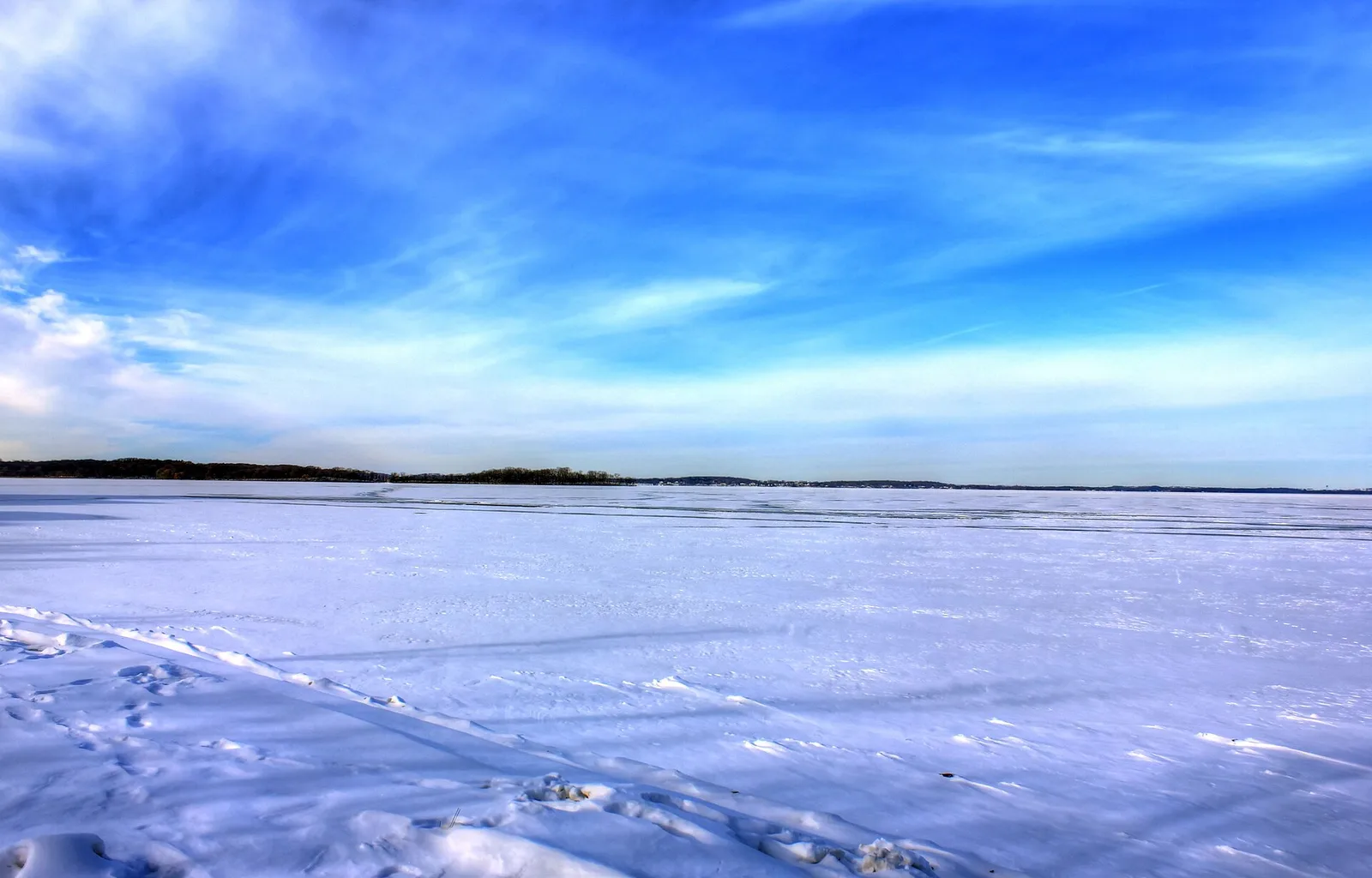 Ice Fishing Madison, WI: The Five Lakes of the Yahara Chain
Ice fishing Madison WI: the five Yahara lakes with depths and access, when Lake Mendota freezes, the rules that differ per lake, and a first trip step by step.
Sources
- Wisconsin DNR, 2026–2027 fishing season dates
- Wisconsin DNR, fishing licenses and fees
- Wisconsin DNR, Guide to Wisconsin Hook and Line Fishing Regulations 2026–2027 (PDF)
- Wisconsin DNR, fishing regulations
- Wisconsin DNR, Winter Free Fishing Weekend January 17–18, 2026
- Wisconsin DNR, Flag up! Ice fishing in Wisconsin
- Wisconsin DNR, ice safety
- Wisconsin State Climatology Office, history of ice freezing and thawing on Lake Mendota
- Wisconsin DNR, Lake Mendota lake page