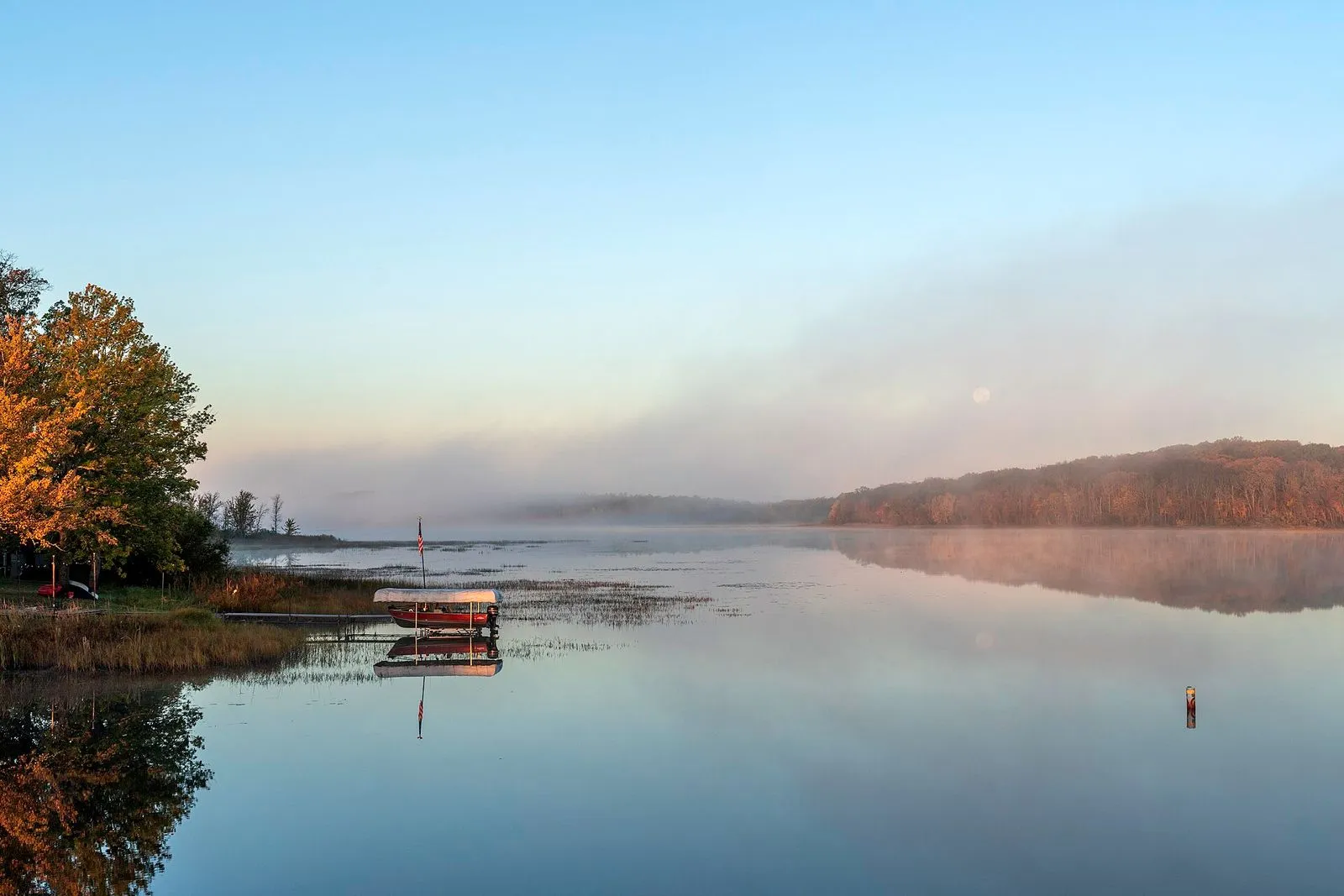
The thermometer: what every species is doing at your water temperature
8 spawning6 feeding hard4 feeding, but slowing7 slow1 too warm
Spawning 8
in or near the spawning range: shallow, on the beds or the flats next to them
- Largemouth bassspawns 60°–65°
- Smallmouth bassspawns 60°–65°
- Spotted bassspawns 57°–74°
- Striped bass (freshwater)spawns 58°–65°
- White bassspawns 55°–70°
- White perchspawns 55°–65°
- Black crappiespawns 58°–68°
- White crappiespawns 60°–70°
Where to find them and what to throw
- Largemouth bass and Smallmouth bass Where: on the flats in 2–8 ft (0.6–2.4 m); smallmouth on gravel by a boulder or log. Throw: weightless stick bait, tube, Texas rig, dead still on the bed.
- Black crappie and White crappie Where: beds in up to 6 ft (1.8 m) on brush, reeds, stumps and dock posts. Throw: a jig under a float set to bed depth; a minnow on a light hook.
Feeding hard 6
inside the comfort range, where the species is caught feeding most often
- Walleyefeeds 60°–72°
- Northern pikefeeds 55°–65°
- Muskellungefeeds 60°–72°
- Rainbow troutfeeds 55°–65°
- Brown troutfeeds 55°–65°
- Brook troutfeeds 55°–64°
Where to find them and what to throw
- Walleye Where: thermocline edge, deep weedlines, humps and points, 15–30 ft (4.6–9 m); dawn, dusk, night. Throw: crankbaits at 1.5–2.5 mph (2.4–4 km/h); bottom bouncer and harness.
Feeding, but slowing 4
above the comfort range and under the stress point: low light, deeper, slower
- Splakeslows above 60°
- Steelheadslows above 58°
- Coho and chinook salmonslows above 60°
- Burbotslows above 60°
Slow 7
below the feeding range: fish deep, small and slow, on the warmest afternoons
- Channel catfishfeeds from 75°
- Blue catfishfeeds from 75°
- Flathead catfishfeeds from 75°
- Bullheadfeeds from 75°
- Common carpfeeds from 70°
- Yellow perchfeeds from 63°
- Bluegillfeeds from 70°
Where to find them and what to throw
- Channel catfish Where: feeding builds, good from about 65 °F (18 °C), on the flats and channel edges that warm first. Throw: cut bait; evenings lengthen.
- Blue catfish Where: feeding, moving shallower as it warms. Throw: cut bait on flats and channel edges that warm first.
- Flathead catfish Where: active above 50 °F; pre-spawn feed from the 60s. Throw: live bait on channel edges.
- Bluegill Where: the first drop outside the spawning bays. Throw: cricket or worm on a #8 under a slip float.
Too warm 1
past the stress point: find cooler or deeper water, or leave trout alone
- Lake troutstress above 60°
Numbers from the chart below and the species pages; comfort and spawn ranges move with latitude, so read the groups as the band to start in. Measure at the depth you fish, not at the surface.
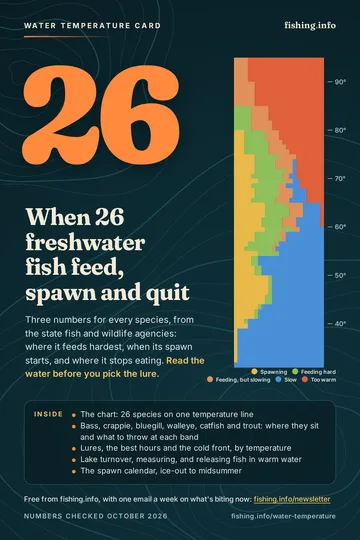
Get this thermometer on paper, free
Plus one email a week on what's biting now. No sales pitches. Privacy.
The best water temperature for fishing, for most freshwater game fish, is 65–75 °F (18–24 °C). That is where largemouth bass, walleye, crappie, white bass and yellow perch feed hardest. Trout and salmon want it colder, 50–65 °F (10–18 °C), and catfish and carp want it warmer, 75–85 °F (24–29 °C). Set the thermometer above to your water and it sorts 26 species into spawning, feeding, slowing down and too warm; for the species with their own page it adds where to find them and what to throw.
A fish’s metabolism roughly doubles with every 18 °F (10 °C) of warming and halves with every 18 °F of cooling. A bass at 55 °F needs about a third of the food a bass at 75 °F needs, which is why the same lure that gets ignored in April gets crushed in June.
The chart
The comfort range is where the species is most often caught feeding. “Spawn” is the water temperature that starts spawning. “Stress” is where feeding slows and the fish move to find cooler water, or deeper water for the coldwater species. The figures come from the state fish and wildlife agencies and three compilations (Coutant 1977, Hokanson 1977, Wismer and Christie 1987), rounded to the nearest degree. Each row was checked against at least one of them, and the bass, catfish and trout rows follow the sourced profiles on the species pages.
| Species | Comfort range | Spawn begins | Stress point |
|---|---|---|---|
| Largemouth bass | 65–80 °F (18–27 °C) | about 60 °F (16 °C) | above 85 °F (29 °C) |
| Smallmouth bass | 65–72 °F (18–22 °C) | 60–65 °F (16–18 °C) | above 75 °F (24 °C) |
| Spotted bass | 65–78 °F (18–26 °C) | 57–74 °F (14–23 °C) | above 85 °F (29 °C) |
| Striped bass (freshwater) | 55–68 °F (13–20 °C) | 58–65 °F (14–18 °C) | above 77 °F (25 °C) |
| White bass | 65–80 °F (18–27 °C) | 55–70 °F (13–21 °C) | above 85 °F (29 °C) |
| Channel catfish | 75–85 °F (24–29 °C) | 75–80 °F (24–27 °C) | feeding stops below 50 °F (10 °C) |
| Blue catfish | 75–85 °F (24–29 °C) | 70–75 °F (21–24 °C) | slow below 55 °F (13 °C) |
| Flathead catfish | 75–85 °F (24–29 °C) | 72–80 °F (22–27 °C) | slow below 50 °F (10 °C), stops near 43 °F (6 °C) |
| Bullhead | 75–85 °F (24–29 °C) | 70–75 °F (21–24 °C) | above 90 °F (32 °C) |
| Common carp | 70–85 °F (21–29 °C) | 63–75 °F (17–24 °C) | above 95 °F (35 °C) |
| Walleye | 60–72 °F (16–22 °C) | 42–50 °F (6–10 °C) | above 76 °F (24 °C) |
| Northern pike | 55–65 °F (13–18 °C) | 40–52 °F (4–11 °C) | above 75 °F (24 °C) |
| Muskellunge | 60–72 °F (16–22 °C) | 49–60 °F (9–16 °C) | above 78 °F (26 °C) |
| Yellow perch | 63–75 °F (17–24 °C) | 44–55 °F (7–13 °C) | above 80 °F (27 °C) |
| White perch | 65–80 °F (18–27 °C) | 55–65 °F (13–18 °C) | above 85 °F (29 °C) |
| Bluegill | 70–80 °F (21–27 °C) | 67–80 °F (19–27 °C) | above 90 °F (32 °C) |
| Black crappie | 65–75 °F (18–24 °C) | 58–68 °F (14–20 °C) | above 80 °F (27 °C) |
| White crappie | 65–75 °F (18–24 °C) | 60–70 °F (16–21 °C) | above 82 °F (28 °C) |
| Rainbow trout | 55–65 °F (13–18 °C) | 42–50 °F (6–10 °C) | above 68 °F (20 °C) |
| Brown trout | 55–65 °F (13–18 °C) | 42–48 °F (6–9 °C) | above 70 °F (21 °C); dies above 81 °F (27 °C) |
| Brook trout | 55–64 °F (13–18 °C) | 40–50 °F (4–10 °C) | above 65 °F (18 °C) |
| Lake trout | 48–55 °F (9–13 °C) | 45–55 °F (7–13 °C) | above 60 °F (16 °C) |
| Splake | 50–60 °F (10–16 °C) | 45–55 °F (7–13 °C), fall (inferred from its parent species) | above 65 °F (18 °C) |
| Steelhead | 45–58 °F (7–14 °C) | upper 40s °F (8–10 °C) | above 68 °F (20 °C) |
| Coho and chinook salmon | 50–60 °F (10–16 °C) | 40–55 °F (4–13 °C), fall | above 65 °F (18 °C) |
| Burbot | 35–60 °F (2–16 °C) | 33–40 °F (1–4 °C), under ice | above 65 °F (18 °C) |
Two things stand out. The warmwater and coldwater groups barely overlap: a lake at 62 °F (17 °C) is a slow day for bass and a good one for trout, and the reverse at 74 °F (23 °C). And the spawn column is a calendar. Walleye and pike go first, right after ice-out in the 40s. Crappie and white bass follow in the 50s, then bass at 60 and bluegill in the upper 60s. Channel catfish come last, at about 75 °F (24 °C) in early summer.
Which page for your fish?
The chart gives the band to start in. The species pages take one fish at a time, with its spawn, its feeding bands and what to throw in each.
- Bass: the spawn, the bite and what to throw at each band.
- Crappie: when they move up to spawn, how deep and for how long.
- Bluegill: the 67–80 °F spawn and how to find the beds.
- Walleye: the 42–50 °F spawn window and every band after it.
- Catfish: when channels, blues and flatheads bite.
- Trout: the 68 °F line, the limits and the summer refuges.
Why does every chart you find disagree?
Put two charts side by side and the numbers differ, sometimes by ten degrees. There are three honest reasons.
- Laboratory preference is not field behavior. Coutant’s 1977 compilation, still the standard reference, lists the temperatures fish chose in tanks with a gradient. Largemouth bass in those tanks settled at 84–90 °F (29–32 °C), warmer than any angler’s chart, because a tank has food, oxygen and no reason to leave. A lake at 84 °F has less oxygen, and the bass move to shade and depth.
- Fish adapt to their latitude. Hokanson showed that yellow perch and walleye from northern lakes spawn and feed at lower temperatures than the same species farther south. The agencies disagree accordingly: Wisconsin puts northern pike spawning at 34–40 °F (1–4 °C), Minnesota at 40–50 °F (4–10 °C). A smallmouth in Lake Erie and a smallmouth in a Texas reservoir have different comfort ranges, and a national chart splits the difference.
- Comfort, growth and preference are different numbers. Channel catfish grow fastest at about 85 °F (29 °C), feed well from 70 °F and survive from just above freezing to nearly 100 °F. A chart that reports “optimum” may mean any of those three.
So use the chart the way a guide uses it: as the band to start in, adjusted by what the fish tell you that day.
How does a lake layer, and when does it mix?
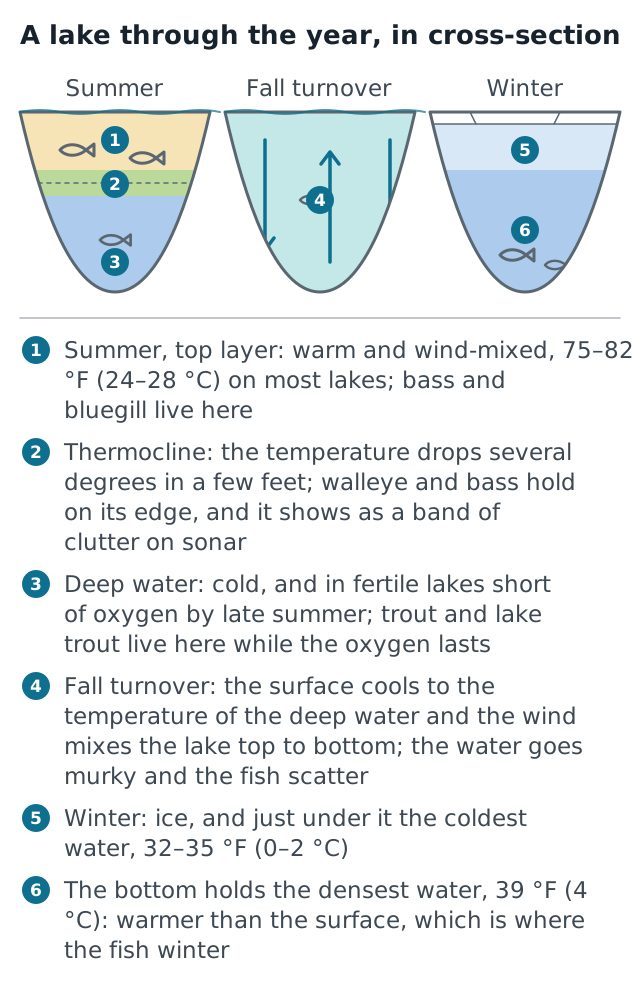
Water is densest at 39 °F (4 °C), and that one fact runs a lake’s year. From late June the sun warms the top and the wind stirs only the upper layer, so the lake stratifies. You get a warm upper layer, then a thermocline where the temperature drops several degrees in a few feet. The cold water below it gets no new oxygen until fall.
In fall the surface cools to the temperature of the deep water, and the layers lose their difference in density. One windy week then mixes the whole lake top to bottom. That is the fall turnover, the murky, scattered week every reservoir angler knows. In winter the order flips: the coldest water sits just under the ice and the 39 °F water on the bottom, which is where the fish spend it.
Measure where the fish are, not where you are
A surface reading from the boat’s sonar is the least useful temperature on the lake. Three rules make the number mean something:
- Depth. In a stratified summer lake, bass and walleye hold on the thermocline edge and trout and salmon live under it. A summer lake can read 82 °F (28 °C) on top and 60 °F (16 °C) at 15 ft (4.6 m). A fish finder shows the thermocline as a band of clutter at one depth (how to read one).
- Time of day. In spring a shallow bay warms 5–8 °F (3–4 °C) between dawn and mid-afternoon, and the afternoon is when pre-spawn bass move up. The morning reading tells you nothing about the afternoon bite.
- Trend beats level. Fish respond to the direction of change more than to the number. A three-day warming trend in April at 52 °F (11 °C) fishes better than a stable 58 °F (14 °C) after a cold front.
To get a reading before you leave home, the lake water temperature page shows how to find one.
What to throw for bass at each temperature
Here is the band, where the bass sit and the lure that matches it, for largemouth and smallmouth in a typical northern-tier reservoir. Southern lakes run the same sequence a month or two earlier.
- Below 48 °F (9 °C), winter. Bass sit deep on vertical structure: bluffs, channel drops, standing timber. Suspending jerkbaits worked with long pauses, a jig or a leadhead grub crawled along the bottom, a blade bait or spoon dropped on marked fish.
- 48–55 °F (9–13 °C), pre-spawn. Bass move from wintering areas toward spawning flats and stage on the first structure next to them. A deep crawfish-pattern crankbait, a slow-rolled spinnerbait, a lipless crankbait over emerging grass.
- 55–70 °F (13–21 °C), spawn. Flat, protected, shallow structure; nests in 2–8 ft (0.6–2.4 m). A tube or floating worm in clear water, a soft jerkbait in stained water, a wacky-rigged stick bait around beds.
- 70–80 °F (21–27 °C), post-spawn to summer. Bass split: some on the first deep break, some in shallow cover. Topwater at dawn and dusk, a frog over grass, a Texas-rigged worm or a football jig on the breaks by day.
- Above 80 °F (27 °C), high summer. Feeding windows shrink to low light, and the fish go to shade, current and the thermocline edge. Deep crankbaits and Carolina rigs on ledges, a punch rig into the thickest mat, night fishing with a black spinnerbait.
- Cooling back through 65–55 °F (18–13 °C), fall. The best feeding of the year as bass chase shad into creeks and coves. Lipless crankbaits, spinnerbaits, walking topwaters, a swimbait when the bait balls up.
The same logic runs for every species in the chart: find where the water is in its range, and the position and the lure follow. What the weather, the barometer and the moon do to the bite is on the conditions hub; the knots and the basics are under techniques.
All articles
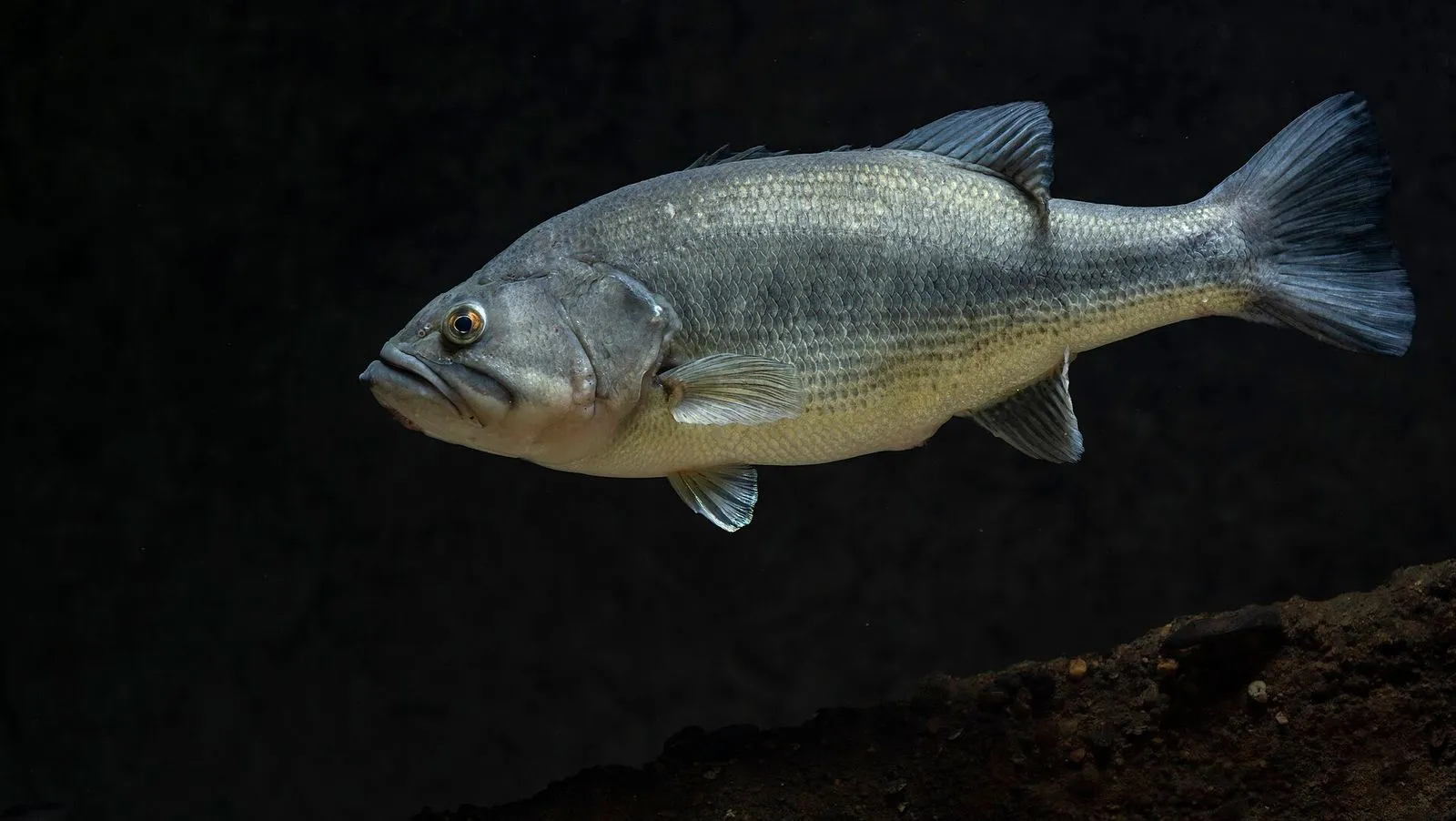 Bass Water Temperature: Spawn, Bite and What to Throw at Each Band
Bass bite best at 65–80 °F and spawn at about 60 °F. A band-by-band table of where bass sit, what to throw and how fast, from 40-degree water to summer heat.
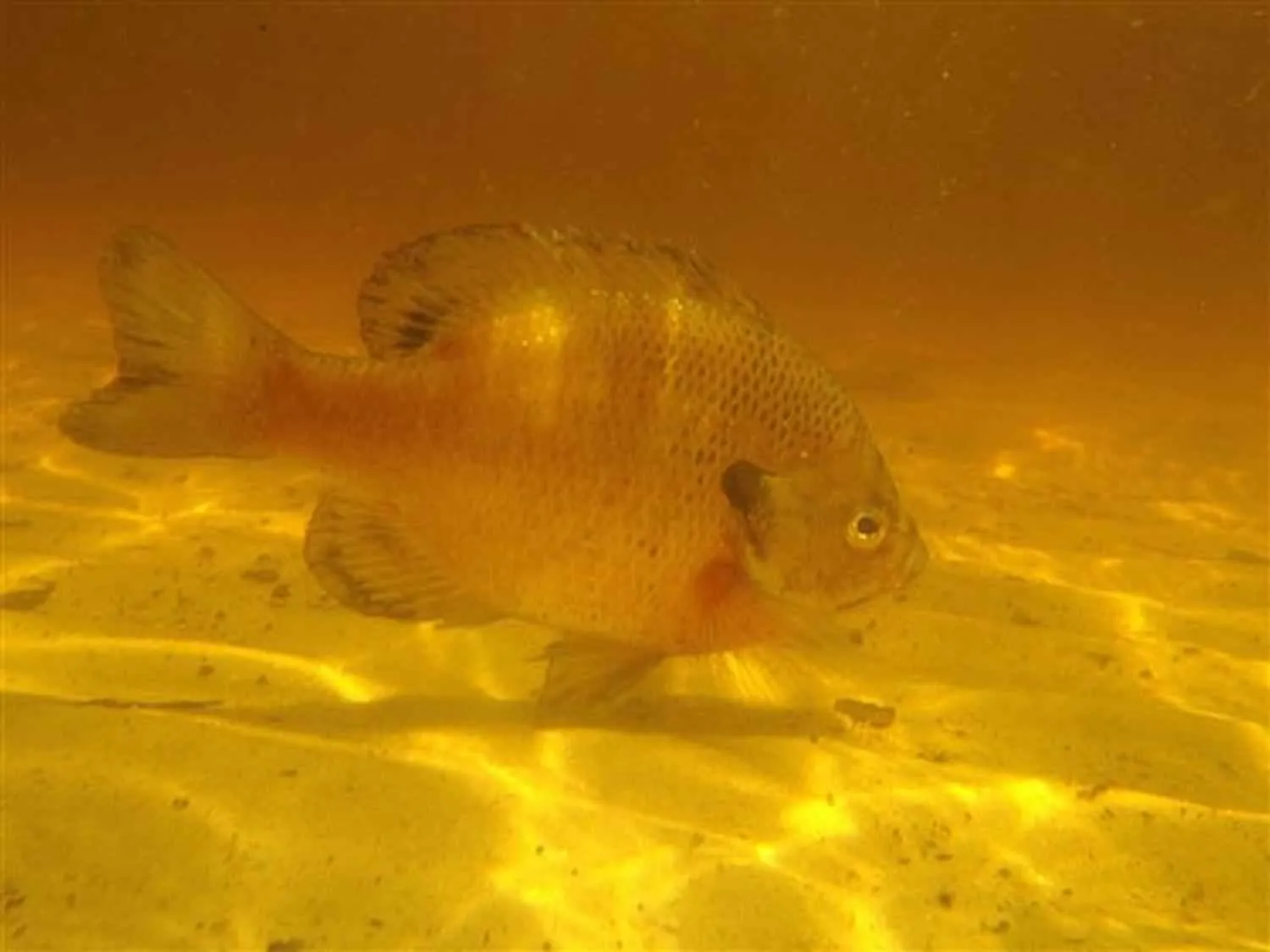 Bluegill Spawn Temperature: 67–80 °F, and How to Find the Beds
Bluegill spawn at 67–80 °F (19–27 °C), in waves from late May into August in the north and longer in the south. Where the beds are and how to fish them.
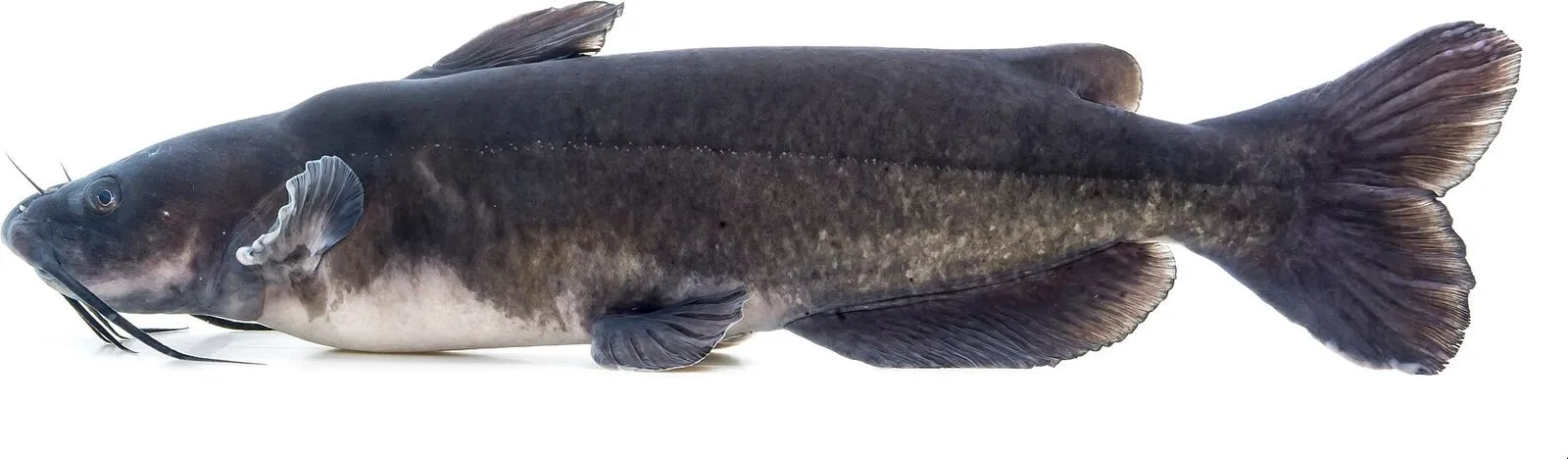 Catfish Water Temperature: When Channels, Blues and Flatheads Bite
Catfish feed hardest at 75–85 °F. The water temperatures where channel, blue and flathead catfish start biting, spawn and quit, and how to fish each band.
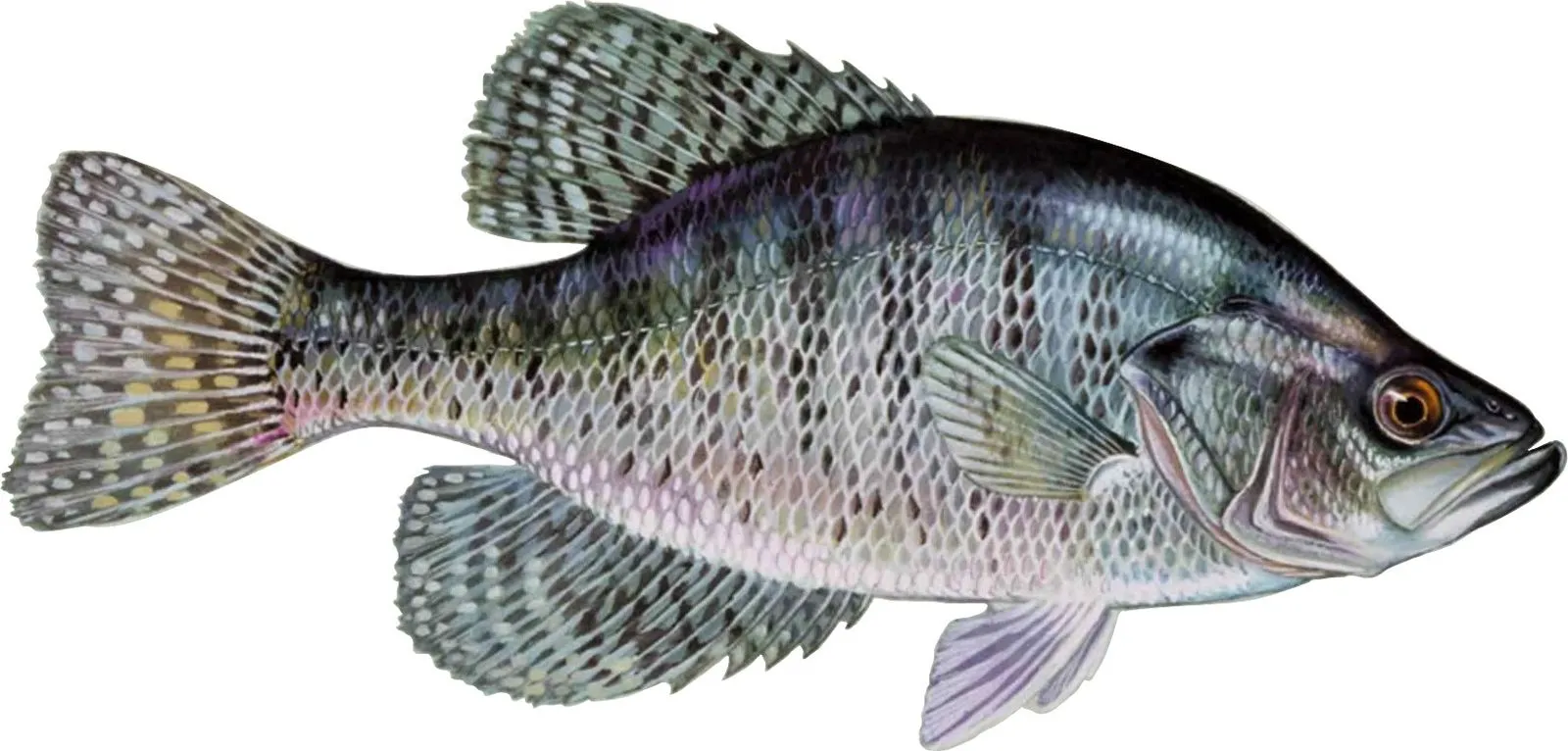 Crappie Spawn Temperature: When They Move Up, How Deep, How Long
Black crappie spawn at 58–68 °F, white crappie at 60–70 °F: when they move up, how deep by water clarity, one spawn a year, and the fall bite.
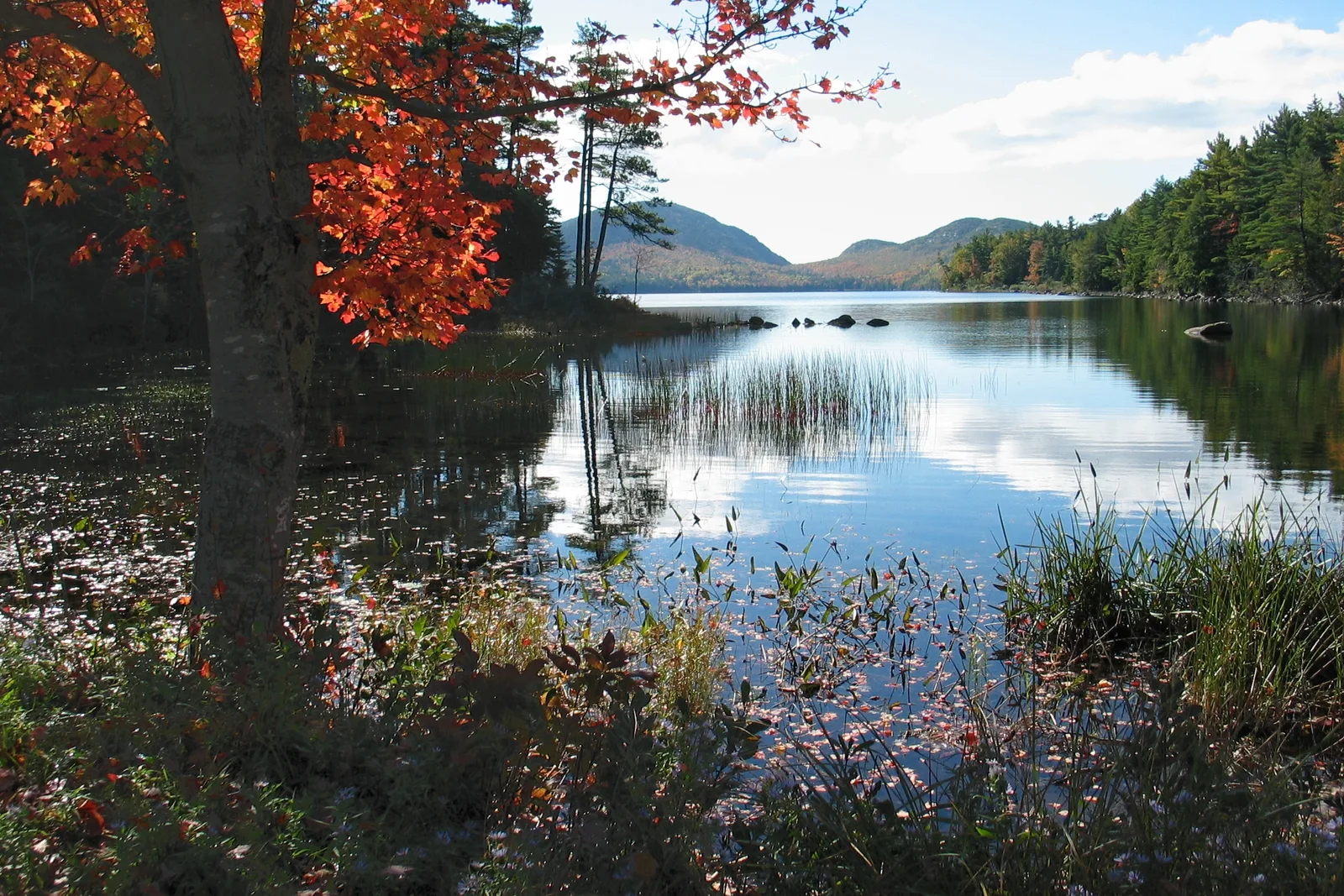 Lake Turnover: How Fall Mixing Works and Where the Fish Go
Lake turnover is the fall mixing that ends the summer thermocline: what sets it off, how long it lasts, seven signs it happened, where the fish go.
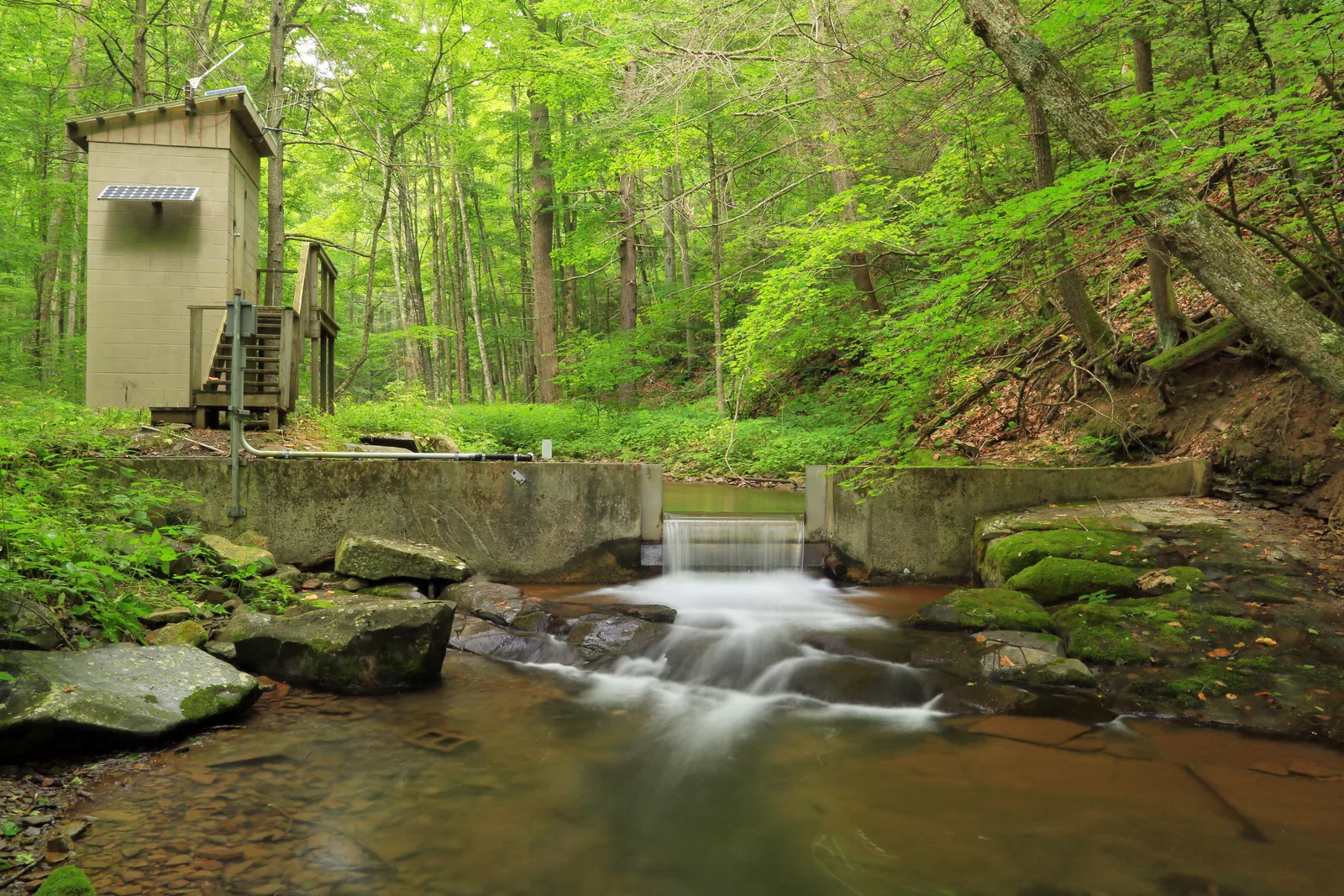 Lake Water Temperature: How to Find It Before You Go
Four ways to know your lake's water temperature before you go: live USGS and NOAA sensors, satellite maps, your own thermometer, and the air-temperature rule.
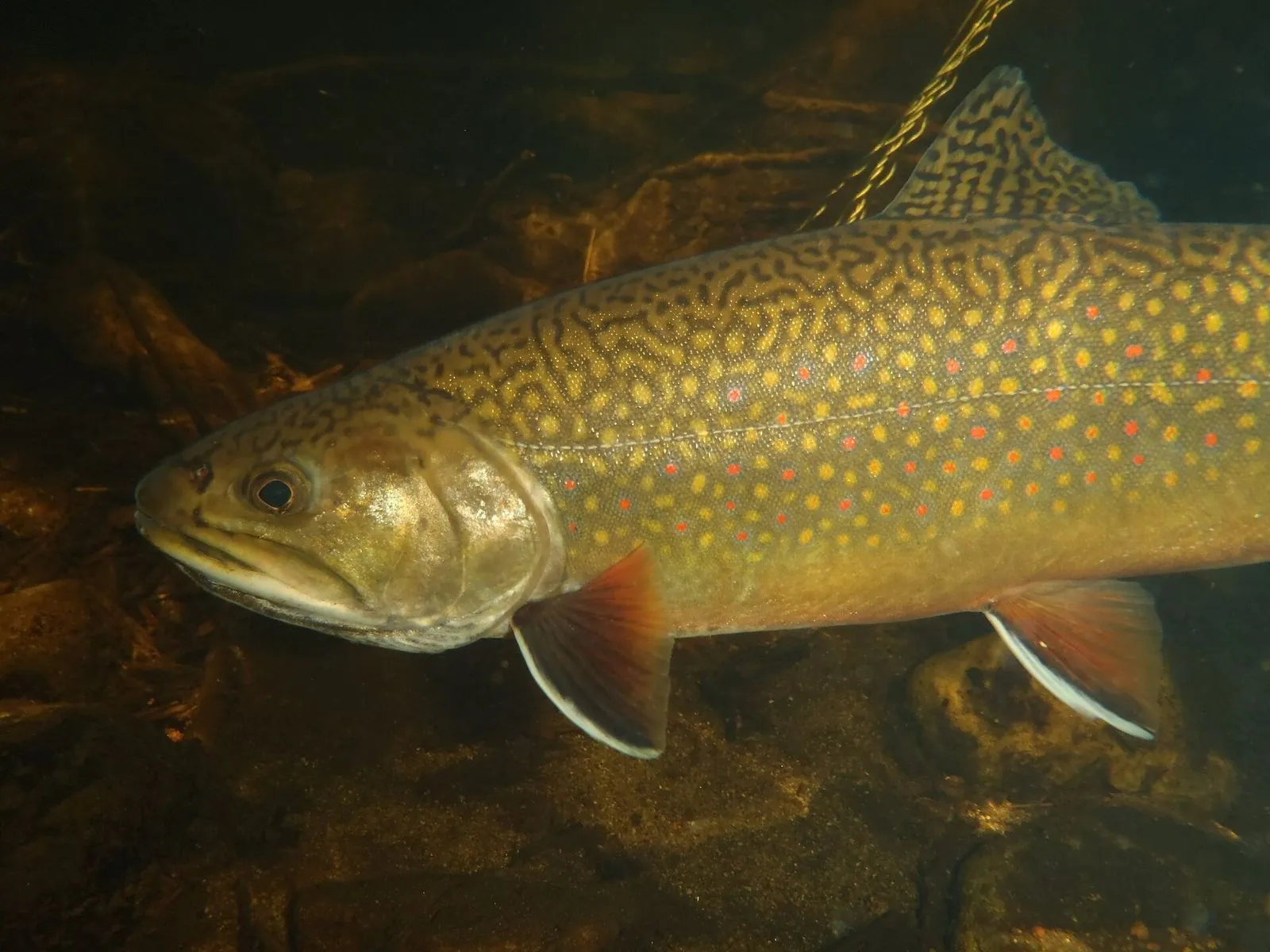 Trout Water Temperature: The 68 °F Line, Limits and Summer Refuges
Trout feed best at 55–65 °F and stress above 68 °F. The chart for five trout species, why anglers stop at 68, and where trout go when rivers warm.
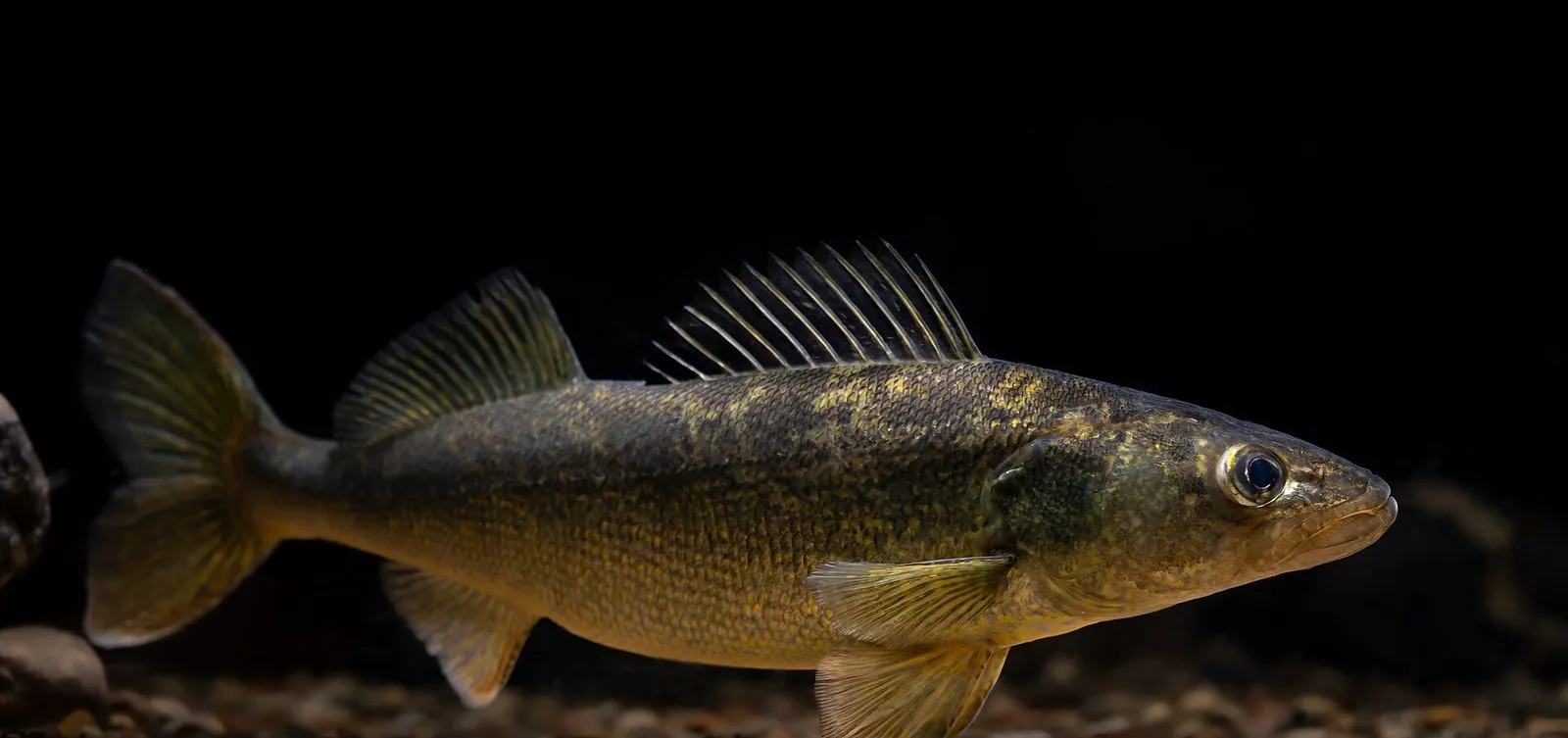 Walleye Spawn Temperature: The 42–50 °F Window and Every Band After
Walleye spawn at 42–50 °F (6–10 °C), right after ice-out. Then the 60–72 °F summer band, the 76 °F ceiling and the fall return, with depth and speed.
Free download
The water temperature card
Read your water temperature and the card tells you who is spawning, who is feeding and what to throw. 26 species, 16 pages, for your phone and the tackle box.
Plus one email a week on what's biting now. No sales pitches. Privacy.
Sources
- Coutant, C. C. (1977), Compilation of temperature preference data, Journal of the Fisheries Research Board of Canada 34:739–745
- Hokanson, K. E. F. (1977), Temperature requirements of some percids and adaptations to the seasonal temperature cycle, Journal of the Fisheries Research Board of Canada 34:1524–1550
- Wismer, D. A. and Christie, A. E. (1987), Temperature relationships of Great Lakes fishes, Great Lakes Fishery Commission Special Publication 87-3
- Clarke, A. and Johnston, N. M. (1999), Scaling of metabolic rate with body mass and temperature in teleost fish, Journal of Animal Ecology 68:893–905
- Texas Parks and Wildlife, largemouth bass species profile
- Texas Parks and Wildlife, spotted bass
- Texas Parks and Wildlife, striped bass
- Texas Parks and Wildlife, white bass (brochure)
- Texas Parks and Wildlife, white crappie
- Wisconsin DNR, smallmouth bass
- Wisconsin DNR, walleye
- Wisconsin DNR, northern pike
- Wisconsin DNR, muskellunge
- Wisconsin DNR, bluegill
- Wisconsin DNR, bullheads (fact sheet)
- Wisconsin DNR (2016), Distribution, biology and management of Wisconsin's ictalurids
- Wisconsin DNR, chinook salmon and coho salmon (fact sheets)
- SRAC Publication 180, Channel catfish: life history and biology
- Mississippi State University Extension, biology of catfish
- Virginia Department of Wildlife Resources, blue catfish
- Minnesota DNR, northern pike species profile
- Minnesota DNR, yellow perch species profile
- Minnesota DNR, crappie biology
- New Hampshire Fish and Game, white perch
- New York DEC, trolling for Lake Ontario trout and salmon (preferred temperatures)
- New York DEC, steelhead fishing in Lake Ontario tributaries
- EPA Region 10 (2003), Guidance for Pacific Northwest state and tribal temperature water quality standards
- West Virginia DNR, brook trout
- Michigan DNR, lake trout
- Maine Department of Inland Fisheries and Wildlife, splake management plan
- Alaska Department of Fish and Game, burbot species profile
- The Tackle Room, striped bass fishing guide (the 55–68 °F feeding band)
- FishBase, Cyprinus carpio (common carp)