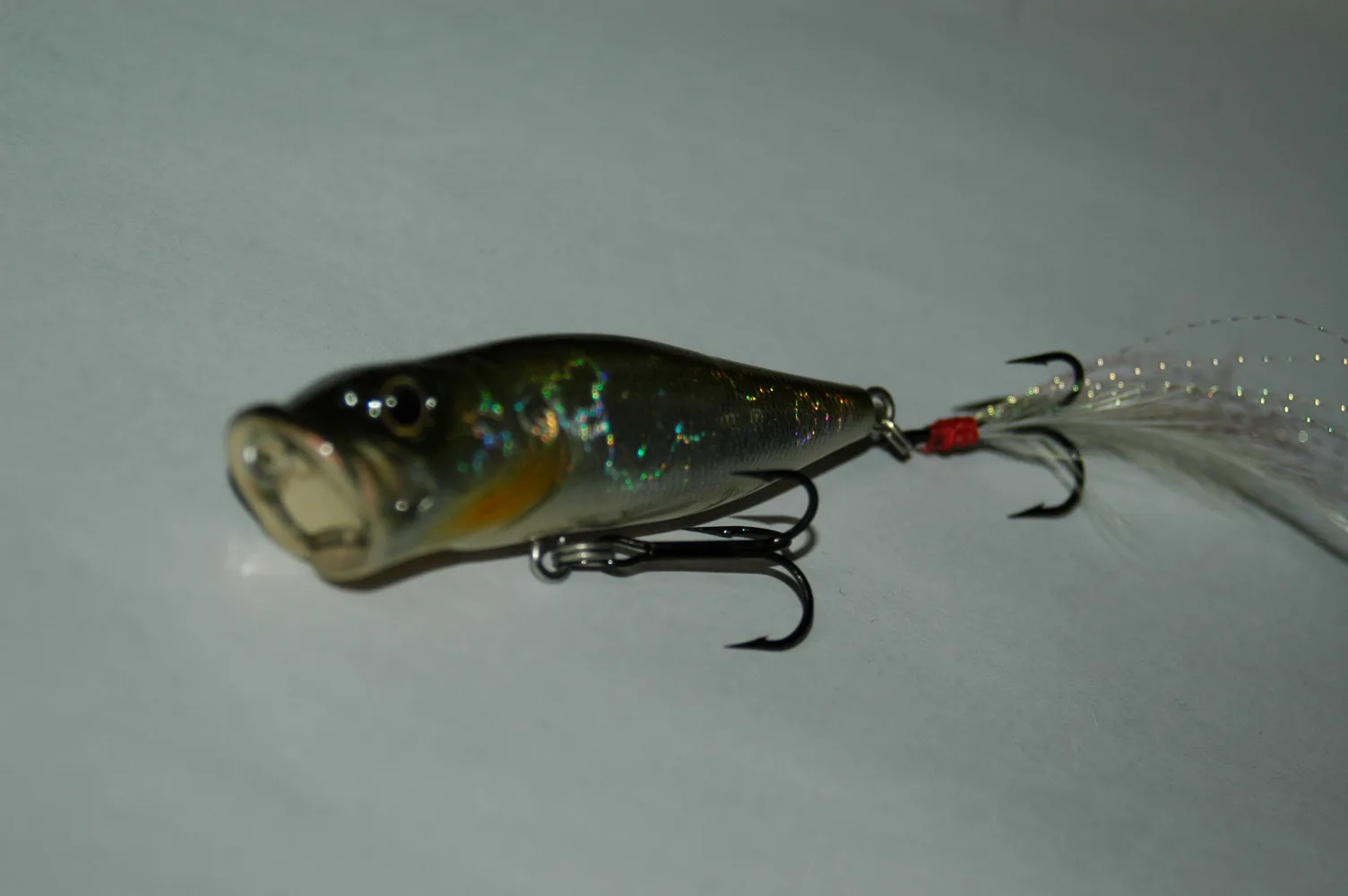
Topwater lures are fished on the surface, and they work in a narrow window: water of about 65 to 85 °F (18–29 °C), low light, and a calm or lightly rippled surface. Inside that window they are the most exciting lure family there is, because you see the strike. Outside it, in cold water or bright midday sun, they catch next to nothing. The first hour of a warm summer morning is their hour.
Never tie a topwater to fluorocarbon: it sinks and pulls the nose of the lure under. Mono floats, braid floats, and both let the lure walk.
Start here
- Frog lures: how to fish a hollow-body frog over grass, and the hookset.
- Whopper Plopper: the sizes, how to fish it, and where it began.
- Bass fishing: the seasons behind the topwater bite.
- Spinnerbaits: the buzzbait’s wire-frame family.
- Fishing line: why fluorocarbon and topwater do not mix.
- Fishing lures: the other lure families.
Which topwater does what?
Five families cover the surface, each with its own movement, sound and cover.
| Family | How it moves | Sound | Cover | Reference lures |
|---|---|---|---|---|
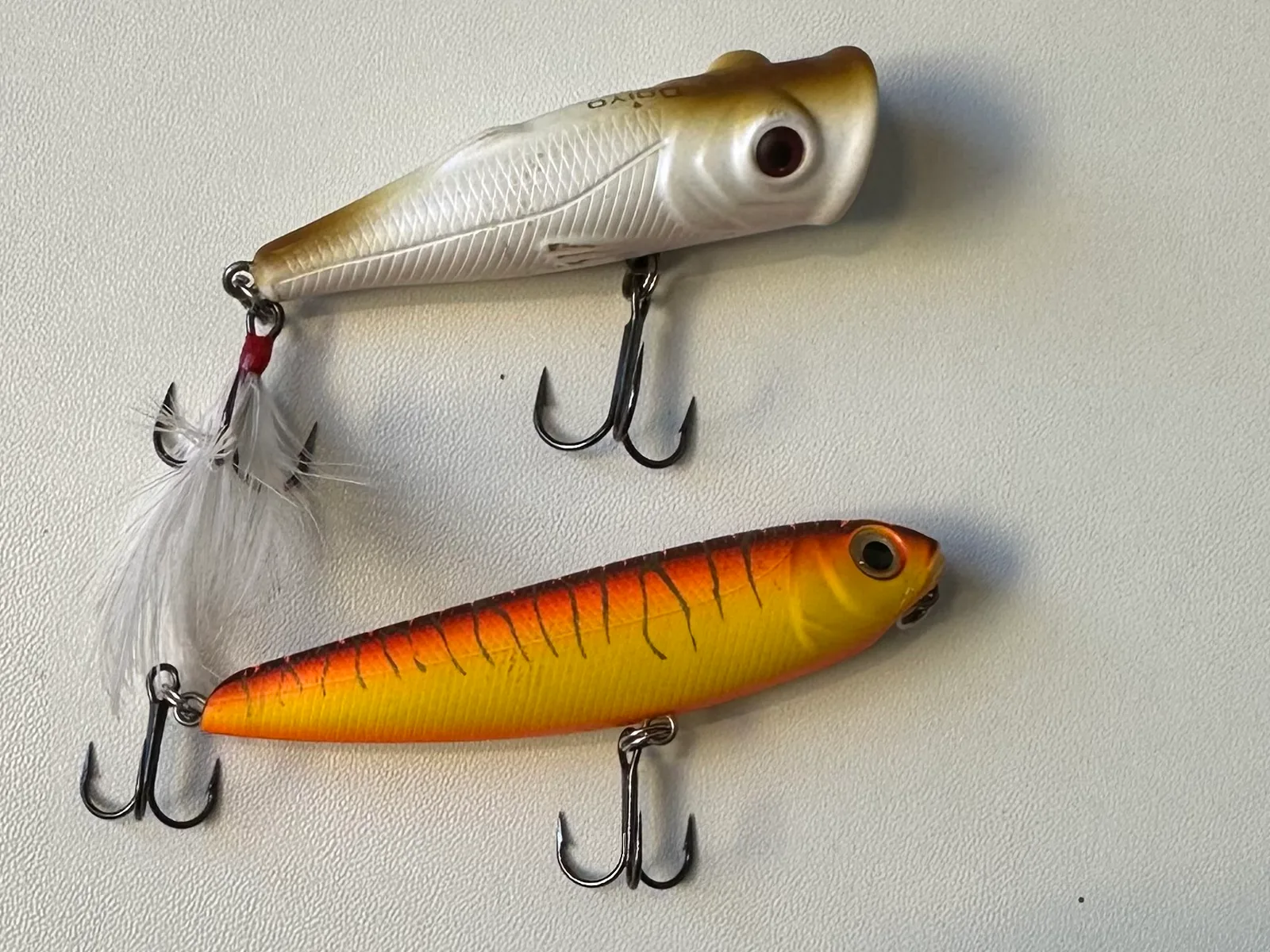
| Walking bait | Side-to-side “walk the dog” on rod twitches | A slap; most rattle, the original Zara Spook is silent | Open water, points, over grass | Heddon Zara Spook, Super Spook, Super Spook Jr. |
| Popper / chugger | Cupped face pops or spits on each pull | Pop or spit | Targets: docks, laydowns, pockets | Rebel Pop-R, Arbogast Hula Popper, KVD Splash |
| Prop bait / plopper | Tail propeller churns on a steady retrieve | A hollow plop; only the Whopper Plopper 130 rattles | Laydowns, docks, grass edges | River2Sea Whopper Plopper, Devil’s Horse |
| Hollow-body frog | Weedless body walked or crawled over mats | Little | Lily pads, hydrilla mats, thick grass | Snag Proof, SPRO Bronzeye, Booyah Pad Crasher |
| Buzzbait | Blade on a wire arm lifts it to the surface; sinks at rest | Squeak and bubble trail | Shallow grass, docks, wood | Lunker Lure and its descendants |
So the best topwater for bass is the one that suits the cover in front of you. In open water and over schooling fish, walk a Spook: the big Super Spook in a wind, the Super Spook Jr. for fussy fish in clear water. Cast a popper tight to a dock or laydown and let it rest. Over pads and matted grass, fish the weedless frog.
The advice is for bass; walking baits and poppers also take stripers, redfish, pike and seatrout.
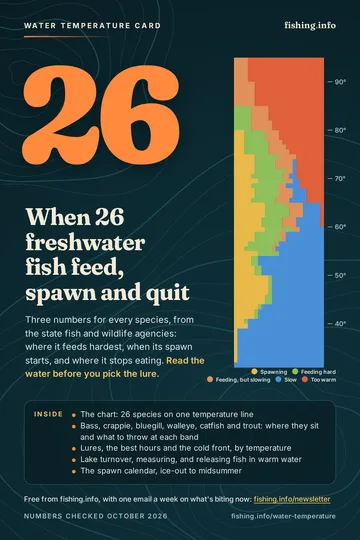
Free card: what 26 species do at your water temperature
Plus one email a week on what's biting now. No sales pitches. Privacy.
When does topwater work?
Water temperature comes first: about 65 to 85 °F, and below 60 °F (16 °C) the surface bite all but stops, by Bass Forecast’s guide. A warming spell before a cold front is a peak. Kevin VanDam’s season guide puts topwater in the post-spawn, at 70–75 °F (21–24 °C), on summer mornings until the sun clears the trees, and in fall when bass school on the surface. The bass water temperature chart shows where that sits in the year.
Light comes second: dawn, dusk and overcast days, when bass are shallow and looking up. After dark the classic is the Jitterbug, a crawler reeled slow and steady so bass find it by sound.
The surface comes third. Calm to lightly rippled water lets a walking bait be seen and heard. A chop favors a louder popper or a plopper.
How do you fish each one?
- Walking bait: fish it on slack line. Twitch the rod tip in a rhythm and give the reel a half-turn each time, so the nose swings left and right. Anglers call it walking the dog.
- Popper: cast it beside a dock or tree, pop it twice, and let it rest 10 to 30 seconds.
- Plopper: reel it steadily, like a buzzbait, rod tip high and lowered as the lure nears the boat. The tail plops at any speed; reel faster over thin cover, slower where bass need time to find it.
- Frog: walk it across the mats and pause in the holes. Then delay the hookset. Jenifer Flanagan of Bass Pro Shops counts to two while taking up the slack, then sets as hard as she can.
- Buzzbait: reel from the moment it lands, fast enough to keep the blade on the surface.
What rod and line?
Frogs are the exception to everything. They need a 7 ft to 7 ft 6 in (2.1–2.3 m) heavy or extra-heavy casting rod and 50 lb braid to start, 65 lb or more in thick mats. Tie the braid straight on: it floats, does not stretch and cuts through the grass the fish is pulled from.
Every other topwater wants a medium or medium-heavy rod with a moderate action, which keeps treble hooks in. Spool monofilament or braid, which float; fluorocarbon sinks and drags the nose of a walking bait under. The rods hub explains the moderate action and the frog rod.
The Whopper Plopper comes in six sizes. They run from the 60 mm, 1/4 oz bait for a spinning rod to the 190 mm, 2¾ oz musky version; the Whopper Plopper page matches rod and line to each.
Where did they come from?
The Zara Spook, the lure that made walking the dog famous, began as Heddon’s wooden Zaragossa. The plastic version of 1939 gained “Spook”, Heddon’s word for a plastic lure, and has been the Zara Spook ever since.
The hollow frog began with a boot. Harry Ehlers, an advertising man at Totes rain boots, watched a boot mold being dipped in plastic. In the late 1950s he molded the first hollow weedless frog in his kitchen. He sold it through Field & Stream classifieds before founding Snag Proof outside Cincinnati.
The buzzbait arrived with tournament fishing in the 1970s, the Lunker Lure first.
The Whopper Plopper is the youngest. It came out of a 2008 collaboration between Larry Dahlberg and River2Sea, with a prototype carved from a broomstick. It was a musky lure meant to sound like “a small water bird running across the surface before flight”.
When the topwater bite is over
When the sun is high, go under the surface with a crankbait, chatterbait or jig. After dark, the catfish hub is the other way to spend a summer night.
All articles
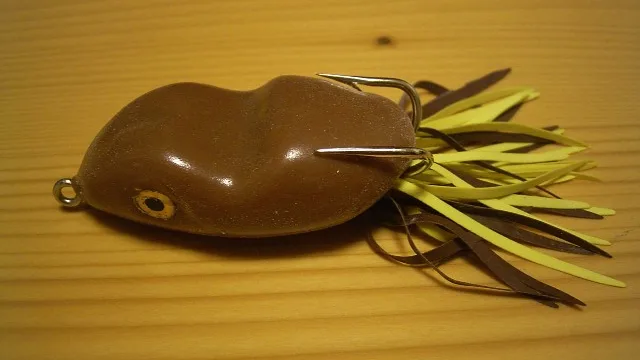 Frog Lure: How to Fish a Hollow-Body Frog Over Grass, and the Hookset
A frog lure is a hollow, weedless topwater walked over matted grass and pads where nothing else can be fished. The gear, the walk, and the two-second hookset.
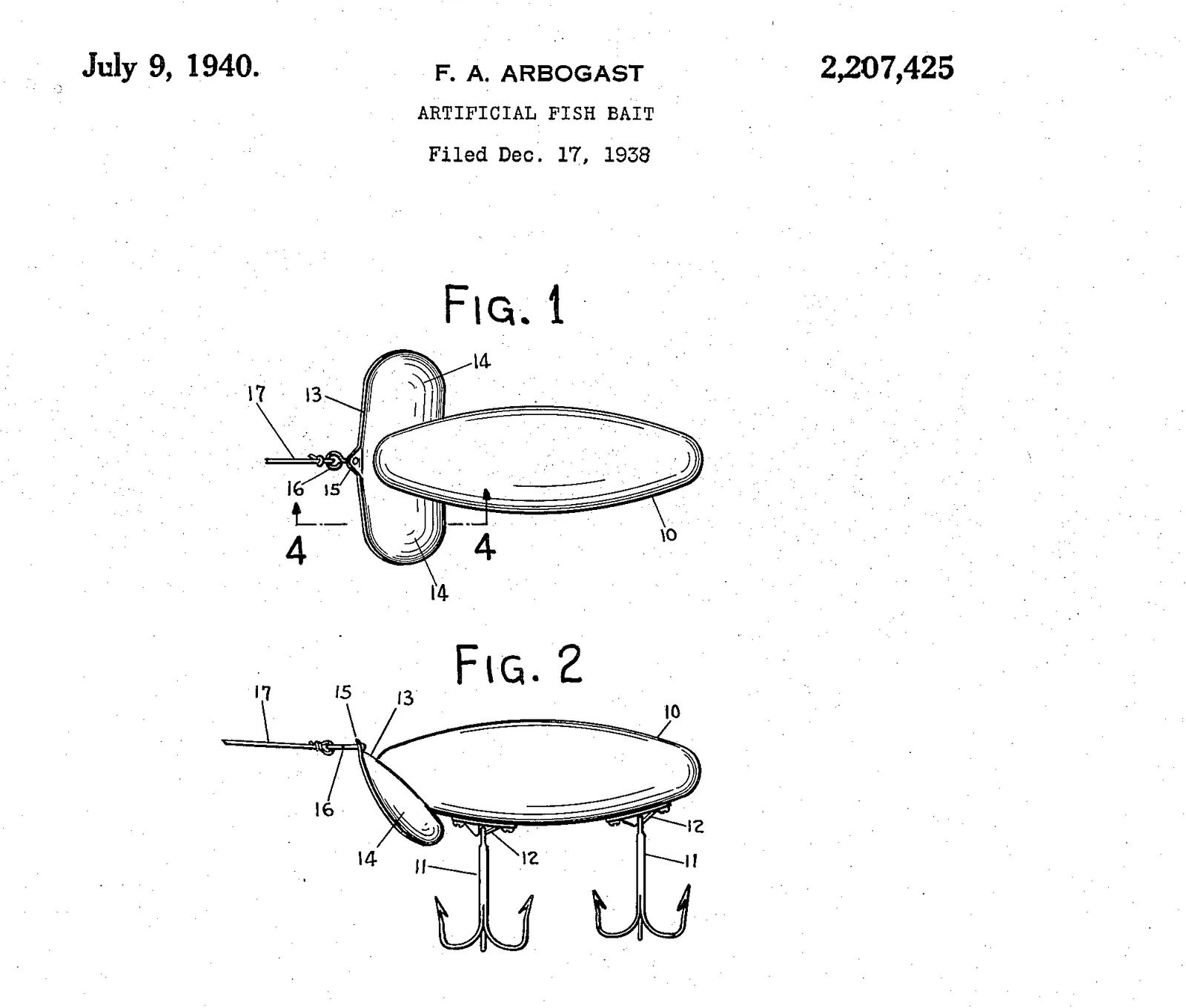 Jitterbug Lure: How to Fish the Arbogast Jitterbug, Day and Night
The Arbogast Jitterbug lure comes in four sizes, 2 to 4 1/2 in. Reel it slow and steady, throw black at night, set only when you feel the fish.
 Whopper Plopper Lure: Sizes, How to Fish It, and Where It Began
Whopper Plopper lure: all six sizes with the maker's weights and hooks, rod and line by size, the retrieves, colors by light and water, and the hookset.
Free download
The water temperature card
Read your water temperature and the card tells you who is spawning, who is feeding and what to throw. 26 species, 16 pages, for your phone and the tackle box.
Plus one email a week on what's biting now. No sales pitches. Privacy.
Sources
- BassResource, Topwater baits explained
- Wikipedia, Zara Spook
- Discount Tackle, Whopper Plopper origins
- Tackle Warehouse, Hollow body frog gear guide
- Mississippi Sportsman (Michael O. Giles, 2013), Don't pull the trigger too quickly for frog-fishing strikes
- Wired2Fish, Best Practices for Frog Fishing With Ish Monroe
- ODU Magazine, Snag Proof Lures: a brand, the innovators and the first hollow-bodied frog
- Lurenet (Jeff Samsel, 2025), A complete guide to Heddon Spook selection
- Bassmaster, KVD's 6-season bass guide
- Bass Forecast, Topwater Bass Fishing: The Art of the Surface Strike
- Kraken Bass, When Is Topwater Fishing The Best – Largemouth & Smallmouth Bass
- River2Sea, Whopper Plopper 60 (specifications)
- River2Sea, Whopper Plopper 190 (specifications)
- Wired2Fish, The Whopper Plopper: How To Use It and When To Fish It
- BassResource, Buzzbait History