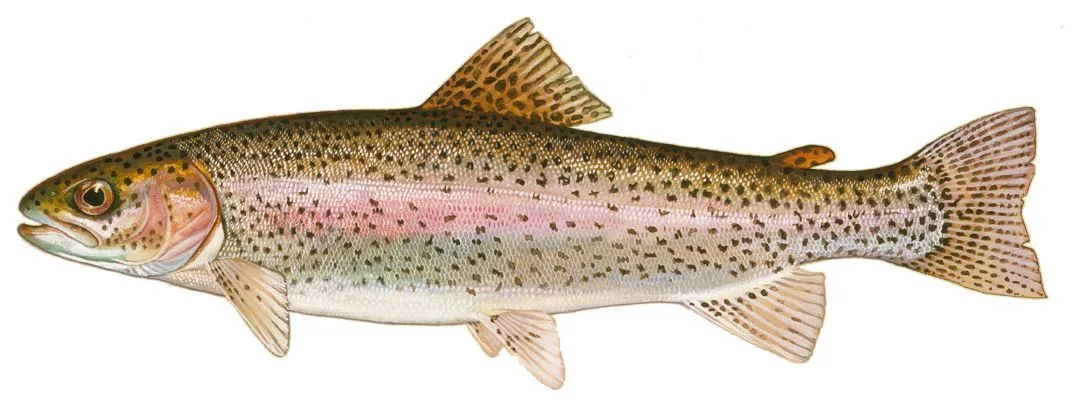
Anglers chase about a dozen fish called trout, and the spots sort them at a glance: dark spots on a light body is a true trout, light spots on a dark body is a char. Two of the most famous, the brook trout and the lake trout, are chars. The rest are the Pacific trout (rainbow, steelhead, cutthroat, golden, Apache, Gila) and the brown trout from Europe. Rainbow and cutthroat spawn in spring, brown, brook and lake trout in fall, and rainbows and browns start to stress in water of about 68 °F (20 °C).
A rainbow trout is closer kin to a Chinook salmon than to a brook trout. The “trout” everyone learns first is two different branches of the salmon family.
Start here
- Trout fishing: the season, the water and the tackle, for stocked and wild fish.
- Rainbow trout: the most stocked trout on the continent and the one most anglers catch first.
- Brown trout: the European import of 1883 that grows biggest in American rivers.
- Brook trout: the native char of the East, and why its spots are pale.
- Trout water temperature: the 68 °F line and what to do when a river reaches it.
Which trout is it?
Spots are the first sort. After that, one mark per fish does the work.
| Fish | Group | The mark that settles it | Native to |
|---|---|---|---|
| Rainbow trout | Trout | Pink band down the side, black spots over the whole tail | Pacific slope, Alaska to Mexico |
| Steelhead | Trout | A rainbow back from the sea: chrome, larger, band faint | Same species as the rainbow |
| Cutthroat trout | Trout | Red-orange slash under each side of the lower jaw | Western North America |
| Brown trout | Trout | Black and red spots with pale halos, tail nearly unspotted | Europe; stocked from 1883 |
| Golden trout | Trout | Golden sides, red band, about ten parr marks kept for life | Kern Plateau, California |
| Apache trout | Trout | Yellow-gold, even dark spots, Arizona’s state fish | White Mountains, Arizona |
| Gila trout | Trout | Gold sides shading to copper, fine spots on the back | Gila drainage, NM and AZ |
| Brook trout | Char | Wormlike pale marks on the back, red spots in blue halos, white-edged lower fins | Eastern North America |
| Lake trout | Char | Deeply forked tail, pale spots on gray-green, no red | Canada, Great Lakes, Northeast |
| Tiger trout | Hybrid | Marbled all over, no spots at all | Hatchery: brown × brook |
| Splake | Hybrid | Brook trout colors on a lake trout shape, slight fork | Hatchery: lake × brook |
Two name traps catch almost everyone. The golden trout of California is a wild native. The bright yellow “palomino” or golden rainbow in stocked water is a color strain, bred in a West Virginia hatchery in the 1950s. And the “speckled trout” of the Gulf Coast is a seatrout, a saltwater drum, not a trout.
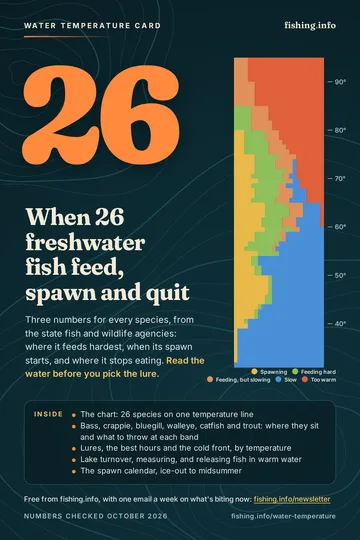
Free card: what 26 species do at your water temperature
Plus one email a week on what's biting now. No sales pitches. Privacy.
How warm is too warm?
Wild trout feed best in water of about 50–65 °F (10–18 °C). Stress starts around 68 °F (20 °C) for rainbows, 70 °F (21 °C) for browns, and a few degrees lower for brook trout. Keep Fish Wet’s review of the release studies puts the safe line for catch and release lower still, at 61 °F (16 °C). When you do release one, how to hold a trout makes sure it swims away.
Lake trout go deep in summer to stay near 50 °F, below 50 ft and some past 200 ft. Browns tolerate the warmest water of the three stream trout, which is part of why they took over rivers that brook trout lost. A stream thermometer is the most useful piece of trout tackle, and the water temperature chart gives the numbers species by species.
When does each trout spawn?
The seasons follow one split. Rainbow and cutthroat trout spawn in late winter and spring, rainbows starting as the water climbs into the upper 40s °F. Brown, brook and lake trout spawn in fall. Browns spawn from October to December at about 42–48 °F, and brook trout in September to November. Lake trout spawn in October and November on rubble shoals in the lake itself, not in streams.
Each species is shallow, aggressive and easiest to find in the weeks around its spawn, and easiest to harm then too. Wading through gravel beds crushes eggs, so step around the clean, fanned patches in a riffle.
Stocked or wild?
Most trout that anglers catch were raised in a hatchery. Pennsylvania’s 2026 program alone put about 3.2 million adult trout into 684 streams and 130 lakes. Three quarters of them were rainbows, at an average of 11 in and 0.58 lb. Stocked trout grew up on pellets, which is why they take dough baits and bright spinners in the first weeks after a truck visit. Wild trout, born in the stream, are warier and far more selective about what drifts past them. The trout bait, trout lures and trout flies pages cover what to tie on for each.
How big do they get?
Among the five trout most anglers chase, the IGFA all-tackle records run from a 14 lb 8 oz brook trout to a 72 lb lake trout. The rainbow is 48 lb from Lake Diefenbaker, Saskatchewan, in 2009, a sterile fish from an escaped net pen. The brown is 44 lb 5 oz from New Zealand’s Ohau Canal in 2020. The lake trout is 72 lb from Great Bear Lake in 1995, the cutthroat 41 lb from Pyramid Lake, Nevada, in 1925. The brook trout’s 14 lb 8 oz from Ontario’s Nipigon River in 1915 is the oldest of them all.
For the light setups trout ask for, the line and hooks hubs cover the tackle.
All articles
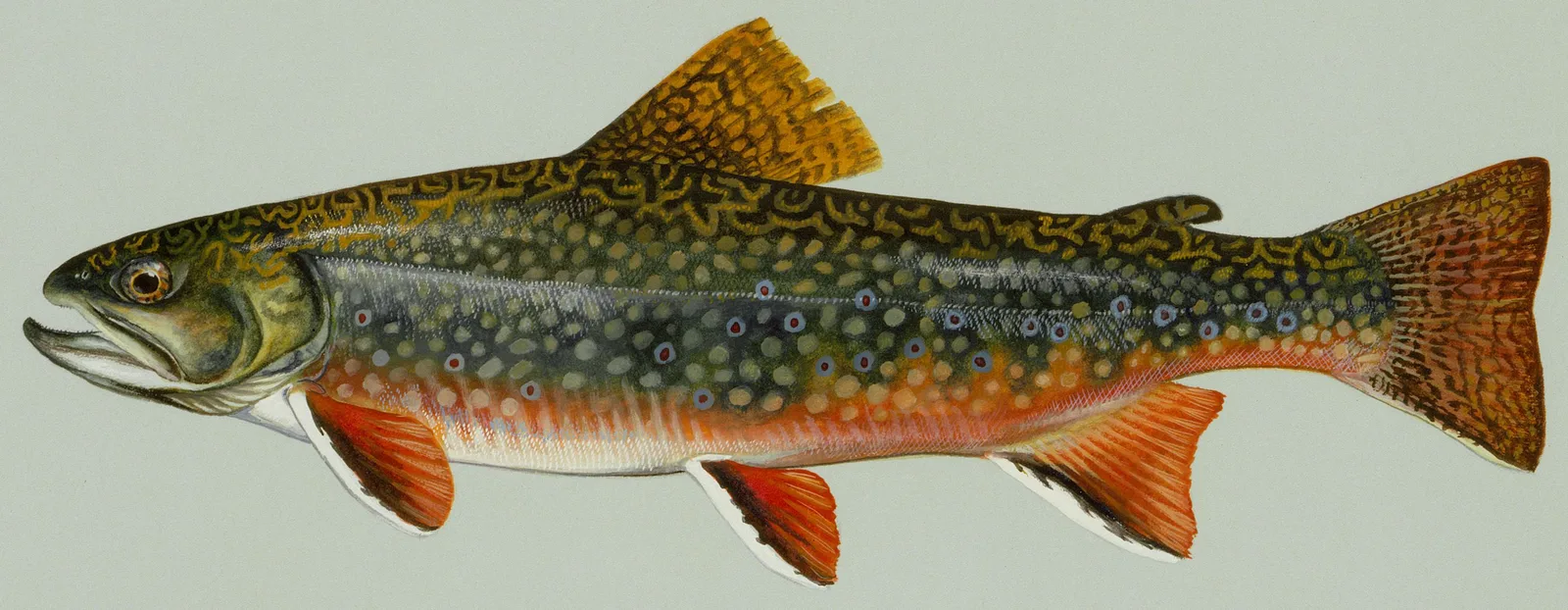 Brook Trout: The Char That Marks America's Coldest Water
The brook trout is a char, not a trout: how to tell it apart, where it still lives, why it lost 28% of its range, and the 1915 record.
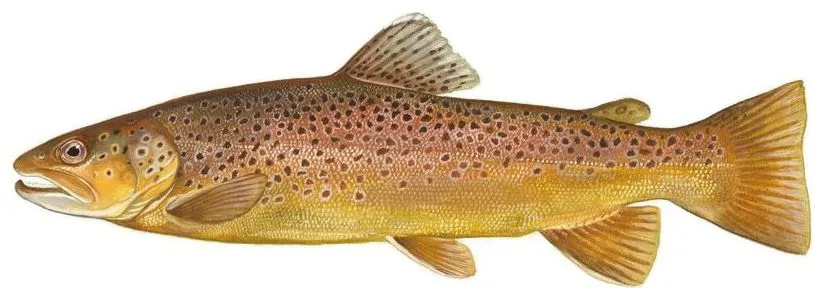 Brown Trout: Identification, History, Habits and Records
Brown trout from the agency data: how to tell one from a rainbow or brook, the 1883 import, night feeding, the fall spawn and the 44 lb record.
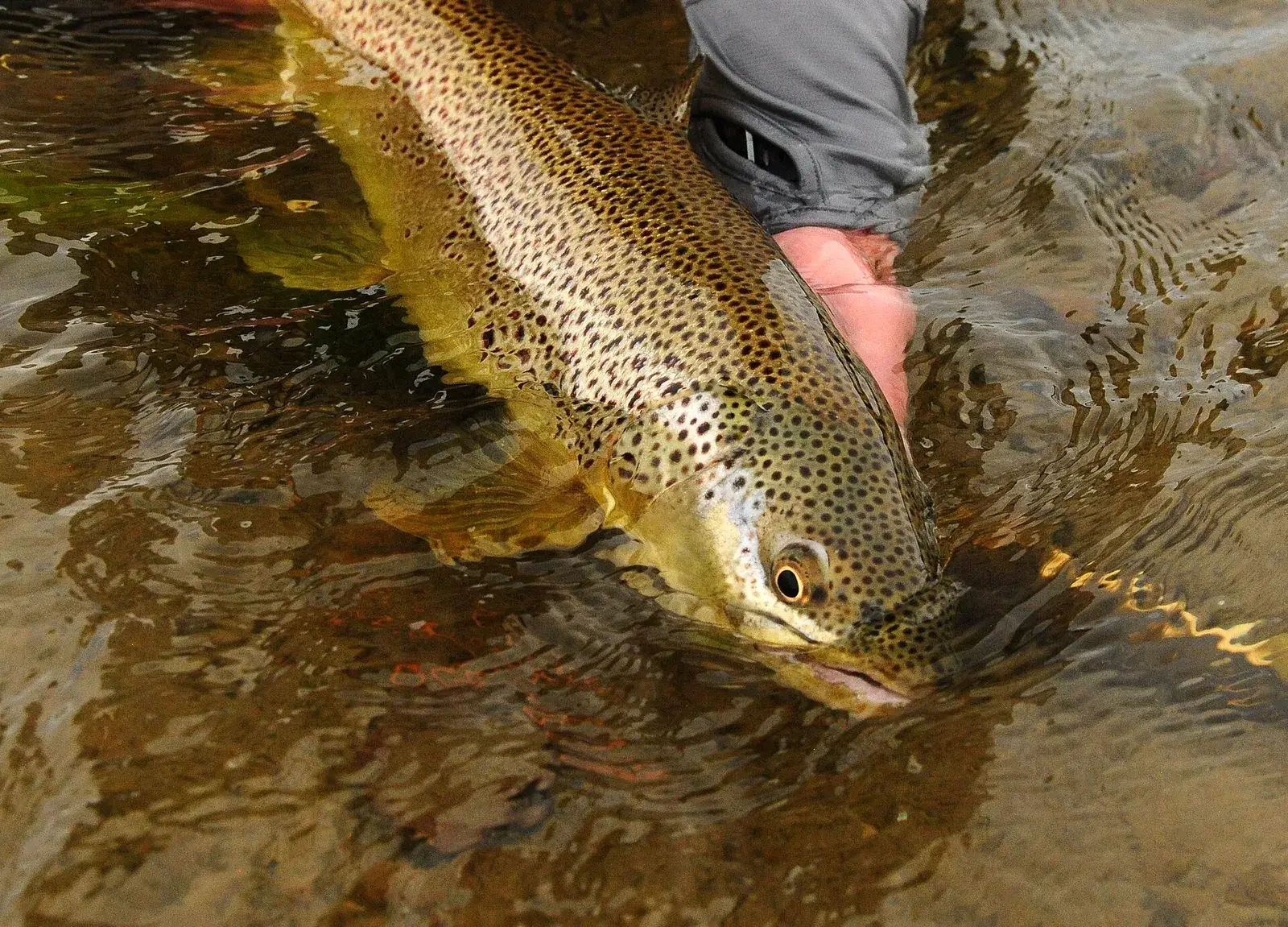 How to Hold a Trout Without Hurting It: Grip, Photo, Release
How to hold a trout so it swims off healthy: the belly cradle and tail grip, no lipping, the 10-second photo, and what the release studies found.
- Rainbow Trout: Identification, Range, Spawning and Record
Rainbow trout from the agency data: how to tell one from a steelhead, cutthroat or brown, the temperatures that matter, spawning, and the 48 lb record.
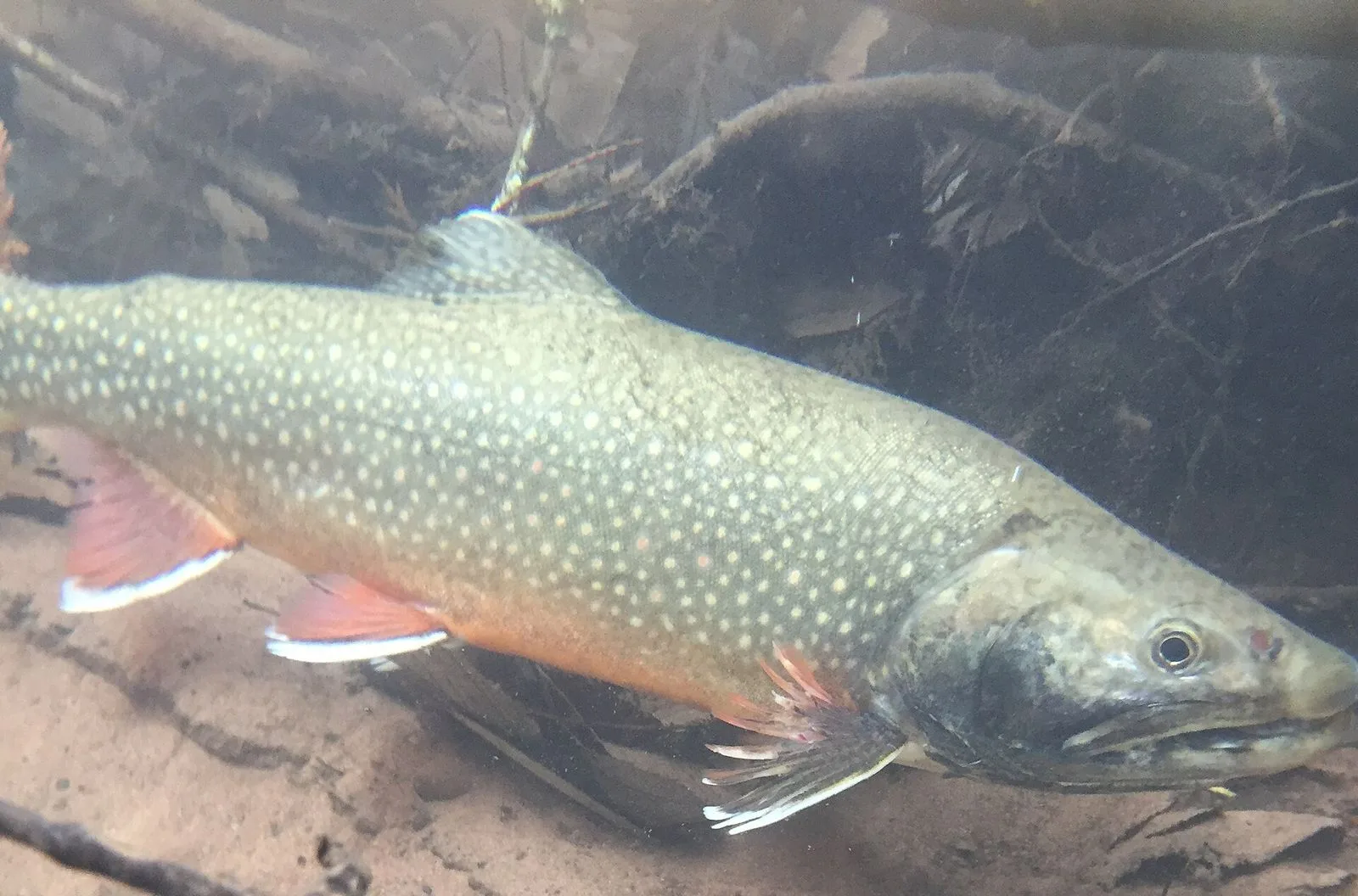 Splake: The Brook Trout and Lake Trout Hybrid
Splake are a hatchery cross of lake trout and brook trout. How to tell them apart, whether they can reproduce, the 20 lb record and how to catch them.
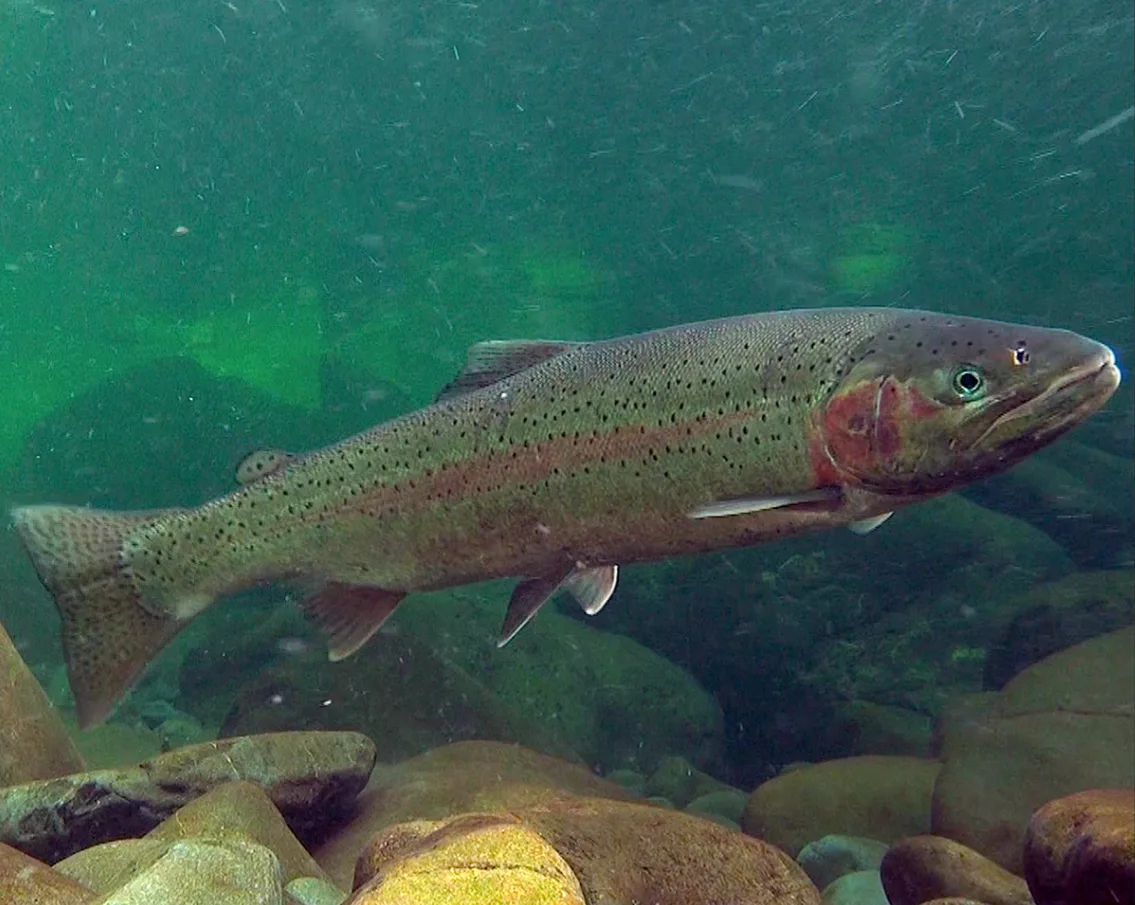 Steelhead Trout: The Rainbow That Goes to Sea
Steelhead trout are rainbows that run to sea or a Great Lake and come back to spawn, often more than once. Runs, the ESA listings, Great Lakes fish, records.
Free download
The water temperature card
Read your water temperature and the card tells you who is spawning, who is feeding and what to throw. 26 species, 16 pages, for your phone and the tackle box.
Plus one email a week on what's biting now. No sales pitches. Privacy.
Sources
- Eastern Brook Trout Joint Venture, brook trout species spotlight
- Animal Diversity Web, Oncorhynchus mykiss
- West Virginia DNR, brown trout
- West Virginia DNR, brook trout
- U.S. Fish & Wildlife Service, lake trout
- Pennsylvania Fish and Boat Commission, trout stocking
- Outdoor Life, the biggest trout of all time