 By
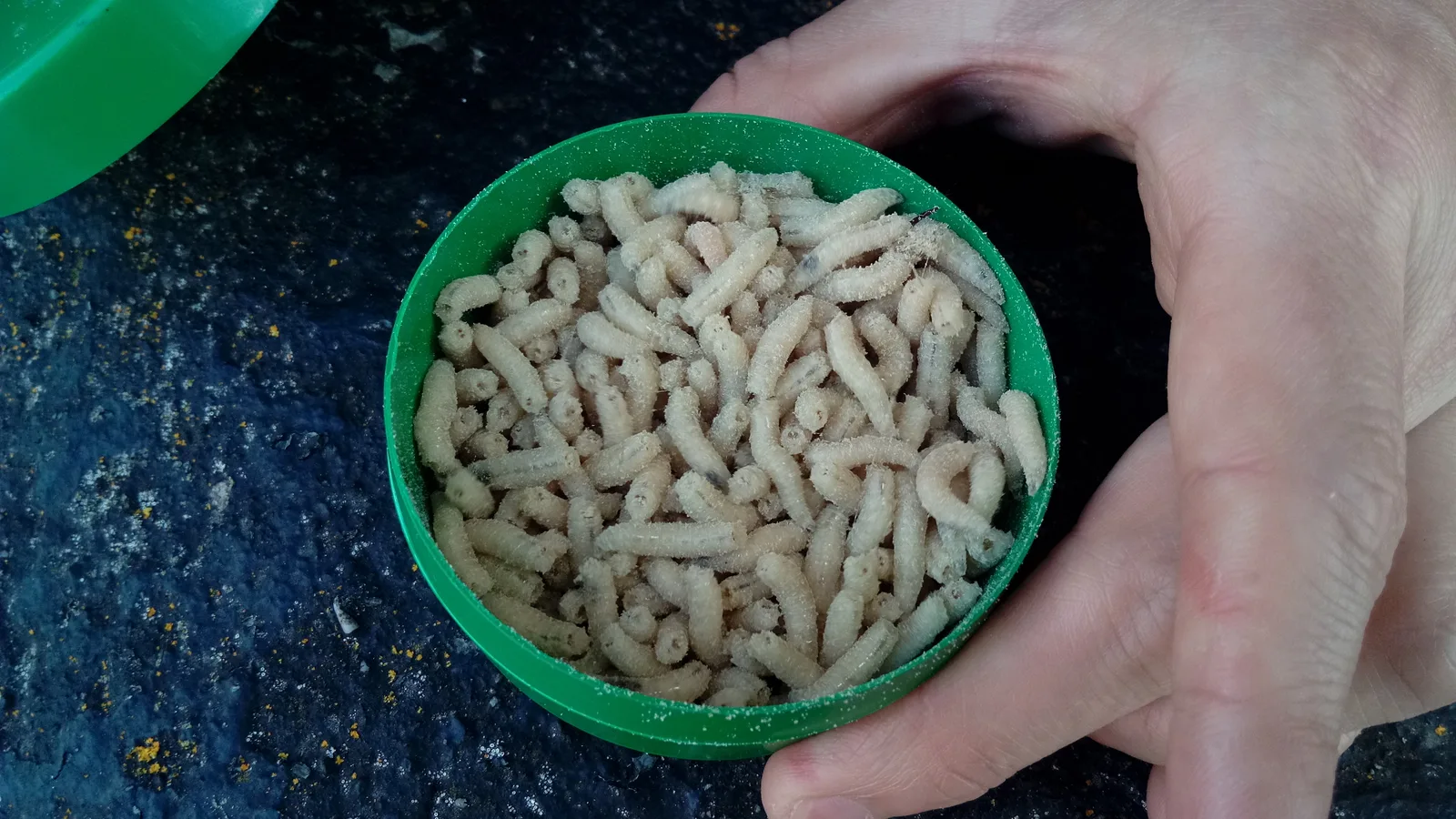
Ice fishing bait comes down to two kinds: insect larvae for panfish, and minnows for walleye and pike. Most ice lures get tipped with one of them, New York DEC says, commonly minnows or the fly larvae called spikes and mousies. Iowa’s DNR pairs wax worms with a small teardrop jig for bluegill and crappie, and calls small minnows great for crappie, perch and walleye. The jig or spoon under the bait is the other half of the rig, and you pick that from the ice fishing lures.
Keep wigglers in an insulated box next to your body, Iowa DNR says, and treat wax worms and spikes the same. Put the minnow bucket in your sled, not on the bare ice.
What is the best live bait for ice fishing?
For bluegill, crappie and perch, start with wax worms. Take Me Fishing calls them one of the best natural ice baits for panfish, and Outdoor Life calls them the most popular of the larvae. Bring a cup of spikes too, because they stay on the hook better.
For walleye, buy minnows: extra-large fatheads, medium suckers or golden shiners. For pike, buy suckers or bigger shiners and hang them under a tip-up. For crappie, Minnesota’s DNR lists crappie minnows right next to wax worms and other larvae. In open water the picks change, and fishing bait has that list.
Here is every common ice bait, the fish the agencies and writers name it for, and how they fish it.
| Bait | What it is | The fish, and who says so | How to fish it |
|---|---|---|---|
| Wax worm (waxie) | Bee moth larva, 1/2 to 1 in (1.3–2.5 cm), cream with a brown head | Bluegill and crappie (Iowa DNR), perch (Wisconsin DNR), walleye jigs (UW Sea Grant) | On a small teardrop jig, or a plain #8 or #10 hook |
| Spike | Housefly or blowfly maggot, a little smaller than a waxie | Sunfish (bluegill among them), crappie and perch (New York DEC) | On a small jig. Tough skin, stays on |
| Eurolarvae | Blowfly maggots from Europe, dyed red, blue, orange, yellow or white | Crappie and perch (Minnesota DNR) | Three or four on the hook |
| Mousie | Rat-tailed maggot, body about 3/4 in (2 cm) plus a long tail | Perch and other panfish (Mississippi State Extension) | Two or three on one hook. Tears off easily |
| Wiggler | Mayfly larva, says Iowa. Other states disagree (below) | Bluegill and crappie (Iowa DNR) | On a small teardrop jig |
| Goldenrod gall grub | A tiny whitish grub inside goldenrod stem galls | Panfish and trout, like the other larvae (Outdoor Life) | Bare hook, or with plastics on a 1/64 or 1/128 jighead |
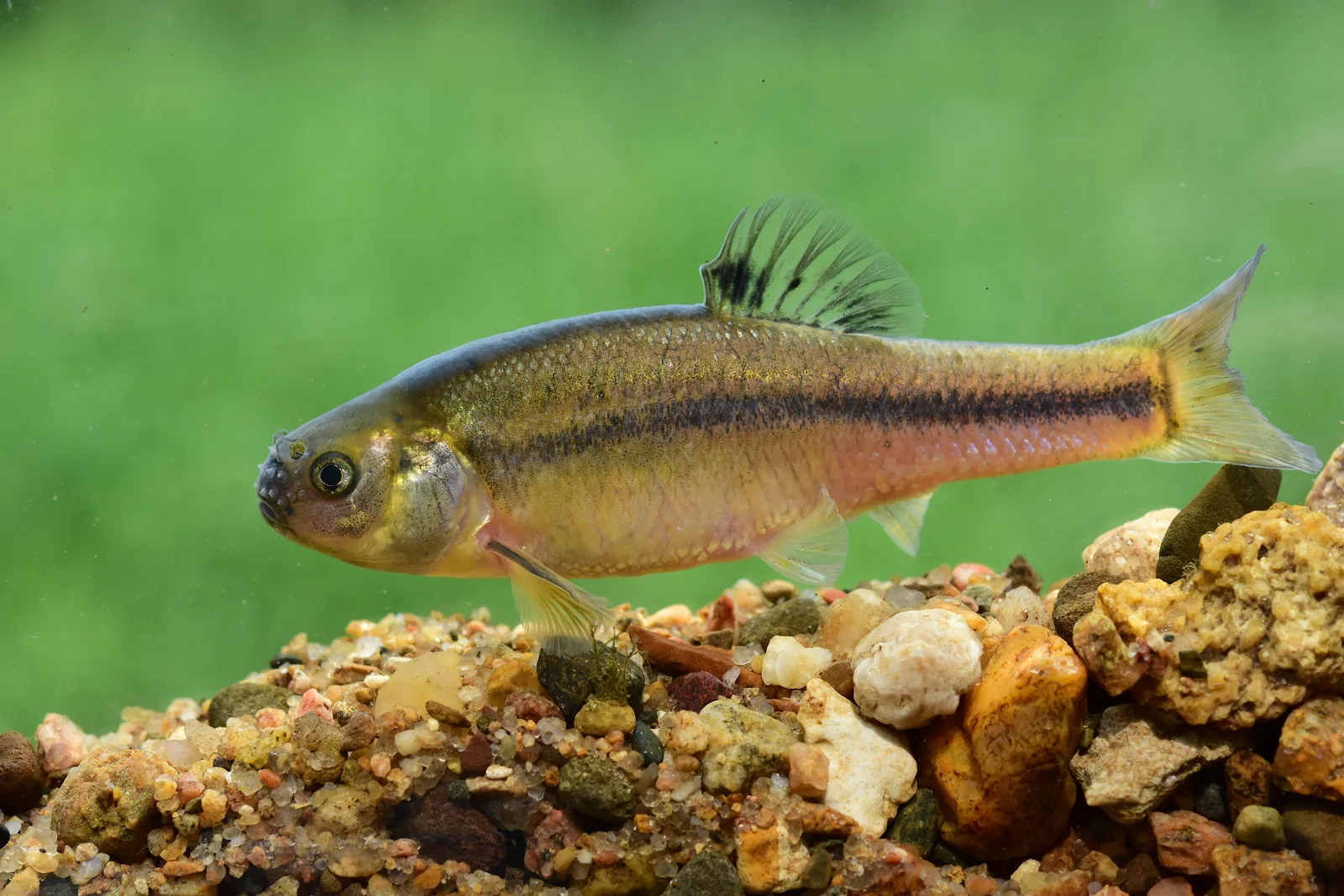
| Crappie minnow | A small, sorted fathead minnow | Crappie (Minnesota DNR) | Whole, or cut in half with the head on the hook |
| Large fathead or golden shiner | Bait minnows | Walleye (Wisconsin DNR) | Lightly through the middle of the back, so it hangs level |
| Sucker | Minnesota counts suckers 12 in (30 cm) and shorter as minnows | Walleye and pike (Wisconsin DNR), pike (Minnesota DNR) | Between the back fin and the tail, missing the spine |
Wax worms or spikes: which should you start with?
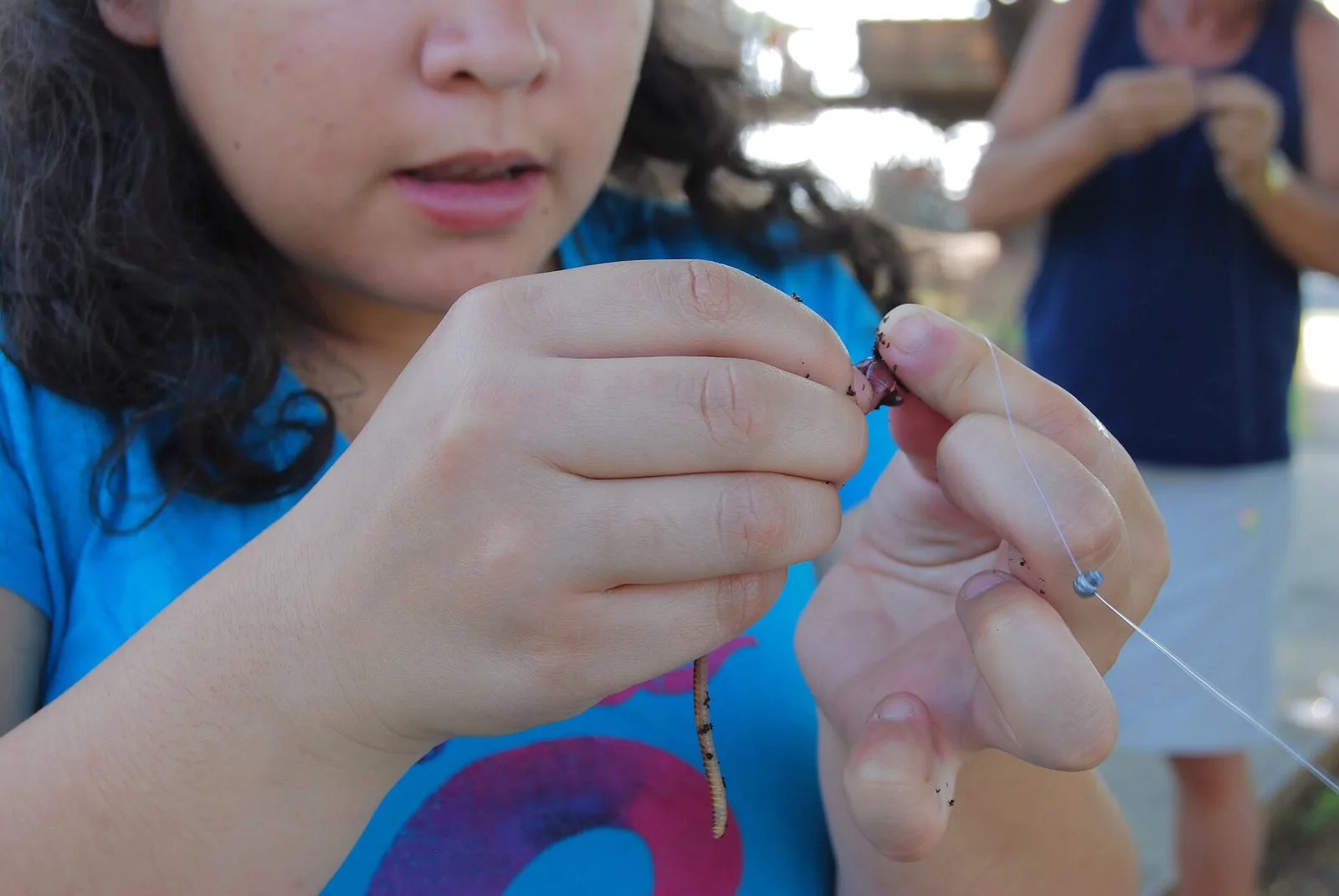
Start with wax worms, and carry spikes as the backup. Wax worms are the larvae of the bee moth, which lives in neglected beehives and eats the wax. They run 1/2 to 1 inch long, cream colored with a brown head, Outdoor Life says.
Put one on a small teardrop jig, a tiny lead jig shaped like a drop. Iowa’s DNR calls a wax worm or wiggler on a small teardrop “a great combination” for bluegill or crappie. Wisconsin’s DNR says small, colorful teardrop jigs are the bait of choice for many of its ice anglers after perch. They bait them with wax worms or mousies. Those perch anglers use short jig poles, some with spools big enough for 50 to 60 feet of line. A plain #8 or #10 hook works too, but most anglers tip a jig.
They’re not only for panfish. Most walleye jigs are baited with wax worms, small minnows or cut smelt, says the University of Wisconsin Sea Grant guide.
One wax worm, or a hookful? Outdoor Life’s answer is to try both. On some days fish want a hook crammed with larvae, and on others a single wiggling one will do. Keep switching until they tell you.
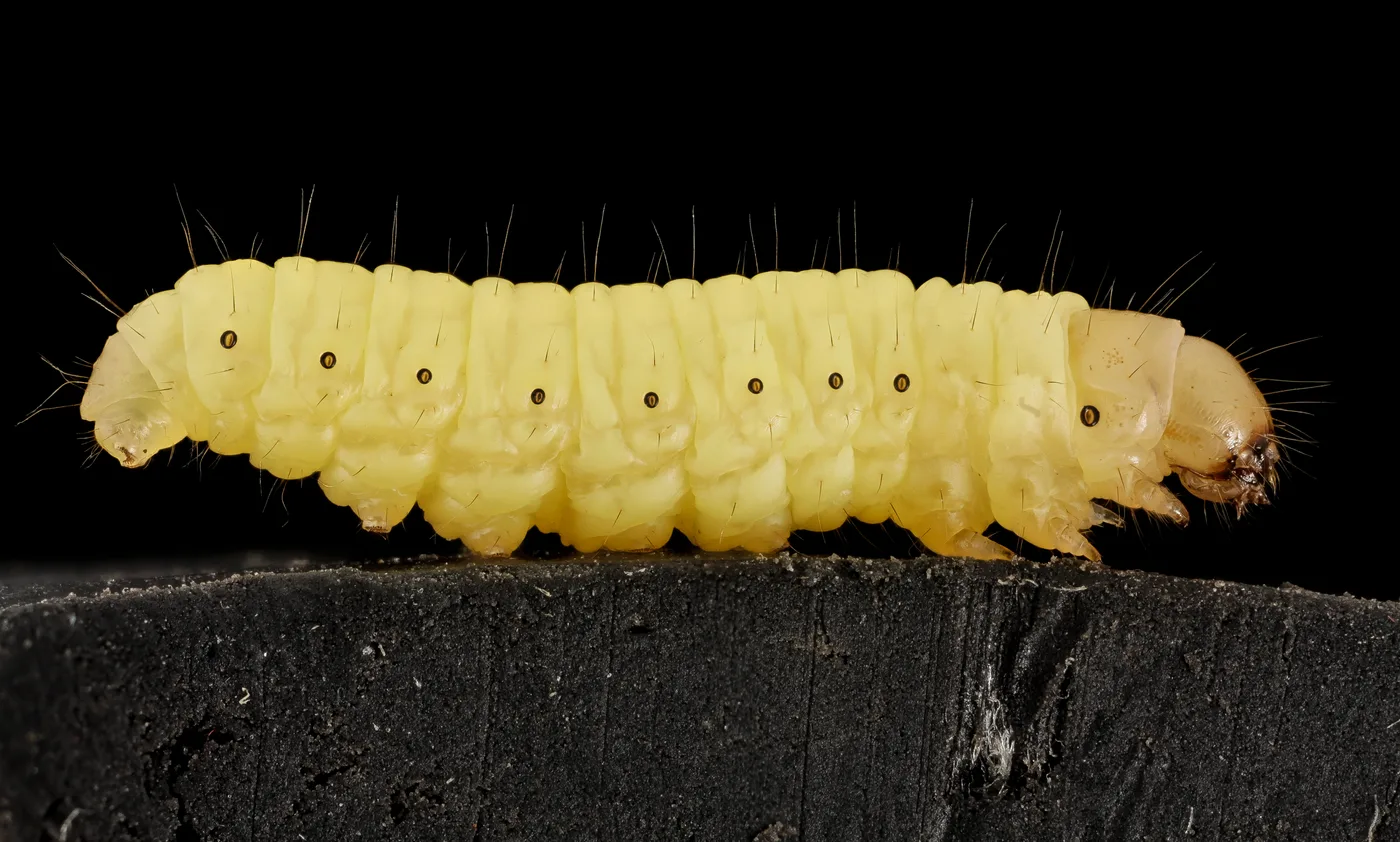
A wax worm, the larva of the greater wax moth, from a bumble bee nest in Maryland. Photo: Wayne Boo, USGS Bee Inventory and Monitoring Lab (public domain).
When do spikes beat wax worms?
Our read: when the fish keep stripping your wax worms, switch to spikes. Spikes are housefly or blowfly maggots, cream or light tan, a little smaller than wax worms. Their skin is tougher, so they don’t tear off the hook as easily. Outdoor Life calls them especially good for panfish and trout. New York DEC tips small jigs with spikes for sunfish, perch and crappie. For sunfish it jigs them from a few feet under the ice to just off the bottom, until fish show up.
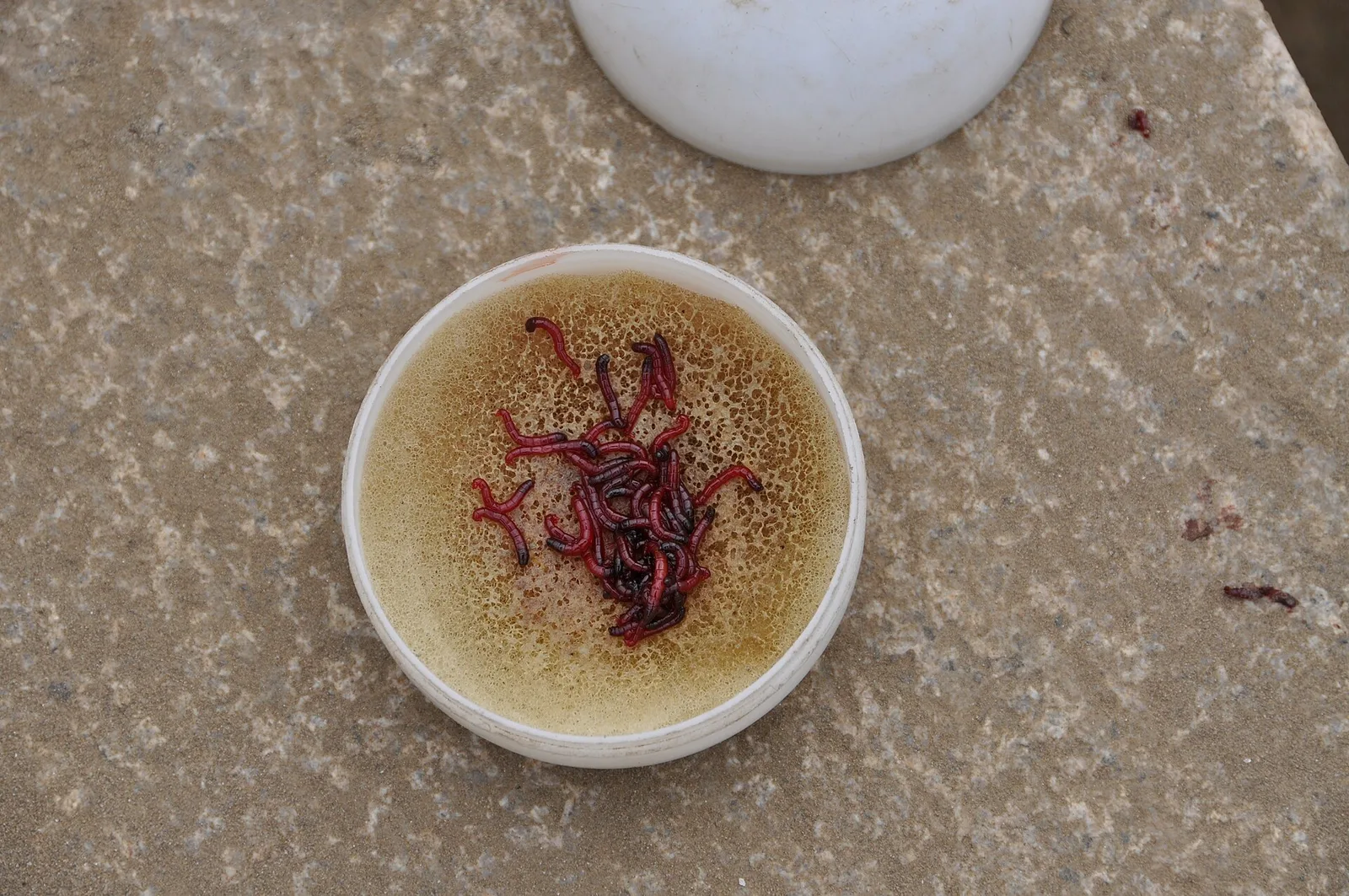
Eurolarvae are the dyed cousins. They’re blowfly maggots from Europe, fed dyed food so they come in red, blue, orange, yellow and white. They’re small, so anglers often gob three or four on the hook or jighead. Minnesota’s DNR lists them for crappie and perch, next to wax worms and meal worms.
So the pick, as we see it: the wax worm is the bigger bite, and the spike stays on longer, so you rebait less. Carry both, and let the fish choose. Fish seldom see larvae like these in nature, Outdoor Life points out. They still rank among the most effective ice baits for panfish and trout. Keep both cups from freezing, in a pocket close to your body.
Free PDF · Ice thickness chart How thick is the ice? Read it at the hole.
Print the free chart, tape the strip to your scoop and hook it under the ice. It shows what that ice is thick enough for, clear or white. Two wallet charts and a wall chart come with it.
No card, nothing to buy, and the PDF is yours to keep. Confirm with one click and it's on its way. Then a few short emails and one a week on what's biting. Unsubscribe anytime. Privacy.
What are mousies, wigglers and gall grubs?
Mousies are rat-tailed maggots. The body is about 3/4 inch long, and the tail can be several times that, says Blake Layton, the entomologist at Mississippi State Extension. They live in stagnant water and breathe through that long tail. They’re a favorite for perch and other panfish, and some anglers put two or three on one hook. The catch is their soft skin. They tear off the hook quite easily.
Goldenrod gall grubs are the free one. They live inside the round swellings on goldenrod stems, and bait shops seldom sell them. Pick the galls from fall through winter and open them as you need grubs. Outdoor Life fishes them on a bare hook, or with plastics on a 1/64 or 1/128 jighead.
What is a wiggler? The names don’t agree
Bait words change from state to state, and so does the bug in the cup.
| Word | One source says | Another says |
|---|---|---|
| Wiggler | Minnesota DNR writes “wigglers/Eurolarvae,” as one bait | Iowa DNR: mayfly larvae. Michigan’s rules: mayfly nymphs. Outdoor Life: spikes are “silver wigglers” |
| Mousie | Mississippi State Extension: the rat-tailed maggot of the drone fly, a flower fly | Outdoor Life: a bee fly larva, with a body about 1/2 inch long |
| Spike | Outdoor Life: a housefly or blowfly maggot | New York DEC: “fly larvae called ‘spikes’ or ‘mousies,’” without telling them apart |
On mousies we’d go with the entomologist. The adult drone fly looks like a honeybee in size, color and markings, Layton writes. That may be where the bee in the other name comes from. On wigglers, a mayfly larva and a dyed maggot are two different baits. Ask what’s in the cup before you pay, and buy the one the shop says is catching fish on that lake this week.
Which minnow for which fish?
Size the minnow to the fish. For pike, go big enough that perch and other small fish can’t attack it and trip the flag, Minnesota’s DNR says, but under 12 inches.
| Fish | What to buy | How big |
|---|---|---|
| Crappie | Crappie minnows, which are small sorted fatheads (Minnesota DNR) | About 1 1/2 in (4 cm) on a jig (Crappie Now) |
| Perch | Small minnows (New York DEC, Iowa DNR) | Small, on a tip-up (New York DEC) |
| Walleye | Medium suckers, extra-large fatheads or golden shiners (Wisconsin DNR) | 3 to 4 in (8–10 cm) on a tip-up (New York DEC) |
| Northern pike | Suckers or larger shiners (Minnesota DNR) | 4 to 7 in (10–18 cm, New York DEC), up to 8 in (Wisconsin DNR) |
| Lake trout | Suckers, chubs or large minnows (Minnesota DNR) | Heads or chunks, on the jig or spoon hooks |
For crappie on a tip-up rather than a jig, Vic Attardo of Crappie Now skips the tiny fathead. He uses a shiner, longer and bulkier, and says tip-ups that way catch fewer crappie but some pretty large ones.
Where the hook goes depends on who you ask. New York DEC hooks tip-up minnows through the lips or under the back fin. Minnesota’s DNR puts it between the back fin and the tail for pike, and says to avoid the spine. Skip Sommerfeldt of Wisconsin’s DNR hooks walleye minnows lightly through the middle of the back, so they hang level. The minnows basics, from fatheads to shiners, carry over from open water.
Then check it. Minnesota says look at a tip-up sucker or shiner every half hour or so. Maine says every hour, to make sure the bait is still hooked and lively.
How do you tip a jig or spoon with live bait?
Tipping means adding live bait to a lure, and New York DEC calls it sweetening. Here’s how the agencies and writers do it, fish by fish.
- Panfish: a wax worm, spikes, or three or four Eurolarvae on a small teardrop or jig. Spikes stay on better than wax worms.
- Crappie: a crappie minnow, or half of one. Minnesota’s DNR cuts it in half and threads the head on the hook.
- Walleye: a jigging spoon tipped with a minnow, New York DEC says, or a lure tipped with a minnow or just its head, Minnesota says.
- Lake trout: heads or chunks of suckers, chubs or large minnows on the jig or spoon hooks, Minnesota says.
Dead minnows still catch fish. Attardo says he’s done very well with a dead minnow on a white marabou jig, at many depths. That’s a jig with a fluffy feather tail. Another way is the head or tail of one on a chain spoon, a spoon whose hook hangs on a short chain. That’s a good use for the ones that die in the bucket.
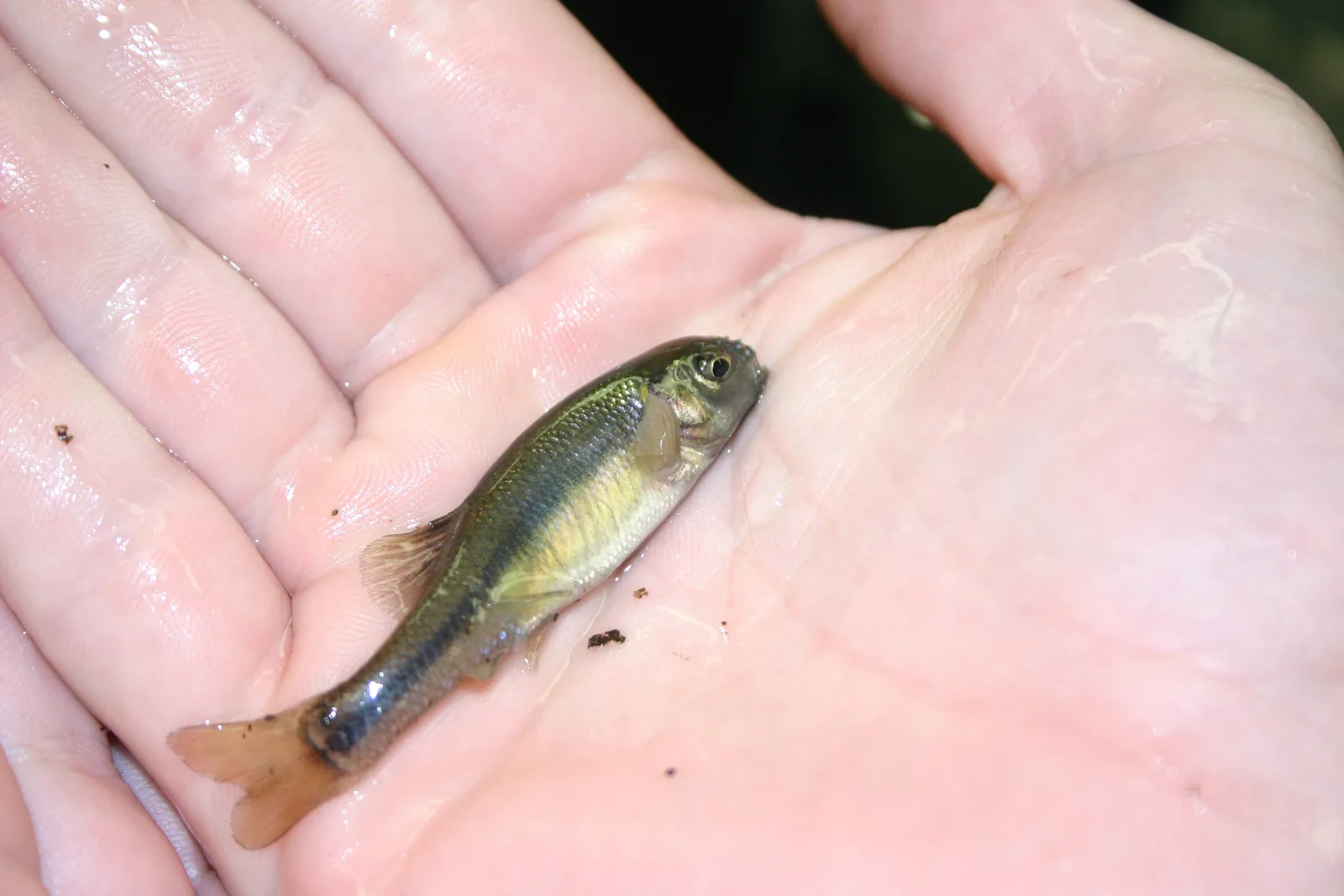
A fathead minnow in the hand. Small sorted ones are sold as crappie minnows. Photo: NOAA Great Lakes Environmental Research Laboratory (CC BY-SA 2.0).
Then let the bait work. “Jig the bait a few times, then pause it for a few seconds,” New York DEC says. “Fish generally hit the bait during the pause.” Minnesota’s DNR adds a second line with a still minnow beside the jigging rod. For crappie, the jigging rod works as a “calling rod” that draws fish in, and they bite the still minnow. The crappie, perch and walleye setups through the ice build on this.
How do you keep bait alive in the cold?
On the ice the danger is freezing, not heat. Outdoor Life’s rule is to keep bait lively by not letting it freeze.
- Larvae: “Store your wigglers in an insulated container kept next to your body to keep them from freezing,” Iowa’s DNR says. The same goes for wax worms and spikes. None of the agencies we read gives a temperature for storing them between trips, so ask the shop that sold them.
- Minnows: an insulated bucket, Iowa says. Attardo puts the bucket in his sled, not straight on the ice. No insulated bucket? He sets a plain one inside a bigger container and stuffs crumpled newspaper between the two.
- Your hands: bring a minnow dipper so your hands stay dry, Iowa says.
- The first dunk: a minnow dropped into a cold lake can go into shock and stop moving, Attardo writes. He adds small amounts of the lake’s cold water to the bucket first, so the minnows get used to it.
That last tip runs into a rule in Wisconsin. Minnows you bought there can go on to another lake only “if no lake or river water was added to the bait container.” Once you add lake water, those minnows can be used again on that same water, and nowhere else.
An insulated bait bucket does the job on the ice too. The open-water side of keeping bait, with aerators and summer heat, is on live bait.
Can you bring minnows to another lake?
Often not, and the ice doesn’t change that much. The worry is VHS, viral hemorrhagic septicemia, which Wisconsin’s DNR calls “a deadly fish virus and an invasive species.” Some infected fish show no signs, so a bucket of healthy-looking minnows can still carry it. Here are six ice states, in their own words where it counts.
| State | The rule | What it means on the ice |
|---|---|---|
| Minnesota | “You can’t import live minnows or leeches into Minnesota.” Fatheads are restricted bait: buy them from a licensed retailer (keep proof of purchase) or a VHS-free source | Keeping bait? Swap the bucket water for tap or bottled water before you leave, “except when you are fishing through the ice.” That exception doesn’t apply on Lake Superior: swap the water there too |
| Wisconsin | Minnows bought from a Wisconsin bait dealer can go back to the same water, or elsewhere “if no lake or river water was added” | Up to 2 gallons of water to keep them alive. You can’t possess more than 600 minnows |
| Michigan | Bait you collect yourself: “Baitfish may only be used in the waters where collected.” Buy only from a licensed dealer, never a pet shop or live fish market | Minnows you catch yourself stay on that lake |
| New York | “Baitfish without a receipt or with a receipt that is older than 10 days shall be considered uncertified bait.” | Uncertified bait can’t ride in your car, except inside a designated corridor |
| North Dakota | “the only legal live baitfish species statewide are fathead minnows, creek chubs and brook sticklebacks” | A few big waters add white suckers, and some add smelt. Some waters, listed in the rule, allow no live baitfish at all, Nelson Lake among them |
| South Dakota | “Anglers may not import live baitfish into South Dakota.” (2023 handbook) | Buy your minnows in the state |
These are six states, and rules change. Read your own state’s bait rules before the first trip of the winter.
What do you do with leftover minnows?
Take them off the ice. Never dump bait, dead or alive, in the water or down your hole, Maine says. New York warns that invasive species can ride along in bait water. Michigan asks for the bait containers and the minnows to go in a trash can. Wisconsin also lets you compost them or use them as garden fertilizer.
Should you buy ice fishing bait or gather your own?
Buy it, for most trips. New York DEC says a bait shop in a popular ice fishing area is the next-best help after a fishing buddy. The shop “should be able to advise you on where fish are currently being caught.” The receipt is your proof of certified bait in New York, and Minnesota wants proof of purchase for restricted bait like fatheads.
Gathering works, with limits:
- Goldenrod galls cost nothing. Collect them in fall and winter, and keep the grubs inside until you need them.
- Minnows from a minnow trap stay on the water you caught them in, in Wisconsin and Michigan. Wisconsin has closed minnow harvest on its VHS waters. Those include the Great Lakes, the Winnebago system, and the Mississippi and Wisconsin rivers up to the Prairie du Sac Dam.
- Wigglers can be collected in Michigan, but not from a trout stream, except for your own use on that same stream.
Live bait or a lure: when do you use which?
Use both at once. The usual ice rig is a lure tipped with live bait, and Minnesota’s DNR describes two lines, one jigged and one still. “Sometimes the rod that is jigged catches most of the fish,” it says, and sometimes the untouched rod with a motionless bait catches more. It also warns that you can over-jig.
Live bait earns its place on the coldest days. Minnows give you more time to react to a strike on particularly cold outings, Attardo says. On a tip-up for pike, the minnow is the whole rig. And when a flag flies, walk. “Ice is slippery,” Minnesota reminds pike anglers.
Before any of it, check the ice under your boots: how thick it needs to be comes first. Then the rest is ice fishing: drill, set your lines, and move until you find fish.

Free PDF · 5 pages
Stop guessing the ice. Tape this strip to your scoop and read it at the hole
Ice that is 6 or 7 inches thick in one spot can be 2 inches close by. You can't tell by looking.
The True-Size Ice Thickness Chart. Print it, tape the strip to your ice scoop, hook it under the ice and read the band at the surface: on foot, sled or truck. One side for clear ice, one for white.
- A true-size strip for your scoop handle, marked from "stay off" to a truck with a wheelhouse
- Two wallet charts, one for your buddy, with five moves that get you out if you go through
- Why 8 inches of white ice counts as 4, and the ice to stay off at any thickness
Every clear-ice number is the Minnesota DNR's, set beside the 29 sources on the page, the Army Corps of Engineers among them.
No card, nothing to buy. Confirm with one click and the PDF is on its way, one version for your phone and one to print, yours to keep. Then a few short emails and one a week on what's biting, with an unsubscribe link in every one. Privacy.
Related
Section guide
Fishing Bait: Live, Cut and Prepared, and Which One to UseFishing bait made simple: live, cut and prepared bait, what to use for each fish, how to hook it and how to keep it alive until you fish.
 Live Bait: Which One to Use, How to Hook It and Keep It Alive
Live bait made simple: which bait for which fish, how to hook it so it stays alive, the rigs, how to keep it alive, and the rules on moving it.
 Minnows: What They Are, Which to Buy and What Size to Use
Minnows are small fish of the minnow family, and the top live bait. Which minnows bait shops sell, what size for each fish, and when they work.
 Sand Fleas: What They Are, Do They Bite, and How to Catch Them
The sand flea surf anglers dig is a clawless mole crab, not an insect. What bites you instead, and how to rake, keep and hook sand fleas.
 Hellgrammite: What It Is, Where to Find It, How to Fish It
A hellgrammite is a dobsonfly larva up to 4 inches long and a top smallmouth bait. How to find one, hold it without a pinch, hook it and fish it.
Sources (27)
- Dick Sternberg, Icefishing Tips: Guide to Live Bait, Outdoor Life (January 11, 2013)
- Blake Layton, Rat-tailed Maggot, Bug's Eye View Vol. 7, No. 2, Mississippi State University Extension (2021)
- Iowa DNR, Ice Fishing
- New York State DEC, Learn How To Ice Fish
- New York State DEC, Guide to Ice Fishing (I FISH NY)
Show all 27 sourcesShow fewer sources
- New York State DEC, Ice Fishing
- New York State DEC, Baitfish Regulations
- Minnesota DNR, Ice fishing for crappie
- Minnesota DNR, Ice fishing for perch
- Minnesota DNR, Ice fishing for walleye
- Minnesota DNR, Ice fishing for northern pike
- Minnesota DNR, Ice fishing for lake trout
- Minnesota DNR Fishing Regulations, General Regulations (eRegulations)
- Skip Sommerfeldt, Fishing walleye through the ice, Wisconsin DNR
- Wisconsin DNR, Yellow Perch (PUBL-FM-710 08, August 2008)
- Wisconsin DNR, Northern Pike (PUBL-FM-707 08, 2008)
- Wisconsin DNR, Viral Hemorrhagic Septicemia fish virus
- Wisconsin DNR, How VHS rules affect anglers
- Wisconsin DNR, Guide to Wisconsin Hook and Line Fishing Regulations 2026-2027
- Michigan DNR Fishing Guide, Lawful Fishing Methods (eRegulations)
- Michigan DNR Fishing Guide, Viral Hemorrhagic Septicemia Virus Regulations (eRegulations)
- North Dakota Game and Fish, Fishing regulations (April 1, 2026, through March 31, 2028)
- South Dakota Game, Fish and Parks, 2023 South Dakota Fishing Handbook
- Maine IFW, Ice Fishing Guide (Jake Scoville)
- Debbie Hanson, Ice Fishing Basics: 5 Guidelines to Get You Started, Take Me Fishing (December 2022)
- Warren Downs, Ice Fishing, University of Wisconsin Sea Grant Institute (revised October 2005)
- Vic Attardo, Minnows for Ice Crappie, Crappie Now (December 19, 2016)