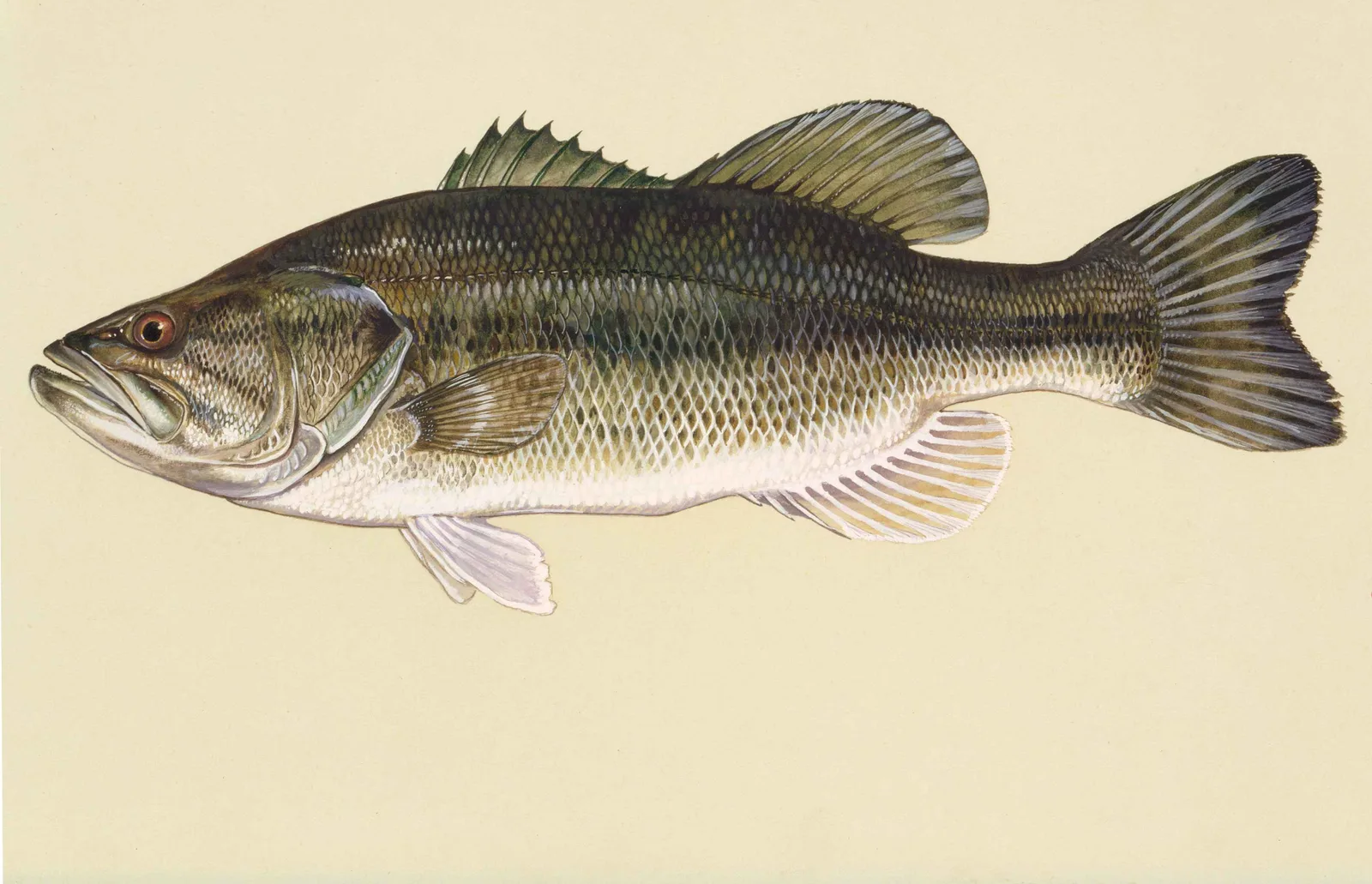
Bass fishing starts with one number: the water temperature. Largemouth move shallow to spawn when a protected flat reaches about 60 °F (16 °C), feed hardest between 65 and 80 °F (18–27 °C), and sit deep when the water is colder or hotter than that. Know the temperature and you know the depth, and the depth decides what you tie on. The three bass most anglers meet, largemouth, smallmouth and spotted, follow the same pattern and differ mainly in the water they choose.
The largemouth record has stood since 1932. Any bass that beats George Perry’s 22 lb 4 oz now needs a genetic test before the IGFA will write it down.
Where do you start?
If you have never caught a bass, the how to fish for bass guide is the page to read first: one priced outfit, five lures, a season table and a numbered method for the first day on the water. If you already fish and want to know what to do this week, the bass water temperature chart turns a thermometer reading into a depth, a lure and a retrieve speed. For the lure question on its own, best bass lures lists what two seasons of Elite Series events were won on, by season and water color.
The rest of this page is the whole of bass fishing in short. Which bass you have, where it is in each season, where it sits in a lake, what to throw, what to hold it with, and how big it can get. Each part points to the page that goes deep.
Which bass is on your line?
Look at the jaw first. Close the fish’s mouth: on a largemouth the upper jaw reaches past the rear edge of the eye, on a smallmouth and a spotted bass it does not. Then the flank, and for the spotted bass the tongue. The smallmouth vs largemouth page settles the commonest mix-up with the fish in your hand. Every fish called bass, from the stripers to the sea basses, is sorted on the types of bass page.
| Bass | How you know it | Where you find it | What it means for you |
|---|---|---|---|
| Largemouth | Upper jaw reaches past the eye; a dark stripe along the side | Quiet, weedy water in nearly every state; the bass in most ponds | Fish the cover: weeds, wood, docks. Slow baits win. The spawn is the easiest fishing of the year |
| Smallmouth | Jaw stops under the eye; bronze with dark vertical bars | Clear, cool lakes and rocky rivers; absent from Florida and Louisiana | Fish rock and current with crawfish colors and lighter line. The hardest fighter of the three |
| Spotted | A rough tooth patch on the tongue; rows of spots below the stripe | The Ohio and Mississippi basins to Texas; reservoirs with current | They roam open water and suspend over channels. A 3 lb (1.4 kg) fish is a good one, 5 lb (2.3 kg) is big |
Size tells you something too: a spotted bass rarely passes five pounds, and Texas puts its maximum at less than a third of a largemouth’s. Any bass you cannot place by jaw and flank is almost certainly a largemouth; they are the fish in most of the country’s water.
Two more live in smaller ranges. The Alabama bass looks like a spotted bass and can only be told from one by a scale count or a genetic test. It was introduced by anglers into Georgia, the Carolinas and Virginia, where it crowds out largemouth and breeds with smallmouth; North Carolina asks you to keep every one you catch and never move fish between waters. The Guadalupe bass lives only in the clear rivers of central Texas, and a 12 in (30 cm) fish is a memorable one. Striped bass and white bass are different fish altogether, with their own pages under the striped bass hub.
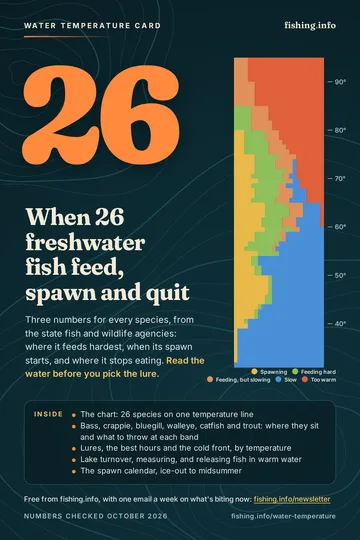
Free card: what 26 species do at your water temperature
Plus one email a week on what's biting now. No sales pitches. Privacy.
Where are the bass in each season?
Bass do not read calendars. The spawn is in February in south Florida and in June in northern Minnesota, and both happen at the same water temperature. So the table runs on temperature, not months. The bands are Kevin VanDam’s six seasons, published by Bassmaster, the model most tournament anglers fish by. Agencies put the spawn trigger at about 60 °F; his bands are tactics, and they are quoted here as his.
| Season | Water | Where the bass are | What to throw |
|---|---|---|---|
| Winter | Under 48 °F (9 °C) | Deep, on vertical structure: bluffs, channel drops, timber | Suspending jerkbaits, grubs, jigs, spoons, fished very slowly |
| Pre-spawn | 48–55 °F (9–13 °C) | On the structure next to the spawning flats; the biggest females of the year | Deep crawfish crankbaits, slow-rolled spinnerbaits, lipless cranks |
| Spawn | 55–70 °F (13–21 °C) | Flat, protected shallows; nests in 2–8 ft (0.6–2.4 m) | Tubes and floating worms in clear water, soft jerkbaits in stained |
| Post-spawn | 70–75 °F (21–24 °C) | Suspended near vertical cover, leaving the beds | Topwater, spinnerbaits, anything high in the water |
| Summer | 75–90 °F (24–32 °C) | Humps, points, drop-offs and ledges by day; under weed mats; shallow at dawn | Crankbaits, weedless frogs, topwater at first and last light |
| Fall | 75 down to 55 °F (24 to 13 °C) | Following the shad into the creeks and coves | Willow-leaf spinnerbaits, shallow crankbaits; cover water |
Two rows deserve a page of their own. The pre-spawn row is the best fishing of the year for a big fish, because the heaviest females feed hard on the edges of the flats where they are about to nest. The best time to fish for bass page puts hours on each row and a number on the weather. The spawn row is the easiest fishing of the year, and the bass spawn page gives its calendar by region and what the law says about fishing the beds.
Smallmouth and spotted bass run the same sequence with two differences. A smallmouth spawns a few degrees warmer, at 62–64 °F (17–18 °C) in Wisconsin’s data, and it feels the heat sooner. A smallmouth lake at 78 °F (26 °C) is a tough day; a largemouth pond at the same reading is a good one. Spotted bass suspend over deep water in summer and fall and chase shad in open water, which largemouth rarely do.
Within a day, dawn and dusk beat noon from late spring to early fall, and the day before a cold front beats the two days after it. The reason is light. In a 1995 laboratory study largemouth caught the prey they struck at more than 95% of the time in dim light, 62% by starlight and almost never in full dark. The first and last hour give the bass enough light to hunt and not enough to be seen. The cold front page says what to change when the sky clears: slower, tighter to cover, a little deeper. In fall, lake turnover scatters the fish for a week or two; the creeks with shad in them recover first.
Where do bass sit in a lake?
Bass hold beside something and wait. The two words every bass angler uses are structure, the shape of the bottom, and cover, what sits on it; the fishing terms page has the rest of the vocabulary. A point is structure. The dock on it is cover. Bass use both, and the best spot on most lakes is where the two meet.
From the bank, these are the places that hold bass, in roughly the order a beginner will find them productive. Points, docks, the outside edge of the weeds, fallen trees, shade lines in summer, riprap and seawalls in spring, and the pinch points where a creek arm narrows. None of them is open, featureless water. The how-to guide’s section on reading the bank goes through each with the cast that fits it. From a boat, a sonar screen shows the structure the bank hides; how to read a fish finder explains the arches, the bottom hardness and the thermocline that matter for bass.
What do you throw?
Start on the bottom. At the 2025 Elite Series event on Lake Tenkiller, six of the final ten anglers were fishing a Texas-rigged soft plastic, a rig from the 1950s. A Texas rig or a weightless stick worm is still the bait that catches the most bass for the most people. It goes through weeds and wood, and it falls slowly in front of a fish that is holding, not hunting. The Senko page covers the stick worm; the rigs hub covers the five rigs that do almost all of bass fishing, including the finesse pair for clear, pressured water, the Ned rig and the drop shot. Live bait, and the lure that copies each food, are on the bass bait page, built on what bass eat.
Then add a moving bait for each kind of water. A jig for wood and rock, and the heaviest fish; bass jigs explains the nine head shapes and why a football head slides over rock while a swim jig slips through grass. A spinnerbait for stained water, wind and the fall shad run; the spinnerbait for bass page gives blade choice and six retrieves by water temperature. A chatterbait for grass and dirty water. A crankbait to cover rock and wood fast in pre-spawn and fall, a squarebill for the first 5 ft (1.5 m). And a topwater for the low light of post-spawn and summer, with a frog over the mats.
That is the whole toolbox: a soft plastic on the bottom, five moving baits for the seasons in the table. Depth and cover come before lure and color, and two colors cover a beginner’s year, green pumpkin for the plastics and white for the moving baits. When the bite stops, change speed or depth before you change color. The lures section explains what each family does in the water, and best bass lures shows which one won where.
What rod, reel and line?
One outfit fishes most of this: a 7 ft (2.1 m) medium-power spinning rod with a fast tip, a size 30–35 spinning reel, 10 lb braid and a short fluorocarbon leader of the same test. The fast tip casts a 1/4 oz worm and a 1/2 oz topwater off the same blank, which is why it is the rod to start with. The beginner’s rod page compares eight combos at that spec, and the how-to guide prices the whole kit at $175–205 for rod, reel, line and the five lures. The fishing rods hub explains power and action for each bass technique. When you add a second and third rod, the bass fishing rods page gives the order.
Move to a baitcaster when you fish jigs, frogs and heavy cover, where the line is heavier and a spinning reel is the wrong tool; the bass line page gives the test for each bait. Best fishing line for bass matches line type and test to each technique. Tie every lure on with a Palomar knot, and carry a thermometer: the one piece of tackle that tells you which row of the table you are in.
The spawn, and whether to fish it
Largemouth spawn once the shallows hold about 60 °F, on nests in 2–8 ft of water. The male builds the nest and guards the eggs and fry, eating almost nothing, which is why spawning bass are easy to find and why anglers argue about fishing for them. Florida’s pond study found no significant difference in young bass per pond between fished and unfished ponds. The common ground is simple: keep a bed fish in the water, unhook it fast, and put it back where you caught it, because a male moved across the lake will not find his nest. The bass spawn page has the timing by region, what a bed looks like, and which states close the season.
How big do bass get?
A largemouth takes three years to reach 16 in (41 cm), on Texas’s figures, and most bass you catch will weigh one to three pounds. A 10-pounder is about 25 in (64 cm) long and close to ten years old. The 10 pound bass page explains why most anglers never hold one and which states produce them. The oldest largemouth on record lived 23 years.
| Bass | Typical adult | All-tackle record | Caught by |
|---|---|---|---|
| Largemouth | 1–6 lb (0.5–2.7 kg) | 22 lb 4 oz (10.1 kg) | George Perry, Montgomery Lake, Georgia, 1932; tied by Manabu Kurita, Lake Biwa, Japan, 2009 |
| Smallmouth | 1–4 lb (0.5–1.8 kg) | 11 lb 15 oz (5.4 kg) | David Hayes, Dale Hollow Lake, Tennessee–Kentucky, 1955 |
| Spotted | 3–5 lb (1.4–2.3 kg) at most | 2 lb 8 oz (1.1 kg) | Art Weston, Toledo Bend, 2025, after the record categories were split |
| Alabama | 1–2 lb (0.5–0.9 kg) when mature | 11 lb 4 oz (5.1 kg) | Nick Dulleck, New Bullards Bar Reservoir, California |
The records are stories as much as numbers. No photograph exists of Perry’s fish on the scale. The Hayes smallmouth was struck from the book in 1996 and restored when the documentation held up. The spotted bass record was reset in 2025 because the bigger “spotted bass” on the books turned out to be Alabama bass, a species only recognized since 2008. The world record largemouth page tells the Perry and Kurita stories and the one about Dottie, the 25 lb bass that never counted.
How do you hold a bass, and keep it alive?
Land a bass by the lower jaw: thumb inside the mouth, fingers under the chin, wet hands. Hold anything over about 3 lb (1.4 kg) horizontally with the other hand under the belly, because the jaw was not built to carry the fish’s weight. Where the hook sits decides more than anything else: in the review that compiled the studies, 56% of largemouth hooked in the throat died, while fish hooked elsewhere did no worse than fish never hooked at all. So cut the line on a bass that has swallowed the worm, and keep air time short in summer. The catch and release page has the ten steps and the numbers behind them.
Keeping a bass is legal within your state’s limits. Three years to 16 in is why most anglers put them back; is bass good to eat weighs taste against the mercury advice. Licenses, seasons and size limits differ by state and sometimes by lake; the state pages carry them, and fishing for beginners says how to buy a license online.
The names, if you want them
Black bass are the genus Micropterus, sunfish rather than true bass, and the 2022 genetic revision counts 19 species. It also renamed the largemouth Micropterus nigricans and kept M. salmoides for the Florida bass; older agency pages still use the old name, and the species pages here give both. The IGFA followed in 2024 with seven new record categories and a rule that any new all-tackle largemouth record needs a genetic test. None of that changes where the fish are in April, which is on the structure next to the flats, waiting for 60 °F.
All articles
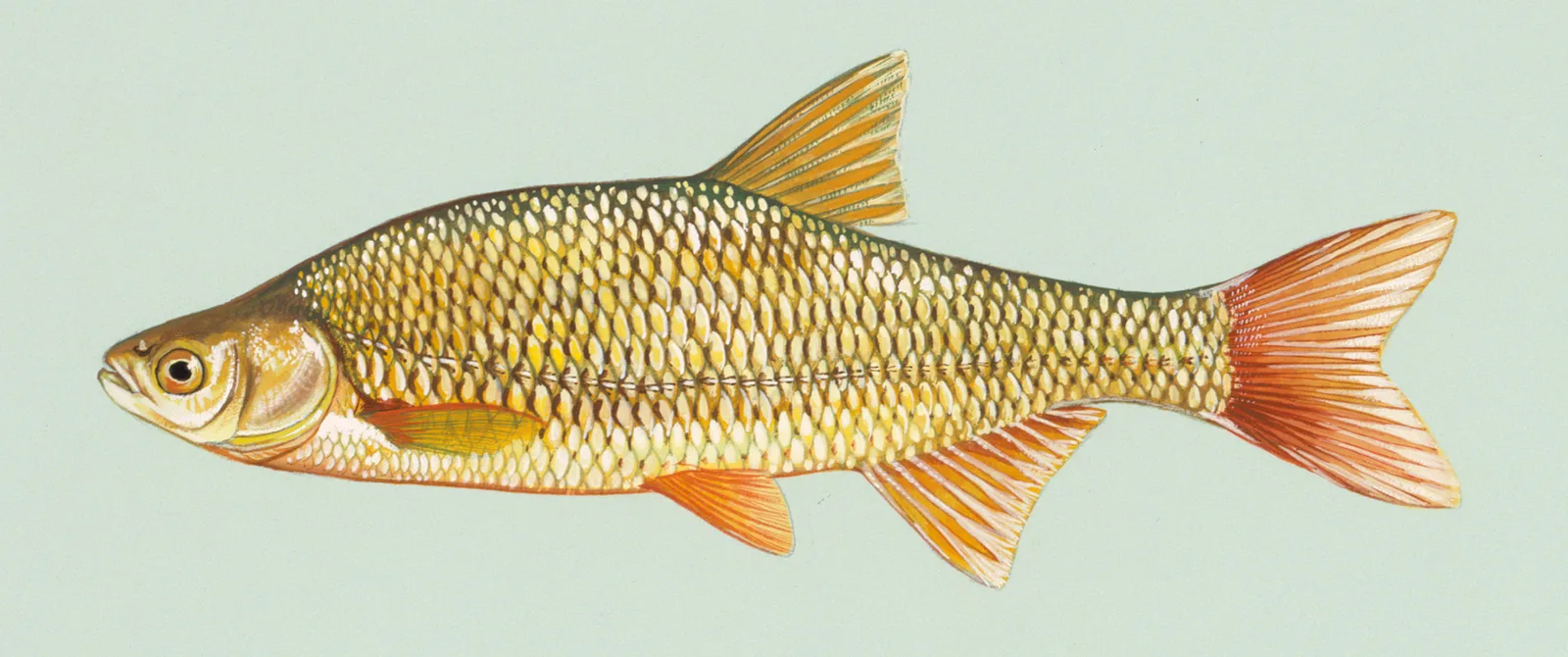 Bass Bait: The Best Live Bait and Lures, Matched to What Bass Eat
The best bass bait is whatever your bass already eat: shiners, crawfish, shad or bluegill, live or as a lure. What works, what size, and where it's legal.
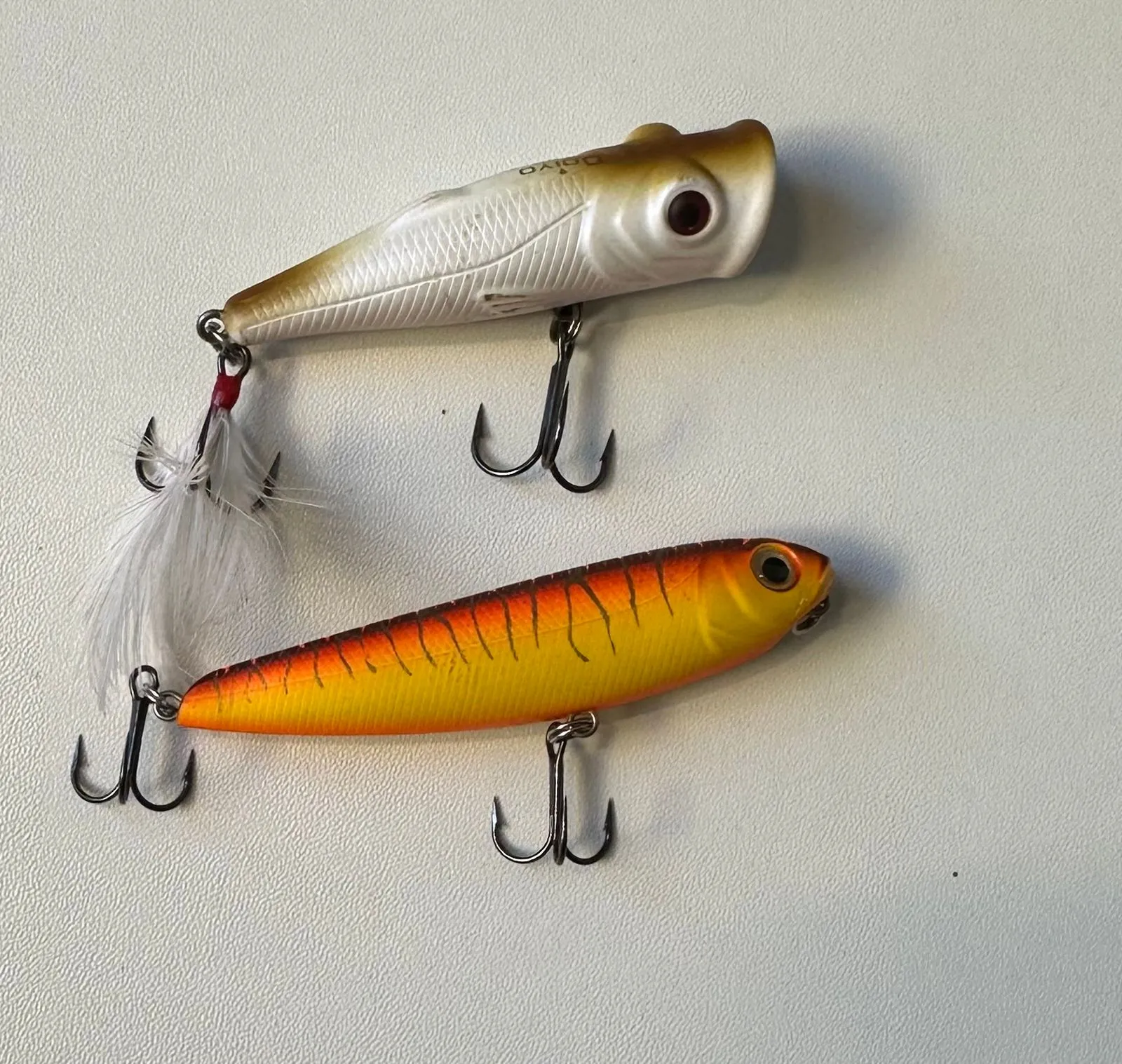 Best Bass Lures: What Won the 2025 and 2026 Elite Series, Season by Season
Best bass lures from two seasons of Elite Series winning baits: a lure for each water color, depth, cover and season, with smallmouth and spotted bass picks.
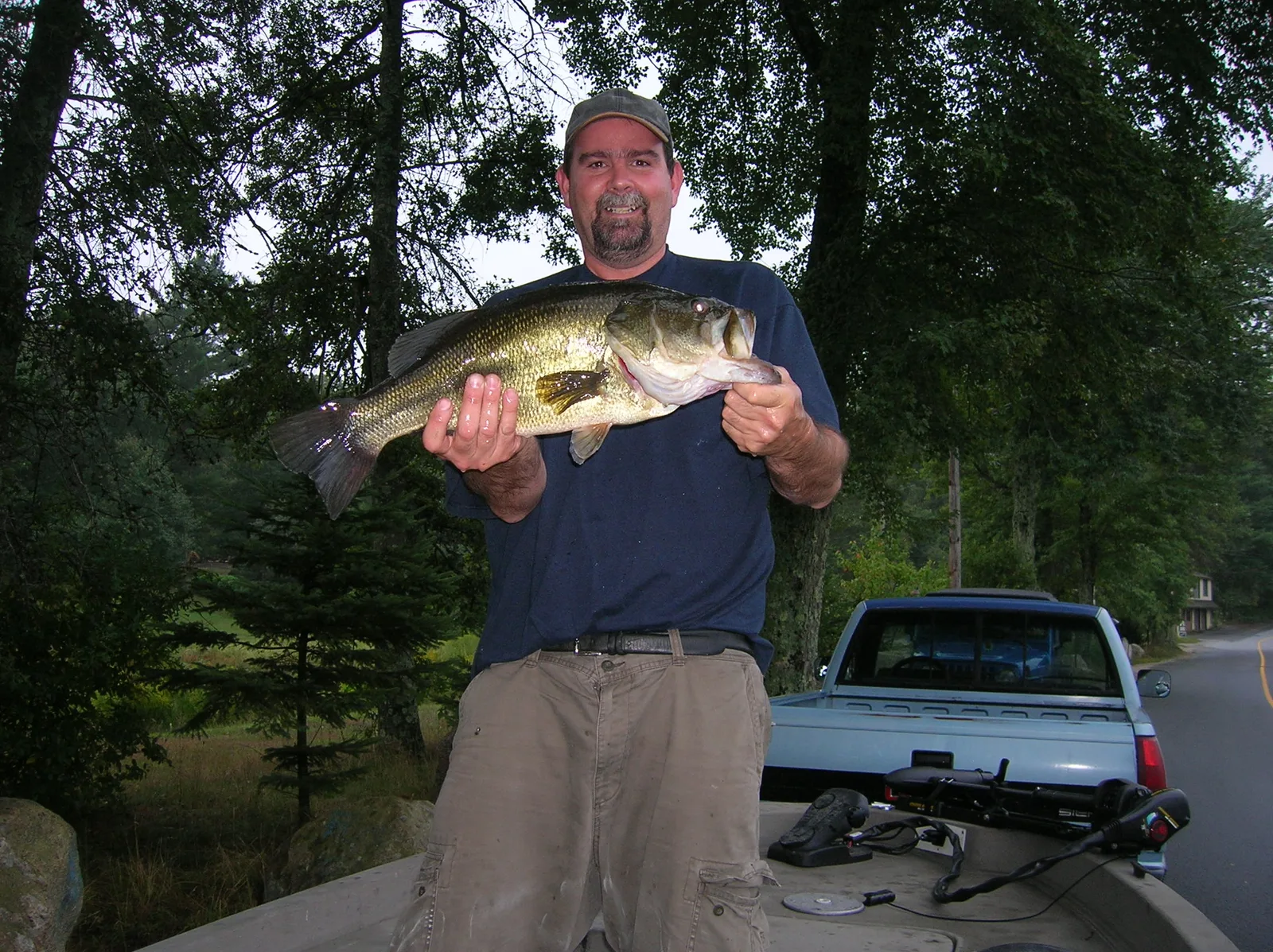 Best Time to Fish for Bass: Season, Time of Day and Weather
The best time to fish for bass is the pre-spawn at 48–55 °F and the fall feed, at dawn and dusk. Season table, hours, night and weather.
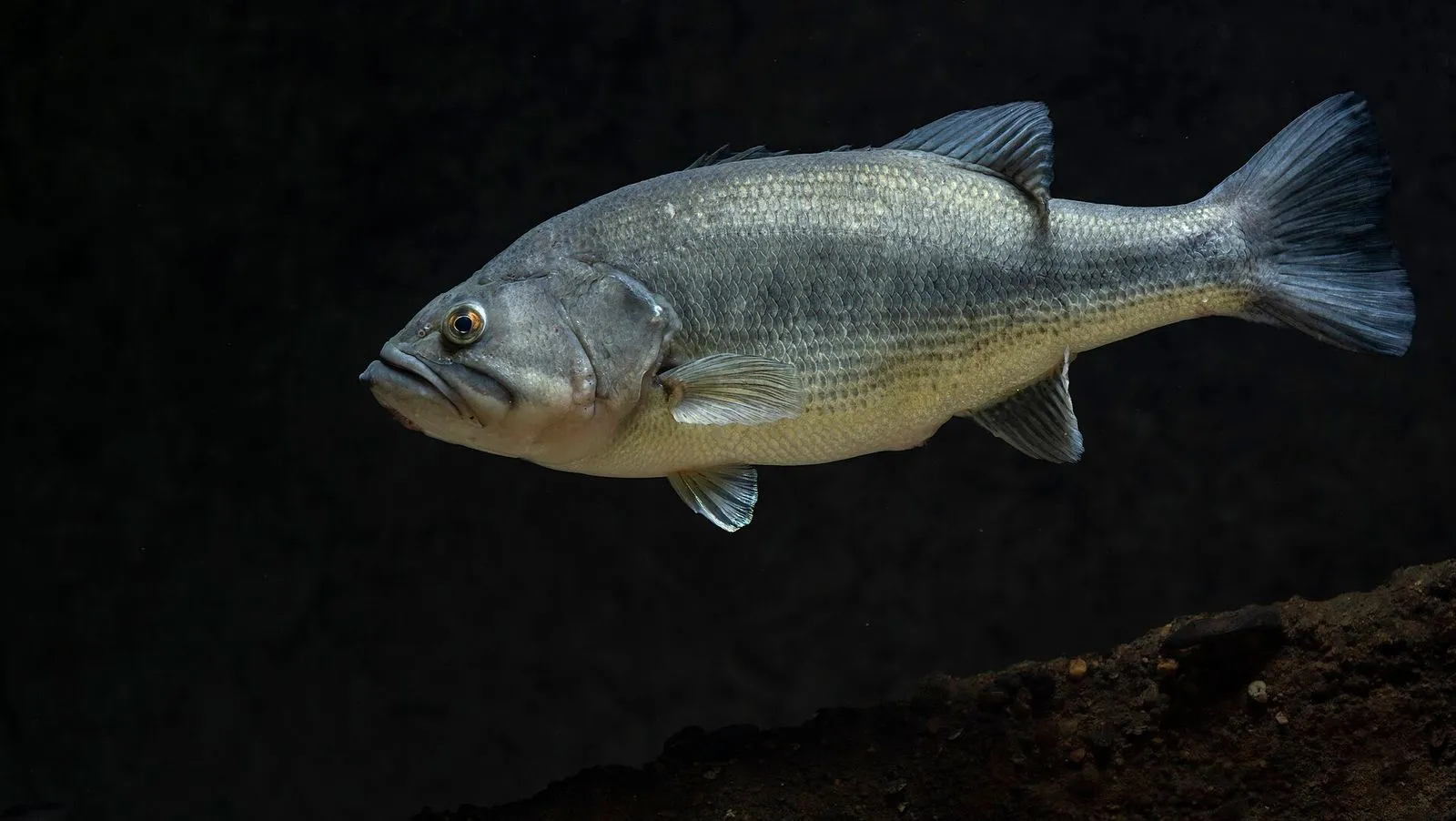 Black Bass: What the Name Means, and All 19 Species
Black bass are the genus Micropterus: 19 species, from largemouth to Bartram's bass. What the name means in science, law and the record book.
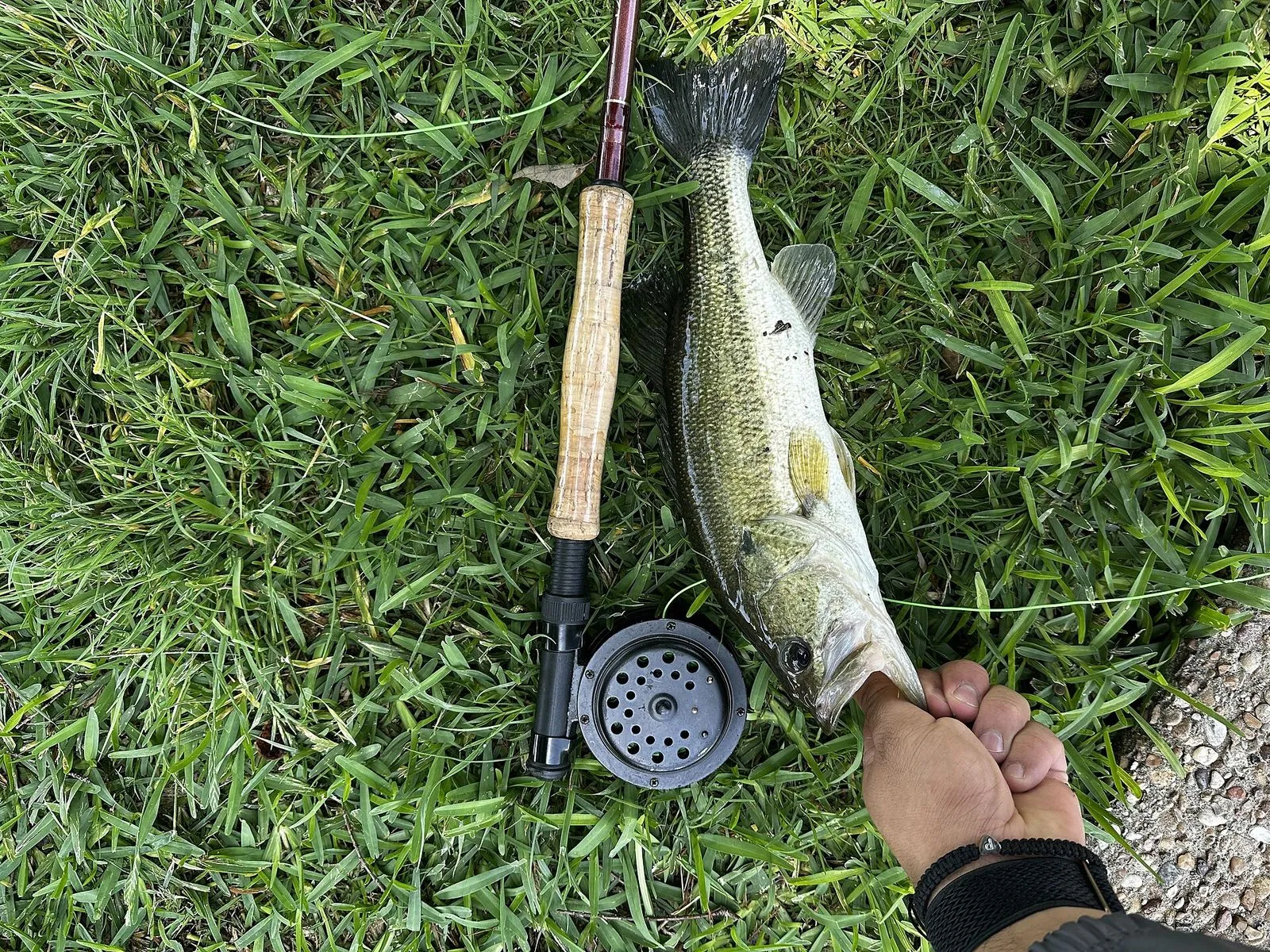 How to Fish for Bass: A Beginner's Season-by-Season Guide
How to fish for bass from the first cast: one rod and reel, five lures, where bass are at each water temperature, and a numbered method for a day on the water.
- Largemouth Bass: Where They Are, How to Catch Them, How Big They Get
Largemouth bass for the angler: how to tell one from a smallmouth, where they are at each water temperature, what to throw, how big they get, and the spawn.
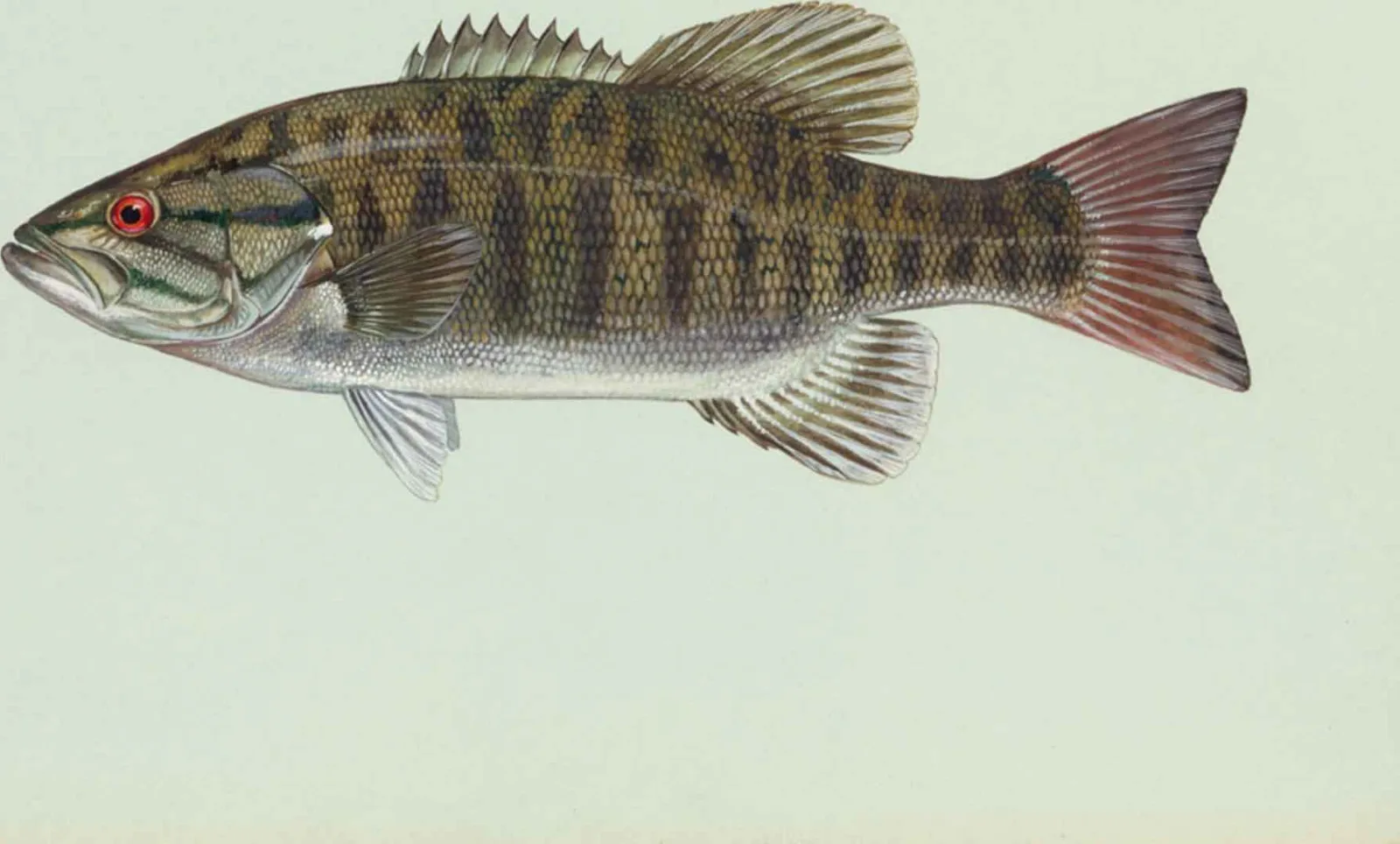 Smallmouth Bass: Identification, Habitat, Spawning and Records
Smallmouth bass from the agency data: the marks that separate them from largemouth, the cool rocky water they need, spawning at 60–64 °F, and the 1955 record.
- Smallmouth vs Largemouth Bass: How to Tell Them Apart
Smallmouth vs largemouth bass: the jaw, the stripe and the dorsal fin settle the identification in seconds. Then habitat, size, records and how each one fights.
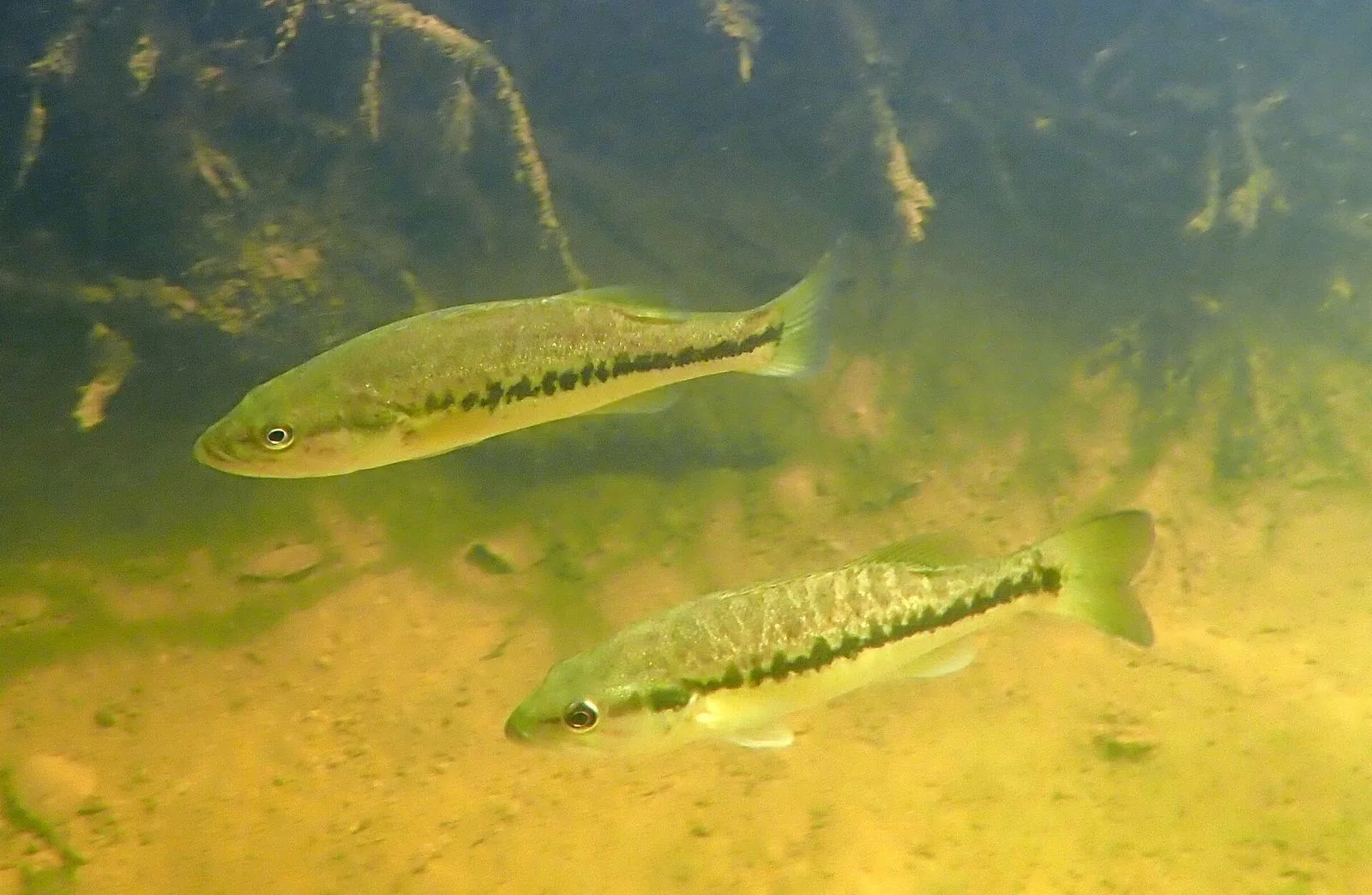 Spotted Bass: How to Tell It From Largemouth and Alabama Bass
Spotted bass from the agency data: the tooth patch, jaw and scale counts that separate it from largemouth and Alabama bass, habitat, spawning, and records.
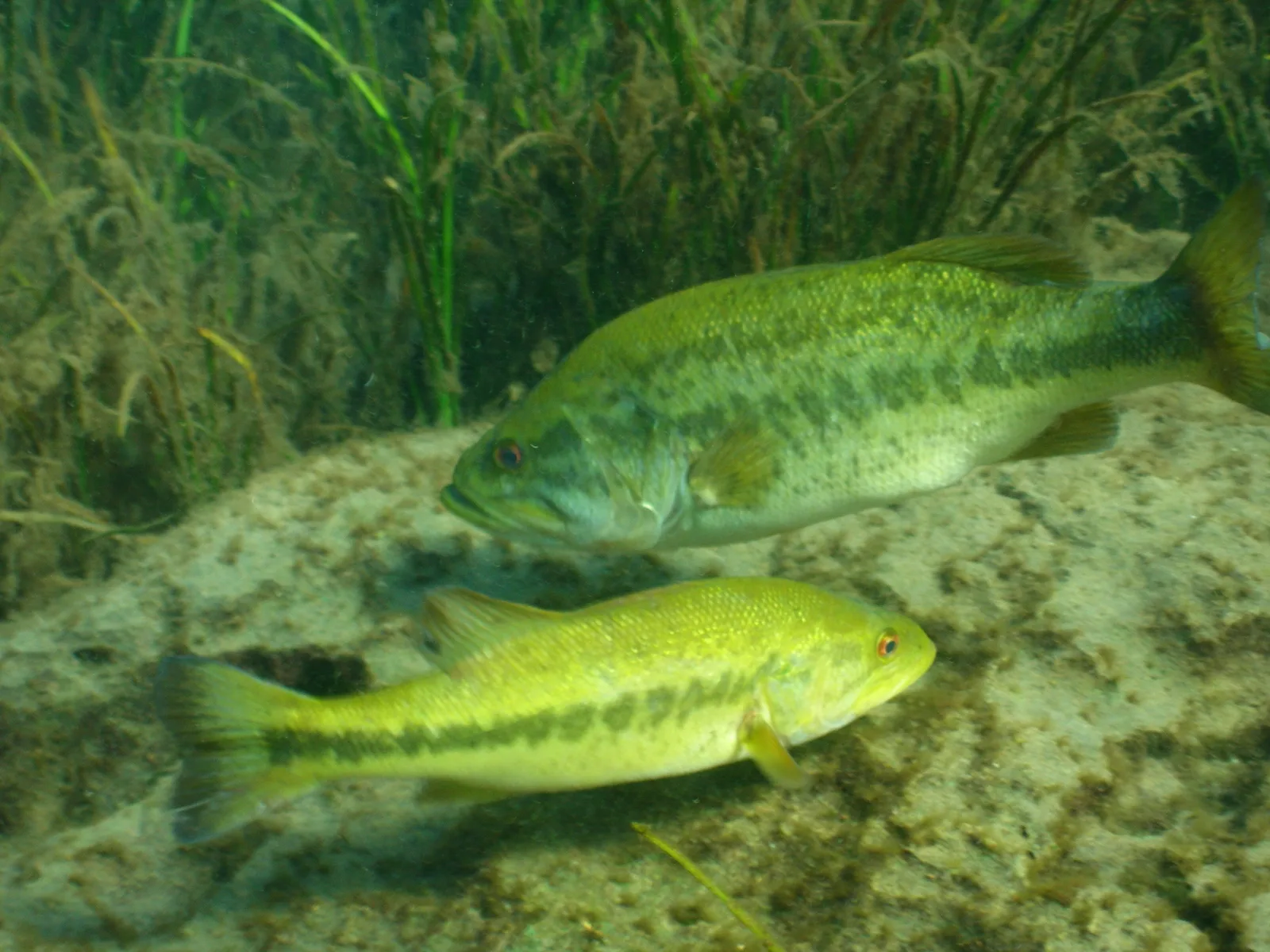 When Do Bass Spawn? Water Temperature and Timing by Region
Bass spawn when the water holds about 60 °F: February in Florida, June in Minnesota. The temperature bands, a calendar by region and how to fish each stage.
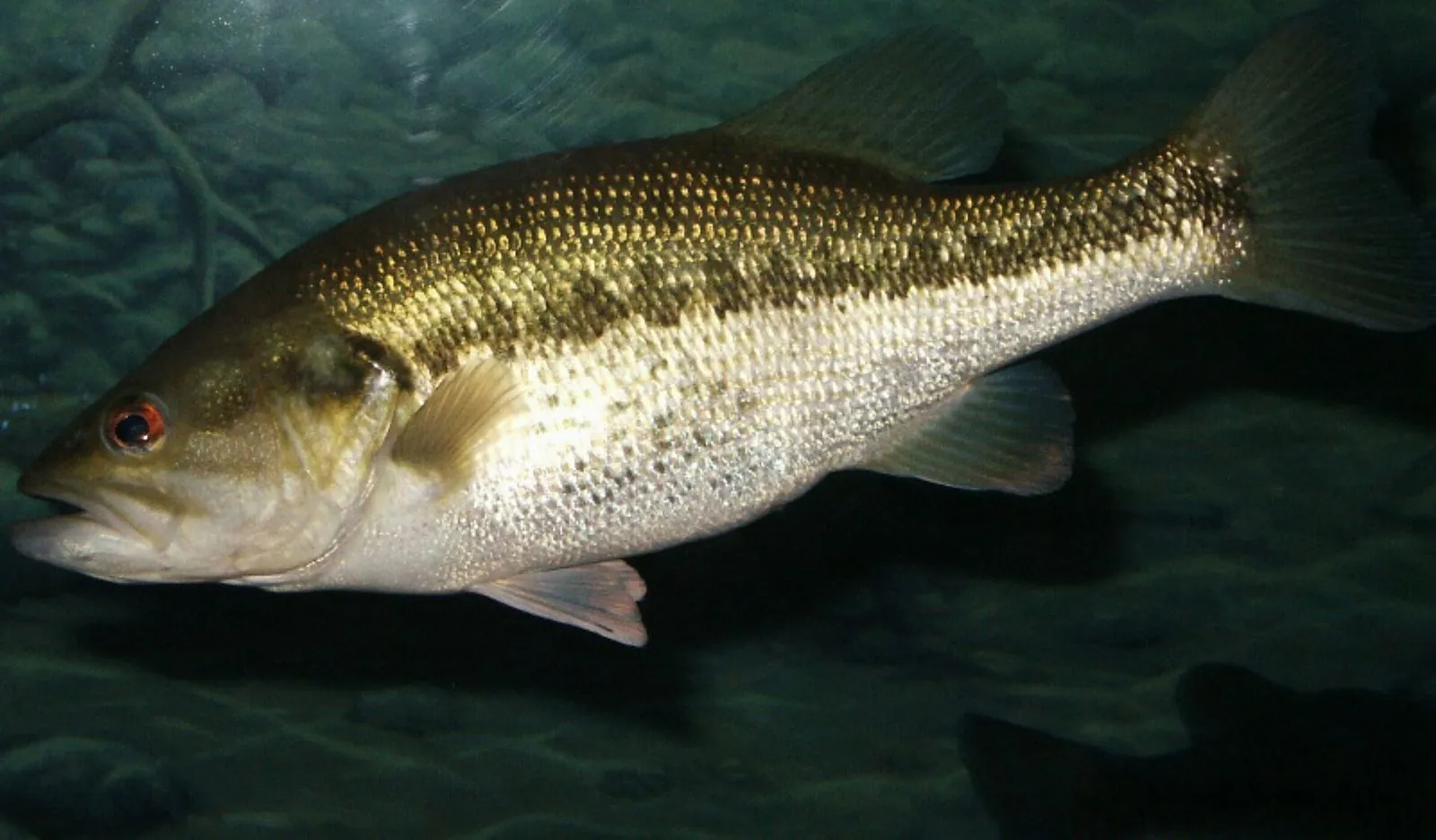 World Record Largemouth Bass: Perry, Kurita and Dottie
The world record largemouth bass is 22 lb 4 oz, caught in Georgia in 1932 and tied in Japan in 2009: the documented story, the IGFA rules, and Dottie.
Free download
The water temperature card
Read your water temperature and the card tells you who is spawning, who is feeding and what to throw. 26 species, 16 pages, for your phone and the tackle box.
Plus one email a week on what's biting now. No sales pitches. Privacy.
Sources
- Texas Parks and Wildlife, largemouth bass species profile
- Texas Parks and Wildlife, smallmouth bass species profile
- Texas Parks and Wildlife, spotted bass species profile
- U.S. Fish and Wildlife Service, largemouth bass
- Wisconsin DNR, smallmouth bass
- Coutant, C. C. (1977), Compilation of temperature preference data, Journal of the Fisheries Research Board of Canada 34:739–745
- Bassmaster, KVD's 6-season bass guide
- Bassmaster, best of the 2025 Elite Series: top lures
- McMahon, T. E. and Holanov, S. H. (1995), Foraging success of largemouth bass at different light intensities, Journal of Fish Biology 46:759–767
- Mississippi Sportsman, the FWC bed-fishing pond study
- Bartholomew, A. and Bohnsack, J. A. (2005), A review of catch-and-release angling mortality, Reviews in Fish Biology and Fisheries 15:129–154
- Bassmaster, the Hayes world-record smallmouth, back in the record book
- Sports Illustrated, Art Weston's spotted bass IGFA world record (2025)
- Wired2Fish, spotted bass: a comprehensive species guide (Alabama bass record, Lake Norman)
- North Carolina Wildlife Resources Commission, Alabama bass
- Virginia DWR, Alabama bass
- Baker, Blanton & Johnston 2008, Zootaxa 1861, the Alabama bass Micropterus henshalli
- Outdoor Life, IGFA adds seven bass record categories (June 2024)
- Kim, Taylor & Near 2022, Phylogenomics and species delimitation of the black basses (Micropterus), Scientific Reports