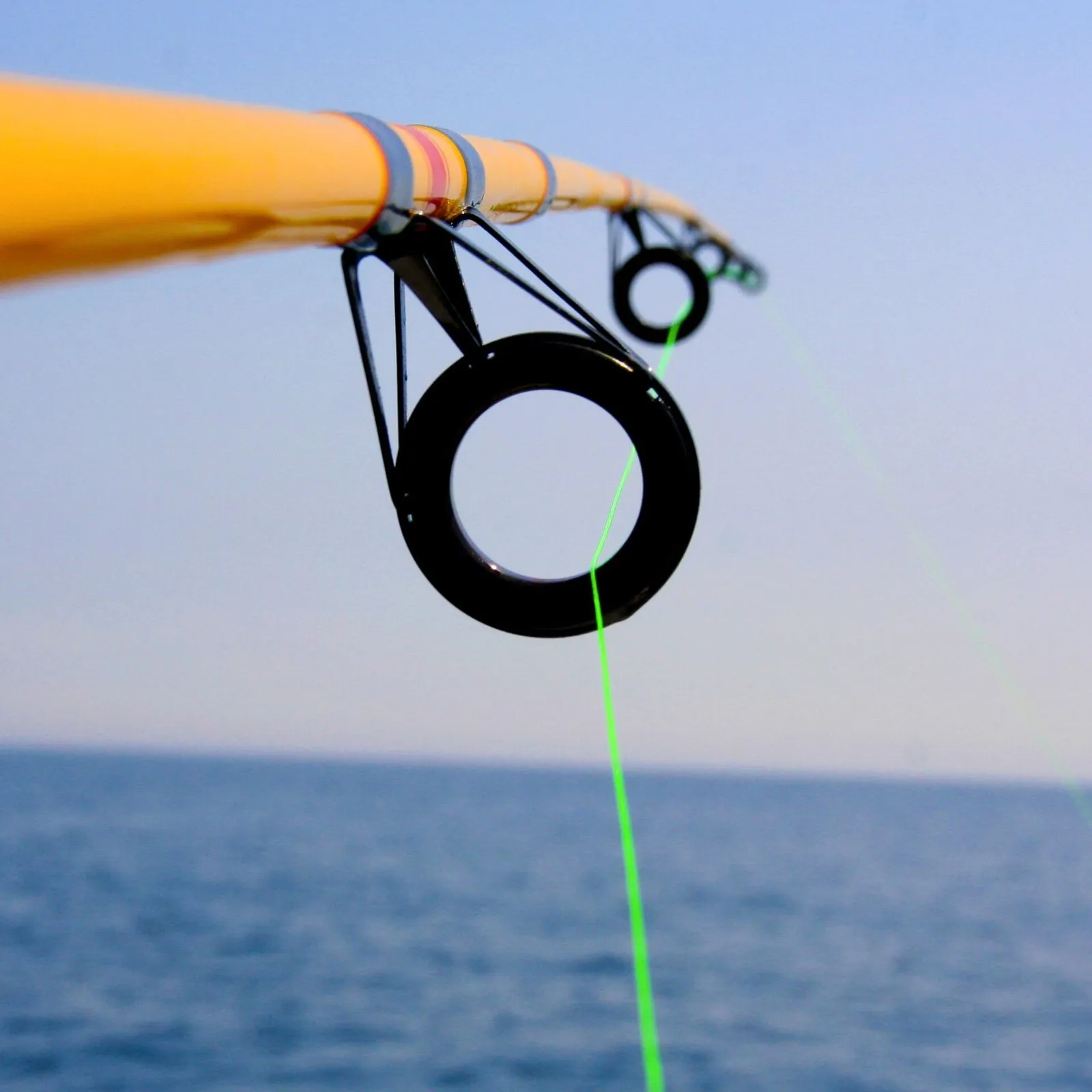
Fishing line comes in three materials, and the choice comes down to four properties: how much it stretches, how visible it is, how thick it is for its strength, and whether it floats. Nylon monofilament stretches and is cheap, fluorocarbon is nearly invisible and sinks, and braid has no stretch and a fraction of the diameter. Know those four and you can pick a line for any technique.
Twenty-pound braid is as thin as six-pound mono. Same number on the label, a third of the diameter in your hand.
Start here
- Braided fishing line: what braid is made of, its pound-test and diameter table against mono, and why it needs a leader and backing.
- Fluorocarbon vs monofilament: the two clear lines on the numbers, then a verdict technique by technique.
- Monofilament fishing line: where the cheap, stretchy line still wins: topwater, trolling, bait and beginners.
- Fluorocarbon fishing line: where it wins, where it loses, and how to tie it so the knot holds.
- Best braided fishing line: eight braids compared on carriers, diameter and price per yard.
- Best fishing line: picks across mono, fluorocarbon and braid by job, with the price per 100 yards.
- Fishing leader: when a leader pays, which material and test, how long, and the knots.
- Best fishing line for bass: pound tests and leaders by technique.
Mono, fluorocarbon or braid?
| Property | Monofilament | Fluorocarbon | Braid |
|---|---|---|---|
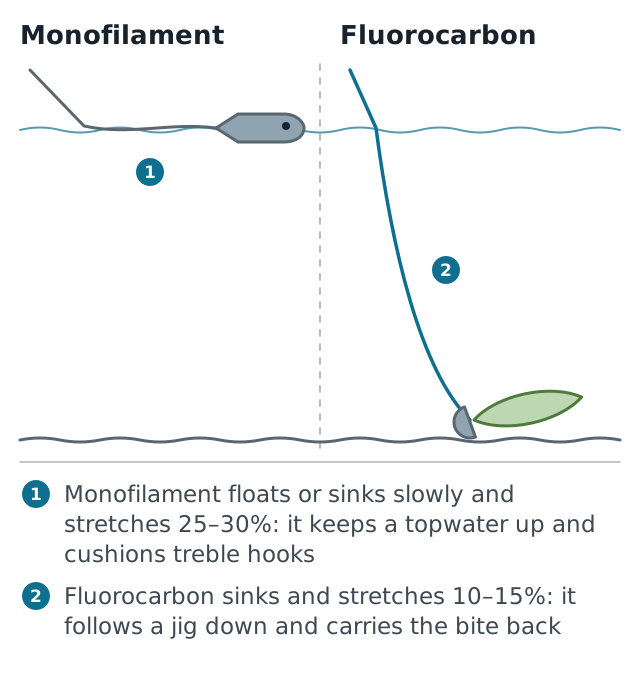
| Stretch | 25–30% | 10–15% | About none |
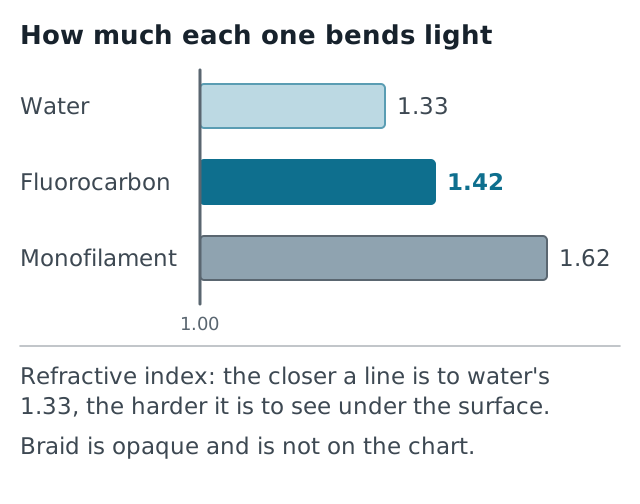
| Refractive index (water 1.33) | 1.62 | 1.42 | Opaque |
| Sinks or floats | Near neutral | Sinks; Seaguar’s demonstration: 30 cm in 15 s against 40 s for nylon | Floats |
| Diameter at 20 lb | 0.016–0.018 in | 0.015–0.016 in | 0.009–0.010 in |
| Abrasion | Moderate | High | Low; frays on shell and rock |
| Memory | High | Moderate to high | None |
| Aging | Poor in sunlight; replace within months | Excellent; a year or two | Excellent; years |
| Knots | Ties easily | Wet the knot; a dry, rushed knot fails | Braid knots: Palomar, FG or double uni to a leader |
| Cost per yard | 1–3 cents | 5–15 cents | 4–10 cents |
| Best at | Trolling, topwater, circle-hook rigs, beginners | Leaders, clear water, bottom contact | Main line for casting, jigging, frogs, grass |
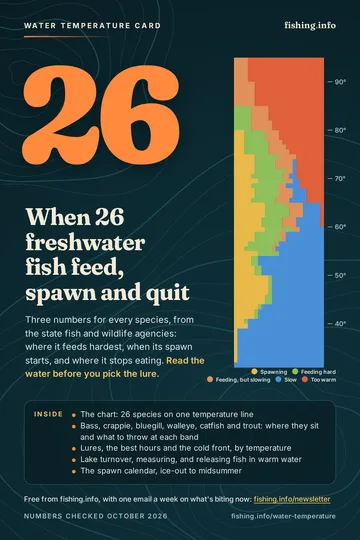
Free card: what 26 species do at your water temperature
Plus one email a week on what's biting now. No sales pitches. Privacy.
Is 20 lb braid stronger than 20 lb mono?
No. Rated strength is the same by definition; the difference is diameter. Measured on Berkley Trilene, Berkley Vanish and SpiderWire Stealth, 20 lb test runs 0.016 in for mono and fluorocarbon and 0.010 in for braid. At 50 lb the three run 0.028, 0.029 and 0.014 in. PowerPro’s own chart puts 20 lb braid at the diameter of 6 lb mono, and 50 lb braid at that of 12 lb.
Thinner line casts farther, cuts through water and wind, holds more on the spool and lets a crankbait dive deeper. The reels hub covers spool capacity, and why braid changes the reel size you need. The cost is that braid is visible, frays on rough cover and bites into itself under load. So drags are set lighter, and a leader is tied on.
Which line for which technique?
For bass, Tactical Bassin’s For bass, Tactical Bassin’s Matt Allen keeps the list short:
- Finesse in clear water: 10 lb braid to a 5–8 lb fluorocarbon leader.
- Texas rigs and flipping: 40 lb braid to a 12–17 lb mono leader, or 15–20 lb fluorocarbon straight.
- Crankbaits: 10–14 lb mono or 12 lb fluorocarbon, because the stretch keeps trebles in.
- Jerkbaits: 12 lb fluorocarbon.
- Drop shot: fluorocarbon, because it sinks.
- Frogs and punching: 50–65 lb braid with no leader.
- Topwater: mono or braid.
On fluorocarbon for topwater, Allen is blunt: “fluorocarbon sinks. Use it for topwater and it will drive you insane!”
Catfish anglers run 20–50 lb mono or 30–65 lb braid on the main line, with a 20–40 lb fluorocarbon or mono leader. That leader is there for abrasion on the bottom, not for invisibility. The line rating printed on a blank is a range for the rod’s power, not a limit; the rods hub explains it. And each lure family has its line on its own hub.
When do you need a leader, and what color?
A leader answers two of braid’s weaknesses at once. Fluorocarbon at the lure is nearly invisible and takes the abrasion, and wire stops a pike or musky biting through. Six to twelve inches of wire is enough to prevent bite-offs; 12–18 in of fluorocarbon covers most lure fishing. The FG knot is the slimmest connection and the double uni the easiest.
On color, the honest answer is that no line is invisible. Fluorocarbon comes closest. Hi-vis braid is for the angler’s eyes and gets a leader, and green or clear mono disappears well enough in most water.
The names, if you want them
Monofilament is nylon. Fluorocarbon is a PVDF polymer, first spun into fishing line by Kureha in 1971. Braid is gel-spun polyethylene, sold under the Spectra and Dyneema names. The hooks hub covers the other end of the line, and the gear hub the five gear decisions.
All articles
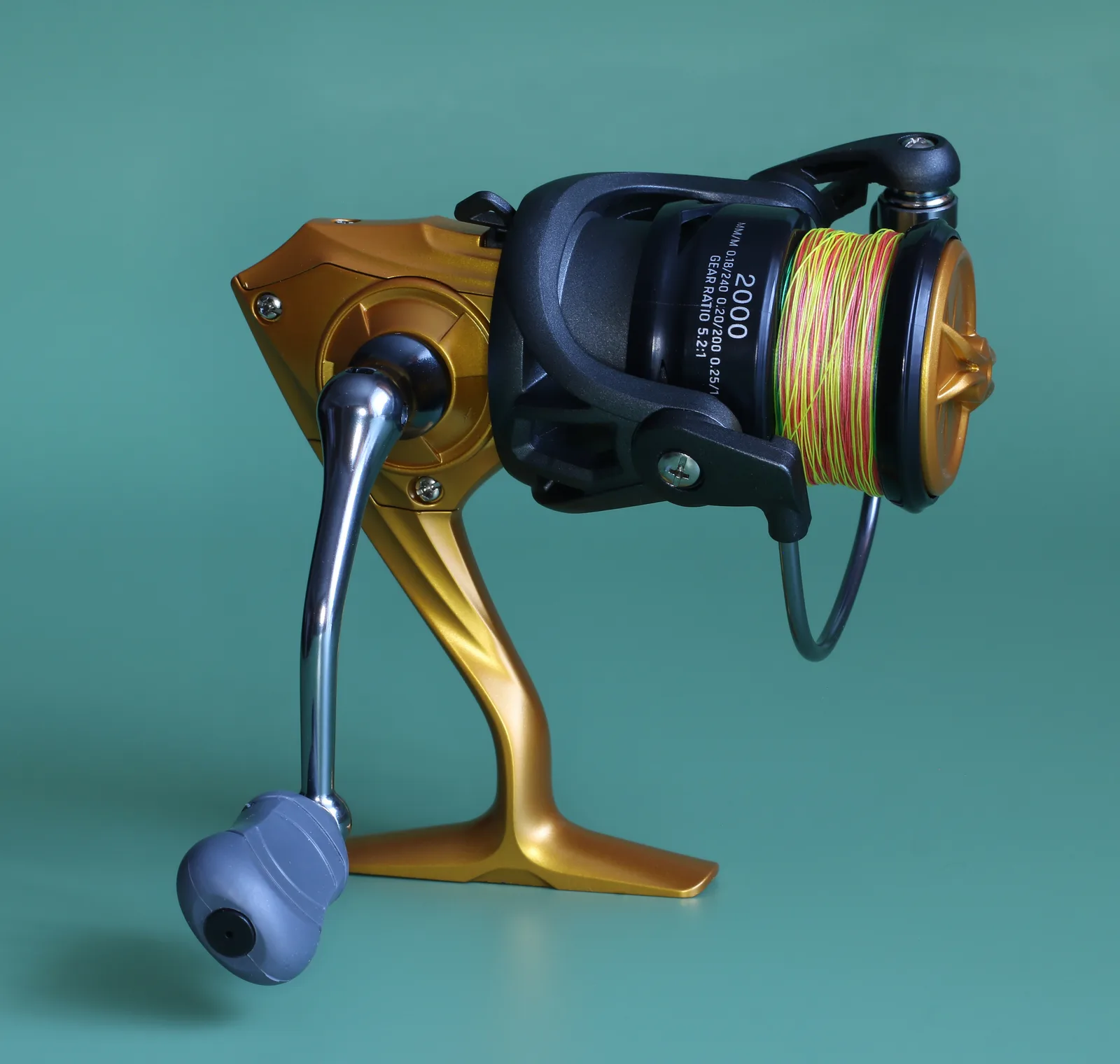 Best Braided Fishing Line: The Reviewers' Picks Compared
The best braided fishing line: eight braids compared on carriers, diameter and price per yard, with picks for flipping, finesse, inshore, surf, catfish and ice.
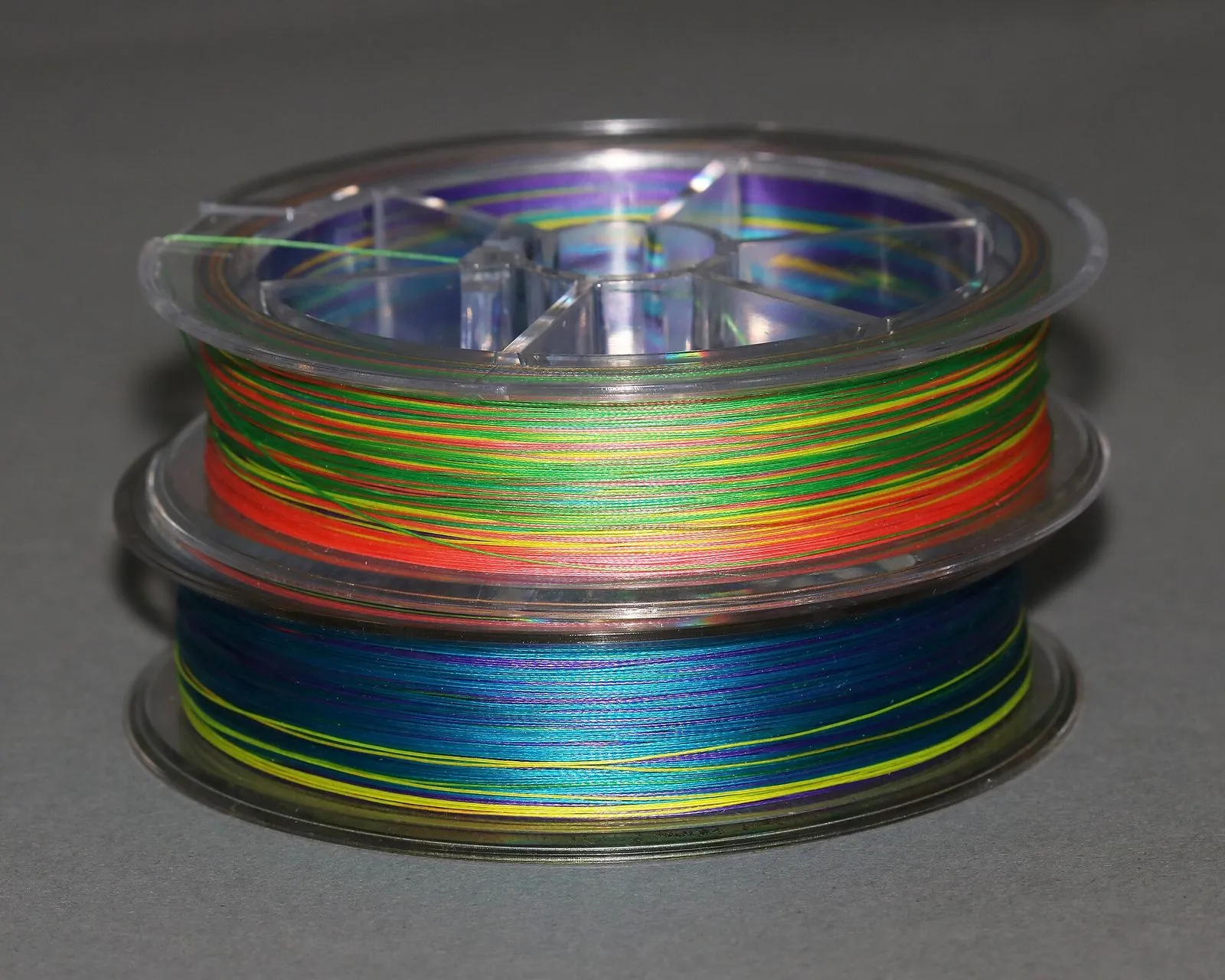 Braided Fishing Line: Strength, Diameter, Pros and Cons Explained
Braided fishing line explained: what it is made of, the pound-test and diameter table against mono, why it needs a leader and backing, and when not to use it.
 Fluorocarbon Fishing Line: What It Does, and When Not to Use It
Fluorocarbon fishing line sinks, stretches less than mono and is nearly invisible under water. Where it wins, where it loses, and how to tie it so it holds.
 Fluorocarbon vs Monofilament: Which Line Wins for Each Technique
Fluorocarbon versus monofilament on the numbers: stretch, visibility, sink rate, abrasion and price, then a technique-by-technique verdict with pound tests.
 Monofilament Fishing Line: What It Is Good For, and Where It Loses
Monofilament fishing line stretches, floats, ties easily and costs a cent a yard. Where that wins, topwater, trolling, bait and beginners, and where it loses.
Free download
The water temperature card
Read your water temperature and the card tells you who is spawning, who is feeding and what to throw. 26 species, 16 pages, for your phone and the tackle box.
Plus one email a week on what's biting now. No sales pitches. Privacy.