Fishing accessories are the small gear between the rod and the fish: the net, the pliers, the scale, the thermometer, the box, the cutters and the clips. None of them catches a fish, and a bad one costs you one. A net with the wrong mesh strips the slime off a trout, pliers that cannot cut braid leave you chewing line, and a tackle box without a drain rusts a season of hooks. This hub lists the accessories that earn their place and the one specification on each that decides whether it is any good.
A fish’s slime coat is its skin’s immune system: knotted nylon mesh scrapes it off in one scoop, which is why every catch-and-release guideline now says rubber net, horizontal hold, ten seconds of air.
Start here
- Fishing thermometers — the cheapest accessory with the biggest effect on where you fish; what the $12 analog, the digital and the depth probe each do.
- How to find your lake’s water temperature — the four ways to know the number before you leave the house, and which lakes have a live sensor.
- Fishing hooks — the hook is the accessory that touches the fish; sizes, types and the chart by species.
- Catch and release — the handling rules that decide what the net, the grip and the scale may do to the fish.
- Fishing rod holders — for catfish, surf and trolling, the holder is the accessory that does the waiting.
The five that earn their place
| Accessory | The spec that matters | Why | Fishing it is for |
|---|---|---|---|
| Landing net | Rubber or rubber-coated mesh, hoop 17–20 in (43–51 cm) for bass, 24 in (61 cm) and up for pike and catfish | Keeps the slime coat; hooks do not tangle in rubber | Every release fishery; a knotless nylon bag only for fish you keep |
| Pliers | A hardened cutter that takes braid, 7–8 in (18–20 cm) long nose, a lanyard | Braid blunts ordinary cutters in a week; the nose reaches a treble inside a pike’s mouth | Bass, pike, catfish, saltwater; small forceps for trout and panfish |
| Scale | A certified or tested 50 lb (23 kg) digital with a hook or a lip grip, read with the fish supported | A record and a tournament weight both need a scale that is right to the ounce | Bass tournaments, catfish, carp; trout anglers carry a tape instead |
| Thermometer | Encased analog or an IPX7 digital, read a foot down in shade | 60 °F (16 °C) starts the bass spawn, 68 °F (20 °C) ends the trout day | Every freshwater trip; a depth probe for trolling walleye and salmon |
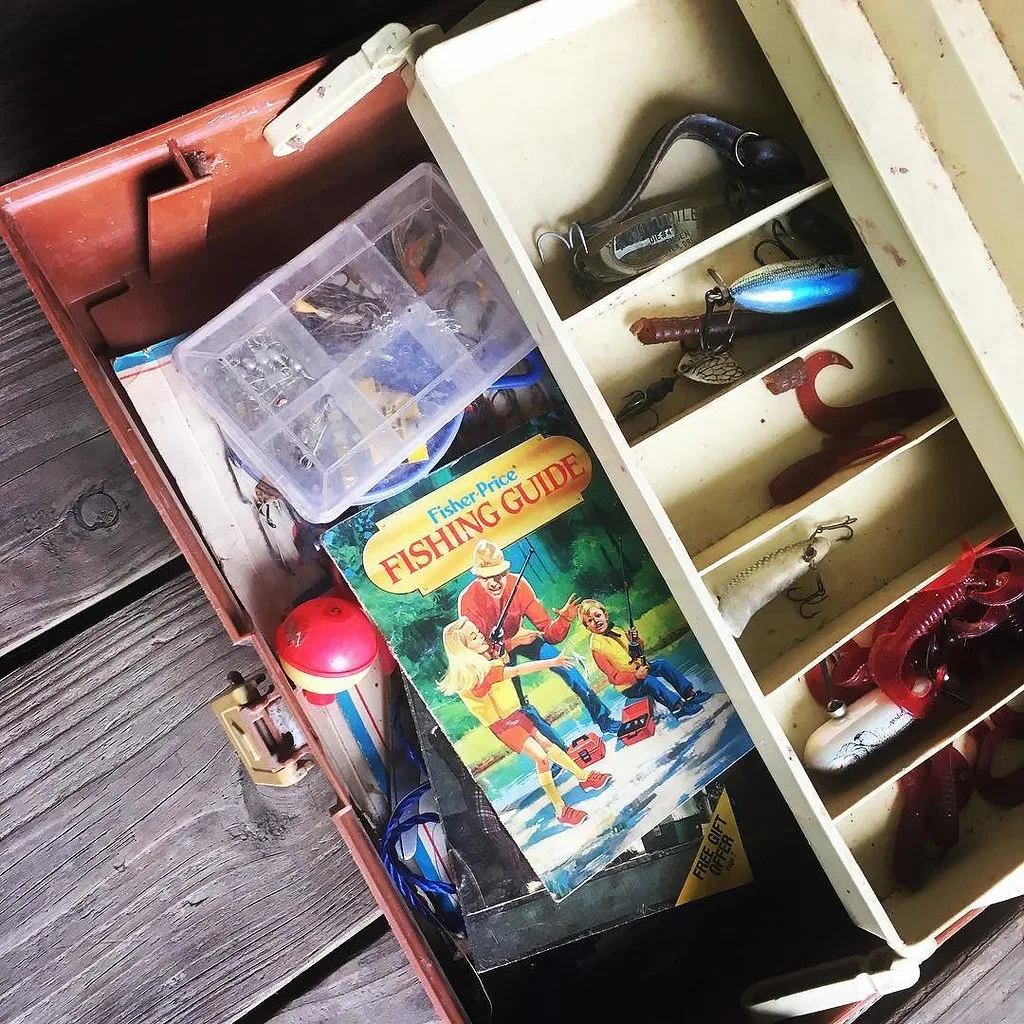
| Tackle box | A drained, rust-inhibiting tray that fits the boxes you own | Wet hooks rust in a sealed box; a 3600 or 3700 tray standard lets boxes move between bags | Bank, boat and kayak; a chest pack or lanyard for wading trout |
Two numbers worth memorizing from that table. The net hoop: a bass net of 17–20 in (43–51 cm) lands any largemouth you will meet, and a pike or flathead needs a hoop of 24 in (61 cm) or more with a deep bag, because the fish is longer than the hoop is wide and folds into the net rather than lying in it. And the tray standard: most of the plastic utility boxes anglers buy are “3600” (about 11 by 7 in, 28 by 18 cm) or “3700” (about 14 by 9 in, 36 by 23 cm), and bags are sold by how many of each they hold. Buy the tray size first and the bag second.
What the rest is for
Line cutters and nippers. A pair of nippers on a zinger is faster than pliers for mono and fluorocarbon and useless on braid; braid wants a serrated cutter or small scissors. Fly anglers wear nippers; bass anglers carry braid scissors in the pocket.
Hook removers and forceps. A 5–6 in (13–15 cm) locking forceps backs a hook out of a trout or a crappie without touching the fish; a long-nose disgorger reaches a bait hook swallowed by a catfish, and when it cannot, cutting the line at the hook kills fewer fish than digging. Barbless or crimped hooks make every remover work faster.
Fish grips and gloves. A lip grip holds a bass, a walleye or a catfish by the jaw for a photo; it does not hold the fish’s weight hanging vertically, which can tear the jaw on anything over about 5 lb (2.3 kg). A glove or a wet rag holds a pike or a muskie behind the head for unhooking, and a catfish is held with the fin spines between the fingers.
Measuring board. A bump board with the nose stop at zero gives the length a limit or a slot regulation asks for; a tape in the net bag does the same on the bank. In states with slot limits on bass or walleye the board is the accessory that keeps the license.
Sunglasses and light. Polarized lenses in amber or copper cut glare on stained water and show the bottom in clear water; a headlamp with a red mode keeps night vision for catfish and walleye after dark.
Clips, swivels and leaders. A snap lets a lure change happen without a knot; a swivel stops an inline spinner twisting the line; the fishing leader page says when each belongs on the line.
Where to go next
The gear section covers the big three, rods, reels and line, and the electronics; the accessories here are what fills the rest of the bag. Fishing hooks and fishing line are the two consumables the box runs out of first. For the gear that keeps a fish alive after the net, read catch and release, and when a word on a packaging label stops you, rods, reels and line in the fishing terms has it in a sentence.
All articles
 Best Fishing Thermometers: From a $14 Stream Tube to the Fish Hawk TD
A $14 encased stream thermometer serves most anglers; only a depth probe reads where summer bass and walleye sit. Five types compared, with picks.