 By
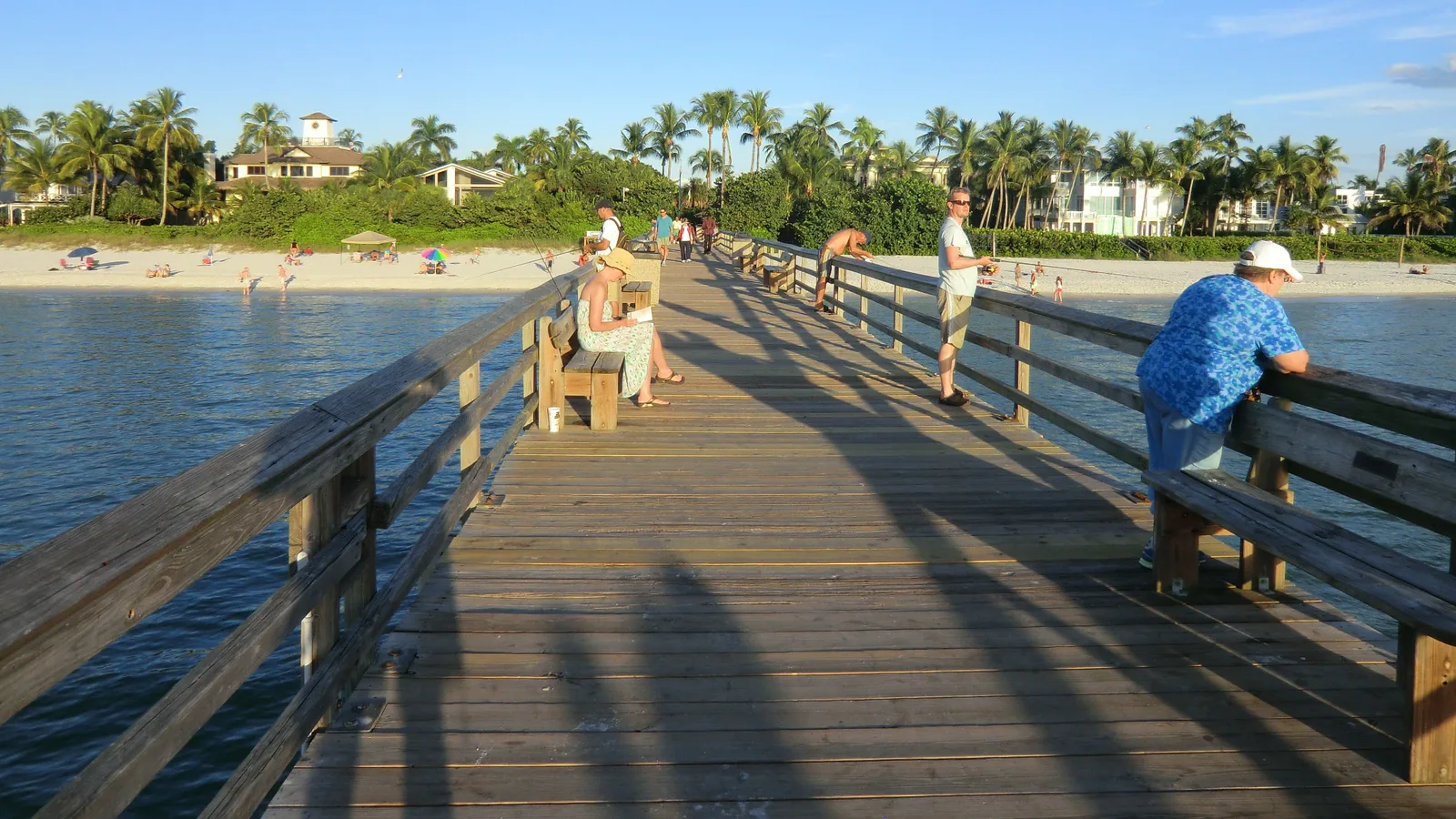
Florida fishing means two kinds of water, and two licenses: saltwater and freshwater each cost a resident $17 a year and a visitor $47. Fresh water never closes. Salt water runs on seasons that change by fish, and for snook and seatrout by region too.
Florida has more than 8,000 lakes, ponds and reservoirs and about 12,000 miles of fishable rivers, streams and canals. None of that fresh water has a closed season.
FWC, the state’s fish and wildlife agency, calls Florida the “Fishing Capital of the World.” It’s working to make it the bass fishing capital too.
Start here
- Florida fishing license: every 2026 fee and who fishes free.
- Florida bass: the state’s top freshwater fish.
- Snook: a permit, a slot and two closed seasons.
- Tarpon: catch and release only, and the 40-inch rule.
- Peacock bass: the South Florida canal fish.
- Grouper: seven groupers, and the size, bag and season rules by coast.
Which license do you need?
Pick it by the fish you’re after, not by the water you’re standing in. A saltwater fish needs a saltwater license, a freshwater fish a freshwater one. A resident who fishes both saves with the $32.50 combo. A visitor can buy 3 days for $17 or 7 days for $30, for each kind of water.
Kids under 16 fish free, and so do Florida residents 65 and older. Residents who fish salt water only from shore can get a shoreline license at no cost. Snook and lobster need a permit on top, and a kept tarpon needs a $51.50 tag.
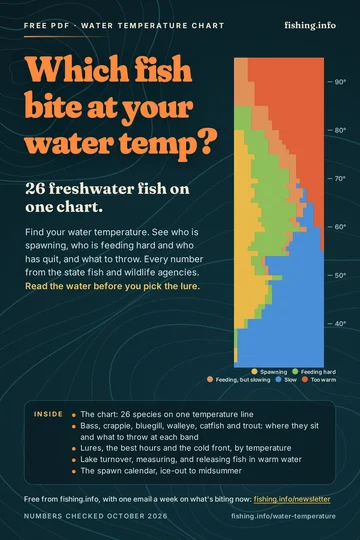
Free PDF · Water temperature chart Which fish are biting at today's water temperature?
One reading, and the 16-page chart shows which of 26 fish are spawning, feeding hard or slowing down; for bass, crappie, bluegill and walleye, where they sit and what to throw. Every number sourced.
No card, nothing to buy, and the PDF is yours to keep. It's in your inbox a minute later. Then a few short emails and one a week on what's biting. Unsubscribe anytime. Privacy.
What are the freshwater limits in Florida?
Florida’s freshwater rules didn’t change for 2026–27. These are the statewide daily limits. Some lakes, rivers and fish management areas have their own.
| Fish | Daily limit | Length rule |
|---|---|---|
| Black bass (Florida, largemouth, Suwannee, spotted, shoal and others, combined) | 5 | only 1 may be 16 in (41 cm) or longer, no minimum for Florida or largemouth bass |
| Panfish (bluegill, redear, warmouth and others, combined) | 50 | none |
| Crappie (speckled perch) | 25 | none statewide |
| Striped, white and sunshine bass, combined | 20 | only 6 may be 24 in (61 cm) or longer |
| Butterfly peacock bass | 2 | only 1 may be 17 in (43 cm) or longer |
You may hold no more than two days’ limit. Keep bass, stripers and peacock bass whole, head and tail on, until you’re done fishing for the day. Sturgeon are protected: one caught by accident goes straight back alive.
The bag limit is per angler. Suwannee, shoal, spotted and Choctaw bass under 12 in (30 cm) go back.
Where are the best bass lakes in Florida?
FWC’s biologists picked the waters most likely to fish best for black bass in 2026. Florida bass live in almost every body of fresh water in the state, so the list helps. These are some of the picks:
| Water | Size | Why it made FWC’s list |
|---|---|---|
| Lake Okeechobee | over 450,000 acres | a top-5 water for TrophyCatch bass, 8 lb (3.6 kg) and up |
| Lake Istokpoga | 27,700 acres | a winter favorite, plus bluegill and redear (shellcracker) near a pound |
| Lake Toho | 18,627 acres | bass anglers caught 1.03 bass an hour in 2025 |
| Orange Lake | nearly 13,000 acres | bass size and numbers, but drought has the water low |
| Winter Haven Chain | just over 9,000 acres in 26 lakes | 14 ramps, 5 fishing piers and bank fishing in city parks |
Lake Talquin in northwest Florida made the list too, for its black crappie and its Florida bass. No boat? Start on the Winter Haven Chain.
When do Florida bass bite best?
In spring, when bass move shallow to spawn. That can start in January in the far south and run to May in the Panhandle, with March and April the peak. Most big bass are caught then.
FWC names the golden shiner, under a float or free-lined, as the best live bait. For lures it’s the plastic worm, Texas- or Carolina-rigged through the weeds and worked slowly along the bottom. The Florida bass page covers the fish itself.
What are the saltwater rules to know?
Salt water is where Florida gets complicated, because the big fish each have their own season. These are the ones that catch people out.
Snook need a snook permit and a saltwater license, and they close twice a year. From the Alabama line to Alligator Point, snook close Dec. 1 to the end of February and May 1 to Aug. 31. There you keep one a day, 28 to 33 in (71–84 cm). Other regions use other dates, so check yours on the snook page.
Watch out: The snook permit applies from shore too, even on a resident’s free shoreline license. FWC gives no refund if snook turn out to be closed where you fish.
Spiny lobster have a two-day sport season, the last Wednesday and Thursday of July: July 28–29 in 2027. In those two days the limit is 12 a day, but 6 in Monroe County and Biscayne National Park. The regular season runs Aug. 6 to March 31 at 6 a day. A lobster’s carapace, the body shell, must be longer than 3 in (7.6 cm), measured in the water, and you need a lobster permit.
Red snapper in the Gulf open in set windows for private boats. For 2026 that was May 22 to July 31, then fall dates, then every day from Dec. 1, 2026, through Jan. 4, 2027. FWC sets the 2027 dates in spring, so check its snapper page before you go. You keep 2 a day, 16 in (41 cm) or longer. On a private boat you also need the free State Reef Fish Angler designation.
Spotted seatrout run by nine regions. In the Indian River Lagoon they close Nov. 1 to Dec. 31, and a keeper measures 15 to 19 in (38–48 cm).
Tarpon are catch and release. Any tarpon over 40 in (102 cm) stays in the water.
When can you fish without a license?
On Florida’s license-free days, nobody needs a fishing license, resident or visitor. Bag and size limits still apply. The freshwater days are the first full weekend in April and the second in June. The saltwater days are the first full weekend in June, the first Saturday in September and the Saturday after Thanksgiving. On those saltwater days you need no snook or lobster permit either.
Heading somewhere else? The fishing license by state page sets Florida’s fees beside other states’.
All articles
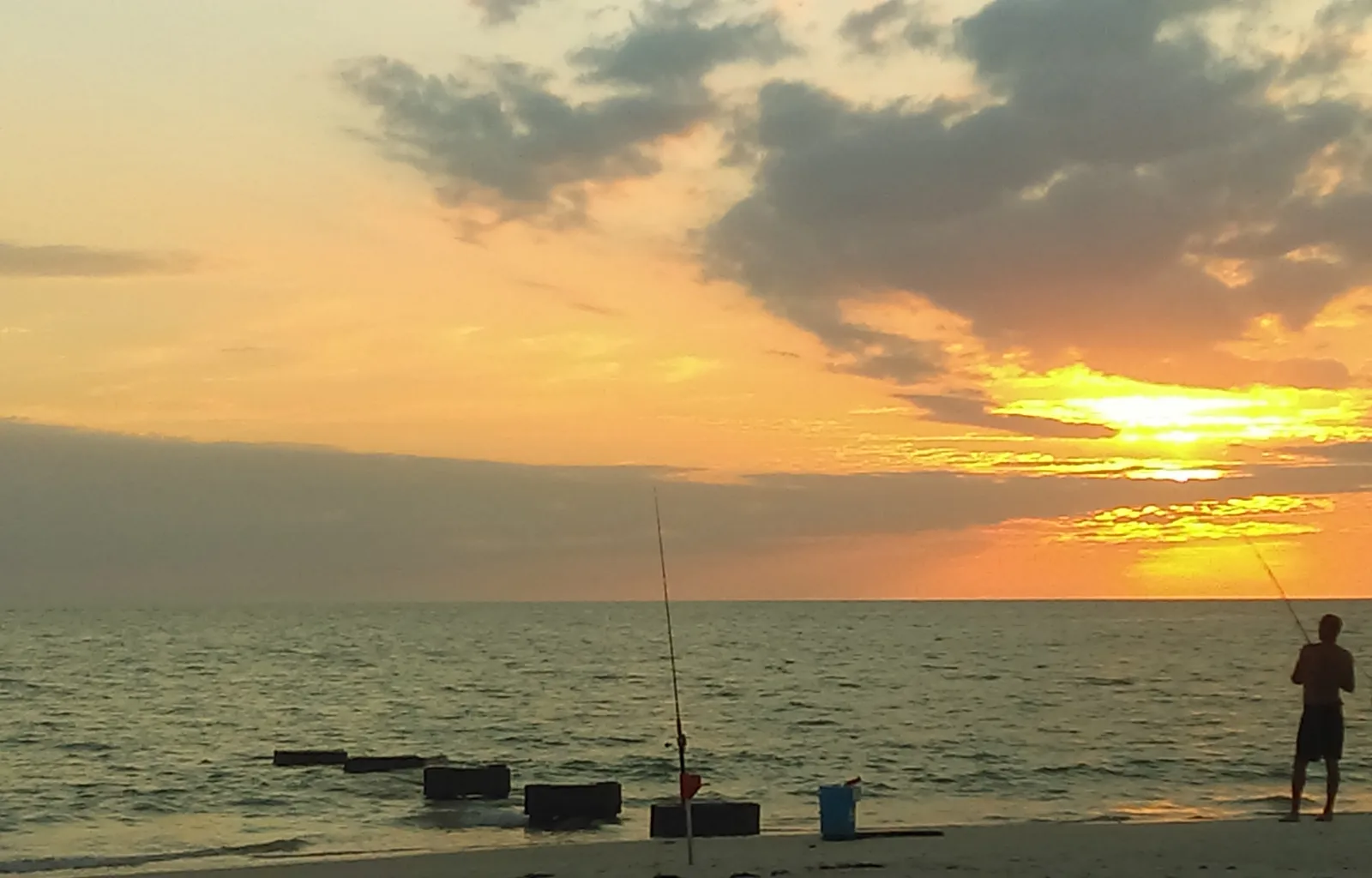 Florida Fishing License 2026: Cost, Who Needs One and Where to Buy
A Florida fishing license is $17 a year for residents and $47 for visitors, salt and fresh sold apart. The fees, who fishes free, and where to buy.

Free PDF · 16 pages
Stop guessing. Know what's biting before your first cast
A whole Saturday on the water with nothing to show for it. One reading tells you who's feeding.
The Water Temperature Fishing Chart. Take one water temperature reading, find it on the chart, and see which of 26 freshwater fish are spawning, feeding hard or slowing down.
- Where bass, crappie, bluegill and walleye sit, and what to throw. Trout: the reading where you stop.
- Why a 3 ft drop beats a cold front, and what to throw each day of the front
- The three thermometer mistakes that make a reading lie
The chart's numbers come from state fish and wildlife agencies and fisheries research: 64 sources, each listed on the site.
No card, nothing to buy. The PDF is in your inbox a minute later, one version for your phone and one to print, yours to keep. Then a few short emails and one a week on what's biting, with an unsubscribe link in every one. Privacy.