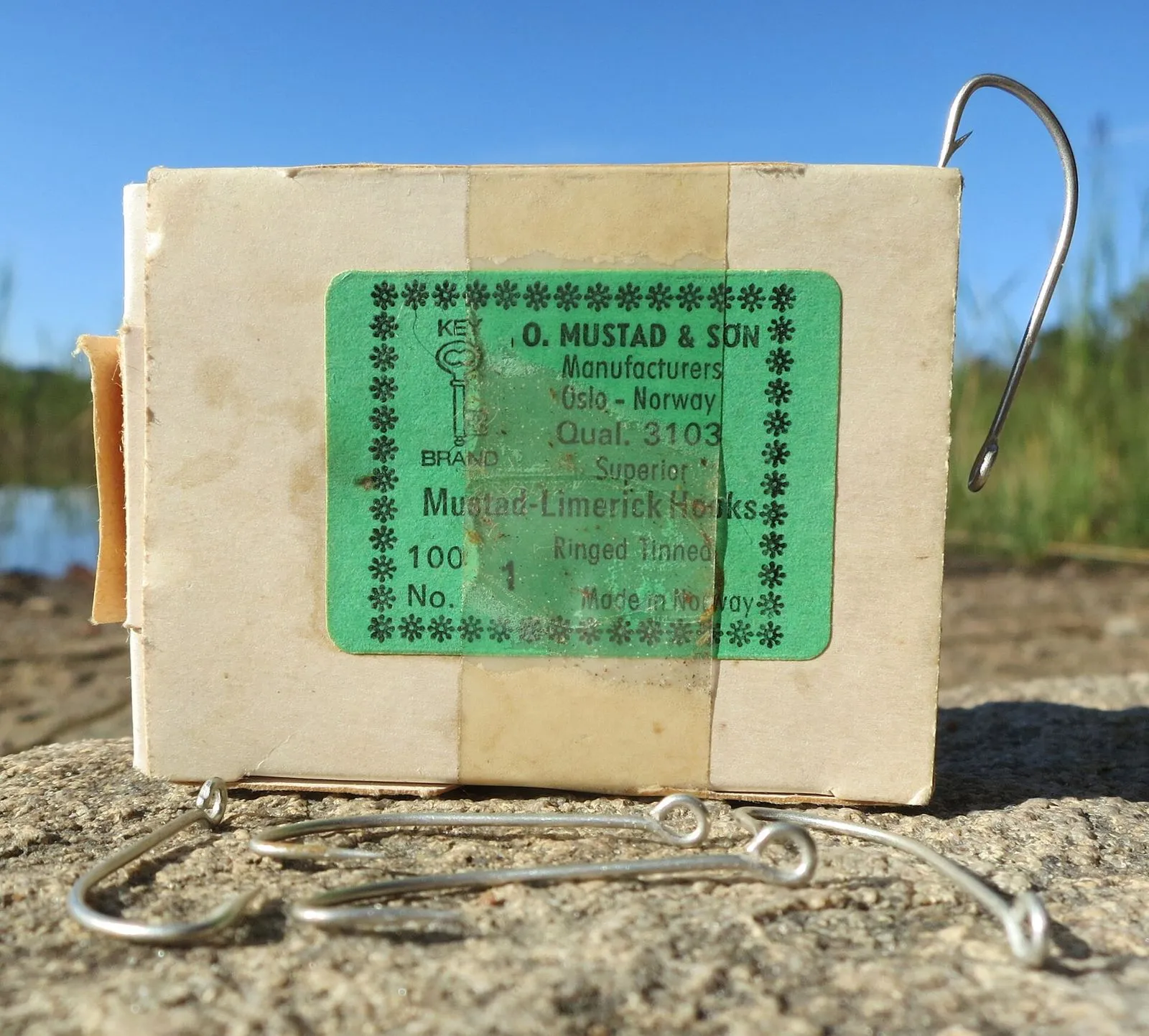
The right hook is the one whose gap fits the bait and the fish’s mouth: a size 8–12 Aberdeen for bluegill, a 3/0–5/0 worm hook for largemouth, a 5/0–8/0 circle hook for blue catfish. A hook is the one piece of tackle that touches the fish, and it is the cheapest to get right. Learn the size system once and what each hook shape is for, and the size chart does the rest.
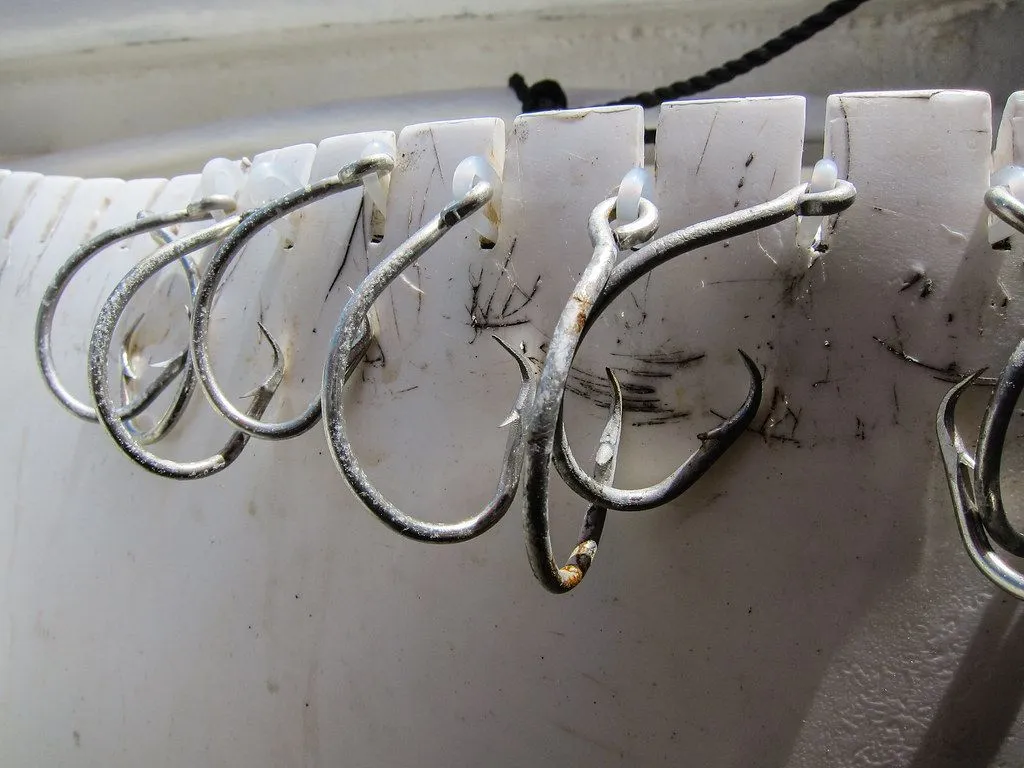
Circle hooks jaw-hook tuna and billfish more than nine times in ten and cut deep hooking in striped bass fourfold; in the Gulf they are the law for reef fish on natural bait.
Start here
- Fishing hook size chart: how the numbers work, with measured sizes and hooks by species.
- Circle hooks: how to fish a hook you do not strike, and the table of where it is the law.
- J hooks: the plain bait hook, how hard to set it, and when a circle hook beats it.
- Treble hooks: treble sizes, when to change them, and the waters that require single hooks.
- Fishing line: the knot and the line test have to match the hook’s wire.
- Fishing rigs: the rigs that put a worm hook or a drop-shot hook to work.
How do hook sizes work?
The scale has two halves. Small hooks are numbered 32 down to 1, and the hook gets bigger as the number gets smaller: a size 10 is a panfish hook, a size 1 a bass hook. Above size 1 the scale flips to “aughts,” written 1/0, 2/0 and so on up to about 20/0. Now the hook gets bigger as the number rises: a 5/0 is a catfish hook, a 10/0 a tuna hook.
The number describes the gap, the distance from point to shank. The gap decides how big a bait the hook carries and how big a mouth it fits. Sizes are not standardized between makers, so a 2/0 from one brand is not exactly a 2/0 from another. The measured sizes on the hook size chart show how much they vary.
Free card: what 26 species do at your water temperature
Plus one email a week on what's biting now. No sales pitches. Privacy.
Which hook shape does which job?
| Type | What marks it | Used for |
|---|---|---|
| Bait (J) hook | The plain shape; baitholder versions have barbs on the shank | Worms, minnows, general bait fishing |
| Circle hook | Point turned back toward the shank | Live and cut bait; sets in the corner of the mouth without a strike |
| Octopus | Short, curved shank, up-turned eye, medium wire | Leeches, minnows, walleye, drop shot |
| Aberdeen | Long shank, light wire that bends free of snags | Crappie in timber, bluegill |
| Kahle | Wide gap, between a J and a circle | Live bait for flounder, catfish |
| Siwash | Long shank, open eye | Replacing trebles on spoons and spinners where single hooks are required |
| Worm / EWG | Offset bend below the eye, wide gap | Texas-rigged soft plastics, weedless |
| Jig hook | Eye bent 60 or 90 degrees | Molded into jig heads |
| Drop-shot hook | Small, light, straight eye | Drop shot, wacky and Neko rigs |
| Treble | Three points on one shank | Crankbaits, jerkbaits, topwater; cut bait for catfish |
Each type has its own section on the types of hooks page. Light wire bends; the reels hub covers the drag that keeps a light-wire hook from straightening.
Which hook for which fish?
The table gives the hook type and a starting size; the hook size chart adds sizes by bait and measured gaps, and the species pages refine it by bait size.
| Species | Hook | Size |
|---|---|---|
| Bluegill, sunfish | Aberdeen | 8–12 |
| Crappie, perch | Aberdeen | 6–10 |
| Trout | single bait hook | 10–14 |
| Walleye | octopus or J | 4 to 1/0 |
| Smallmouth bass | worm hook | 2/0–3/0 |
| Largemouth bass | EWG worm hook | 3/0–5/0 |
| Channel catfish | circle | 1/0–4/0 |
| Blue catfish | circle | 5/0–8/0 |
| Flathead catfish | circle, live bait | 7/0–10/0 |
| Pike | treble or single | 2/0–5/0 |
| Redfish | circle | 1/0–3/0 |
| Snapper | circle | 2/0–5/0 |
| Grouper | circle | 8/0–12/0 |
| Tuna | circle | 7/0–10/0 |
Catfish are the species where hook size matters most, because the bait is a chunk of shad or a live bluegill. Bass are the other species this hook advice is built around.
Why circle hooks, and where are they the law?
A circle hook is fished by not striking. Maine’s Department of Marine Resources tells anglers to “simply point the tip of the rod at the fish and slowly begin to reel in. The hook will set itself, usually in the corner of the mouth.”
Cooke and Suski’s 2004 review of 43 studies found that circle hooks cut hooking mortality by about half compared with J hooks, mostly because they hook fish in the jaw instead of the gut. That finding is now regulation in several places. Circle hooks are required with bait:
- for Gulf of Mexico reef fish in federal waters, where the circle hook must be non-stainless steel;
- for striped bass in Maryland, on fish, crab, worm or processed bait;
- for striped bass in North Carolina’s ocean waters since 2021, non-offset and non-stainless (not in internal coastal waters);
- for striped bass and bluefish in Maine since 2013, with an exception for tube-and-worm rigs.
The circle hook page keeps the table by jurisdiction.
Barbless hooks are the other conservation argument. Hühn and Arlinghaus’s 2011 meta-analysis of 107 freshwater studies found hooking mortality significantly higher on barbed hooks and natural bait than on barbless hooks and artificial bait. Across all species the mean was 15.9 percent and the median 7.8. The barb has a cost, too: in Schaeffer and Hoffman’s Gulf of Mexico bait study off St. Petersburg, Florida, barbless hooks came out faster, but anglers landed 22 percent more fish on barbed hooks.
What are the parts of a hook?
Everything about a hook is in seven parts and two numbers. The parts are the point, barb, bend, shank, gap, throat and eye; the numbers are a size and a wire gauge. The fishing gear hub has the rest of the tackle that hangs off the eye. The fishing tackle page says which hook, weight and float go in a first box for panfish, bass and catfish. To tie the hook on, the fishing knots hub starts with the Palomar and the uni knot, which also ties a snell.
All articles
 Circle Hooks: How They Work, How to Fish Them, and Where They Are Law
Circle hooks turn the point back toward the shank and set themselves in the corner of the mouth when you reel, not strike. How to fish them, and the rules.
 Fishing Hook Size Chart: How Sizes Work, With Hooks by Species
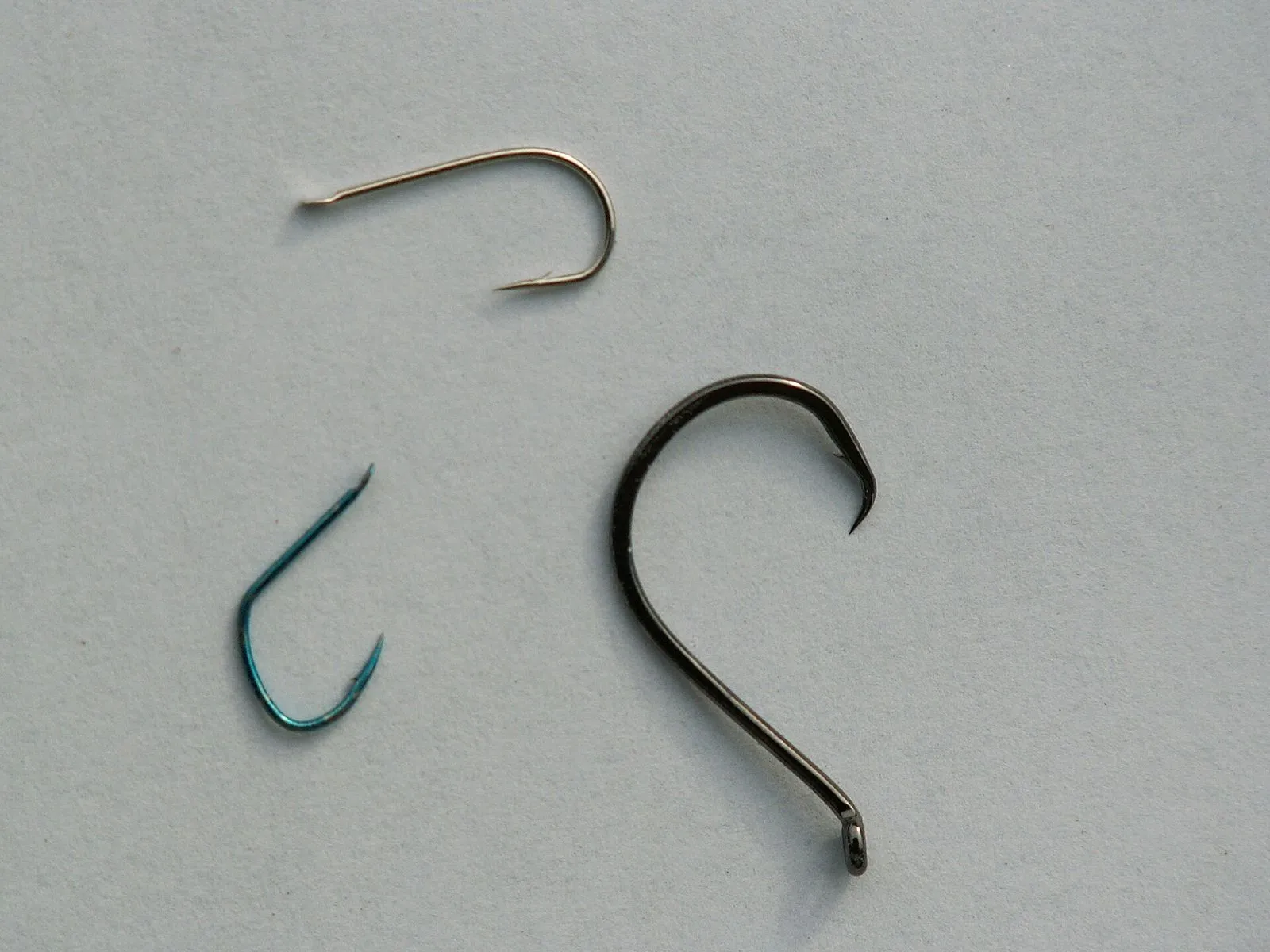
The fishing hook size chart explained: why #4 is bigger than #6 and 2/0 bigger than 1/0, the gap the number describes, and size-by-species and bait charts.
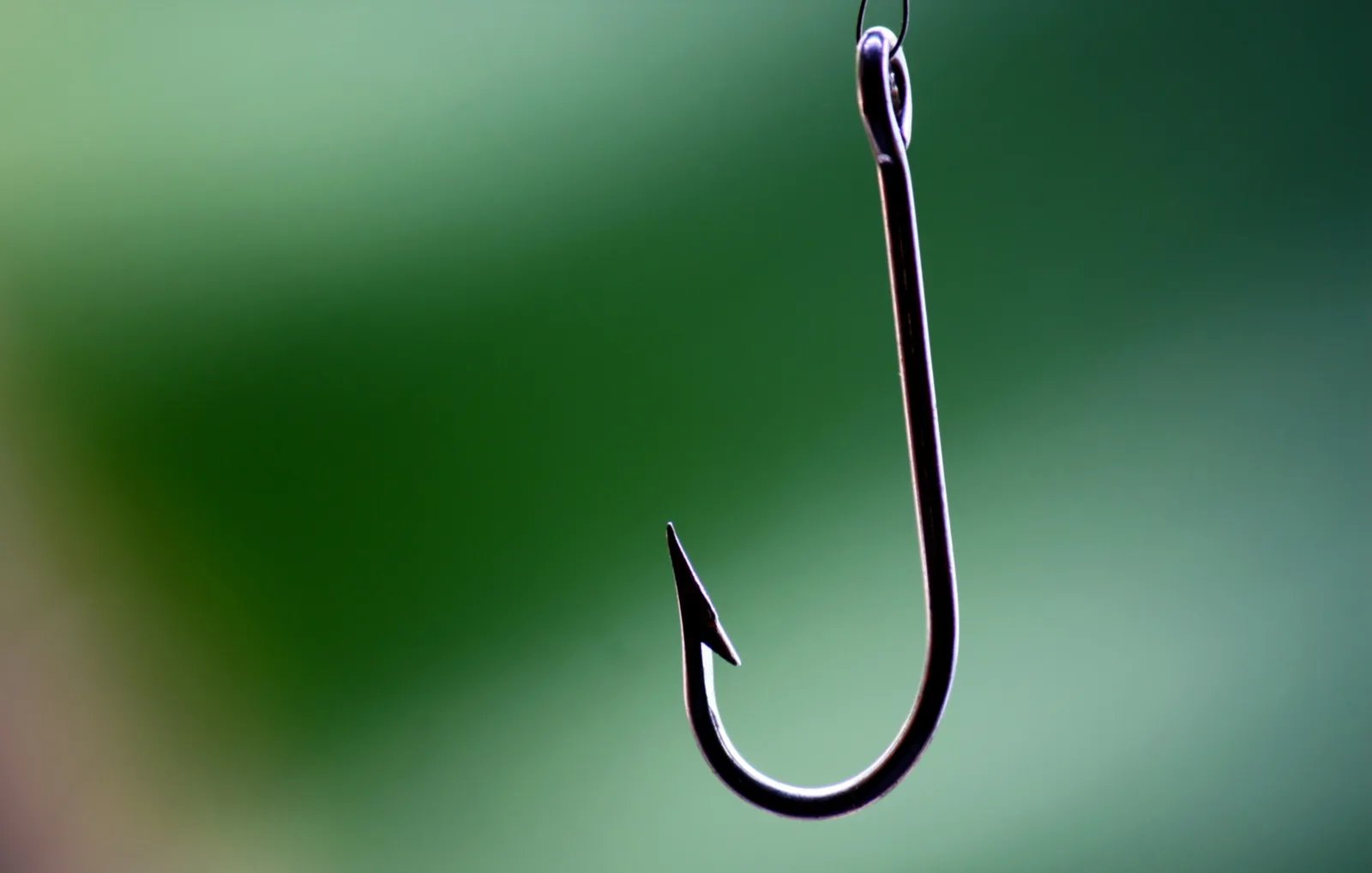 J Hook: What This Fishing Hook Is For, and When It Beats a Circle Hook
A J hook is the plain fishing hook, its point parallel to the shank, set at the bite. When it out-catches a circle hook, and where bait on one is banned.
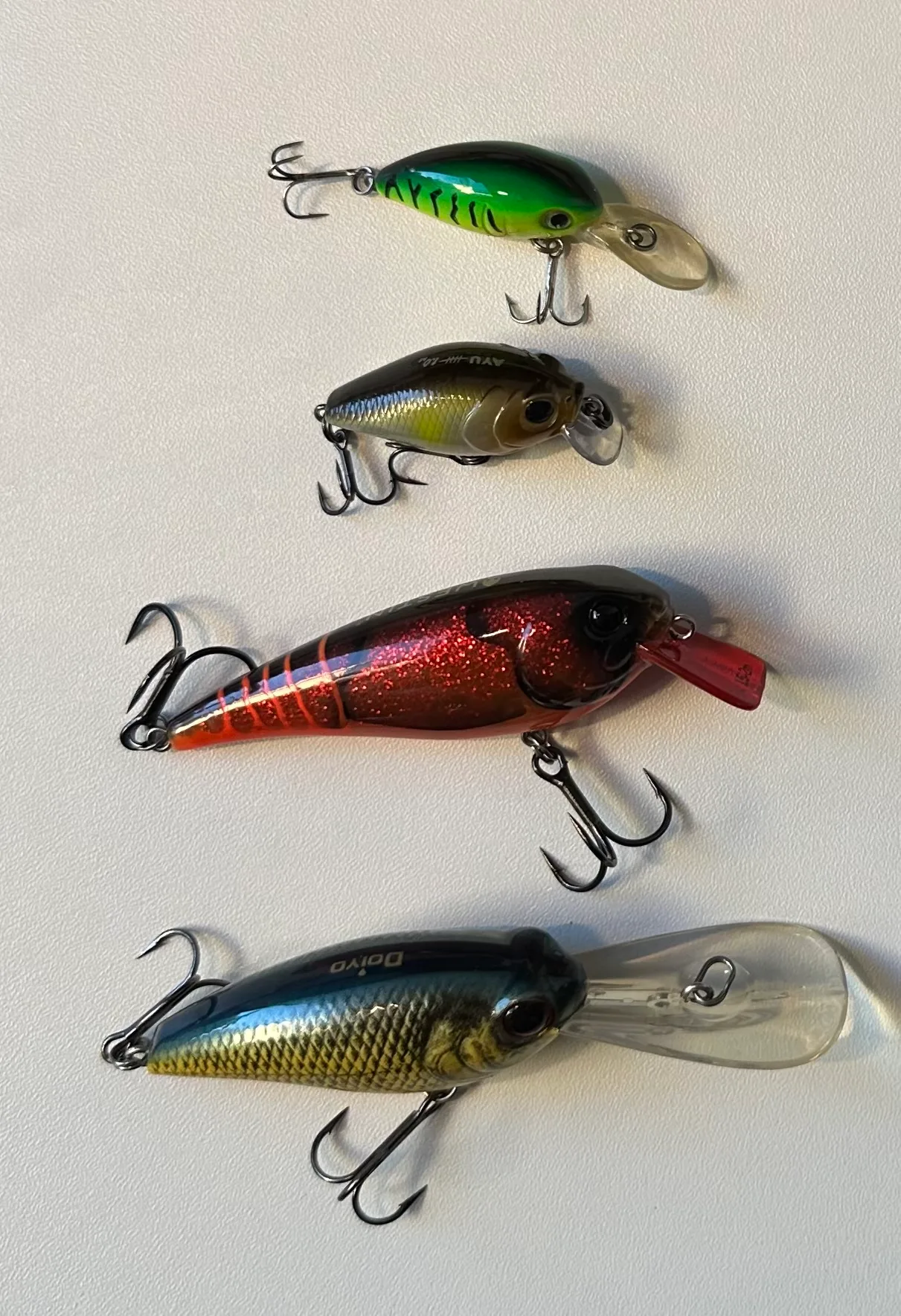 Treble Hook: Sizes, When to Change Them, and the Single-Hook Waters
A treble hook has three points on one shank and comes on almost every crankbait and topwater. Sizes by lure, when to change them, single-hook waters.
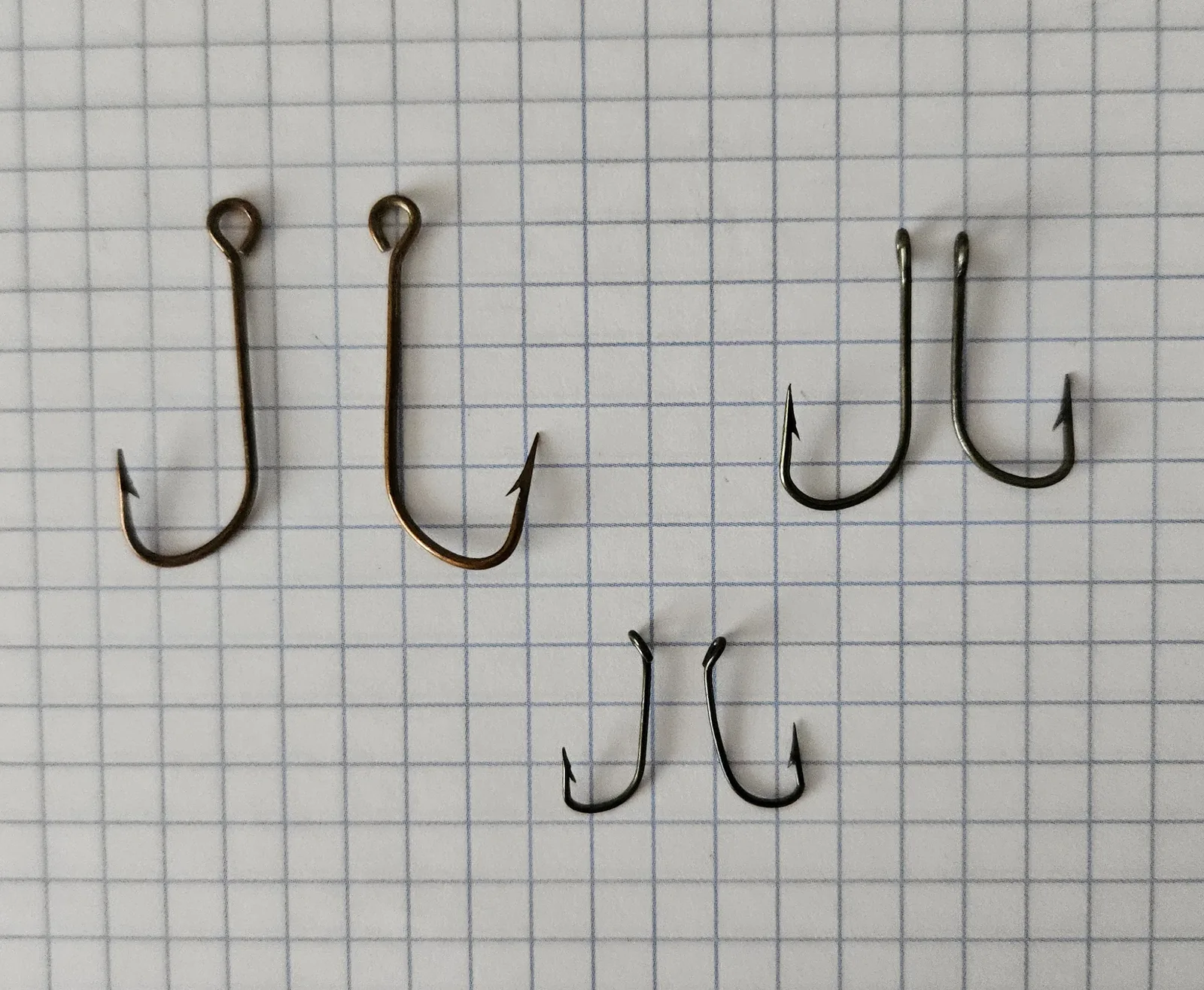 Types of Hooks: The Ten Fishing Hook Styles and What Each One Is For
The types of fishing hooks explained: bait, circle, octopus, Aberdeen, Kahle, siwash, worm, jig, drop-shot and treble, and how to read each shape.
Free download
The water temperature card
Read your water temperature and the card tells you who is spawning, who is feeding and what to throw. 26 species, 16 pages, for your phone and the tackle box.
Plus one email a week on what's biting now. No sales pitches. Privacy.
Sources
- Take Me Fishing, Fishing hooks: sizes, types, anatomy
- Bass Pro Shops, A simple guide to the most popular fish hook styles
- Academy Sports, Fishing hook size chart by species
- Maine Department of Marine Resources, Tips for using circle hooks
- Eagle Claw, octopus hook 226 (up eye, medium wire)
- Cooke, S. J. and Suski, C. D. (2004), Are circle hooks an effective tool for conserving marine and freshwater recreational catch-and-release fisheries? Aquatic Conservation: Marine and Freshwater Ecosystems 14:299–326
- Hühn, D. and Arlinghaus, R. (2011), Determinants of hooking mortality in freshwater recreational fisheries: a quantitative meta-analysis, in The Angler in the Environment: Social, Economic, Biological, and Ethical Dimensions, AFS Symposium 75 (abstract)
- Schaeffer, J. S. and Hoffman, E. M. (2002), Performance of barbed and barbless hooks in a marine recreational fishery, North American Journal of Fisheries Management 22:229–235 (USGS)
- 50 CFR 622.30, Required fishing gear (Gulf reef fish: non-stainless steel circle hooks with natural baits)
- COMAR 08.02.25.03, Hook and line (Maryland striped bass circle-hook rules)
- NC DEQ (2020), Circle hooks will be required for recreational striped bass fishing in ocean beginning Jan. 1