 By
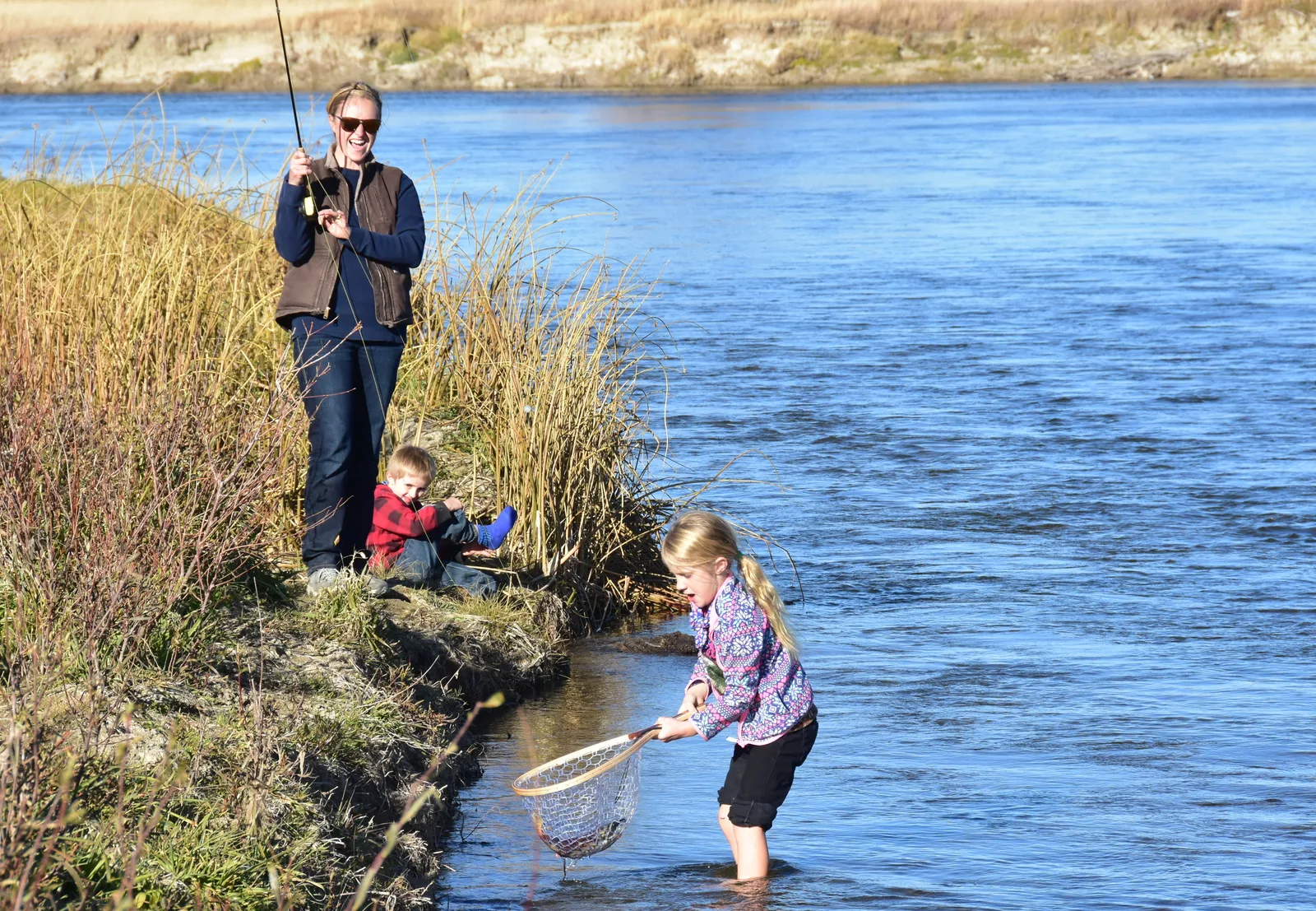
Fishing basics are the things no tackle shop sells: how to handle a fish so it lives, what your license covers and what to bring the first day. They matter more than the tackle. A fish handled badly dies whatever it was caught on, and a day without a license ends with a fine whatever was caught.
In Florida’s snook trial, four of twelve deep-hooked fish died when the hook was pulled out. None of twelve died when the leader was cut and the hook left in.
Start here
- Fishing for beginners: the first day from license to first fish, with the kit, the bobber rig and where bluegill bite.
- Catch and release: how many fish survive by species and hook, what decides it, and the ten-step release.
- Ikejime: how to kill, bleed and ice a fish you keep, with the brain spike point for bass, walleye, trout and catfish.
- Fishing terms: 690+ words anglers use, from aught and action to skunked, each in a plain sentence.
- Fishing knots: the five knots that cover almost everything, with the tying steps and the strength tests.
- How to fish for bass: one outfit, five lures and a first day, season by season.
- Fishing gear: the five numbers on the box that decide a rod, reel, line, hook and fish finder.
What do you bring the first day?
| Bring | Why | Where it is explained |
|---|---|---|
| A license, on your phone or in your pocket | Every state requires one; officers check | License by state |
| One rod and reel matched to each other | A 7 ft medium spinning outfit covers most freshwater fishing | Gear |
| Line already on the spool, a leader if it is braid | Braid is visible and needs a nylon leader | Fishing line |
| A small box: hooks #6–#10 for panfish, a few 1/0–3/0 for bass, sinkers, swivels | The rig is built from these on the bank | Fishing hooks |
| Pliers, clippers, a wet cloth | Unhooking fast and cutting line are the two things that keep fish alive | Catch and release |
| A tape or a marked rod | Size limits are in inches; guessing costs a fine | State regulations |
| Water, sun cover, polarized glasses | Glasses show the cover and the fish; the rest keeps you fishing | — |
| Nothing else | A first day with one lure fished well beats one with twenty fished badly | How to fish for bass |
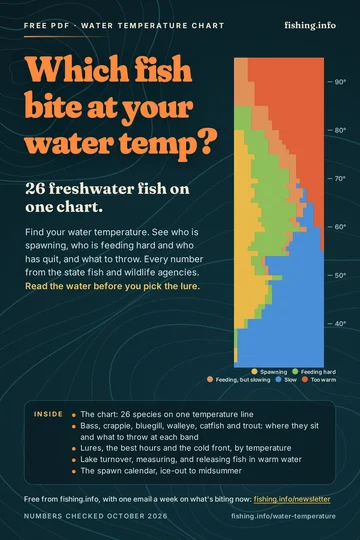
Free PDF · Water temperature chart Which fish are biting at today's water temperature?
One water temperature reading, and the 16-page chart tells you who's spawning, who's feeding hard, where they sit and what to throw. 26 fish, every number sourced.
Enter your email, confirm it with one click, and the PDF is in your inbox. Plus one email a week on what's biting. Unsubscribe anytime. Privacy.
How do you keep a fish alive?
Three habits do more for a released fish than any hook. The first is wet hands. Dry skin strips the slime that protects a fish from infection, so wet your hands before you touch it.
The second is to keep it in the water, in a rubber net, while you get the hook out. A barbless hook comes out with a twist of the pliers. A gut-hooked fish is better off with the line cut than the hook dug out.
The third is to count to ten. Photograph the fish in the water or with a wet hand under its belly, and put it back before ten seconds are up. Tournament largemouth in water of 70 °F (21 °C) or below survived up to 13 minutes in air, yet took longer to regain their balance, and nobody has shown the same in summer water. The ten-second rule works for every fish in every season. The catch and release page has the studies behind each of those habits.
What does the license cover?
Every state sells a fishing license online, most in under ten minutes. Prices run from about $10 for a day to between $14 (Missouri) and $64.54 (California) for a resident year. Most states also hold one or two free fishing days a year when no license is needed.
Size and bag limits, seasons and the waters where a species is protected are set state by state and change yearly. The fishing license by state page explains why the rules stop at the state line, and the Wisconsin page is the first state in detail. For any other state, search the state name and “fishing regulations” and use the agency’s own page, not a reseller’s.
Where next?
Knots are the first skill to learn, and the knots section has the five that cover almost everything. Then the species pages say what each fish wants, and the gear section says what to buy once and what to buy later.
All articles
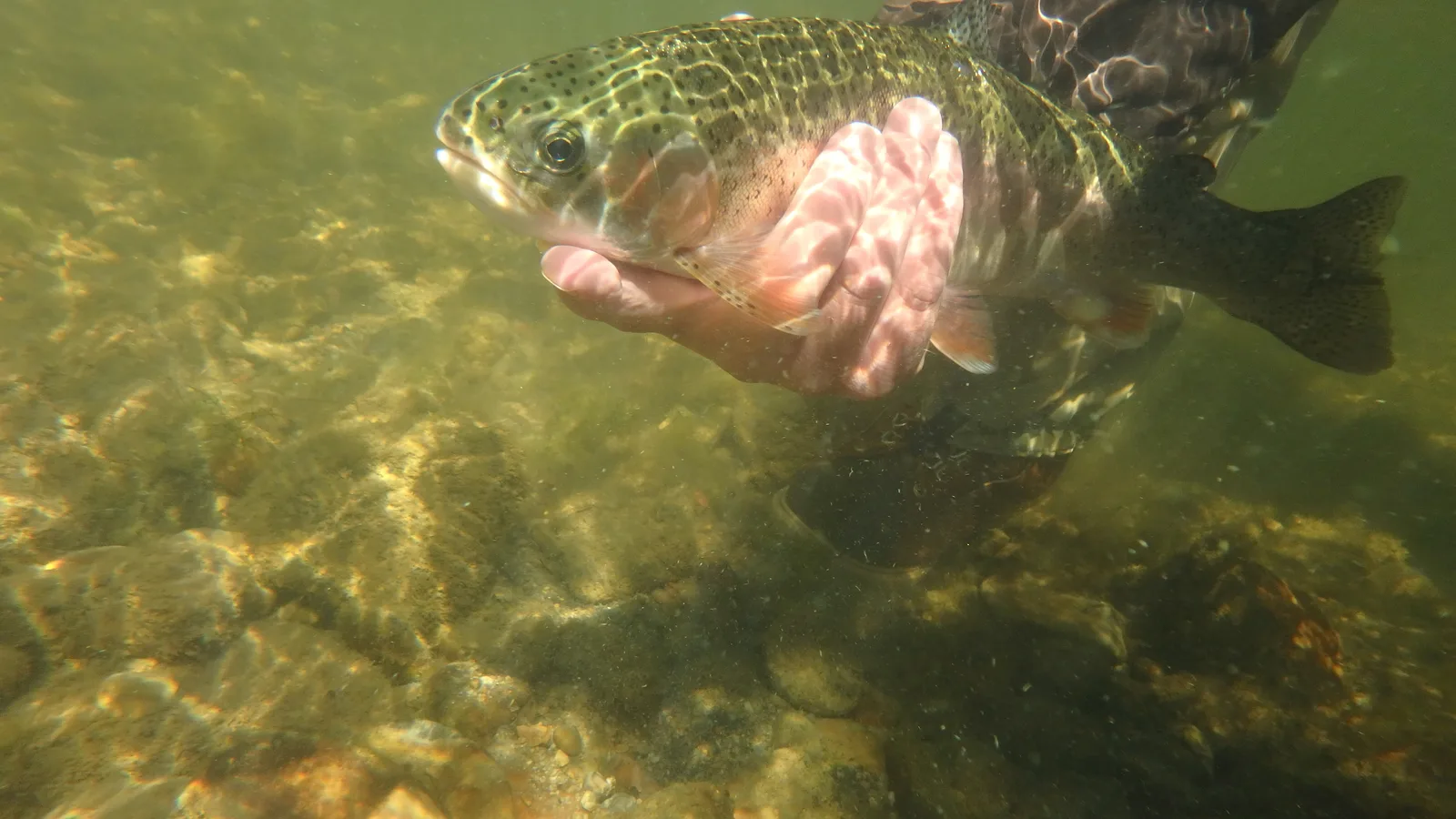 Catch and Release Fishing: How Many Fish Survive, and How to Do It
Catch and release fishing by the numbers: survival rates by species and hook location from the published studies, and the ten-step release that raises them.
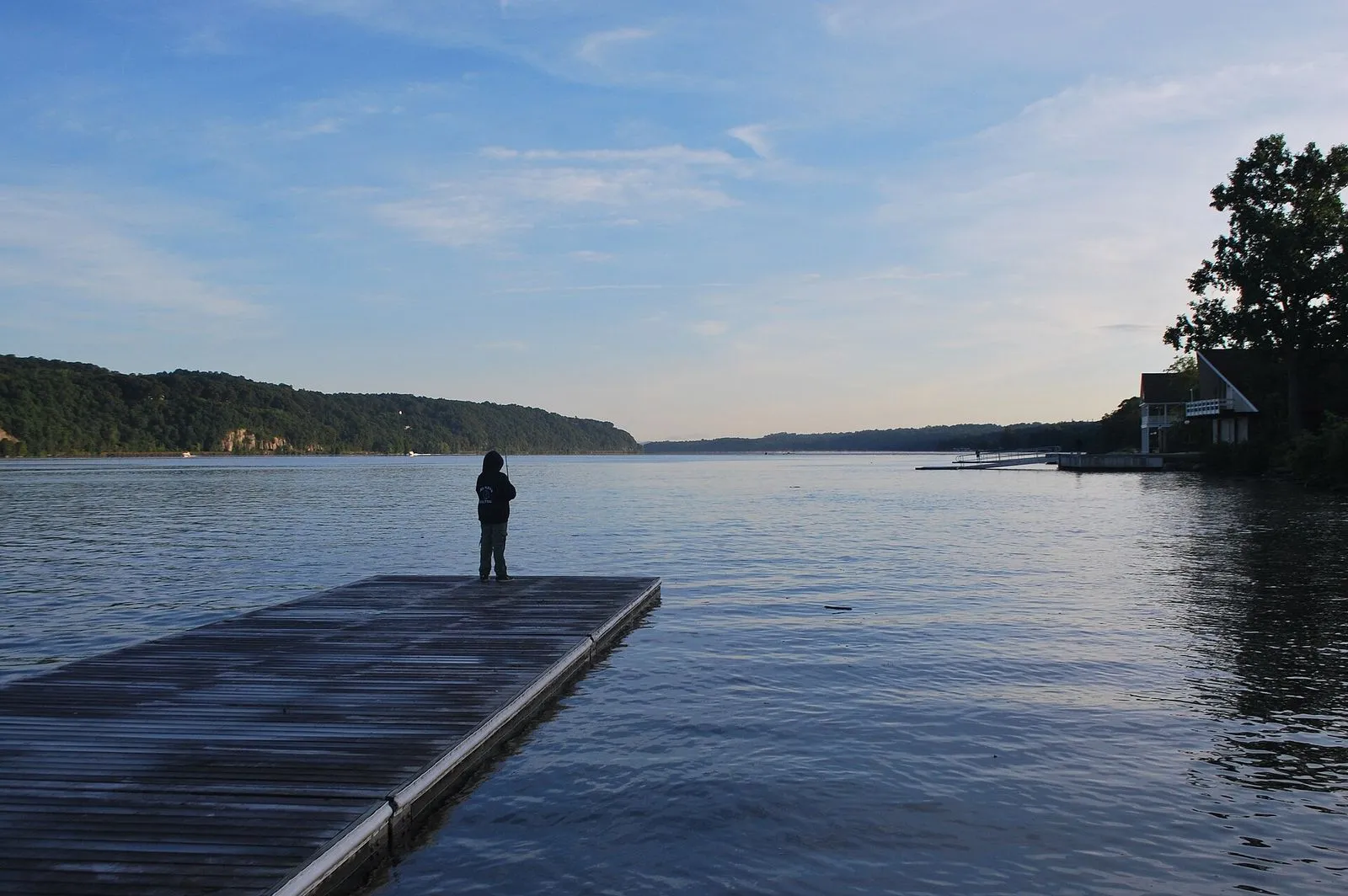 Fishing for Beginners: Your First Day, From License to First Fish
Fishing for beginners, step by step: the $65–80 starter kit, who needs a license, where to go, the bobber rig, the cast, the bite and the rules.
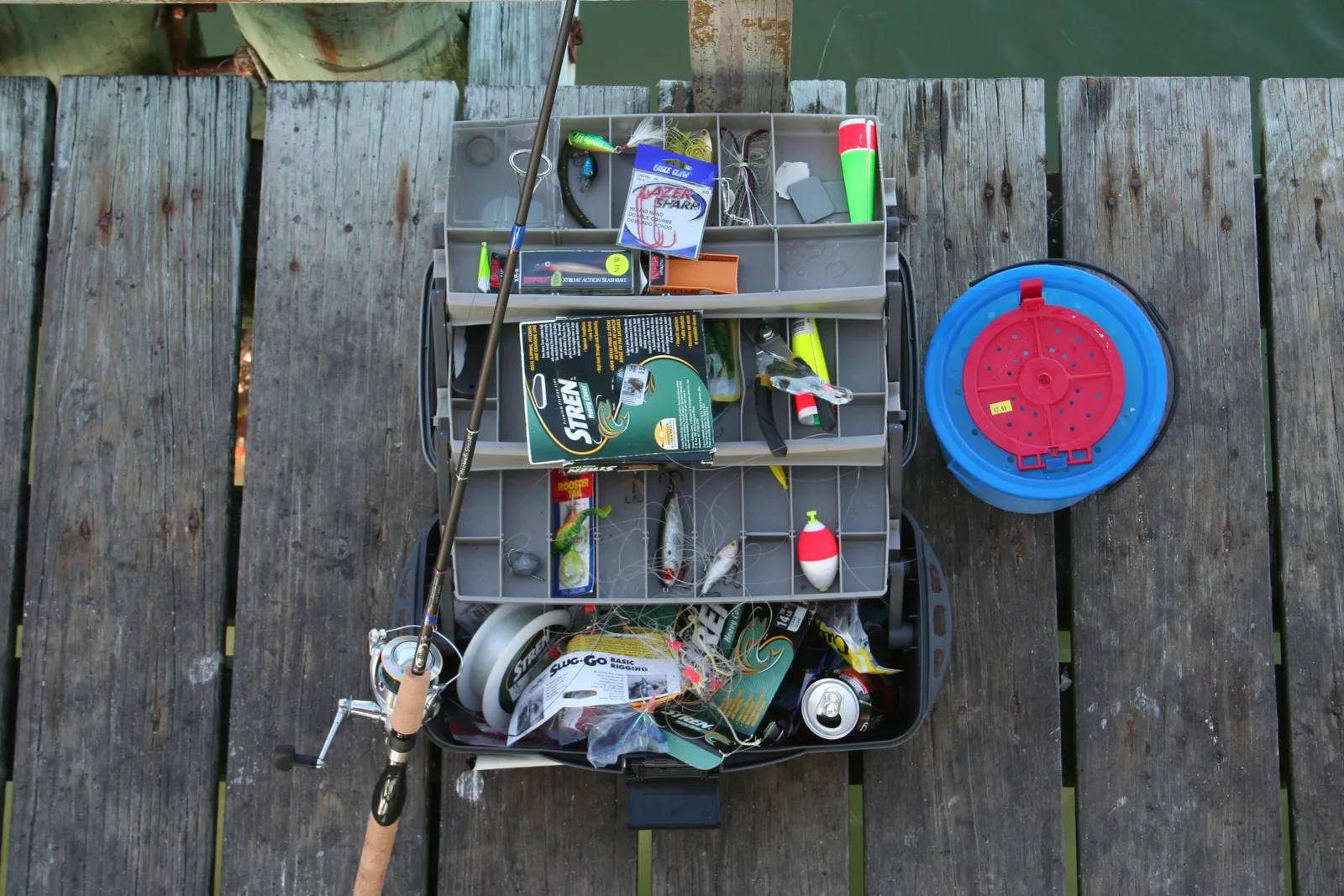 Fishing Terms: 690+ Words, Slang and Acronyms Anglers Use
Fishing terms and slang, A to Z: 690+ words in plain English, from bail and drag to hawg, dink and honey hole, plus 32 acronyms anglers use.
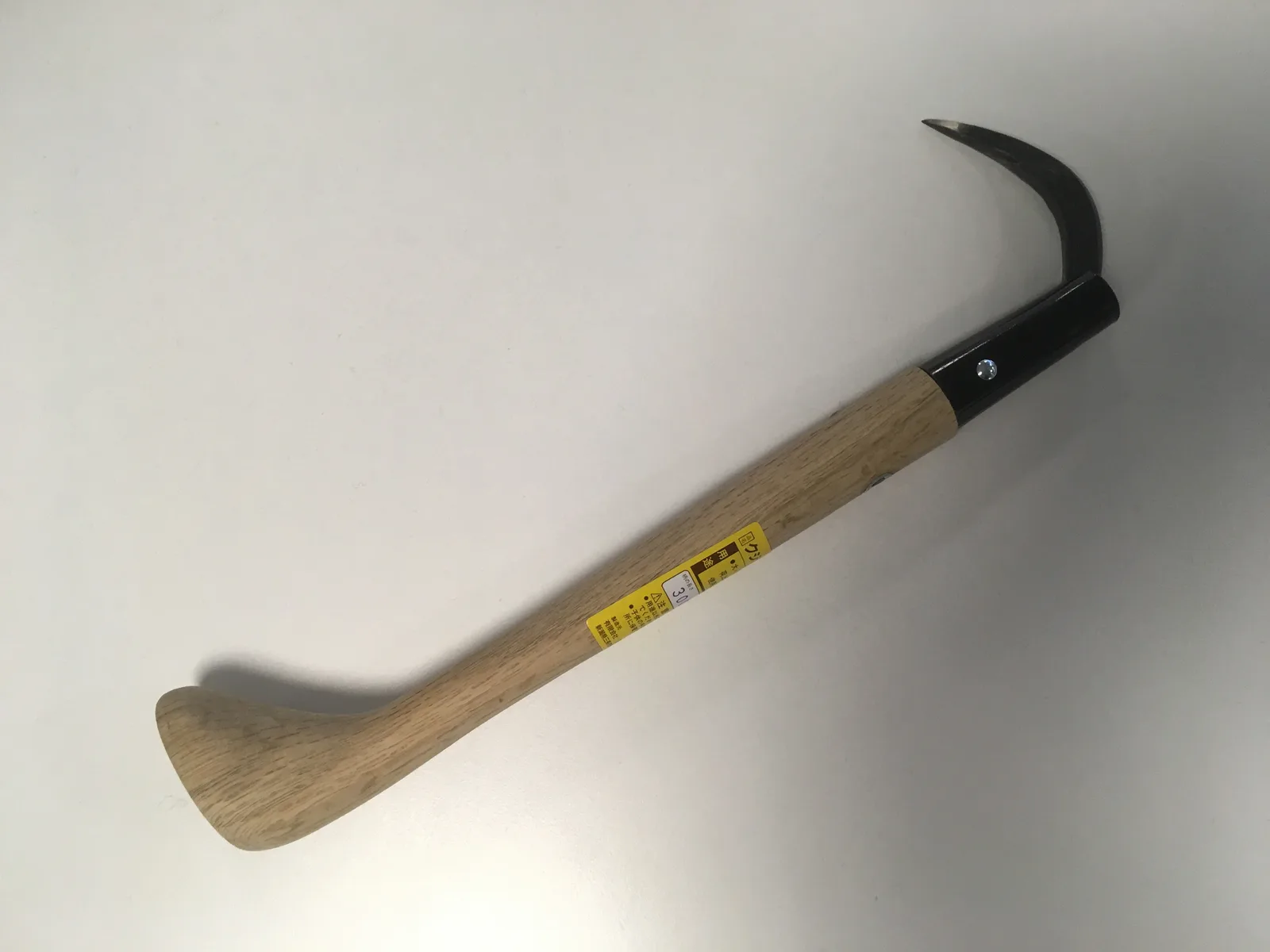 Ikejime: How to Spike, Bleed and Ice a Fish You Will Eat
Ikejime step by step: eight steps as the agencies describe them, where the brain is on bass, walleye, trout and catfish, and what the studies measured.
Free PDF · 16 pages
Know what's biting before your first cast
The Water Temperature Fishing Chart. Take one water temperature reading, find it on the chart, and you know which of 26 freshwater fish are feeding today, where they are and what to throw. For your phone and the tackle box.
- The 26-fish chart: who's spawning, feeding hard or shut down at your reading
- Where they sit and what to throw at every band: bass, crappie, bluegill, walleye, catfish and trout
- The best hours at your reading, the cold front day by day, and the spawn calendar from ice-out to midsummer
- The three thermometer mistakes that make a reading lie (the first one is the surface)
Every number from state fish and wildlife agencies and fisheries research: 61 sources, all on the site.
Enter your email, confirm it with one click, and the PDF is in your inbox. Plus one email a week on what's biting. Unsubscribe anytime. Privacy.
Sources
- Bartholomew and Bohnsack (2005), A review of catch-and-release angling mortality
- Florida FWC, Techniques to reduce catch-and-release mortality
- Take Me Fishing, How to fish
- In-Fisherman, Bass out of water (Thompson et al. 2008: no deaths after up to 13 minutes in air at 70 °F or below)
- California Department of Fish and Wildlife, Fishing licenses (2026 resident sport fishing license $64.54)
- Missouri Department of Conservation, Price adjustments for some permits in 2026 (resident fishing permit $14)