 By
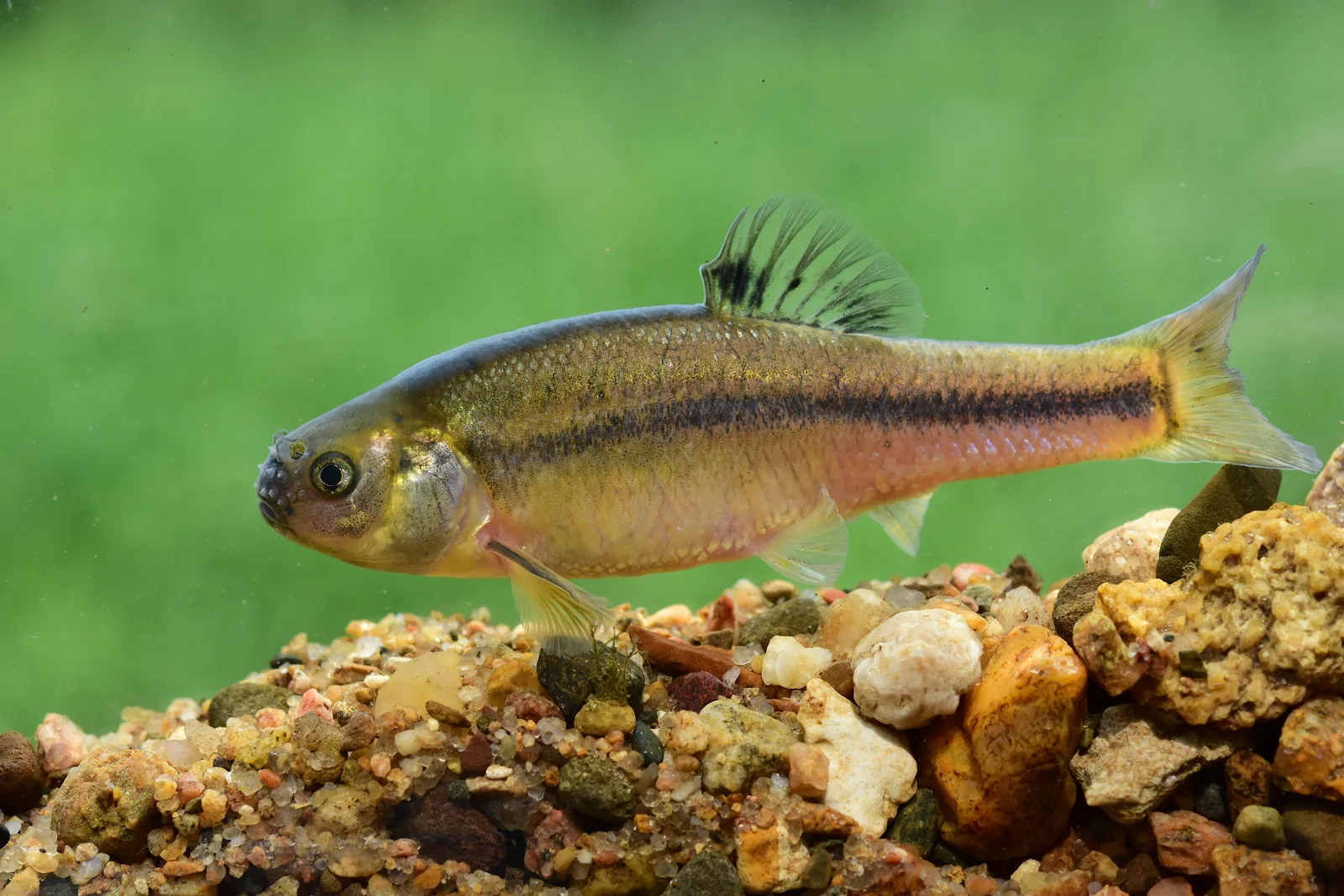
A minnow is a small freshwater fish of the minnow family, and North America has over 290 kinds of them. Shiners, chubs, daces and fatheads are all minnows, and most stay under 6 inches. At the bait shop, “minnows” means the small live fish sold by the dozen, most often fathead minnows or golden shiners. They’re the bait for crappie, walleye, perch and bass.
Under Minnesota law, a leech is a minnow. So is a sucker up to 12 inches long, and a bullhead up to 7.
What is a minnow?
It’s any fish of the minnow family. Over 290 kinds live in North America, and Virginia alone has 67. Most are small schooling fish, under 6 inches, with names that end in shiner, chub or dace.
Small isn’t the rule, though. Carp and goldfish are minnows too. The biggest native one, the Colorado pikeminnow, grows up to 6 feet and 100 pounds. It’s endangered.
What they share is a set of teeth in the throat. Minnows use them to grind weeds, clams and insects they dig out of the mud.
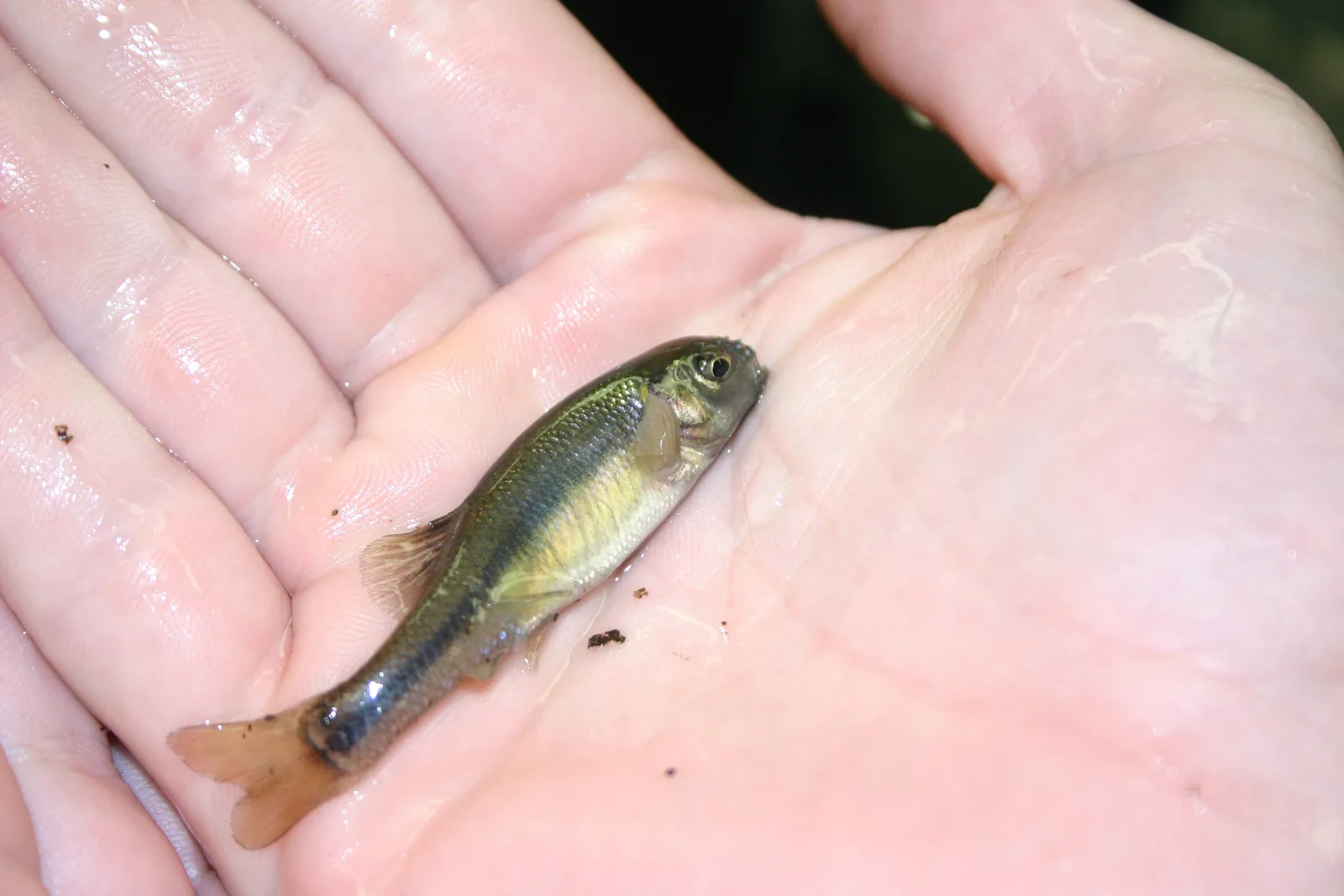
A fathead minnow, one of the two minnows bait shops sell most, at about the size you’ll buy. Photo: NOAA Great Lakes Environmental Research Laboratory (CC BY-SA 2.0).
For fishing, the word is looser. Minnesota’s law counts suckers up to 12 inches as minnows, and on the Gulf Coast a “mud minnow” is a killifish. The table below sorts out which is which.
Which fish get called minnows?
Plenty of fish wear the name without being in the family. It doesn’t matter much on the water. It matters when you read your state’s bait rules, because the law uses its own definition.
| Called a minnow | Is it one? | Where you’ll meet it |
|---|---|---|
| Fathead minnow, shiners, chubs, daces | Yes, the minnow family | Bait shops, creeks and ponds everywhere |
| Carp and goldfish | Yes, the same family | Many states ban carp as bait. Some ban selling goldfish as bait |
| Sucker “minnows” | No, the sucker family | Sold as big live bait for pike and musky |
| Mud minnow, bull minnow | No, it’s a killifish, another family | Raised on the Gulf Coast as a bait for part-salt water |
| Mudminnow | No, its own family | Counted as a minnow in Minnesota law |
Minnesota writes a wide list. In its fishing law, “minnows” means the minnow family except carp and goldfish. It also means mudminnows, suckers up to 12 inches, bullheads, ciscoes and a few others up to 7 inches, leeches, tadpole madtoms and stonecats. Your state’s list can be wider or narrower, so read it before you net or buy.

Free PDF · Water temperature chart Which fish are biting at today's water temperature?
One reading, and the 16-page chart shows which of 26 fish are spawning, feeding hard or slowing down; for bass, crappie, bluegill and walleye, where they sit and what to throw. Every number sourced.
No card, nothing to buy, and the PDF is yours to keep. Confirm with one click and it's on its way. Then a few short emails and one a week on what's biting. Unsubscribe anytime. Privacy.
How big do minnows get?
Most minnows stay under 6 inches, and the common bait kinds run 2 to 3. A few grow far bigger. Here’s the spread, from the bait tank to the giants.
| Minnow | Usual adult size | Biggest |
|---|---|---|
| Bluntnose minnow | About 2 1/2 in (6.5 cm) | About 4 in (11 cm) |
| Emerald shiner | About 2 1/2 in (6 cm) | 3 1/2–5 in (9–13 cm) |
| Fathead minnow | 1 1/2–3 in (4–8 cm) | 3 in in Missouri, 4 in in Ohio (8–10 cm) |
| Common shiner | 3–5 in (8–13 cm) | About 7 in (18 cm) |
| Golden shiner | 3–6 in (8–15 cm) | About 12 in (30 cm) |
| Fallfish | Largest native minnow in Virginia | 15 in (38 cm) |
| Colorado pikeminnow | The giant of the family | 6 ft (1.8 m), 100 lb (45 kg) |
They grow fast and die young. A common shiner grows about 2 to 4 inches in its first year. Golden shiners start to mature by their first spring, and fatheads usually live only a few years.
Where do minnows live?
Almost anywhere there’s fresh water. Fatheads range from Canada to northern Mexico, in slow streams, ponds, lakes and wetlands. In Missouri they’re thickest in the pools of small prairie creeks, because they handle heat, muddy water and low oxygen. Golden shiners are native to, or have been stocked in, much of the lower 48.
Most minnows travel in schools. Emerald shiners take the cold well, which is one reason they’re a winter bait.
Which minnows are sold as bait?
Two cover almost every bait tank: the fathead minnow and the golden shiner. With goldfish, they make up over 90 percent of farm-raised bait and feeder fish sold in the US. Most of those farms are in Arkansas. About half of all baitfish sold are caught wild, which is where the regional ones come in.
| Bait | Size | How it holds up | Use it for |
|---|---|---|---|
| Fathead minnow | About 2–3 in (5–8 cm) | Very well. Handles heat, muddy water and low oxygen | Crappie, walleye, perch, on a jig or under a bobber |
| Golden shiner | Usually 3–6 in (8–15 cm) | Not very hardy. Wants aerated water and room | Largemouth bass, crappie |
| Emerald shiner | Small and silver, green on the back | Often short. Lake Erie shops run out in summer and fall | Yellow perch on Lake Erie, also crappie |
| Redtail or black chub | Redtails 3–4 in in spring, 5–6 in by fall (8–15 cm) | Black chubs are the tougher of the two. Redtails are scarce early | Walleye |
| White sucker | Up to 8 in for pike, 10–14 in for musky (20–36 cm) | Rules vary. Minnesota counts suckers up to 12 in as minnows | Northern pike and musky |
| Goldfish | Sold small, as food for pet fish | Very hardy, even in low oxygen | Some states ban selling it as bait. Check first |
If you only buy one, buy fatheads. They last, and they’re slow swimmers, which is exactly why fish catch them. Wisconsin’s DNR calls small fatheads “crappie minnows” and says they’re the most popular crappie bait. Step up to shiners when you want more flash, or a bigger bait for bass.
Lake Erie shows how fast this can change. Emerald shiners were the go-to perch bait there. By 2020 the shops were often out of them, and golden shiners had become the main live bait sold on the lake.
What size minnow should you use?
Match the minnow to the fish you’re after. Here’s what the agencies and guides say, fish by fish.
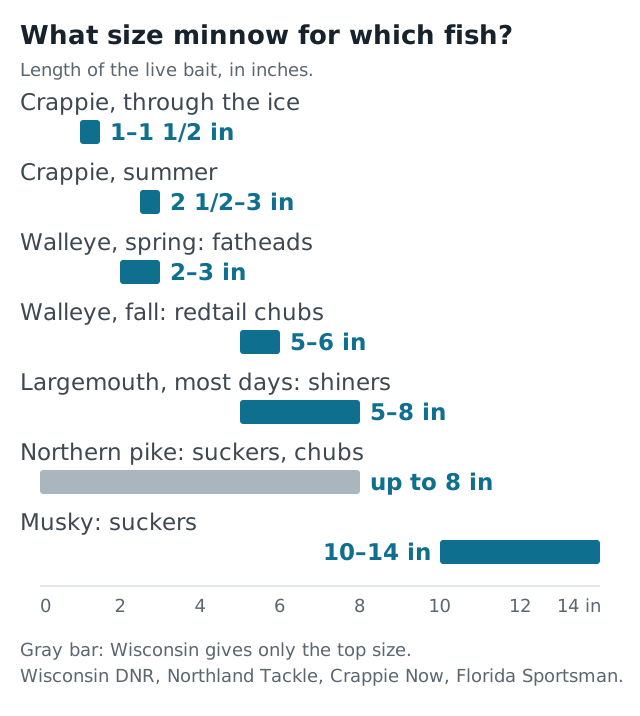
Drawing: fishing.info, from Wisconsin DNR, Northland Tackle, Crappie Now and Florida Sportsman.
- Crappie: small. A 1 to 1 1/2 inch minnow through the ice and at ice-out, and 2 1/2 to 3 inches in summer.
- Walleye: 2 to 3 inch fatheads in spring, up to 5 or 6 inch chubs by fall. Don’t go big too early. “Many people oversize minnows in spring thinking small minnows won’t catch big fish. Untrue,” writes Greg Bohn of Northland Tackle.
- Largemouth bass: a 5 to 8 inch golden shiner on most days. It keeps the small bass off and still gets the big ones, Florida Sportsman says.
- Northern pike: a sucker or chub up to 8 inches, under a sturdy bobber, Wisconsin says.
- Musky: a sucker of 10 to 14 inches.
Size the hook to the minnow, not to the fish. Bohn uses a #6 hook for medium to large fatheads, and a #2 or #4 for chubs. The hook size chart shows what those numbers look like.
When are minnows the best bait?
In cold water. For walleye, minnows are the pick from opening day, at 40 to 50 °F (4–10 °C), until the water reaches 60 to 64 °F (16–18 °C), Bohn says. Then leeches and nightcrawlers take over for summer, and minnows come back in fall once the water cools to about 60 °F. Iowa’s DNR says much the same: minnows from late fall to early spring, crawlers and leeches in between.
That makes minnows the ice-fishing bait too. Wisconsin’s ice advice for walleye is tip-ups, jigs and medium-sized minnows. A tip-up is a flag on a spool set over the hole, and it lets a fish run with a live minnow.
| Water temperature | Walleye bait to start with |
|---|---|
| 40–50 °F (4–10 °C), opening day | Small fatheads |
| Up to 60–64 °F (16–18 °C) | Minnows still lead |
| Summer, about May to October | Leeches. Nightcrawlers on deep structure and after dark, in 65–80 °F (18–27 °C) water |
| Fall, back to about 60 °F (16 °C) | Minnows again. Redtails have grown to 5–6 in by now |
Carry two kinds of bait anyway. The best one can change as the water warms through the day. The walleye water temperature page has the rest of the numbers.
How do you hook a minnow?
Hook it so it stays alive and keeps swimming. There are two main spots, through the lips or through the back, and Missouri’s advice is to pick whichever keeps the minnow lively. Here’s when to use each.
| How you’re fishing | Where the hook goes | Who says so |
|---|---|---|
| A jig, or a 3-way rig you troll | Through both lips | Iowa’s DNR, for walleye |
| Under a slip bobber | Just below the back fin | Iowa’s DNR |
| Under a bobber or on the bottom | Through the lips or behind the back fin | Missouri. Either way works, so pick the one that keeps it alive |
| Bohn’s walleye rigs | Between the back fin and the tail, closer to the tail | Greg Bohn. He skips the lips, because the hook sometimes turns and sticks in the minnow’s head |
A big golden shiner for bass gets hooked by the job: through the lip to drift it, in the back to steer it into cover.
How do you keep minnows alive?
Keep them cold and give them air. Most minnows die from warm water and too little oxygen. An insulated bait bucket and a small battery aerator, a pump that bubbles air into the water, solve most of it.
- Shade and a lid. Sun heats a bucket fast.
- Room. A bigger container gives them more room to breathe.
- A little ice on warm days. It keeps the water cool.
- Careful with tap water. Fill up at the bait shop. If you use treated tap water, add a fish water conditioner from a pet store first.
Fatheads forgive mistakes. Golden shiners don’t, so plan on aerated water and a roomy bucket if you buy shiners. If the bait has to last into a second day, the fathead minnow is the one to buy.
What do minnows eat?
Mostly algae, tiny water animals and insects. Adult minnows eat both plants and animals. Golden shiners live on zooplankton, the tiny animals that drift in open water, plus insects and algae. Fatheads feed on the bottom, so they eat small animals and plant bits mixed with mud.
| Minnow | What it eats |
|---|---|
| Golden shiner | Zooplankton, insects and algae. Young ones eat tiny zooplankton and algae |
| Fathead minnow | Small animals and plants mixed with mud, picked off the bottom, plus zooplankton |
| Goldfish | Insect larvae, small invertebrates, algae and water plants. It uproots plants as it feeds |
| Minnows in general | Insects and algae. The throat teeth grind weeds, small clams and insects from the mud |
Will minnows eat fish food? Yes. Bait farms raise golden shiners on prepared fish feed, and they take it readily.
What eats minnows is the better question for an angler. Bait minnows are sold to catch crappie, largemouth bass, walleye and many other fish, and in the wild minnows are what those fish grow on. Walleye feed mainly on minnows, Wisconsin’s DNR says.
How do you catch your own minnows?
Use a minnow trap or a seine, a net you sweep toward the bank. Bait the trap with bread, salted crackers or dry dog food, Outdoor Life says. Set it in shallow water and leave it overnight.
Read your state’s rules first. Some states limit the trap and the net. Michigan allows a minnow trap up to 24 inches long, with a funnel opening no larger than 1 1/2 inches, and it has to carry your name and address. Wild minnows also come mixed, several kinds in one haul. Sort them before you use them, and let go anything you can’t name.
Can you use minnows anywhere?
No. Minnow rules are strict, because a bucket of minnows can carry fish diseases, invaders and the wrong species into a new lake. The bait hub lays out seven states side by side. Here’s the short version.
| The rule | What it means | One state that has it |
|---|---|---|
| Buy where you fish | Some states don’t let you bring live bait in | Minnesota: “It is illegal to bring live minnows and leeches into Minnesota from out of state” |
| Check the list | Some states allow only certain baitfish. Many ban carp, and some ban selling goldfish as bait | New York: only the 11 kinds on its Green List can be bought and used, golden shiners and fatheads among them |
| Keep the receipt | Some states want proof your bait is certified, meaning tested for disease | New York: no receipt, or one older than 10 days, and the bait counts as uncertified |
| Don’t move wild minnows | Bait you catch often has to stay on that water | Michigan: minnows you take “may only be used in the waters where they are collected” |
| Never dump them | Leftovers go in the trash, never in the lake | Minnesota: “It is illegal to release bait into Minnesota waters” |
The rudd shows why. It’s a European minnow that looks like a golden shiner, and it was sold as bait in the US for about a decade. Then it was found breeding with golden shiners, and it was banned as bait.
Live or dead minnows?
Live first, because a minnow that kicks draws the strike. A half-dead shiner might interest a catfish, one Florida captain writes, but not the bass you’re dreaming of. Swap a bait when it stops swimming.
Dead minnows still catch fish, though, and sometimes they’re the better choice:
- Perch: size matters more than life. The best perch anglers Ross Robertson knows carry game shears to cut minnows in half at times.
- Walleye under the ice: jig near the bottom with a lure tipped with a minnow or just a minnow head. That’s Minnesota’s advice.
So a minnow that dies in the bucket isn’t wasted. Keep it cold and use it to tip a jig.
Where do you buy minnows?
At a bait shop near the water. They sell minnows by the dozen or by the scoop, and they know which size is working this week. Call first, especially before a holiday weekend. Prices move with supply. On Lake Erie in 2020, a scoop of emerald shiners ran “upwards of $4, often more than $5,” up from about $2 a few years earlier.
Buy from a licensed bait dealer. Farm-raised bait comes from a few known kinds of fish. Wild-caught bait can come with other fish mixed in, and those have to be sorted out before they travel. That’s why some states want proof of where your bait came from.
Can you eat minnows?
You can. Minnows are mostly used for bait, but people eat them too. They aren’t prized as food in the US, because minnows carry fine bones in the meat, the same ones that keep carp off most tables. If you keep minnows to eat, check your state’s fish advisory for that water first.
Can you keep minnows as pets?
Yes. Many minnows are hardy, attractive and lively in a home aquarium, Virginia Tech says. The goldfish is a minnow, after all. Bait farms also raise an orange fathead called the “rosy red.”
Don’t let a pet minnow go in a lake or creek, though. Virginia Tech blames pet owners for the goldfish that keep turning up in wild water, where they compete with native fish.
For most people, a minnow’s job is on the hook. The bait hub shows what else to use when the minnows run out, and the crappie fishing guide is the best place to put a bucket of fatheads to work.

Free PDF · 16 pages
Stop guessing. Know what's biting before your first cast
A whole Saturday on the water with nothing to show for it. One reading tells you who's feeding.
The Water Temperature Fishing Chart. Take one water temperature reading, find it on the chart, and see which of 26 freshwater fish are spawning, feeding hard or slowing down.
- Where bass, crappie, bluegill and walleye sit, and what to throw. Trout: the reading where you stop.
- Why a 3 ft drop beats a cold front, and what to throw each day of the front
- The three thermometer mistakes that make a reading lie
The chart's numbers come from state fish and wildlife agencies and fisheries research: 61 sources, each listed on the site.
No card, nothing to buy. Confirm with one click and the PDF is on its way, one version for your phone and one to print, yours to keep. Then a few short emails and one a week on what's biting, with an unsubscribe link in every one. Privacy.
Related
Section guide
Fishing Bait: Live, Cut and Prepared, and Which One to UseFishing bait made simple: live, cut and prepared bait, what to use for each fish, how to hook it and how to keep it alive until you fish.
 Live Bait: Which One to Use, How to Hook It and Keep It Alive
Live bait made simple: which bait for which fish, how to hook it so it stays alive, the rigs, how to keep it alive, and the rules on moving it.
 Sand Fleas: What They Are, Do They Bite, and How to Catch Them
The sand flea surf anglers dig is a clawless mole crab, not an insect. What bites you instead, and how to rake, keep and hook sand fleas.
 Hellgrammite: What It Is, Where to Find It, How to Fish It
A hellgrammite is a dobsonfly larva up to 4 inches long and a top smallmouth bait. How to find one, hold it without a pinch, hook it and fish it.
Sources (32)
- Virginia Tech, Virtual Aquarium: Cyprinidae (minnows)
- Wikipedia, Minnow
- Nathan Stone and Hugh Thomforde, Common Farm-Raised Baitfish, SRAC Publication No. 120 (revised June 2001)
- Southern Regional Aquaculture Center, Bait and feeder fish
- Texas A&M, Fathead Minnows - Aquaculture, Fisheries, & Pond Management
Show all 32 sourcesShow fewer sources
- Minnesota Statutes 97A.015, Definitions, subd. 29 (Minnows)
- Greg Bohn, Leeches vs. minnows vs. nightcrawlers, Northland Tackle
- Wisconsin DNR, Hook your catch (baits and methods by species)
- James Proffitt, Yellow Perch, Emerald Shiners: Diet change might have led to drop in fish catches, Great Lakes Now (Feb. 12, 2020)
- Missouri Department of Conservation, Live Bait Basics (Mark Goodwin, Missouri Conservationist, 2009)
- Iowa DNR, Walleye
- Steve Wayne, Unlock Classic Shiner Tactics to Catch the Biggest Bass, Florida Sportsman (February 13, 2025)
- Terry Lacoss, Best Ways to Hook a Live Shiner in Every Situation, Florida Sportsman (March 7, 2023)
- Darl Black, Sometimes Live Bait Matters, Crappie Now
- John J. Woods, Be sure minnows are alive and kicking, Mississippi Sportsman (May 15, 2015)
- Chad Mason, Catch These 6 Live Bait Species to Land More Fish This Summer, Outdoor Life (2026)
- Michigan DNR Fishing Guide, Lawful Fishing Methods (eRegulations)
- Missouri Department of Conservation, Fathead Minnow (field guide)
- Missouri Department of Conservation, Golden Shiner (field guide)
- Missouri Department of Conservation, Common Shiner (field guide)
- Fish of Ohio, Fathead Minnow
- Vermont Fish and Wildlife, Golden shiner (baitfish identification sheet)
- Jeff Sundin, Keep Your Bait Alive (2010, updated 2012)
- Minnesota DNR, Aquatic invasive species: anglers
- New York DEC, Baitfish regulations
- MeatEater, Perch Fishing Tips and Tricks (Ross Robertson, 2024)
- Minnesota DNR, Ice fishing for walleye
- Capt. George Tunison, A golden shiner the best bait if fishing for local trophy bass, Cape Coral Breeze (December 17, 2021)
- Wikipedia, Emerald shiner
- Wikipedia, Bluntnose minnow
- Dhester88, Fathead Minnow, Bear Creek, Iowa (photo, CC BY-SA 4.0, via Wikimedia Commons)
- NOAA Great Lakes Environmental Research Laboratory, Fathead Minnow (photo, CC BY-SA 2.0, via Wikimedia Commons)