 By
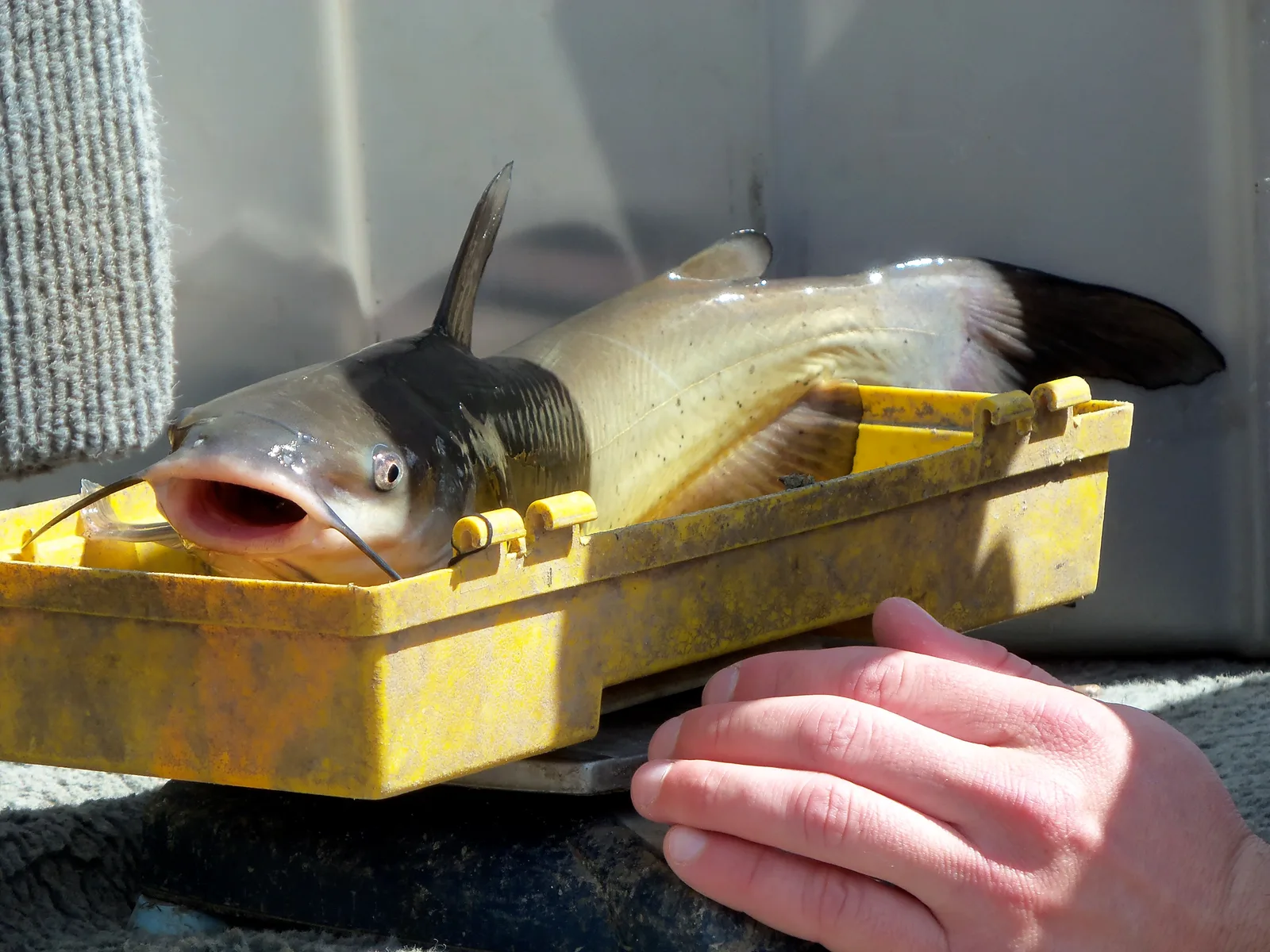
What catfish like depends on which catfish. A channel catfish eats almost anything that smells of food, a blue catfish over 8–13 in eats mostly fish, and a flathead over 10 in eats fish and little else. Those three diets answer the bait question: almost anything smelly for channels, fresh cut fish for blues, live fish for flatheads. Beyond food, all three like the same things: strong scent, cover, current and the dark.
North Dakota’s fisheries biologists call the channel catfish a “swimming tongue.” Its whole body is covered in taste receptors, so when you hold one, it is tasting you.
What does each catfish eat, and which bait matches?
| Species and size | What it eats | Bait that matches |
|---|---|---|
| Channel catfish, under 4 in | Almost entirely small insects | Worms and small bits of bait; not a target |
| Channel catfish, adult | Fish, insects, crayfish, mollusks, plant material, dead and alive | Punch and dip baits for numbers; fresh dead shad or bluegill for size; liver, nightcrawlers, shrimp |
| Blue catfish, under 8–13 in | Mostly small invertebrates; some fish from 4 in | Worms and small cut bait |
| Blue catfish, adult | Mostly fish and larger invertebrates: crayfish, fingernail clams, mussels; in the Chesapeake, menhaden, shad, river herring, blue crabs | Fresh cut gizzard shad or skipjack herring; cut carp, drum, bluegill |
| Flathead catfish, under 10 in | Invertebrates; under 4 in, insect larvae | Not a target |
| Flathead catfish, adult | Fish from 10 in on (Texas: entirely fish): shad, carp, suckers, sunfish, largemouth bass, other catfish; Missouri adds crayfish; rarely anything dead | Live green sunfish, bluegill, suckers or bullheads, big and lively |
| Bullheads | Adults mostly immature aquatic insects; yellow bullheads add crayfish, snails, plants, an occasional small fish | Worms first; liver, cheese and hot dogs also |
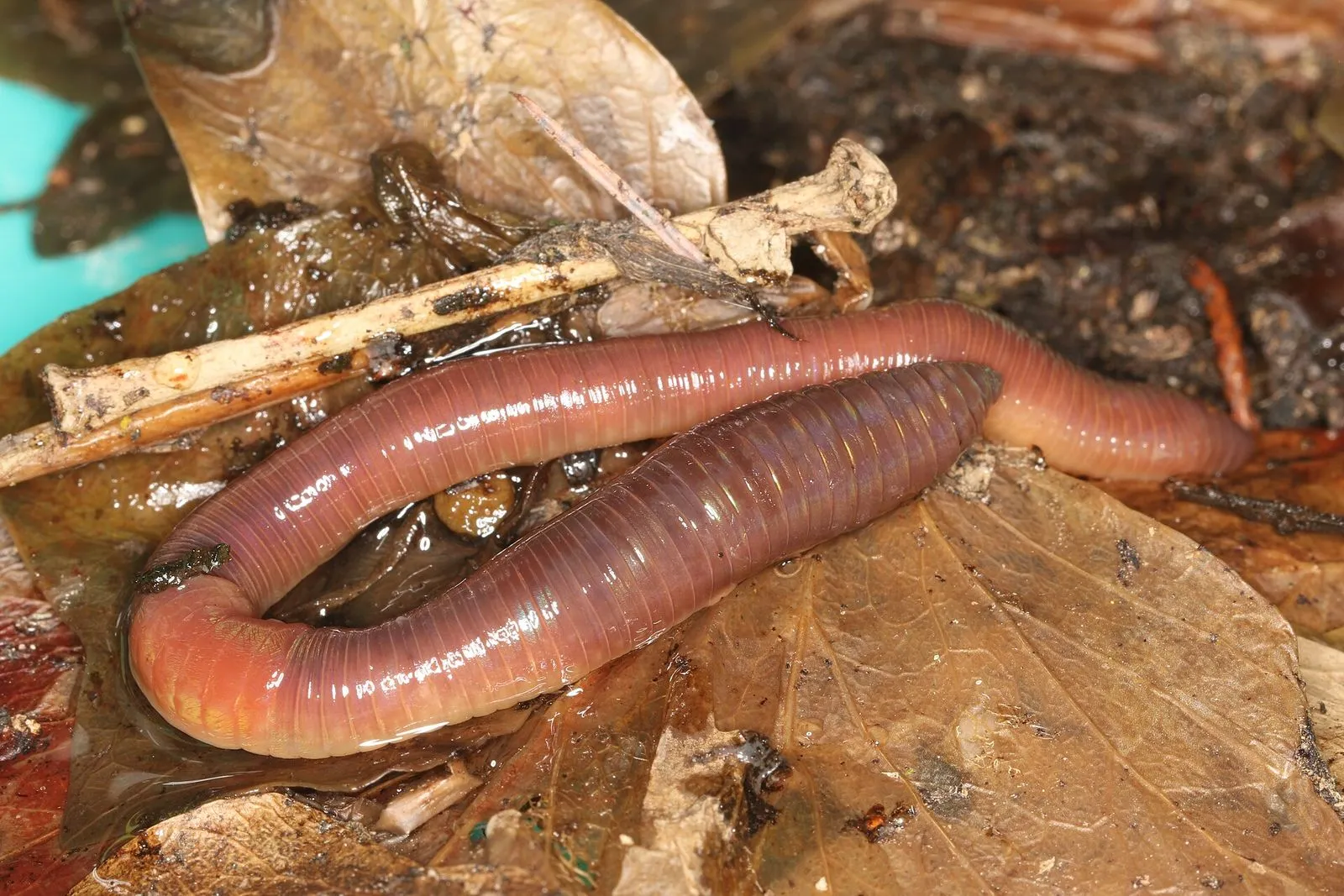
The pattern runs from scavenger to hunter, across the whole catfish family. At the scavenger end, the channel catfish is an opportunistic omnivore that eats food “in proportion to availability,” in Mississippi State’s words. Insects from 50 families have turned up in its stomachs. That is the case for local bait: a channel cat in a river full of crayfish is already eating crayfish. The baits that catch it run from fish, crayfish, worms and grasshoppers to liver, shrimp, chicken parts, blood, cheese and commercial stinkbait. The bullheads take the same baits on a smaller scale.
The flathead catfish sits at the other end. Besides fish, adults take some crayfish and other crustaceans, but they are not scavengers. Missouri’s biologists put it flatly: “only live or freshly killed baits are effective.” Anglers who soak stink bait for flatheads catch channels and wonder where the flatheads went.
The blue catfish sits in between. Many river anglers prefer gizzard shad and skipjack herring above all other baits, because those fish are said to release oil into the water. Food-habit studies suggest blues feed on mussels more readily from spring through fall, above all in southern reservoirs, then turn almost entirely to shad when cold water slows them. The best catfish bait page ranks the baits within each species.
What is a catfish’s favorite food?
Fish, once a catfish is big enough to catch them. Fish become an important part of a channel catfish’s diet from about 18 in (46 cm), and in natural waters they can make up as much as 75 percent of what it eats. Blues switch to mostly fish at 8–13 in and flatheads at 10 in. Below those sizes the big three live on insects and other small invertebrates, and bullheads stay mostly on insects all their lives.
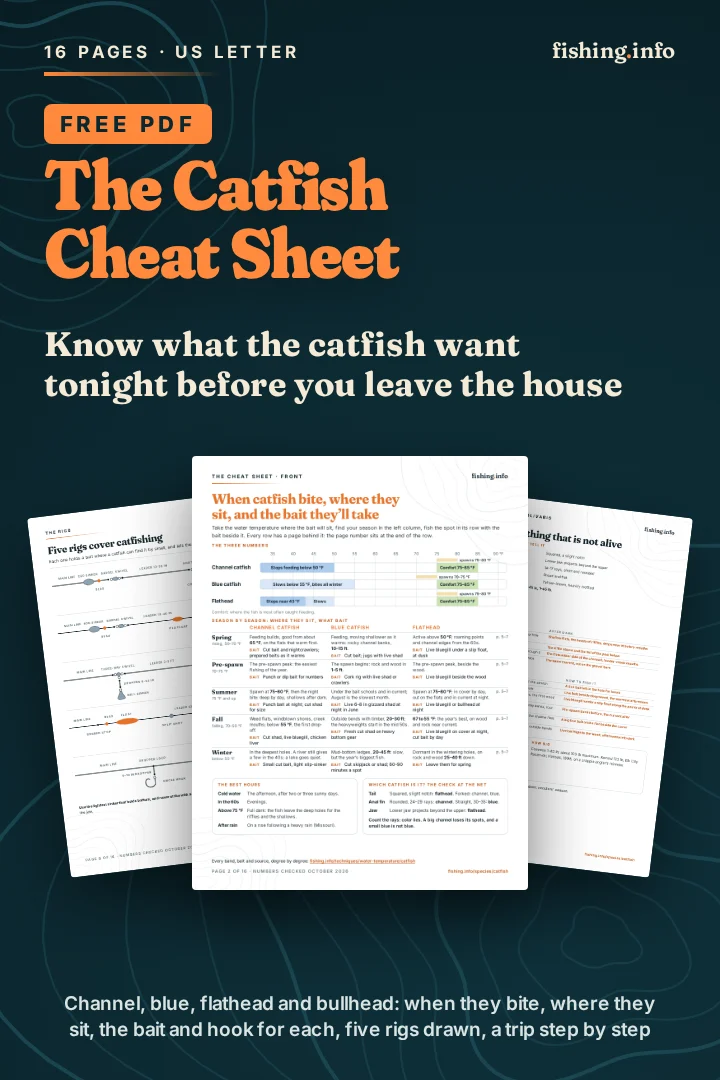
Free PDF · Catfish cheat sheet When do catfish bite, and what do they want on the hook?
One reading, and the 16-page cheat sheet tells you which catfish is feeding, where it sits and what to put on the hook; with the five rigs drawn and a trip step by step.
Enter your email, confirm it with one click, and the PDF is in your inbox. Plus one email a week on what's biting. Unsubscribe anytime. Privacy.
How does a catfish find your bait?
By taste and smell first. A channel catfish has taste buds over its entire outer surface, most densely on the barbels and gill arches. These receptors are especially good at detecting proteins dissolved in water, from food and from other catfish. A square millimeter of barbel carries about 25 taste buds. A 1975 study by John Caprio put its result in the title: “High sensitivity of catfish taste receptors to amino acids.”
The nose is sharper still. A channel catfish can smell some amino acids, the building blocks of flesh, at about one part per 100 million in water. A fish has few or no taste buds on its tongue, as do fish have tongues explains. A catfish tastes with its skin and smells with its nostrils instead.
Hearing helps too. Catfish carry the Weberian ossicles, a chain of small bones that links the swim bladder to the inner ear. In almost all of the 28 catfish species tested so far, the upper limit of hearing was at least 5,000 Hz. That is why a rattle, a spinner blade or a bait hitting the water reaches a catfish; do fish hear compares the species. The lateral line adds a close-range sense of vibration.
What that means at the water: cutting or crushing a bait, in In-Fisherman’s words, “allows the attractive amino acids to flow.” A fresh, oily cut bait leaks a scent trail into the current, and a catfish downstream follows it to the hook. A bait that has soaked until it is pale and washed out has given most of that away, so rebait often.
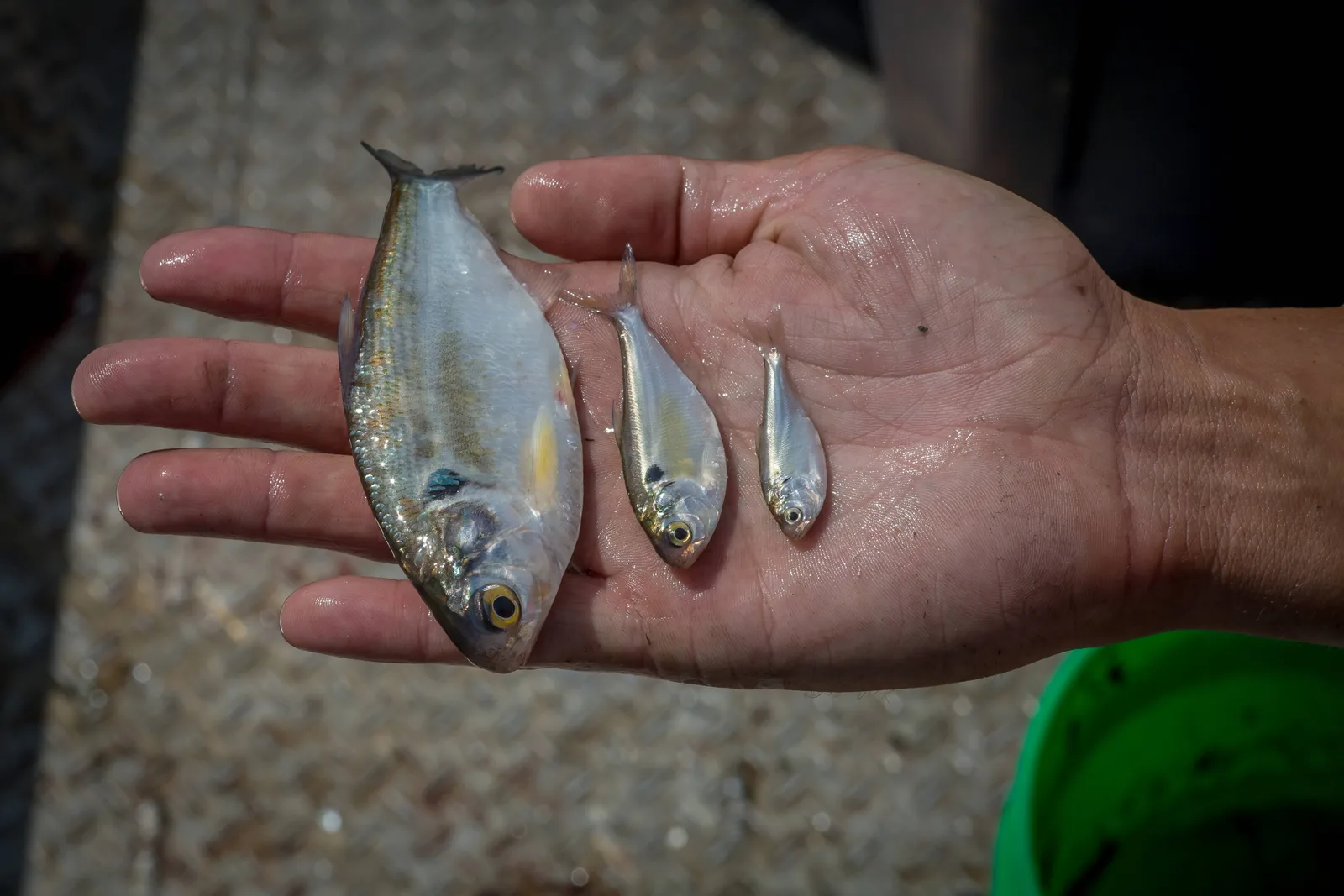
Gizzard shad, the oily baitfish many river anglers prefer above all others for blue catfish. Photo: U.S. Fish and Wildlife Service (public domain).
Do catfish like…? Quick answers
- Chicken liver. Channel catfish, yes. Liver is on the agency lists of baits that catch them, and channels feed on organic matter dead and alive. Flatheads, rarely: they do not scavenge.
- Worms. Yes, above all channel catfish. In-Fisherman calls nightcrawlers “sometimes unequaled for channel cats.”
- Hot dogs, chicken and cheese. Channel catfish, yes, because they eat dead food; chicken and cheese are on the agency bait lists. Expect channels and bullheads on them, not big blues or flatheads. Chad Ferguson of Catfish Edge calls these “grocery store baits” and steers anglers away from them: “there are times these can be good baits,” but punch bait catches more channels and fresh dead fish catches bigger ones.
- Shrimp and grasshoppers. Yes for channels; both are standard channel-cat baits.
- Sweet baits and marshmallows. Sometimes. In-Fisherman’s Cory Schmidt (2016) wrote that catfish may “crave sweet, fruity flavors over rotten cheese or meaty chicken liver.” Their preferences, he added, “change from season to season, water to water.” Of the baits in a jar, he admitted, “we really don’t know what exact flavors catfish prefer.”
- Garlic and other added scents. Anglers swear by them; we found no controlled study that tests them. The amino acids in fresh fish are what a catfish’s taste receptors are most sensitive to, so fresh bait is the safe bet.
- WD-40. No. The maker calls the fish-oil story a myth that came from “folks assuming that the product must contain fish oil since it appears to attract fish.” It does not recommend using it to attract fish.
- Lures. Sometimes, mostly blues and flatheads, which eat swimming fish, and that is when catfish lures beat bait.
When and where do catfish feed?
- Temperature. Channel catfish grow best at 75–85 °F (24–29 °C). Growth is slow below 65 °F (18 °C), and feeding essentially stops below about 50 °F (10 °C). Those numbers are for channel catfish; blues keep eating shad in cold water. The catfish water temperature page has the bands for all three species.
- Current. The blue catfish is a big-river fish of swift chutes and pools with noticeable current. A bait in moving water carries its scent to more fish than a bait in a still pond.
- Cover by day. By day channel catfish retire to deep water or lie about drift piles, submerged logs and other cover. A single drift pile usually holds only one to three adult flatheads, and each has a favorite resting place.
- The dark. Channel catfish feed at night in shallow pools and on riffles, and adult flatheads move at night from deep water or cover into the riffles and shallows. That is why summer catfishing is night fishing; best time of day has the hours by species.
- Rain and rising water. Inflows carry food and scent; fishing in the rain covers where catfish go when the water comes up.
- The spawn. Channel catfish spawn when the water reaches 75 °F (24 °C). The eggs hatch in 5–10 days and the fry swim up a few days later, so the male guards the cavity for about two weeks in all. “Male catfish take little or no food while protecting the nest,” Keith Sutton notes. The females are not on guard duty.
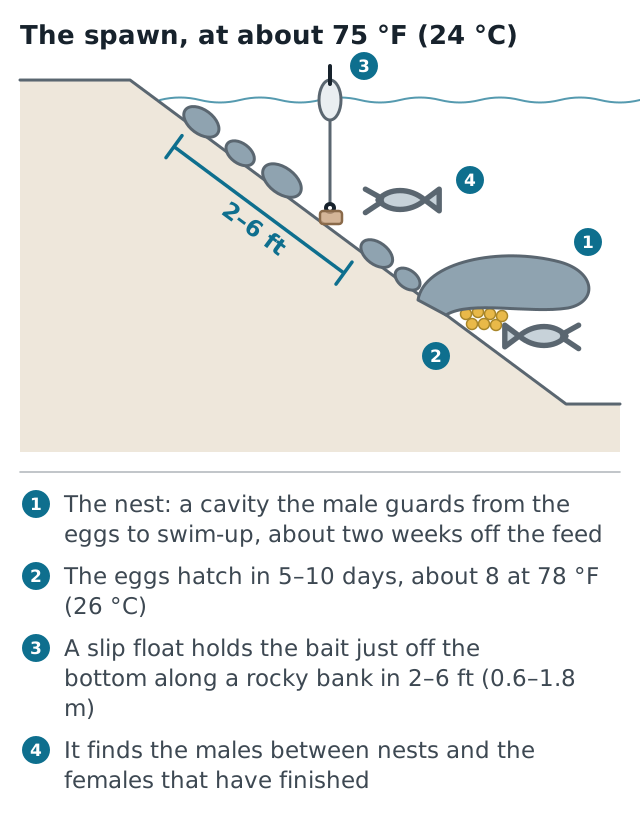
A male channel catfish on the nest takes little or no food for about two weeks; a bait along the bank finds the fish that are not on guard. Drawing: fishing.info.
How big a bait, and when?
In-Fisherman’s rule of thumb is short: “Smaller baits in colder water, big stuff for summer nights.” In spring and fall, a small chunk of cut shad or a single nightcrawler on a modest hook fits the rule. On a summer night, with the water at the top of the growth range, go up a size or two in bait.
Flatheads are the exception: the bait is big all season. They want livebaits that “live for hours on the hook and struggle to escape,” as In-Fisherman puts it, such as green sunfish and white suckers. Match the hook to the bait, not to the fish. A 1/0–4/0 circle hook suits channels on worms, liver and small chunks, a 5/0–8/0 blues on cut shad, and a 7/0–10/0 flatheads on a live bluegill; punch bait goes on a #4 treble. Those sizes are what most catfish anglers use, not a rule.
The easiest way to put all of this together, the rig, the spot and the hours, is on how to catch catfish.
What do catfish not like?
- Cold water. Below about 50 °F (10 °C), channel catfish nearly stop feeding. Winter catfishing is slow fishing with small baits.
- Stale bait. A bait that has leaked out its juices has nothing left to say. The flathead rule, live or freshly killed bait only, is the strict version of the same rule.
- A bait that pulls back. A catfish that feels the sinker’s weight on the take can drop the bait. The slip-sinker rig on catfish rigs lets the line run free through the weight.
- Noise you do not need. Catfish hear to at least 5,000 Hz. Ease the anchor down, keep the motor off over the hole, and step softly on a dock or a bank.
Gear for catfish
Gear guide
Best Catfish Bait: What Channel, Blue and Flathead Catfish EatThe best catfish bait by species: cut shad for blues, punch and dip baits for channels, live bluegill for flatheads, and which prepared baits to buy.
Gear guide
Catfish Rods: Length, Power, the Soft Tip, and the Reviewers' PicksCatfish rods explained: 7–10 ft, medium-heavy, a soft glass tip on a strong butt, sinker ratings by species, and the reviewers' picks with maker specs.
Free PDF · 16 pages
Know what the catfish want tonight before you leave the house
The Catfish Cheat Sheet. Take one water temperature reading, find your season on the two-page sheet, and it tells you which catfish is feeding, where it sits and what goes on the hook. Behind it, thirteen more pages: a page each for channel, blue, flathead and bullhead, the rigs, the bait, the trip and the hold.
- The temperature that shuts channel cats down while blue cats keep biting all winter
- Five rigs drawn, three tied step by step, and why you never strike with a circle hook
- The bait and hook for each catfish, from punch bait on a #4 treble to a live bluegill on a 7/0 circle
- A catfish trip in nine steps, with the "Before you go" checklist and what a bite feels like on a tight line
Every line from the catfish pages on fishing.info and the 151 sources behind them, Missouri and Texas wildlife agencies among them.
Enter your email, confirm it with one click, and the PDF is in your inbox. Plus one email a week on what's biting. Unsubscribe anytime. Privacy.
Related
Section guide
Catfish: Species Identification, Baits, Seasons and RecordsThe catfish species anglers catch most, channel, blue and flathead first: how to tell them apart by the anal fin, when they spawn, what bait each wants.
 Saltwater Catfish: Hardhead vs Gafftopsail, the Sting, the Eating
The two saltwater catfish: how to tell a hardhead from a gafftopsail, sizes and records, the sting and its first aid, and which one to eat.
- How to Catch Catfish: Bait, Rigs, Where and When, by Species
How to catch catfish: the bait, rig, hook and water for channel, blue and flathead catfish, where they are by day and night, and a trip step by step.
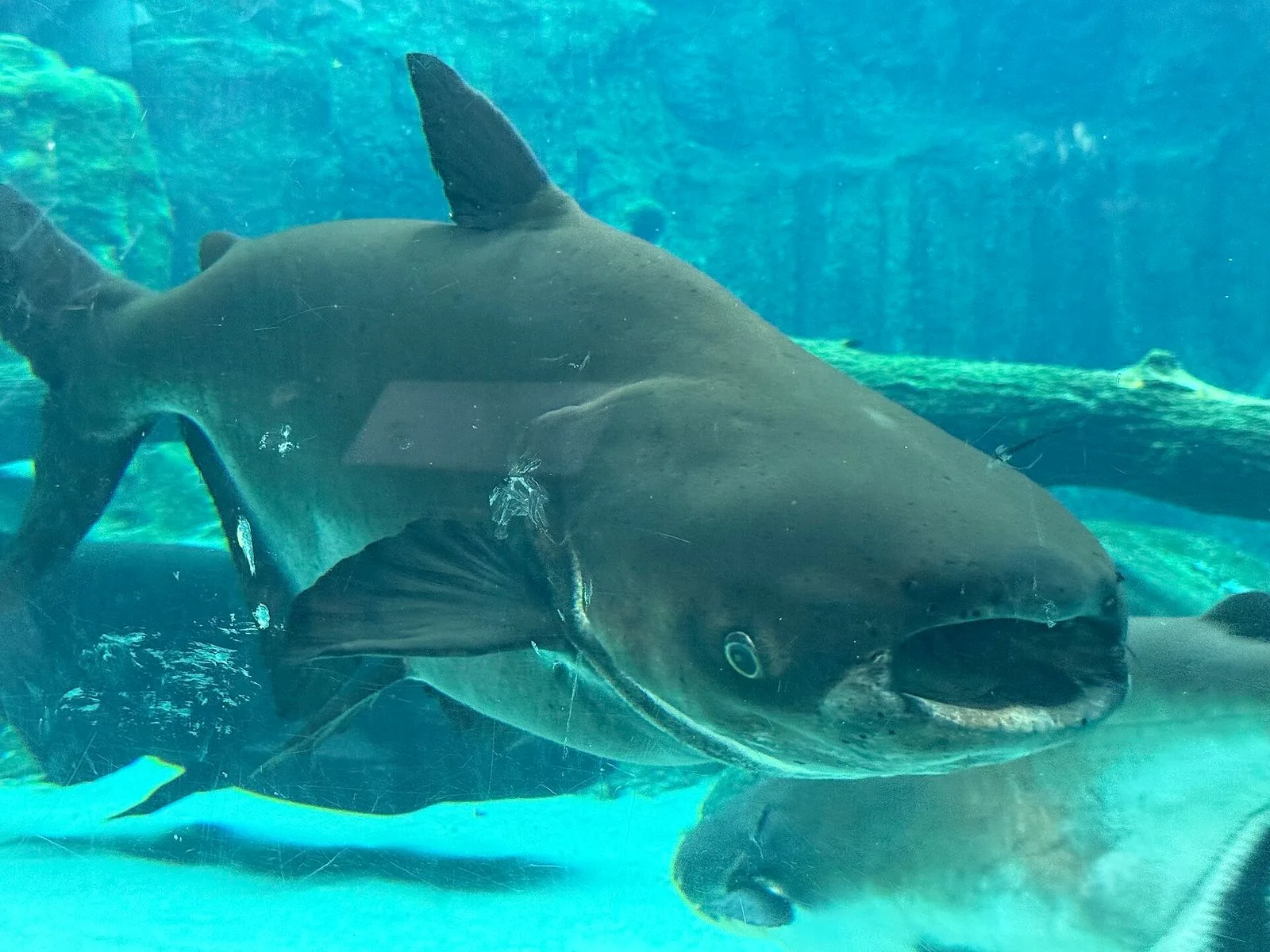 Mekong Giant Catfish: The 646 lb Record, and Where You Can Legally Catch One
The Mekong giant catfish: how to recognize the toothless giant, the 646 lb fish of 2005, how many are left, and the one legal way an angler catches one.
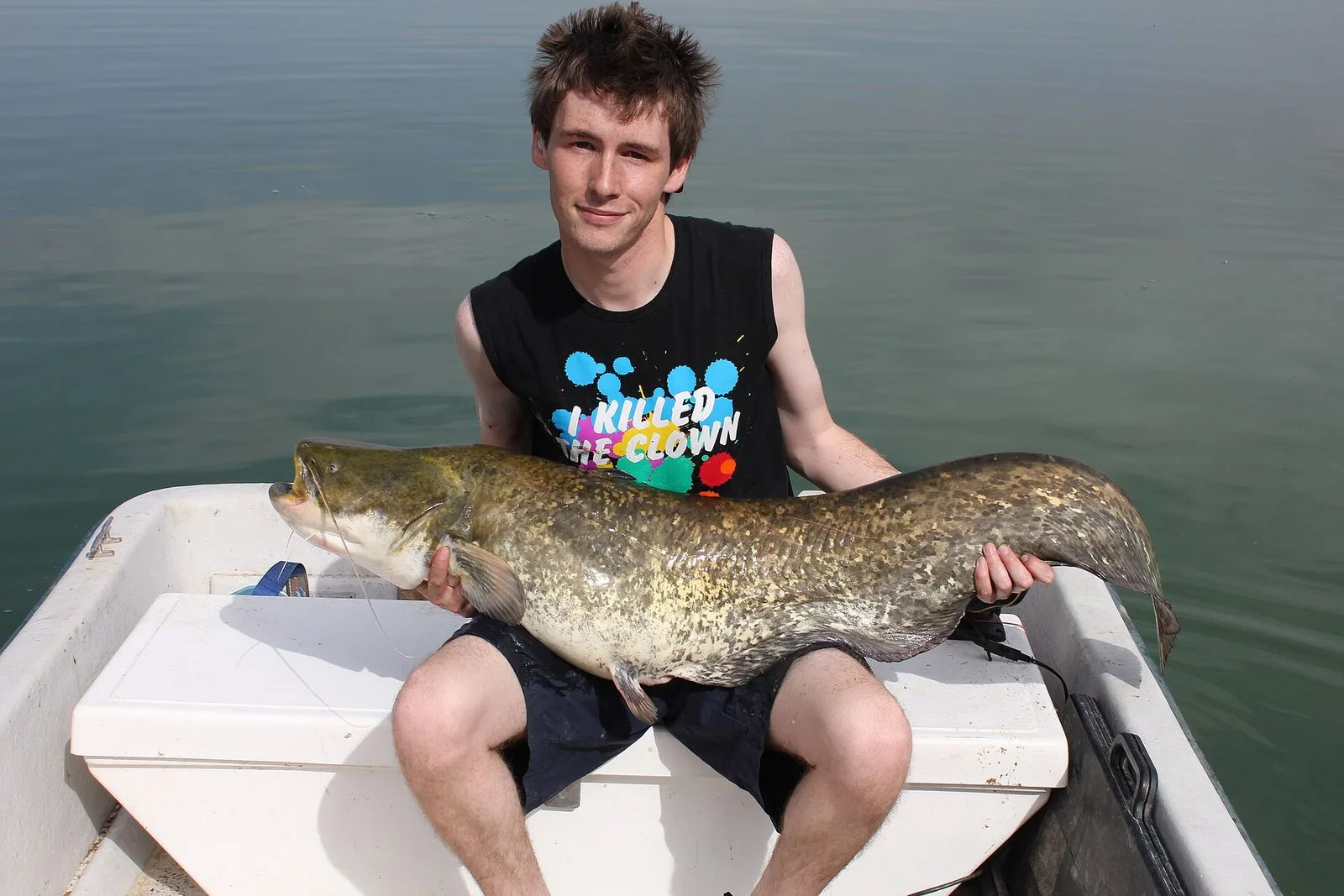 Wels Catfish: Europe's Giant, Its Records, and Why It Is Banned in the US
Wels catfish: Europe's giant, 297 lb 9 oz on record and banned from US import since 2016. How to recognize it, the Ebro record book, how anglers catch it.
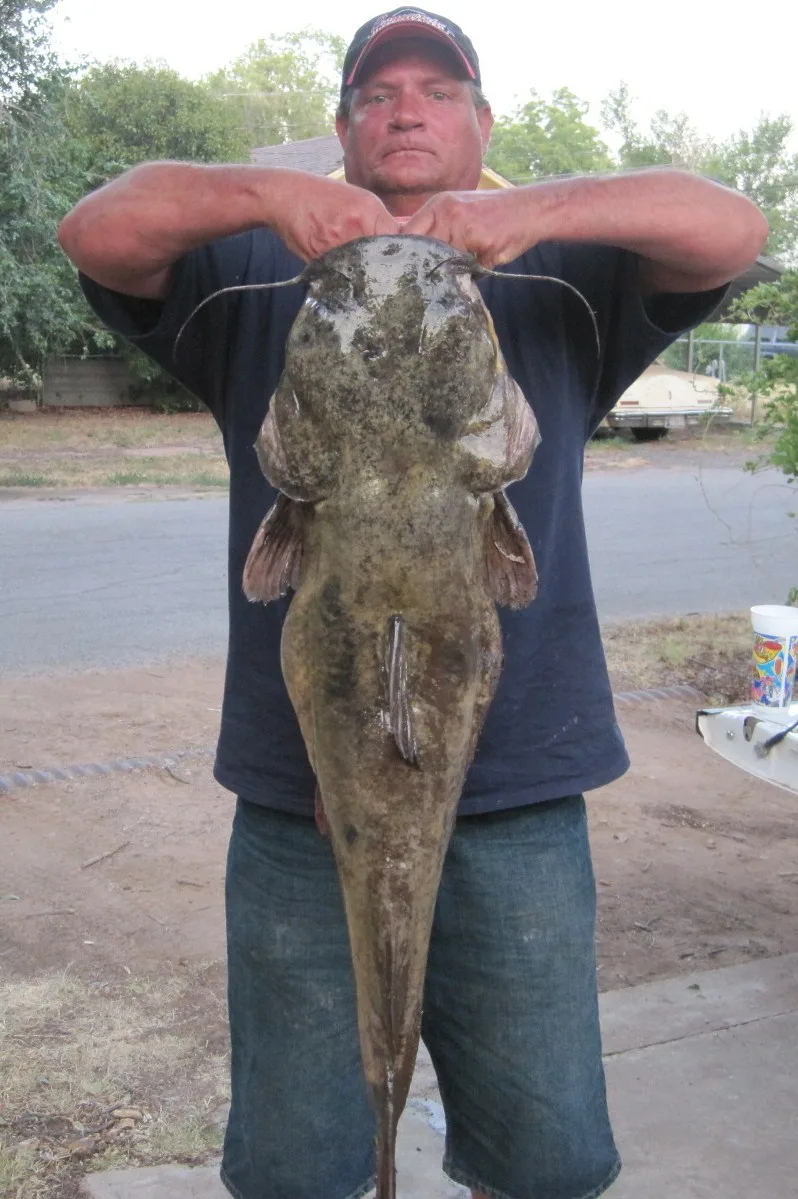 Noodling Catfish: How It Works, Where It Is Legal, Staying Safe
Noodling catfish means pulling a nest-guarding flathead from its hole by hand. How it is done, every state's season and rules, and what hurts people.
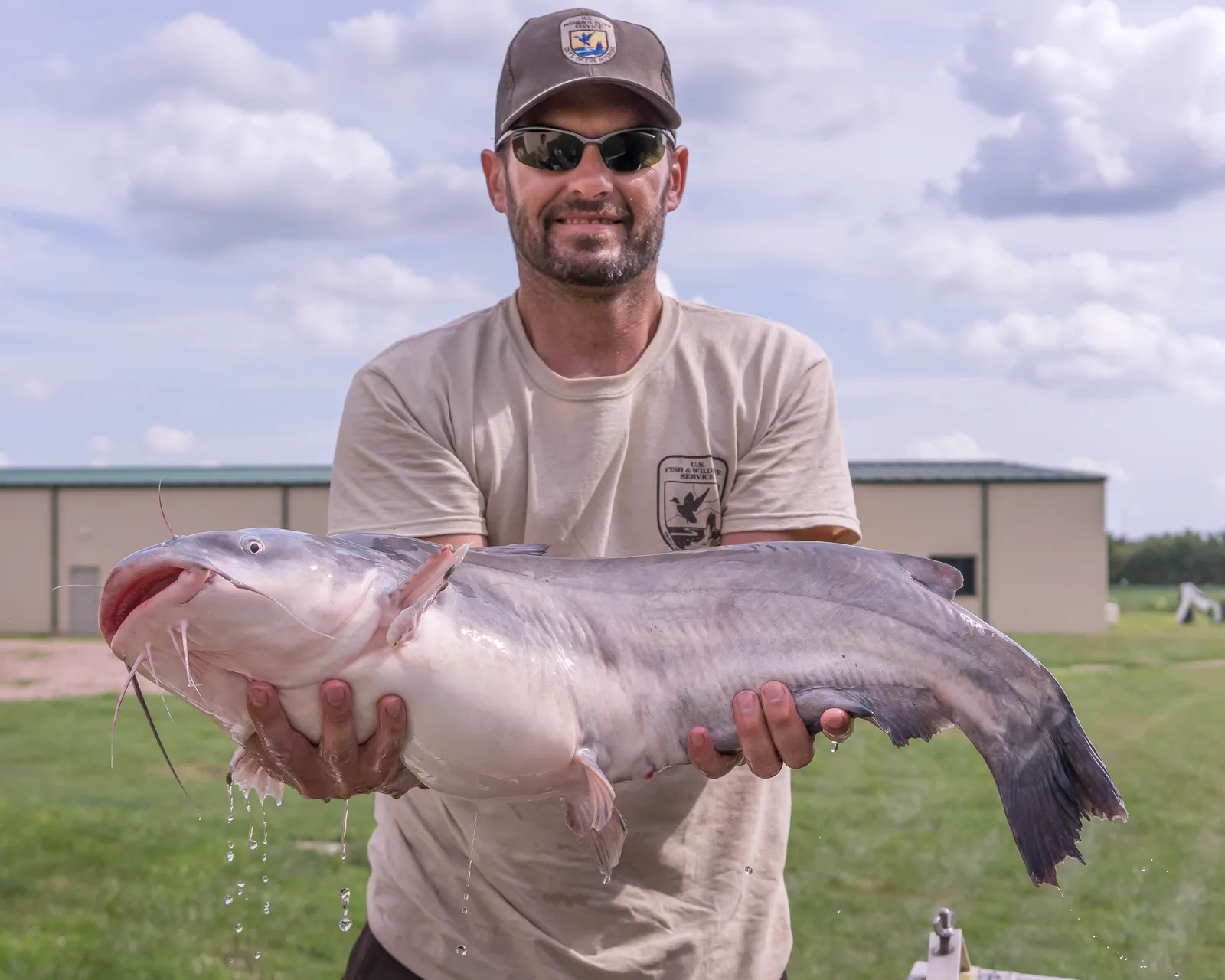 World Record Catfish: Blue, Flathead, Channel, Wels, Mekong Giant
The biggest catfish on record: the 646 lb Mekong giant, the 297 lb wels, the 143 lb blue, 123 lb flathead and 58 lb channel, and how a record is certified.
Sources
- Missouri Department of Conservation, channel catfish
- Missouri Department of Conservation, blue catfish
- Missouri Department of Conservation, flathead catfish
- Missouri Department of Conservation, black bullhead
- Missouri Department of Conservation, yellow bullhead
- Texas Parks and Wildlife, flathead catfish
- Texas Parks and Wildlife, channel catfish
- NOAA Fisheries, blue catfish
- Oklahoma Department of Wildlife Conservation, channel catfish
- Mississippi State University Extension, biology of catfish
- SRAC Publication 180, channel catfish life history and biology
- North Dakota Game and Fish, catfish taste receptors
- Wikipedia, channel catfish (taste-bud density, cited there to an iNaturalist guide; amino-acid threshold stated without citation)
- Caprio, J. (1975), High sensitivity of catfish taste receptors to amino acids, Comparative Biochemistry and Physiology A 52(1): 247–251
- Ladich, F. (2023), Hearing in catfishes: 200 years of research, Fish and Fisheries
- In-Fisherman Staff (2026), 10 best catfish baits today
- In-Fisherman (Cory Schmidt, 2016), all time secret catfish baits
- Catfish Edge (Chad Ferguson), Best catfish bait: cut shad, punch bait, live bait by species
- FishUSA, Best hooks for catfish: circle hook sizes by species
- Keith Sutton, spawning time facts, CatfishNow
- WD-40 Company, myths, legends and fun facts