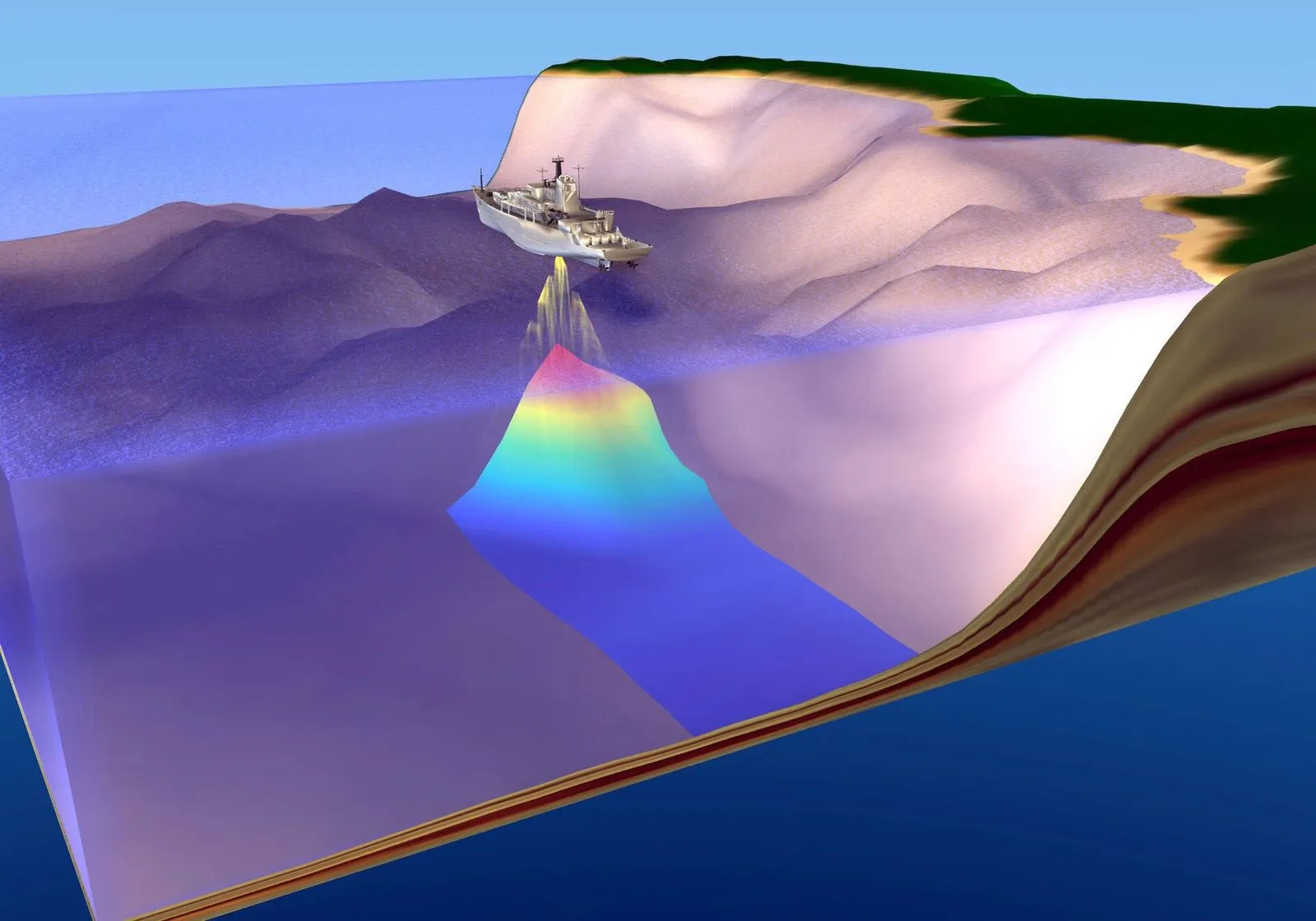
A fish finder is a sonar: a transducer under the boat sends a pulse of sound into the water, times the echo, and the display draws what came back. Every feature on the box, CHIRP, ClearVü, MEGA Imaging, LiveScope, is a variation on that one idea. Every buying decision comes down to three questions: what frequency the unit uses, whether it draws pictures or arches, and whether it can show fish moving in front of the boat. Get those three right and the three big makers’ model ladders turn from a price list into a choice.
A 200 kHz beam sees a cone about a third as wide as the water is deep; drop to 83 kHz and the cone is about as wide as it is deep. That one fact decides what your screen is showing you.
Start here
- Best fish finder: the pick at each price from $120 to $3,000, what every step adds, and the Black Friday price to wait for.
- How to read a fish finder: arches and dots, hard and soft bottom, bait, the thermocline and the settings.
- Bass fishing: the species that drove the live-sonar boom and the tournament rules that followed.
- Fishing reels and fishing rods: the tackle the electronics are meant to put in the right place.
- Fishing gear: the section hub, where each category’s key number is explained.
Which frequency, and how wide a cone?
Sound leaves the transducer in a cone. The lower the frequency, the wider the cone and the deeper it reaches, at the cost of detail. The higher the frequency, the narrower and sharper the picture. Lowrance gives its standard 83/200 kHz transducers 20 degrees at 200 kHz and 35 to 50 degrees at 83 kHz. The working rule that follows: at 83 kHz you see a patch of bottom about as wide as the water is deep, at 200 kHz about a third as wide.
CHIRP sonar sweeps a band of frequencies in each pulse instead of one. That separates targets a single frequency would blur into one arch. Garmin’s imaging transducers sweep 425–485 kHz and 790–850 kHz; Raymarine’s CHIRP band is 320–380 kHz.
| Sonar type | Frequency | What it draws | Reach |
|---|---|---|---|
| Traditional 2D | 50, 83 or 200 kHz | Fish as arches, bottom as a band | Deepest; 50 kHz for offshore |
| CHIRP 2D | a swept band | Cleaner arches, better target separation | As 2D |
| Down imaging (ClearVü, DownScan, Down Imaging) | 455 or 800 kHz | A picture-like slice under the boat, about 60 degrees wide | About 600 ft (183 m); Garmin CHIRP 750 ft (229 m) |
| Side imaging (SideVü, SideScan, Side Imaging) | 455, 800 kHz or Humminbird MEGA at 1.2 MHz | Structure and fish out to each side | Up to about 600 ft (183 m) per side on the best units |
| Forward-facing live sonar (LiveScope, ActiveTarget, MEGA Live) | about 1 MHz | Fish and lure moving in real time ahead of the boat | LiveScope Plus 20 × 135 degree view; MEGA Live 20 × 120 |
Humminbird MEGA Imaging, at 1.2 MHz, is the highest frequency in any recreational fish finder. That is why its side-imaging pictures are the sharpest and its reach the shortest.
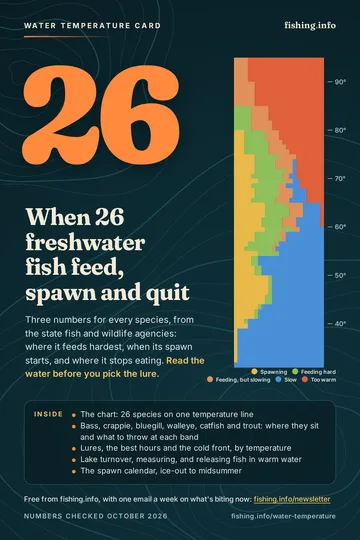
Free card: what 26 species do at your water temperature
Plus one email a week on what's biting now. No sales pitches. Privacy.
What is the screen showing you?
On 2D sonar a fish is an arch because it moves through the cone. It enters at the edge, is closest in the middle and leaves at the far edge, and the echo time draws a curve. A full arch means the fish crossed the whole cone; bigger fish draw longer, thicker arches. On down imaging the same fish is a dot, because the beam is too thin to draw a curve.
A hard bottom returns a thick, strong band, a soft mud bottom a thin, faint one; color palettes show hard as yellow or red and soft as blue. Baitfish appear as a cloud of dots and weed as a fuzzy carpet above the bottom. In summer the thermocline shows as a faint horizontal band where the water temperature drops.
Live sonar, and why the leagues limit it
Forward-facing sonar arrived with the Garmin Panoptix in 2015 and LiveScope in 2018. Lowrance ActiveTarget and Humminbird MEGA Live followed in 2021, and MEGA Live 2 with the XPLORE heads in December 2024. A transducer alone costs about $1,500 to $1,700 before the display. Outdoor Life’s comparison calls MEGA Live and LiveScope “close to a tie, with Garmin getting a slight edge”.
The technology changed competitive bass fishing enough that the leagues stepped in:
- B.A.S.S. limits Elite Series boats to one live-sonar transducer and 55 inches of total screen. From 2026 it allows the technology in at most five of nine regular-season events, chosen by coin flip.
- Major League Fishing limits the Bass Pro Tour to two transducers, and to one of three periods a day.
- The NPFL banned it outright from 2025.
Garmin, Humminbird or Lowrance?
| Brand | Entry | Mid | Premium | Live sonar |
|---|---|---|---|---|
| Garmin | Striker Vivid 4–9 in (no charts) | ECHOMAP UHD2 5–9 in, Navionics+ maps | ECHOMAP Ultra 2 10–16 in; GPSMAP 7–27 in | ECHOMAP and GPSMAP only, not Striker |
| Humminbird | PiranhaMAX; HELIX 5–12 G4/G4N | SOLIX; XPLORE 9–12 (2024) | APEX 13–19 in, full HD | MEGA Live 2 on APEX, SOLIX G3 and XPLORE only |
| Lowrance | Eagle 4–9 in; HOOK Reveal | Elite FS 7–12 in | HDS PRO 9–16 in | ActiveTarget 2 on Elite FS and HDS PRO |
The trap in every ladder is compatibility. A Garmin Striker cannot run LiveScope, and a Humminbird HELIX cannot run MEGA Live 2 or network with an XPLORE. Buy the display for the sonar you want in two years, not the one you want today.
From a kayak or the bank, the answer is smaller: a castable puck, or a 5-inch screen on a 12 V 10 Ah lithium battery. Whatever you buy, the catfish and bass hubs say what the sonar is looking for.
All articles
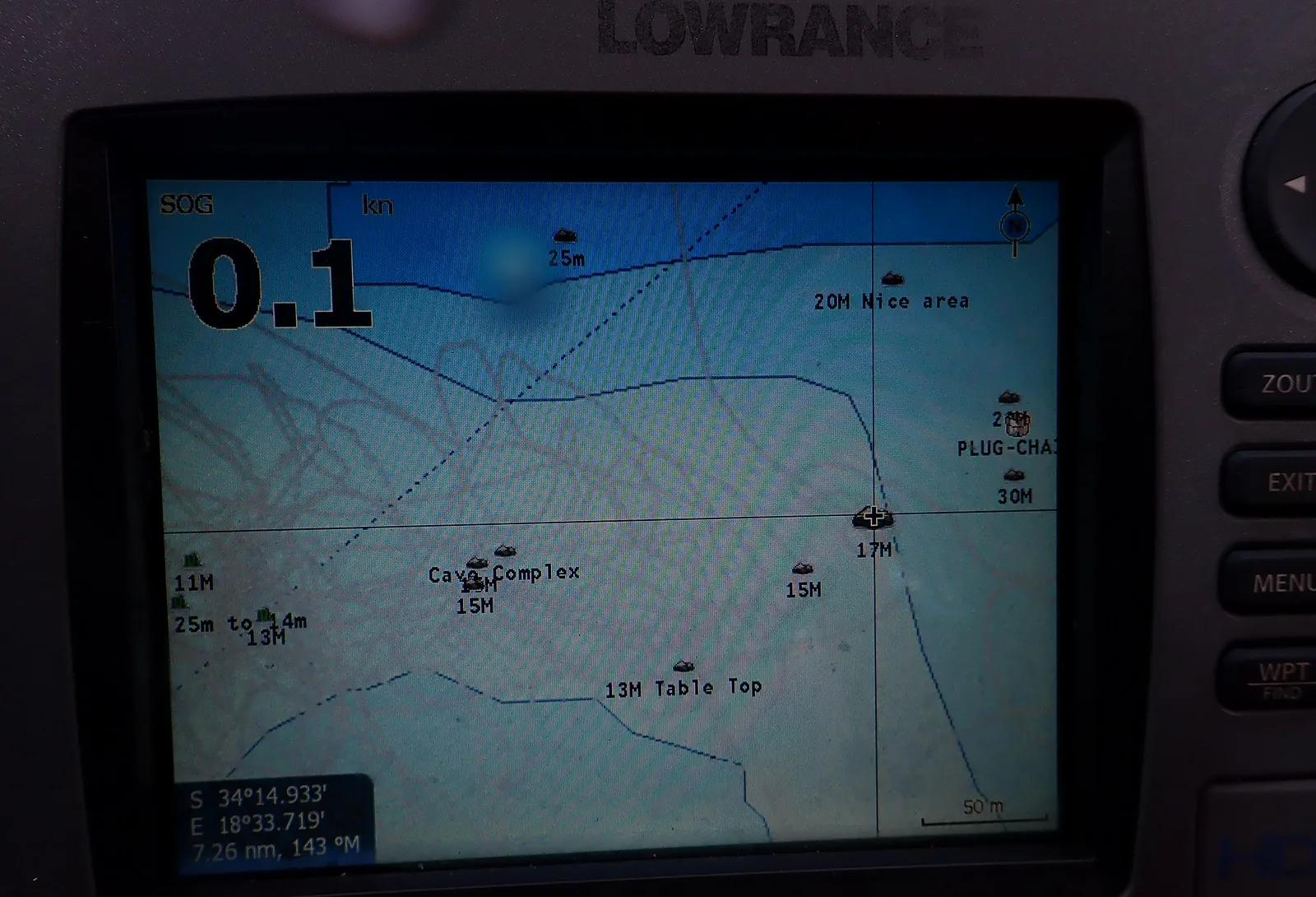 Best Fish Finder for the Money: What Each Price Step Buys
The best fish finder at each price from $120 to $3,000, what every step adds, and the Black Friday price to wait for on each pick.
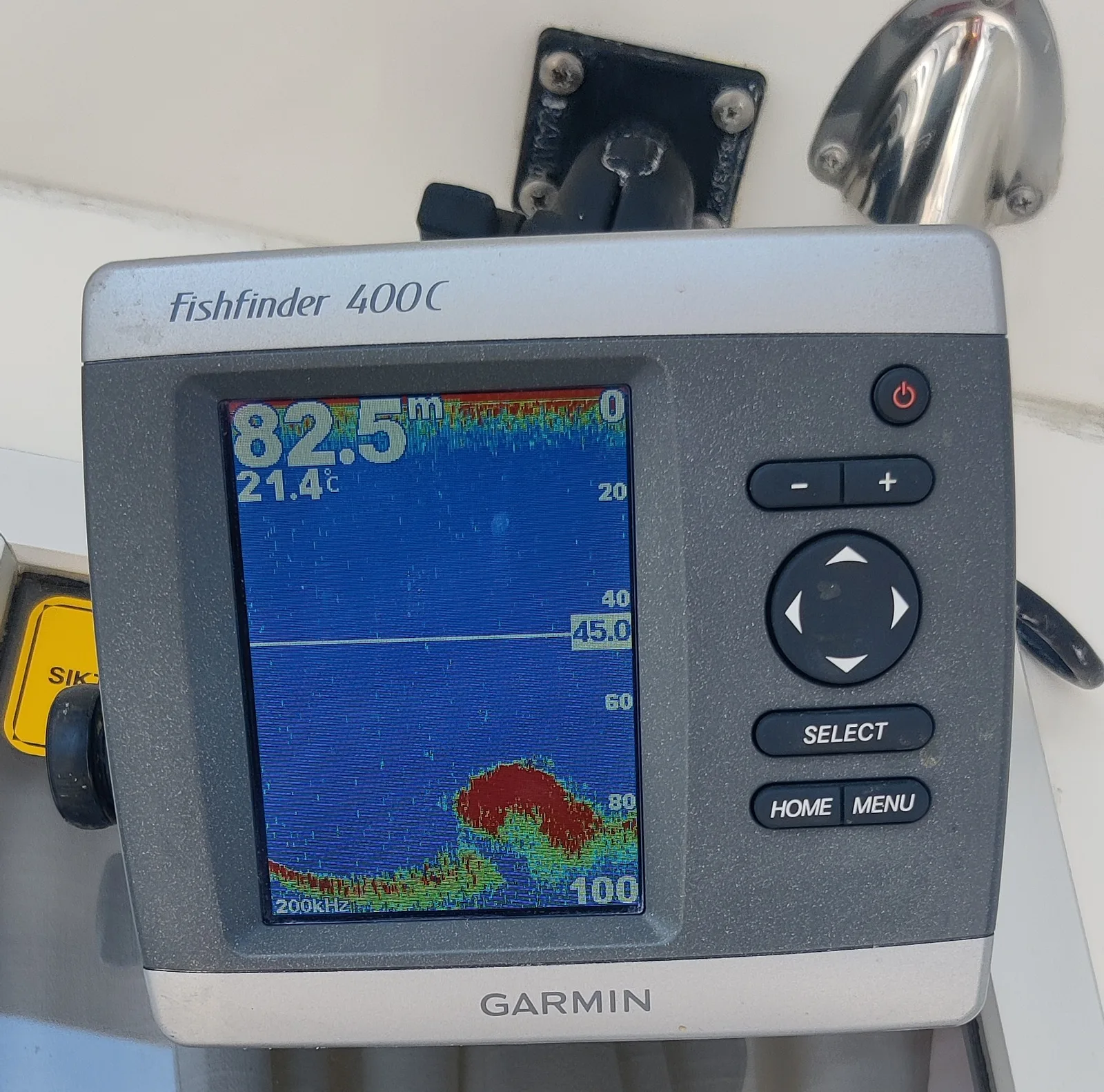 How to Read a Fish Finder: Arches, Bottom, Bait and Imaging
How to read a fish finder: why fish show as arches on 2D sonar and dots on down imaging, what hard and soft bottom look like, bait, the thermocline, settings.
Free download
The water temperature card
Read your water temperature and the card tells you who is spawning, who is feeding and what to throw. 26 species, 16 pages, for your phone and the tackle box.
Plus one email a week on what's biting now. No sales pitches. Privacy.