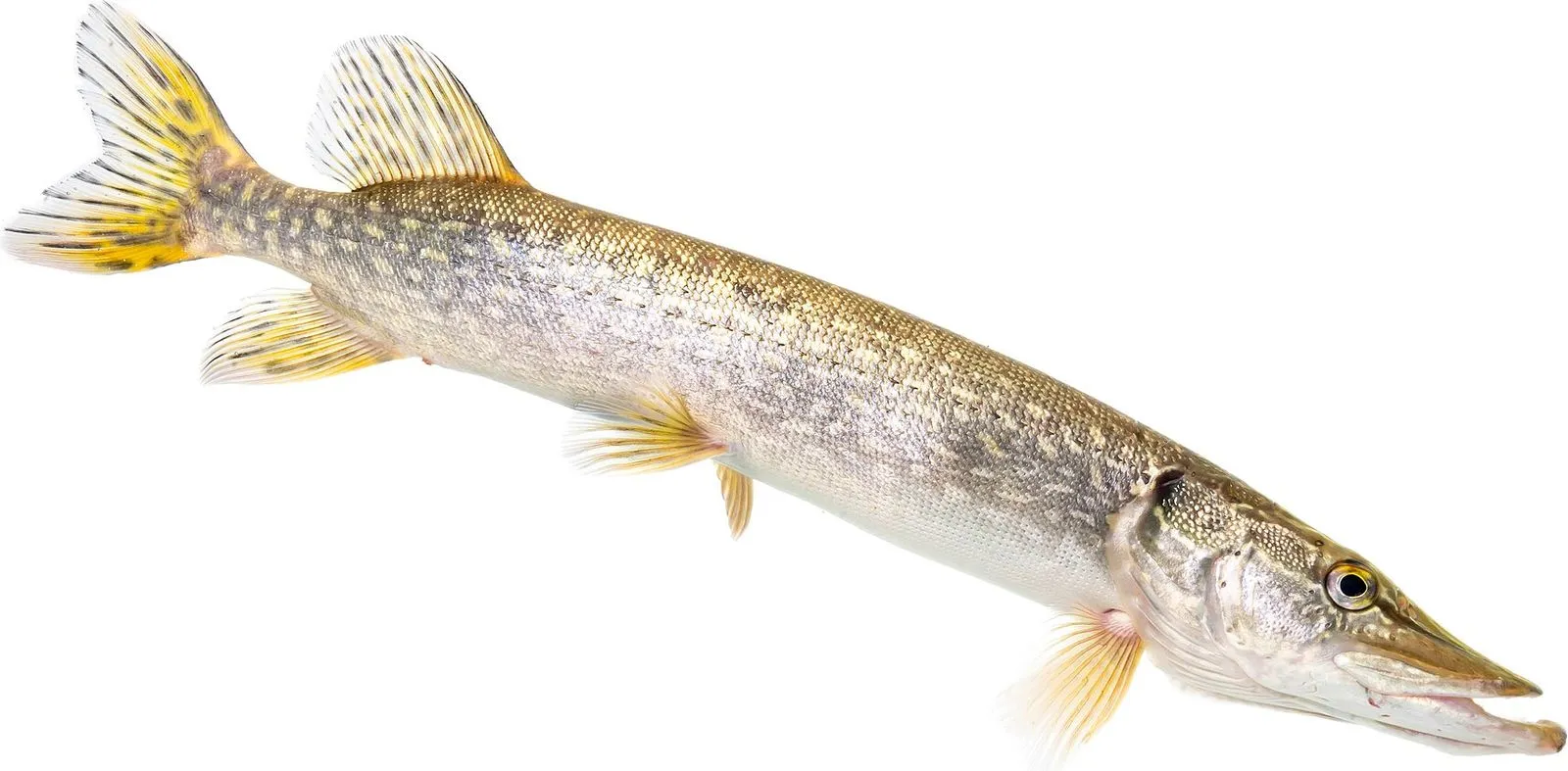
North American anglers meet four pike fish: the northern pike, the muskie, their hybrid the tiger muskie, and the chain pickerel. All four are long, duck-billed ambush hunters with the dorsal fin set far back by the tail and a mouth full of teeth. In the net, the pattern, the scales on the head and the pores under the jaw tell them apart.
Northern pike wear light spots on a dark coat and muskies wear dark marks on a light one. When the pattern has faded, count the pores under the jaw: five or fewer is a pike, six or more is a muskie.
Start here
- Pike fishing: where pike hold each season, what to throw, and the quick-strike rig.
- Muskie: age and weight at 40 and 50 in, and the 27 hours of fishing per muskie in Wisconsin.
- Northern pike: size by age, weight by length, the truth about its teeth and where big pike go in summer.
- Muskie vs pike: the full side-by-side and a 30-second field check.
- Tiger muskie and chain pickerel: the hybrid and the pike of the eastern pond.
- Northern pike teeth and whether pike are good to eat.
- Best pike lures and best muskie lures: one pick per lure class and who recommends it.
- World record muskie and world record pike: every claim and what became of it.
- Fish weight calculator: a muskie’s or pike’s weight from length and girth.
- Water temperature for fishing: pike, muskie and 24 other species in one chart.
- Yellow perch: the fish both pike and muskie eat most in northern lakes.
Which pike is it?
Wisconsin DNR’s card gives the short version: a pike is light on dark with a rounded tail, a muskie dark on light with a pointed tail, the hybrid striped with a rounded tail. The table adds the marks that still work when color fails.
| Mark | Northern pike | Muskie | Tiger muskie | Chain pickerel |
|---|---|---|---|---|
| Pattern | Pale bean-shaped spots in rows, dark body | Dark bars or spots on a light body, or none | Bold, irregular vertical bars | Dark chain-link net on green-gold |
| Under the eye | No ID mark named | No tear mark; a black streak runs through the eye | No ID mark named | A dark vertical bar, like a tear |
| Cheek scales | All over | Upper half only | All over, or two thirds | All over |
| Gill-cover scales | Upper half only | Upper half only | A third to a half | All over |
| Jaw pores, per side | 5 or fewer | 6 to 9 | 5 to 7 | No agency count |
| Tail tips | Rounded | Pointed | Rounded | Pale, unmarked fins; tip shape not given |
Two honest warnings. Agencies do not agree on whether a tiger muskie is dark-on-light or light-on-dark, because its bars and the gaps between them are about equally wide. Use the rounded tail and the cheek. And Wisconsin’s own leaflets give two pore counts for pike: “5 or less” on the card and “five to seven” in a 2008 fact sheet. When a count lands on five or six, let the cheek decide.
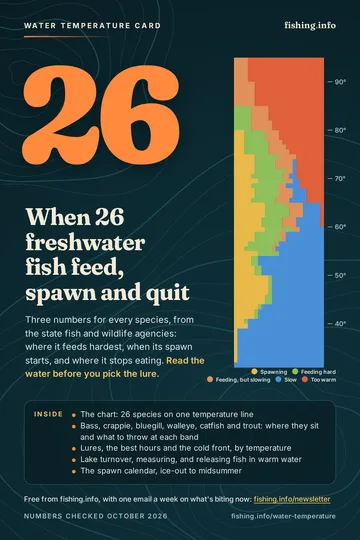
Free card: what 26 species do at your water temperature
Plus one email a week on what's biting now. No sales pitches. Privacy.
Northern pike: the common one
The northern pike is one of the few freshwater fish native to both North America and Eurasia. A typical Wisconsin catch is 18 to 20 in (46–51 cm) and about 2 lb (0.9 kg). On North Dakota’s averages a 40 in (102 cm) pike weighs about 15 lb (6.9 kg), and a 20 lb (9 kg) one is about 44 in (112 cm).
Pike live in shallow, weedy lakes and seek cooler water in summer; most live about 7 years (Wisconsin DNR). Their main prey in North America is probably yellow perch, a panfish, at a third to half the pike’s length (Fisheries and Oceans Canada). Locally the pike is also called jackfish, snake and, confusingly, pickerel; fishing terms has gator, hammer handle and other pike slang.
Muskie: the biggest and the rarest
The muskellunge is the largest of the family and the rarest in any lake that holds it. Most are 30 to 42 in (76–107 cm), and 50 in (127 cm) is a trophy that takes a Wisconsin fish about 17 years to reach. Its home is the Great Lakes, the St. Lawrence and the upper Mississippi and Ohio river basins.
Tiger muskie: the hybrid
The tiger muskie is the cross of a northern pike and a muskellunge. It happens naturally where the two share a lake, but most tigers come from hatcheries: USGS records stocked tigers in about 30 states. Washington, Colorado and New York call the hybrid sterile. USGS is more exact: the males always are, the females often are not.
Chain pickerel: the small one of the East
The chain pickerel is the pike of the East and South, native from southwestern Maine to Florida and west along the Gulf to Texas. It is small by family standards, commonly 10 to 18 in (25–46 cm); Pennsylvania calls a 25 in (64 cm), 4 to 5 lb fish a trophy. Its two cousins, the redfin and grass pickerel, are smaller still.
One naming trap: in parts of Canada “pickerel” means walleye, which is a perch and no relation.
The records
| Fish | Record | Angler, year, water |
|---|---|---|
| Muskie (IGFA) | 67 lb 8 oz (30.6 kg) | Cal Johnson, 1949, Lac Courte Oreilles, Wisconsin |
| Muskie (Hall of Fame, Wisconsin) | 69 lb 11 oz (31.6 kg) | Louis Spray, 1949, Chippewa Flowage, Wisconsin |
| Northern pike (IGFA) | 55 lb 1 oz (25 kg) | Lothar Louis, 1986, Germany |
| Northern pike, North America | 46 lb 2 oz (20.9 kg) | Peter Dubuc, 1940, Great Sacandaga Lake (then Sacandaga Reservoir), New York |
| Tiger muskie | 51 lb 3 oz (23.2 kg) | John Knobla, 1919, Lac Vieux Desert, Wisconsin and Michigan |
| Chain pickerel | 9 lb 6 oz (4.25 kg) | Baxley McQuaig Jr., 1961, Homerville, Georgia |
The muskie has two records because two bodies keep the books, and each recognizes a different 1949 fish caught near Hayward, Wisconsin. The pike record has stayed in Europe since 1986; no North American pike has beaten Dubuc’s in more than 80 years.
The names, and the rest of the family
The family is Esocidae and the genus Esox: Esox lucius is the northern pike, Esox masquinongy the muskie and Esox niger the chain pickerel. Worldwide the genus has seven living species. Beside the three species above and the American pickerel, there is the Amur pike of northeast Asia, silver with small black spots. Two European pikes were separated from the northern pike only recently: the southern pike of Italy, described in 2011, and the Aquitanian pike of southwestern France, described in 2014.
Other weed-edge ambush hunters are in the bass hub; every species is in the species guide.
All articles
- Are Northern Pike Good to Eat? Yes: the Y-Bones, the Five-Fillet Cut and Which Fish to Keep
Northern pike are firm, white and flaky. How to cut five boneless fillets around the Y-bones, which size to keep, and how much is safe to eat.
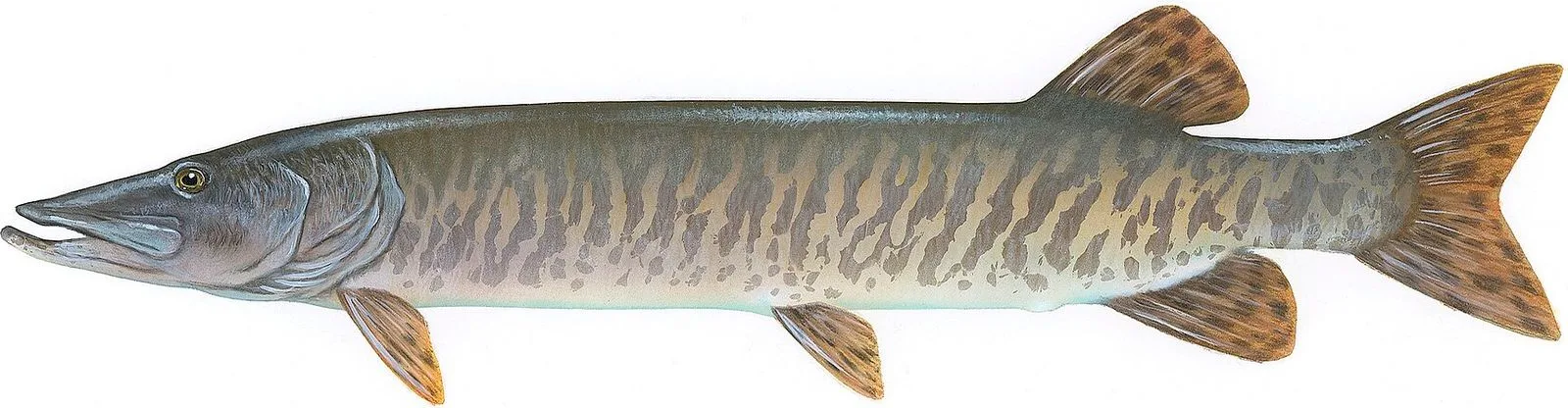 Best Muskie Lures: The Classic in Each Class, and the Water Temperature to Throw It
The muskie lures guides and magazines keep naming, one per class, with maker-checked sizes and the water temperature each is for, from 40 °F to 75 °F.
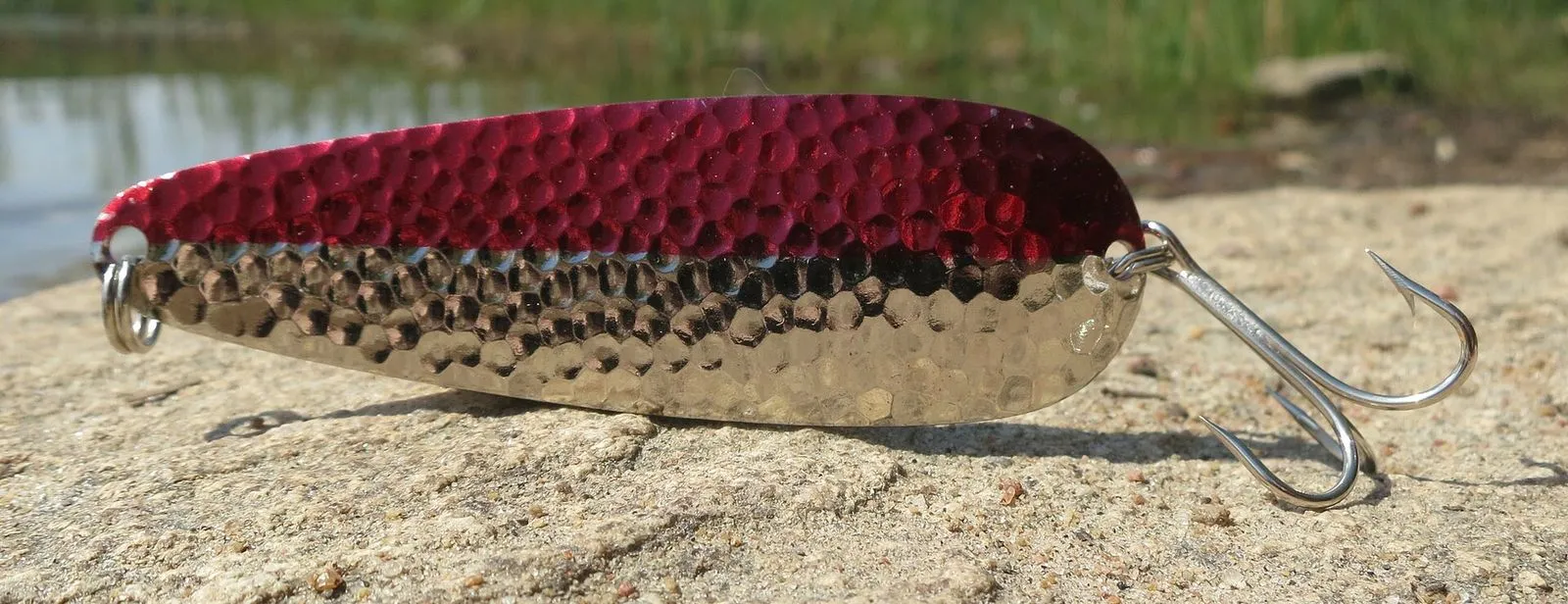 Best Northern Pike Lures: Six Classics the Agencies and Guides Agree On, and When to Throw Each
Northern pike lures by the evidence: a 1 oz spoon first, then spinners, spinnerbaits, plugs and topwaters, with the water and season each one is for.
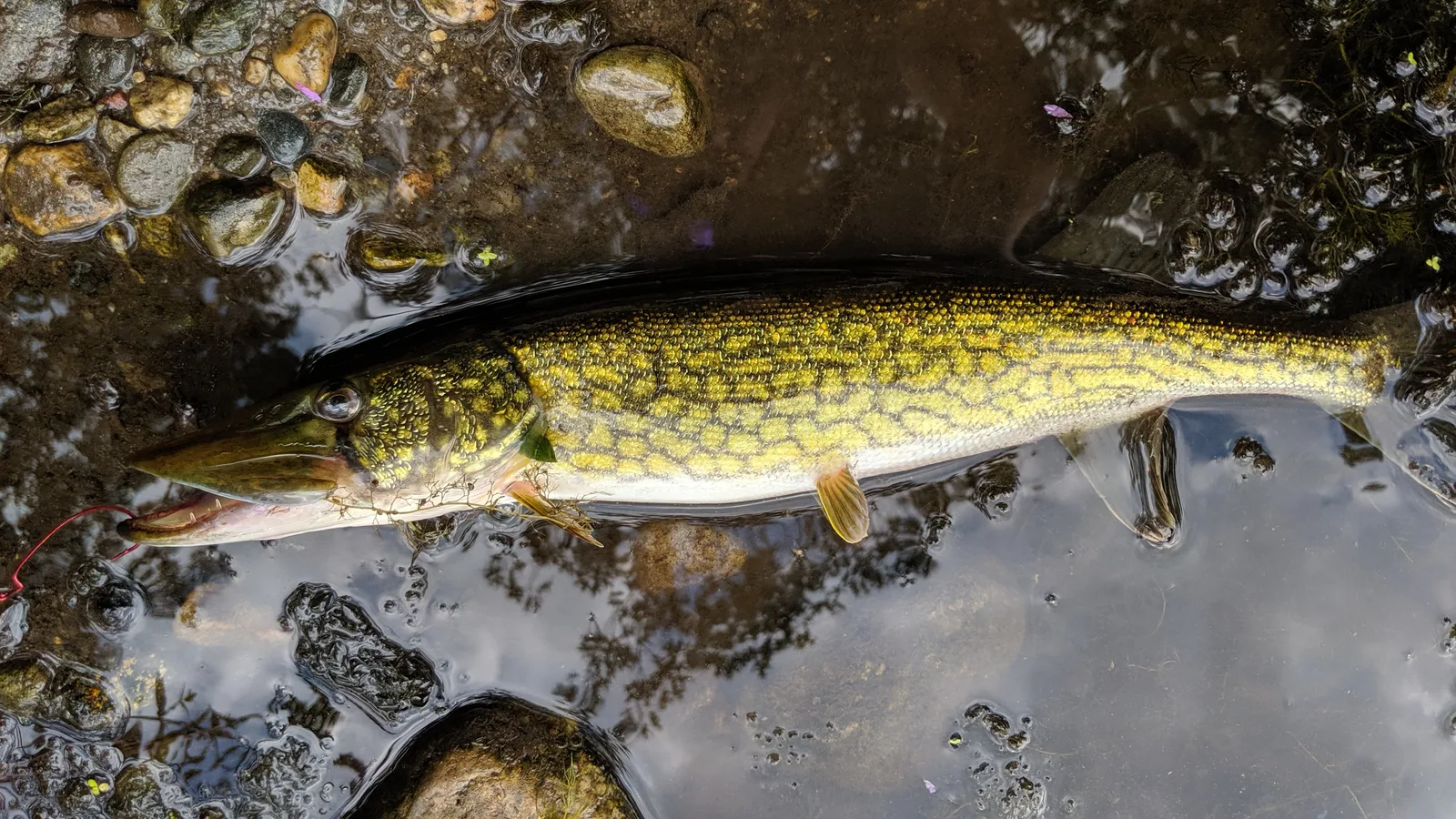 Chain Pickerel: How to Identify One, How Old It Is, and How to Catch It
Chain pickerel: the tear under the eye, the three pickerels compared, age at every length, season-by-season fishing, the bones, and the 1961 record.
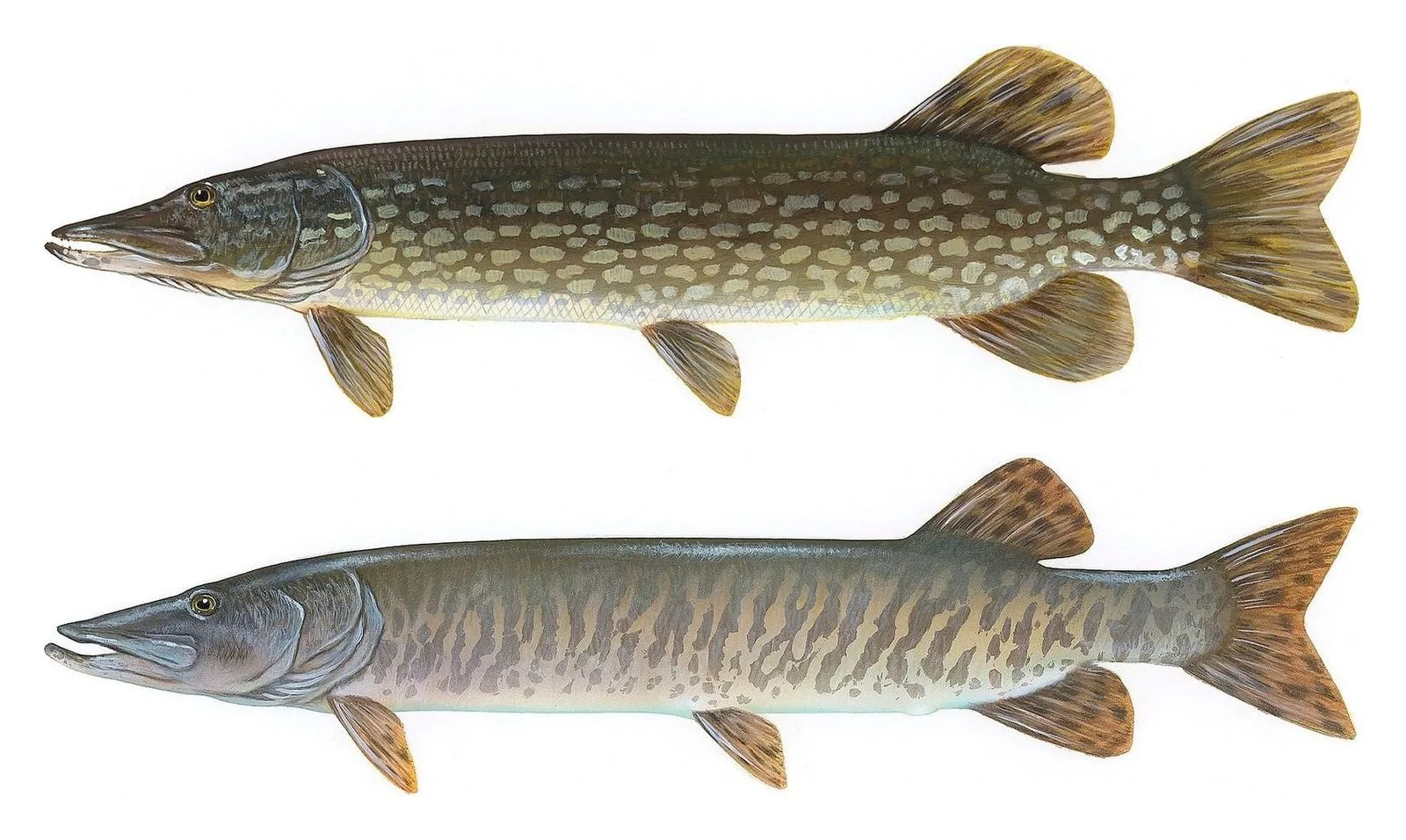 Muskie vs Pike: How to Tell Them Apart, and How the Two Fish Really Differ
Muskie vs pike: markings, tail tips, jaw pores and cheek scales side by side, plus size, age, numbers per acre, and pike against pickerel and walleye.
- Muskie: Size by Age, Weight by Length, and How to Tell It From a Pike
How big muskie get, how old a 40 or 50 inch muskellunge is, what it weighs, how to tell it from a pike, and the real hours behind 10,000 casts.
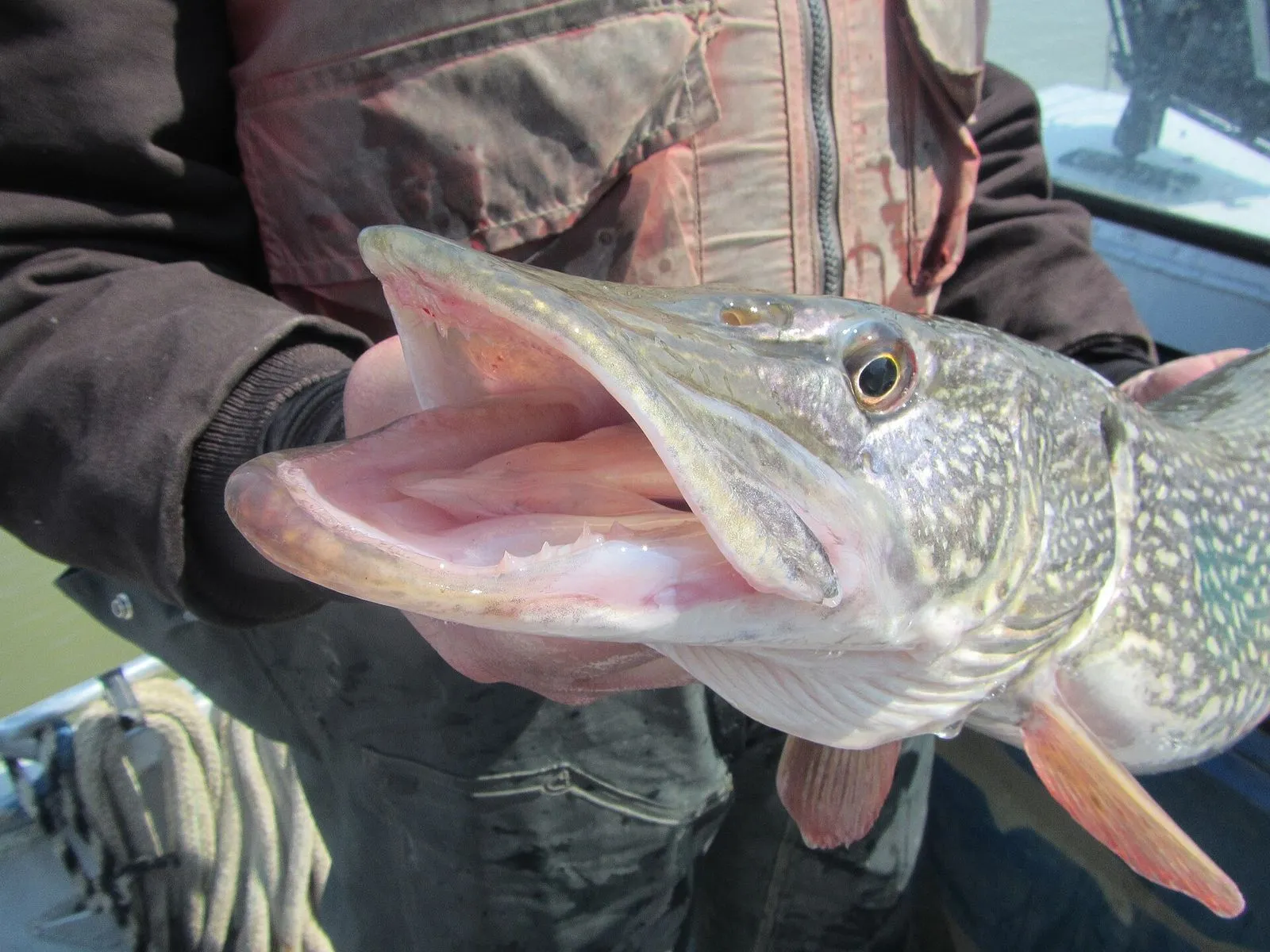 Northern Pike Teeth: How Many, How Sharp, the Summer Myth, and How to Unhook One
Northern pike teeth: about 16 knife-edged canines on each side of the lower jaw, hundreds more on the roof and tongue, and how to unhook one safely.
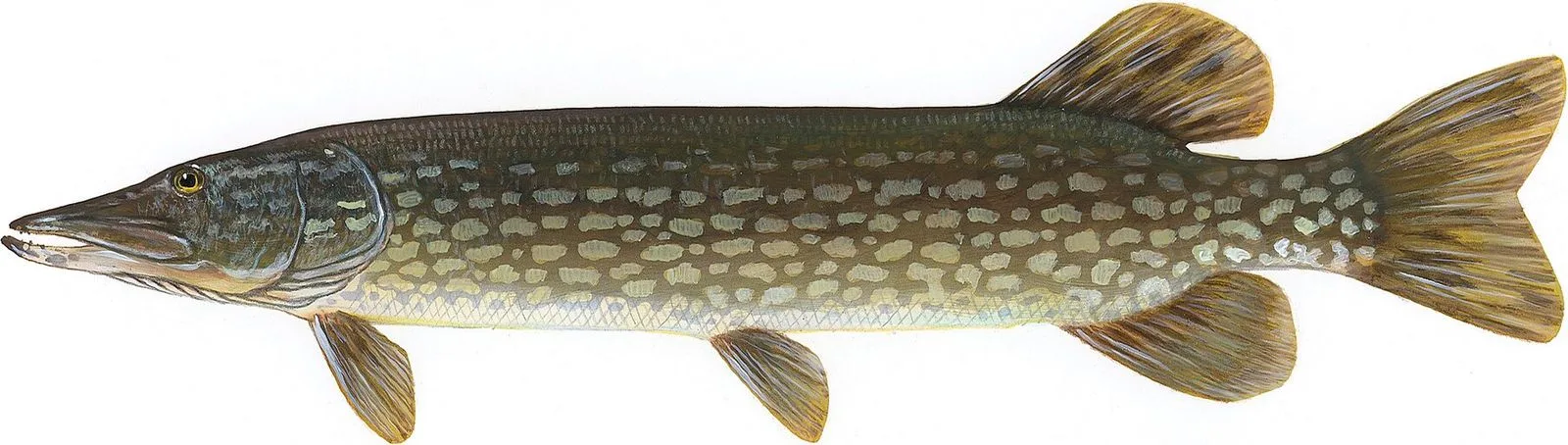 Northern Pike: Size by Age, Weight by Length and Where Big Ones Go
Northern pike size by age and weight: Michigan's 7,726 aged pike average 24 in at age 4–5 and 36 in at 10; a 36 in pike weighs about 11 lb.
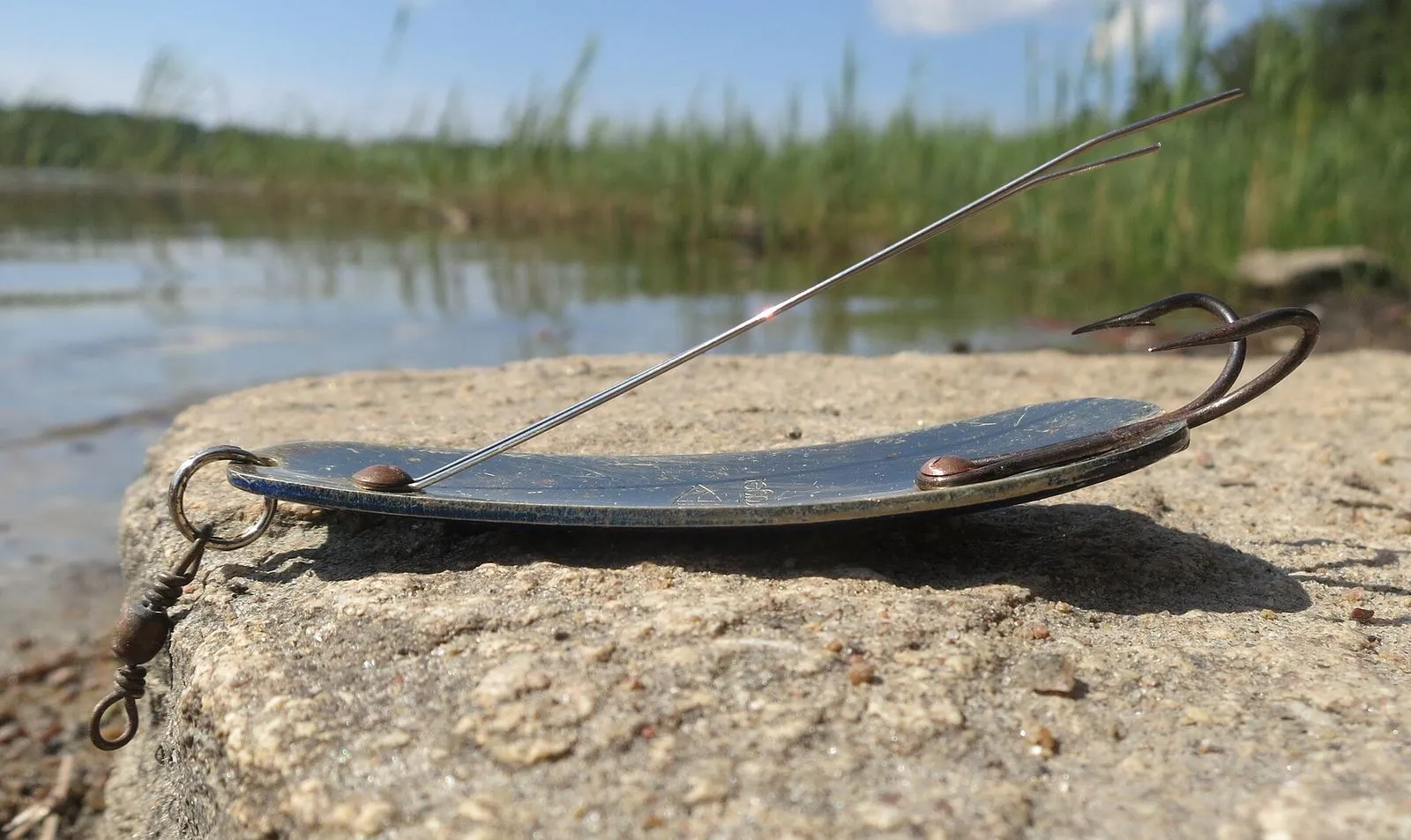 Pike Fishing: How to Catch Northern Pike in Every Season
Pike fishing season by season: where northern pike are from ice-out to first ice, what to throw, where big pike go in summer, and the quick-strike rig.
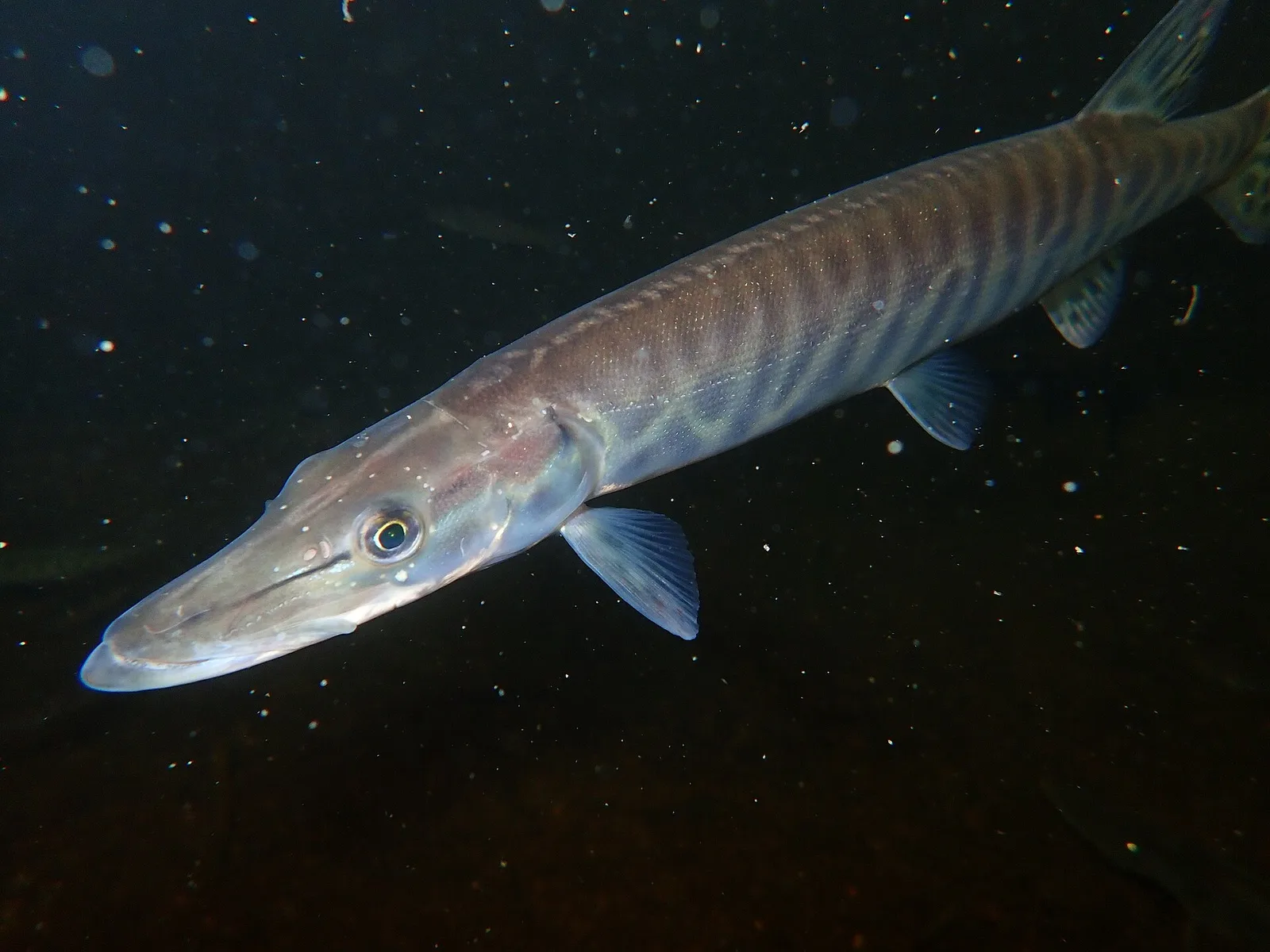 Tiger Muskie: What the Hybrid Is, How Big It Gets, and Which States Stock It
Tiger muskie: the pike and muskellunge cross, how to tell it from both parents, how fast it grows, which states stock it and why, and the 1919 record.
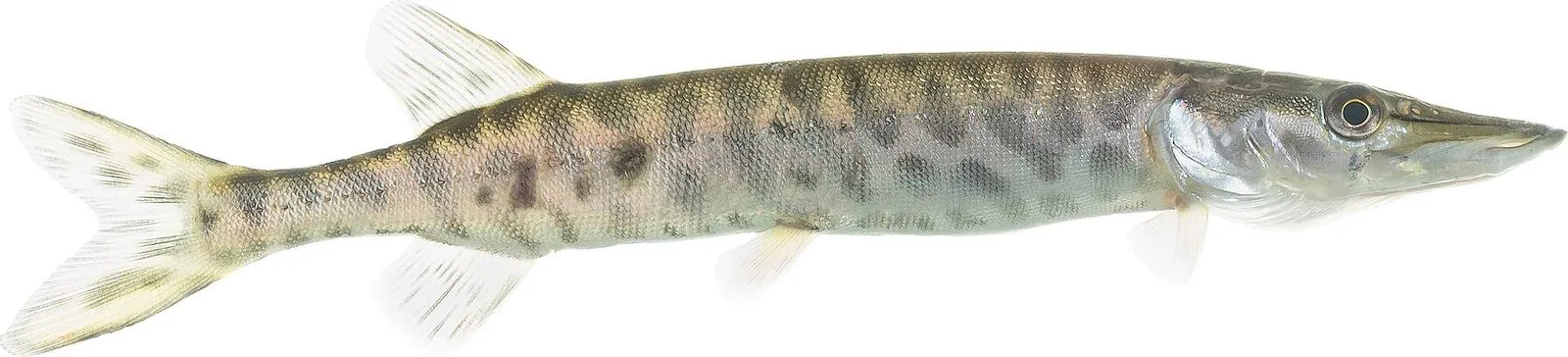 World Record Muskie: Three Claims, Two Record Books and the Biggest Fish Nobody Disputes
The world record muskie is 67 lb 8 oz to the IGFA and 69 lb 11 oz to the Hall of Fame. Both date from 1949, both are disputed, and a 65 lb fish is not.
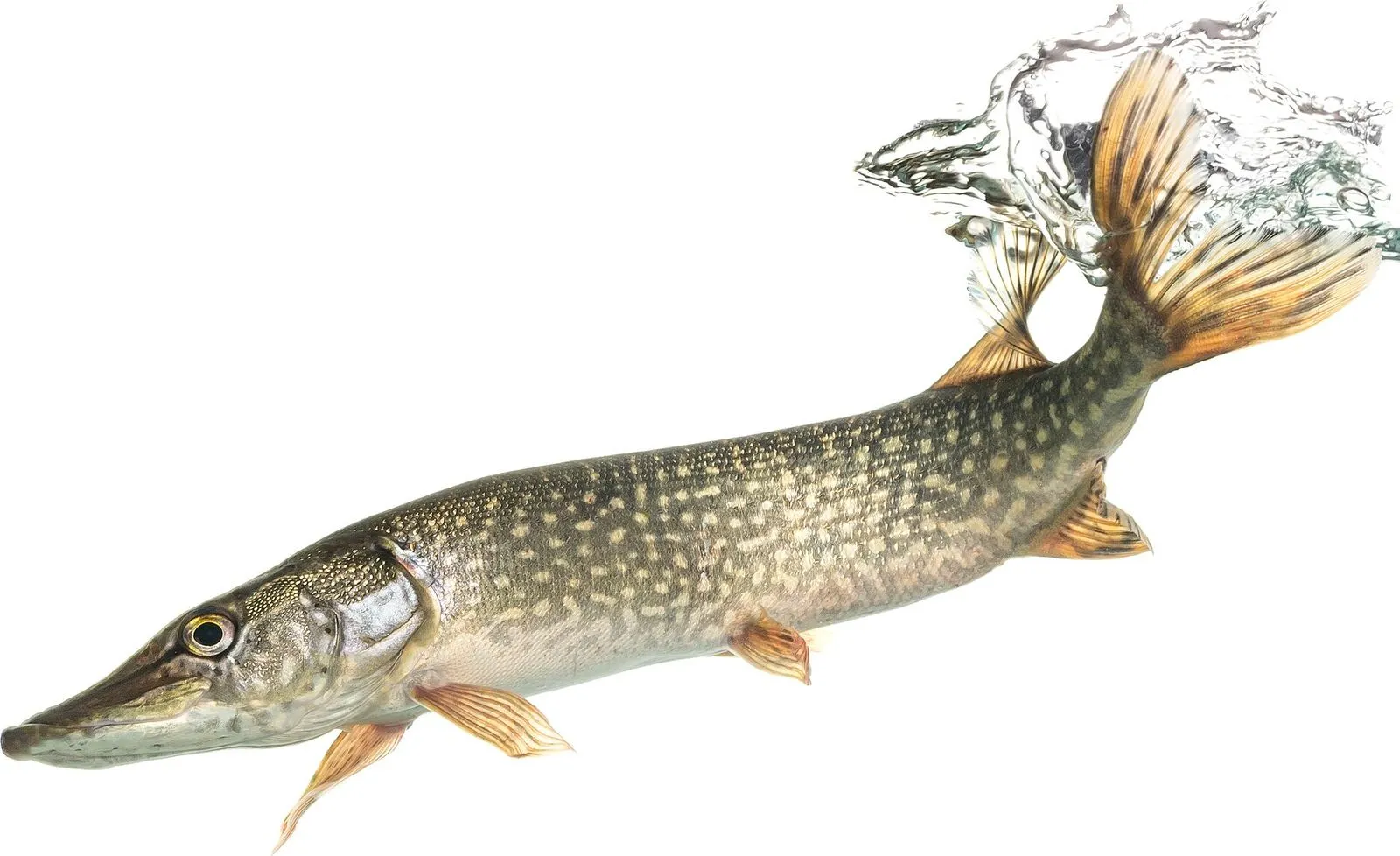 World Record Pike: The 55 lb German Fish, the 46 lb American One and the State Records
The world record pike is 55 lb 1 oz, caught in Germany in 1986. North America's best is 46 lb 2 oz from New York in 1940, a fish its captor never mounted.
Free download
The water temperature card
Read your water temperature and the card tells you who is spawning, who is feeding and what to throw. 26 species, 16 pages, for your phone and the tackle box.
Plus one email a week on what's biting now. No sales pitches. Privacy.
Sources
- Wisconsin DNR, Muskellunge – Northern Pike Identification, PUBL-FM-503: markings, pores, cheek and gill-cover scales, tail
- Wisconsin DNR, Northern Pike (Esox lucius), PUBL-FM-707 (2008): identification, common size, habitat, lifespan, the national record
- Wisconsin DNR, Muskellunge (Esox masquinongy) fact sheet, PUBL FM-705 (2012)
- Wisconsin DNR, Muskellunge Management Update, FH-508 (2012): length at age (40 in in year 9, 50 in by age 17), 27 hours per fish, size limits
- Harvey (2009), A biological synopsis of northern pike, Fisheries and Oceans Canada: prey, prey size
- North Dakota Game and Fish, Fish length-weight table
- Wisconsin DNR, Freshwater angling records: Spray (muskellunge), Knobla (tiger muskellunge)
- Pennsylvania Fish and Boat Commission, The Pike Family (2003): the species, names, cheek and gill-cover scaling, pickerel size
- Iowa DNR, Know Your Catch: how to ID northern pike and muskies
- Connecticut DEEP, Chain pickerel: eye bar, scaling, common size, record
- USGS Nonindigenous Aquatic Species, tiger muskellunge: natural range, stocking, fertility
- Washington Department of Fish and Wildlife, tiger muskie: a sterile cross
- Colorado Outdoors (2019), Tiger Muskie: the role of this silent predator in Colorado's waters
- New York DEC, Musky, Pike, Tiger Musky and Pickerel Fishing Opportunities
- USGS Nonindigenous Aquatic Species, chain pickerel: native range
- The Canadian Encyclopedia, Pickerel: the name as a diminutive of pike, the walleye error
- New York State DEC, Freshwater fishing records: Dubuc (northern pike, 46 lb 2 oz, Great Sacandaga Lake)
- ESPN / Associated Press, Fishing Hall of Fame upholds record muskie (January 2006)
- Georgia DNR, Fishing records: McQuaig (chain pickerel, 9 lb 6 oz)
- Sasha Doss, The 7 Wonderful Pikes, Pickerels, and Muskies of the World!, The Fisheries Blog (2017)
- IGFA (2026), 12 of the largest northern pike in IGFA world record history