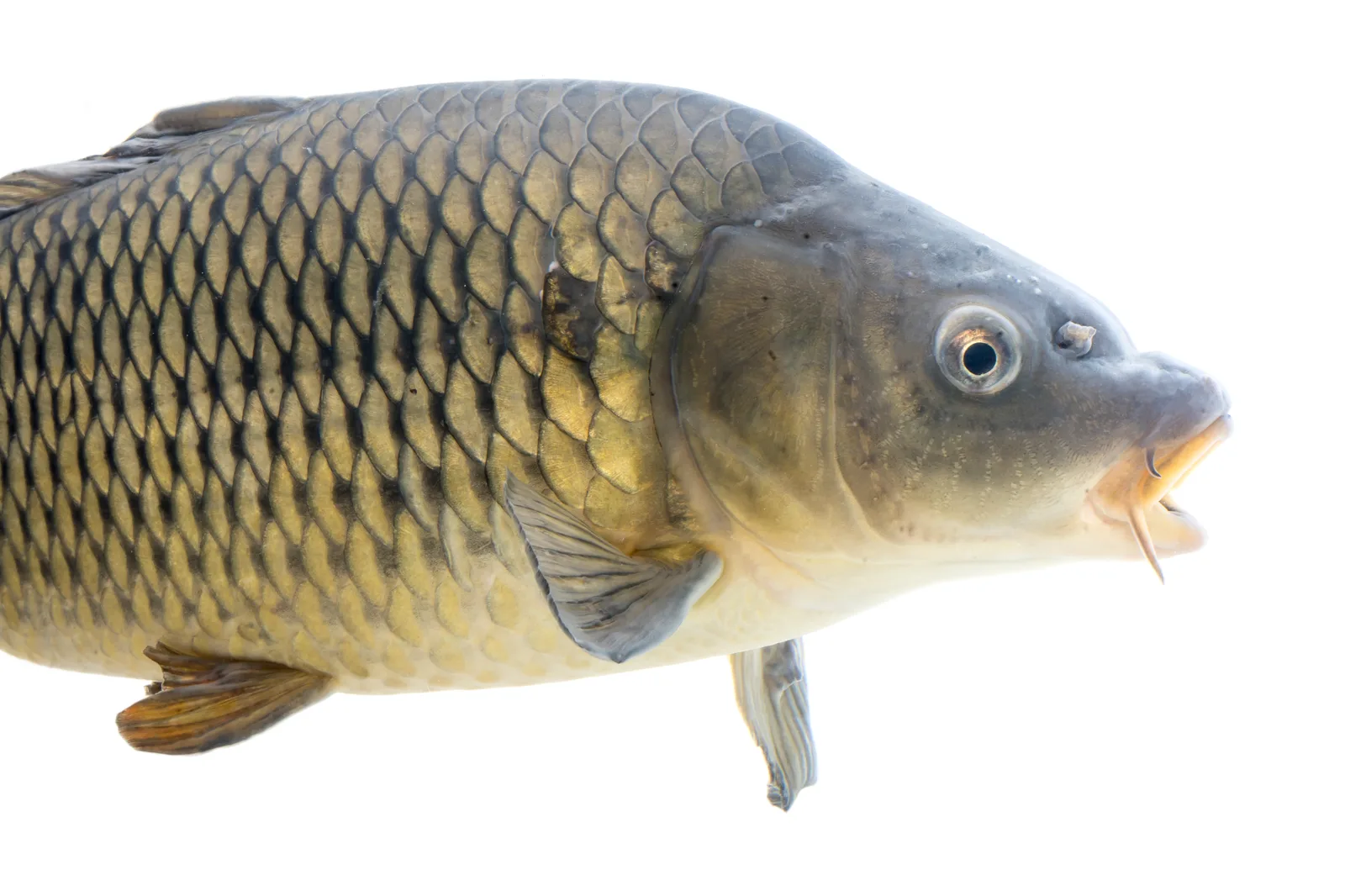
The best carp bait to start with is canned sweet corn or bread. The American Carp Society threads 3 or 4 kernels of corn onto the hook, or molds bread around it with the point showing. Boiled field corn, boilies and worms catch carp too. Carp probably find food more by taste than by sight, so a sweet bait on a spot you have fed first, where that is legal, does most of the work.
New York’s fisheries agency publishes a carp bait you can remember by its name: the 1-2-3 doughball, 1 cup sugar, 2 cups flour and 3 cups cornmeal, boiled 20 minutes in a cloth bag.
What bait do you use to catch a carp?
Bread or canned sweet corn. The American Carp Society’s first choice is the simplest: a loaf of bread, a size 6 or 8 hook and 10 lb line. Start where people feed the ducks: those carp already eat bread. The society’s alternative is canned sweet corn, cast with or without a small sliding egg sinker. In its words, corn “will certainly produce a carp if they are there feeding in the area you are fishing.”
New York’s DEC lists more baits already in the kitchen: canned or frozen corn, bread, dry dog food and puffed cereal. Outdoor Life’s guide, built on an interview with carp angler Aaron Huffman, ranks boiled and flavored field corn best overall. It calls canned corn the quick and easy choice, with two faults: it falls off the hook, and it draws turtles and bluegill.
For bigger carp and longer sessions, the society names boilies: hard, round baits of boiled paste. They are fished on a hair rig, a short loop of line that holds the bait beside the hook. The society also lists nightcrawlers, and Outdoor Life adds maggots, mealworms and wax worms.
The bait also depends on which “carp” is in front of you, because three very different fish share the name:
| Fish | What it eats | Baits that work | What the law adds |
|---|---|---|---|
| Common and mirror carp | insect larvae, snails, small crustaceans, plant matter | corn, bread, doughball, pack bait, boilies, tiger nuts, worms, maggots | Pennsylvania bans common carp and koi as baitfish |
| Grass carp | water plants | white bread, berries, boiled corn, cherry tomatoes, iceberg lettuce, grass clippings | prohibited in Minnesota: report a catch; must be euthanized under DEEP’s volunteer permit at Candlewood Lake and Squantz Pond, Connecticut |
| Bighead and silver carp | plankton, strained as filter feeders | no source lists a hook bait | federally injurious species; Missouri bans them as live bait |
The grass carp column is Connecticut DEEP’s list. Bighead and silver carp are a different fishery altogether; the carp hub tells the fish called carp apart.
What do carp eat, and what does it mean for your bait?
Almost anything small on the bottom. In US waters, the USGS describes the common carp’s diet as organic detritus (mostly of plant origin), midge larvae, small crustaceans and snails. Missouri’s field guide calls aquatic insects the most important food. Carp feed mostly on the bottom but also at the surface, most actively in late evening and early morning. They grind their food with throat teeth, the pharyngeal teeth.
The line that matters for bait is Missouri’s: “Food is probably located more by taste than by sight.” That is why scent and sweetness count for more than shape, and why how a fish tastes is worth a minute of a carp angler’s time. Huffman, in Outdoor Life, says sweeter flavors “consistently get more attention than savory or stinky baits.”
Carp also follow the season’s food. “Mulberries are a favorite food for both grass and common carp during June and July,” in Connecticut DEEP’s grass carp guide. A berry tree leaning over the water in early summer is a feeding spot.
How much do they eat? Up to 3% of their body weight a day, according to the UK’s Angling Times. Its advice is to put out about what one carp can eat, so you do not wait long for a bite on the hook bait.
Free card: what 26 species do at your water temperature
Plus one email a week on what's biting now. No sales pitches. Privacy.
How do you make carp bait at home?
Most homemade carp baits are corn or flour, cooked until they hold on a hook.
| Bait | Recipe or ratio | Time | On the hook | Source |
|---|---|---|---|---|
| Canned sweet corn | straight from the can | none | 3 or 4 kernels threaded on the hook | American Carp Society |
| Boiled field corn | dry feed corn boiled in Kool-Aid (vanilla, sugar and salt optional) | soak overnight; boil 1.5 hours until it threads without splitting; cool overnight | 2 or 3 kernels on a hair | Outdoor Life |
| 1-2-3 doughball | 1 cup sugar, 2 cups white flour, 3 cups cornmeal, water to a dough | boil 20 minutes, flattened in a cloth bag; cool and refrigerate | on the hook; knead scents in after cooking | NY DEC |
| Pack bait | creamed corn and dry oats, about 1:4 | rest about 20 minutes; breaks apart in 5 to 10 minutes once cast | a ball slightly larger than a golf ball, around a corn-baited hook | FishTalk |
| Panko pack | panko and creamed corn; no ratio given | none given | pressed around 2 or 3 maggots or worms | Outdoor Life |
| Tiger nuts | 1 kg dry tiger nuts in about 3 liters of water with 200 ml molasses (Haith’s) | soak 24–48 h, boil 45 min, stand 24 h (Haith’s) | on a hair | Haith’s; Angling Times |
| Bread | a slice of bread | none | molded on the hook, point showing | American Carp Society |
| Boilies | bought, 0.3 to 1.6 in (8–40 mm) | none | on a hair; a floating pop-up over weed | ACS; Wikipedia |
New York’s DEC says field corn “needs to be boiled to soften it up,” and Outdoor Life’s 1.5 hours is how long that takes. The doughball is the other way around: fillers go in before cooking, scents after it cools.
Tiger nuts never go soft. Angling Times boils them so they “cannot germinate or swell further,” and says they “last indefinitely on the hair.” Its minimum is a 24-hour soak and a 20-minute boil; Haith’s soaks and boils them longer.
FishTalk’s tip is to thread a few sweet corn kernels on the hook, then close the ball around them. When the ball breaks apart, the hook bait sits in its own little pile of feed.
Not every carp bait has to be homemade. Outdoor Life’s pick among ready-made baits is Nash boilies: “you can simply grab a pack off the shelf and go fishing,” in floating or sinking versions. It adds that pre-made pack bait is sold online. Its most durable artificial is Korda’s plastic pop-up corn, in many colors and scents, but hard to find in stores and too expensive to chum. Connecticut DEEP points carp anglers to online sellers and specialist tackle shops for pre-made boilies.
Size the boilie to the fish. Angling Times suggests 8 to 10 mm for carp under 10 lb, 12 to 15 mm for fish of 10 to 19 lb, and 18 mm or more from 20 lb.
Should corn go on the hook or on a hair rig?
Both catch carp. Canned corn is soft enough to thread straight onto the hook, and Huffman finds it works better that way, with enough kernels to cover the hook. Hard baits, boiled field corn, tiger nuts and boilies, go on a hair rig.
A hair rig is a short tag of line below the hook with a small loop, and the bait rides on the loop. New York’s DEC gives three reasons to use one. The hook point is not covered by the bait. A carp that tries to spit the bait out is usually still hooked. And fish do not swallow it as deeply, so they are quick to release. The how to catch carp guide ties it step by step.
The rest of the rig is simple. New York’s DEC uses an egg sinker, a barrel swivel and a leader, a sliding-sinker setup much like a Carolina rig. Its current carp page recommends size 4 to 8 bait hooks; the hook size chart shows how small that is. Huffman prefers a size 2 or 4 circle hook, and he admits most carp anglers would choose a smaller bait hook.
Leave the bail open. Carp “tend to drop a bait at the slightest resistance,” in DEC’s words. Over a weedy or muddy bottom, a pop-up boilie, a floating fake kernel or a bit of foam on the hair keeps the bait above the debris.
What attracts carp the most, and is chumming legal?
Sweet scents attract carp most, and a spot that already smells of food keeps them there. Five flavor tips worth trying:
- Pineapple and strawberry: some of the most popular boilie flavors in the USA, per the American Carp Society.
- Fruity over savory: Huffman’s rule for corn and boilies, with Kool-Aid in the boil.
- Fruity or sour baking extracts: what worked on pop-up boilies for one angler in Connecticut’s volunteer grass carp program, as DEEP’s sheet reports.
- Garlic in cold water: UK carp angler Mark Holmes, in Angling Times, calls garlic his number one attractor along with liver, and says spices like it work well in colder weather. No agency or carp-society guide mentions it.
- Browns, purples and reds in summer: Angling Times, a UK magazine, on hook bait colors; greens and blues are colors the fish rarely see.
The fed spot comes from chumming. “Chumming is scattering bait in the area you plan on fishing to help attract carp,” in New York DEC’s words. Its method is a few handfuls of corn, freshened every half hour to an hour. Outdoor Life’s guide puts the chumming anywhere from one day to several weeks ahead. With boilies, Huffman chums for a few days first, because carp are not used to seeing them. Pack bait puts the chum on the hook when the spot is farther out than you can throw corn.
Whether you may do it is state law, and the states disagree:
| State | Chumming | Related bait rule |
|---|---|---|
| New York | legal; the DEC teaches it with corn | chumming with fish eggs is banned in fresh water |
| Minnesota | throwing chum, corn included, “is considered littering” | an attractant ball counts as chumming or littering, even when it dissolves |
| Pennsylvania | no chumming rule in the general regulations (58 Pa. Code ch. 63) or the 2026 Fishing Summary, which does ban leaving litter or debris in or along waters; ask the Fish and Boat Commission first | common carp, koi and goldfish banned as baitfish |
| Connecticut | DEEP’s grass carp sheet for Candlewood Lake and Squantz Pond describes pre-baiting with corn; for other waters, check the CT Fishing Guide | Candlewood and Squantz volunteers: every grass carp caught must be euthanized (a permit rule) |
Minnesota’s attractant-ball line reads as if written for pack bait. Read your own state’s rules before you feed a spot.
What will carp not eat?
No agency or angling-society guide names a food carp refuse. What fails is the presentation. Outdoor Life notes that a carp “can distinguish and spit out an unnatural feeling bait remarkably fast,” which is the case for the hair rig. Resistance on the line has the same effect, which is why the bail stays open.
The second failure is the wrong flavor. Savory baits do work, but in Outdoor Life’s words “they often catch more catfish than carp, and result in smaller fish.” Liver and stink baits belong on the catfish bait list.
Hot dogs: no US agency or carp-society guide names them. Processed meat is a known carp bait in the UK, though: Angling Times calls meat “a big-carp bait” and fishes it in larger chunks, or fried so it holds on the cast. No source tests hot dogs as such, and a savory bait draws catfish too.
Is carp a dirty fish to eat?
It is a bottom feeder, and whether it is clean to eat depends on the water. New York’s DEC calls carp “extremely good to eat” and a delicacy in many countries. The trouble on the plate is two rows of small floating bones, broken up by scoring or grinding the fillet. The American Carp Society, which promotes catch and release, still calls carp “not good table fare.”
The real caution is the water. Because of their long life, feeding habits and fat, carp take up contaminants, especially in urban and suburban waters. New York’s health department gives its advice by species. Statewide, outside the Adirondacks and Catskills, carp are a “Good Choice” fish: up to four meals a month, or one for people who may become pregnant and children under 15. Waters with their own advisory say less, and on the Lower Hudson the department advises no one to eat carp, because of PCBs. Seafood Watch rates common carp from Illinois’s commercial net fisheries a Best Choice for sustainability. The how to catch carp guide covers keeping one for the table.
Will carp clean up a pond, and why do anglers dislike them?
Common carp make a pond muddier, not cleaner: their feeding “stirs up the bottom,” in the USGS fact sheet’s words. Grass carp eat water plants, and in Texas only sterile triploids may be stocked, by permit; the carp hub explains the difference.
The dislike is history. The U.S. Fish Commission imported carp from Germany in 1877 and shipped the young fish to 24 states. By the 1890s the market had collapsed to 3 or 4 cents a pound, and the carp became, in the American Carp Society’s history, “the perfect scapegoat.”
For where to fish your corn and when carp feed, the how to catch carp guide takes it from here.
Free download
The water temperature card
Read your water temperature and the card tells you who is spawning, who is feeding and what to throw. 26 species, 16 pages, for your phone and the tackle box.
Plus one email a week on what's biting now. No sales pitches. Privacy.
Related
Section guide
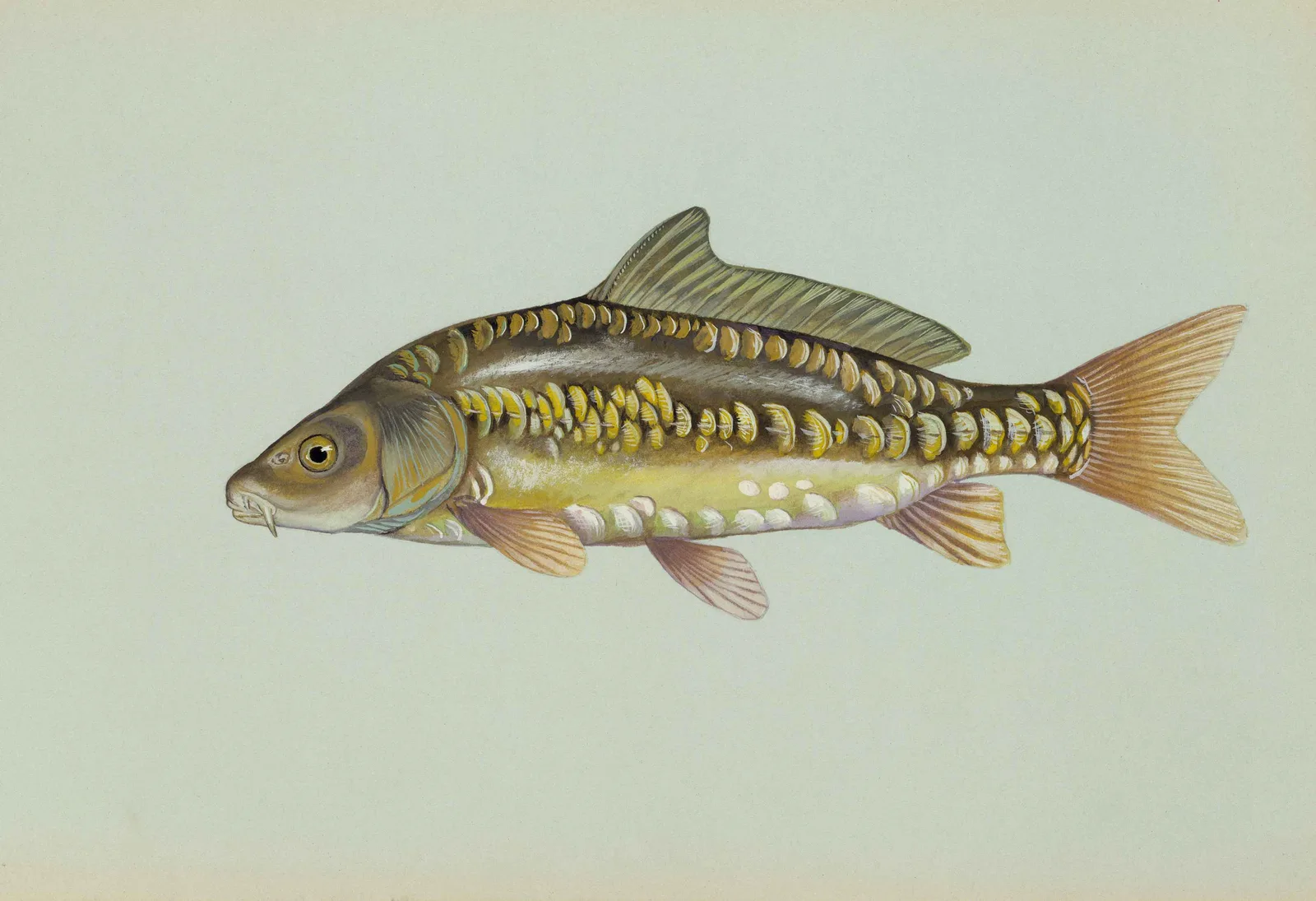
Carp: Common, Grass, Silver and Bighead Carp and the Fish Mistaken for ThemEvery carp in US waters told apart: common, mirror, grass, bighead, silver and black carp, goldfish and buffalo, with records and eating.
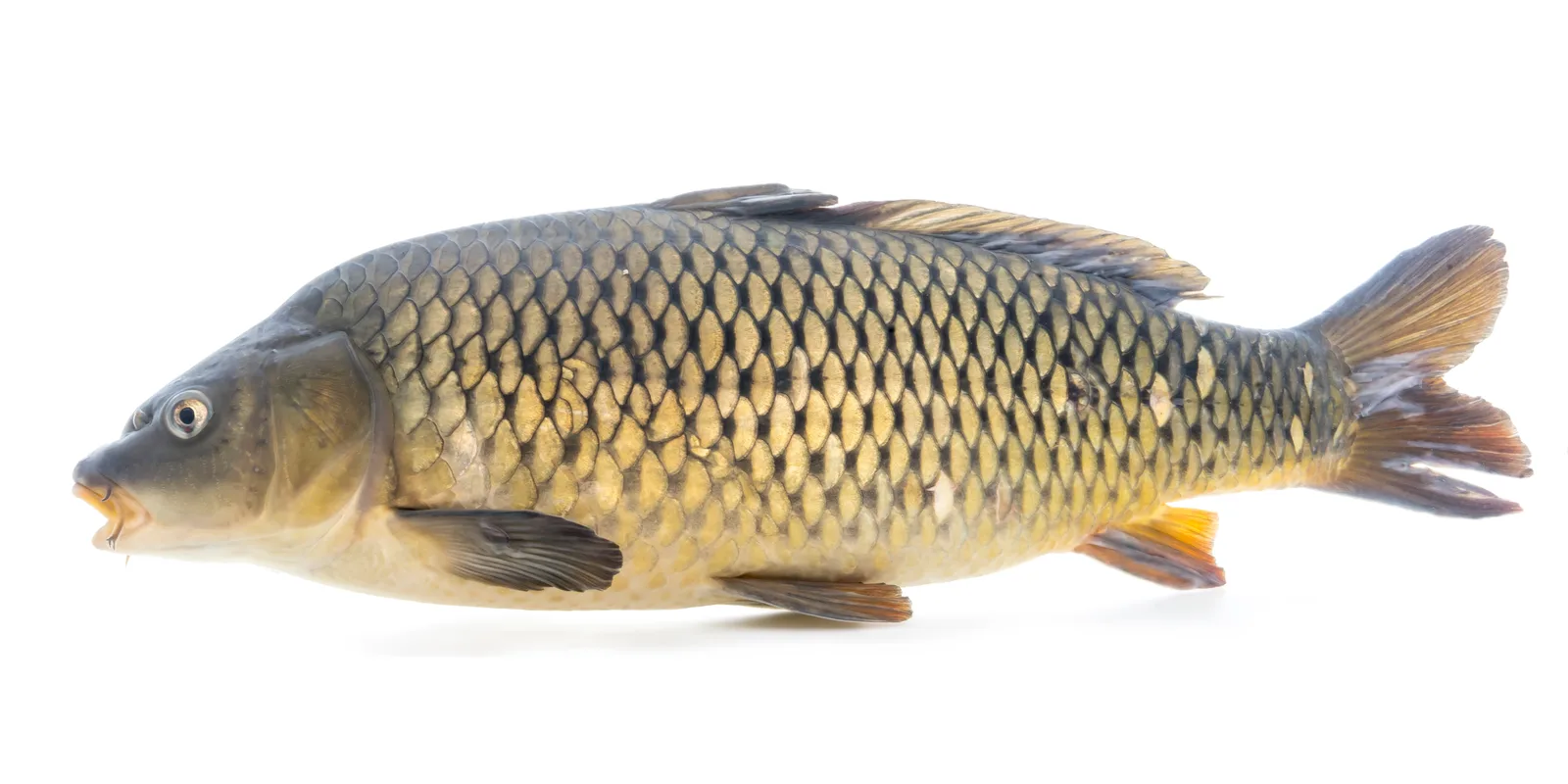 Carp Fishing: How to Catch Carp With a Simple Rig or a Hair Rig
Carp fishing for beginners: the setup, where carp feed by season, bread free-lined close in, and the hair rig with a baitrunner for big carp.
Sources
- American Carp Society, Intro to carp angling (canned sweet corn, bread, boilie flavors, hair rig)
- American Carp Society, Boon, W. (2023), USA carp angling introduction, part 1 (free-lining bread, hook sizes)
- American Carp Society, US carp history (1877 import, the collapse of the carp market)
- New York DEC, Let's go carp fishing (1-2-3 doughball, hooks, resistance, eating carp)
- New York DEC, Carp fishing in New York (kitchen baits, field corn, chumming, hair rig, hook sizes)
- 6 NYCRR §10.1, New York fishing regulations (chumming with fish eggs)
- Minnesota DNR, Why BaitCloud is illegal (chum and attractant balls as littering)
- Minnesota DNR, Grass carp (prohibited invasive species, report a catch)
- 58 Pa. Code §63.44, Illegal baitfish (common carp, koi, goldfish)
- 58 Pa. Code Chapter 63, General fishing regulations (section list)
- Pennsylvania Fish and Boat Commission, 2026 Pennsylvania Fishing Summary (unlawful acts: litter and debris in or along waters)
- Connecticut DEEP (2023), Triploid grass carp fishing tactics and tips (baits, mulberries, extracts, pre-baiting, permit rule)
- Hughes, K. (2022), The best carp baits, Outdoor Life (interview with carp angler Aaron Huffman)
- FishTalk Magazine, Pack baiting for carp (creamed corn and oats ratio)
- Mills, B. (2015), How to prepare tiger nuts for fishing: a comprehensive guide, Haith's (molasses ratio; soak, boil and stand times)
- Haydon, C. (2024), The 20 best carp fishing bait edges, Angling Times (tiger nuts, colors, how much bait, meat, boilie size)
- Furness, J. (2025), Use garlic to catch more carp: Mark Holmes, Angling Times (garlic and spices as attractors)
- Wikipedia, Boilie (ingredients, 8–40 mm sizes, pop-ups over weed and silt)
- USGS Nonindigenous Aquatic Species, Common carp fact sheet (diet, turbidity)
- Missouri Department of Conservation, Common carp field guide (taste over sight, feeding times)
- Missouri Department of Conservation, Silver carp field guide (filter feeder, illegal as live bait)
- Missouri Department of Conservation, Bighead carp field guide (illegal as live bait)
- FAO, Cultured aquatic species fact sheet: Cyprinus carpio (diet, pharyngeal teeth)
- 50 CFR 16.13, Importation of live or dead fish (injurious carp species)
- Texas A&M AgriLife Extension, Pond management: grass carp (triploid permit)
- New York State Department of Health, Statewide fish advice (revised March 2025; carp a Good Choice fish)
- New York State Department of Health (2026), Updated waterbody-specific advice for eating fish you catch (do not eat Lower Hudson carp)
- Monterey Bay Aquarium Seafood Watch (2025), Wild-caught invasive carp from the United States, report 28361