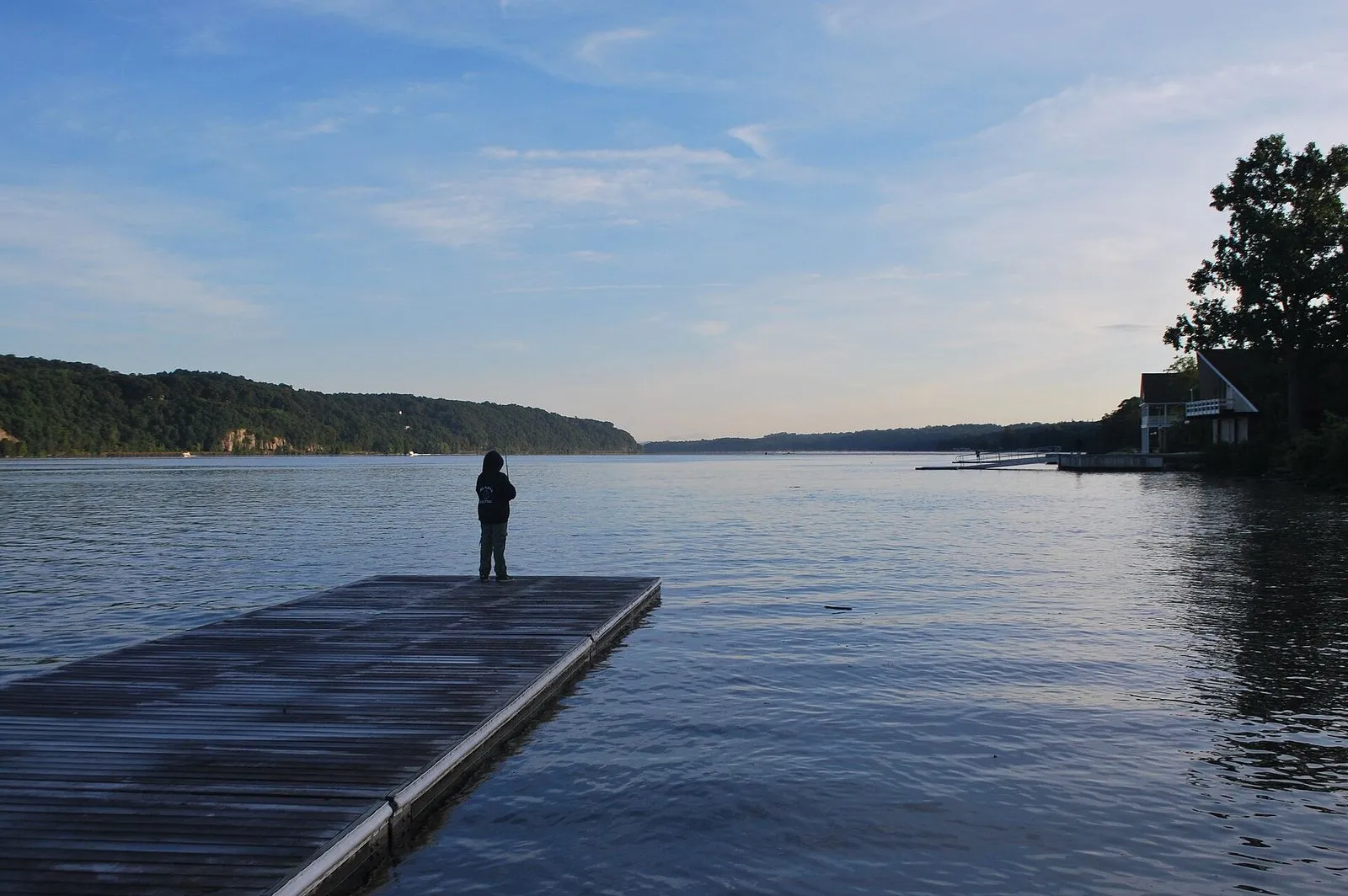
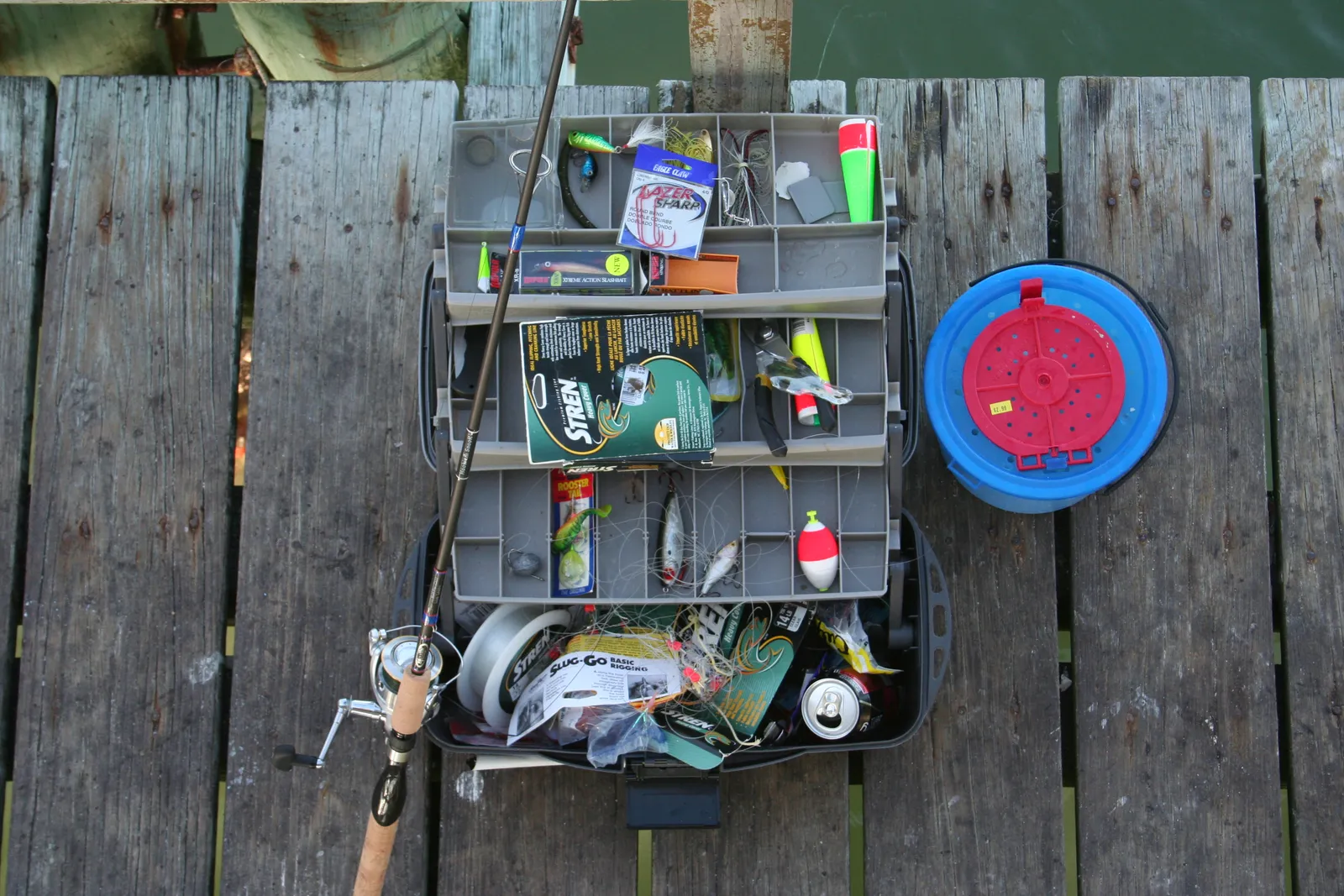
Fishing for beginners comes down to one spinning combo, a spool of 8 lb line, a few small hooks, split shot, a bobber, a pack of worms and a license. That kit, a pond bank and a bluegill will teach you more in an afternoon than a shelf of tackle. Bluegill bite all day, close to the bank, and a small bobber shows every bite. If you are taking a child, the same kit works on a shorter clock.
86 percent of the people fishing in the United States today caught their first fish before they were 12 years old (ASA/RBFF Special Report on Fishing, 2026). The habit starts early, and it starts with a bobber.
What do you need to buy?
Buy a spinning outfit, not a baitcaster. A 6 ft 6 in to 7 ft (2–2.1 m) medium-power spinning rod with a 2500 or 3000 reel casts light rigs and forgives bad technique. It also grows into bass fishing later. Wired2Fish’s beginner guide gives the same advice, and Field & Stream puts a combo with real guides, cork and an aluminum reel at $80–150.
Cheaper works. The Abu Garcia Max X combo sells for about $55, and the Ugly Stik GX2 combo lists at $79.95 with a ten-year rod warranty. The rods hub explains the terms on the label.
| Item | Why | Cost or note |
|---|---|---|
| 6 ft 6 in–7 ft medium spinning combo | Casts a bobber rig; handles bluegill to bass | About $55–80 (Abu Garcia Max X, Ugly Stik GX2) |
| 8 lb monofilament, 150–200 yd | Strong enough for bass, thin enough to cast a bobber | Replace the factory line; kit owners always complain about it |
| Hooks #6–#10, long shank | Fits a bluegill’s mouth; the long shank is easy to grip | A #6 Aberdeen for worms; see the hook size chart |
| Split shot, small | Sinks the bait under the bobber and adds casting weight | Pinch on 12–18 in (30–45 cm) above the hook |
| Bobbers, ¾–1 in (2–2.5 cm) | Shows the bite; a small one dips at the lightest pull | Bigger bobbers hide bites |
| Nightcrawlers or red worms | Bluegill, perch, catfish and bass all eat them | One pack lasts a day; a pinch of bread also works |
| Needle-nose pliers and nail clippers | Unhooking, cutting line, crushing barbs | Pliers double as wire cutters for a hook in skin |
| Polarized sunglasses | See the bottom and the fish; protect eyes from a swinging hook | Worth spending a little more on |
| License | Required for adults in every state | Online from the state agency; see the table below |
Do you need a license?
Yes, if you are an adult, in every state. Buy it online from the state wildlife agency before you leave the house.
Children are the exception, and the age differs by state. Most states exempt children under 16; Texas and Michigan exempt them under 17. A few charge earlier, Arizona from age 10. Michigan adds a twist: the adult who is “actively assisting” a child needs a license of their own.
| State | Free under | Note |
|---|---|---|
| Wisconsin | 16 | Wisconsin DNR |
| Florida | 16 | Florida FWC |
| Iowa | 16 | Iowa DNR |
| Ohio | 16 | |
| California | 16 | |
| Georgia | 16 | |
| Texas | 17 | TPWD |
| Michigan | 17 | The helping adult needs a license (Michigan DNR) |
| Arizona | 10 | |
| Utah | 12 | |
| Massachusetts | 15 | Mass.gov |
| Vermont | 15 | |
| Washington | 15 |
Two things the table does not change. Bag limits, size limits and seasons apply to children exactly as to adults, everywhere. And every state has free fishing days when nobody needs a license.
National Fishing and Boating Week ran June 6–14 in 2026, and many free days sat inside it: Texas on June 6, Michigan on June 13–14, Florida on three June weekends. Others fell elsewhere: Ohio on June 20–21, Pennsylvania on May 24 and July 4, Virginia on September 25–27. Those 2026 dates come from Take Me Fishing, Virginia DWR and FishingBooker; check your agency’s page for the current ones.
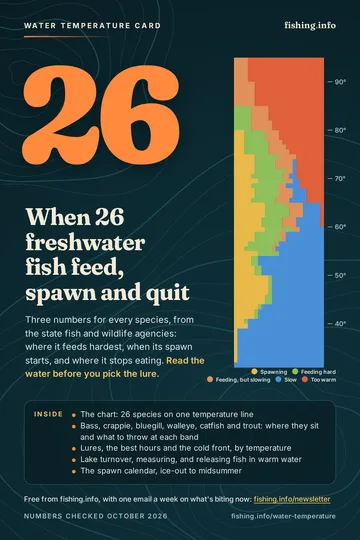
Free card: what 26 species do at your water temperature
Plus one email a week on what's biting now. No sales pitches. Privacy.
Where should you go, and what should you fish for?
Go to a pond or the shore of a small lake, with a clear bank and no boat. Aim for bluegill. Three state agencies, Illinois, Minnesota and Idaho, name it the fish to learn on; Illinois calls it “the perfect fish to introduce youngsters to angling”.
The reasons hold for adults too. Bluegill are hardy and plentiful in almost every warm-water pond. They bite all day rather than only at dawn, and they live shallow, close to the bank. In late spring their nests show as pale saucers on the bottom; the bluegill spawn temperature page says when.
Bass and catfish live in the same ponds and eat the same worm. The water temperature chart says when each comes close to the bank.
Where on the bank do you cast?
Fish hold near something, so cast beside a dock, a weed edge, a fallen tree or an overhanging branch. Shade beats open sun. A point where the bank juts out reaches deeper water. Where a creek enters, food enters. Nothing in 15 minutes: walk 50 ft (15 m) and try again.
How do you catch your first fish?
- Tie the hook on. Pass the line through the eye and tie a palomar knot or an improved clinch knot. Wet the knot, pull it tight, trim the tag to 1/8 in (3 mm). The knots hub compares them.
- Build the bobber rig. Pinch one small split shot 12–18 in (30–45 cm) above the hook. Clip the bobber to the line 2–3 ft (0.6–0.9 m) above the hook, so the worm hangs off the bottom. Thread a 1 in (2.5 cm) piece of worm onto the hook and leave the point bare.
- Cast. Reel the bobber to about 12 in (30 cm) from the rod tip. Hook the line on your index finger, open the bail. Bring the rod back over your shoulder, sweep it forward, and let go of the line when the rod points at eleven o’clock. Close the bail by hand. Practice on the lawn with a split shot and no hook until three casts in a row land where you looked.
- Let it sit. Take up slack until the line runs straight to the bobber, then leave it. A bobber that dips, bobs twice, slides sideways or lies flat on the water is a fish.
- Set the hook. When the bobber goes under and stays under, lift the rod smoothly to the vertical and reel. No jerk; a #8 hook needs very little to take hold.
- Bring it in. Keep the rod tip up and the line tight; a bluegill turns sideways and pulls harder than its size suggests. Swing it to your hand, never onto dry sand or concrete.
- Hold it. Wet your hand first. Grip the fish around the body behind the head, flattening the spiny dorsal fin backward. It cannot bite; the spines only prick if you slide your hand forward.
- Unhook and release. Back the hook out the way it went in with your fingers or the pliers. Lower the fish into the water and let it swim off. If the hook is deep, cut the line close to it; the catch and release page shows why that beats digging it out.
- Rebait and cast to the same spot. Bluegill live in schools. Where one bit, ten more are waiting.
Taking a child? What changes
Everything above holds, with a shorter clock. A push-button spincast combo 36–48 in (0.9–1.2 m) long, about the child’s height, is the kids’ fishing pole our guide picks for ages 2–7. Spool it with 4–6 lb line, a #8–#10 hook, a small split shot and a ¾–1 in bobber. Fish worms or a pinch of bread for bluegill.
Plan for 30 to 60 minutes of actual fishing, a couple of hours at the very most. Go in the morning and pick a spot near restrooms. The Iowa DNR’s line is the one to say out loud on the way there: “fishing is fun, catching is a bonus.” Bassmaster’s tip for a day when nothing bites: stop for ice cream anyway.
The safety rules the agencies and the outdoor press repeat:
- A US Coast Guard-approved life jacket on every child on a boat, a dock or near moving water, worn, not stowed.
- Barbless hooks, or crush the barb flat with pliers. A barbless hook comes out of a fish, a thumb or an ear in one pull.
- Rod tip below the waist when walking; the hook swings at eye height otherwise.
- The adult unhooks every fish for children under 12.
- Practice casting on the lawn first, with a rubber casting plug or a split shot and no hook.
- Polarized sunglasses for everyone, sunscreen every two hours, and a first-aid kit with wire cutters for a hook past the barb.
Children ask questions while the bobber sits still: do fish feel it, can they see us, do they sleep. The fish facts pages answer those in language a ten-year-old follows; read them in the car.
The fishing basics hub has the next steps. And when the tackle shop asks whether you want a 1/0 or a medium-heavy, the fishing terms page translates.
Free download
The water temperature card
Read your water temperature and the card tells you who is spawning, who is feeding and what to throw. 26 species, 16 pages, for your phone and the tackle box.
Plus one email a week on what's biting now. No sales pitches. Privacy.
Related
Section guide
Fishing Basics: Handling, Releasing and the First Day on the WaterThe fishing basics every angler needs before the first cast: handling fish, catch and release with the survival numbers, licenses, and the first-day kit.
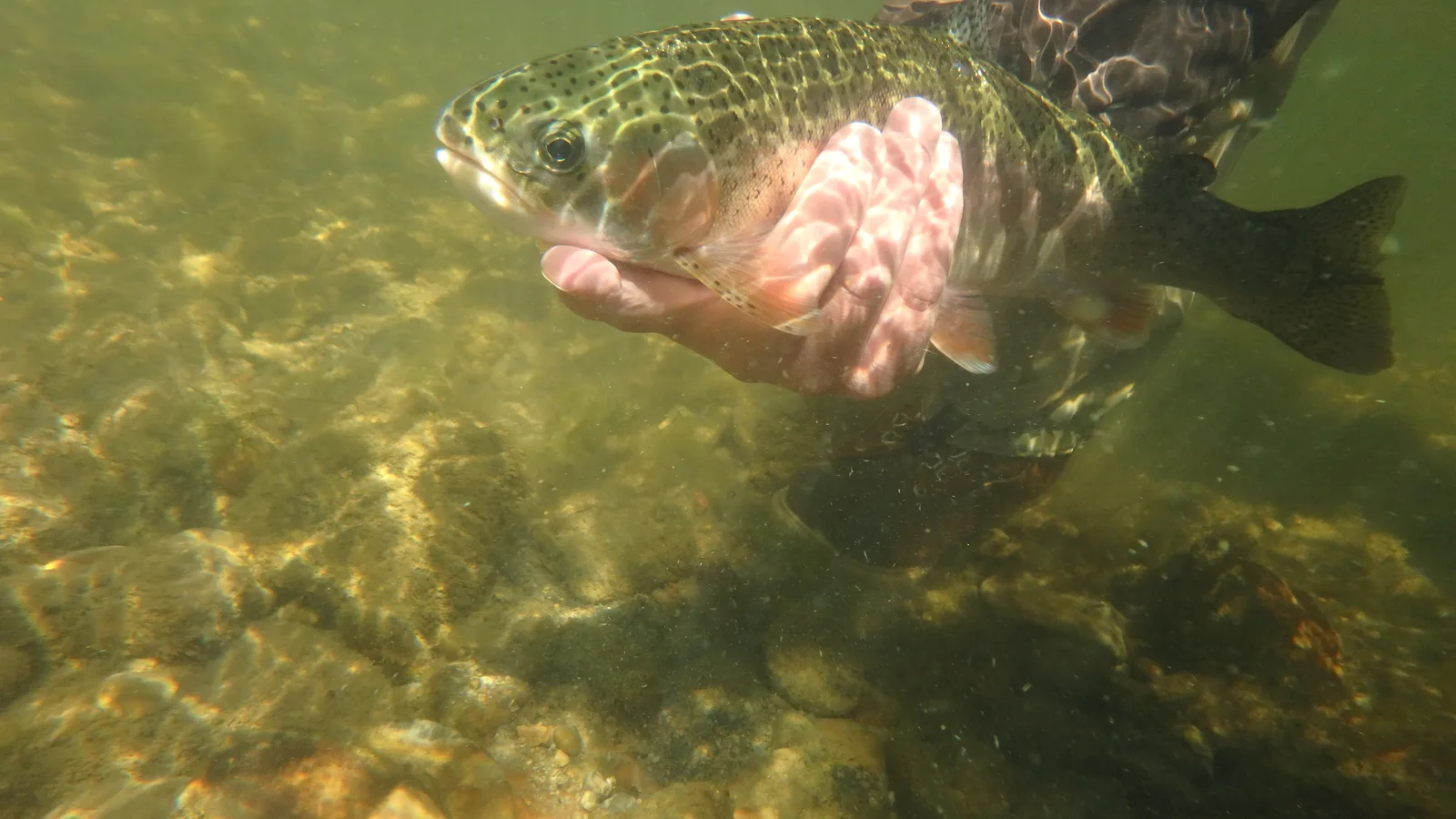 Catch and Release Fishing: How Many Fish Survive, and How to Do It
Catch and release fishing by the numbers: survival rates by species and hook location from the published studies, and the ten-step release that raises them.
 Fishing Terms: 690+ Words, Slang and Acronyms Anglers Use
690+ fishing terms in plain words: tackle, lures, rigs, techniques, fly and ice fishing, boats, rules, tournament talk, slang and acronyms.
Sources
- American Sportfishing Association and RBFF, 2026 Special Report on Fishing
- Outdoor Illinois Journal (Illinois DNR), Bluegill fishing: the perfect fish to introduce youngsters to angling (2025)
- Minnesota DNR, How to catch a sunfish
- Idaho Fish and Game, Bluegill fishing is great for kids
- Wisconsin DNR, Do children need a fishing license?
- Texas Parks and Wildlife, License FAQ
- Michigan DNR, Fishing license information
- Mass.gov, Who needs a freshwater fishing license
- Florida FWC, Do I need a license?
- Take Me Fishing, Free fishing days by state
- Take Me Fishing, Fishing with kids: safety
- Iowa DNR, Family fishing
- Bassmaster (2023), Planning a first fishing trip with kids
- Bass Pro 1Source (2026), 12 helpful tips for taking kids fishing