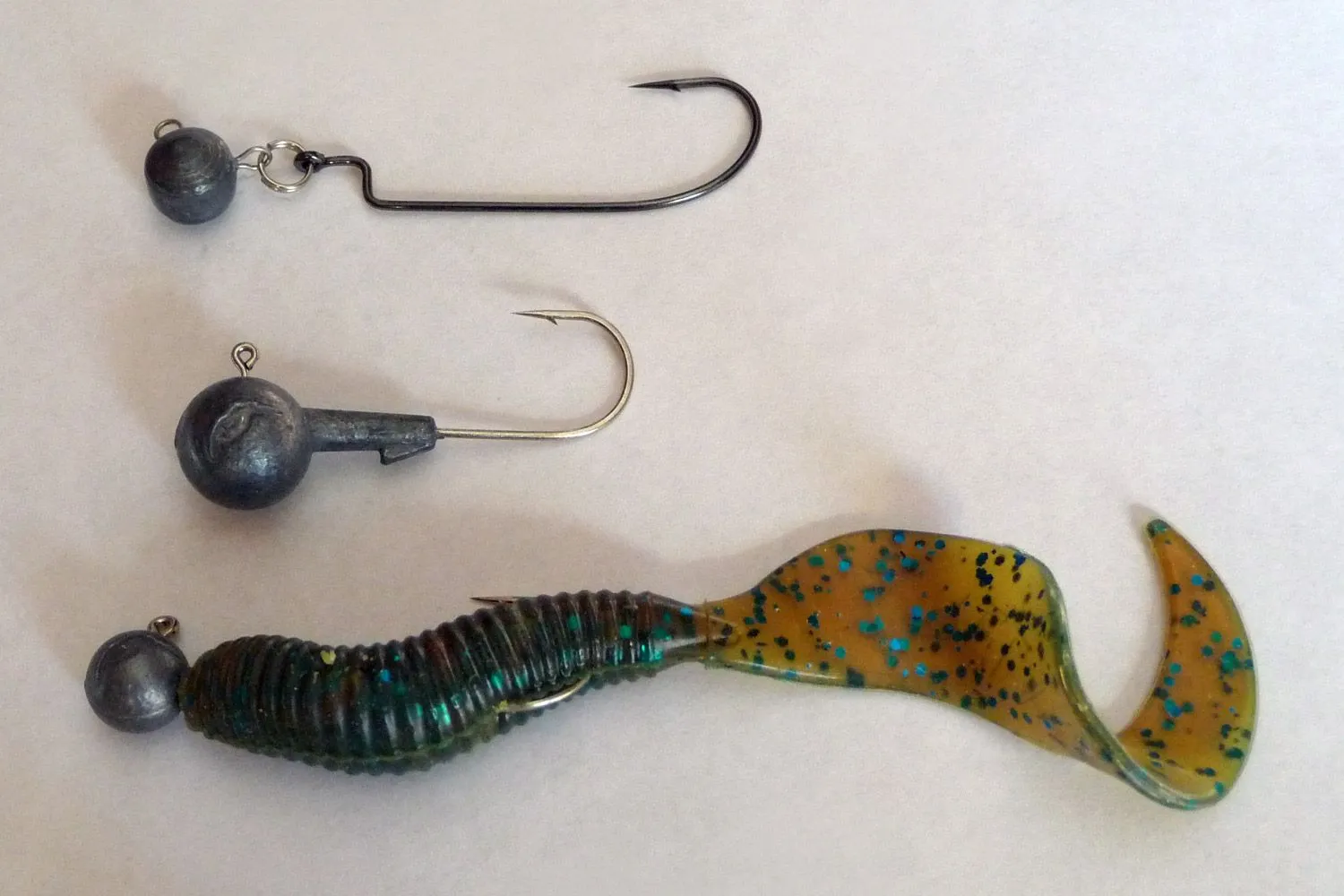
A jig is a hook with a lead or tungsten head molded onto it, dressed with a skirt, hair or a soft-plastic trailer, and fished mostly along the bottom, where it looks like a crayfish. It is one of the simplest lures in the box, and it catches bass all year, cold water included. The head shape decides where it works, the trailer decides how it falls, and six types cover rock, wood, grass, docks, clear water and open ledges.
Jordan Lee started the last day of the 2017 Bassmaster Classic in 15th place. Stuck on one offshore spot on Lake Conroe by boat trouble, he caught 27 lb 4 oz on a football jig from a 30-yard area, and won.
Start here
- Shaky head jig: a stand-up head for a 4–7 in worm.
- Ned rig: a 2–4 in floating plastic on a 1/16 oz mushroom head.
- Best bass lures: where the jig fits by season, clarity and cover.
- Football jig: the rock and ledge jig, with the trailer and the drag-and-pause retrieve.
- Swim jigs: a jig you reel like a swimbait, for grass and covering water.
- Jig heads: weight and hook charts from 1/32 oz crappie heads to 3 oz swimbait heads.
- Bass jigs: the nine types, which weight and trailer for each, and how to fish them.
Which jig for which cover?
The head shape decides where a jig works.
| Jig | Head | Weight | Where it works | Trailer |
|---|---|---|---|---|
| Football | Wide; stays upright on rock | 3/8–1 oz (11–28 g) | Rock, ledges, offshore structure | Craw, creature, grub |
| Flipping | Compact, heavy hook, stiff weedguard | 3/8–1 oz (11–28 g) | Heavy wood, brush, matted grass | Craw, beaver |
| Casting (Arkie) | Round or flat-bottom | 3/8–1/2 oz (11–14 g) | Moderate cover, docks; the one-jig choice | Craw, creature, grub |
| Swim | Bullet head, light weedguard | 1/4–1/2 oz (7–14 g) | Grass, sparse cover, covering water | Paddle-tail swimbait, grub |
| Finesse | Compact, lighter hook, thin weedguard | 1/4–7/16 oz (7–12 g) | Clear or cold water, smallmouth and spotted bass | Small craw |
| Hair (marabou) | Round | 1/16–1/8 oz (1.8–3.5 g) for smallmouth; up to about 1 oz (28 g) on southern ledges | Cold water; shad on ledges | None |
The trailer sets the fall rate and the profile. A bulky craw slows the fall for flipping; a thin swimbait keeps a swim jig high over grass. The shaky head is the seventh head, a stand-up finesse head made for a straight worm.
Free card: what 26 species do at your water temperature
Plus one email a week on what's biting now. No sales pitches. Privacy.
Why does a jig catch the big ones?
Because it looks like a crayfish, and adult bass eat crayfish next to fish. In 748 largemouth from DeGray Reservoir, Arkansas, crayfish were nearly 38% of the diet by weight, as the page on what bass eat shows. A jig with a craw trailer crawls and hops along the bottom like one, slowly enough for a cold bass to follow. That is why it stays in the box all winter. The bass water temperature table puts a hair jig next to the blade bait and the suspending jerkbait below 45 °F (7 °C), and a football jig at 45–50 °F (7–10 °C).
How do you fish a jig?
Three retrieves cover most of it. Drag it slowly along the bottom with the rod tip, then pause. Hop it off the bottom and watch the line as it sinks, because many bites come on the fall. Swim it: reel a swim jig steadily over the grass, like a spinnerbait. A flipping jig is dropped straight into cover at close range. The bite is a tick or a sudden weight on the line, and the hookset has to come at once.
How heavy a jig?
Go as light as still keeps bottom contact: the light end of each range in the table for shallow water, the heavy end on deep ledges and for pitching into brush. Wind and current both call for more weight, because a bowed line hides the bite. Tungsten heads are smaller than lead for the same weight and pass more of the bottom up the line.
Away from bass the scale of jig heads drops. Crappie anglers fish 1/32 to 1/8 oz heads with a small plastic. For river walleye, Jeff Knapp of Bass Pro vertical-jigs a 1/4 oz head in 10–25 ft (3–7.6 m) and goes to 3/8 oz deeper, particularly in wind, often with a fathead minnow on the hook.
What rod and line?
Bass jigs are baitcaster lures. Use a 7 ft to 7 ft 6 in medium-heavy, fast-action rod with 15–20 lb fluorocarbon, or 40 lb braid to a leader. A high-speed reel picks up slack for the hookset. Hair jigs and finesse jigs of 1/4 oz or less go on a 7 ft medium-light spinning rod with 10–15 lb braid to a 6–8 lb fluorocarbon leader. The rods hub has the power and action for each technique.
What if they want something else?
A jig is a bottom bait. When the same soft plastics are better fished on a hook and a separate weight, the fishing rigs hub has the Texas rig, Carolina, drop shot, Ned and wacky rigs. When a jig keeps hanging up in thick grass, the Texas rig is the usual switch. When bass want a moving bait, the crankbait and chatterbait hubs take over.
All articles
 Shaky Head Jig: The Finesse Worm on the Bottom, Rigged and Fished
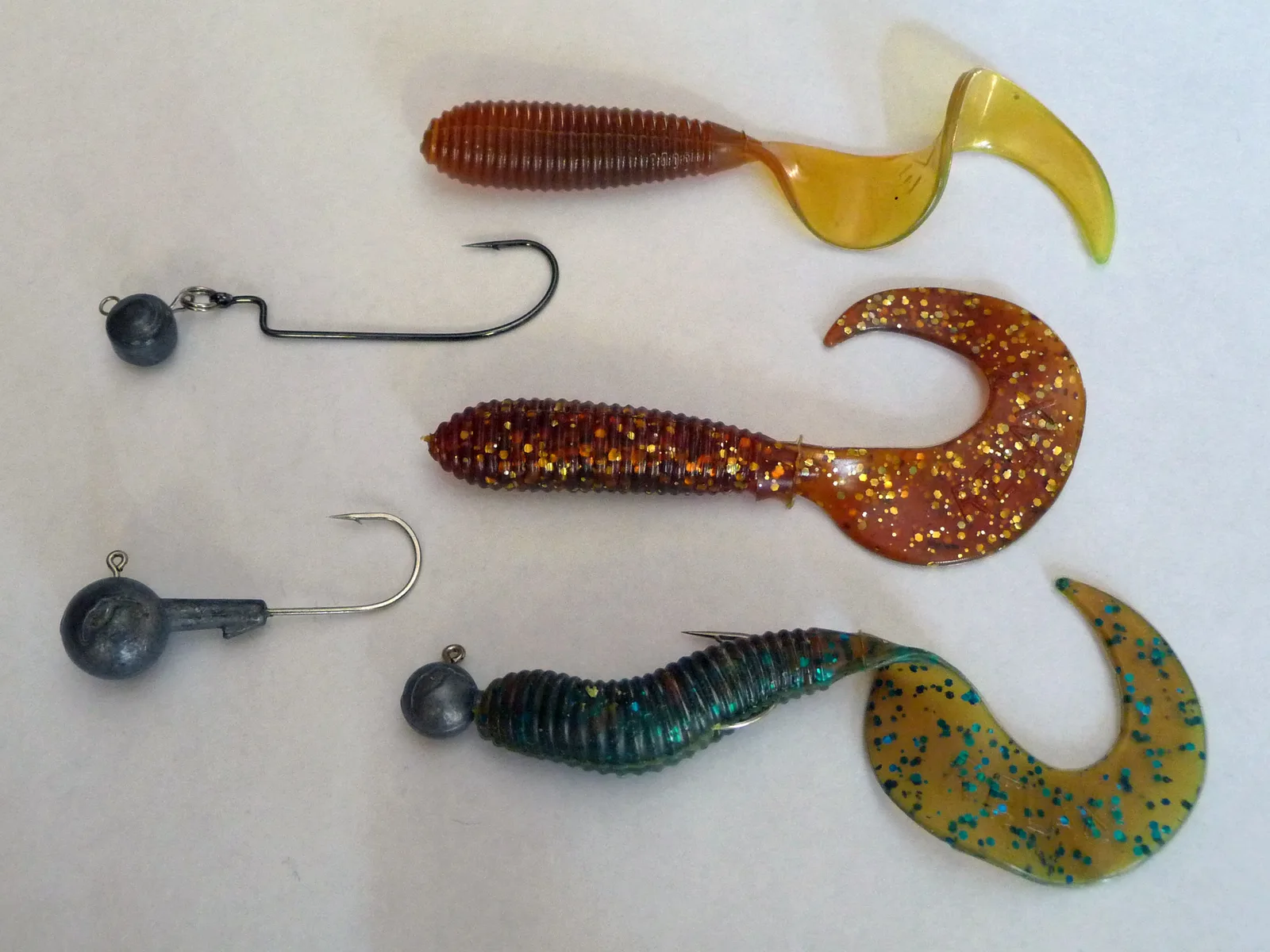
A shaky head jig is a stand-up jig head with a finesse worm rigged weedless, shaken on the bottom so the tail waves. Heads, worms, rigging and the retrieve.
Free download
The water temperature card
Read your water temperature and the card tells you who is spawning, who is feeding and what to throw. 26 species, 16 pages, for your phone and the tackle box.
Plus one email a week on what's biting now. No sales pitches. Privacy.
Sources
- Wired2Fish (Shaye Baker), a look at jigheads and how they differ
- Florida Sportsman, 25-year-old former college angler wins the Bassmaster Classic (2017)
- Wired2Fish (Luke Stoner), 3 football jig tips for offshore bass (Jordan Lee)
- BassResource (Tyler Brinks), 6 bass jigs explained
- BassResource, Matt Arey on how to choose jig size
- Texas Parks and Wildlife, largemouth bass species profile
- Bass Pro Shops 1Source (Jeff Knapp), leadhead jigs for winter river walleye
- Leland's Lures, Crappie Magnet jig heads (weights and hook sizes)