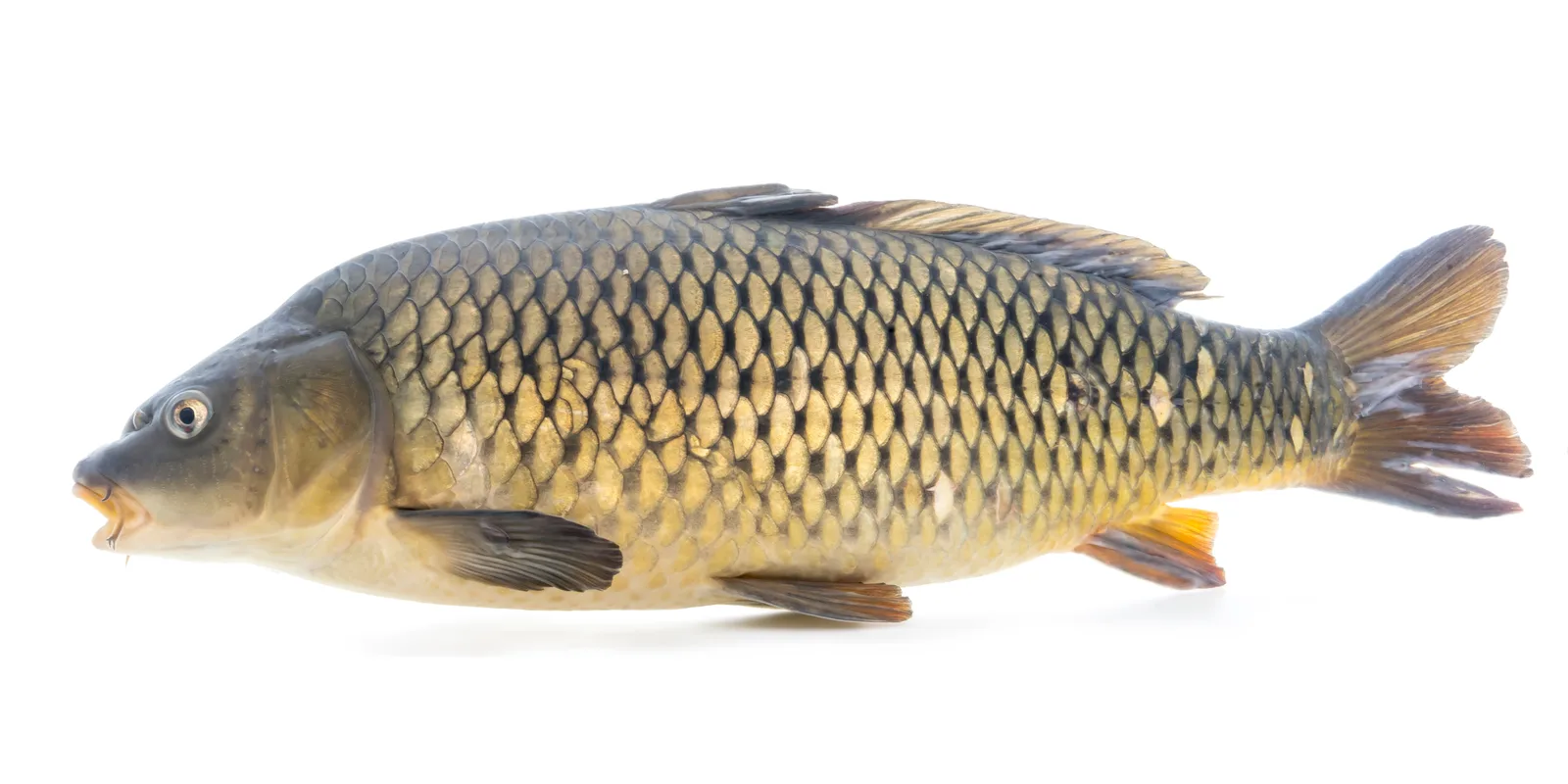
You catch carp by putting corn or bread on the bottom where they feed, at dawn, dusk or after dark, and letting the fish take line without feeling a thing. New York’s DEC puts the whole problem in one line: “carp tend to drop a bait at the slightest resistance.” So the bail stays open, or a baitrunner lets the line run. Close to the bank, bread on a size 8 hook catches carp up to 10 lb; bigger fish and longer sessions call for the hair rig.
IGFA calls the common carp “one of the hardest fighting freshwater game fish in the world.” Its all-tackle record, 75 lb 11 oz from France, has stood since 1987.
When do carp bite?
Carp feed hardest at the two ends of the day. Missouri’s field guide puts the peak “in late evening or early morning, sometimes in very shallow water,” and the American Carp Society (ACS) adds the night. They bite all year, though the ACS calls the very cold months harder. The carp anglers fish for is the common carp; grass, silver and bighead carp are different fish, sorted on the carp page.
Water temperature sets the season. On the water temperature chart, common carp are most comfortable at 70–85 °F (21–29 °C) and spawn at 63–75 °F (17–24 °C). For the spawn, adults “migrate into shallow wetlands to spawn in the spring,” in the words of University of Minnesota researchers. The eggs stick to submerged plants. No nest is built and no parent stays; in Missouri most spawning runs from March to June and can continue into early fall.
Where do you find carp, season by season?
| Season | Water | Where the carp are | Source |
|---|---|---|---|
| Spring | Spawn at 63–75 °F (17–24 °C) | Spawners in shallow wetlands, eggs on submerged plants; feeding fish sometimes in very shallow water | MAISRC (spawn), MDC (feeding) |
| Summer | Comfort at 70–85 °F (21–29 °C) | Weed beds, reeds, warm inlets; basking in midday shallows near deep water; under mulberry trees in June and July | ACS, CT DEEP |
| Fall | Cooling | Still feeding: carp are caught year-round, and only the cold months are harder | ACS |
| Winter | Coldest | Shallows the sun warms fastest, close to deep water; shoaled together under the ice | ACS, MAISRC |
Look before you cast, because carp give themselves away. They “crash out” with a splash (ACS) and breach the surface at sunrise and in late evening (IGFA). Clear patches in weed and gravel mark a regular feeding zone. Rooting in soft bottom “stirs up the bottom” (USGS), which anglers call mudding, and sends up bubbles.
How deep? The ACS says carp are caught “from a foot to 30 feet or more,” and by day they look for food mostly on the bottom. The edge of a drop-off, where shallow water falls into deep, is a classic spot. So is the bank where people feed the ducks: the ACS notes that carp there are used to eating bread.
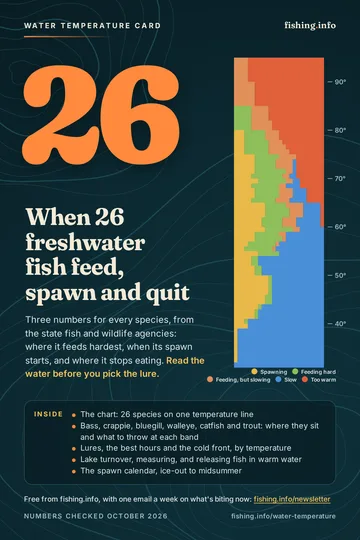
Free card: what 26 species do at your water temperature
Plus one email a week on what's biting now. No sales pitches. Privacy.
Why are carp so hard to catch?
Three things, each in a source’s own words. Resistance: carp “drop a bait at the slightest resistance” (NY DEC). Feel: they “can distinguish and spit out an unnatural feeling bait remarkably fast” (Outdoor Life). Nerves: “They are naturally shy fish” (ACS), and Connecticut DEEP calls grass carp “a wary fish” that is “easily spooked.”
Missouri’s field guide adds a fourth: food “is probably located more by taste than by sight,” so the bait has to smell right before it looks right. Every piece of carp tackle answers one of these. The open bail removes resistance, the hair rig defeats the spit, and a quiet bank keeps the fish in front of you.
What carp fishing setup do you need?
Any medium rod catches carp. The sources split on length, and agree on one thing: the fish must be able to take line freely.
| Source | Rod | Reel and line | Hook | How the fish takes line |
|---|---|---|---|---|
| NY DEC, Let’s Go Carp Fishing | Medium action, about 6 ft (1.8 m) | Spinning or spin-cast; 8–12 lb, more in weeds | 2–6 | Bail open, tip low, no big round bobber |
| NY DEC, carp page | 6 ft works; 8½–12 ft (2.6–3.7 m) preferred | 100+ yd of 10–15 lb mono or braid | 4–8 | Bail open, rod in a holder, an indicator on the line |
| American Carp Society | 12 ft (3.7 m) for an adult; 6–7 ft medium spinning works | Fixed-spool reel; 8–10 lb | 6–10 | Clutch “set loose so that the fish can take line” |
| Outdoor Life | 9–12 ft (2.7–3.7 m), medium-fast | Large-spool baitrunner; Aaron Huffman: 20–30 lb braid | Huffman: 2 or 4 circle, on a hair | Baitrunner |
| Wired2Fish | 10–12 ft (3–3.7 m), 2.5–3.5 lb test curve | Baitrunner; 12–20 lb mono or 30–50 lb braid | 4–8, wide-gap | Baitrunner |
The 6 ft rod and the 12 ft rod both catch carp, but length helps: “the longer the rod, the easier it will be to land a big fish” (NY DEC).
Test curve, in the Wired2Fish row, is the British rating for carp rods: the pull in pounds that bends the tip to a right angle. American rods carry a power rating instead.
For action, NY DEC asks for medium. IGFA asks for medium-heavy when you free-line.
The reel is a spinning reel. A baitrunner is a spinning reel with a lever that frees the spool with the bail closed, so a carp can run against almost no drag. For line, the sources run from 8 lb to 15 lb for most carp fishing, heavier in weeds (NY DEC); the specimen anglers spool braid. Hook sizes run from 2 to 10 across the sources, and NY DEC’s carp page settles on 4–8.
Then the landing kit. NY DEC: “The use of a landing net and a pair of hemostats (or pliers) will help you land and unhook carp quickly.” An unhooking mat keeps a big fish off hard ground while you work. The accessories page covers nets and holders.
What is the best bait for carp?
Corn and bread. Canned sweet corn goes on the hook straight from the can; Outdoor Life calls it “quick and easy.” Dry field corn “needs to be boiled to soften it up” (NY DEC). For bread, the ACS says to “mold the bread to the hook with just the point showing.” Flavors lean sweet: savory boilie flavors, Outdoor Life warns, “often catch more catfish than carp.” Boilies, small round dough balls sold ready to use, go on a hair rig. Carp are not used to them, Aaron Huffman tells Outdoor Life, so where chumming is legal, chum with boilies for a few days before you fish them.
How do you catch carp, step by step?
- Pick the water and the hour. A pond or park lake where people feed the ducks, at dawn, dusk or after dark.
- Find the fish before you cast. Fish crashing out, bubbles, muddy water, clear patches in weed. Reeds, weed beds, drop-offs and warm inlets come first.
- Choose the rig. Fish up to 10 lb within a short cast: free-line or a running rig. Bigger fish, longer casts, rods left out for hours: a hair rig and a baitrunner. The table further down sets them side by side.
- Bait up. Corn on the hook or on a hair, or bread squeezed on with the point free.
- Chum where the law allows it. NY DEC’s method: “a few handfuls” of corn in the spot, topped up every half hour to an hour.
- Cast, then open the bail. Rod in a holder, tip low, bail open or baitrunner on. A foam or foil indicator, or an electronic alarm, shows the take.
- Strike on the run. When line pours off, close the bail and lift. On a hair rig with a semi-fixed lead, the fish has usually hooked itself.
- Fight it on the drag. NY DEC: “Carp fight hard and make long runs so make sure your drag is adjusted properly and take your time to wear them out.”
- Net it, mat it, unhook it. Weigh it in the net, unhook it on the mat, and decide whether it goes back.
Is chumming for carp legal?
It depends on the state. New York teaches it: “Chumming is scattering bait in the area you plan on fishing to help attract carp.” The one chumming rule in the state’s general freshwater regulations is a ban on chumming with fish eggs (6 NYCRR §10.1). Minnesota DNR lists “throwing chum (fish parts, corn, etc.)” among illegal methods and adds: “This is considered littering.” Pennsylvania’s general fishing regulations (58 Pa. Code chapter 63) have no chumming section, and that is not permission. Section 63.5 makes any method of taking fish unlawful unless the law specifically authorizes it, so ask the Fish and Boat Commission before you throw corn there.
What does a carp bite feel like?
A carp take is line moving. On a free-lined or running rig, line peels off the open spool. On a hair rig, the bite alarm sounds as line runs off the baitrunner. Either way, that is the moment to lift.
The hair rig often hooks the fish before you touch the rod. Its semi-fixed lead, a weight that stays put on the line, drives the hook in when the carp moves off. Fished this way it is called a bolt rig.
Then the fight NY DEC warns about: long runs, more than one of them. Connecticut DEEP’s grass carp sheet tells anglers to expect a second run at the bank and a soaking from the tail. Keep the drag smooth and do not hurry the fish to the net. Once it is in, lay it on the mat rather than on gravel or grass.
Free-line or hair rig?
| Situation | Rig | Reel | Bait and hook |
|---|---|---|---|
| Carp up to 10 lb close to the bank | Free-line: no weight, just the bait | Bail open | Bread, size 8 hook, 10 lb line (ACS) |
| Fish feeding on the bottom within an easy cast | Running rig: sliding egg sinker, bead, swivel, leader | Bail open, rod tip low | Corn on the hook or a hair, size 4–8 (NY DEC) |
| Carp you can see in the margins | Waggler float, bait resting on the bottom | Bail open | Corn or bread (ACS, IGFA) |
| Bigger fish, longer casts, long sessions | Hair rig on a semi-fixed lead of 2 oz or more | Baitrunner on, bite alarm | Corn or boilies on the hair |
The running rig is the catfish slip-sinker rig scaled down, and a cousin of the Carolina rig bass anglers know. The hair rig is the specimen angler’s tool. The bait sits on a short length of line, the hair, below the bend of a bare hook. In IGFA’s description, “the hook turns when the fish eats the bait and safely hooks most fish in the bottom lip.” NY DEC adds that it hooks fish that spit the bait and makes release easier, because carp do not swallow the hook deeply.
The rig became popular in the 1980s, credited to Len Middleton and Kevin Maddocks, and IGFA accepted it in 2007. When nothing bites, change the spot before the rig: move to where carp are showing.
How big do carp get?
Missouri’s field guide lists common carp at 12–25 in (30–64 cm) and 1–8 lb. NY DEC says many New York waters hold carp “in the 10-30 pound range.” The records:
| Record | Weight | Water | Year |
|---|---|---|---|
| IGFA all-tackle | 75 lb 11 oz (34.35 kg) | Lac de St. Cassien, France | 1987 |
| Wisconsin | 57 lb 2 oz (25.9 kg) | Lake Wisconsin | 1966 |
| New York | 50 lb 6 oz (22.8 kg), on a nightcrawler | Tomhannock Reservoir | 1995 |
| Texas | 43.75 lb (19.8 kg), on maize | Lady Bird Lake, Austin | 2009 |
Should you keep or release a carp?
The ACS asks anglers to release carp unharmed, “especially those larger than 10/15lbs,” and to “practice C.P.R. (Catch, Photo & Release).” Catch and release has the handling steps.
Carp are good to eat if you deal with the bones. NY DEC calls carp “a delicacy in many countries” and describes two rows of floating bones above and below the lateral line, which you break up if you score the fillet or grind it. The state health department advises no more than one meal (½ lb) a week from any New York freshwater, and less on listed waters. Seafood Watch (January 2025) rates common carp from the Illinois gillnet and trammel-net fishery a Best Choice. Commercially, carp is cheap: the same report gives a market price of $0.09 to $0.30 a pound for wild invasive carp.
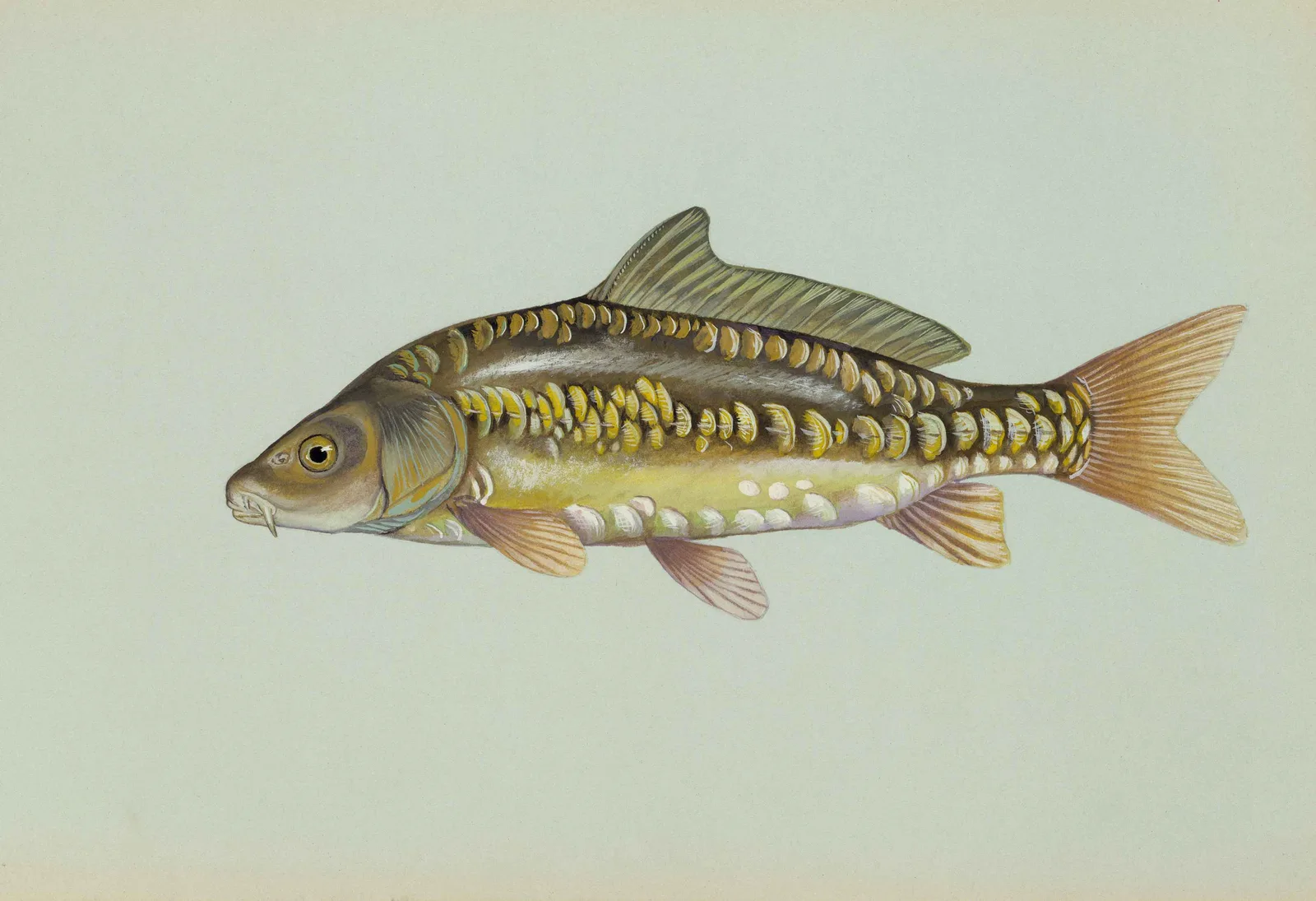
If the fish has no barbels at the mouth, it is not a common carp, and different rules apply. Minnesota DNR: “Report any occurrences of grass carp to the DNR immediately”; keeping one needs a special permit. Silver, bighead and black carp are federally injurious (50 CFR 16.13), so no live transport. Missouri makes silver carp illegal as live bait: “Do not collect, transfer, or dump this fish!” Texas says no person may possess them “except as authorized by the department.”
Mistakes to avoid
- A big round bobber or a closed bail. Both are resistance, and the carp drops the bait. Fish the bail open or the baitrunner on.
- A noisy bank. Connecticut’s sheet says “Avoid motor noise or excess splashing.” Shy fish leave.
- A drag set tight. A carp’s long run snaps line that a smooth drag would have saved.
- Chumming without checking. Legal in New York, littering in Minnesota.
- Unhooking on hard ground. Use the net and the mat.
When something else wins
Carp cruising clear shallows can be caught on a fly. Orvis suggests a 7–9 weight and nymph, bug or crayfish patterns: “Aim to place your fly within a couple of feet of the carp, preferably in their line of sight.” Texas’ fly-rod record common carp weighed 26.1 lb.
In June and July, look for mulberry trees over the water. Connecticut DEEP’s sheet says grass and common carp feed on the fruit there, and a berry on the hook catches them.
Bowfishing is a separate sport with its own records, such as Oklahoma’s 48 lb 13 oz common carp taken with a bow.
Free download
The water temperature card
Read your water temperature and the card tells you who is spawning, who is feeding and what to throw. 26 species, 16 pages, for your phone and the tackle box.
Plus one email a week on what's biting now. No sales pitches. Privacy.
Related
Section guide
Carp: Common, Grass, Silver and Bighead Carp and the Fish Mistaken for ThemEvery carp in US waters told apart: common, mirror, grass, bighead, silver and black carp, goldfish and buffalo, with records and eating.
Sources
- NY DEC, Let's Go Carp Fishing: 6 ft rod, 8–12 lb line, hooks 2–6, the slightest resistance, eating carp, NYS DOH advice
- NY DEC, Carp Fishing in New York: 8½–12 ft rods, 10–15 lb line, hooks 4–8, chumming method, hair rig, drag, sizes
- American Carp Society, Intro to Carp Angling: free-lining, depth, times of day, seasons, signs, C.P.R.
- American Carp Society, USA carp angling introduction, part 1 (2023): rod, line, hook sizes, carp up to 10 lb close to shore, bread on the hook
- Wayne Boon, Carp angling in North America, IGFA (2019): hardest fighting, hair rig, signs, waggler float
- IGFA World Record Search: common carp all-tackle record, 75 lb 11 oz (1987)
- Missouri Department of Conservation, Common carp (field guide): size, feeding hours, taste over sight, spawning
- Minnesota Aquatic Invasive Species Research Center, Common carp: spawning in shallow wetlands, winter shoals under ice
- USGS Nonindigenous Aquatic Species, Common carp fact sheet: feeding stirs up the bottom
- FAO, Cultured aquatic species: common carp: best growth 23–30 °C, spawning from 17–18 °C (agrees with the chart)
- Kevin Hughes, The best carp baits, Outdoor Life (2022): Aaron Huffman's tackle, corn, boilies and chumming them, flavors, spitting baits
- David Schlake, Carp fishing: how to catch carp, Wired2Fish (Aug 22, 2025): 10–12 ft rod, 2.5–3.5 lb test curve, baitrunner, 12–20 lb mono or 30–50 lb braid, size 4 to 8 wide-gap hook
- Wikipedia, Hair rig: Middleton and Maddocks, the semi-fixed lead of 2 oz or more, self-hooking
- Connecticut DEEP, Triploid grass carp fishing tactics and tips (2023): sight fishing, mulberries, landing, stealth
- 6 NYCRR §10.1(c)(5): New York bans chumming with fish eggs
- Minnesota DNR, Why BaitCloud is illegal: throwing chum is littering
- 58 Pa. Code Chapter 63, Pennsylvania general fishing regulations: section list (no chumming section)
- 58 Pa. Code §63.5, Methods of fishing: a method not specifically authorized by law or this part is unlawful
- Monterey Bay Aquarium Seafood Watch, Wild-caught invasive carp from the United States, report 28361 (January 2025): common carp ratings by fishery, market price
- Minnesota DNR, Grass carp: prohibited invasive species, report and permit
- 50 CFR 16.13: silver, bighead, largescale silver and black carp listed as injurious
- Missouri Department of Conservation, Silver carp (field guide): illegal as live bait
- Texas Parks and Wildlife, Prohibited aquatic species: invasive carp
- Wisconsin DNR, Record fish, hook and line: common carp 57 lb 2 oz (1966)
- NY DEC, Angler Achievement Awards: state record common carp 50 lb 6 oz (1995)
- Texas Parks and Wildlife, State freshwater records: common carp 43.75 lb (2009), fly rod 26.1 lb (2023)
- Oklahoma Department of Wildlife Conservation, State record fish: bow-caught common carp 48 lb 13 oz
- Orvis UK, Fly fishing for carp: rod weights, patterns, presentation