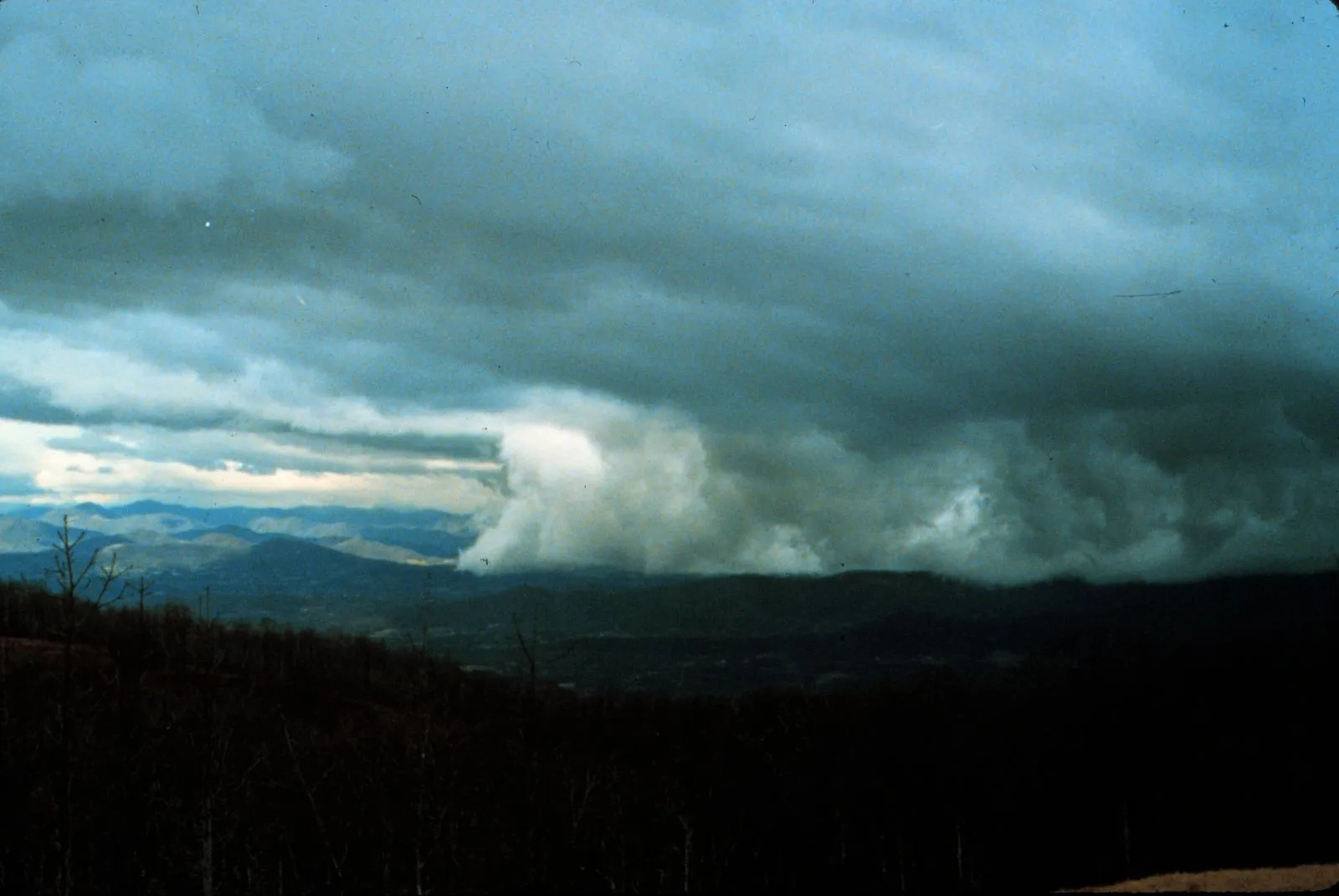
Cold front fishing is good on the day before the front and slow for a day or two after it. The warm, cloudy, windy hours ahead of the line are the window to be on the water. Then the sky clears, the wind swings to the north and the surface cools by 8–10 °F (4–6 °C). The bass, crappie and walleye that were easy on Tuesday are hard on Wednesday, and wind is the one part of a front that helps.
A whole cold front swings the barometer from about 990 to 1030 millibars, a 4% change. In water, 4% is 16 in (41 cm) of depth. A bass that slides down 3 ft (1 m) to the next ledge feels more pressure change than the biggest front of the year.
What does a cold front do to the water?
A front is a line, not a day. Ahead of it the air is warm and humid, the wind blows from the south or southwest, and cloud thickens through the afternoon. Water warms a little, light drops, and bait rides the wind into the banks it hits. That is the pre-front window.
The line itself brings rain or storms and a wind shift to the west or northwest. Behind it the sky scrubs clean, the wind stays up from the north for a day, and nights are cold. On a typical spring or fall front the surface drops 8–10 °F (4–6 °C), while the barometer climbs from around 990 mb to 1030 mb over the same two days.
The pressure part is what anglers talk about most and what matters least. Fish sense pressure through the swim bladder, and a bladder cannot tell a barometer from depth. The whole swing of a front equals 16 in (41 cm) of water, which a bass covers chasing one shad. What changes their behavior is the rest of the package: 10 °F (6 °C) of cooling in a shallow flat, a sky with no cloud, and a wind blowing from the wrong shore. Read the water temperature trend first, the sky second, and the barometer last.
What happens day by day?
Rows run from the afternoon before the front to the third clear day; the species columns give where the fish sit and how they bite.
| Stage | Sky and wind | Bass | Crappie and walleye | What to throw |
|---|---|---|---|---|
| Pre-front (the day before) | Warm, humid, thickening cloud; south or southwest wind 10–20 mph (16–32 km/h) | Shallow and moving; the best hours of the week, into dusk | Crappie up on the brush; walleye on windblown points late in the day | Spinnerbait, squarebill crankbait, topwater; jig and minnow for walleye |
| Front passing | Rain or storms, wind swings west then northwest; temperature falls | Bite shuts off as the wind shifts; scattered fish still hit reaction baits | Crappie start dropping to the deep side of the brush | Lipless crankbait on the shift; then get off the water if there is lightning |
| Day 1 after | Bright, cold, north wind 15–25 mph (24–40 km/h); surface down 8–10 °F (4–6 °C) | Slowest day: tight to cover, deeper, short strikes; under 5 fish per hour on a good lake | Crappie deeper and tighter to structure; walleye on the deep edge, low light only | Jig, Ned rig, drop shot, fished slow on the sunny bank |
| Day 2 | Bright, calm, cold morning; afternoon warms | Still slow, first fish mid-afternoon in the warmest water | Crappie holding deep; walleye same edge, dawn and dusk | Same slow baits, moved a bit shallower after 2 p.m. |
| Day 3 and after | Warming; wind back to the south; cloud returns | Fish move back up; normal bite by the next warm front | Crappie back on the brush; walleye onto the points again | Back to moving baits; the next pre-front window is coming |
Free card: what 26 species do at your water temperature
Plus one email a week on what's biting now. No sales pitches. Privacy.
What should you change after a front?
Magazine and forum advice converges, and it fits what the front does to the water: cold water, bright sky, moved bait. Decide in this order.
- Slow everything by half. A jig crawled instead of hopped, a crankbait stopped on every cover contact, a worm dead-sticked for a ten count. The fish are colder and shorter-striking; the bass water temperature bands say how much a 10 °F (6 °C) drop costs in metabolism.
- Fish tighter to cover. Post-front bass hold against the stalk, the trunk or the dock post, not out on the edge. Pitch to the thickest part and let the bait fall on the wood.
- Downsize. A 1/4 oz jig with a compact trailer, a 3 in (7.6 cm) finesse worm on a Ned rig, a smaller crankbait. Short strikes turn into hooked fish when the bait is one bite.
- Move one step deeper. Not to the basin, just to the first break below where the fish were before the front: from 3 ft (1 m) to 6–8 ft (2–2.5 m) on the same bank.
- Fish the warmest water of the afternoon. A shallow, dark-bottomed flat on the north shore takes the day’s sun and gains a few degrees by 2 or 3 p.m. On day two that is where the first fish of the day come from.
- Pick the sunny, wind-protected bank on day one; the windward bank once the wind swings back. Day one’s north wind is cold and pushes cold surface water; day three’s south wind is the one that concentrates bait.
Why are the days after a front so slow?
The slow days after a front show up in the catch logs. Hal Schramm, reviewing cold fronts and bass for In-Fisherman, puts the post-front rate at under five largemouth per hour on a lake that gives more on a normal day. Ralph Manns’ Lake Travis logs put 65% of strikes in slow-falling pressure and only 30% in slow-rising pressure, which is the post-front condition.
The explanation is where it gets thin. The old story is that the bright post-front sky hurts a bass’s eyes, so the fish bury in cover and sulk. Schramm calls that a myth, and the lab work backs him. Largemouth tested at light levels from bright day down to moonlight struck their prey successfully more than 95% of the time across the whole range. Bass see fine in sunlight; they are not hiding from it.
The other candidates are the temperature drop, the loss of bait on the wind-changed banks, and the fish simply having fed hard the day before. Schramm weighs a handful of fish-movement studies, sauger on Melvern Lake and crappie on Brant Lake among them. He lands on this: the mechanism is unproven, and a cold front affects the angler at least as much as the bass. A cold, bright, windy morning shortens casts, kills patience and sends people home by noon.
Crappie are the one species with a biologist watching them through a front. Craig Bonds of Texas Parks and Wildlife tracked white crappie by telemetry on Lakes LBJ and Waco. The fish moved as pressure changed and went deeper around fronts.
Catfish are the gap: no study of catfish and cold fronts exists, so post-front catfish advice, deeper holes and fresh bait included, is opinion. Walleye come from the Escanaba Lake creel data, where barometric pressure meant nothing to trip success but bright sun lowered it. So the post-front walleye plan is a light plan, not a pressure plan.
When does wind help?
Wind sorts species before it sorts days. In angling records for northern pike, catch rates rose with wind speed and fell with warmer air, so a cold, blowing day is a pike day. Thirteen years of compulsory creel at Escanaba Lake found the opposite for muskellunge: wind reduced muskie catch, and bright sun reduced both muskie and walleye trip success. Same lake type, two big members of the pike family, opposite answers. That is why “fish the wind” is not a universal rule.
For bass, the wind number comes from a log, not a study. Josh Alwine’s High Percentage Fishing logbook of about 40,000 bass catches reports catch rates more than doubling once the wind passes 15 mph (24 km/h). The data set is proprietary and has not been published or reviewed. Treat it as a strong angler’s log, in the same category as Manns’ Lake Travis records, not as a finding.
The mechanism behind it is sound, though. Wind pushes surface water, plankton and the shad that eat it onto the windward bank. It breaks up the light so bass leave cover to hunt, and it hides a lure’s flaws in the chop. Fish the bank the waves are hitting, with a spinnerbait, a bladed jig or a crankbait, and expect the bite to be shallower than the calm-day bite.
The limit is the boat, not the fish. A 15–20 mph (24–32 km/h) wind that helps a bass angler in a bass boat swamps a kayak and makes a small open boat unsafe on a big reservoir. On the day the wind is right and the boat is wrong, fish the windward bank from shore; the fish are against it anyway.
And the front itself carries the rule the National Weather Service gives for every storm: thunder within 30 seconds of the flash means leave the water, and stay off it for 30 minutes after the last thunder. No bass is worth the lightning.
The rest of the weather, from the barometer bands to the moon and the best hour of the day, is weighed the same way in the fishing conditions guide.
Free download
The water temperature card
Read your water temperature and the card tells you who is spawning, who is feeding and what to throw. 26 species, 16 pages, for your phone and the tackle box.
Plus one email a week on what's biting now. No sales pitches. Privacy.
Related
Section guide
Fishing Weather: What Wind, Cloud, Pressure, Rain and the Moon Really Do to the BiteWhat weather is good for fishing, ranked by the evidence: light and hour first, then temperature trend, wind and cloud, the moon, and last the barometer.
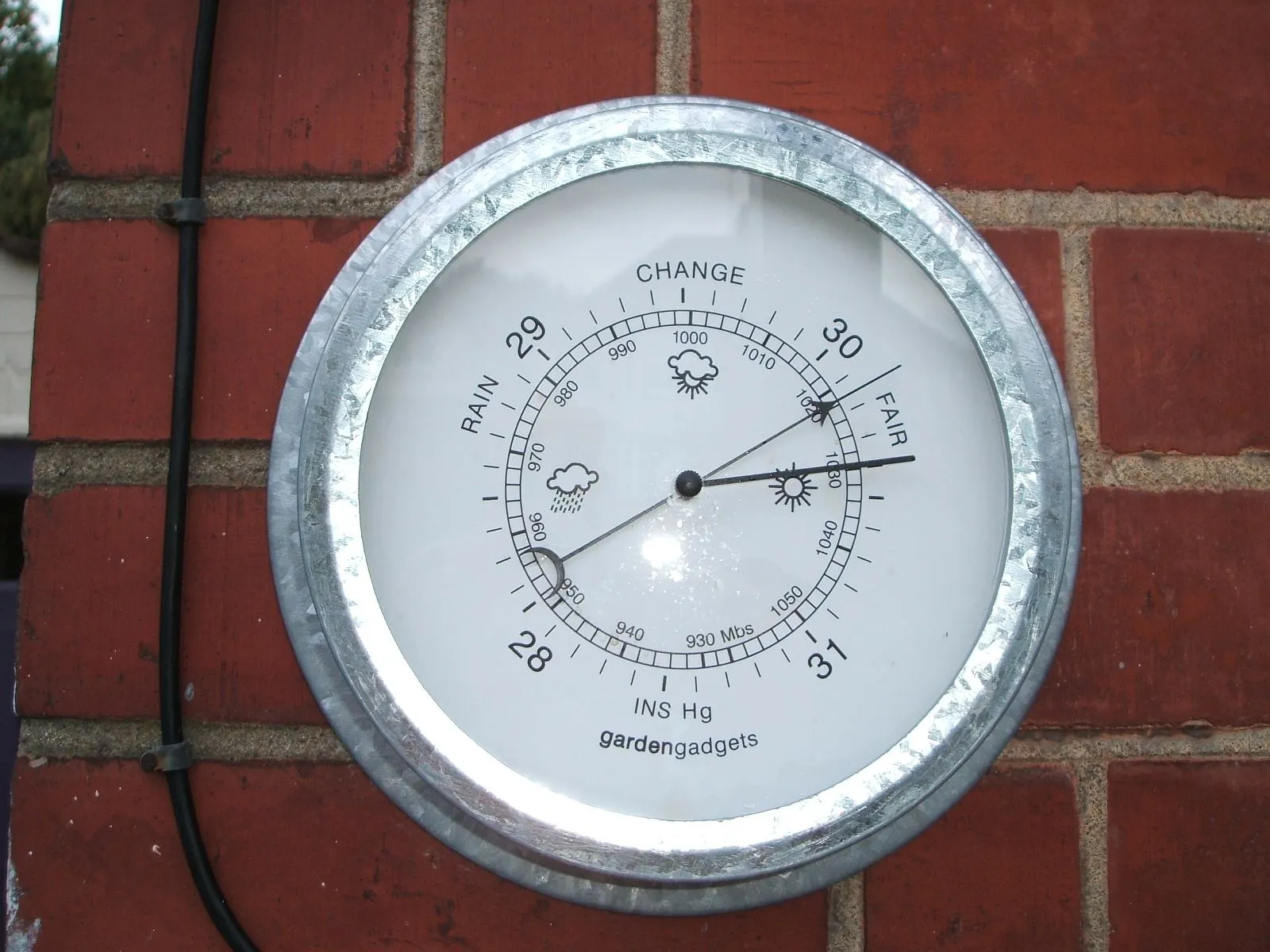 Best Barometric Pressure for Fishing: The Chart Everyone Shares, and What the Studies Say
The chart says 29.70–30.40 inHg is the best barometric pressure for fishing. A whole cold front equals 16 in of water and no study finds a feeding effect.
 Best Time of Day to Fish: Dawn, Dusk, Midday and Night, Species by Species
Dawn and dusk beat midday for most fish, and catfish, walleye and big brown trout bite after dark. A species-by-species table of when to go.
 Moon Phase Fishing: The Solunar Theory, the Studies That Tested It, and a Verdict for Each Phase
No moon phase reliably out-fishes another: a 1,355-hour trout test found no solunar effect. Where the moon does matter, and a verdict per phase.
 Fishing in the Rain: What Really Improves the Bite Before, During and After a Shower
Fishing in the rain works because of cloud, cooling and runoff, not the drops. Before, during and after a shower, by species, plus the lightning rule.
Sources
- Schramm, H. L. (2017), The Effects of Cold Fronts on Bass, In-Fisherman
- McMahon, T. E. and Holanov, S. H. (1995), Foraging success of largemouth bass at different light intensities, Journal of Fish Biology 46:759–767
- Shaw, S. L., Renik, K. M. and Sass, G. G. (2021), Angler catch rates of walleye and muskellunge at Escanaba Lake, Wisconsin, PLOS ONE
- Kuparinen, A., Klefoth, T. and Arlinghaus, R. (2010), Abiotic and fishing-related correlates of angling catch rates in pike, Fisheries Research
- Straw, M. (2014), Crappies: Weather Vanes of the Fishing World (Craig Bonds, TPWD, telemetry), In-Fisherman
- Manns, R. (2017), Barometric Pressure and Bass, In-Fisherman
- Alwine, High Percentage Fishing wind data, via BassForecast
- National Weather Service, lightning safety