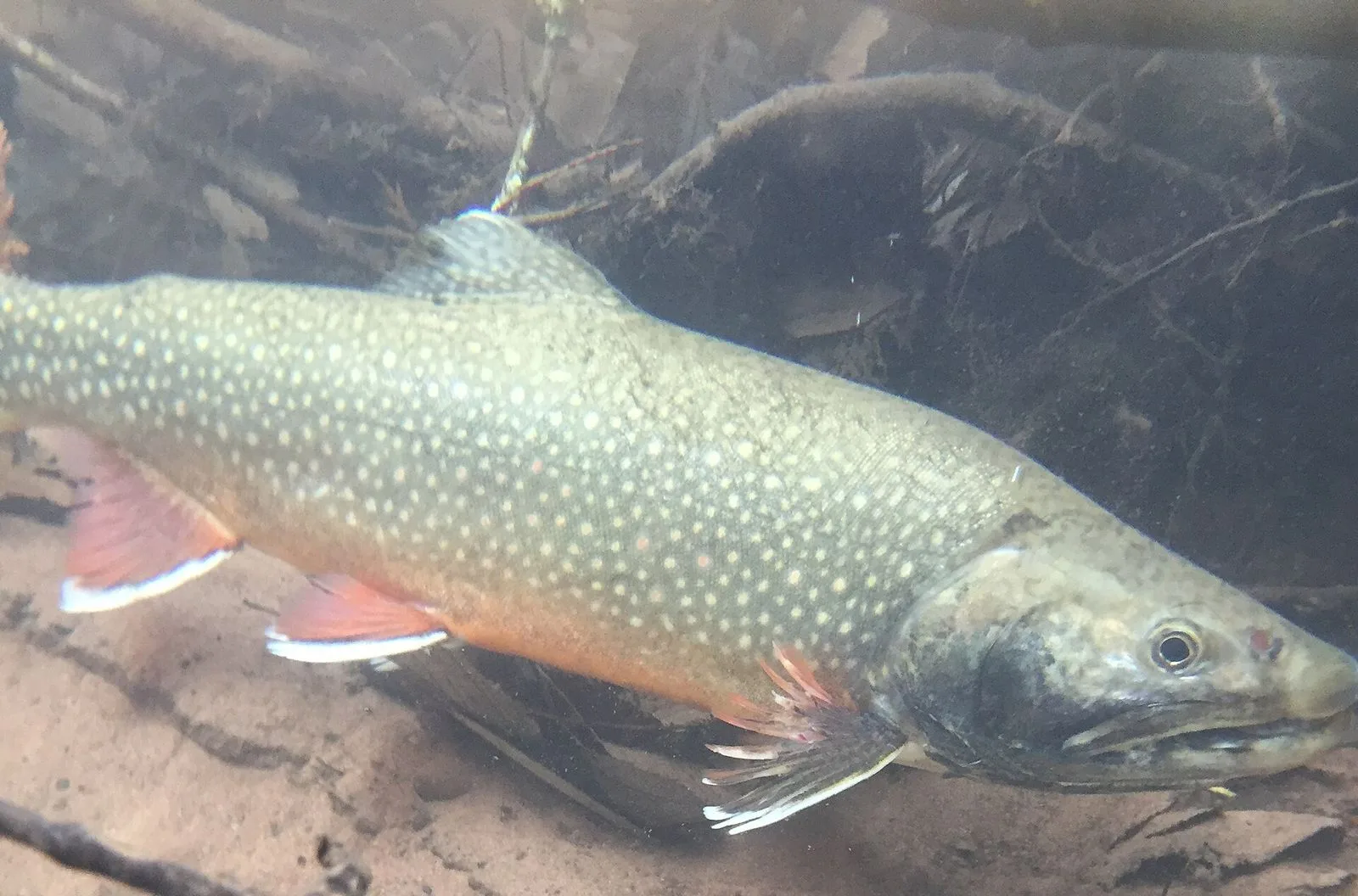
A splake is a hatchery-made cross between a lake trout and a brook trout, almost always a female lake trout and a male brook trout. Hatcheries stock them in cold lakes where neither parent does well, and a typical splake is 10–18 in (25–46 cm) and 1–3 lb (0.5–1.4 kg). The name joins the brook trout’s old name, “speckled trout”, with “lake trout”; in parts of Canada the fish is called a wendigo. Fish culturists have made splake since the early 1870s.
The only sure way to identify a splake is on the cleaning table. Count the finger-like sacs where the stomach meets the gut: a brook trout has 23–55, a splake 65–85, a lake trout 93 or more. The ranges never overlap.
How do you tell a splake from a brook trout or a lake trout?
On the outside a splake falls between its parents, and it can lean toward either one. Maine’s biologists write that misidentification as either parent “is common”. The tail is the quickest outside clue: the lake trout’s is deeply forked, the splake’s moderately forked, the brook trout’s only slightly. The spots help too. A splake has pale spots on a dark back like both parents and some red spots, but none of the blue halos a brook trout wears.
The mark that never lies is internal. Pyloric caeca are small, sac-like projections at the junction of the stomach and the intestine, and each species carries a fixed range of them.
| Mark | Brook trout | Splake | Lake trout |
|---|---|---|---|
| Pyloric caeca | 23–55 | 65–85 | 93 or more |
| Tail | Square to slightly forked | Moderately forked | Deeply forked |
| Spots | Pale, plus red with blue halos | Pale, some red, no blue halos | Pale, no red |
| Lower fins | Orange, white edge, black line | Tricolored | Faint white edge, never orange |
| Typical size | 6–12 in (15–30 cm) | 10–18 in (25–46 cm) | 18–24 in (46–61 cm) |
| Record | 14 lb 8 oz (6.6 kg) | 20 lb 11 oz (9.4 kg) | 72 lb (32.7 kg) |
| Where | Native, eastern streams and ponds | Hatchery only, stocked lakes | Native, deep northern lakes |
To count caeca, open the belly as if cleaning the fish and find where the stomach ends. Tease the cluster of short fingers apart with a knife point. Up to about 55 is a brookie, 65–85 is a splake, and 93 or more, often a thick bundle, is a laker.
The parents have their own pages: the brook trout and the lake trout.
Where do splake live, and what do they eat?
Splake want cold water like both parents. Maine’s management plan puts their preferred temperature between the lake trout’s (about 54 °F) and the brook trout’s (about 61 °F). In Colorado’s Parvin Lake, gill nets set after the lake stratified caught no splake anywhere the water was over 60 °F (16 °C). They held in the lower thermocline and in a spring-fed bay. In summer, look deep; the trout water temperature chart shows the band.
Splake are never native, so you fish for them where an agency stocks them. In the East that means Maine, with about 53 waters managed mainly for splake, and Ontario. Wisconsin stopped stocking them in Lake Superior after 2025. In the West they live in cold mountain lakes and reservoirs. Colorado lists them at North Lake, a trout-only reservoir in Las Animas County. In Wyoming’s Cloud Peak Wilderness, a 2018 survey of helicopter-stocked lakes found abundant splake approaching 18 in (46 cm) in Romeo Lake. Your state’s stocking report names the current waters.
For their first year splake eat invertebrates, then turn to fish. In Maine they are most likely to eat smelt and white perch, and also take yellow perch, crayfish, sunfish and minnows.
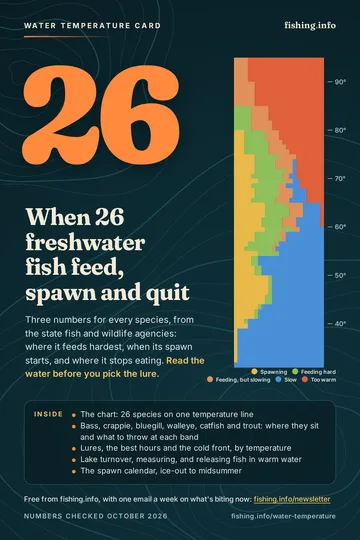
Free card: what 26 species do at your water temperature
Plus one email a week on what's biting now. No sales pitches. Privacy.
How do you catch splake?
Ontario’s advice is short: splake are shy and easily spooked, so go light. Fish them in shallow water just after ice-out with light tackle or flies. Follow them deeper as the water warms, with small minnow-imitating plugs, spoons, spinners and jigs. Through the ice they are one of the most catchable trout there is: Maine recorded ice-fishing returns of about 78% of the splake stocked in one study water.
A practical year:
- Ice-out and spring: cast small spoons, inline spinners and streamers along shorelines and inlets while the surface is still cold.
- Summer: troll or jig at the thermocline, the same depths as the lake trout fishing methods but lighter.
- Fall: splake move onto rocky shoals and inlets with the spawning urge, and gather where lake trout spawn.
- Winter: jig small spoons tipped with a minnow, or fish a live smelt or shiner under a tip-up.
When Wisconsin ended splake stocking in Lake Superior in 2025, one charter captain there put the loss plainly: splake are a near-shore fish and easier for sport anglers to catch than lake trout.
How big do splake get?
Splake carry hybrid vigor: the first generation grows faster than either parent. Maine can grow them to 18 in (46 cm) two years after stocking. In its study waters splake survived to age four, where stocked brook trout rarely lived past one. Maine’s netting data from waters stocked with both:
| Age | Brook trout | Splake |
|---|---|---|
| 1 | 9.5 in (24 cm) | 11.4 in (29 cm) |
| 2 | 12.1 in (31 cm) | 13.4 in (34 cm) |
| 3 | 13.8 in (35 cm) | 16.6 in (42 cm) |
| 4 | 15.4 in (39 cm) | 19.4 in (49 cm) |
| 5–8 | none sampled | 22.8–26.0 in (58–66 cm) |
In twelve years of sampling in the region, no brook trout older than four turned up; splake reached eight. That longevity is the whole point. A splake lake gives anglers a trout fishery in water where brook trout would be caught out or die young, and where lake trout would never establish.
Maine began stocking splake at Long Pond in Washington County in 1958. It now manages about 53 waters primarily for them, and keeps them out of waters with significant wild brook trout fisheries. Ontario stocks splake across much of the province and notes they tolerate marginal trout water, such as low-pH lakes.
The world-record splake weighed 20 lb 11 oz (9.4 kg), the Ontario record at 20.71 lb. Paul Thompson caught it in Georgian Bay near Wasaga Beach on May 17, 1987, on a red fluorescent Rapala. It measured 35 in (89 cm) with a 23.3 in girth. Maine’s state record is 10 lb 3 oz (4.6 kg), from Basin Pond, one of the first two waters stocked when Maine restarted its splake program in 1981.
Are splake good to eat?
Yes. Take Me Fishing calls the splake an excellent food fish, and Maine manages most of its splake waters as harvest fisheries. Length limits there let the fish reach 12 in and more before they are kept. Cook one like a brook trout. Check the state rules for the water first: bag and length limits on splake waters vary from general trout rules to one-fish trophy limits.
Can splake reproduce?
Yes, and that makes them unusual. Most hybrid fish, the tiger trout among them, are sterile. Maine’s management plan calls the splake the only salmonid cross capable of reproducing for an indefinite number of generations. Hatchery work in the 1950s showed splake are not sterile, and that a male splake crossed back to a female brook trout produces live young.
In the wild the answer is different. Maine’s plan, written after more than a century of stocking across North America, found “no credible documentation of splake reproduction in the wild”. The 2016 Lake Superior study by Feringa and colleagues could not document it either. What it did find is why managers worry:
- On lake trout spawning reefs near Copper Harbor, Michigan, twenty years of fall sampling caught 1,315 lake trout and 609 splake. In some years splake outnumbered the lake trout on the reef.
- On average 56% of those splake were sexually mature, and 28% of the mature ones were ripe or already spent.
- Splake turned up in two brook trout spawning rivers 25–30 miles (41–48 km) from the nearest stocking site.
Maturity itself comes early. At Maine’s Piper Pond, splake began to mature at age two and all were mature by age four, a pace closer to a brook trout’s than a lake trout’s.
Wisconsin ended splake stocking in Lake Superior after the spring of 2025, after more than 50 years. It cited its genetic guidelines and a lake trout population that now sustains itself, and planned to raise brown trout stocking by 30–40% to fill the gap. The trout hub covers every trout and char in North America.
Free download
The water temperature card
Read your water temperature and the card tells you who is spawning, who is feeding and what to throw. 26 species, 16 pages, for your phone and the tackle box.
Plus one email a week on what's biting now. No sales pitches. Privacy.
Related
Section guide
Trout: The Types of Trout and How to Tell Them ApartThe types of trout anglers catch, from rainbow and brown to brook and lake trout (two are chars): the marks that identify each, spawn seasons, records.
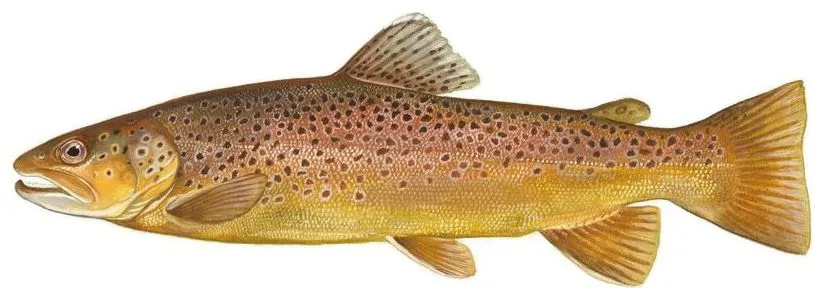 Brown Trout: Identification, History, Habits and Records
Brown trout from the agency data: how to tell one from a rainbow or brook, the 1883 import, night feeding, the fall spawn and the 44 lb record.
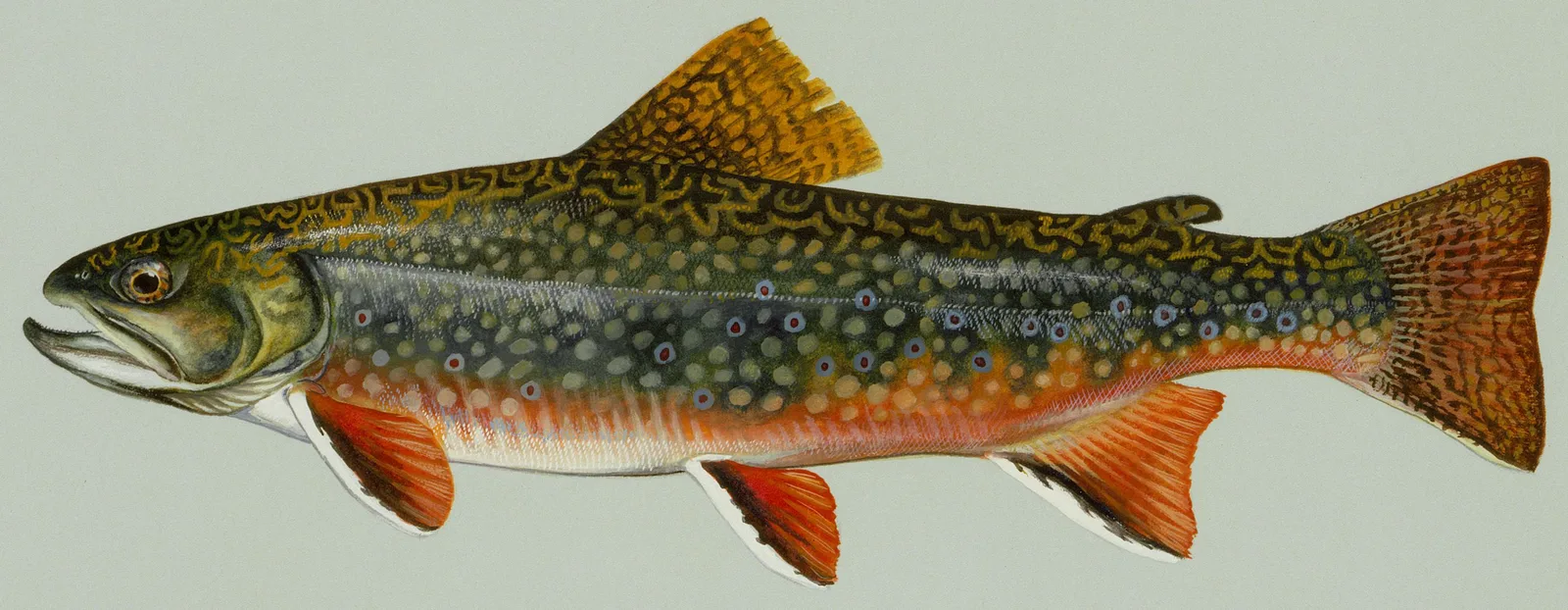 Brook Trout: The Char That Marks America's Coldest Water
The brook trout is a char, not a trout: how to tell it apart, where it still lives, why it lost 28% of its range, and the 1915 record.
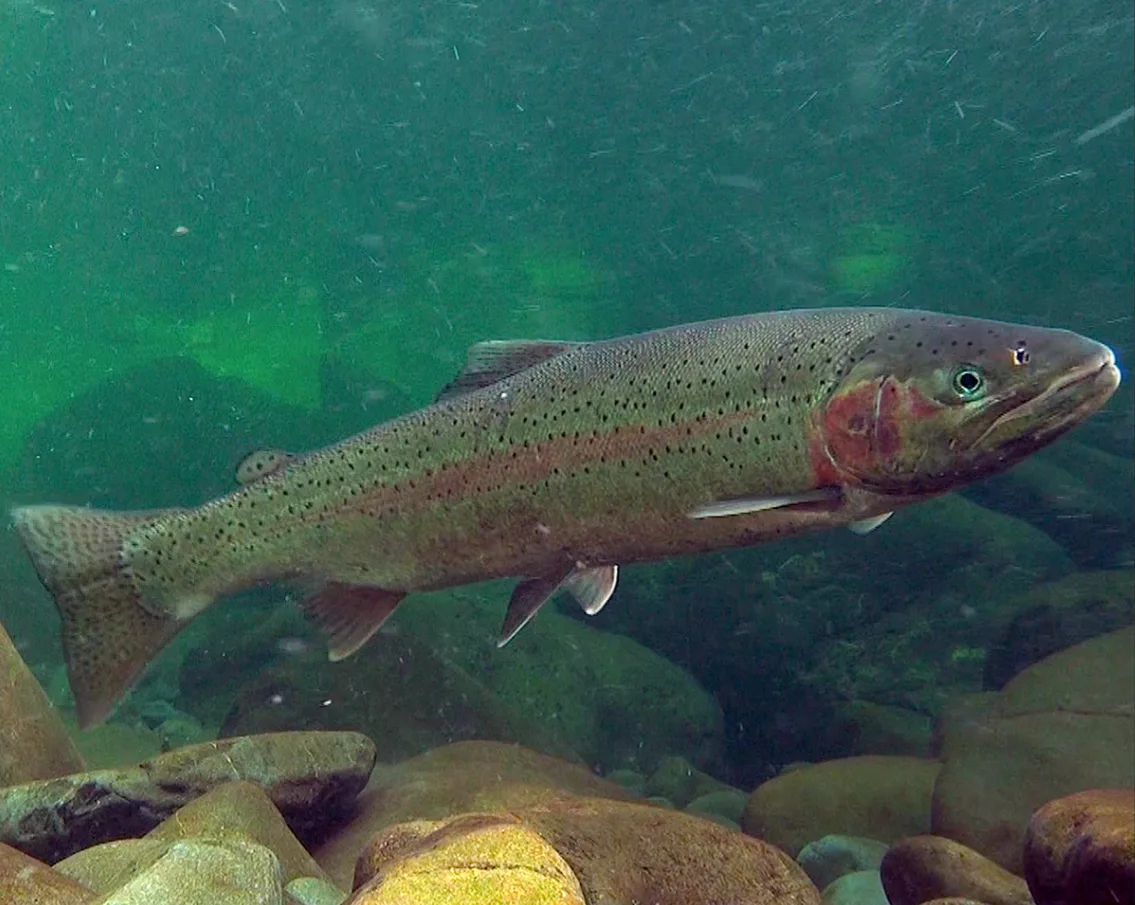 Steelhead Trout: The Rainbow That Goes to Sea
Steelhead trout are rainbows that run to sea or a Great Lake and come back to spawn, often more than once. Runs, the ESA listings, Great Lakes fish, records.
- Rainbow Trout: Identification, Range, Spawning and Record
Rainbow trout from the agency data: how to tell one from a steelhead, cutthroat or brown, the temperatures that matter, spawning, and the 48 lb record.
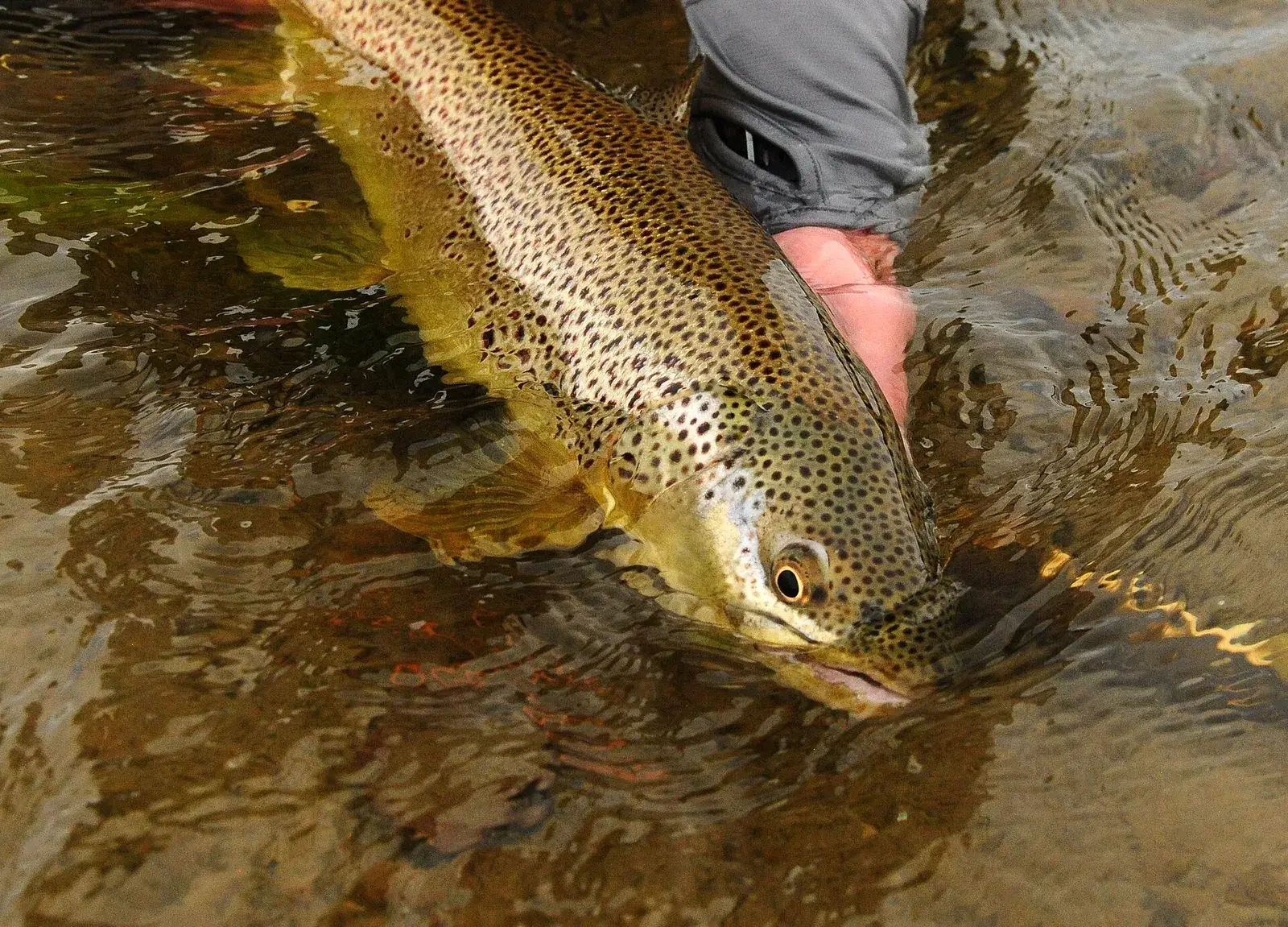 How to Hold a Trout Without Hurting It: Grip, Photo, Release
How to hold a trout so it swims off healthy: the belly cradle and tail grip, no lipping, the 10-second photo, and what the release studies found.
Sources
- Maine IFW, splake species information
- Maine IFW, splake management plan (Obrey, 2002)
- Ontario government, splake
- Wisconsin DNR, Lake Superior lake trout, splake and brook trout comparison
- Feringa et al. (2016), Genetic and phenotypic evidence for splake presence in brook trout and lake trout spawning habitats, Journal of Great Lakes Research
- IAGLR, hybrid splake found on lake trout spawning reefs and in brook trout streams
- Northern News Now, DNR announces end to splake stocking on Lake Superior (2024)
- Ontario Record Fish Registry (Not Just Fishing)
- Take Me Fishing, splake
- Maine IFW, lake trout (togue) species information
- Colorado Parks and Wildlife, North Lake
- Wyoming Game and Fish Department, High country lakes fish surveys (Sheridan Region, 2018)