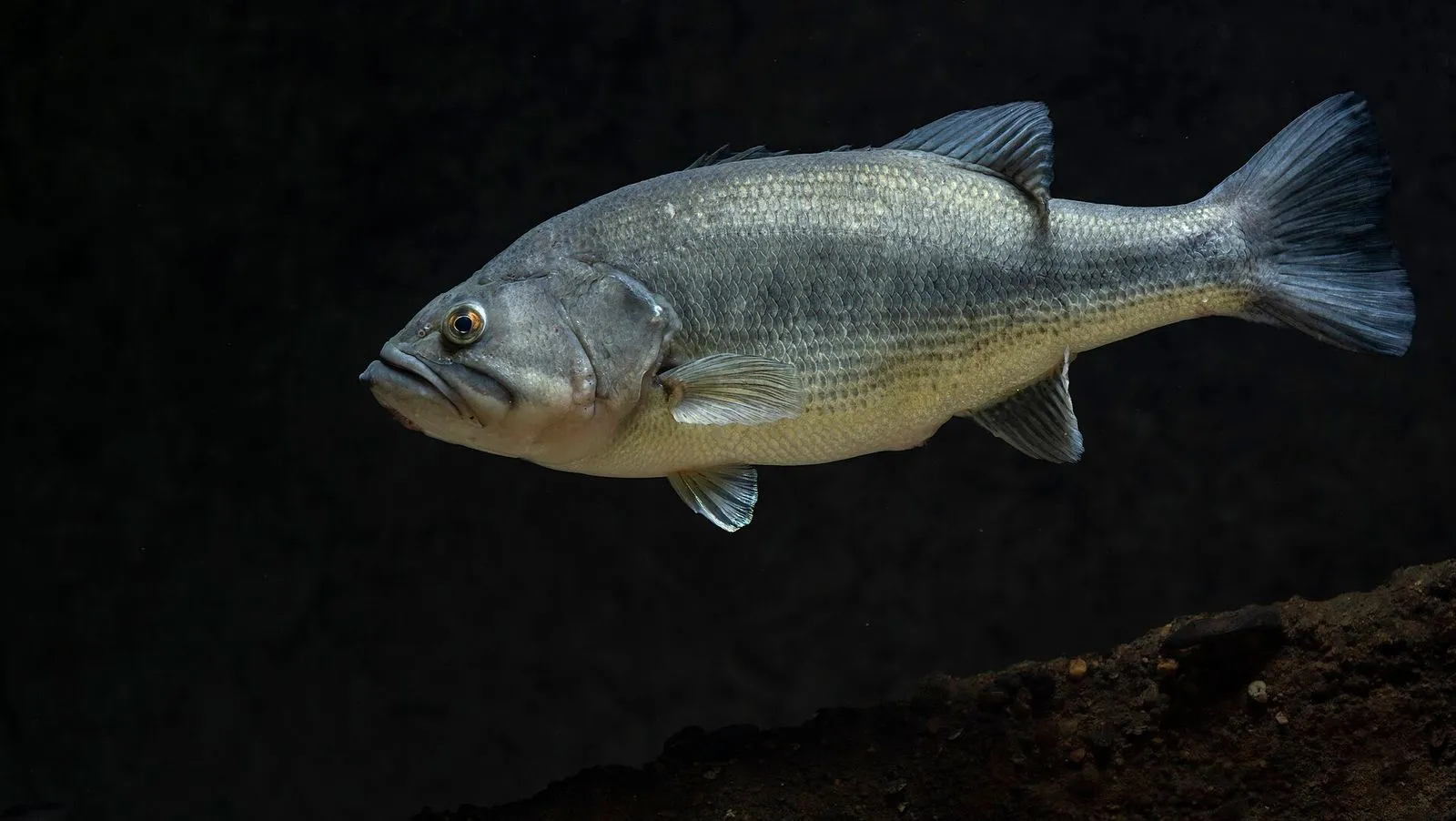
Bass bite best in water of 65–80 °F (18–27 °C), and largemouth spawn once a shallow flat holds about 60 °F (16 °C). Those two numbers, and the bands around them, tell you where the fish sit, how often they eat, and how fast a lure can move before they let it pass. Read the water before you pick the lure: the same reading means the same fishing in Georgia in March and in Minnesota in June.
In Coutant’s laboratory tanks, largemouth bass settled at 84–90 °F (29–32 °C), warmer than any angler’s chart. On a lake they abandon that water for shade and depth, because a tank has food and oxygen and an 88-degree cove has neither.
What are the three numbers for each bass?
Every species has a band where it feeds hardest, a temperature that starts its spawn, and a stress point where feeding slows and the fish move. For the three black bass they are these:
| Species | Feeds hardest | Spawn begins | Feeding slows |
|---|---|---|---|
| Largemouth | 65–80 °F (18–27 °C) | about 60 °F (16 °C) | above 85 °F (29 °C) |
| Smallmouth | 65–72 °F (18–22 °C) | 60–65 °F (16–18 °C) | above 75 °F (24 °C) |
| Spotted bass | 65–78 °F (18–26 °C) | 57–74 °F (14–23 °C) | above 85 °F (29 °C) |
The spawn figures come with detail. Wisconsin’s DNR has males on the nest at 60 °F and eggs laid at 62–65 °F (17–18 °C). Its usual smallmouth nesting temperature is 62–64 °F, with spawning recorded anywhere from 53 to 75 °F (12–24 °C).
The stress column is the one to remember. A smallmouth lake at 78 °F (26 °C) is a tough day; a largemouth pond at the same reading is a good one.
Why does temperature decide how often bass eat?
The reason is metabolism. A survey of 69 fish species found the rate roughly doubles with each 18 °F (10 °C) of warming. A bass at 45 °F (7 °C) digests at about a quarter of the pace of a bass at 80 °F (27 °C). So it eats a quarter as often, and moves a quarter as far to do it.
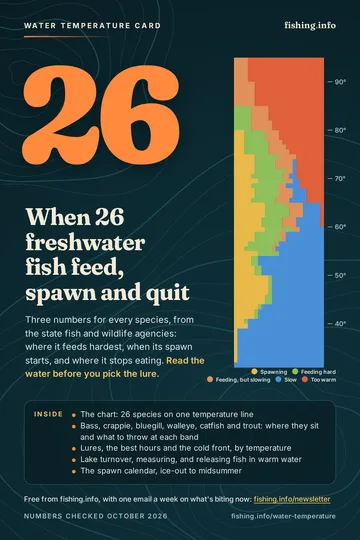
Free card: what 26 species do at your water temperature
Plus one email a week on what's biting now. No sales pitches. Privacy.
Where are the bass at each temperature?
Take the water temperature at the depth the bass are using, not at the surface. The table covers largemouth and smallmouth together; where they differ, the cell says so.
| Water temperature | Where the bass are | What to throw | Retrieve |
|---|---|---|---|
| Below 45 °F (7 °C) | Deep and vertical: bluffs, channel bends, standing timber; smallmouth on deep rock | Hair jig or light Ned rig, blade bait, suspending jerkbait | Slowest of the year; 10-second pauses |
| 45–50 °F (7–10 °C) | Still deep, on the structure that leads toward spawning flats | Football jig, jerkbait, slow-rolled spinnerbait | Slow drag, long pauses |
| 50–60 °F (10–16 °C), pre-spawn | Staging on the first drop or point next to the flats; biggest females of the year | Lipless or crawfish-pattern crankbait, spinnerbait, jig | Medium; stop-and-go |
| 60–65 °F (16–18 °C), spawn | On the flats in 2–8 ft (0.6–2.4 m); smallmouth on gravel by a boulder or log | Weightless stick bait, tube, Texas rig | Dead still on the bed; slow lift and drop |
| 65–80 °F (18–27 °C), prime | Grass edges, docks, points, shade lines; smallmouth on wind-blown rock | Topwater at first and last light, Texas rig and squarebill by day | Fastest of the year; burn the moving baits |
| 80–85 °F (27–29 °C) | Deep breaks or the thickest shallow cover; smallmouth on the thermocline edge | Deep crankbait, Carolina rig, frog over mats | Fast early, slow and deep in the sun |
| Above 85 °F (29 °C) | Shade, current and the thermocline; feeding shrinks to low light | Punch rig into mats, deep crankbait on ledges, black spinnerbait after dark | Slow by day, fast at night |
| Cooling 65 to 55 °F (18 to 13 °C), fall | Following shad into creek arms and coves, shallow and aggressive | Lipless crankbait, spinnerbait, walking topwater | Fast, slowing as the water drops through the 50s |
One rule runs through the rows, and through the whole water temperature chart. As the water warms, the bass move up and the lure speeds up; past the comfort band, both come back down. The best bass lures list covers every bait in the table.
How do you fish the spring warm-up, from 45 °F to the beds?
The spawn is a calendar written in temperature. Here is the order of decisions from the last of winter to the first bed, for a largemouth reservoir. A smallmouth lake runs the same sequence a few degrees later.
- At 45–48 °F (7–9 °C), find the road, not the fish. Bass winter in the deepest water near their spawning flats. Locate a flat with a firm bottom and follow the channel or point that leads to it. Every later stage happens on that structure.
- At 48–52 °F (9–11 °C), fish the afternoon. A shallow spring bay warms 5–8 °F (3–4 °C) between dawn and mid-afternoon, and the first fish move up with it. Throw a jerkbait or a jig on the first drop. The morning reading says nothing about the afternoon bite.
- At 52–58 °F (11–14 °C), speed up. The biggest females stage on the pre-spawn structure and feed hard. Crawfish-pattern crankbaits and a slow-rolled spinnerbait cover the drop; a jig picks off the fish that will not chase.
- After any cold front, back up one step. A front knocks a flat back three or four degrees and pushes the fish to the drop for a few days. The trend matters more than the level: a lake warming through 52 °F outfishes a lake stuck at 58 °F after a front.
- At 58–62 °F (14–17 °C), look for clean circles. Males sweep nests in 2–8 ft (0.6–2.4 m); light spots of cleaned bottom are the tell. Cover the flat with a lipless crankbait or swim jig and note where the bites cluster.
- At 60–65 °F (16–18 °C), slow to a stop. Pitch a tube, a weightless stick bait or a Texas-rigged creature bait to the bed and leave it. Release a bed fish where it was caught; a male moved across the lake will not find his nest.
- At 68–75 °F (20–24 °C), split the day. Post-spawn fish are tired and scattered. Males guarding fry take a popper in the shallows; females suspended off the first point take a jerkbait. Two slow weeks, then the prime band opens.
The how to fish for bass guide carries the rod, reel and line for all of it.
Do bass bite in 40- and 50-degree water?
Bass eat all winter. In 40-degree water (4 °C) a largemouth’s metabolism runs at roughly a quarter of its summer pace, so a fish that ate every day in July may feed once in four. The ones that do eat hold in tight groups on vertical structure, so one bite marks the spot for ten more. Fish a jig or a blade bait dead slow and count the pauses in seconds, not twitches.
Fifty-degree water (10 °C) is the turn. Below it the bass are still on winter structure. Between 50 and 55 °F (10–13 °C) the first fish stage next to the flats. That is when bass start biting in spring in any consistent way. The calendar does not decide it; three days running of afternoon shallows above 50 °F does.
When do bass stop biting in the heat?
Bass do not stop biting in summer; they stop biting where and when most people fish. Above 85 °F (29 °C) largemouth pull into shade, current and the thermocline, and feed in the first and last hour of light. Smallmouth feel it ten degrees sooner, above about 75 °F (24 °C). They slide down to the cool edge of a stratified lake, where the water can read 82 °F (28 °C) on top and 60 °F (16 °C) at 15 ft (4.6 m).
Coutant’s tank data says bass would choose 84–90 °F given unlimited oxygen and food. Lakes offer neither, so the field ceiling for largemouth sits near 85 °F. In August the thermometer that matters hangs at the depth of the shade line, not on the transducer.
Why does the spawn come in March in one state and June in another?
The numbers travel; the dates do not. Texas Parks and Wildlife puts the largemouth spawn as early as February and as late as May, depending on latitude. Wisconsin’s DNR has its smallmouth nesting mostly from mid-May through June. A 1977 study of perch and walleye found that northern populations spawn and feed a little cooler than southern ones of the same species, and the bass agencies’ figures follow the same pattern. That is why two agencies can disagree by 5–10 °F (3–6 °C) on a spawn figure.
So a Georgia angler reads 60 °F on a flat in early March, a Minnesota angler reads it in early June, and both fish the same row of the table. The bass spawn calendar lays out the months by region. The same band-by-band treatment for crappie, trout, catfish, bluegill and walleye sits under the water temperature chart.
Free download
The water temperature card
Read your water temperature and the card tells you who is spawning, who is feeding and what to throw. 26 species, 16 pages, for your phone and the tackle box.
Plus one email a week on what's biting now. No sales pitches. Privacy.
Related
Section guide
Ideal Water Temperature for Fish: The Chart for 26 Freshwater SpeciesMost freshwater fish bite best at 65–75 °F, trout at 50–65 °F, catfish at 75–85 °F. One chart for 26 species: feeding range, spawn and shutdown.
 Lake Water Temperature: How to Find It Before You Go
Four ways to know your lake's water temperature before you go: live USGS and NOAA sensors, satellite maps, your own thermometer, and the air-temperature rule.
 Lake Turnover: How Fall Mixing Works and Where the Fish Go
Lake turnover is the fall mixing that ends the summer thermocline: what sets it off, how long it lasts, seven signs it happened, where the fish go.
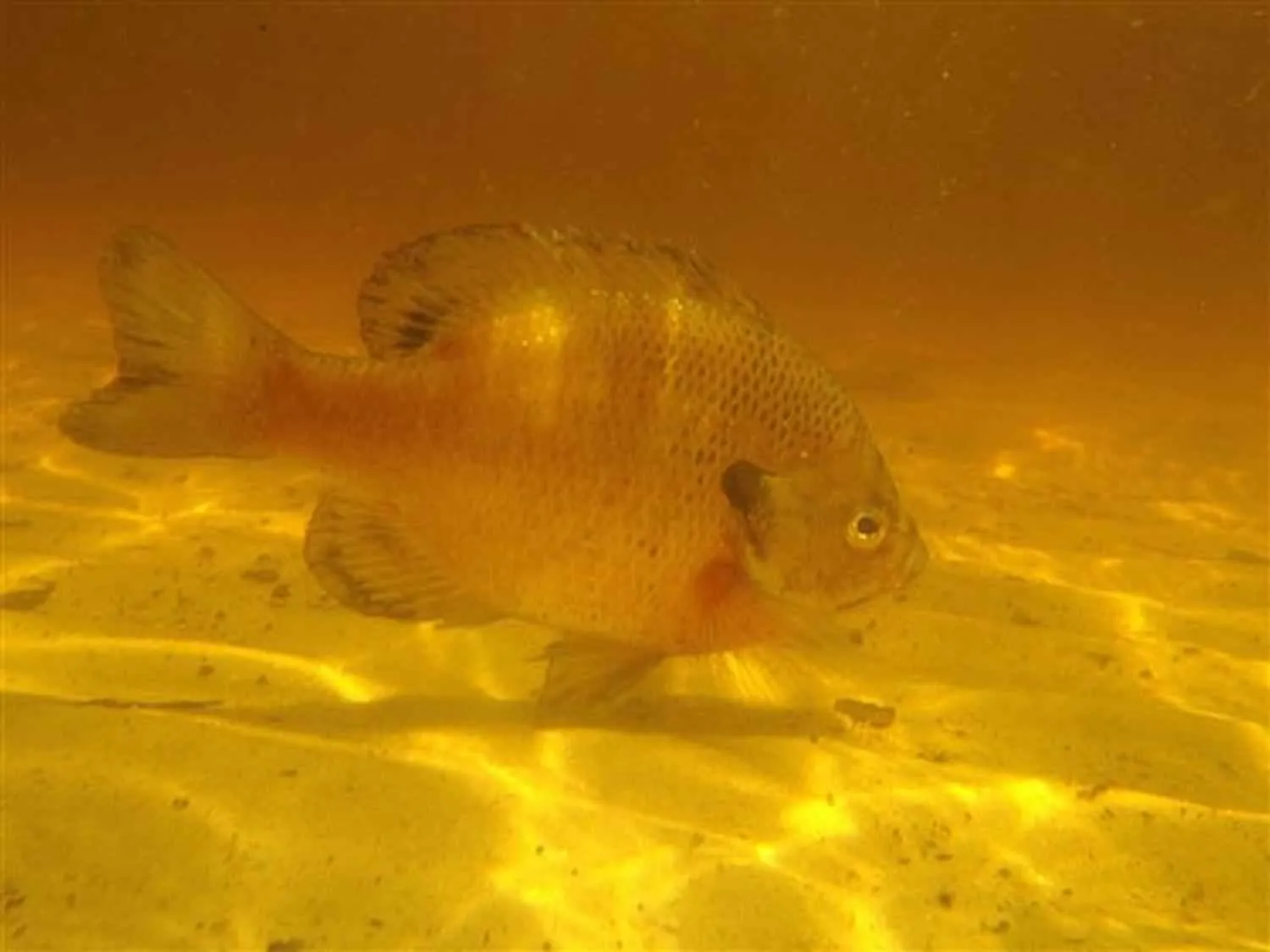 Bluegill Spawn Temperature: 67–80 °F, and How to Find the Beds
Bluegill spawn at 67–80 °F (19–27 °C), in waves from late May into August in the north and longer in the south. Where the beds are and how to fish them.
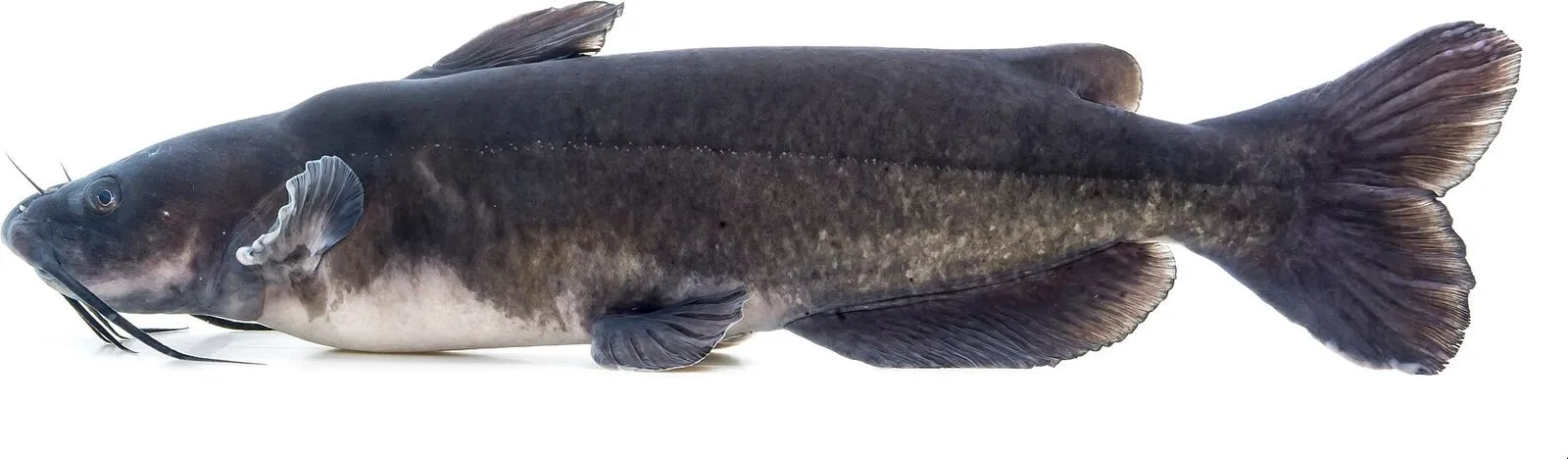 Catfish Water Temperature: When Channels, Blues and Flatheads Bite
Catfish feed hardest at 75–85 °F. The water temperatures where channel, blue and flathead catfish start biting, spawn and quit, and how to fish each band.
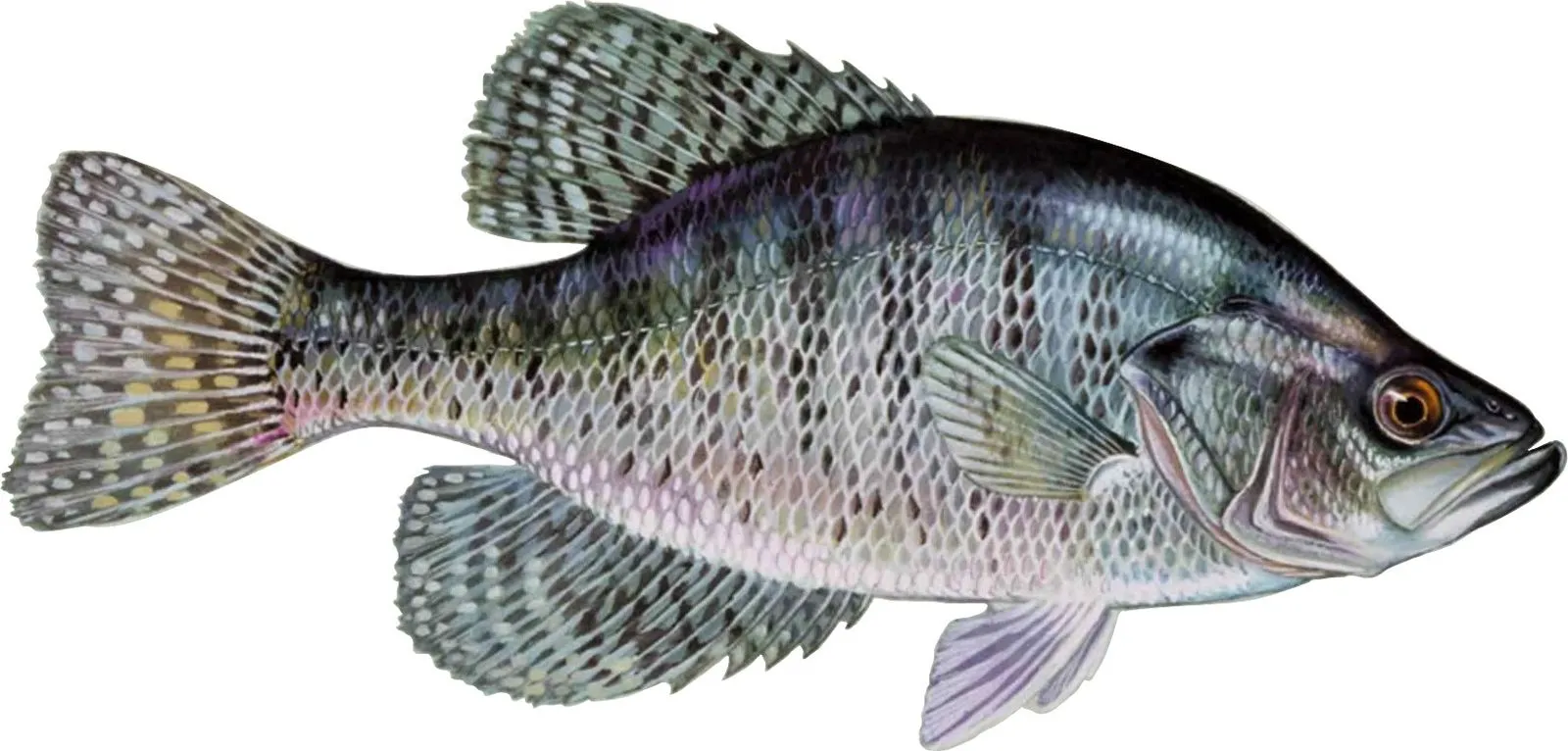 Crappie Spawn Temperature: When They Move Up, How Deep, How Long
Black crappie spawn at 58–68 °F, white crappie at 60–70 °F: when they move up, how deep by water clarity, one spawn a year, and the fall bite.
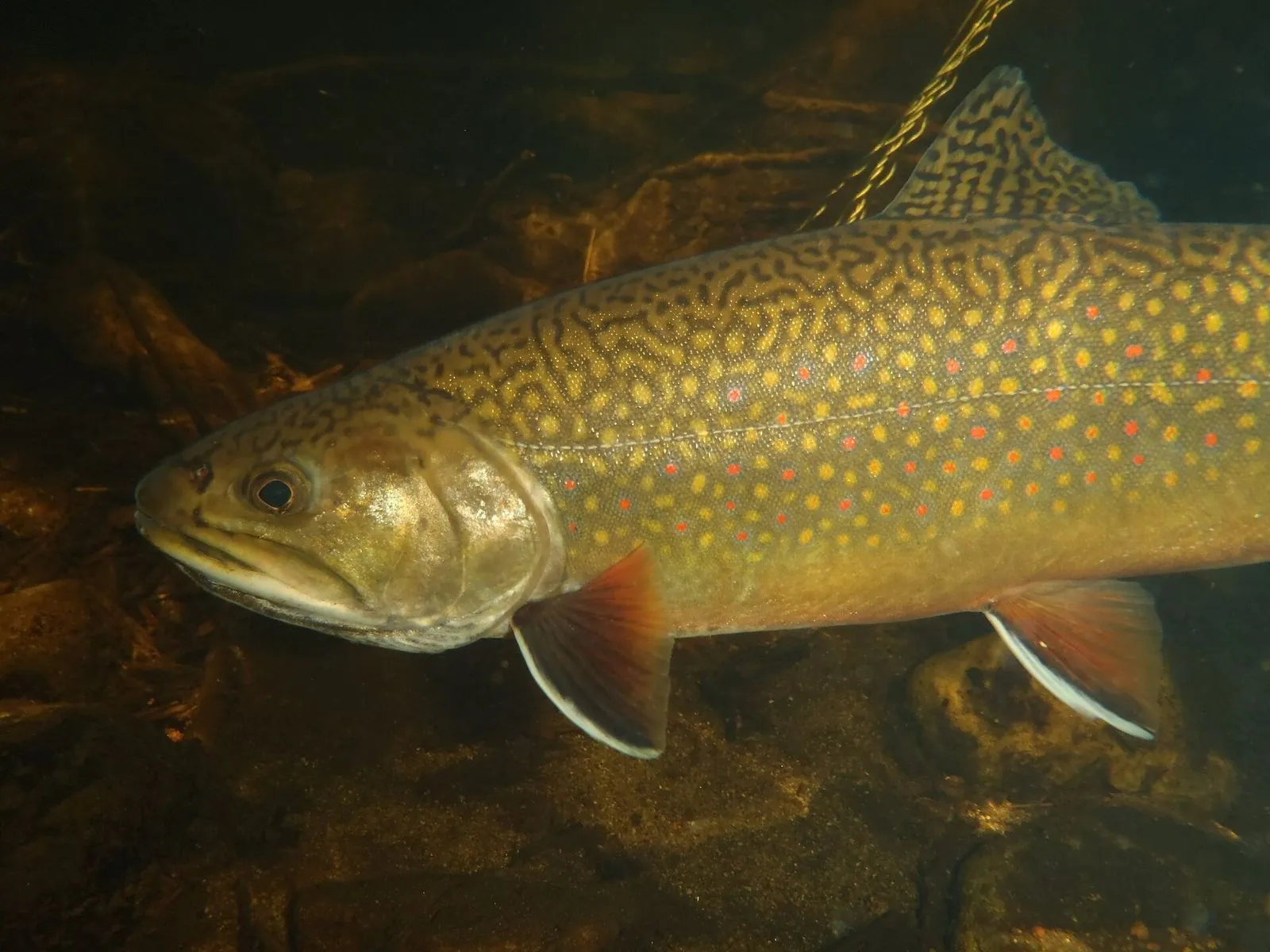 Trout Water Temperature: The 68 °F Line, Limits and Summer Refuges
Trout feed best at 55–65 °F and stress above 68 °F. The chart for five trout species, why anglers stop at 68, and where trout go when rivers warm.
Sources
- Texas Parks and Wildlife, largemouth bass species profile
- Texas Parks and Wildlife, smallmouth bass species profile
- Texas Parks and Wildlife, spotted bass species profile
- Wisconsin DNR, smallmouth bass
- Coutant, C. C. (1977), Compilation of temperature preference data, Journal of the Fisheries Research Board of Canada 34:739–745
- Hokanson, K. E. F. (1977), Temperature requirements of some percids and adaptations to the seasonal temperature cycle, Journal of the Fisheries Research Board of Canada 34:1524–1550
- Clarke, A. and Johnston, N. M. (1999), Scaling of metabolic rate with body mass and temperature in teleost fish, Journal of Animal Ecology 68:893–905