 By
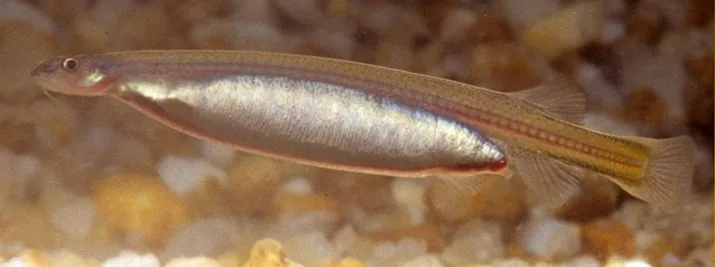
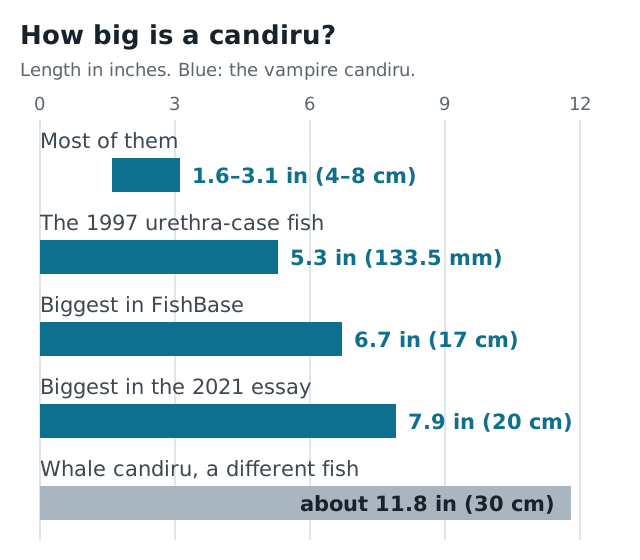
A candiru is a tiny, see-through Amazon catfish, most of them 1.6 to 3.1 inches (4 to 8 cm) long. It drinks blood from the gills of bigger fish. The story that it swims up a stream of urine into a man’s urethra is a legend. Physics rules it out, the fish ignored urine in tank tests, and the one modern case is disputed. What a candiru really does is strange enough without it.
A candiru doesn’t suck blood. It nicks an artery in a fish’s gills, and the host’s own blood pressure pumps it full. That takes 30 seconds to about two and a half minutes.
What is a candiru?
It’s a small, scaleless catfish you can almost see through. The body only takes on color after it feeds, when the belly swells with blood. It has needle-like teeth and short spines on its gill covers that point backward. Those spines hold it in place while it feeds. The fish in the photo at the top has just eaten.
It also goes by toothpick fish, vampire fish and cañero. The name candiru covers more than one fish, though. It’s used for catfish of two families that aren’t related, and only some of them drink blood. That’s a big part of why the stories don’t match.
| Fish called candiru | Size | What it eats | Bites people? |
|---|---|---|---|
| Vampire candiru, the fish of the legend | Usually 4–8 cm (1.6–3.1 in), up to 20 cm (7.9 in) | Blood from the gill arteries of bigger fish | A related, unnamed species has |
| Carrion candiru | About 10–15 cm (4–6 in) for its group | Dead animals, and its relatives scrape mucus or scales off big fish | Feeds on bodies already dead |
| Whale candiru, or candiru-açu | Up to about 30 cm (11.8 in) | Two of about 35 species eat dead animals | Occasionally, and on corpses |
The whale candiru is the one with a real bite. It’s stockier, and the two carrion-eating species tear off chunks with razor-sharp teeth. One of them feeds in frenzies of tens to hundreds of fish. They’re why a body pulled from an Amazon river can have deep round holes in it. They aren’t parasites at all.
The vampire candiru is a catfish like the ones you fish for at home, with the same barbels around the mouth. It just went a very different way.
Does the candiru really swim up urine?
No. The claim has two parts, and both fail.
The first part is that the fish follows the smell of urine. The old idea was that a candiru finds a fish by the urea coming out of its gills. So, the story went, it might take you peeing in the water for a fish. In tank tests in 2001, a close cousin of the legend’s candiru showed no interest in human urine. It ignored ammonia, amino acids and fish slime too. It seemed to go for live fish by sight. A 2021 essay by three Brazilian fish and medical experts found no solid proof that these candirus react to ammonia or blood in the water at all.
The second part is the leap. In 1855 the Frenchman Francis de Castelnau wrote down what local fishermen told him. The fish, they said, “springs out of the water and penetrates into the urethra by ascending the length of the liquid column.” Castelnau himself called that “absolutely preposterous.” The physics of a fish swimming up a falling stream doesn’t work, says Stephen Spotte, an American who wrote a whole book on the candiru.
So where did the fear come from? The earliest report, from the German naturalist von Martius in 1829, was hearsay. He never saw it. An interpreter told him that men tied a cord around the penis before going into the river. An American fish expert, Eugene Gudger, pulled the old accounts together in 1930. He noted that not one case of the fish entering the anus was ever documented. To Gudger, that made the far smaller opening of a man’s urethra even less likely.
FishBase, the big online fish database, still says the candiru is “known to enter the urethra of humans urinating under water.” That’s the legend written as fact. The 2021 essay calls such cases disputed, for what looks like a lack of solid evidence.
Could one get in if you pee while you’re under water? Nobody has shown it can’t. Nobody has a solid case that it did, either.
Has a candiru ever gone up a man’s urethra?
There is one modern case of a candiru said to be removed from a man’s urethra. It happened in 1997 in Itacoatiara, Brazil. A 23-year-old man said a candiru “jumped” from the water into his urethra. He was peeing while standing thigh-deep in a river. A urologist in Manaus, Dr. Anoar Samad, took the fish out.
In 1999 Spotte went to Brazil and looked into it. He got the photos, the video of the procedure and the fish itself. He never said outright that it was false. But he found several things that don’t fit:
- The fish was 133.5 mm (5.3 in) long, with a head 11.5 mm (0.45 in) across. Getting it in would take real force, and a fish jumping from the water has nothing to push against.
- Samad said he had to snip off the fish’s spines to get it out. The fish he handed over had all its spines.
- Samad said the fish had chewed through the wall of the urethra. Spotte says a candiru doesn’t have the teeth for that.
- The patient said the fish darted up his urine stream. Spotte says simple physics makes that impossible. The doctor guessed the urine drew the fish in. The 2001 tank tests don’t back that guess.
What are your odds if you pee in a candiru river? Spotte put them at “about the same as being struck by lightning while simultaneously being eaten by a shark.”

Free PDF · Water temperature chart Which fish are biting at today's water temperature?
One reading, and the 16-page chart shows which of 26 fish are spawning, feeding hard or slowing down; for bass, crappie, bluegill and walleye, where they sit and what to throw. Every number sourced.
No card, nothing to buy, and the PDF is yours to keep. Confirm with one click and it's on its way. Then a few short emails and one a week on what's biting. Unsubscribe anytime. Privacy.
The candiru stories, checked
Here’s each piece of the legend next to where it came from and what holds up. When a buddy brings it up at the ramp, this is the short version.
| The claim | Where it comes from | What holds up |
|---|---|---|
| It swims up a stream of urine | Fishermen’s story told to Castelnau, 1855 | No. Castelnau called it preposterous, and physics rules it out |
| The smell of urine draws it in | An old guess about how it finds fish | No sign of it. In 2001 tank tests a close cousin ignored urine and seemed to hunt by sight |
| It got into a man’s urethra in 1997 | One case report from Manaus | Disputed. The spines and the chewing don’t match the fish |
| It lodges with its spines | The backward spines on its gill covers | Yes, in a fish’s gills. That’s what the spines are for |
| It drinks blood | Long known from fish it feeds on | Yes, from fish gills, and a related species has fed on a person’s skin |
| It eats people from the inside | The whale and carrion candirus on dead bodies | Not the vampire candiru. The whale candiru and the carrion candiru do, on the dead |
How a candiru really feeds
It goes in under the gill cover. A candiru swims up to a bigger fish and forces its way under the gill cover while the fish breathes. Our page on how fish breathe shows how that gill chamber works. Inside, it bites mostly at the two big arteries of the gills. It doesn’t suck. Its needle teeth make a cut, and the host’s blood pressure pumps the blood into its gut. FishBase calls the blood-sucking candiru “a misleading concept.”
The meal is quick. From going in to coming out takes 30 to 145 seconds. Then it swims off swollen, the blood often showing through its clear body. Most host fish don’t seem badly hurt by it.
Some fish fight back. The tambaqui, a big South American fish, can pin a candiru under the soft flap of its gill cover. It can also press the candiru against its side with a pectoral fin, or sweep it off the edge of the gill cover.
That explains the spines. They’re for staying put in a fish that’s trying to shake you off. A starving candiru may go into the wrong opening, a fish’s nostril for one. The stories about people may have grown from that.
The other blood-feeder you may know is the lamprey, the jawless fish with a round sucker mouth that fastens to lake trout. The candiru works fast: in, fed and out in a couple of minutes.
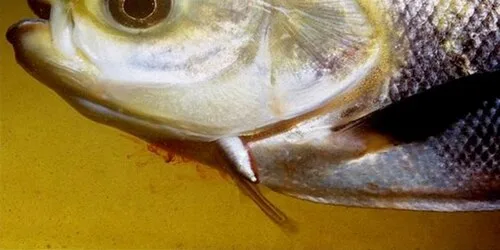
A candiru taking blood at a host fish’s gills. You can see the swollen belly and the blood at the gill opening. Photo: Ivan Sazima and Jansen Zuanon, Wikimedia Commons (CC BY 4.0).
Can a candiru hurt you?
Yes, but not the way the legend says. Here’s what’s on record.
- A candiru that bites skin. A close cousin of the vampire candiru, with no scientific name yet, was filmed feeding on blood from a boy’s back. It holds on with its teeth and strong head muscles and is hard to pull off. The wound bleeds for a while after.
- A suspected whale candiru bite. In 2019 a 2-year-old boy went into the Madeira River in Brazil and began to cry and shout. His mother found a candiru on his leg. It let go and left a deep round wound, 3 by 3 cm (1.2 by 1.2 in), on his left calf. It was the second such case in that village in three weeks, in the dry season.
- Whale candirus on the dead. They feed on drowned or dead animals, people included. Their bite leaves round marks even on skull bone.
For a traveler, the call is clear. Headed to the Amazon? A 2013 review for travel doctors saw “no need for considering the candiru in health advice for travelers to the Amazon.” That holds until there’s evidence it threatens people. The same review questioned the evidence behind the usual advice on preventing attacks and treating them. The classic advice comes from a 1991 paper. It claims a tight swimsuit keeps the fish out and that big doses of vitamin C soften its spines. The review asked what evidence advice like that stands on.
A fish there that does bite swimmers is the piranha, and even its attacks are rare, mostly a single bite on a leg or foot. Like scary fish? Our list of the scariest fish sorts the real ones from the stories.
Where do candiru live?
Only in South America. FishBase gives the Amazon basin, and the candiru of the legend is found in Bolivia, Brazil, Colombia, Ecuador and Peru. Animal Diversity Web adds the Orinoco basin.
They like shallow, slow, acidic water over mud or sand. When they aren’t feeding they stay buried in the soft bottom. They hunt for blood both by day and at night. In the muddy water they live in, a clear fish that size is close to invisible.
You won’t meet one on a US river, so you can stop checking your bait bucket. The same rivers hold the arapaima and the piranha, so a candiru is something you’d hear about on an Amazon trip, not catch.
Can you keep a candiru in the US?
Not in Texas or Florida. Texas lists the “South American Parasitic Candiru Catfishes, Family Trichomycteridae,” all species, on its Prohibited/Controlled Exotic Species list. In Texas no person may possess them or put them in the water without the department’s approval. Florida puts the same family, all species, on its Prohibited Nonnative Species List.
Other states have their own lists. Check your state wildlife agency before you buy any odd catfish from a pet trade listing. If you do find a strange little catfish on your hook at home, it isn’t a candiru.
How do candiru breed?
Nobody has seen them spawn in the wild. There’s one record of candirus spawning in captivity. The male swam around the female and drove her down toward the bottom. She released 4 or 5 eggs at a time, several times over three days. None of the eggs were viable.
That’s about all that’s known, and it’s a fair summary of the candiru. The small, real fish is barely known. The legend has been told for almost 200 years. For the rest of the odd fish of warm rivers and old waters, start at the other freshwater fish hub.

Free PDF · 16 pages
Stop guessing. Know what's biting before your first cast
A whole Saturday on the water with nothing to show for it. One reading tells you who's feeding.
The Water Temperature Fishing Chart. Take one water temperature reading, find it on the chart, and see which of 26 freshwater fish are spawning, feeding hard or slowing down.
- Where bass, crappie, bluegill and walleye sit, and what to throw. Trout: the reading where you stop.
- Why a 3 ft drop beats a cold front, and what to throw each day of the front
- The three thermometer mistakes that make a reading lie
The chart's numbers come from state fish and wildlife agencies and fisheries research: 61 sources, each listed on the site.
No card, nothing to buy. Confirm with one click and the PDF is on its way, one version for your phone and one to print, yours to keep. Then a few short emails and one a week on what's biting, with an unsubscribe link in every one. Privacy.
Related
Section guide
Freshwater Fish Species Outside the Big Families: Sturgeon, Gar, Bowfin, BurbotThe freshwater fish species outside the bass, trout, catfish and pike families: sturgeon, gar, bowfin, burbot, drum, eel and paddlefish, with records.
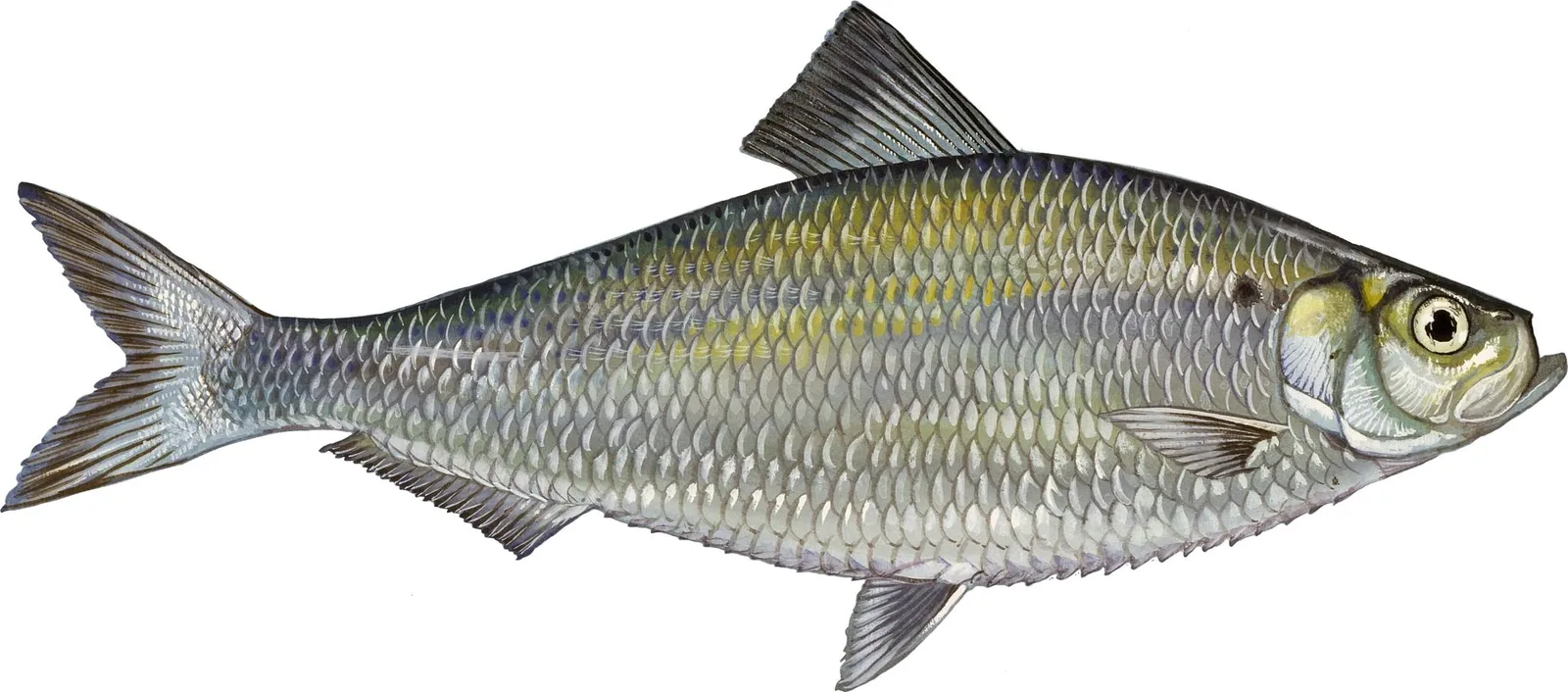 Alewife: How to Identify It, Where It Runs and Why Anglers Care
The alewife is a small silver herring: sea-run on the Atlantic, landlocked in the Great Lakes. How to ID one, where it runs, and where you can keep it.
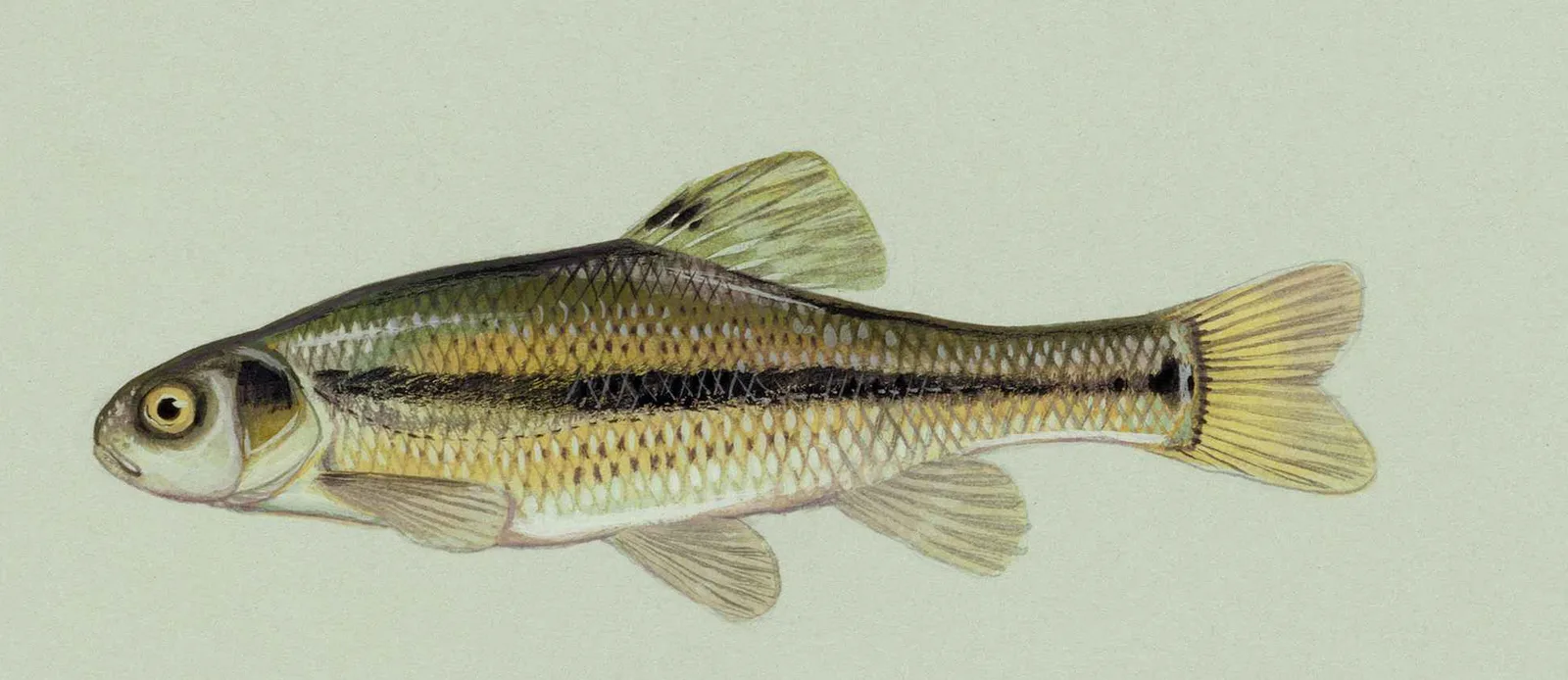 Fathead Minnows: ID, Bait, Pond Stocking and Rosy Reds
Fathead minnows are tough 2 to 3 in baitfish. How to identify them, keep them alive in a bucket, stock a pond by the pound, and spot a rosy red.
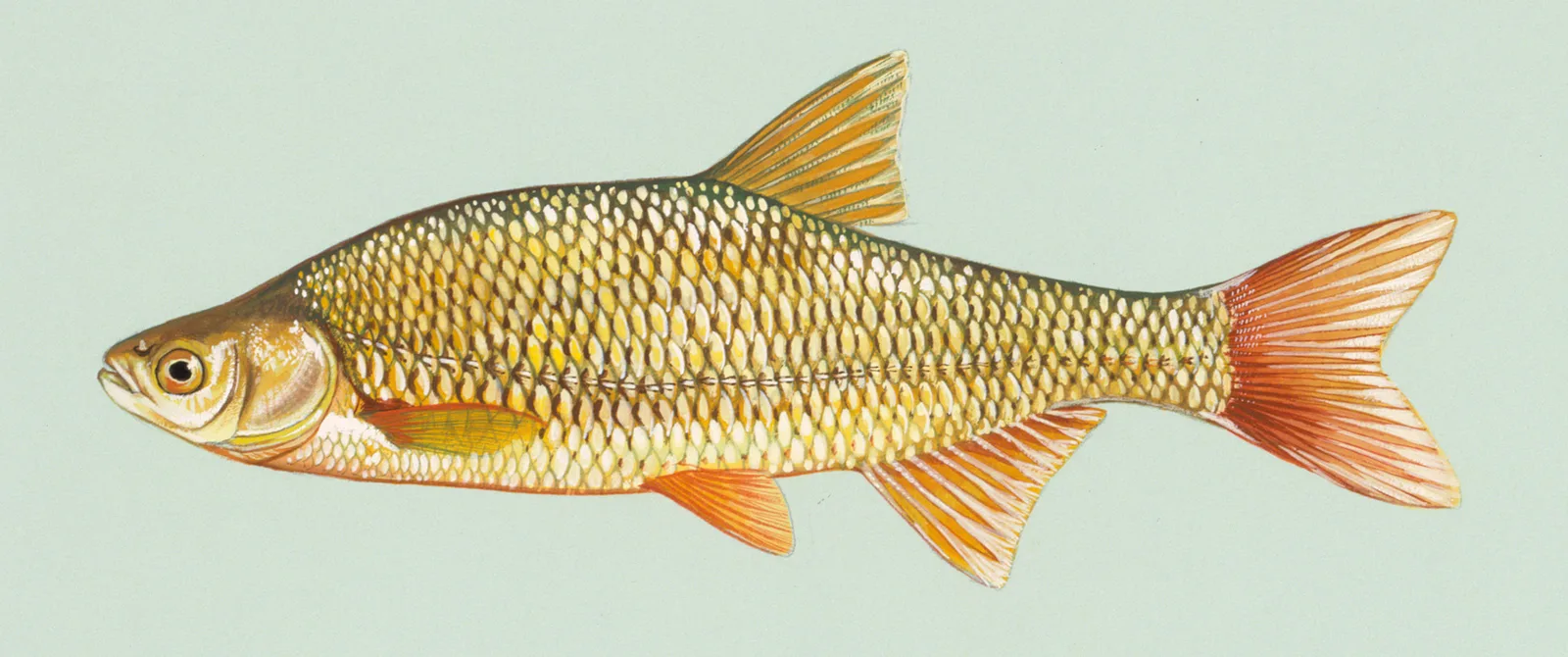 Golden Shiner: How to ID, Catch and Fish This Trophy Bait
Golden shiners are deep-bodied minnows and Florida's top live bait for big bass. How to tell one from a rudd, catch your own, and hook it right.
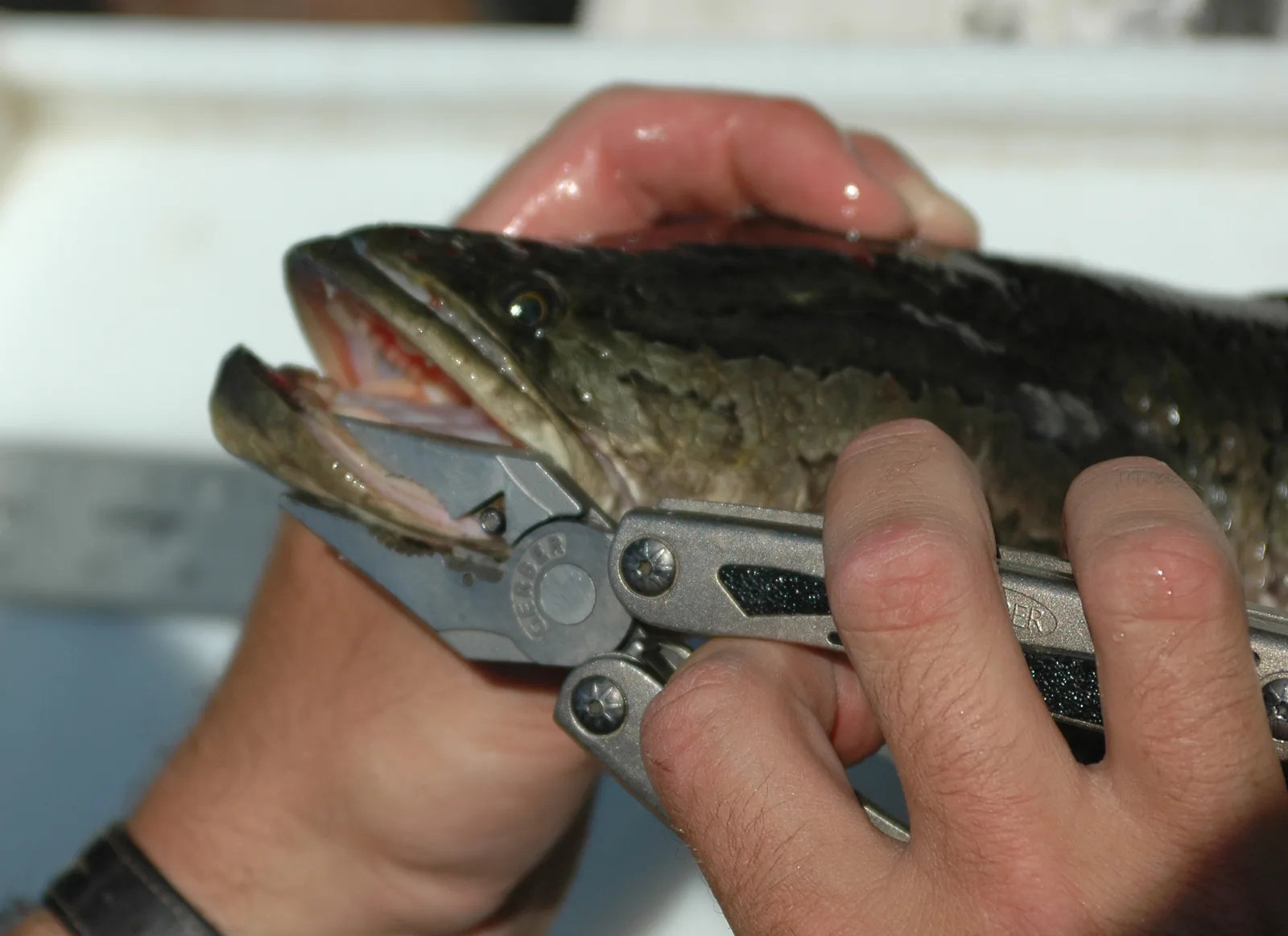 Snakehead Fish: How to Identify, Catch, and Handle One
The snakehead fish is an invasive, air-breathing predator. How to identify one, catch one on a frog, and what each state says to do with it.
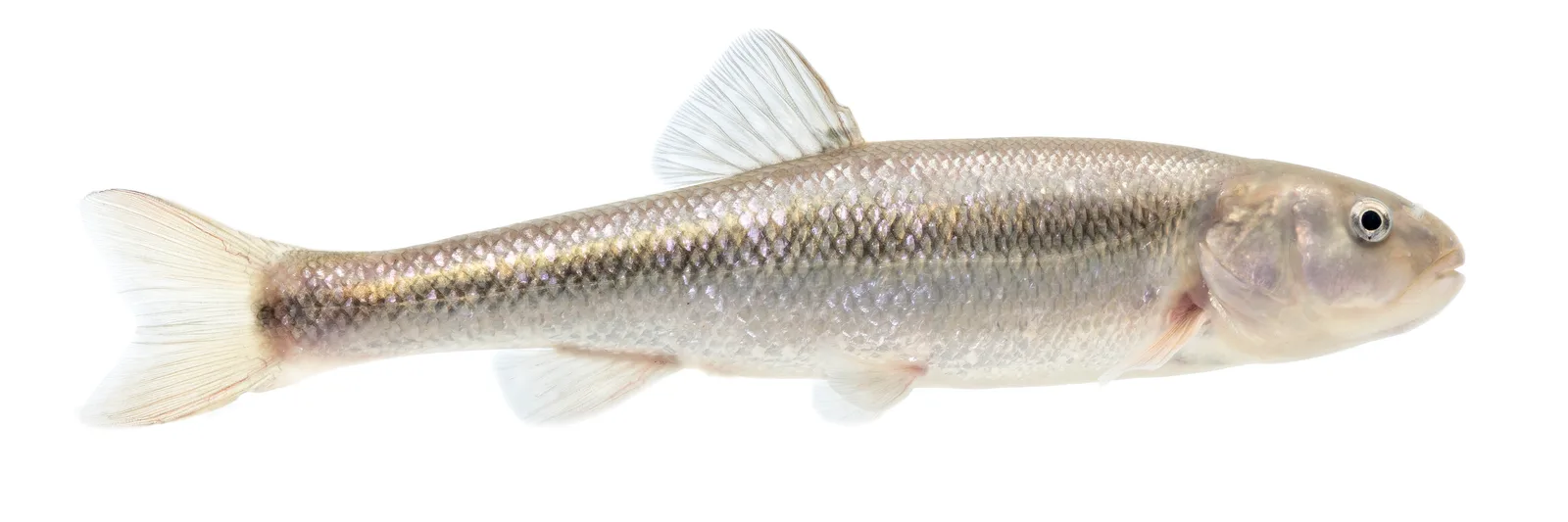 Creek Chub: How to Identify, Catch and Use Them as Bait
A creek chub is a 5 to 7 in minnow with a black spot on its back fin. How to identify one, catch it on light tackle, and rig it as live bait.
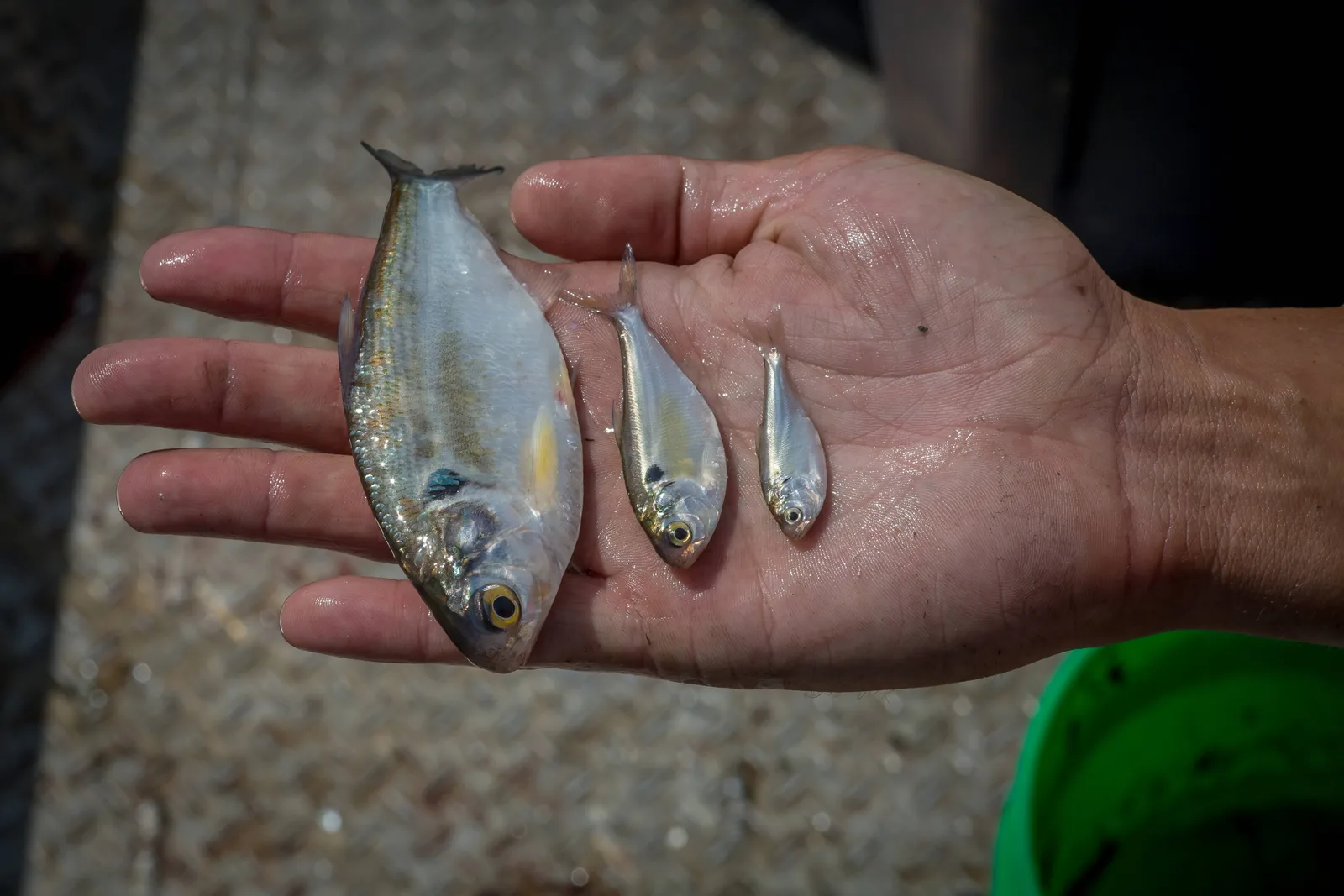 Gizzard Shad: How to Identify, Catch and Use Them for Bait
Gizzard shad commonly run 9 to 14 in. How to tell one from a threadfin, net it, keep it alive, and which states ban it as live bait.
Sources (13)
- Haddad Junior, V., Zuanon, J. and Sazima, I. (2021), Medical importance of candiru catfishes in Brazil: A brief essay, Revista da Sociedade Brasileira de Medicina Tropical 54: e0540-2020
- FishBase, Vandellia cirrhosa, Candiru
- Animal Diversity Web, Vandellia cirrhosa (Candiru)
- Spotte, S., Petry, P. and Zuanon, J. A. S. (2001), Experiments on the Feeding Behavior of the Hematophagous Candiru, Vandellia cf. Plazaii, Environmental Biology of Fishes 60: 459–464
- Bauer, I. L. (2013), Candiru--a little fish with bad habits: need travel health professionals worry? A review, Journal of Travel Medicine 20(2): 119–124
Show all 13 sourcesShow fewer sources
- Lesimann, W., Queiroz, T. and Camargo, L. M. A. (2020), Child injured by suspected catfish (Cetopsis sp.) bite in river, Humaitá, Amazonas, Brazil, Revista da Sociedade Brasileira de Medicina Tropical 53: e20190458
- Wikipedia, Candiru (fish) (history of the legend and the 1997 case, citing Gudger 1930 and Spotte 2002)
- Wikipedia, Vandellia cirrhosa
- Fischer, H. (2023), What can the candiru (Vandellia cirrhosa) do?, Hektoen International
- Schutt, B. (2008), Dark Banquet: Blood and the Curious Lives of Blood-Feeding Creatures, Crown, p. 281 (Spotte's odds, quoted on Wikipedia, Candiru (fish))
- Breault, J. L. (1991), Candirú: Amazonian parasitic catfish, Journal of Wilderness Medicine 2(4): 304–312
- Texas Parks and Wildlife Department, Prohibited/Controlled Exotic Species
- Florida Fish and Wildlife Conservation Commission, Prohibited Nonnative Species List