 By
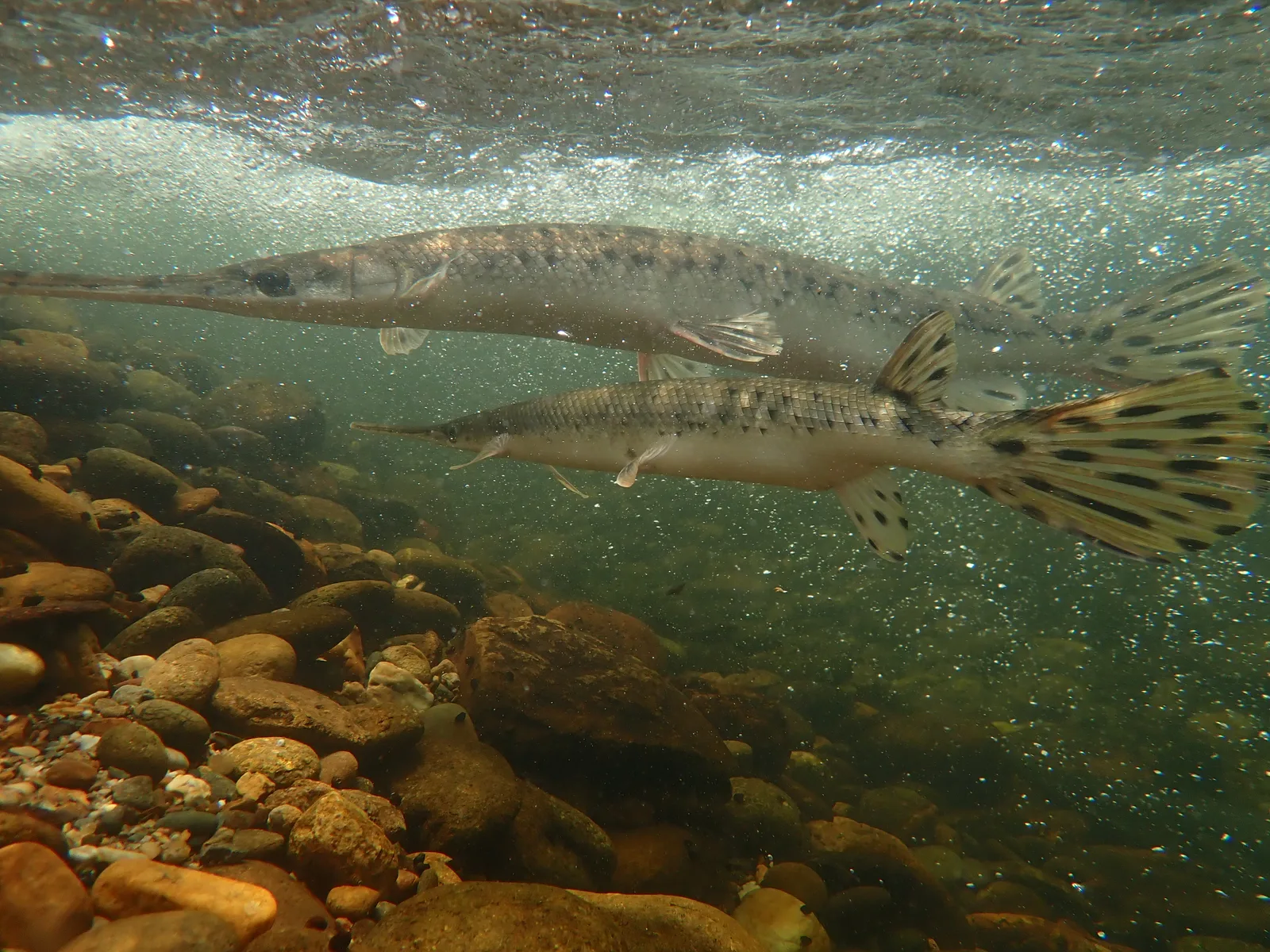
The longnose gar is the gar most anglers meet: a fish commonly 3 ft (0.9 m) long, armored in diamond-shaped scales, with a needle of a snout full of teeth. The IGFA calls it “the most common and widely distributed of all the gars,” found from Quebec and the Great Lakes south to Florida and the Rio Grande. You will see it basking at the surface of slow rivers and reservoirs in summer. Catching one takes frayed nylon, live bait and patience, because that bony beak rarely holds a hook.
The IGFA world record longnose gar weighs 43 lb. Arkansas, Texas, Mississippi and Oklahoma have each certified a heavier one in their own record books.
How do you identify a longnose gar?
Look at the snout. In Missouri’s field guide, the narrowest width of a longnose gar’s snout goes about 15 to 20 times into its length; Texas puts the rule at “at least 10 times.” Either way the beak is more than twice as long as the rest of the head, which is why Texans also call it needlenose gar, billfish or billy gar. No other North American gar comes close.
The rest of the fish is brown to dark olive above and white below. Round black spots cover the unpaired fins, and fish from clear water often carry spots on the body too, but the spots do not reach the head. Young longnose gar have a bold black stripe along each side. The body is covered in ganoid scales, hard diamond-shaped plates that interlock like armor.
The teeth are the second check. A longnose gar has a single row of long, sharp, needle-like teeth along each side of the upper jaw, the type biologists call villiform. Those teeth are built to hold prey, not to cut it, but they can still cut: keep your fingers clear of the jaws when you handle one. The fish teeth guide shows how gar teeth compare with those of other fish.
| Gar | Snout: length vs. narrowest width | Upper-jaw teeth | Spots on top of the head |
|---|---|---|---|
| Longnose | 15–20 times (Missouri); at least 10 times (Texas) | One row | No |
| Shortnose | 6–10 times | One row | No |
| Spotted | Short, like the shortnose | One row | Yes, plus on the paired fins |
| Alligator | 3–5 times, broad | Two rows | — |
The one real mix-up is size. A big longnose can look like an alligator gar from a distance, but the alligator gar’s snout is short and broad, and it is the only gar with two rows of teeth in the upper jaw. Texas genetic work has found natural crosses of alligator and longnose gar, so a fish with an in-between snout may be a hybrid.
Where do longnose gar live?
The range covers most of the eastern half of the continent. Longnose gar live from central Florida up the Atlantic seaboard to the St. Lawrence River in Quebec, in every Great Lake except Superior, through the Mississippi basin, and along the Gulf coast to the Rio Grande in Texas and Mexico. Kentucky’s wildlife magazine marks it as the most commonly caught gar, and Missouri’s field guide says it probably occurs in every major stream in the state.
Within that range they want slow water. Adults hold in sluggish pools, backwaters and oxbows of moderately clear rivers, and they often thrive in reservoirs: Missouri’s biggest numbers are in the large Ozark lakes. In Virginia they hold in shade under overhanging limbs and around sunken structure. They also enter brackish water in places such as Mobile Bay and the Chesapeake. The young stay in shallow backwaters, often around thick weed growth.
Gar can survive where most fish cannot because they gulp air. A gar’s swim bladder is laced with blood vessels and connected to the throat, so it works much like a lung. In summer, when the oxygen in the water runs low, longnose gar often lie motionless near the surface and take in air. That is when you see them, hanging still at the top on a hot afternoon. The how fish breathe guide explains the gills they rely on the rest of the time.

Free PDF · Water temperature chart Which fish are biting at today's water temperature?
One water temperature reading, and the 16-page chart tells you who's spawning, who's feeding hard, where they sit and what to throw. 26 fish, every number sourced.
Enter your email, confirm it with one click, and the PDF is in your inbox. Plus one email a week on what's biting. Unsubscribe anytime. Privacy.
When do longnose gar bite? Hot, sunny summer days
Longnose gar eat almost nothing but fish except for a brief period after hatching. They feed by day and by night, more actively at night, and mostly near the surface. A gar does not chase. It drifts toward its prey with tiny fin movements, looking like a floating stick, then lunges and grabs the fish sideways in its jaws. When the prey stops struggling, the gar turns it and swallows it headfirst.
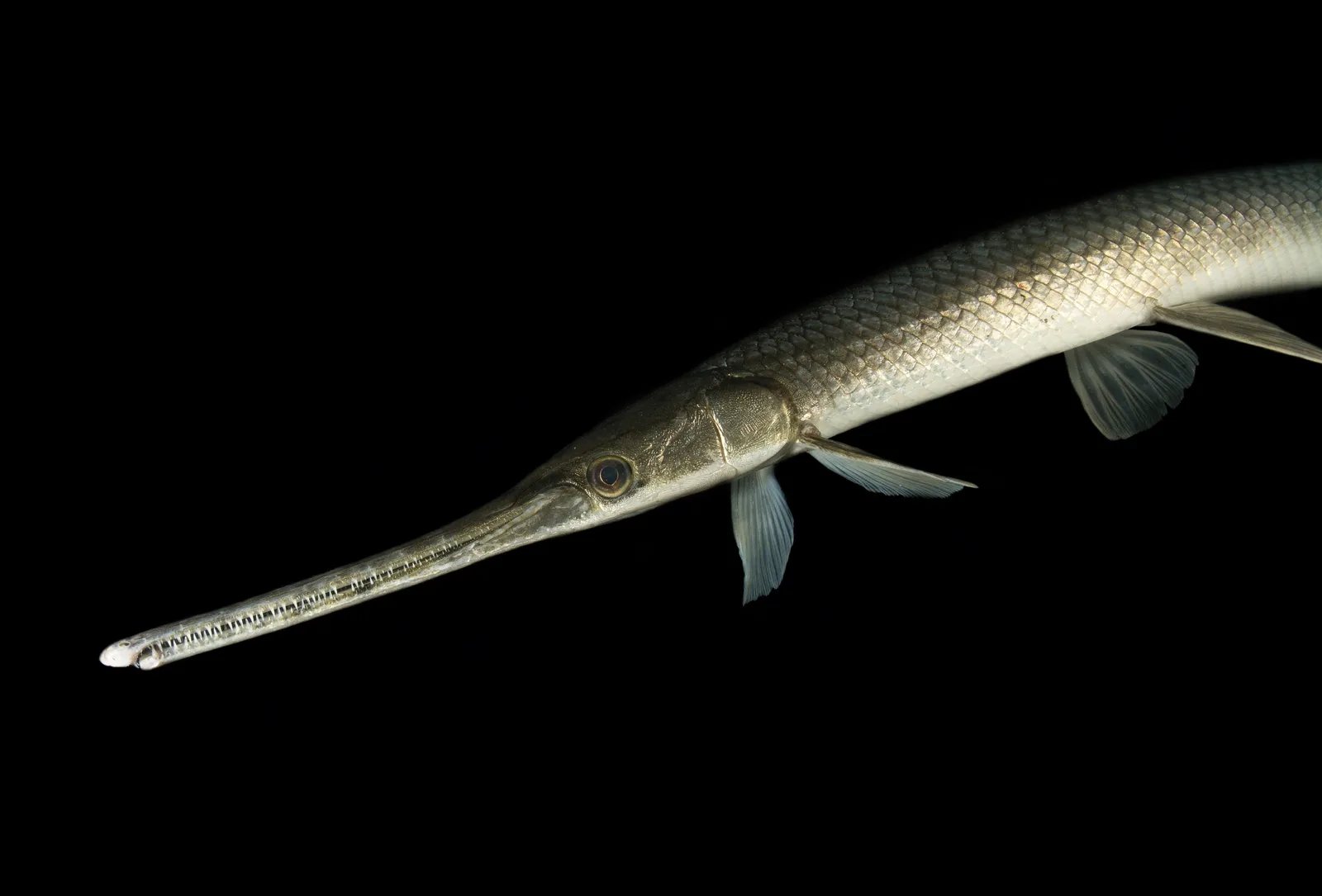 Photo: Ryan Hagerty, U.S. Fish and Wildlife Service, Gavins Point National Fish Hatchery (public domain)
That sequence explains most of the fishing. The first grab is a sideways hold, not a swallow, so an early hookset pulls the bait out of a bony mouth. Missouri’s biologists put it plainly: “The hard, bony jaws of gars do not readily take a hook.”
Spring brings the fish together. Before spawning, longnose gar move upstream into smaller, faster streams. In the Ozarks the adults reach their spawning spots by late April, and spawning runs from early May to mid-June; in Virginia it is generally April to June. In Alabama, biologists have watched large numbers of ripe adults gather in the tailwaters below every lock and dam in the Mobile basin during the spring spawn. Tailraces are a common place for them to hunt: a Mississippi Sportsman photo shows a longnose that hit a bass angler’s spinnerbait below a dam.
Summer is the season the gar guides favor. In In-Fisherman, New York guide John Gaulke says July and August are the top months and “the best days are hot, clear, and sunny,” when surface-oriented gar are easy to spot. On Alabama’s Coosa River, guide Terry Smith sees gar feed more actively once the water reaches about 70 °F (21 °C) in spring, and a lot of surface activity when it reaches the 80s to low 90s °F (27–34 °C).
How do you catch a longnose gar?
There are four ways, and the right one depends on whether you want to release the fish.
- A rope lure. A short piece of frayed nylon rope on a line with no hook at all. The gar slashes at it and its fine teeth tangle in the fibers. Texas lists entangling the teeth in nylon threads as one of the two usual ways to take a longnose.
- Live bait under a float. A live minnow under a float, or a shad drifted in the current like the one that took the Mississippi record. When the float goes under, wait: the gar is still holding the bait sideways. Set only after it has turned and swallowed the bait.
- Lures. Gar hit bass lures, and some of the biggest ever recorded came to anglers fishing for something else (see the record table below). The Michigan record took a Rattle Trap, a lipless crankbait; the Georgia record hit a bass plug cast at what the angler took for a bass. Gaulke still does not recommend hooks for longnose: “It’s terribly ineffective.”
- Bowfishing. Because gar bask near the surface, Missouri’s field guide notes that they “provide a ready target for the bow hunter.” Texas names bowfishing as the other usual way to take a longnose. An arrow kills, so this is for fish you plan to keep.
The full rigs, rope-lure recipes and hooksets for every gar are on the gar fishing page. Whatever the method, land a longnose with care. The teeth can cut, and if you keep one, the eggs go in the trash (see below).
How big do longnose gar get?
Missouri’s field guide gives the everyday size: commonly 3 ft and 5 to 6 lb, with the state’s largest fish at about 60 in (152 cm) and 30 lb (14 kg). The upper limits in other sources vary. The Florida Museum gives up to 6 ft 8 in (2 m) and 35 lb (16 kg), the Chesapeake Bay Program 5 to 6 ft and as much as 50 lb (23 kg). The big ones are females: in Missouri, males do not exceed 3 ft.
What is the longnose gar world record?
The IGFA all-tackle world record is 43 lb (19.5 kg), caught by Rock Shaw on the Trinity River in Texas on May 7, 2017. The IGFA also keeps an all-tackle length record: 148 cm (58 in), by Arthur Weston on Sam Rayburn Lake, Texas, on September 7, 2023. That is five days after Weston caught the 283 lb alligator gar that holds that species’ world record, on the same lake.
State record books tell a different story, because state record programs run separately from the IGFA’s. At least four states have certified a longnose heavier than the world record, and a striking number of record fish were caught by anglers after another species.
| Record | Weight and length | Where and when | How it was caught |
|---|---|---|---|
| Arkansas, unrestricted tackle | 54 lb (24.5 kg) | Arkansas River, August 4, 2011 | Torry Cook; the rod-and-reel record is 35 lb 12 oz (16.2 kg), 2005 |
| IGFA all-tackle | 43 lb (19.5 kg) | Trinity River, Texas, May 7, 2017 | Rod and reel, Rock Shaw |
| Texas | 50.31 lb (22.8 kg) | Texas | Not given in TPWD’s summary |
| Mississippi | 48 lb 1 oz (21.8 kg) | Sardis Lake spillway, September 10, 2016 | A shad drifted under a float, fishing for catfish |
| Oklahoma, rod and line | 43 lb 8 oz (19.7 kg); 64½ in (164 cm) | Lake Eufaula, August 28, 2012 | Rod and line, Howard Zummer |
| Missouri, pole and line | 32 lb 10 oz (14.8 kg) | Table Rock Lake, April 7, 2021 | Spotted on a trip for crappie; the bow record is 35 lb 9 oz, 2013 |
| Georgia | 31 lb 14 oz (14.5 kg) | Lake Blackshear, March 5, 2026 | A bass plug cast at a fish taken for a bass |
| South Carolina | 25 lb 6 oz (11.5 kg) | 2008 | Not given |
| Michigan | 18 lb (8.2 kg); 53 in (135 cm) | Williamsville Lake, 1995 | Spincasting, a Rattle Trap |
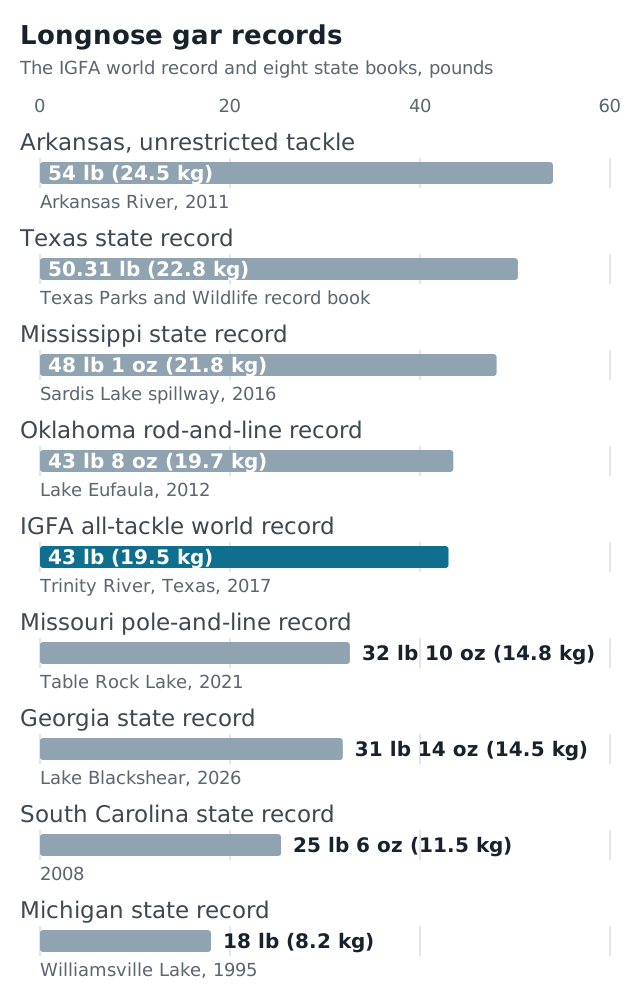
The Mississippi fish shows how fast these books move. It beat a state record of 40 lb, and Missouri’s 2021 fish replaced one of 27 lb that had stood since 1999. Don Henson was fishing the spillway for a catfish dinner when his float disappeared, and after a fight of about 15 minutes he thought he had “the biggest catfish at the end of my line.” The record books are worth a look if you hook a big gar on a catfish rig: weigh it on a certified scale before you decide what to do with it.
What are the rules for longnose gar?
Longnose gar are lightly regulated where they are common. Texas has no minimum size and no daily bag limit on longnose, shortnose or spotted gar, and Missouri treats the longnose as a native nongame fish. Arkansas has a commercial fishery for them. Bowfishing rules, seasons and methods still differ from state to state, so read your state’s current regulations before you keep or shoot one. If you plan to let a gar go, the catch and release guide covers handling it.
Are longnose gar good to eat?
Edible, but few people bother. Missouri says gars “are rarely used for food,” and South Carolina says longnose gar “are not noted for their food value.” Mississippi Sportsman adds that “a small but dedicated number of anglers swear the meat is sweet and tasty when cleaned and cooked properly.”
Never eat the eggs. In Missouri’s words, gar roe is “highly toxic to warm-blooded animals, including humans.” The Chesapeake Bay Program describes the eggs as large, sticky and green, and extremely poisonous to people, animals and birds. Before you keep any fish from a river or reservoir, check your state’s fish consumption advisories for that water.
How long do longnose gar live, and how do they grow?
A longnose gar’s life depends on its sex. Females mature later and live about twice as long, and in the words of Missouri’s biologists, “the females are always much larger than the males.”
| Males | Females | |
|---|---|---|
| Mature at | Age 3 or 4, about 28 in (71 cm) | Age 6, about 33 in (84 cm) |
| Largest size | Do not exceed 3 ft (0.9 m) | At least 4½ ft (1.4 m) |
| Lifespan | Rarely more than 11 years | 20 years or more; up to 22 in the Florida Museum’s profile |
| On the spawning riffle | Far outnumber the females | Each one escorted by one to several males |
Growth is fast at first: young longnose gar reach about 20 in (51 cm) in their first year. Spawning happens over shallow gravel riffles, where the fish gather in large numbers, vibrate and splash loudly enough to be heard from far off. No nest is built. A female can lay up to 77,000 eggs in a season, in several batches over the spawning period, and the sticky eggs lodge in the gravel and hatch in six to eight days. In Virginia, longnose gar sometimes spawn on the beds of smallmouth bass, whose guarding may protect the gar eggs too. The hatchlings hang from rocks and plants by an adhesive disc on the snout until their yolk sac is gone.
The diet changes with age. Young-of-the-year eat mostly minnows, and older fish in Missouri feed mostly on gizzard shad. In Lake Texoma, the Florida Museum reports, young longnose gar ate more than 80% inland silversides and less than 1% game fish. Gar are often blamed for eating sport fish, but Missouri’s biologists point out that they may also keep forage fish from overpopulating, which can improve a fishery.
Gars are an old family: Missouri traces the order to the Late Jurassic, and Kentucky notes that “gar” is the Anglo-Saxon word for “spear.” The other freshwater fish hub has the longnose’s neighbors, from burbot to whitefish.
Free PDF · 16 pages
Know what's biting before your first cast
The Water Temperature Fishing Chart. Take one water temperature reading, find it on the chart, and you know which of 26 freshwater fish are feeding today, where they are and what to throw. For your phone and the tackle box.
- Where they sit and what to throw at every band: bass, crappie, bluegill and walleye; catfish by species; trout: when to stop and where they hide
- The best hours at your reading, the cold front day by day, and the spawn calendar from ice-out to midsummer
- The three thermometer mistakes that make a reading lie (the first one is the surface)
- The 26-fish chart: who's spawning, feeding hard or shut down at your reading
Every number from state fish and wildlife agencies and fisheries research: 61 sources, all on the site.
Enter your email, confirm it with one click, and the PDF is in your inbox. Plus one email a week on what's biting. Unsubscribe anytime. Privacy.
Related
Section guide
Freshwater Fish Species Outside the Big Families: Sturgeon, Gar, Bowfin, BurbotThe freshwater fish species outside the bass, trout, catfish and pike families: sturgeon, gar, bowfin, burbot, drum, eel and paddlefish, with records.
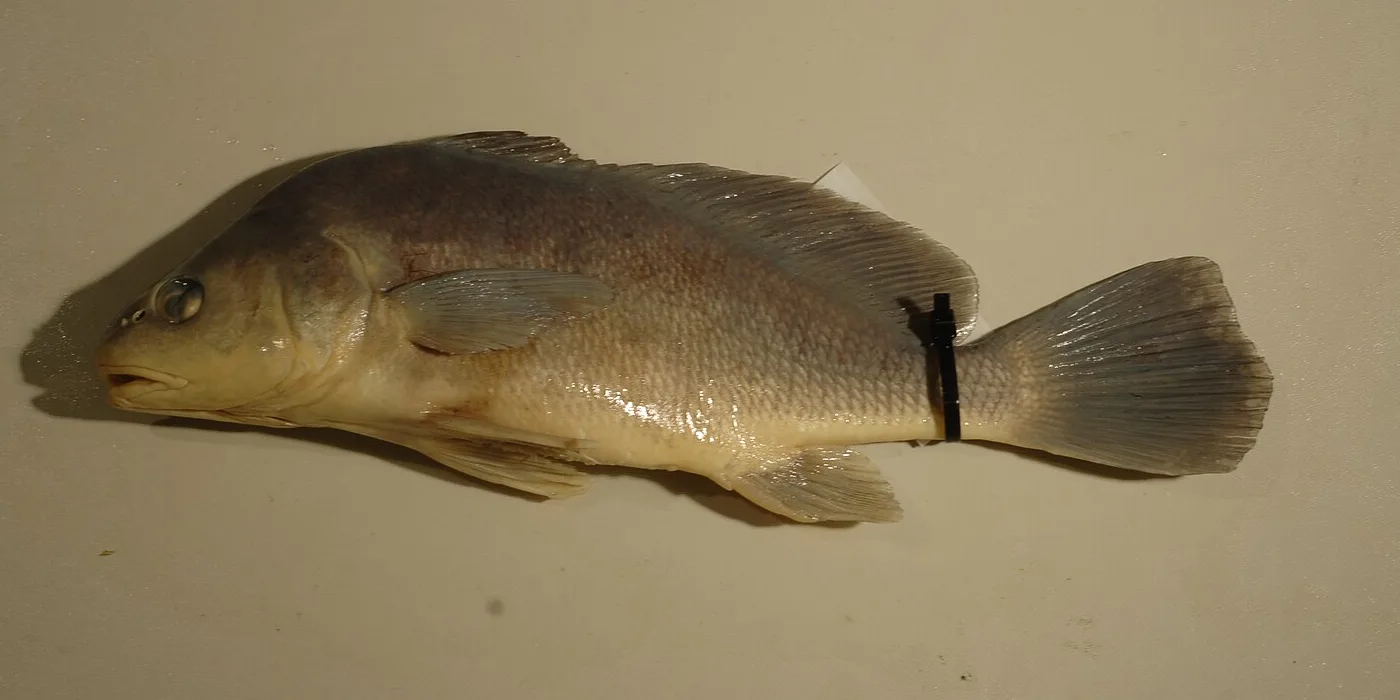 Freshwater Drum: Sheepshead, Gaspergou and How to Catch Them
Freshwater drum, or sheepshead, mostly run 1 to 5 lb; the record is 54 lb 8 oz. How to tell one apart, the rig that catches it and how to cook it.
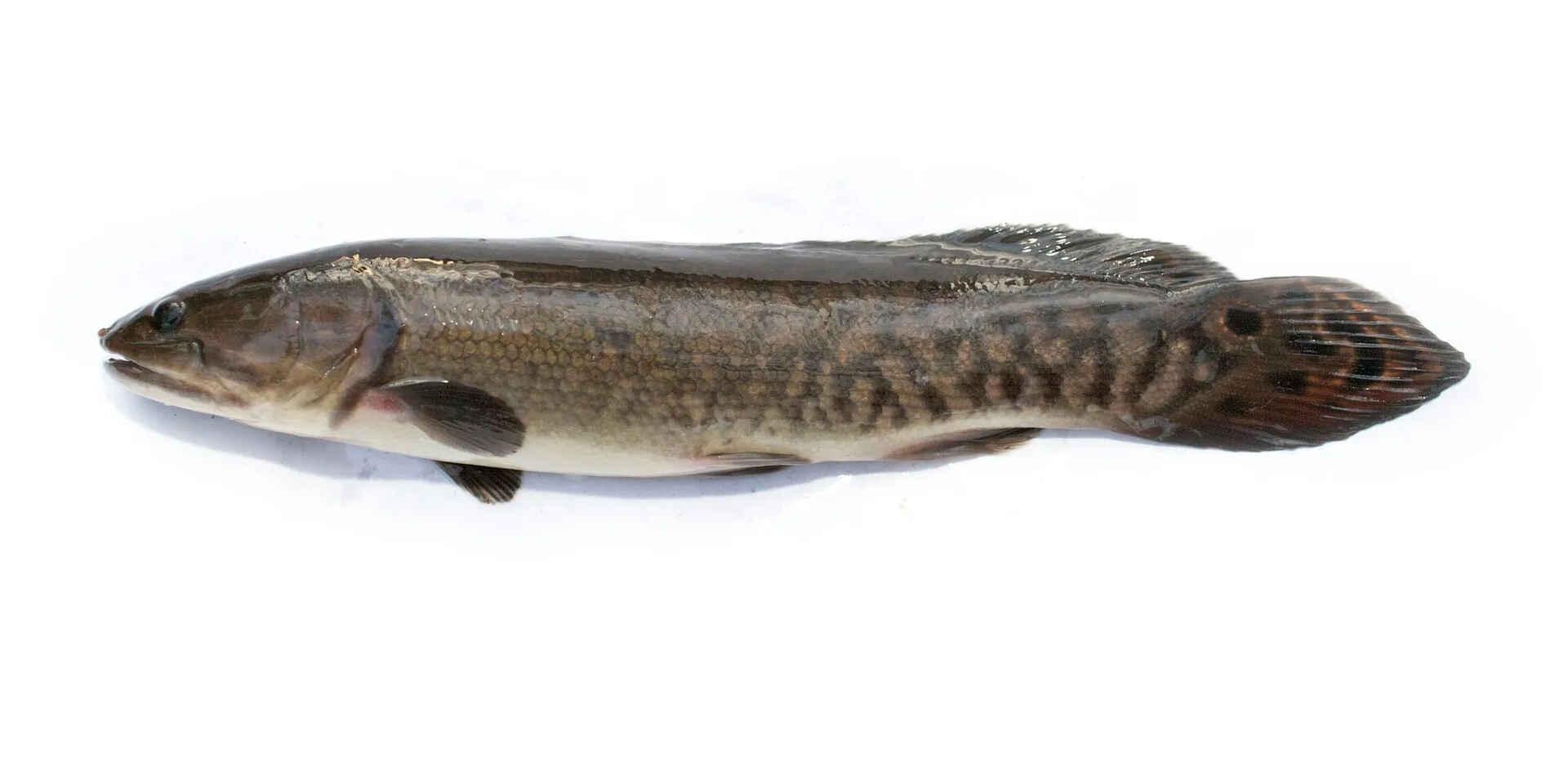 Bowfin: Identification, Bowfin Fishing, and the Snakehead Look-Alike
The bowfin is a native, air-breathing predator with a 21 lb 8 oz world record. How to identify one, tell it from a snakehead, and catch one.
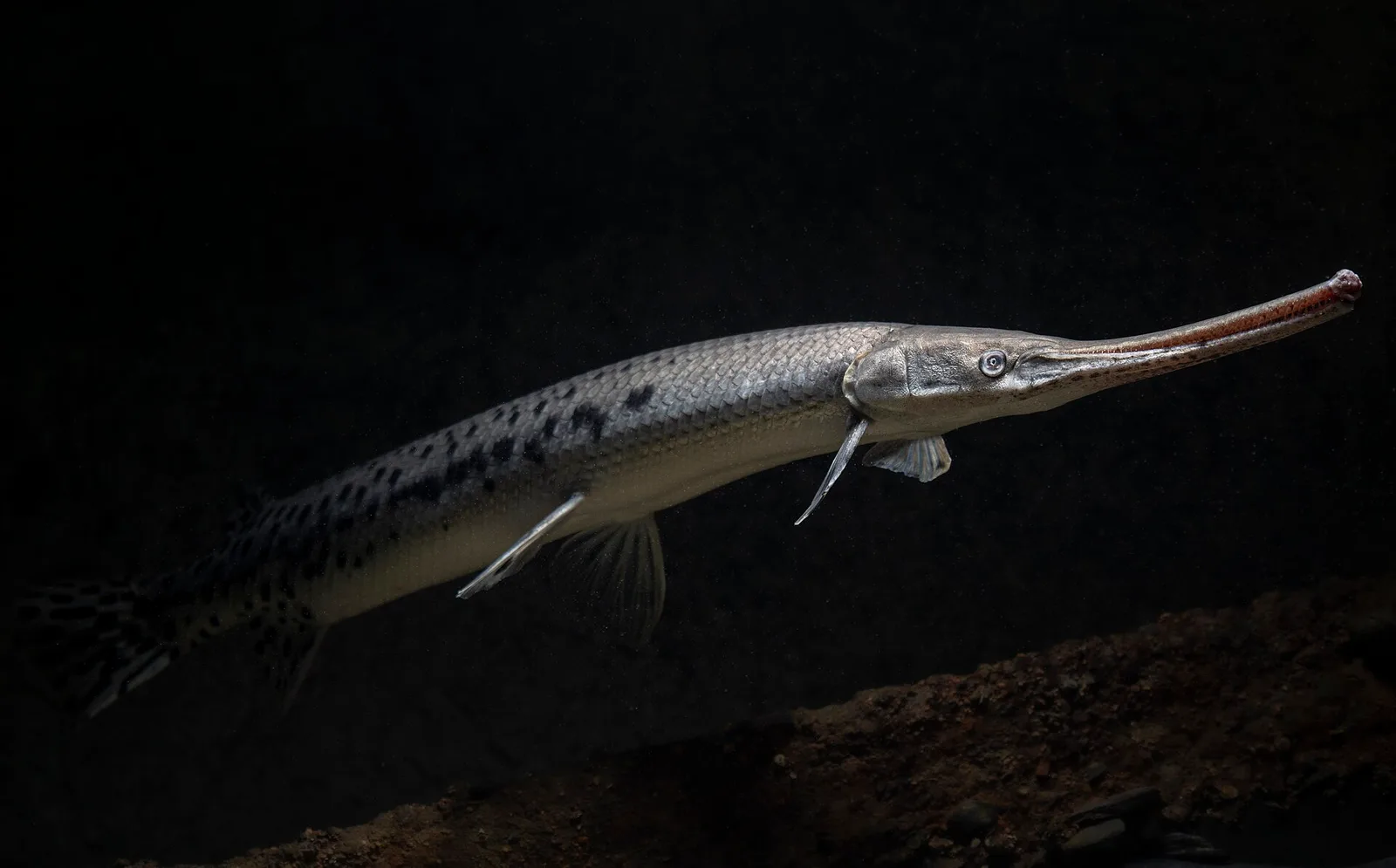 Gar Fishing: Rope Lures, Live Bait and Bowfishing for Every Gar
Gar fishing for all five US gars: hookless rope lures, live bait, fly and bow, the alligator gar rig, and how to handle a mouth full of teeth.
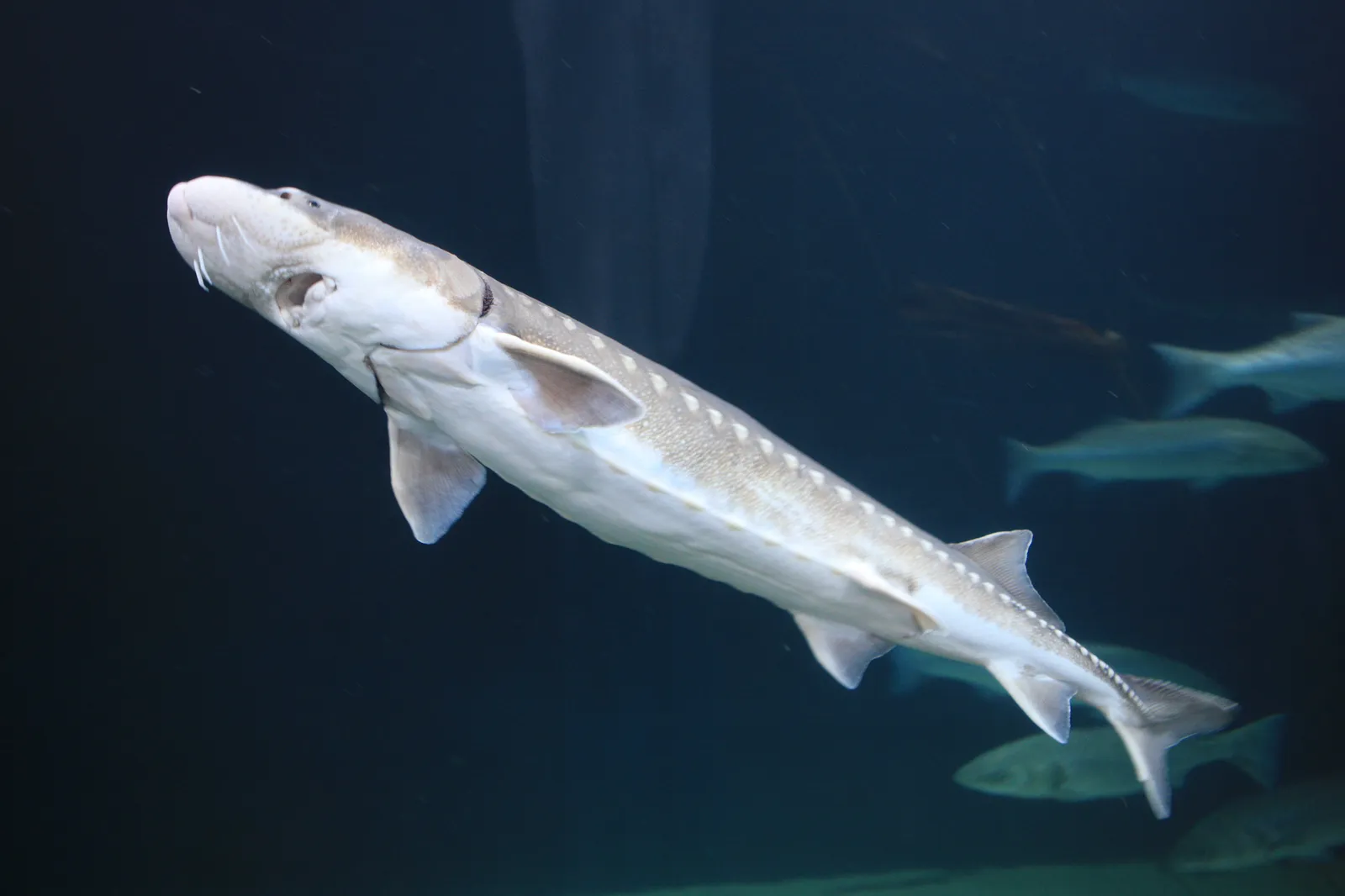 Sturgeon: The Nine US Sturgeons, How Big and Old They Get, and the Rules
Nine sturgeons live in US waters and six may never be kept. How to tell them apart, how big and old they get, the records and where you can fish.
- Alligator Gar: Size, Teeth, Records, and How to Catch One
Alligator gar reach 8 ft and 300 lb and can live past 90 years. How to tell them from other gars, how to catch one, the records and the rules by state.
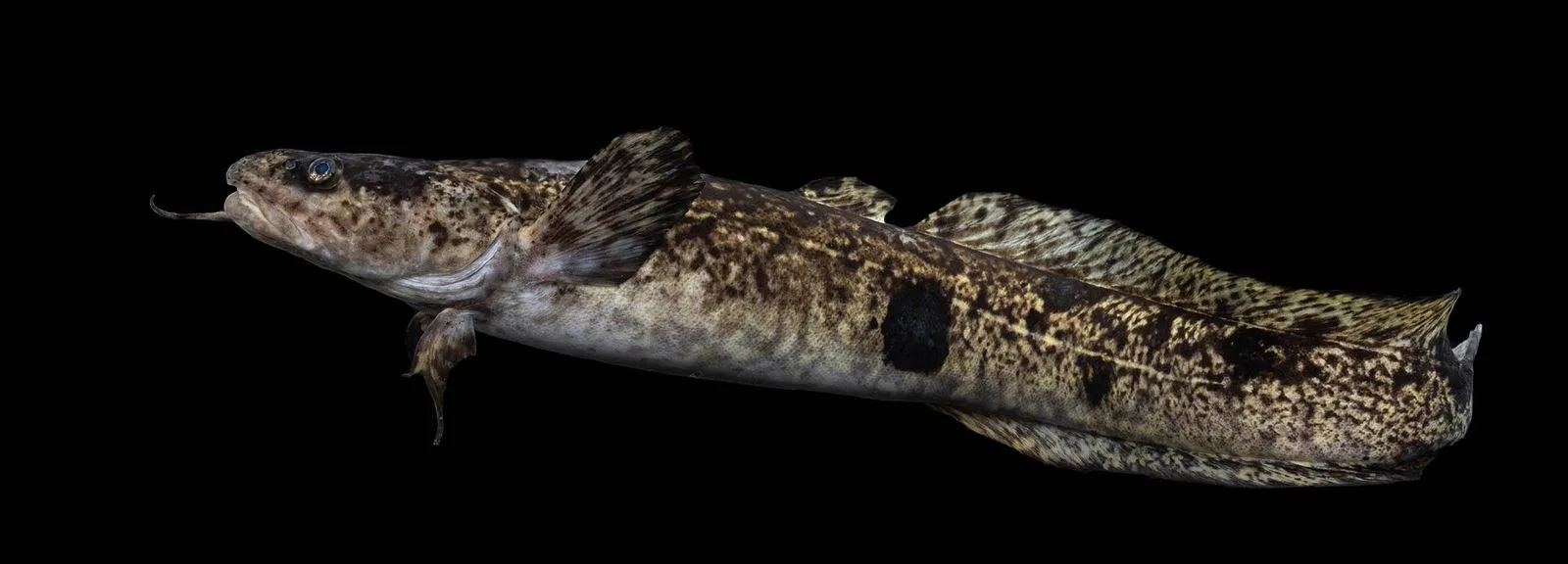 Burbot: The Freshwater Cod That Spawns Under the Ice
Burbot, the only freshwater cod: one chin barbel, 15–28 in, 1.5–5 lb. When and where they bite through the ice, the glow jig that works, and the rules.
Sources
- Missouri Department of Conservation, Longnose Gar (field guide)
- Texas Parks and Wildlife Department, Longnose Gar (Lepisosteus osseus)
- TPWD: News Roundup: Alligator Gar (fast facts: records, other gars, eggs)
- Florida Museum of Natural History, Longnose Gar – Discover Fishes
- IGFA World Record Search: Gar, longnose (all-tackle, Rock Shaw, 43 lb 0 oz; all-tackle length, Arthur Weston, 148 cm; read 2026-11-01)
- Chesapeake Bay Program, Longnose Gar (field guide)
- Virginia Department of Wildlife Resources, Longnose Gar
- South Carolina Department of Natural Resources, Longnose Gar
- Alabama Department of Conservation and Natural Resources, Longnose Gar (from Fishes of Alabama and the Mobile Basin)
- Kentucky Afield (Summer 2012), Meet the Gars: Distinguishing the four types found in Kentucky
- Missouri Department of Conservation, Missouri angler swipes state record for longnose gar
- Arkansas Game and Fish Commission, Arkansas State Record Fish
- In-Fisherman, Best Summer Gar Fishing Strategies
- Oklahoma Department of Wildlife Conservation, State Record Fish
- Georgia DNR Wildlife Resources Division, New State Record Longnose Gar Caught on Lake Blackshear
- Mississippi Sportsman (2017), 'Garilla' — Sardis spillway yields world record
- Mississippi Sportsman, Species Spotlight: Longnose gar
- Michigan DNR, State record fish table (2024 copy)
- Bohn, Kreiser, Daugherty and Bodine (2017), Natural Hybridization of Lepisosteids: Implications for Managing the Alligator Gar, North American Journal of Fisheries Management
- U.S. Fish and Wildlife Service, Longnose gar swimming upstream to spawn in the Conasauga River, Georgia (photo)
- U.S. Fish and Wildlife Service, Longnose Gar at Gavins Point NFH (photo)