 By
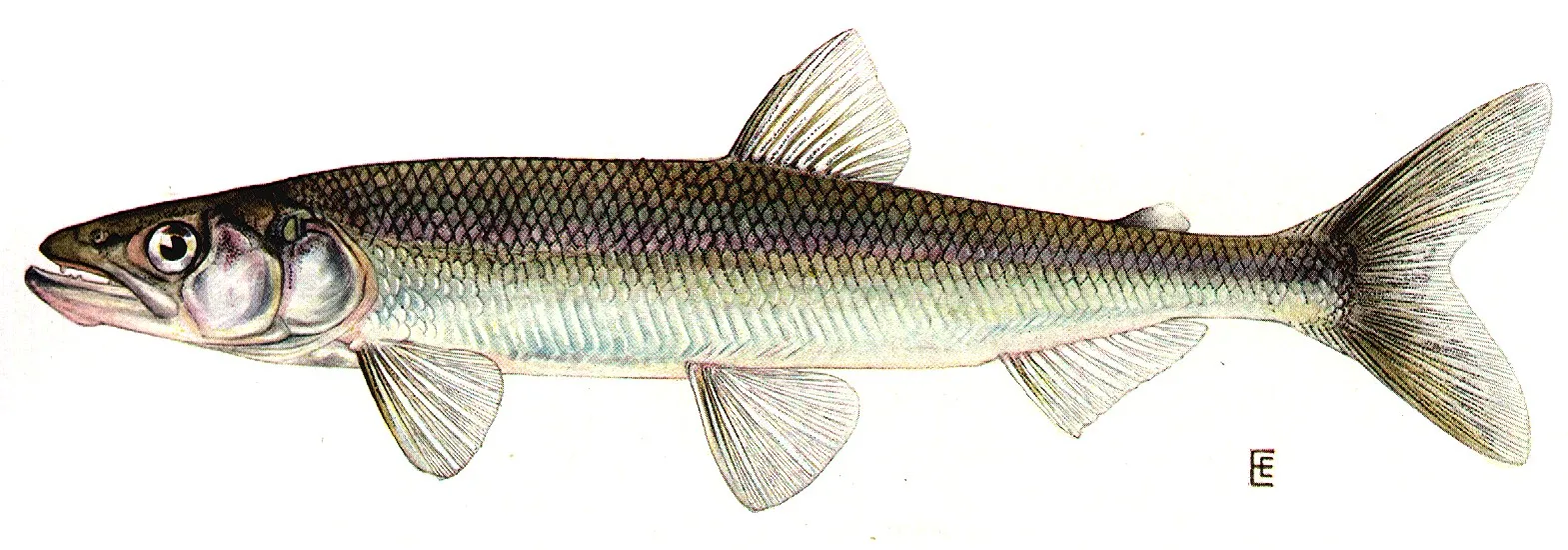
Smelt fishing is mostly done at night: dip a net into the spring run once shore water reaches about 40 °F, or jig a tiny hook through the ice. Start with the net if you live near a run. It’s the easy one, and all you need is a net, waders and a bucket.
Oregon’s 2026 smelt opening on the Sandy River lasted seven hours, noon to 7 p.m. on one Wednesday. Check the date before you load the truck.
When do smelt run?
Smelt come in to spawn when the ice goes out and the shallows start to warm. Wisconsin’s DNR puts the trigger at about 40 °F. Bass Pro writer Jason Akl likes 42 to 45 °F, and he says the spawn starts at dusk. Your window is short: a run can be over in seven to 10 days, or last a couple of weeks.
| Water | When | How |
|---|---|---|
| Maine tidal rivers | Fish arrive in December, peak in late February and early March | Hook and line from a shack, at night, on an incoming tide |
| Inland lakes such as Green Lake, Michigan | Winter, under the ice | Light, small jig, after dark |
| Lake Michigan | Late March to the end of April | Frame dip net at night |
| Lake Superior | Last two weeks of April, peaking just after ice-out in Chequamegon Bay | Seine or dip net after dark |
| Cowlitz River, Washington | Wednesdays or Saturdays in February and March, when approved. Closed for all of 2026 | Handheld dip net from the bank |
| Sandy River, Oregon | One day in March 2026 | Dip net from the bank |
Watch the weather as much as the calendar. A cold spring can push a run back. The spawn gets heaviest once it’s fully dark, Akl says, so be set up by sunset.
How do you dip net smelt?
Lower the net, lift it, and dump the fish in the bucket. That’s the whole method. The only hard part is being there on the right night.
- Read your state’s net rule first. A net built to the Cowlitz limit is twice as wide as New Hampshire allows. Some waters are closed outright.
- Pick a stream mouth or a sheltered shore. Smelt push into streams and the shallows close to shore to spawn. On Lake Michigan, Wisconsin’s DNR says most smelting near Milwaukee happens at Jones Island, with McKinley Pier sometimes good. On Lake Superior, the run usually shows first in the Hot Pond on the Ashland side of Chequamegon Bay.
- Go after dark. The big schools swim in close to shore once it’s dark. Bring a lantern and a headlamp.
- Dip and lift. Use a long-handled or frame dip net. Lower it in and lift it straight up.
- Change spots if it’s dead. When nothing comes through, try the next stream mouth or another stretch of shore.
- Fish safe. That water sits around 40 °F. Wear waders and watch for slippery rocks. Bringing kids? Oregon’s agency says life jackets are “strongly recommended for children.”
Lake Superior netters often use a seine, a long net two people walk through the water. Carry it out as deep as you can wade, with the poles held high so the net stays out of the water. Then set the poles on the bottom and work slowly back to shore. Keep the net on the bottom and pick up the pace near the beach, then slide it onto the sand. Bass Pro’s Jason Akl calls for a 15- to 25-foot (4.6 to 7.6 m) seine. Minnesota caps them at 25 feet long and four feet deep. It also bans seines in every stream but the St. Louis River, and within 100 feet of a stream mouth on Lake Superior.
What to bring: a net, waders, waterproof gloves, a 5-gallon bucket, a lantern and a headlamp. Oregon’s agency adds a scale and ice.
Free PDF · Water temperature chart Which fish are biting at today's water temperature?
One reading, and the 16-page chart shows which of 26 fish are spawning, feeding hard or slowing down; for bass, crappie, bluegill and walleye, where they sit and what to throw. Every number sourced.
No card, nothing to buy, and the PDF is yours to keep. Confirm with one click and it's on its way. Then a few short emails and one a week on what's biting. Unsubscribe anytime. Privacy.
How do you catch smelt through the ice?
Fish at night with the lightest line you own and a very small jig. The lightest, whippiest panfish rod you own is the right tool, the one you’d take for perch. In-Fisherman’s Dave Scroppo fishes 1 or 2 lb line on a Michigan lake. His bait is a tiny jig tipped with a spike, which is a fly maggot. Check the ice is safe before you walk out in the dark.
Light brings them in. Set out a lantern or hang a submersible bulb, wait 20 minutes to half an hour, and let the feeding start. The light pulls up the tiny animals that smelt eat. Set your shanty about 10 ft (3 m) from it.
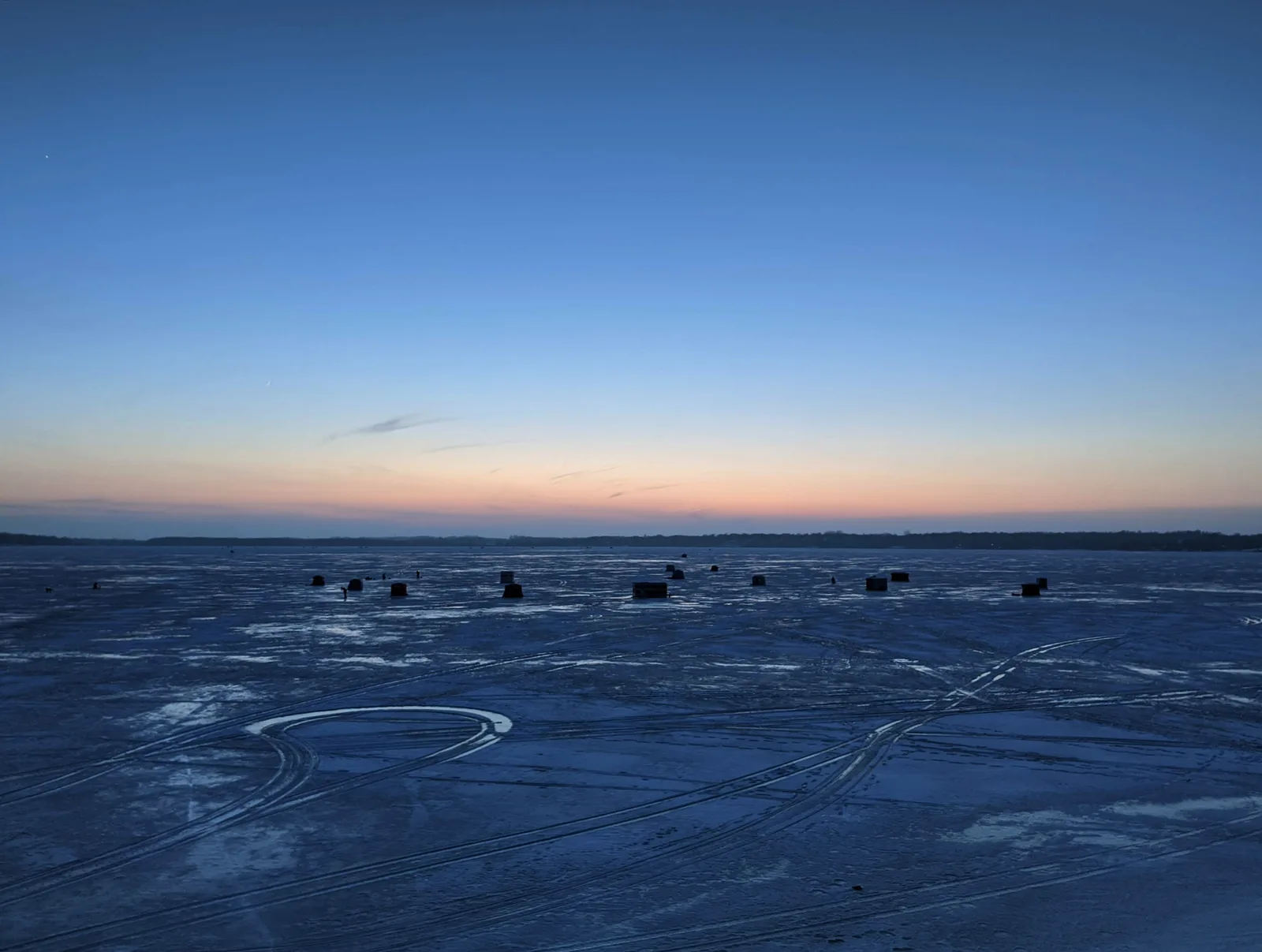
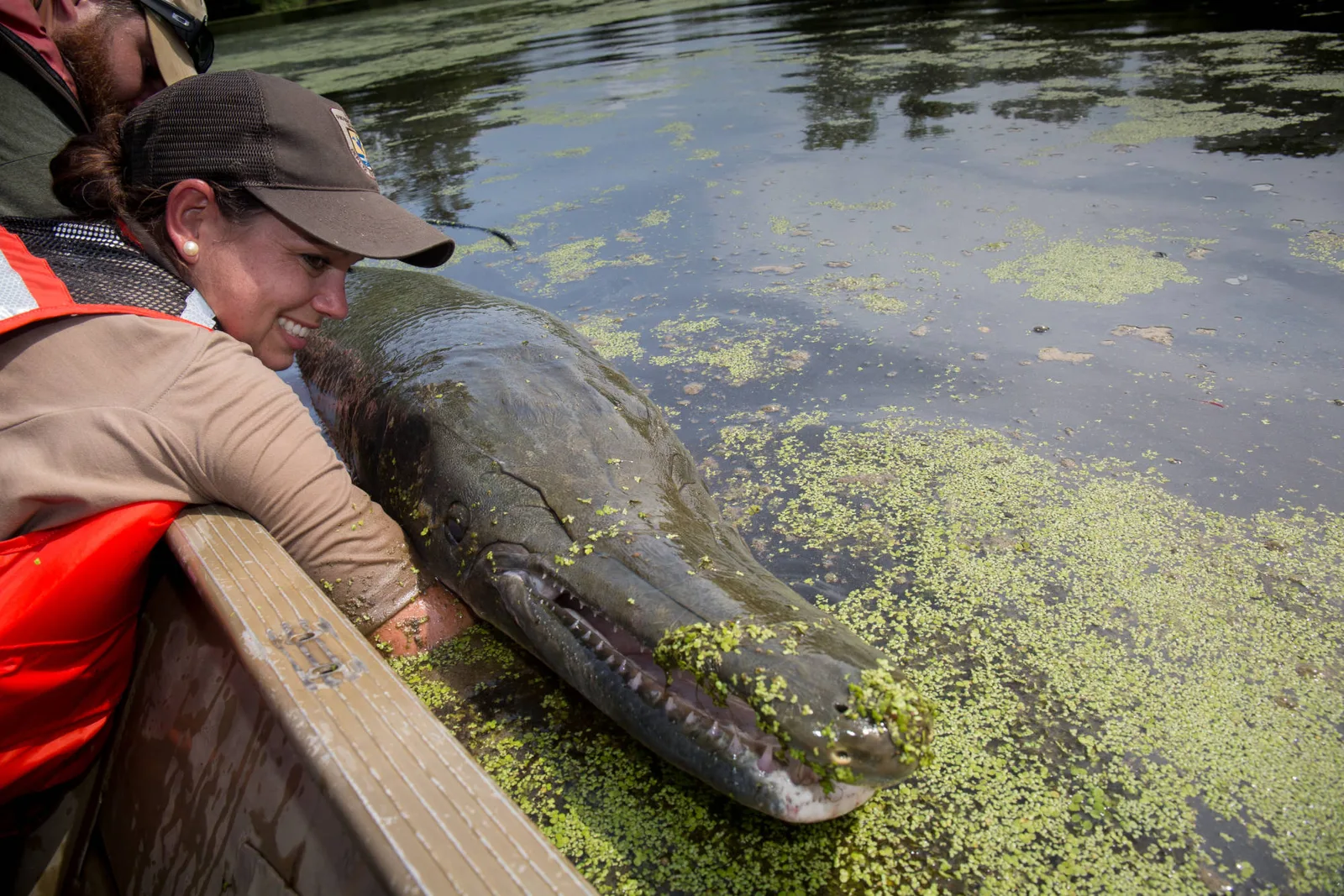
Photo: Courtney Celley, U.S. Fish and Wildlife Service (public domain)
Depth is the part that changes. Smelt can sit anywhere from inches under the ice to more than 20 ft (6 m) down. That’s over 40 ft (12 m) of water or more. They come up as the night goes on. Work the jig 2 to 3 ft (0.6 to 0.9 m) at a time. Go back to the depth where you got bit. A portable fish finder or flasher saves a lot of guessing here. Late at night you might see them a foot or two under the ice.
The bite is light. They’ll steal your bait while you’re looking at your phone, so watch the rod tip like a hawk. When it barely twitches, that’s a smelt.
Fishing bait on a plain hook instead of a jig? The County, a northern Maine paper, calls one size 8 or 10 hook the common setup. Pinch a small non-lead split shot on the line a foot above it.
How does a Maine smelt shack work?
You pay, you sit in a warm shack over a tidal river, and the camp hands you the gear. Rentals include seaworms for bait, hooks, lines, sinkers and firewood. Game & Fish reported rental costs “between $10 and $14 per person” in 2025. The tradition’s center is Merrymeeting Bay, where six rivers meet, including the Kennebec and the Androscoggin.
Book your night around the tide. Night fishing on an incoming tide, or around high tide, is usually best. Bringing your own rod? Game & Fish says that’s typically an ultralight spinning rod with 4 lb line. Add a weighted Sabiki rig, a store-bought string of tiny hooks. Bait the hooks with little pieces of cut worm.
You can skip the shack and fish a dock. Lighted docks draw more smelt than dark ones, and a longer rod with a softer tip suits the job.
What are the smelt rules in each state?
Every state does this differently, and some change it water by water. These are the agencies’ own words. They change, so read the current rule before you go.
| Where | Season and gear | Limit |
|---|---|---|
| Michigan | “Open All Year.” “Dip nets may be used for Bowfin, carp, Longnose Gar, Smelt and suckers in waters that are not designated trout streams.” | “2 gallons” |
| Minnesota, Lake Superior and tributaries | “Continuous.” “smelt may be taken with the use of dip nets and minnow seines not more than 25 feet in length” “nor more than four feet in depth” | “Smelt may be possessed without limit” |
| New York, Lake Ontario, Lake Erie, Niagara River | “All Year.” “Smelt may be taken in any size dip net” | “8 Quarts” |
| New York, Tupper Lake and seven Finger Lakes | “All year.” “a dip net not exceeding 14 inches in diameter, or 13x13 inches if square” | “Anytime,” “8 Quarts” |
| New Hampshire, freshwater | “From March 15 through April 30, smelt may be taken by means of a dip net not over 18 inches in diameter” “between the hours of sunset and 12 midnight.” Named waters only | “2 quarts liquid measure of whole (head and tail intact) freshwater smelt” |
| New Hampshire, coastal | “No closed season” | “4 liquid quarts.” “Head and tail must remain intact” |
| Massachusetts, inland | “Smelt may be taken in all inland waters by hook and line only from May 16th to the last day of February” | “There is no daily or seasonal limit for smelt on these waters.” |
| Washington, Cowlitz River | “a handheld dip net with a rigid handle.” “The bag frame may not exceed 36 inches across, and the mesh size must be no larger than 5/8-inch stretch.” | “up to 10 pounds of smelt” |
| Oregon, Sandy River | “Harvest is allowed with dipnet only and smelt may only be caught from the bank.” | “10 pounds per person” |
Maine isn’t in the table, because its rule changes with where you stand. Game & Fish reported in 2025 that the state is split into three zones with their own seasons, and that limits are counted in quarts. Read the Department of Marine Resources’ current smelt regulations for your zone before you go. Many of Maine’s tributaries close during part or all of the run. Wisconsin sends you to its spearing and netting regulations for gear and limits, so read those first.
Massachusetts has one exception to its inland rule, Quabbin Reservoir. There, smelt “may only be taken in open water where legal fishing is permitted,” from May 16th “to the end of the Quabbin fishing season.” New York’s Hudson River, from the Mario M. Cuomo Bridge to the Troy Dam, has its own line: “All year,” “Anytime” and “Any number.” A few other waters, Indian Lake and the Caroga lakes among them, open only “April 1-May 15,” from “5 AM to 10 PM.” The seven Finger Lakes are Canandaigua, Canadice, Hemlock, Keuka, Seneca, Cayuga and Owasco. A few of their creeks are closed to dipping. Minnesota closes six Lake Superior streams to smelt at all times. They are the French, Sucker and Little Sucker rivers in St. Louis County, and Silver Creek, the Encampment River and Crow Creek in Lake County.
West Coast smelt: what’s the catch?
On the Columbia system, the fish people call smelt is the eulachon. It’s a different fish from the rainbow smelt of the East and the Great Lakes. The two rivers open only when managers say so, so don’t plan your trip off last year’s dates.
Washington lists tentative days on the Cowlitz, Wednesdays and/or Saturdays, with tentative hours of 8 a.m. to 1 p.m. on approved days. Fishing is from the bank, between the Highway 432 Bridge near Kelso and the Al Helenberg Memorial Boat Ramp. For this year, the rule is short: “Cowlitz River recreational smelt fishing is closed for the 2026 season.” Everyone 16 and older needs a valid Washington fishing license.
Oregon’s 2026 opening ran from the mouth of the Sandy River up to the Stark Street Bridge. Each dipper needed a valid 2026 Oregon angling license.
What happened to the Great Lakes smelt?
They were never supposed to be there. Rainbow smelt got into the Great Lakes by an accidental escape from Crystal Lake, near Frankfort, Michigan, in 1912. They boomed, and Wisconsin’s natural resources magazine says about 5 million to 6 million pounds were caught each year from 1936 through 1942. Then a mystery disease is believed to have crashed them, and the 1944 catch was a mere 4,344 pounds.
They came back, and in the 1960s and ’70s people on Lake Superior could scoop them out of the water. Numbers fell again in the 1980s once Lake Superior’s predator fish recovered. Enough remain to keep the tradition going, with tens of thousands coming in each run around Duluth, NPR reported in 2022. Just don’t expect a pickup truck full.
Can you use smelt for bait?
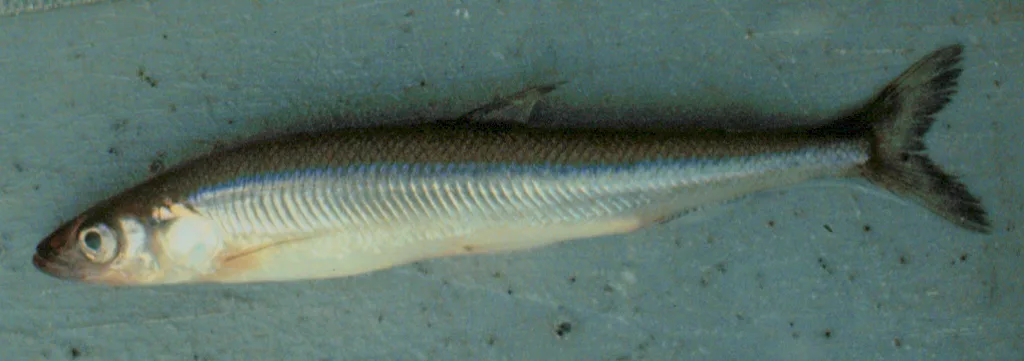
Photo: U.S. Geological Survey, Great Lakes Science Center (public domain)
Dead, yes, in many places. Live is where you get in trouble. Wisconsin’s DNR says it plainly: “Do not transport or use live smelt for bait.” Minnesota’s rule says “live smelt may not be possessed or transported.” Smelt you take for bait there “may be used only on Lake Superior or its tributaries below the posted boundaries, as fresh, dead, frozen, or preserved bait.”
Dead smelt under the ice works for northern pike and on tip-ups for lake trout, and Alaska lists smelt as a bait for burbot. Wisconsin also says not to dump smelt guts, or rinse a bucket that held them, in its waters. These fish got into the Great Lakes by escaping once, and nobody wants a repeat.
Are smelt good to eat?
Yes, and they’re a treat. One netter at Duluth told NPR they taste “kind of like french fries.” Snip off the head, pull the insides, rinse, batter and fry. Once they’re cooked you eat them whole, because the bones and fins are soft. You’ll need a lot of them to make a meal.
Watch where yours came from, though. Wisconsin’s DNR has an eating advisory on rainbow smelt from Lake Superior and its tributaries because of PFOS, one of the PFAS chemicals. NPR reported in 2022 that Michigan and Minnesota had advisories too. Check your state’s current fish advisory before you fill the freezer.
Quick answers about smelt fishing
What is a rainbow smelt? A small, slim, silver fish with a sheen of blue and pink along its sides. Adults run about 8 in (20 cm) and 3 oz (85 g).
What size hook do you use for smelt? Small. One Maine paper calls a size 8 or 10 hook the common setup, and In-Fisherman’s pick is the tiniest panfish jigs.
What’s the best bait for smelt? Through the ice, a spike on a small jig on inland lakes, and seaworms in Maine’s tidal rivers. Use small pieces of worm on tiny hooks.
Do you need a license to dip smelt? Usually, yes. Washington and Oregon both say so for their river openings, and Minnesota’s rule says licensed anglers. Check your state.
Can you fish for smelt in the daytime? Rarely on a spring run. Washington’s bank fishery is the exception, with tentative hours of 8 a.m. to 1 p.m.
Mistakes to avoid
- Buying a net before reading the rule. Where a state sets a width, it runs from 14 in to 36 in (36 to 91 cm), depending on the water.
- Going by last year’s date. A late spring moves the run, and the West Coast opens a day at a time.
- Fishing too heavy through the ice. Go to 1 or 2 lb line and the smallest jig you have.
- Staying at one depth. Smelt climb as the night goes on, so climb with them.
- Carrying live smelt home. Keep them dead, on ice, and out of your bait bucket.
Want to know what else is moving when the water warms? The water temperature chart shows it by fish, and the rest of the odd ones are in other freshwater fish.

Free PDF · 16 pages
Stop guessing. Know what's biting before your first cast
A whole Saturday on the water with nothing to show for it. One reading tells you who's feeding.
The Water Temperature Fishing Chart. Take one water temperature reading, find it on the chart, and see which of 26 freshwater fish are spawning, feeding hard or slowing down.
- Where bass, crappie, bluegill and walleye sit, and what to throw. Trout: the reading where you stop.
- Why a 3 ft drop beats a cold front, and what to throw each day of the front
- The three thermometer mistakes that make a reading lie
The chart's numbers come from state fish and wildlife agencies and fisheries research: 61 sources, each listed on the site.
No card, nothing to buy. Confirm with one click and the PDF is on its way, one version for your phone and one to print, yours to keep. Then a few short emails and one a week on what's biting, with an unsubscribe link in every one. Privacy.
Related
Section guide
Freshwater Fish Species Outside the Big Families: Sturgeon, Gar, Bowfin, BurbotThe freshwater fish species outside the bass, trout, catfish and pike families: sturgeon, gar, bowfin, burbot, drum, eel and paddlefish, with records.
 Creek Chub: How to Identify, Catch and Use Them as Bait
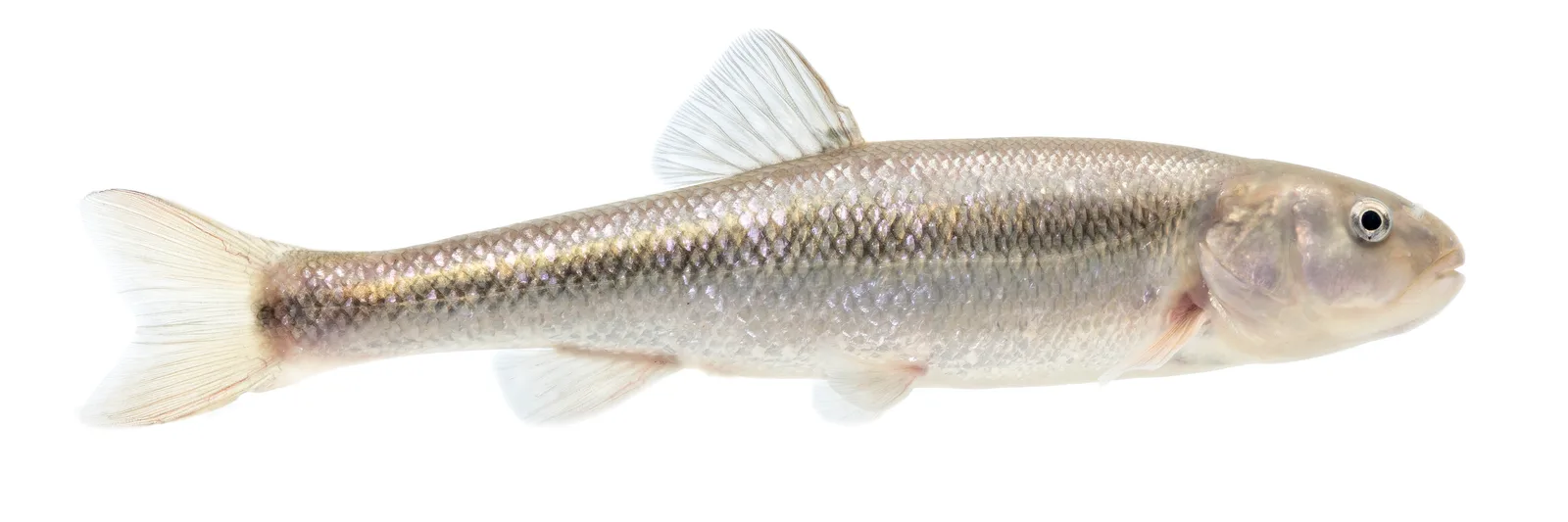
A creek chub is a 5 to 7 in minnow with a black spot on its back fin. How to identify one, catch it on light tackle, and rig it as live bait.
 Gizzard Shad: How to Identify, Catch and Use Them for Bait
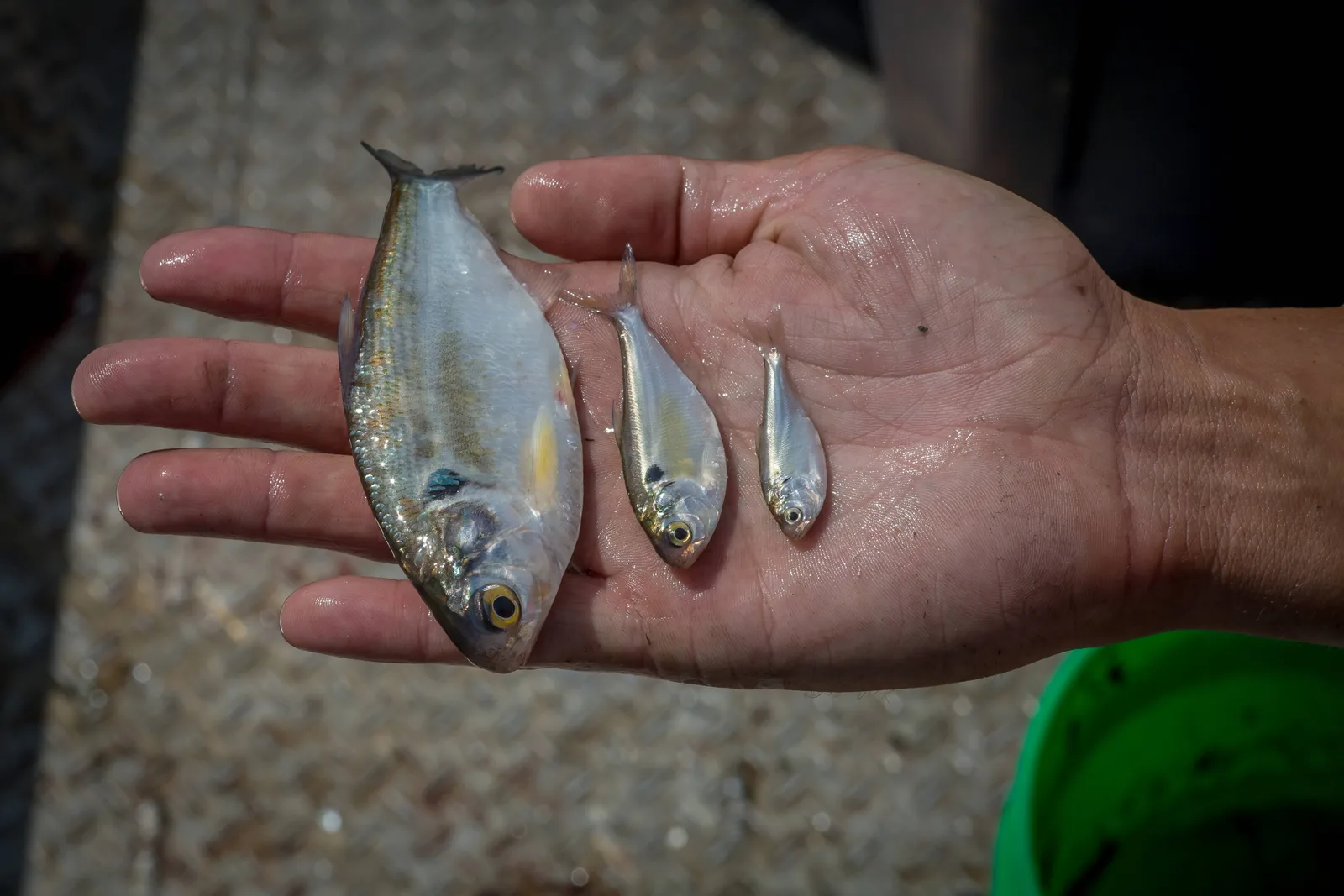
Gizzard shad commonly run 9 to 14 in. How to tell one from a threadfin, net it, keep it alive, and which states ban it as live bait.
 Shad Fishing: When the Run Hits, What to Throw, What You Can Keep
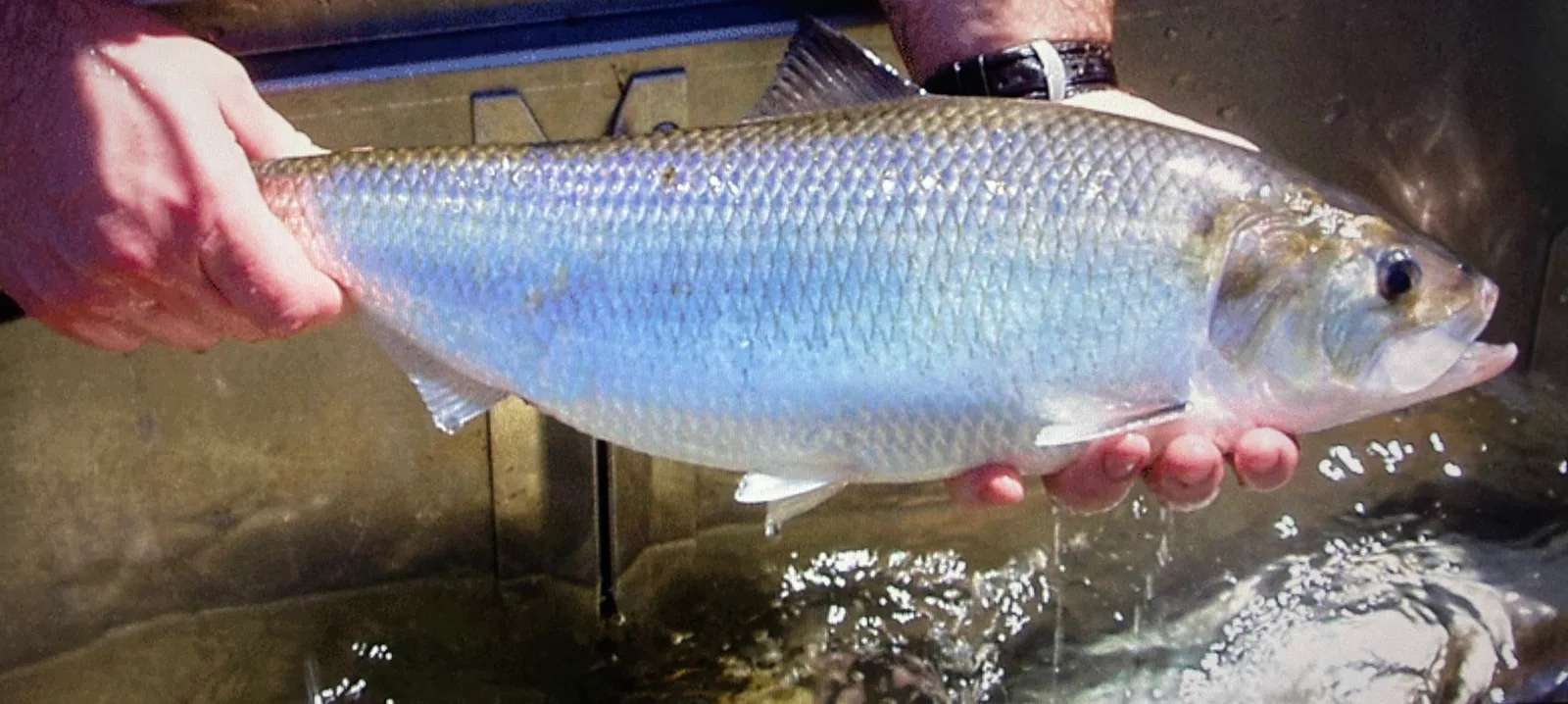
Shad fishing for American and hickory shad: when the spring run hits each river, the darts and spoons to throw, and which states let you keep one.
 Beluga Sturgeon: How Big It Gets, Where It Lives and the Caviar Ban
The beluga sturgeon reaches 26 ft on the books and lives only in the Caspian and Black Sea basins. Its size, record, status and the US caviar rules.
 Goliath Tigerfish: How Big They Get, Teeth, and the Crocodile Stories
Goliath tigerfish facts that hold up: the 97 lb IGFA record, real size, the teeth, the attack and crocodile stories, and where anglers go.
 Nile Perch: How Big They Get, the Record, and Where to Catch One
Nile perch grow to about 2 m and 200 kg, and the record is 230 lb from Lake Nasser. Where to catch one, why the US bans it, and the Lake Victoria story.
Sources (20)
- Wisconsin DNR, Smelt runs on lakes Michigan and Superior
- Wisconsin Natural Resources magazine, Back in the day (Spring 2019)
- Wisconsin DNR, news release 40496, Lake Superior rainbow smelt advisory (January 15, 2021)
- Minnesota Rules, part 6262.0300
- Michigan fishing guide, General Fishing Regulations
Show all 20 sourcesShow fewer sources
- Michigan fishing guide, Lawful Fishing Methods
- New Hampshire 2026 saltwater guide, Recreational Saltwater Fishing, Finfish
- New Hampshire 2026 freshwater guide, Freshwater Smelt
- New York State Department of Environmental Conservation, General Freshwater Fishing Regulations
- Massachusetts Code of Regulations, 321 CMR 4.01, Taking of Certain Fish
- Washington Department of Fish and Wildlife, Smelt
- Oregon Department of Fish and Wildlife, Smelt fishery on Sandy River opens 12-7 p.m., Wednesday, March 11
- Game & Fish, smelt ice fishing in Maine (Bob Humphrey, 2025)
- In-Fisherman, Ice Fishing Smelt (Dave Scroppo)
- Bangor Daily News, All you need to know about smelts (John Holyoke)
- NPR, Grab a net and a pail: Springtime in Duluth means the smelt are running (Dan Kraker)
- Bass Pro Shops, Smelt Fishing Tackle and Techniques (Jason Akl)
- Wisconsin DNR, PFAS Fish Consumption Advisories of Lake Superior and Mississippi River
- The County, Maine's smallest gamefish yields big fun (January 20, 2026)
- Harpswell Heritage Land Trust, Nature Notes: Smelting (Ed Robinson)