 By
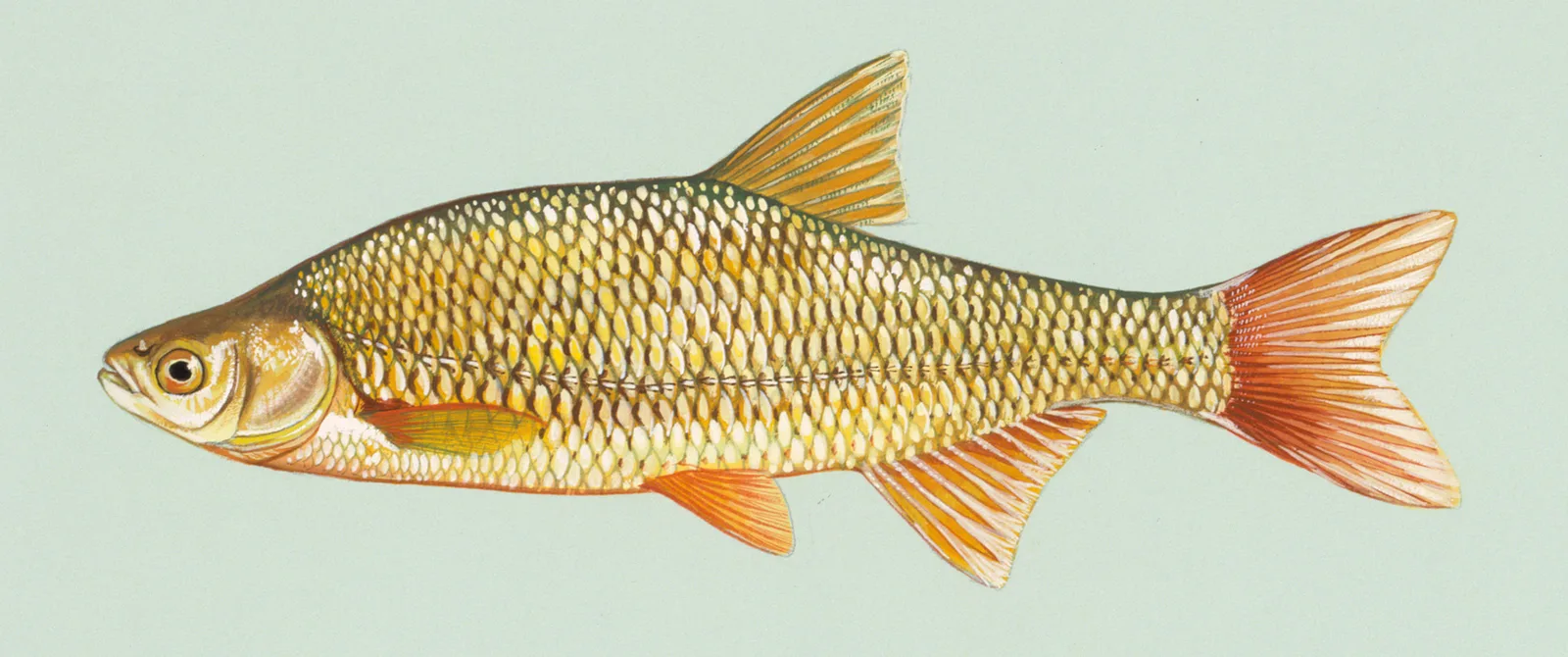
A golden shiner is a deep-bodied minnow, usually 3 to 6 inches long, and it’s the bait Florida’s wildlife agency rates best for largemouth bass. Hook one through the upper lip and hang it under a small float along a weed edge. Most bait dealers sell them, or you can catch your own on a tiny hook with bread or corn.
In Florida’s TrophyCatch program, natural bait took 47 percent of the bass of 13 pounds or more. The state’s wildlife agency calls the golden shiner the best all-around live bait for largemouth.
How do you identify a golden shiner?
Flip it over and look at the belly. Between the pelvic fins and the anal fin, a golden shiner has a bare, fleshy ridge with no scales on it. That ridge is called a keel, and Missouri says no other minnow in the state has one.
Three more marks back it up. The lateral line dips deep along the side in a U shape. The mouth is small and turned up. The anal fin sits on a long base, with 11 to 14 rays most of the time. The sides run from gold to brass to silver, under a dark olive back. Young fish are silvery with a broad dark band, so a small one won’t look gold at all.
| Fish | Check this | What it tells you |
|---|---|---|
| Golden shiner | Bare, scaleless keel on the belly. Side line dips deep. 7–9 rays in the back fin | Your bait, where your state allows it |
| Rudd | Scaled keel. 9–11 rays in the back fin. Bright red fins | A European fish, banned as bait once it turned out rudd can cross with golden shiners |
| Common shiner | No belly keel. Plain fins, slab sides, 3–5 in (8–13 cm) | A different minnow. Legal bait in New York and New Hampshire |
| Fathead minnow | Thick body, blunt head, dark stripe along the side | Slower than a golden shiner. Bass can wipe them out of a clear pond with little cover |
Don’t go by red fins alone. A breeding male golden shiner can have an orange-red tail too, and that’s where the belly check earns its keep. Connecticut has reported rudd turning up in a bait store tank mixed with golden shiners, so it’s worth a look at what you buy. The minnows page sorts out the other bait minnows.
Is a golden shiner a carp?
No. It’s a native North American minnow. It’s in the same big order of fish as carp, but it isn’t one. There’s a look-alike problem in reverse, though. Young Asian carp look a lot like golden shiners, and that’s one reason Minnesota doesn’t want minnows hauled in from elsewhere.
How do you fish a golden shiner for bass?
Pick the size first, then the hook, then the spot. Capt. Dan Hand runs shiners on many of his Central Florida charters. Steve Wayne wrote up Hand’s fishing for Florida Sportsman. He sorts the sizes this way:
| Shiner | What it does | Hook |
|---|---|---|
| 3–4 in (8–10 cm) | Fast action and more bites. Harder to cast | 3/0 to 4/0 |
| 5–8 in (13–20 cm) | Easier to cast. Fewer small bass, and it still draws the big ones | Between the two. Match the hook to the bait |
| 10–12 in (25–30 cm) | Can fool the biggest bass in the lake. Hard to cast, so lob it gently | Up to 6/0 |
For most days, take the 5- to 8-inch shiner. It’s the size that cuts down the small fish without giving up the big bite. Start with a 2/0 kahle hook, a wide-bend hook halfway between a J and a circle. Florida Sportsman’s Terry Lacoss says a 2/0 kahle handles most wild shiners, and he goes up to 4/0 for big ones. Check the rules for your lake. Florida’s Headwaters Lake requires circle hooks.
Then decide where the hook goes:
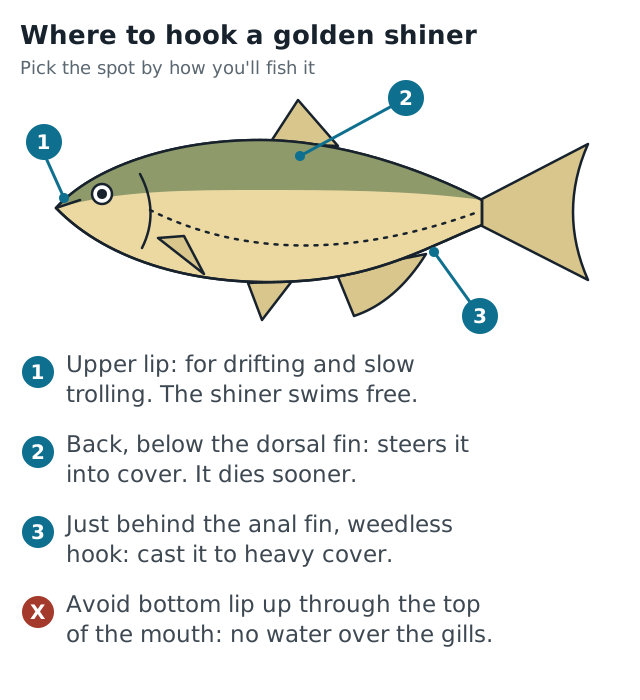
Drawing: fishing.info.
Go through the upper lip first. That’s the spot for drifting and slow trolling, and the shiner still swims freely. Lacoss warns against hooking from the bottom lip up through the top of the mouth, because the bait can’t pull water over its gills. The most common rig in Wayne’s piece does start at the bottom lip. It comes out through a nostril, though, not the roof of the mouth.
A hook in the back, below the dorsal fin, lets you steer the shiner into cover with your rod tip. It dies faster that way, so save it for when you need to reach a spot. For the thick stuff, use a weedless kahle just behind the anal fin, cast close to the cover, and let the shiner swim under it.
Now rig it:
- Float. Use a 2-inch bobber set 2 to 4 feet above the shiner, shorter in shallow water. FWC’s rule of thumb: a float just big enough that the shiner can’t pull it under.
- Line. Hand runs 20 lb braid with a 15 lb fluorocarbon leader in open water. In heavy weeds he goes to 30 lb braid and a 25 lb leader.
- Spot. Look for hard edges along weed lines or next to deep water. You don’t need a boat for this. Cast to the edge from the bank and let the shiner work.
- Free-line it when the water is open or deeper: no float, no weight, just the shiner swimming around out there on its own.
- Set the hook by the bite. Let how the bass are eating be your guide. If you’re missing fish, give it a few more seconds. With a circle hook, a small lift beats a hard snap.
A dying bait won’t get it done. A big bass won’t bother with a half-dead shiner, says Florida captain George Tunison, so swap yours when it stops swimming.
Golden shiners catch more than bass. A 7-inch one under a tip-up makes good bait for northern pike. Along with fatheads, they’re what crappie anglers use most, Arkansas writer Keith Sutton says. On Lake Erie, bait shops sell small ones for yellow perch when emerald shiners run short. And Massachusetts’ 15 lb 8 oz largemouth record came through the ice in 1975 on a tip-up baited with one.
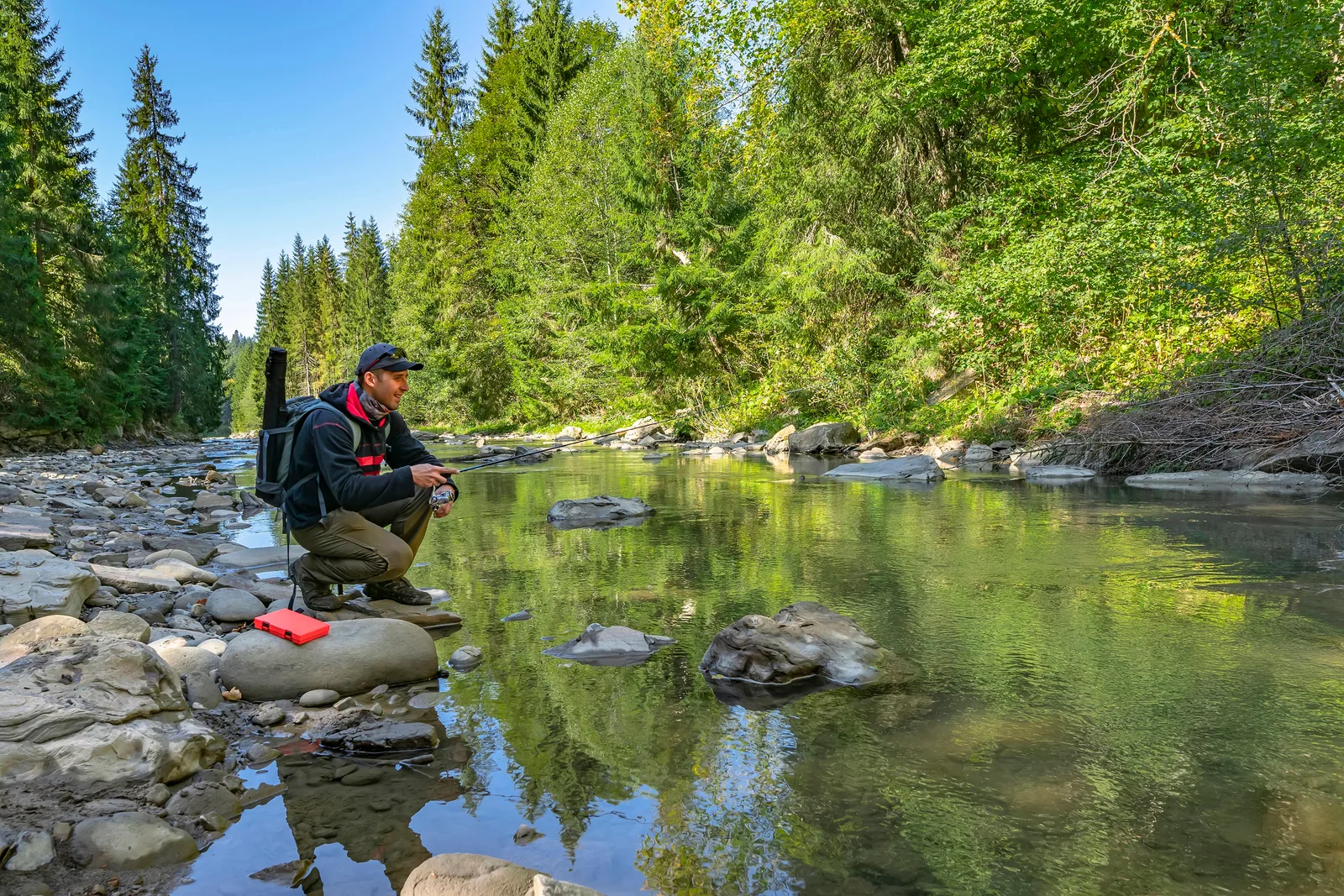
Fishing a forest river. Photo: FedBul / Depositphotos.
Wild or farm-raised?
Wild shiners cost a lot more, $20 to $30 a dozen at the Florida shops that carry them. They can be hard to find in winter, too. Farm-raised shiners run $11 to $15 a dozen and are easier to get. Buy the farm fish for a normal day. Hand uses them himself in the busy season. Save the wild ones for a day you’re really after a giant, or catch your own.

Free PDF · Water temperature chart Which fish are biting at today's water temperature?
One reading, and the 16-page chart shows which of 26 fish are spawning, feeding hard or slowing down; for bass, crappie, bluegill and walleye, where they sit and what to throw. Every number sourced.
No card, nothing to buy, and the PDF is yours to keep. Confirm with one click and it's on its way. Then a few short emails and one a week on what's biting. Unsubscribe anytime. Privacy.
How do you catch golden shiners?
Bait up a small spot and fish a tiny hook. Use a size 12 or smaller Aberdeen hook with a bit of bread or a single kernel of corn. Fish it under the smallest float you can find with one split shot, and keep the hook within a foot of the float. Throw in chum one small handful at a time, in one small area, using corn, bread crumbs or oatmeal. Tunison says you can bait a weedy spot with oatmeal for a few days before you go after them.
Check your state’s rules on chumming first.
| When | Where to look |
|---|---|
| Spring and late fall | The warmest water: north ends of ponds, shallow dark mud flats, brush, stumps and fallen trees |
| As the water warms in spring or cools in fall | The same spots, a little deeper |
| Spawn, 68–81 °F (20–27 °C) | Weedy shallows, where they stick their eggs on the plants |
| Winter | The deep basins of ponds |
| In a stream, any time | Pools with a flat surface and very slow, even current |
Want a lot at once? Use a cast net. Chum first with oatmeal, laying mash or bread. Then “make your first cast count,” FWC says, because the net hitting the water scares them off. In Florida you can keep golden shiners of any size, within gear limits. A cast net’s mesh can’t be over 1 inch stretched. A dip net can’t be over 4 feet across. A seine can’t be over 20 feet long and 4 feet deep, with 1-inch stretched mesh at most. A trap can’t be over 24 inches long and 12 inches across, with a funnel no wider than 1 inch. A minnow trap baited with crackers or bread also works.
How do you keep golden shiners alive?
Keep them in moving, aerated water and don’t crowd them. Vermont’s bait guide says the golden shiner isn’t particularly hardy, in the bucket or on the hook. Use an aerated livewell, or a ventilated bucket hung in the water. Swap the livewell water every half hour, Hand says. Tunison adds two more: don’t pack the tank, and watch for sudden temperature changes, which can shock them or kill them outright. The fishing bait guide has a keep-it-alive table for every live bait.
When you buy, pick clean, healthy fish with their scales still on and their slime coat intact. A shiner that feels rough has lost that coat. Tunison says those might make it to the ramp, but not much longer.
Never dump the leftovers. Texas thinks bait releases are probably why golden shiners now turn up nearly everywhere in the state. Oregon Sea Grant says bait fishing is mainly how they got west of Montana.
How big do golden shiners get?
Most run 3 to 6 inches, and Missouri puts the top end at about 8. Vermont says big ones reach 8 to 10 inches, and The Fisherman says some reach 12. FishBase lists a maximum of 12.6 inches (32 cm). Britannica says they reach about 12 inches and 1.5 pounds, while Texas reports fish over 8 inches and a quarter pound. A real 12-incher is a bait for the biggest bass in the lake.
What are the rules on golden shiners?
They vary a lot, and they change. Check your own state’s book before you buy or net any.
| State | Can you use them? | The catch |
|---|---|---|
| Florida | Yes, any size, by cast net, dip net, seine or trap within the gear limits | Black bass and peacock bass can’t be used as bait. Selling bait takes a commercial license |
| New York | Yes, they’re on the Green List | Rudd are banned. Bait you catch yourself stays on that water |
| New Hampshire | Yes, a listed bait fish | 2 quarts a day |
| Maine | Yes, on the legal baitfish list | No bringing baitfish into the state. Live fish banned in the North Zone and on some waters |
| Minnesota | Yes | No live minnows from other states. Releasing bait is illegal |
| California | By district | Check your district’s list |
| Washington | No, with narrow exceptions | Live fish can’t be used as bait in fresh water |
| Oregon | No | Oregon Sea Grant says the use of bait fish is illegal in the state |
Those import bans aren’t just red tape. Minnesota’s worry, reported in 2017, was VHS, a fish disease that shiners from other states could carry. New Hampshire puts it plainly on its bait page: “Don’t Dump Bait.”
Are golden shiners good for a pond?
Yes, if you’re growing big bass. Oklahoma says they “work well when the only objective is a trophy bass fishery.” They’re fast, so bass don’t catch them as easily as fatheads. Bass can wipe out fatheads in clear ponds with little cover.
The trade-off is that they grow too large for small predators, and they may eat the eggs of the fish you want. Golden shiners have been seen picking eggs out of largemouth nests. Oklahoma suggests stocking 2- to 3-inch fish, and Penn State says about 400 adults, 2 to 4 inches long, per surface acre, with bass. They do best with plants for cover and spawning.
Can you eat golden shiners?
You can, but hardly anybody does. Britannica lists the fish as edible. It’s not normally considered a food fish, though, and its real value is on the hook. If you do keep a few from a water with a consumption advisory, follow the advisory.
What do golden shiners eat, and are they rare?
They aren’t rare. They turned up in 71 percent of 203 northeastern lakes checked. Farms sold about half a billion in 2013, 74 percent of the sales from Arkansas. They’re native from Nova Scotia south to southern Texas, through the Great Lakes and the Mississippi drainage. Bait buckets have carried them well past that.
They eat about half plants and half small animals: crustaceans, insects and snails. They school up by day, mostly in quiet, weedy water with little current. That’s why you look for them on weed edges.
They start spawning when the water passes 68 °F and stop above 81 °F. They don’t build a nest. Eggs get stuck on plants and hatch in about 3 or 4 days, and the parents leave them to it. A female can produce up to 200,000 eggs. They rarely live more than six years, though 9 has been reported.
Next, the bass bait guide matches each food to its live bait and its lure. The chain pickerel has a soft spot for shiners too, and our other freshwater fish hub covers the rest.

Free PDF · 16 pages
Stop guessing. Know what's biting before your first cast
A whole Saturday on the water with nothing to show for it. One reading tells you who's feeding.
The Water Temperature Fishing Chart. Take one water temperature reading, find it on the chart, and see which of 26 freshwater fish are spawning, feeding hard or slowing down.
- Where bass, crappie, bluegill and walleye sit, and what to throw. Trout: the reading where you stop.
- Why a 3 ft drop beats a cold front, and what to throw each day of the front
- The three thermometer mistakes that make a reading lie
The chart's numbers come from state fish and wildlife agencies and fisheries research: 61 sources, each listed on the site.
No card, nothing to buy. Confirm with one click and the PDF is on its way, one version for your phone and one to print, yours to keep. Then a few short emails and one a week on what's biting, with an unsubscribe link in every one. Privacy.
Related
Section guide
Freshwater Fish Species Outside the Big Families: Sturgeon, Gar, Bowfin, BurbotThe freshwater fish species outside the bass, trout, catfish and pike families: sturgeon, gar, bowfin, burbot, drum, eel and paddlefish, with records.
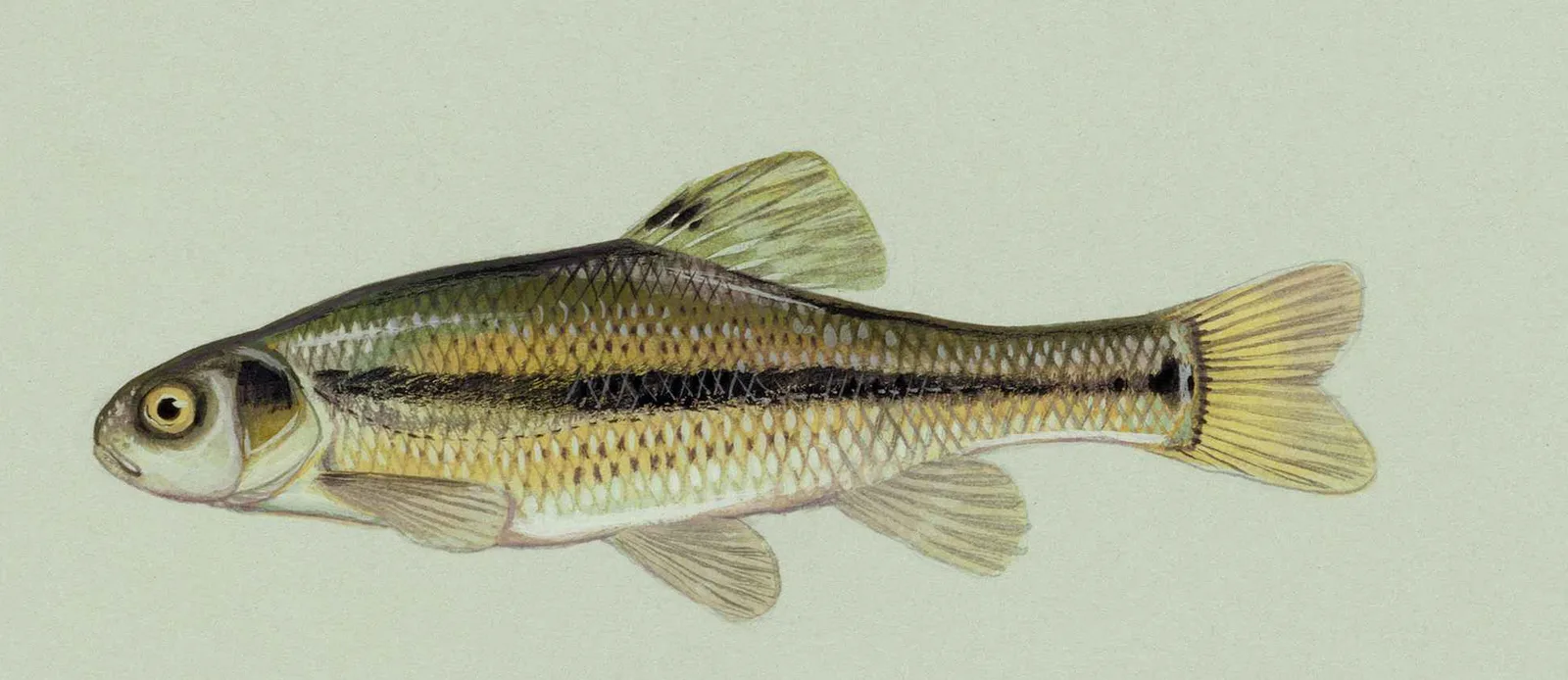 Fathead Minnows: ID, Bait, Pond Stocking and Rosy Reds
Fathead minnows are tough 2 to 3 in baitfish. How to identify them, keep them alive in a bucket, stock a pond by the pound, and spot a rosy red.
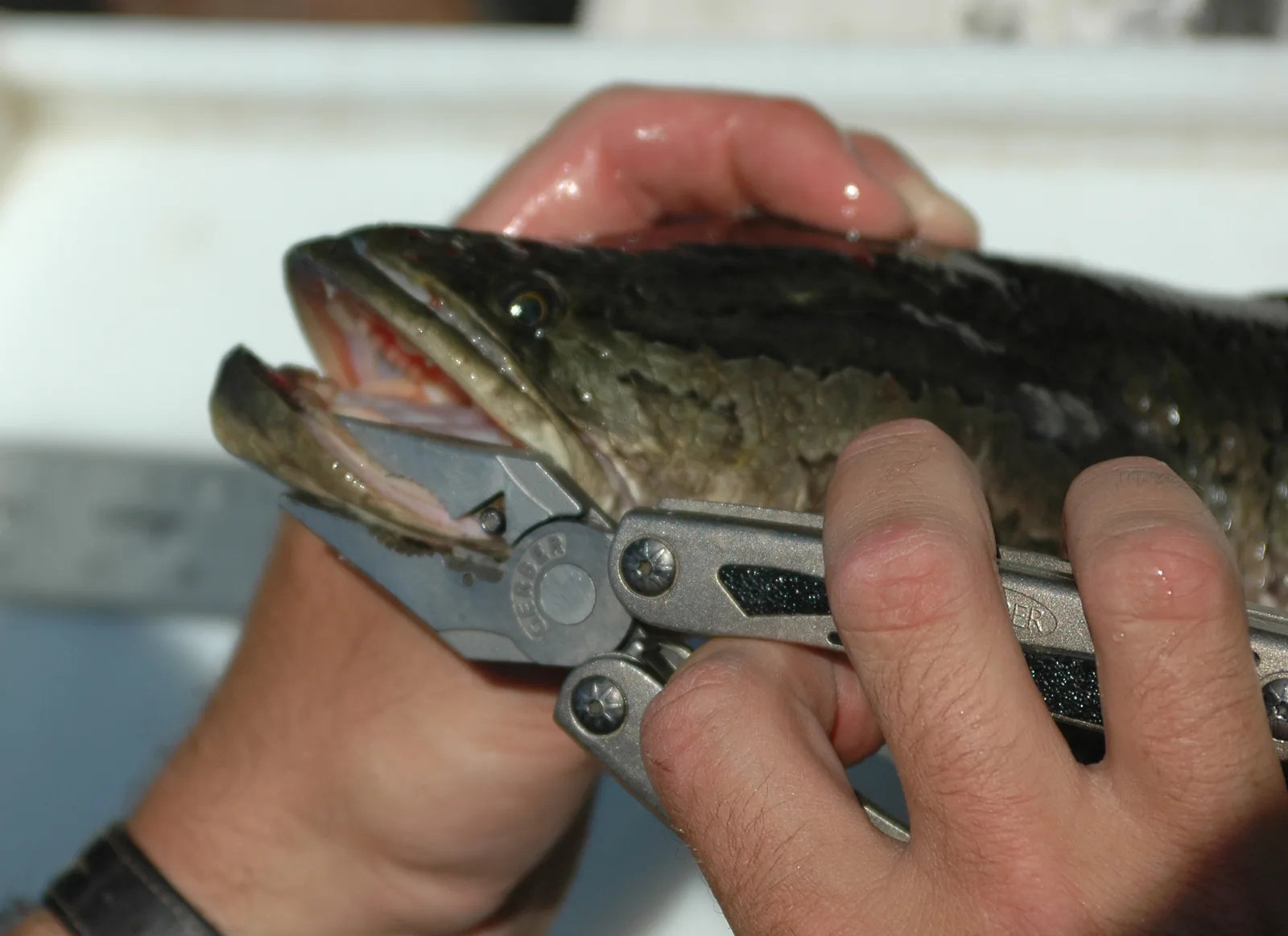 Snakehead Fish: How to Identify, Catch, and Handle One
The snakehead fish is an invasive, air-breathing predator. How to identify one, catch one on a frog, and what each state says to do with it.
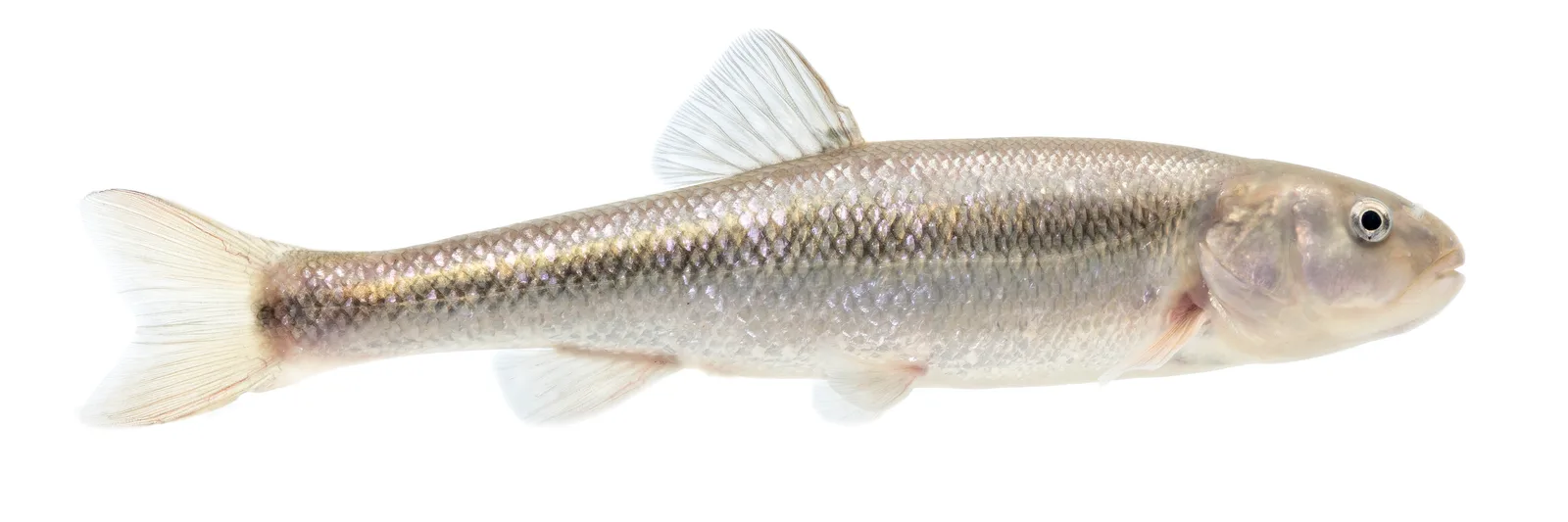 Creek Chub: How to Identify, Catch and Use Them as Bait
A creek chub is a 5 to 7 in minnow with a black spot on its back fin. How to identify one, catch it on light tackle, and rig it as live bait.
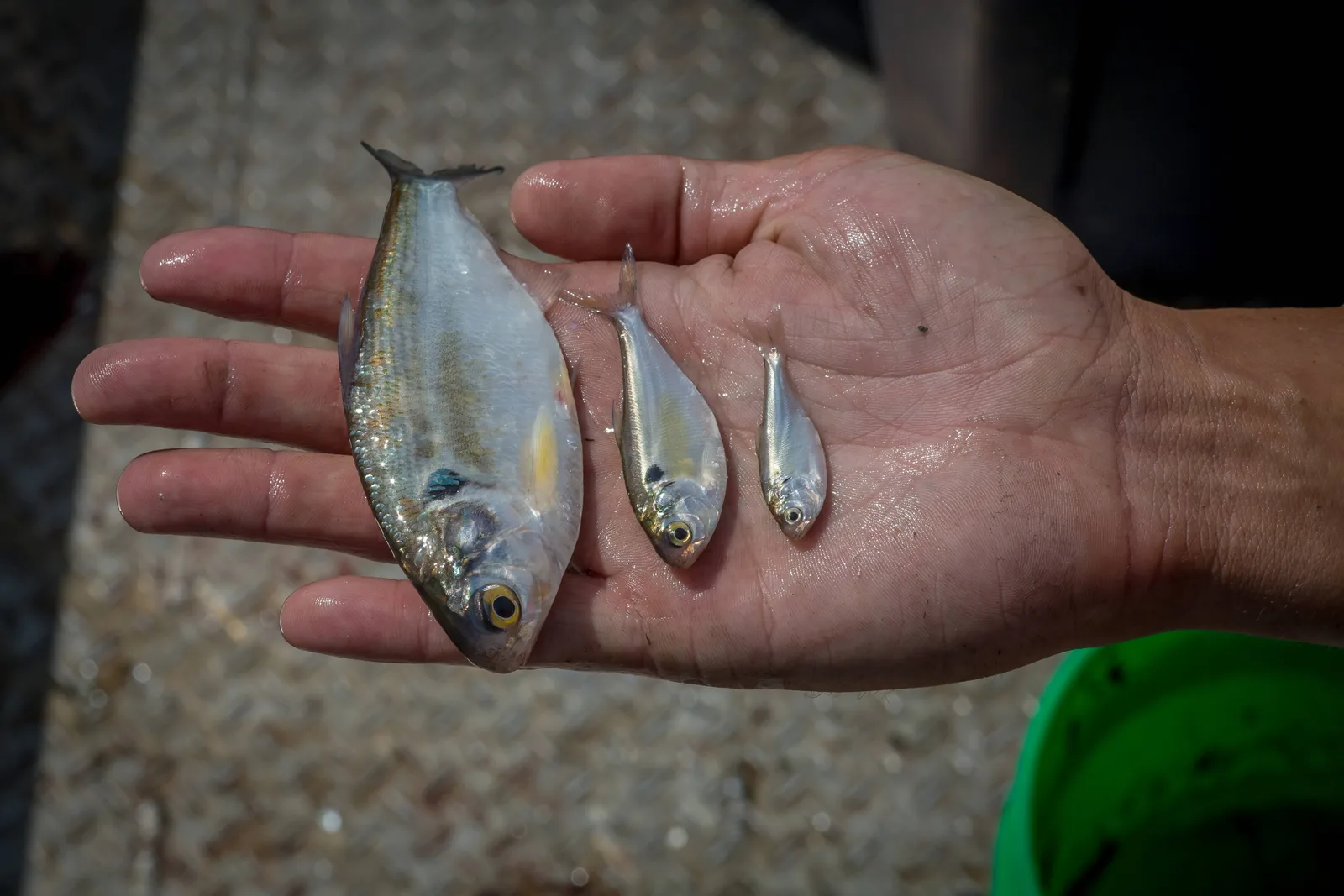 Gizzard Shad: How to Identify, Catch and Use Them for Bait
Gizzard shad commonly run 9 to 14 in. How to tell one from a threadfin, net it, keep it alive, and which states ban it as live bait.
 Shad Fishing: When the Run Hits, What to Throw, What You Can Keep
Shad fishing for American and hickory shad: when the spring run hits each river, the darts and spoons to throw, and which states let you keep one.
 Smelt Fishing: Net a Spring Run or Jig Them Through the Ice
Smelt fishing two ways: dip a spring run at night or jig them through the ice. When the run hits, the gear, and each state's rule.
Sources (31)
- Missouri Department of Conservation, Golden shiner (field guide)
- Missouri Department of Conservation, Common shiner (field guide)
- Texas Parks and Wildlife, Golden shiner (Notemigonus crysoleucas)
- Vermont Fish and Wildlife, Golden shiner (baitfish identification sheet)
- Oregon Sea Grant, Golden Shiner
Show all 31 sourcesShow fewer sources
- Connecticut DEEP, Rudd (Scardinius erythrophthalmus)
- Stone and Thomforde, Common Farm-Raised Baitfish, SRAC Publication No. 120 (revised June 2001)
- Stone, Kelly and Roy (2016), A Fish of Weedy Waters: Golden Shiner Biology and Culture, Journal of the World Aquaculture Society 47(2)
- FishBase, Notemigonus crysoleucas, Golden shiner
- Animal Diversity Web, Notemigonus crysoleucas
- Britannica, golden shiner
- Florida Fish and Wildlife Conservation Commission, The Florida Freshwater Angler, Issue 17 (October 7, 2019)
- Fla. Admin. Code R. 68A-23.002, General Methods of Taking Freshwater Fish
- Steve Wayne, Unlock Classic Shiner Tactics to Catch the Biggest Bass, Florida Sportsman (February 13, 2025)
- Terry Lacoss, Best Ways to Hook a Live Shiner in Every Situation, Florida Sportsman (March 7, 2023)
- Rowan Lytle, Golden Shiners: On Hook & Line, The Fisherman (December 2022)
- Capt. George Tunison, A golden shiner the best bait if fishing for local trophy bass, Cape Coral Breeze (December 17, 2021)
- Summer Lindelien and John Cimbaro, Want Fishing Tips? Consult the Data, Florida Specifier (January 19, 2026)
- Penn State Extension, Fish for Pennsylvania Ponds
- Oklahoma Department of Wildlife Conservation, Other fish species (farm ponds)
- New York DEC, Baitfish regulations
- New Hampshire Fish and Game, Bait fish information
- Maine IFW, Baitfish and Smelt Information
- Minnesota DNR, General regulations (fishing regulations)
- CBS Minnesota, Out-Of-State Golden Shiner Minnows Worry DNR Ahead Of Walleye Opener (May 5, 2017)
- On The Water, Massachusetts' 15.5-pound largemouth record
- Florida FWC, Methods of taking freshwater fish (eRegulations)
- MeatEater, Perch Fishing Tips and Tricks (Ross Robertson, 2024)
- Arkansas Democrat-Gazette (Keith Sutton), minnows and crappie fishing are an inseparable duo
- Washington WDFW, Statewide Freshwater Regulations
- California Code of Regulations, Title 14, section 4.00 (bait fish by district)