 By
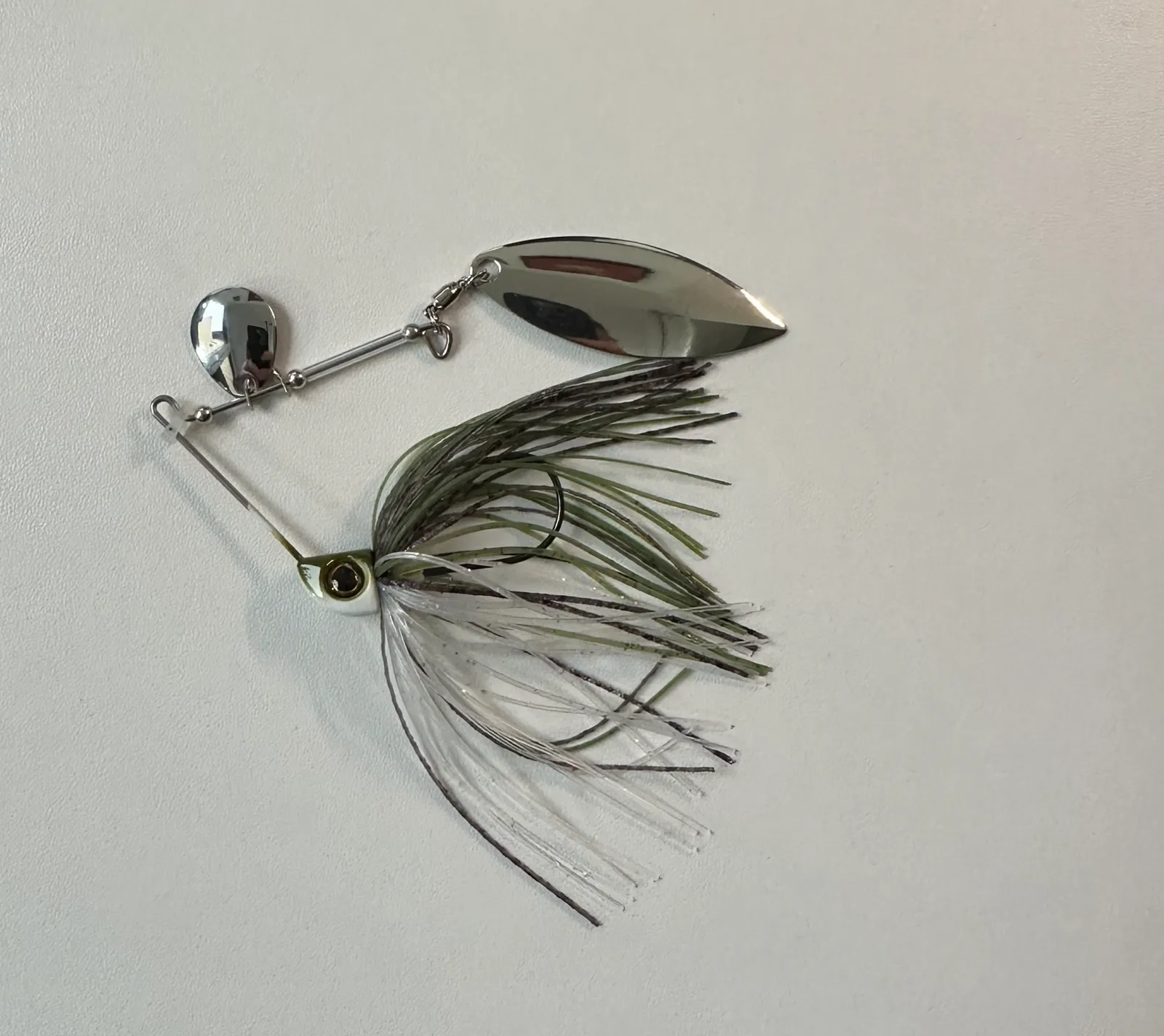
Yes, a spinnerbait is a good bass lure, built for stained water, wind and cover: one or two spinning blades on a bent wire arm throw flash and vibration above a lead head, a skirt and a single hook. The arm rides ahead of the hook, so it slides through laydowns, brush and grass edges that would snag a treble-hooked lure. The blades let a bass find it in water the color of coffee. The all-rounder is a small Colorado blade in front of a bigger willow, which Wired2Fish’s Shaye Baker throws in his 55 to 75 °F (13–24 °C) sweet spot.
The blade sets the depth more than the head does. In Shaye Baker’s comparison for Wired2Fish, a 1/2 oz spinnerbait with two small willow blades runs about 10 ft deep; the same head with one big Colorado runs 2 or 3 ft at the same speed.
What is a spinnerbait, and how does it work?
Spinnerbaits used to be called “safety-pin” lures, and the shape is exactly that: an open safety pin. A lead head sits on the hook, and a wire frame bends up and back from it. One or more blades spin on swivels at the end of the upper arm, and a skirt of rubber or silicone covers the hook. The bend where the two arms meet is the R-bend, and that is where the line is tied.
Arm length changes how it fishes. A short upper arm suits dropping, or “helicoptering,” the lure off ledges; a long arm suits grass and brush. The shorter the wire from the head to the R-bend, the better the bait comes through cover. The longer the wire out to the blades, the more it shields the hook.
A single blade often does better in deeper, clearer water and for bass that are not feeding hard, and it gives the most vibration in low light and heavy stain. Tandem blades suit murky water, grass and thick cover, and give more flash. Unlike an inline spinner, whose blade spins around the shaft in front of the hook, a spinnerbait keeps blade and hook on separate arms. Its topwater cousin in the spinnerbait family, the buzzbait, swaps the blades for a propeller.
The lure is more than a century old. Jesse Shannon of Lake Geneva, Wisconsin, filed the patent for his twin-armed lure on November 15, 1916, and it was granted on February 25, 1919. His Shannon Twin Spinner is credited as the first spinnerbait, and it stayed in production into the 1970s. The twin-arm design has since given way almost entirely to the safety-pin shape.
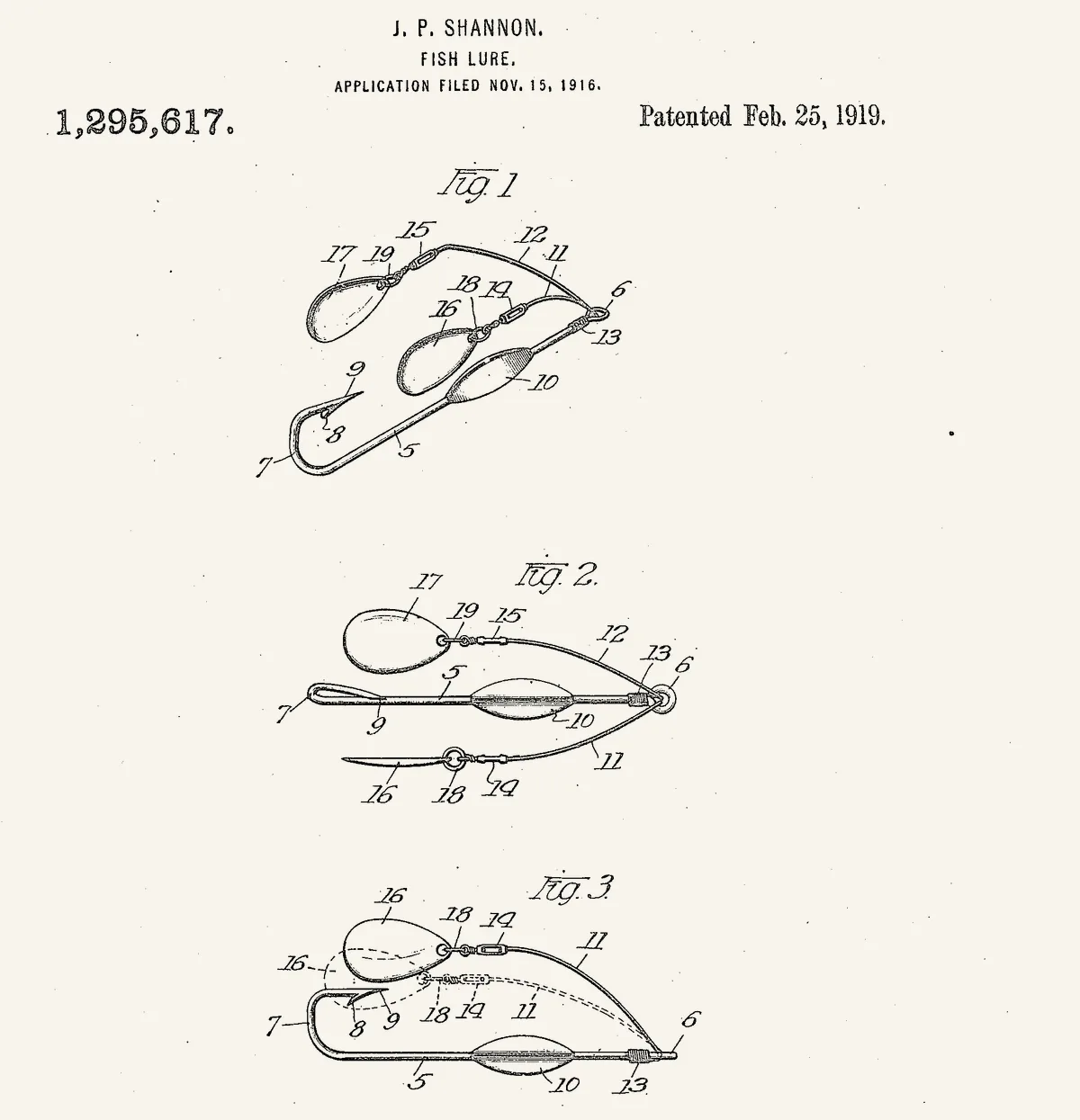
Drawing: J. P. Shannon, US patent 1,295,617 (1919), public domain
Which blade for bass: Colorado, Indiana or willow?
Hank Parker’s rule covers all three. The round, deep-cupped Colorado gives “a lot of vibration” for “really off-colored water.” The willow leaf gives flash, and it “will come through vegetation a lot better.” The Indiana is “a good all-around compromise.” The sizes in the last column are Jason Christie’s, from his Bassmaster piece, and Tom Frink’s.
| Blade | Thump vs flash | Water and season | Sizes pros name |
|---|---|---|---|
| Colorado | Most vibration and lift; slows the lure | Cold, muddy, night; early prespawn, sluggish bass | Christie: No. 3½–4½, up to No. 4 front and No. 6 or 7 back, under 60 °F (16 °C); Frink: one No. 6 on a 1 oz head |
| Indiana | In between; more flash, less thump | Active bass in stained-to-clear water | Fished faster than a Colorado |
| Willow | Most flash, least drag; snag-resistant | Clear water, grass, summer and fall shad | Christie: two No. 4 willows on a 3/4 oz head for clear water and smallmouth |
| Colorado + willow | Both | Semi-clear, warm water (Christie); stained water after the spawn (KVD, Baker) | Christie: a Colorado and a willow together |
Blade size matters as much as shape: a large willow thumps harder than a small Colorado, so compare like with like. Finish follows the light. Silver goes in clear water, gold or copper in murky water, and white blades cut the flash for shallow fish in clear water. Black blades work at night, and painted blades suit smallmouth in clear water and largemouth in mud.
Free PDF · Water temperature chart When do bass bite?
One reading, and the 16-page chart shows which of 26 fish are spawning, feeding hard or slowing down; for bass, crappie, bluegill and walleye, where they sit and what to throw. Every number sourced.
Enter your email, confirm it with one click, and the PDF is in your inbox. Plus one email a week on what's biting. Unsubscribe anytime. Privacy.
How heavy a spinnerbait?
Most bass spinnerbaits weigh 1/4 to 3/4 oz (7.1–21.3 g). Baker ties the weight to the blade size: 3/4 oz with small blades (No. 4 and under), 1/2 oz (14.2 g) with No. 3 to 5, and 3/4 oz or more with a No. 6. Go heavier to fish any combination deeper or faster, lighter to fish it slower and shallower.
- Clear water, 2 ft (0.6 m) or more of visibility: 1/4 oz with tandem willows.
- Really muddy water: 1/2 oz with one big blade, or Tom Frink’s 1 oz head with a No. 6 Colorado. “A 1-ounce head with a size 6 Colorado blade doesn’t roll like the 1/2-ounce with a size 6 would,” says the Bassmaster Opens pro; the light head turns on its side and snags. To fish it slower, he drops to 3/4 oz with a No. 5 or 6 Colorado.
- 6–8 ft (1.8–2.4 m) deep: 1/2 oz at a natural speed. A 3/8 oz (10.6 g) must be crawled to get there, and a 3/4 oz burned to stay off the bottom.
- Deeper than 10 ft (3 m) or slow-rolling: 3/4 to 1 oz (28.3 g), with one big No. 6 or larger blade.
- Wind and small baitfish: 1/2 oz to cast into the wind, with small blades to match the forage.
Which skirt color?
Baker’s starting point is to match the forage. In clear water on a sunny day that means a natural, translucent shad pattern. When clear water turns cloudy, add a few chartreuse strands; in muddy water where shad live, go to a white skirt. Chartreuse shows up in mud, and black reads best at night as a silhouette.
Christie throws shad colors for largemouth and something bright for smallmouth bass, which he calls “visual feeders.” A little red somewhere on the bait “usually is an asset,” writes BassResource, and Frink’s muddy-water bait wears a red head over a chartreuse-and-blue skirt.
What rod, reel and line for a bass spinnerbait?
Opinions split on the rod. BassResource warns against a heavy, worm-style rod: you overreact to the strike and pull the lure out of the bass’s mouth. Its advice is a medium-action rod with 14 lb or heavier line on a baitcaster.
Tackle Warehouse’s gear guide goes heavier. It sets a 7 ft (2.1 m) medium-heavy to heavy casting rod for roll casts to docks and overhangs, and 7 ft 6 in (2.3 m) or longer for deep slow-rolling, both with a moderate-fast to fast taper. It pairs that with a 7:1 reel, 12–20 lb fluorocarbon in open water, and 40–50 lb braid in grass and muddy water.
Tie a Palomar knot to the line tie at the R-bend; the blades turn on their own swivels.
How to fish it: six retrieves
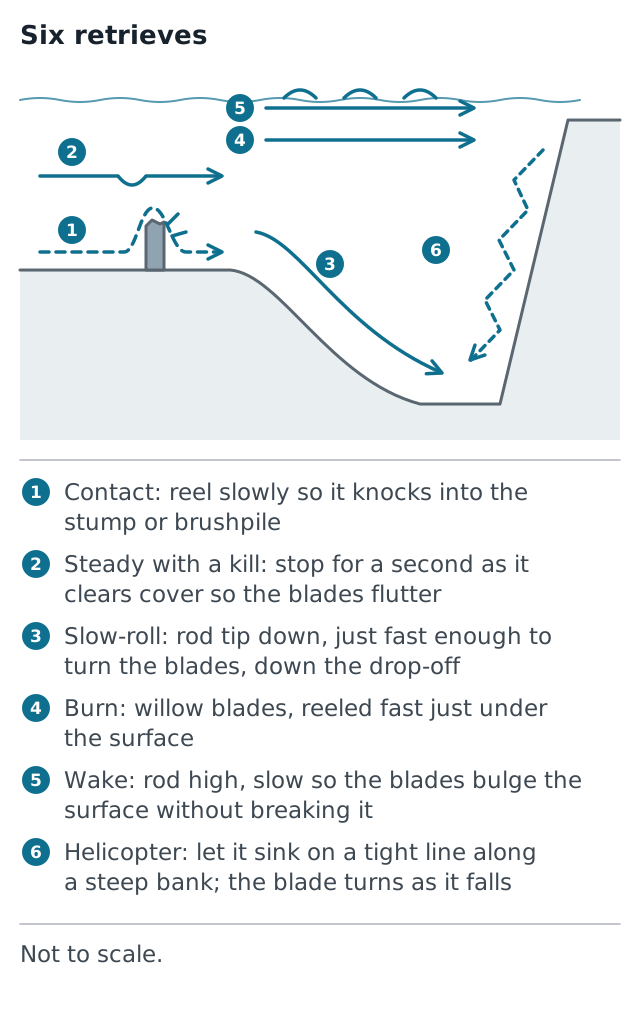
Drawing: fishing.info, after the six retrieves below
- Contact. Cast well past a stump, brushpile or grass clump and reel slowly so the lure knocks into it. The bump changes the lure’s direction and action, and that often triggers the strike.
- Steady with a kill. Reel at a steady pace so the head hangs below the blades and the hook rides point-up. Stop for a second as the lure clears cover so the blades flutter, or pump the rod tip without stopping the reel.
- Slow-roll. Cast toward shallow water, point the rod tip down and reel just fast enough to turn the blades, so the lure sinks as it swims down drop-offs. A 3/4 to 1 oz bait works best. Kevin VanDam (KVD) names the slow-rolled spinnerbait for prespawn bass in 48–55 °F (9–13 °C) water.
- Burn. Reel fast with willow blades so the lure runs just under the surface. Christie’s clear-water bait is a 3/4 oz head with No. 4 willows. Above 75 °F (24 °C), Baker burns a double willow just under the surface.
- Wake. In shallow, murky water, hold the rod high and reel fast until the lure rises. Then slow just enough that the blades bulge the surface without breaking it. Christie wakes one big Colorado when big shad are around. Reel faster still and the blades splash through: that is the buzz retrieve, the job a buzzbait is built for.
- Helicopter. Along a steep bank or ledge, let the lure sink on a tight line; the blade turns as it falls. Reel up the slack on the bottom, lift the rod and let it drop again.
In cold, muddy water, Frink makes five, six or even seven casts to the same stump before moving on.
Which setup for the water temperature?
| Water | Blades | Retrieve | Who says so |
|---|---|---|---|
| 48 °F (9 °C) and below | Spinnerbait not on the winter list | Jerkbait, jig or blade bait instead | KVD |
| Below 55 °F (13 °C) | Colorado or double Colorado, No. 3 and 5; No. 4 and 6 in mud | Slow | Baker |
| 48–55 °F (9–13 °C), prespawn | Colorado | Slow-roll | KVD |
| 50–65 °F (10–18 °C), spring and fall | Colorado under 60 °F (16 °C) | His favorite spinnerbait water | Christie |
| 55–75 °F (13–24 °C) | Colorado and willow tandem | Steady | Baker |
| 70–75 °F (21–24 °C), postspawn | Tandem Colorado or Colorado-Indiana | Stained water | KVD |
| Above 75 °F (24 °C) | Double willow | Burn just under the surface | Baker |
| Fall, 75 down to 55 °F | Willow leaf | Match the baitfish | KVD |
Above his 55 to 75 °F sweet spot, Baker says, the bite fades once the water turns hot. The bass water temperature chart sets these bands against the spawn, and the best time to fish for bass puts them on the calendar.
Which trailer, and a trailer hook?
A plastic trailer adds appeal, buoyancy and lift. Baker reaches for a split-tail or a swimbait most of the time; a craw or twin-tail grub bulks the profile and slows the lure. Frink uses a thick swimbait with a big tail to keep the bait high in very shallow water, and a thinner swimbait or a curly-tail worm to let it run deeper.
A trailer hook catches bass that swipe and miss. Baker picks one a size smaller than the main hook, points it the same way so the lure stays weedless, and slides it on after the trailer. Others turn it the opposite way for a better strike-to-catch ratio, where the cover allows.
When to throw something else
A spinnerbait loses to other lures when the water clears or gets cold. Frink’s big blade wants less than a foot of visibility; when the water cleans up he picks up a swim jig or a crankbait. In 48 °F (9 °C) water and colder, KVD reaches for suspending jerkbaits, leadhead grubs, jigs, blade baits and spoons. A good rule of thumb: fish a spinnerbait close enough to the surface to see it, and if the bass sit deeper than that, a worm is the better bait. Wired2Fish’s Jason Sealock picks a chatterbait over a spinnerbait on sparse grass edges, and under docks because it skips better; on laydowns, stumps and dirty water the spinnerbait stays first. The best bass lures list, in the bass hub, sets the spinnerbait among the rest.
The lure tournament anglers know as banned is a different one: the umbrella, or Alabama rig. B.A.S.S. limited Classic and Elite Series anglers to a single lure from February 1, 2012. In 2014 it barred umbrella rigs from the Bassmaster Opens and from any event that leads to Classic qualification.
Gear for bass
Gear guide
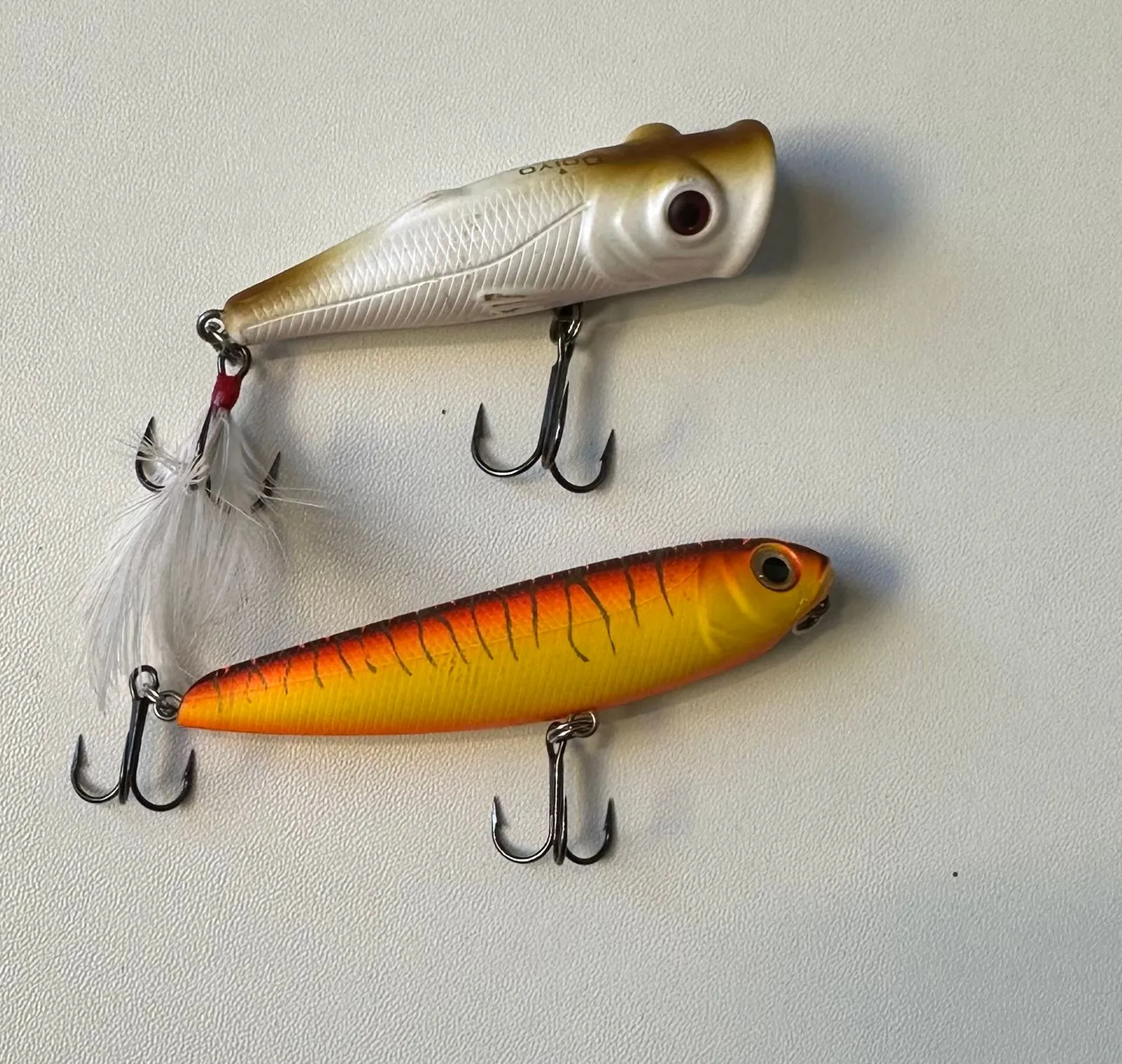
Best Bass Lures: What Won the 2025 and 2026 Elite Series, Season by SeasonBest bass lures by season: 18 Elite Series events were won on 10 kinds of bait. The pick for each water temperature, color and cover, plus smallmouth.
Gear guide
Best Fishing Line for Bass: The Setup for Every TechniqueThe best fishing line for bass is four setups: 10 lb braid to a 6–8 lb leader for finesse, 12 lb fluoro, mono for topwater, 50–65 lb braid for cover.
Free PDF · 16 pages
Know what's biting before your first cast
The Water Temperature Fishing Chart. Take one water temperature reading, find it on the chart, and see which of 26 freshwater fish are spawning, feeding hard or slowing down. Six pages go deeper: bass, crappie, bluegill, walleye, catfish and trout. For your phone and the tackle box.
- Where they sit and what to throw at every band: bass, crappie, bluegill and walleye; catfish by species; trout: the 68 °F line where you stop, and where they hide
- A bass that drops 3 ft feels more pressure change than the biggest cold front: the front day by day, and what to throw on each
- The three thermometer mistakes that make a reading lie (the first one is the surface)
- The 26-fish chart: who's spawning, feeding hard or slowing down at your reading
The chart's numbers come from state fish and wildlife agencies and fisheries research: 61 sources, each listed on the site.
Enter your email, confirm it with one click, and the PDF is in your inbox. Plus one email a week on what's biting. Unsubscribe anytime. Privacy.
Related
Section guide
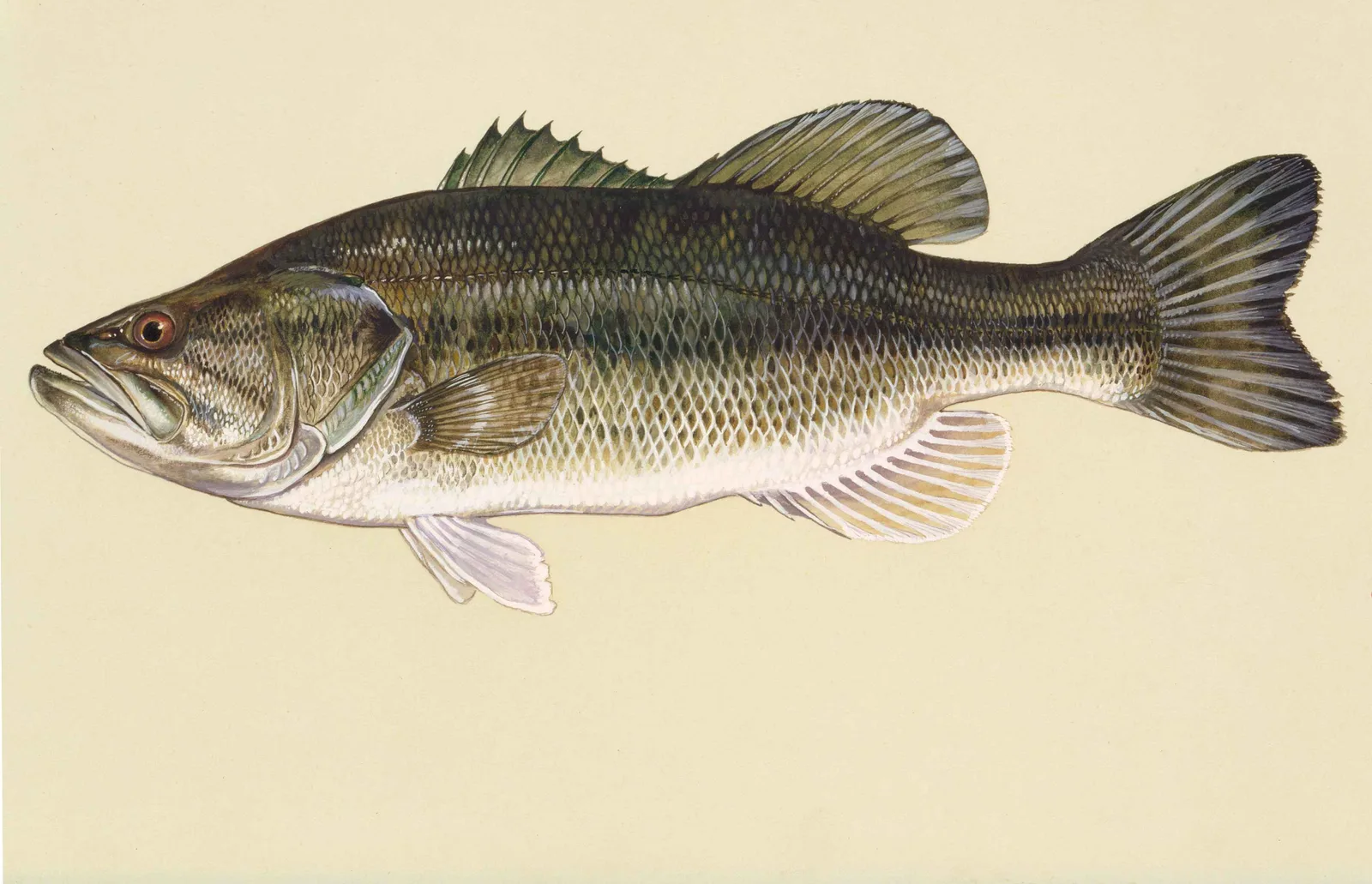
Bass Fishing: Where the Bass Are, What to Throw, and the Three Bass You Will MeetBass fishing by water temperature: where largemouth, smallmouth and spotted bass sit from 48 to 90 °F, what to throw first, and how to tell them apart.
 Bass Jigs: The Nine Types, Which Weight and Trailer, How to Fish Them
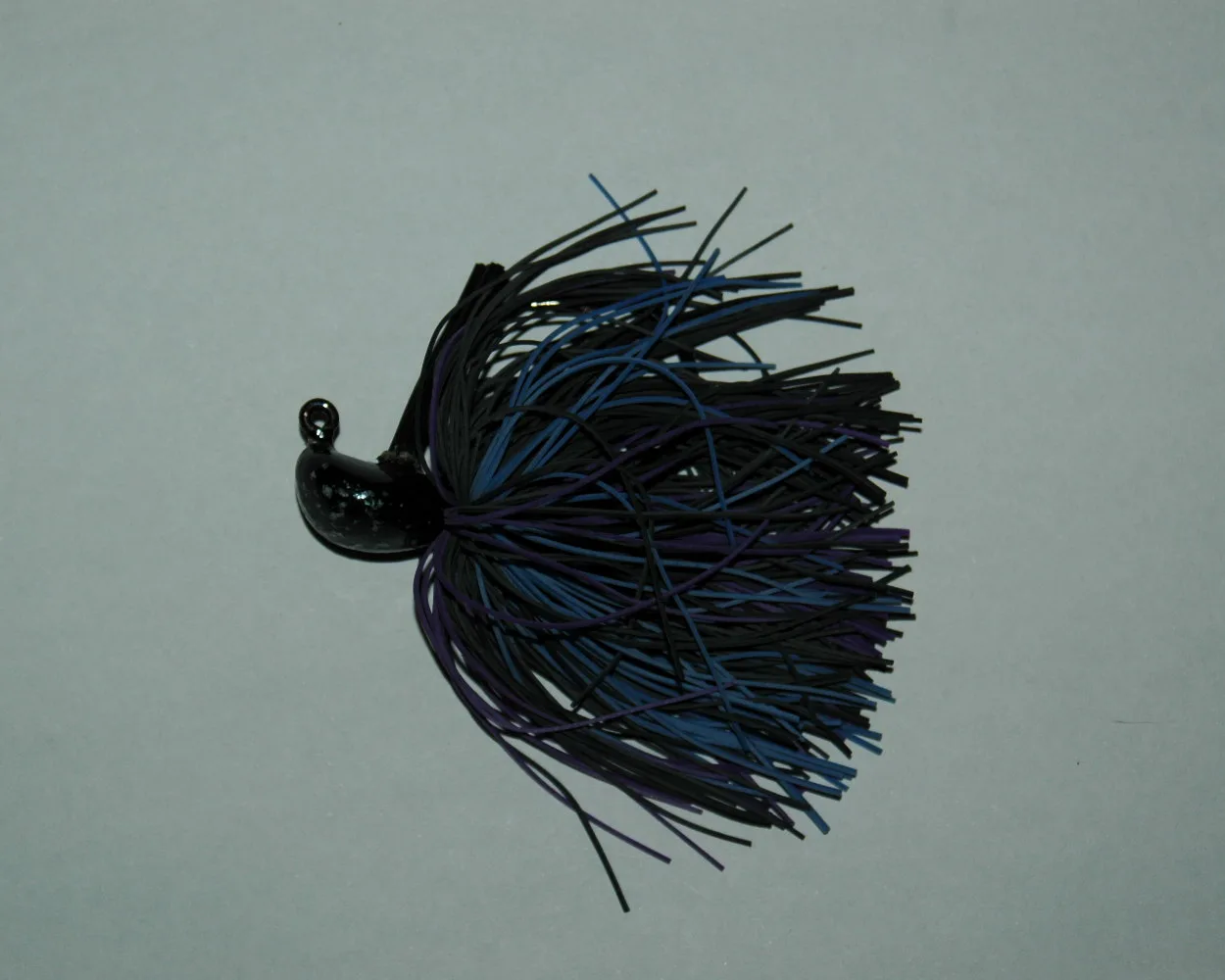
Bass jigs explained: football, flipping, casting, skipping, swim, grass, finesse, hair and bladed jigs, with weights, trailers and how to fish each.
 Meanmouth Bass: How to Identify the Hybrid, and the Records
A meanmouth bass is a smallmouth crossed with a spotted or largemouth bass. How to identify one, where they turn up, and the IGFA records.
- Types of Bass: Every Fish Called Bass and How to Tell Them Apart
The types of bass, from largemouth and smallmouth to striped and black sea bass: which family each is, where it lives, its record and how to tell them apart.
 What Do Bass Eat? The Diet by Size, Season and Species
Adult bass eat mostly fish and crayfish: 59% and 38% by weight in an Arkansas study. The diet by size, season and species, from six studies.
 Is Bass Good to Eat? Yes, If You Keep the Small Ones and Check the Water
Yes, bass is good to eat: mild, white and firm. Which bass to keep, what mercury advice says about bass against panfish, and why most go back.
- World Record Smallmouth Bass: The Hayes Fish and the False Affidavit
The world record smallmouth bass weighs 11 lb 15 oz, caught at Dale Hollow in 1955. How it was struck off and restored, the IGFA records, the state records.
Sources
- BassResource, spinnerbaits and spinnerbait fishing
- BassResource, Hank Parker on spinnerbait blade types (2018)
- Wired2Fish (Shaye Baker), how to choose the perfect spinnerbait (2025)
- Wired2Fish (Shaye Baker), how to rig and fish a spinnerbait (2024)
- Wired2Fish (Shaye Baker, with Tom Frink), how and why to fish a heavy spinnerbait shallow (2023)
- Wired2Fish (Jason Sealock), ChatterBait vs spinnerbait: when to throw each (2023)
- Bassmaster, Jason Christie on spinnerbait sizes and blade selection (2015)
- Bassmaster, KVD's 6-season bass guide
- Google Patents, US 1,295,617, J. P. Shannon, Fish-lure (filed 1916, granted 1919)
- Game & Fish, rediscover the spinnerbait for bass
- Tackle Warehouse, spinnerbait gear guide
- Bassmaster, B.A.S.S. imposes one-lure rule (January 2012)
- Bassmaster, umbrella restrictions increased (October 2014)