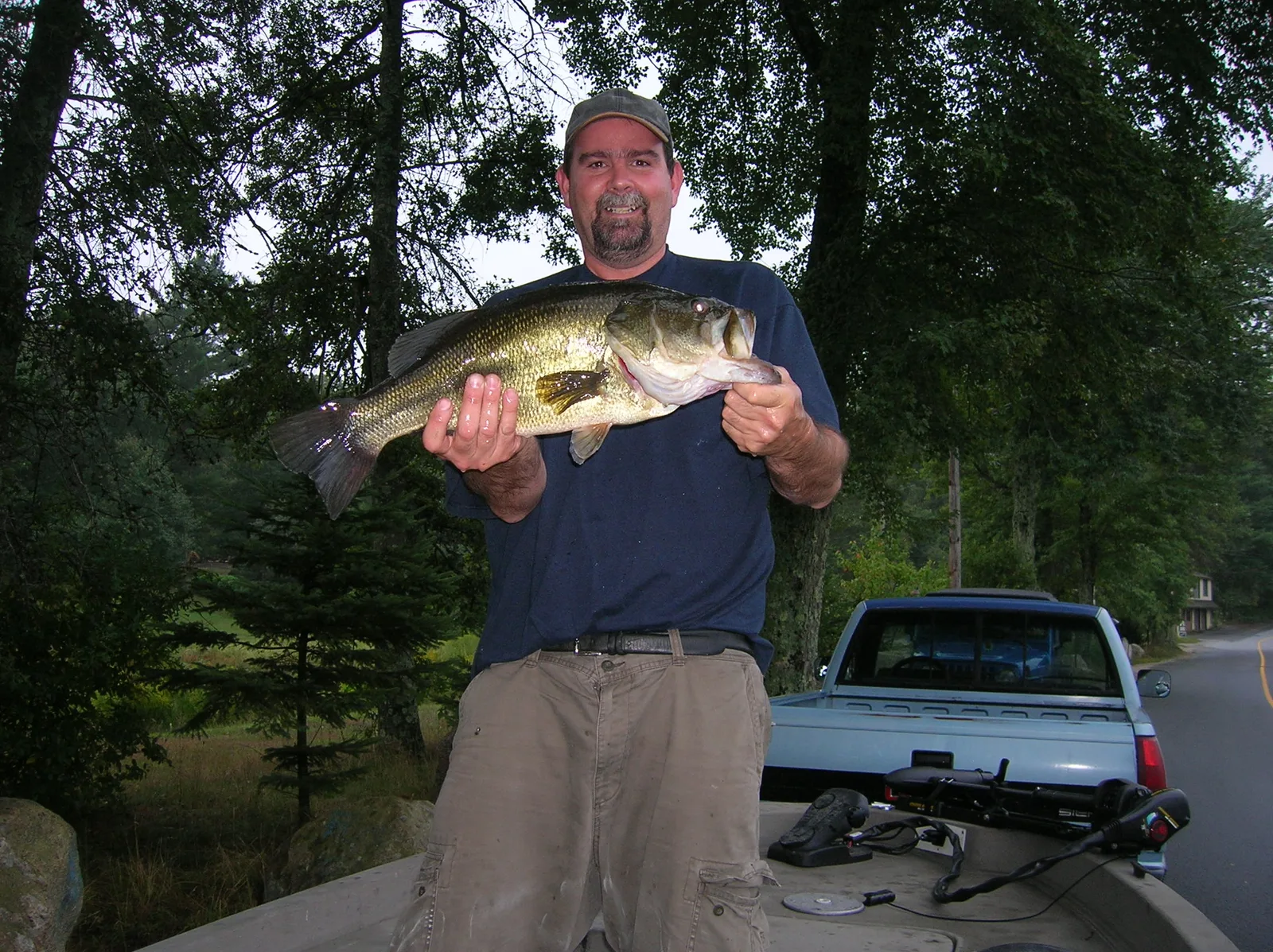
The best time to fish for bass is the pre-spawn, when the water warms from 48 to 55 °F (9–13 °C). The heaviest females of the year feed then, on the edges of the flats where they are about to nest. The second-best window is the fall feed, as the water cools from the mid-70s toward 55 °F (24–13 °C) and bass chase shad into the creeks. Within any day, dawn and dusk beat noon from late spring to early fall, and the warm afternoon beats dawn in winter and early spring.
Under a full moon a largemouth catches its prey more than 95% of the time, as well as on a dim day. Under starlight alone that falls to 62%, and in total darkness to nearly zero.
Why does water temperature set the calendar?
Largemouth bass are cold-blooded. They normally stop feeding below 41 °F (5 °C), above 98.6 °F (37 °C) and during the spawn itself. Between those ends, appetite rises with the water.
Spawning starts at about 60 °F (16 °C), and in Texas alone that reading can arrive anywhere from February to May. Across the country it comes in Florida in February and in Minnesota in June; the when do bass spawn calendar gives the months by region. That spread is why every season in the table is a temperature band, not a month.
Winter is slow, not dead. A 2025 study fitted wild largemouth in a small lake with heart-rate loggers and accelerometers from fall to late spring. Activity, heart rate and metabolic rate fell through the fall, stayed low all winter and peaked in late spring with the spawn. The fish kept swimming slowly all winter, and the energy budget suggests most of them kept eating. A winter bass bites; it just bites less often and closer to the bottom.
The season bands come from Kevin VanDam’s six-season guide. The bass water temperature page sets the agency numbers beside them: the spawn trigger at about 60 °F and the prime feeding band at 65–80 °F (18–27 °C). The water temperature chart does the same for every other species.
Which season is it, and where are the bass?
Read the temperature where the bass live, not the air. A fishing thermometer on a protected flat in the afternoon can read several degrees warmer than the main lake at dawn.
| Season | Water | Where the bass are | Best hours | What to throw |
|---|---|---|---|---|
| Winter | Below 48 °F (9 °C) | Main lake, steep structure: bluffs, channel drops, standing timber | Warmest part of the day, about 10 a.m. to 2 p.m. | Suspending jerkbait, jig, blade bait, spoon, fished slowly |
| Pre-spawn | 48–55 °F (9–13 °C) | Ditches and tapering points leading to the spawning flats; north banks first | Afternoons, then all day as it warms; the day before a front | Crawfish crankbait, slow-rolled spinnerbait, lipless crankbait, jig |
| Spawn | 55–70 °F (13–21 °C), nests from about 60 °F | Flat, protected water: 10 ft (3 m) or less on lowland lakes, 8–20 ft (2.4–6 m) on highland reservoirs | Midday, when the sun shows the beds | Tube, floating worm in clear water; soft jerkbait in stained |
| Post-spawn | 70–75 °F (21–24 °C) | Suspended by vertical cover: dock pilings, bushes, standing trunks | Early morning and evening | Topwater, spinnerbait, a grub jig reeled high in the water |
| Summer | 75–90+ °F (24–32+ °C) | Humps, points, ledges and drop-offs; or thick grass | First and last hour of light; night; whenever the dam generates | Deep crankbait, Carolina rig, frog over mats, topwater early |
| Fall | 75 down to 55 °F (24–13 °C) | Following shad onto flats, long points and up the creek arms | All day under cloud; mornings under sun | Willow-leaf spinnerbait, shallow and medium crankbait, chugger, jerkbait late |
Two rows matter most. In pre-spawn the fish are heavy, grouped on the routes to the flats and eating. In fall they are feeding up for winter, shallow where a bank angler can reach them.
VanDam gives each window a marker. The pre-spawn pace picks up around 52 °F (11 °C), on the north banks first because they warm first. The fall pattern starts the day the water cools about 10 °F (6 °C) below its summer peak, and a rapid drop is best. Summer and winter still produce, but on a schedule of hours rather than days.
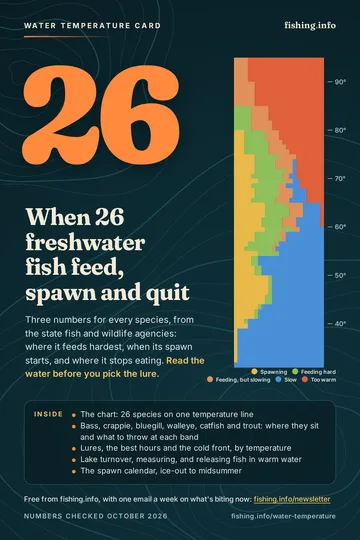
Free card: what 26 species do at your water temperature
Plus one email a week on what's biting now. No sales pitches. Privacy.
What time of day is best?
The dawn-and-dusk rule is one of the few pieces of bass lore that tracking studies back up. In one, nine largemouth over 3.3 lb (1.5 kg) were radio-tagged in a Lake Seminole embayment, in Georgia, and followed for a year. By day the bass sat offshore in deeper water beside big wood and barely moved. In low light they moved toward the shoreline, where, the researchers concluded, the feeding presumably happened.
Their depths split in two all year: one group of readings under 3 ft (1 m), the other around 10 ft (3 m). A 2026 accelerometer study on Lake Ontario at Toronto found the same clock from another angle. Largemouth activity peaked at dawn and at dusk, and ran higher in spring and summer.
So the logic of the day is simple. When the water is colder than bass like, the warmest hours fish best. When it is warmer, the edges of the day and the night fish best. In the comfortable middle, the weather matters more than the clock. The best time of day to fish runs on the same logic for other species.
- Winter and early spring (water in the 40s °F): roughly 10 a.m. to 2 p.m. is the best window in cold water. The second or third warm day in a row beats the first.
- Spring (50s and 60s): all day, best from mid-morning on. Sight fishing on beds needs the sun high enough to see the bottom.
- Summer (70s and 80s): the morning bite usually fades around 10 a.m., often comes back around 1 p.m., and peaks in the evening. VanDam’s line for clear lakes: a topwater draws strikes until the sun climbs above the tree line.
- Fall (dropping through the 60s): all day under cloud, mornings under sun, and the windy afternoon after a front that pushes the shad.
Is night fishing worth it?
On a moonlit summer night, yes. Bass are sight feeders, and a laboratory study measured how much light they need. Largemouth caught their prey more than 95% of the time at every light level from dim daylight down to moonlight. Under starlight the success rate fell to 62%, and in total darkness to nearly zero.
Worked out for real lakes, a full moon let bass feed down to 5–43 ft (1.6–13 m), depending on water clarity. Under starlight, enough light reached only the top 20 in (0.5 m), whatever the clarity.
That gives two rules for a summer night. On moonlit nights bass can hunt the whole shallow edge, so fish it as you would at dusk. On dark nights the feeding happens near the surface, where a fish sees a silhouette against the sky. Throw a black buzzbait, a popper or a slow-rolled dark spinnerbait.
VanDam also notes bass moving up to spawn around the new and full moon. Whether the moon does more than that is what the moon phase studies test.
How does the weather change the bite?
Weather moves bass more in a day than the season does in a week. The barometer is the best forecast on the boat, but the studies do not show bass reacting to the pressure itself.
Ralph Manns logged bass on Lake Travis. Of the fish he showed a lure to, 65% struck under slowly falling pressure, against 30% under slowly rising pressure. Yet his own conclusion was that the readings alone did not predict bass activity. The warm wind and cloud before a front, and the bright sky after it, explain more. The barometric pressure page has the numbers.
- The day before a front. Warm, humid, overcast, south wind building: bass move shallow and chase. The afternoon before a spring front is the best afternoon of the week. Throw moving baits.
- The front passing. Rain, then a wind shift to the north. Reaction baits keep catching until the shift; leave the water at the first lightning.
- The bright day after. The surface can read 8–10 °F (4–6 °C) cooler the morning after a front. Mike Iaconelli’s count is that eight or nine fronts in ten change the bite, and the second day is sometimes the toughest. Slow down, fish tight to cover and fish the warmest bank of the afternoon; the cold front plan goes day by day.
- Wind. A steady breeze onto a bank pushes plankton and baitfish into it and breaks up the light, so bass hunt shallower. Fish the windblown bank with a spinnerbait or crankbait; save the calm pocket for topwater.
- Cloud. Overcast stretches the dawn bite through the day and lets fish roam from cover. Sun pins them to shade and the edge of the shadow line.
- Current. On a river-run reservoir, VanDam has bass feeding once the dam releases water and current moves the baitfish. That can happen at any hour, so the generation schedule beats the clock. On tidal rivers, bass and bait concentrate on the low tide.
Do smallmouth keep the same clock?
They do, a few weeks behind largemouth in the same lake. Smallmouth usually spawn at 62–64 °F (17–18 °C), with nests recorded as cold as 53 °F (12 °C). The best lake fishing is June, during and just after the spawn, and early fall. Natural baits such as hellgrammites, dragonfly larvae and crayfish fish best early in the morning and late in the evening.
Smallmouth also feel summer heat sooner. They slow down above about 75 °F (24 °C), ten degrees before the largemouth. A 78 °F (26 °C) lake is a dawn-and-dusk smallmouth lake while it is still an all-day largemouth lake. The smallmouth bass page has their own season table, and the bass hub the rest of the family.
If you can pick one week, which one?
Pick the week the water on your lake passes 52 °F (11 °C) on the way up. Fish the points and channel edges beside the biggest spawning flats, on the north side first, with a jig and a crankbait. Expect the heaviest fish of the year.
If you can pick one hour on a summer day, take the last hour of light on a windy bank. Bring a topwater and a spinnerbait, and stay after dark if the moon is up. The rod, reel and line for all of it are on the how to catch bass page.
Free download
The water temperature card
Read your water temperature and the card tells you who is spawning, who is feeding and what to throw. 26 species, 16 pages, for your phone and the tackle box.
Plus one email a week on what's biting now. No sales pitches. Privacy.
Related
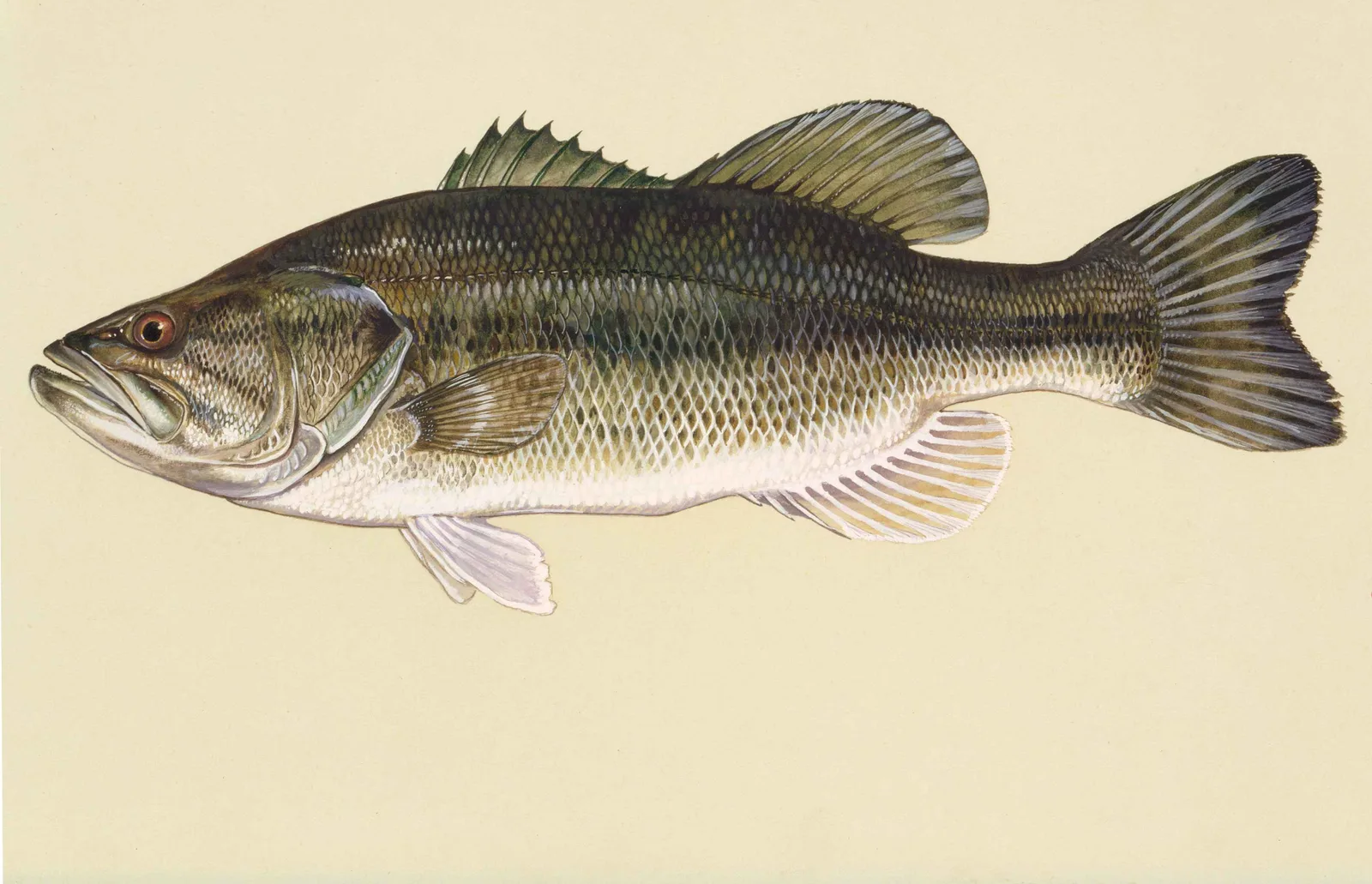
Section guide
Bass Fishing: Where the Bass Are, What to Throw, and the Three Bass You Will MeetBass fishing from the angler's side: where largemouth, smallmouth and spotted bass are at each water temperature, what to throw first, how to tell them apart.
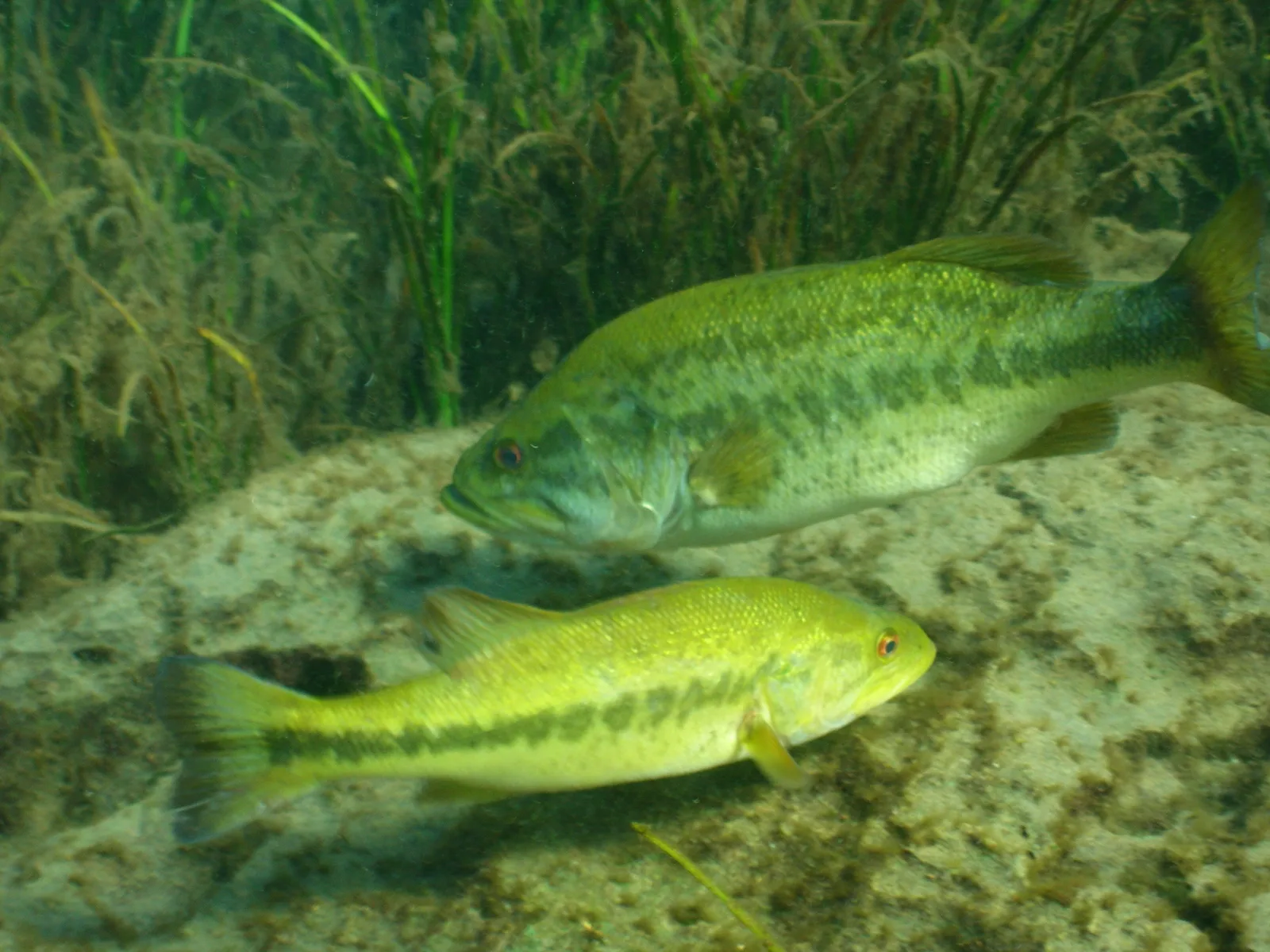 When Do Bass Spawn? Water Temperature and Timing by Region
Bass spawn when the water holds about 60 °F: February in Florida, June in Minnesota. The temperature bands, a calendar by region and how to fish each stage.
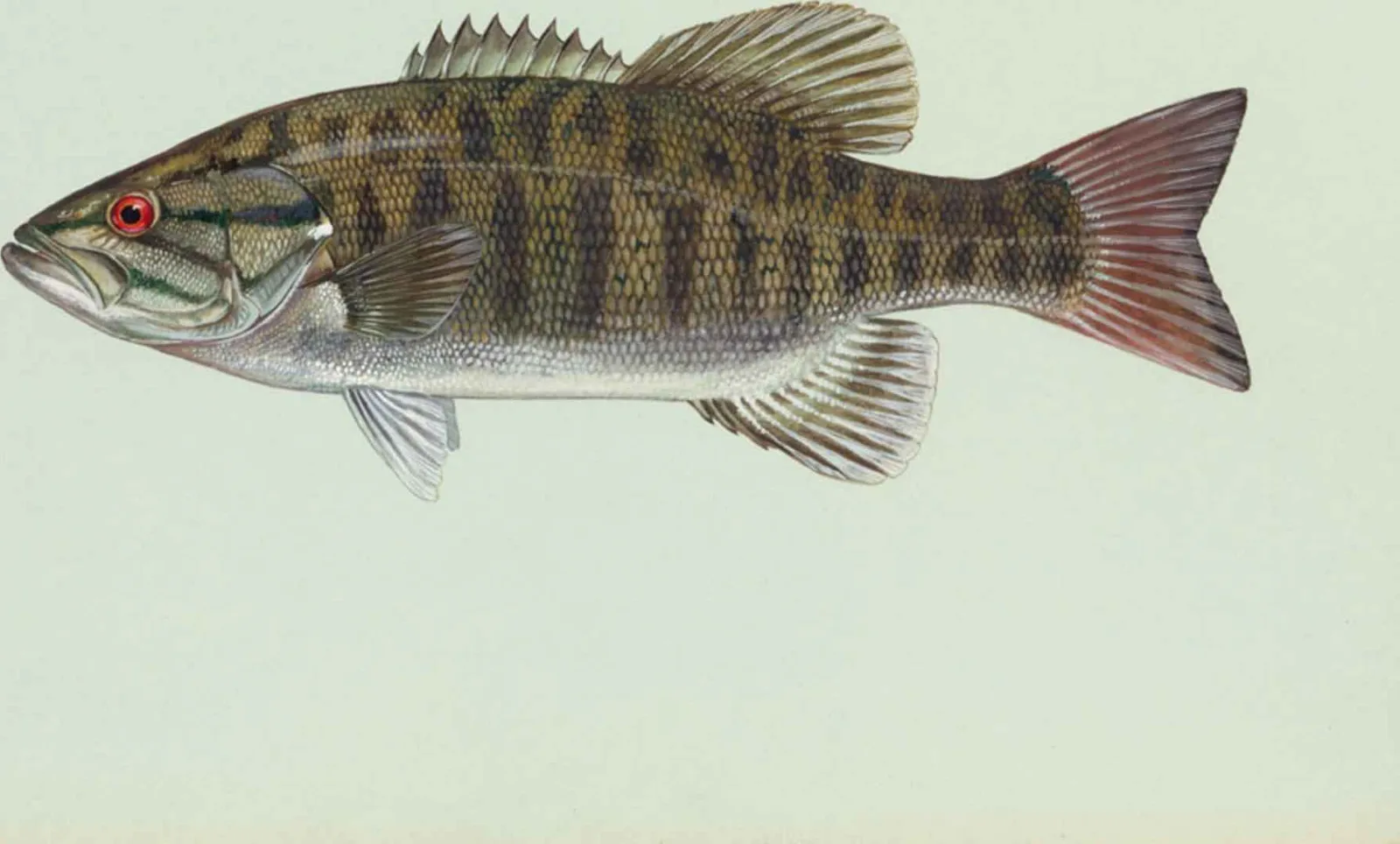 Smallmouth vs Largemouth Bass: How to Tell Them Apart
Smallmouth vs largemouth bass: the jaw, the stripe and the dorsal fin settle the identification in seconds. Then habitat, size, records and how each one fights.
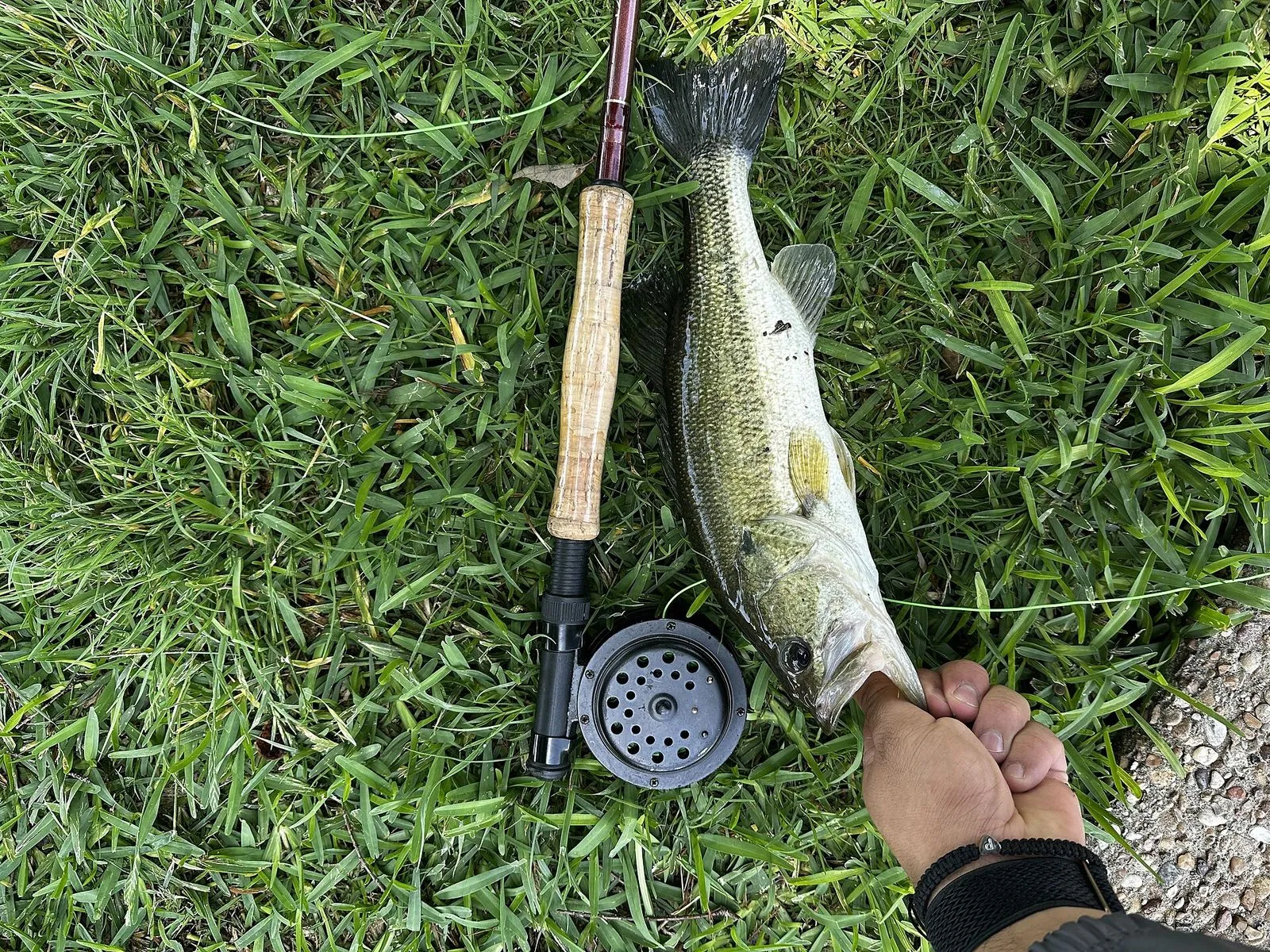 How to Fish for Bass: A Beginner's Season-by-Season Guide
How to fish for bass from the first cast: one rod and reel, five lures, where bass are at each water temperature, and a numbered method for a day on the water.
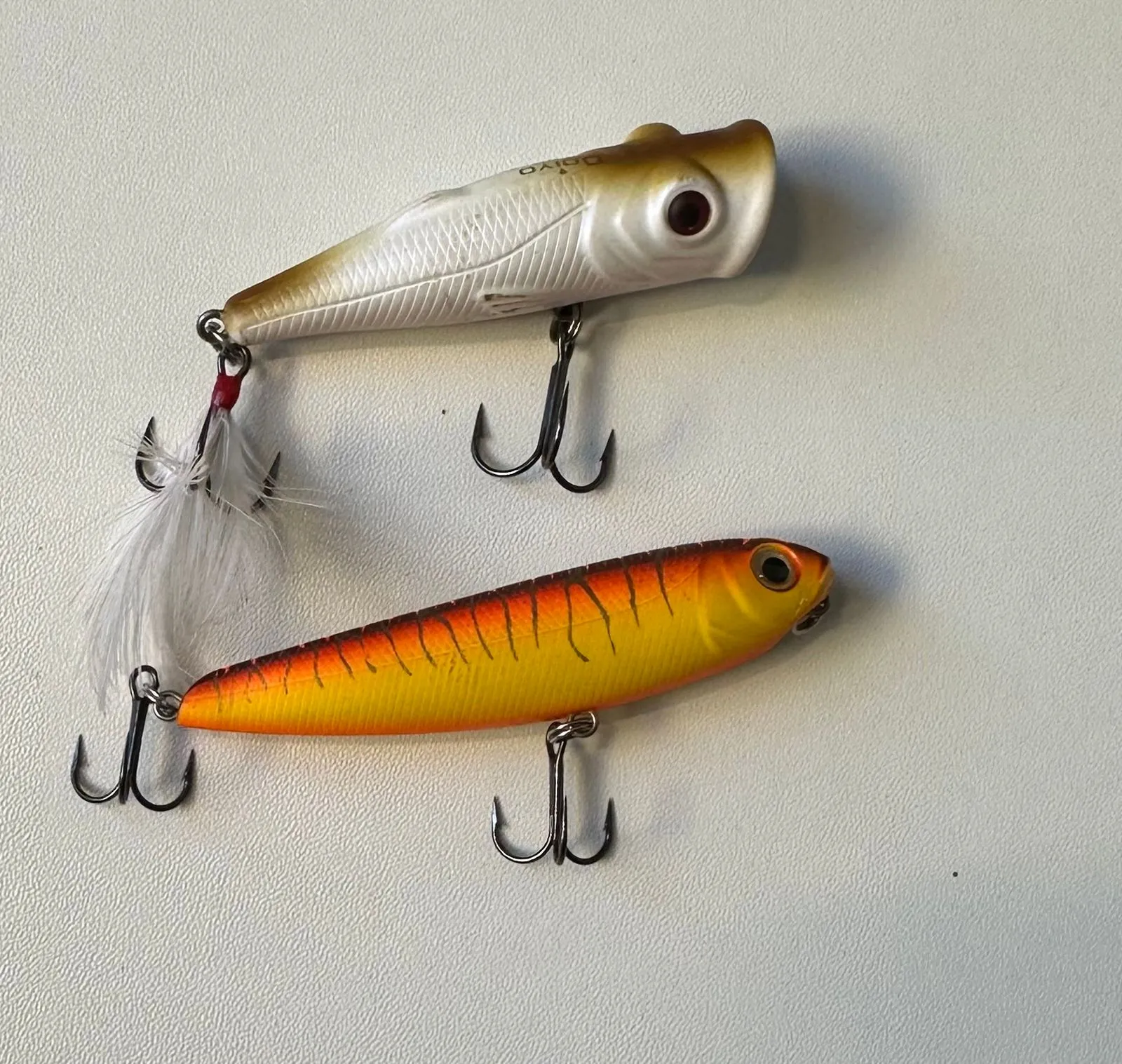 Best Bass Lures: What Won the 2025 and 2026 Elite Series, Season by Season
Best bass lures from two seasons of Elite Series winning baits: a lure for each water color, depth, cover and season, with smallmouth and spotted bass picks.
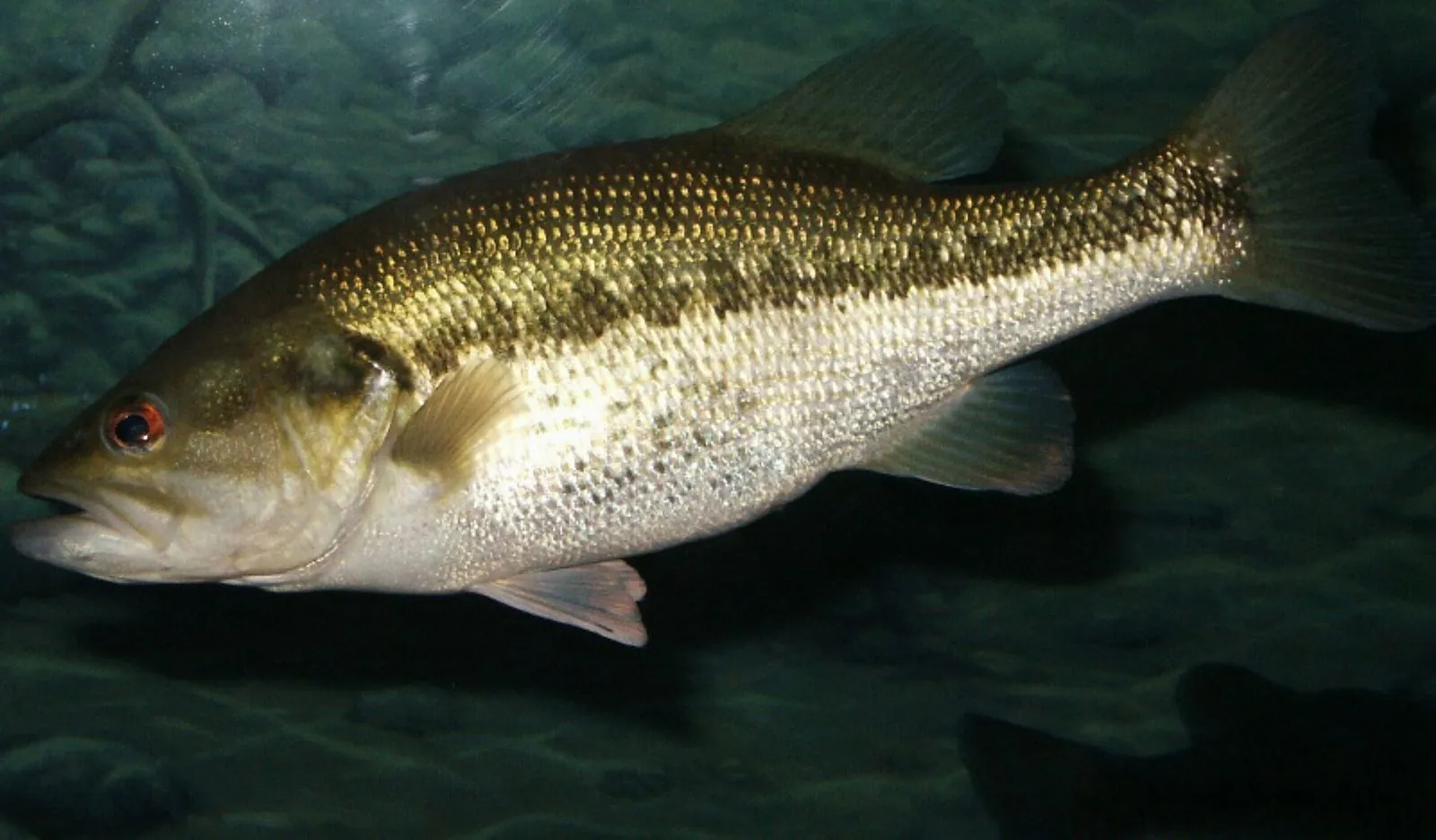 World Record Largemouth Bass: Perry, Kurita and Dottie
The world record largemouth bass is 22 lb 4 oz, caught in Georgia in 1932 and tied in Japan in 2009: the documented story, the IGFA rules, and Dottie.
 Spotted Bass: How to Tell It From Largemouth and Alabama Bass
Spotted bass from the agency data: the tooth patch, jaw and scale counts that separate it from largemouth and Alabama bass, habitat, spawning, and records.
Sources
- Bassmaster, KVD's 6-season bass guide
- Texas Parks and Wildlife, largemouth bass species profile
- U.S. Fish & Wildlife Service, largemouth bass
- Wisconsin DNR, smallmouth bass
- Sammons, S. M. and Maceina, M. J. (2005), Activity patterns of largemouth bass in a subtropical US reservoir, Fisheries Management and Ecology 12:331–339
- McMahon, T. E. and Holanov, S. H. (1995), Foraging success of largemouth bass at different light intensities, Journal of Fish Biology 46:759–767
- Hlina, B. L. et al. (2026), Animal Biotelemetry 14, Seasonal effects on the acceleration of largemouth bass and northern pike in Toronto Harbour
- Reeve, C., LaRochelle, L., Bihun, C. J., Brownscombe, J. W. and Cooke, S. J. (2025), Winter behaviour and energetics of free-swimming largemouth bass, Canadian Journal of Fisheries and Aquatic Sciences 82:1–16
- Manns, R. (2017), Barometric Pressure and Bass, In-Fisherman
- Schramm, H. (2018), The Effects of Cold Fronts on Bass, In-Fisherman
- Baker, S. (2026), The Best Times to Fish for Bass, Each Day and All Season, Field & Stream