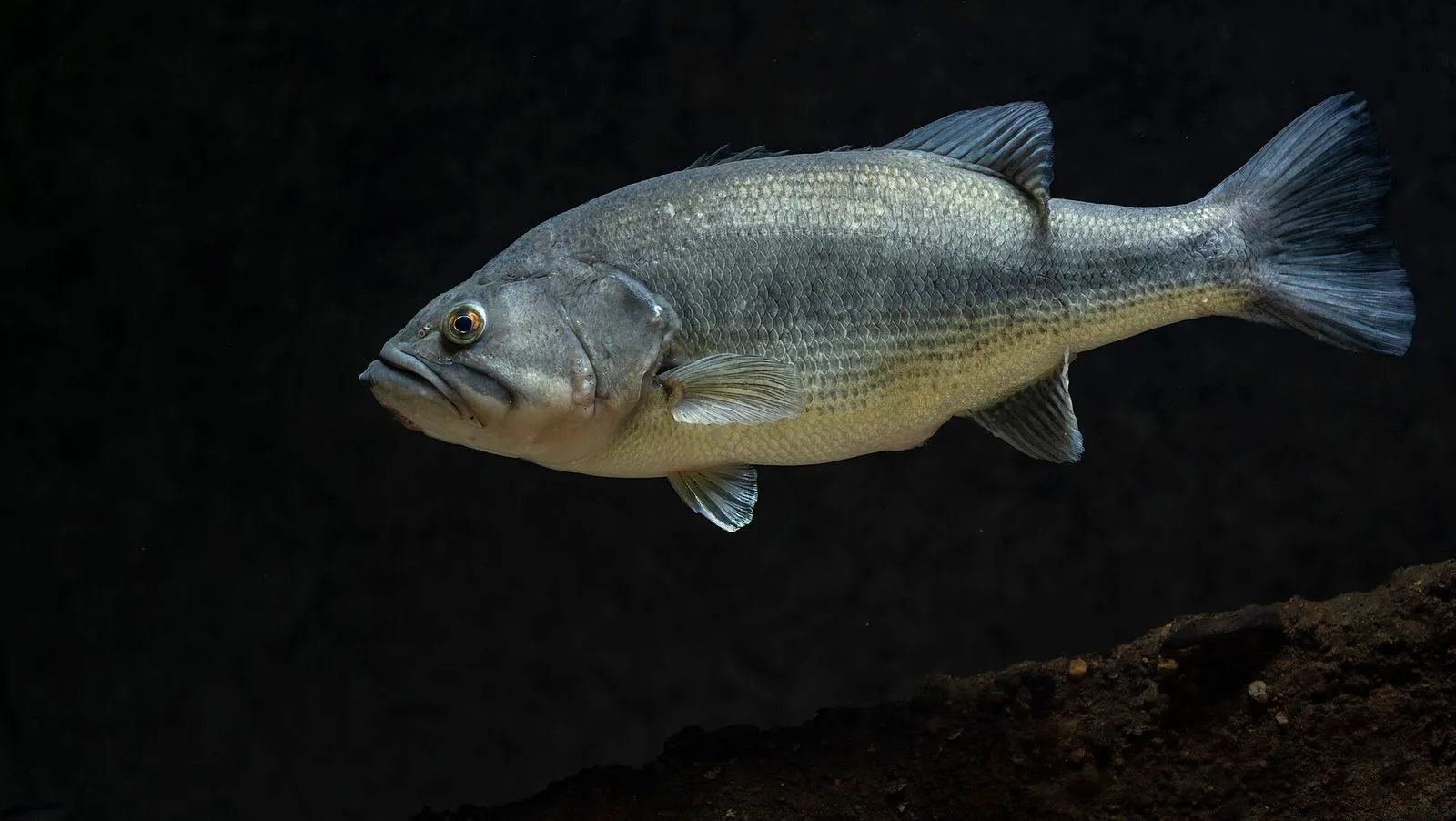
Black bass are the North American freshwater genus Micropterus: the largemouth, the smallmouth, the spotted bass and 16 close relatives, 19 species in all. If you came for the saltwater fish on restaurant menus, that is the black sea bass, Centropristis striata, a different fish from a different family; NOAA Fisheries has its biology and rules. Everything below is about the freshwater black basses anglers chase.
Florida’s fishing law protects the Choctaw bass by name, yet in zoology the fish still has no valid scientific name: its proposed name, Micropterus haiaka, was never published under the rules.
What is a black bass?
A black bass is any fish of the genus Micropterus, part of the sunfish family, Centrarchidae. That makes them cousins of the bluegill and the crappie, not of the striped bass. The temperate basses, stripers, white bass and yellow bass, belong to another family, Moronidae.
The name is old and plain. Early federal fisheries reports wrote “small-mouthed black bass”, and the federal law of 1926 that protected these fish across state lines spoke of “black bass” too. Biologists still use the term for the whole genus; the fishing terms glossary gives the short version.
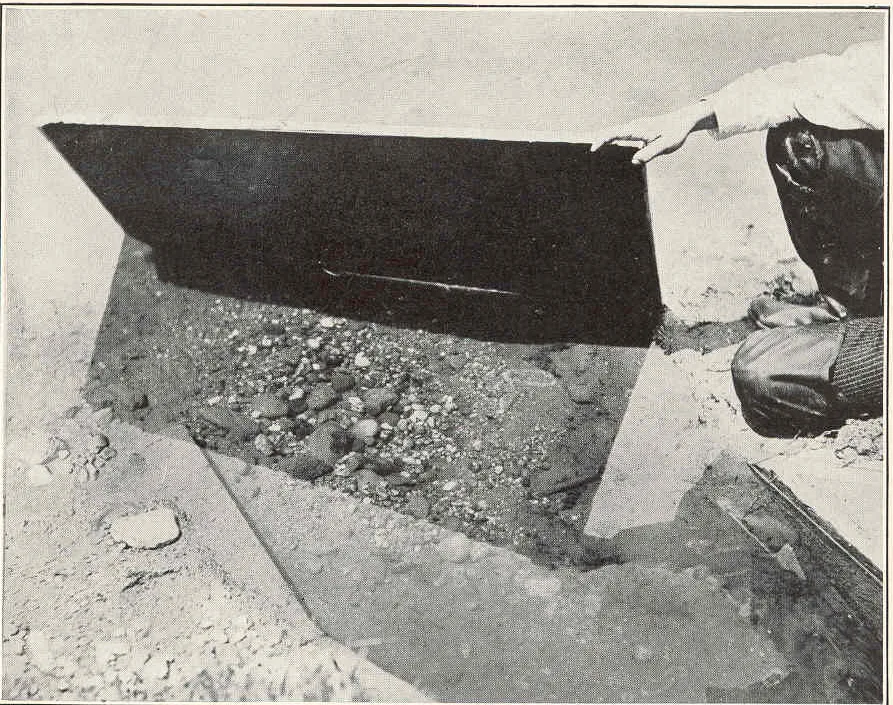
Jacob Reighard’s photograph for the U.S. Bureau of Fisheries (Bulletin for 1908, printed 1910) is captioned as the nest of a “small-mouthed black bass” (Micropterus dolomieu). Photo: Jacob Ellsworth Reighard, Wikimedia Commons (public domain).
How many species of black bass are there?
There are 19. A 2022 genetic study by Daemin Kim, Andrew Taylor and Thomas Near sorted the genus into 19 species, of which only 14 had a scientific name. Two more were named in August 2025, so in October 2026 the count is 16 named species and 3 still waiting for a formal description: the Little River bass, the Ouachita bass and the Choctaw bass.
The Choctaw bass is the odd one. Florida biologists found its DNA in a Chipola River fish in 2007, announced the species in 2013 and proposed the name Micropterus haiaka. The Catalog of Fishes, the reference list taxonomists use, files that name as not published under the zoological code. Until someone publishes a full description, the right way to write it is “proposed name M. haiaka”.
One more name circulates: the Presque Isle bass, M. parallelus, described from Lake Erie in 2024. The Catalog of Fishes calls the publication unavailable and the fish possibly a hybrid, so it is not in the count.
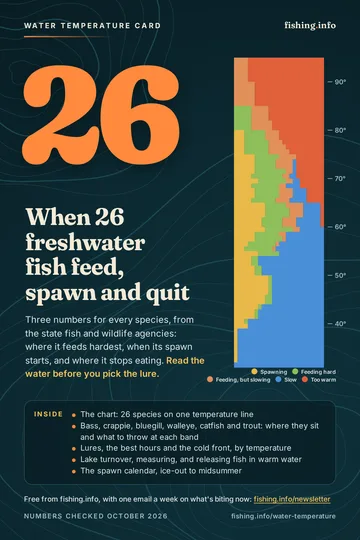
Free card: what 26 species do at your water temperature
Plus one email a week on what's biting now. No sales pitches. Privacy.
All 19 black basses: where they live and the record
Most anglers will only ever meet the first three or four fish on this list. The rest live in one river system each, mostly in Alabama and Georgia, and several of them are fished for on purpose by anglers chasing a slam. A linked name leads to our guide.
| Black bass | Native range | IGFA all-tackle |
|---|---|---|
| Largemouth M. nigricans | Great Lakes and Mississippi basin south to the Rio Grande | 22 lb 4 oz (10.1 kg), Georgia, 1932 |
| Florida bass M. salmoides | Peninsular Florida; Atlantic plain north to North Carolina | 22 lb 4 oz (10.1 kg), Japan, 2009 |
| Smallmouth M. dolomieu | Great Lakes, St. Lawrence and Mississippi basins | 11 lb 15 oz (5.4 kg), Tennessee, 1955 |
| Neosho bass M. velox | Arkansas River system, Oklahoma and Arkansas | — |
| Little River bass (undescribed) | Little River system, Oklahoma and Arkansas | — |
| Ouachita bass (undescribed) | Upper Ouachita River system, Arkansas | — |
| Spotted bass M. punctulatus | Ohio and Mississippi basins to Texas and the Gulf | 2 lb 8 oz (1.1 kg), Texas, 2025 |
| Alabama bass M. henshalli | Mobile Bay basin, Alabama, Georgia, Mississippi | 11 lb 4 oz (5.1 kg), California, 2017 |
| Choctaw bass (undescribed, proposed M. haiaka) | Coastal rivers of the western Florida Panhandle and Alabama | — |
| Guadalupe bass M. treculii | Central Texas rivers | 3 lb 11 oz (1.7 kg), Texas, 1983 |
| Redeye bass M. coosae | Coosa River system, Alabama and Georgia | — |
| Bartram’s bass M. pucpuggy | Savannah River drainage, South Carolina, Georgia, North Carolina | — |
| Altamaha bass M. calliurus | Altamaha basin and upper Ogeechee, Georgia | — |
| Cahaba bass M. cahabae | Cahaba River system, Alabama | — |
| Chattahoochee bass M. chattahoochae | Chattahoochee River system, Alabama and Georgia | — |
| Tallapoosa bass M. tallapoosae | Tallapoosa River system, Alabama and Georgia | — |
| Warrior bass M. warriorensis | Black Warrior River system, Alabama | — |
| Shoal bass M. cataractae | Apalachicola, Chattahoochee and Flint drainages | 4 lb 13 oz (2.2 kg), Georgia, 2026 |
| Suwannee bass M. notius | Suwannee and nearby Gulf rivers, Florida and Georgia | 3 lb 14 oz (1.8 kg), Florida, 1985 |
A dash in the record column means the IGFA’s record search returns no approved all-tackle record for that fish. The IGFA added categories for the Neosho bass and four of the redeyes in June 2024, but its online search returns no record for them. The all-tackle record is the heaviest fish of a species on any line class.
Two records look strange until you know the history. The spotted bass record is only 2 lb 8 oz because the giant “spotted bass” on the old books turned out to be Alabama bass, and the category was reset. The shoal bass record of 4 lb 13 oz was caught on the Flint River in March 2026. The IGFA’s shoal bass notes still print 8 lb 12 oz, the weight of a 1995 Apalachicola River fish filed as a redeye bass and since retired.
How did the count reach 19?
The genus grew slowly for two centuries, then fast once DNA came in:
- 1802. Lacépède names the genus with the smallmouth, M. dolomieu. In the same book he describes a bass from the Carolinas as Labrus salmoides, the name the largemouth then carried for 220 years.
- 1819 to 1874. The spotted bass is named from the Ohio River (1819), Huro nigricans from Lake Huron (1828) and the Guadalupe bass from Texas (1874). The Lake Huron name was later filed as a duplicate of salmoides and shelved.
- 1940 and 1949. Hubbs and Bailey describe the redeye and, as subspecies, the Neosho and Alabama bass; the Suwannee bass follows in 1949.
- 1999. The shoal bass, long mistaken for a redeye, gets its own name.
- 2013. Four Alabama and Georgia river forms of the redeye are named as species: Cahaba, Chattahoochee, Tallapoosa and Warrior. Florida announces the Choctaw bass the same year.
- 2022. Kim, Taylor and Near count 19 species. Because the Carolina fish of 1802 was a Florida bass, M. salmoides goes to the Florida bass, and the largemouth takes the Lake Huron name, M. nigricans. The American Fisheries Society’s official names list follows in 2023.
- 2024. The IGFA splits the record book: Florida bass and Alabama bass get their own categories, and any new all-tackle largemouth record needs a genetic test.
- 2025. Bartram’s bass and Altamaha bass, both split from the redeye, are described in Zootaxa on August 19.
Is a largemouth or a smallmouth a black bass?
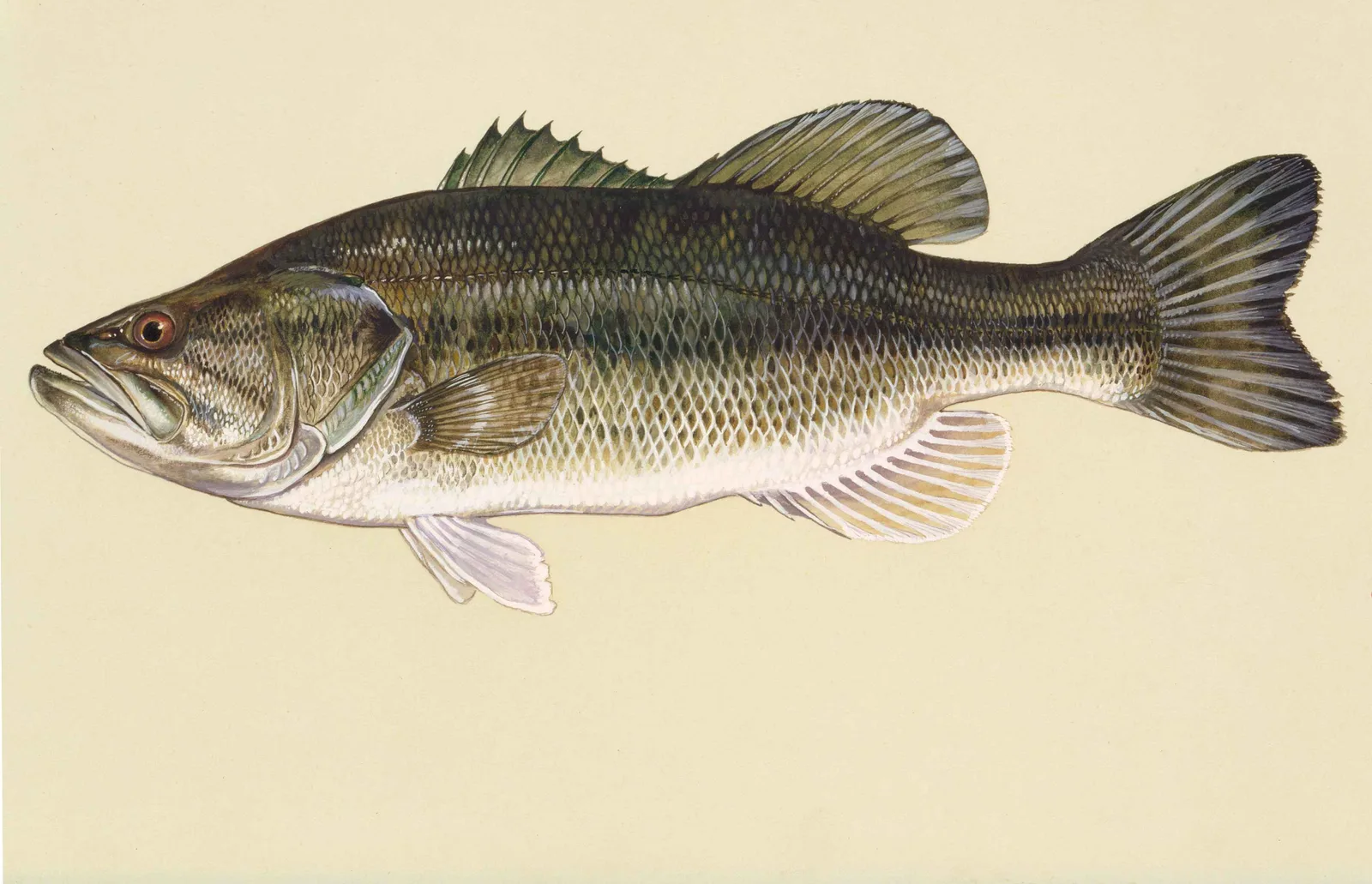
Yes. “Black bass” is the group and the largemouth is one member of it, the way a mallard is a duck. The same goes for the smallmouth, the spotted bass and every fish in the table above. A fish called a black bass in a freshwater lake is almost always one of the first three.
Telling the common ones apart takes a few seconds. Close the mouth: on a largemouth the upper jaw reaches past the back of the eye, on a smallmouth and a spotted bass it stops below it. The smallmouth vs largemouth page settles that mix-up with the fish in your hand. The spotted bass has a rough tooth patch on its tongue. Where each of the three sits through the year is on the bass fishing page.
What does “black bass” mean in the fishing regulations?
In law, “black bass” means the species a state lists, and the lists differ. That matters most when a state counts every black bass toward one daily bag, which is what the term usually does in a rulebook.
| Where the term is used | Which fish count | The rule or number |
|---|---|---|
| Science (2022 study, 2025 additions) | The whole genus Micropterus | 19 species; 16 named, 3 undescribed |
| Florida regulations | Florida, largemouth, Suwannee, spotted, Choctaw and shoal bass | 5 a day combined, only one 16 in (41 cm) or longer |
| Texas regulations (no “black bass” term) | Largemouth, smallmouth, Alabama, Guadalupe and spotted bass | One bag: 5 a day for any combination |
| Georgia DNR Bass Slam | Ten natives, Bartram’s and Altamaha included | Catch five species in one year |
| North Carolina | Bartram’s, largemouth, smallmouth, spotted | The Alabama bass is listed as invasive |
| Federal law, 1926 to 1981 | Largemouth and smallmouth taken against state law (1926 text) | Interstate transport banned; repealed in 1981 |
| FDA seafood labels | Largemouth, smallmouth and black sea bass all carry the nickname | Nicknames may not be used on labels; FDA says they can misbrand the fish |
Florida names the Choctaw bass in its rules and protects it with a 12 in (30 cm) minimum, the same as Suwannee, shoal and spotted bass. Florida and largemouth bass have no minimum there. Before you keep a fish, check your own state’s list and the bag limit for the water you fish.
The federal black bass act became law on May 20, 1926, and made it illegal to carry largemouth or smallmouth black bass taken against state law across state lines. Congress repealed it on November 16, 1981, in the Lacey Act Amendments of that year.
Is a black bass rare?
The common ones are not. The largemouth has been stocked far beyond its native range, on other continents too, and the how to catch bass guide starts with the fish in your nearest pond. The smallmouth and the spotted bass have been moved well outside their home waters as well.
The rare ones are the river specialists. Bartram’s bass lives only in the Savannah River drainage and sits on the wildlife action plans of both South Carolina and Georgia. The biggest threat to it and its cousins is not fishing. Introduced bass breed with the natives, and the 2025 description had to pick its type specimens by DNA to find fish that were not hybrids. North Carolina lists the Alabama bass as invasive for that reason.
That rarity is what anglers chase. Georgia DNR’s Bass Slam asks you to catch five of the state’s ten native black basses in one calendar year, and only 68 anglers finished it in 2025. If you catch one of the rare ones, a quick photo and a fast release are what the fishery needs.
Which fish are called black bass but are not?
Two fish share the name without belonging to the genus. The black sea bass is a saltwater fish of the Atlantic coast, family Serranidae, sold and eaten as a sea bass. The Papuan black bass of New Guinea rivers is a snapper, Lutjanus goldiei; its IGFA record is 47 lb 8 oz (21.5 kg), caught on the Tauri River in 2015.
Plenty of other fish are called bass without being black bass: the striped, white and yellow bass, the rock bass of the sunfish family, the peacock bass, which is a cichlid. The panfish section covers the rock bass’s sunfish relatives, and the striped bass section the temperate basses.
Is black bass good to eat?
Yes, black bass are eaten wherever they are caught, but whether you should eat a given fish depends on the water it came from. For fish you catch, the FDA and EPA say to check the local advisory; where there is none, eat one serving and no other fish that week. The largemouth page has the state examples. The saltwater black sea bass is on the agencies’ “Best Choice” list.
Many bass anglers release their fish anyway. The bass you let go today is next spring’s spawning fish, and the best bass lures will find it again.
Gear for bass
Gear guide
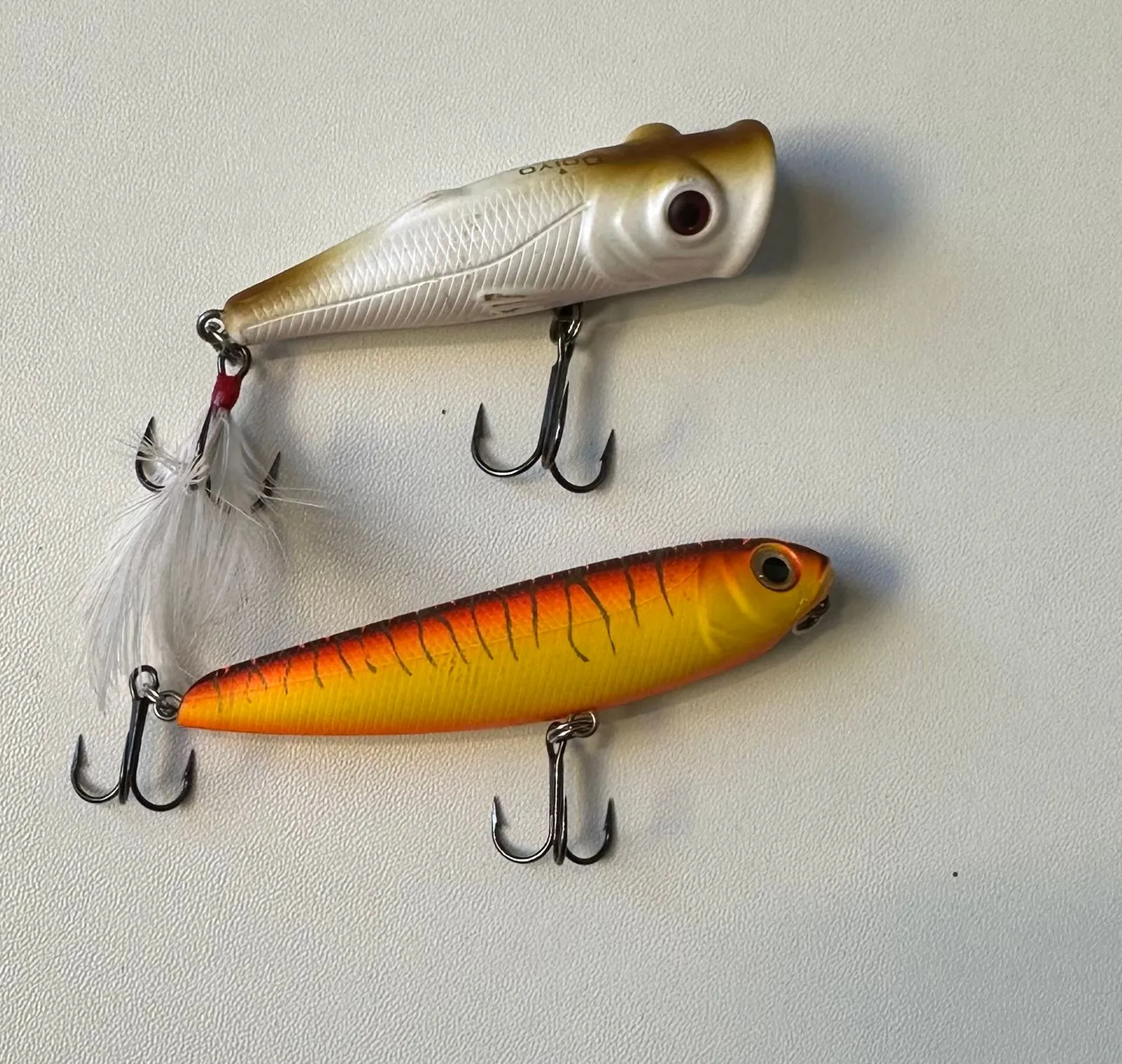
Best Bass Lures: What Won the 2025 and 2026 Elite Series, Season by SeasonBest bass lures from two seasons of Elite Series winning baits: a lure for each water color, depth, cover and season, with smallmouth and spotted bass picks.
Free download
The water temperature card
Read your water temperature and the card tells you who is spawning, who is feeding and what to throw. 26 species, 16 pages, for your phone and the tackle box.
Plus one email a week on what's biting now. No sales pitches. Privacy.
Related
Section guide
Bass Fishing: Where the Bass Are, What to Throw, and the Three Bass You Will MeetBass fishing from the angler's side: where largemouth, smallmouth and spotted bass are at each water temperature, what to throw first, how to tell them apart.
 Bass Bait: The Best Live Bait and Lures, Matched to What Bass Eat
The best bass bait is whatever your bass already eat: shiners, crawfish, shad or bluegill, live or as a lure. What works, what size, and where it's legal.
 Best Time to Fish for Bass: Season, Time of Day and Weather
The best time to fish for bass is the pre-spawn at 48–55 °F and the fall feed, at dawn and dusk. Season table, hours, night and weather.
 When Do Bass Spawn? Water Temperature and Timing by Region
Bass spawn when the water holds about 60 °F: February in Florida, June in Minnesota. The temperature bands, a calendar by region and how to fish each stage.
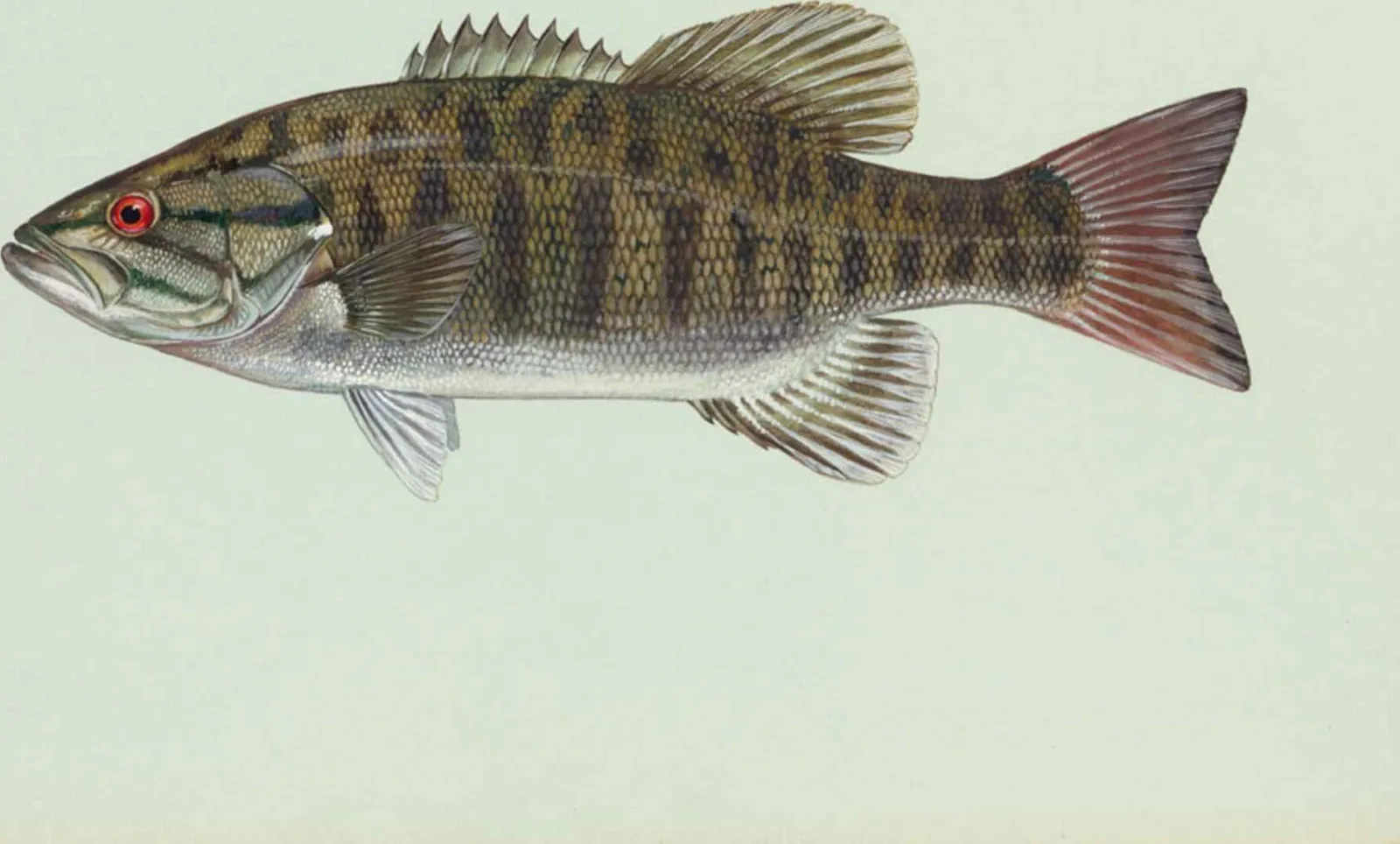 Smallmouth vs Largemouth Bass: How to Tell Them Apart
Smallmouth vs largemouth bass: the jaw, the stripe and the dorsal fin settle the identification in seconds. Then habitat, size, records and how each one fights.
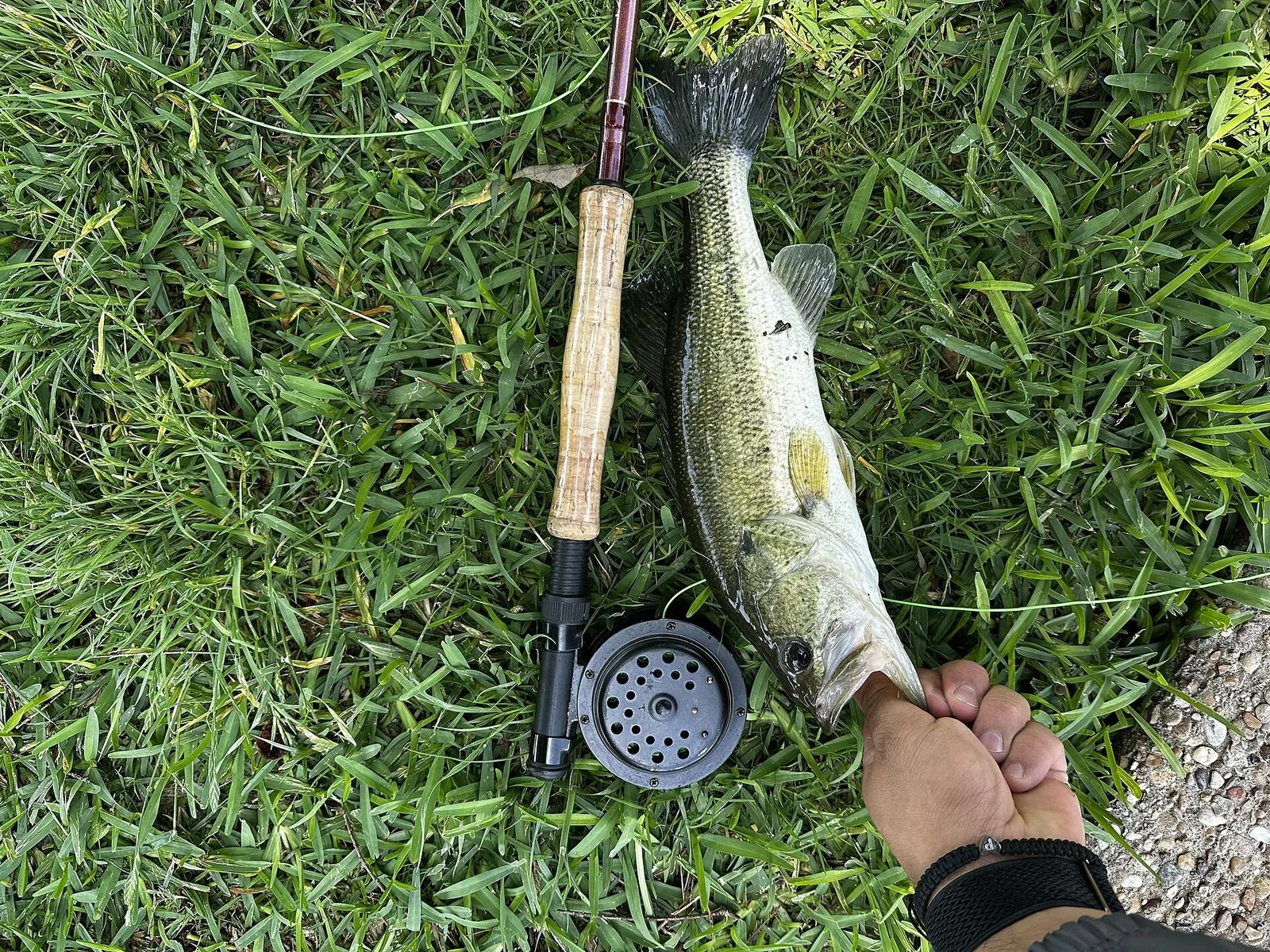 How to Fish for Bass: A Beginner's Season-by-Season Guide
How to fish for bass from the first cast: one rod and reel, five lures, where bass are at each water temperature, and a numbered method for a day on the water.
- Best Bass Lures: What Won the 2025 and 2026 Elite Series, Season by Season
Best bass lures from two seasons of Elite Series winning baits: a lure for each water color, depth, cover and season, with smallmouth and spotted bass picks.
Sources
- Kim, Taylor & Near 2022, Phylogenomics and species delimitation of the economically important black basses (Micropterus), Scientific Reports 12:9113
- Freeman et al. 2025, Two new species of Micropterus endemic to Atlantic Slope river drainages in Georgia, South Carolina and North Carolina, Zootaxa 5683(1):67–89
- South Carolina DNR, Bartram's bass formally described as a new species (Sept. 2, 2025)
- Eschmeyer's Catalog of Fishes, species of Micropterus (valid names, haiaka and parallelus status; online version of Sept. 21, 2026)
- Florida FWC, Black basses research (Choctaw bass)
- Florida Sportsman, FWC scientists discover new bass species (May 7, 2013)
- Florida FWC, General freshwater fishing regulations (black bass)
- Texas Parks and Wildlife, Freshwater bag and length limits
- WRDW, 2026 Georgia DNR Bass Slam (May 20, 2026)
- North Carolina Wildlife Resources Commission, Black bass in North Carolina
- American Fisheries Society, Ontario Chapter, Changes to fish names following Page et al. 2023 (Micropterus nigricans)
- IGFA, World records search (black bass all-tackle records, queried Oct. 2026)
- IGFA, World record: Bass, shoal (Ryan Kennedy, Flint River, 2026)
- Outdoor Life, IGFA adds seven bass record categories (June 2024)
- 16 U.S.C. §§851–856, the 1926 black bass act, what §852 made illegal, and its 1981 repeal (Legal Information Institute)
- Act of May 20, 1926, ch. 346, 44 Stat. 576: An Act to regulate the interstate transportation of black bass (U.S. Statutes at Large, GovInfo)
- U.S. Food and Drug Administration, The Seafood List (market and vernacular names for 'bass')
- NOAA Fisheries, Black sea bass
- Ross & Stauffer 2024, Morphological analysis of a new species of Micropterus from Lake Erie, Pennsylvania, Biology 13(9):660
- U.S. FDA and EPA, Advice about eating fish