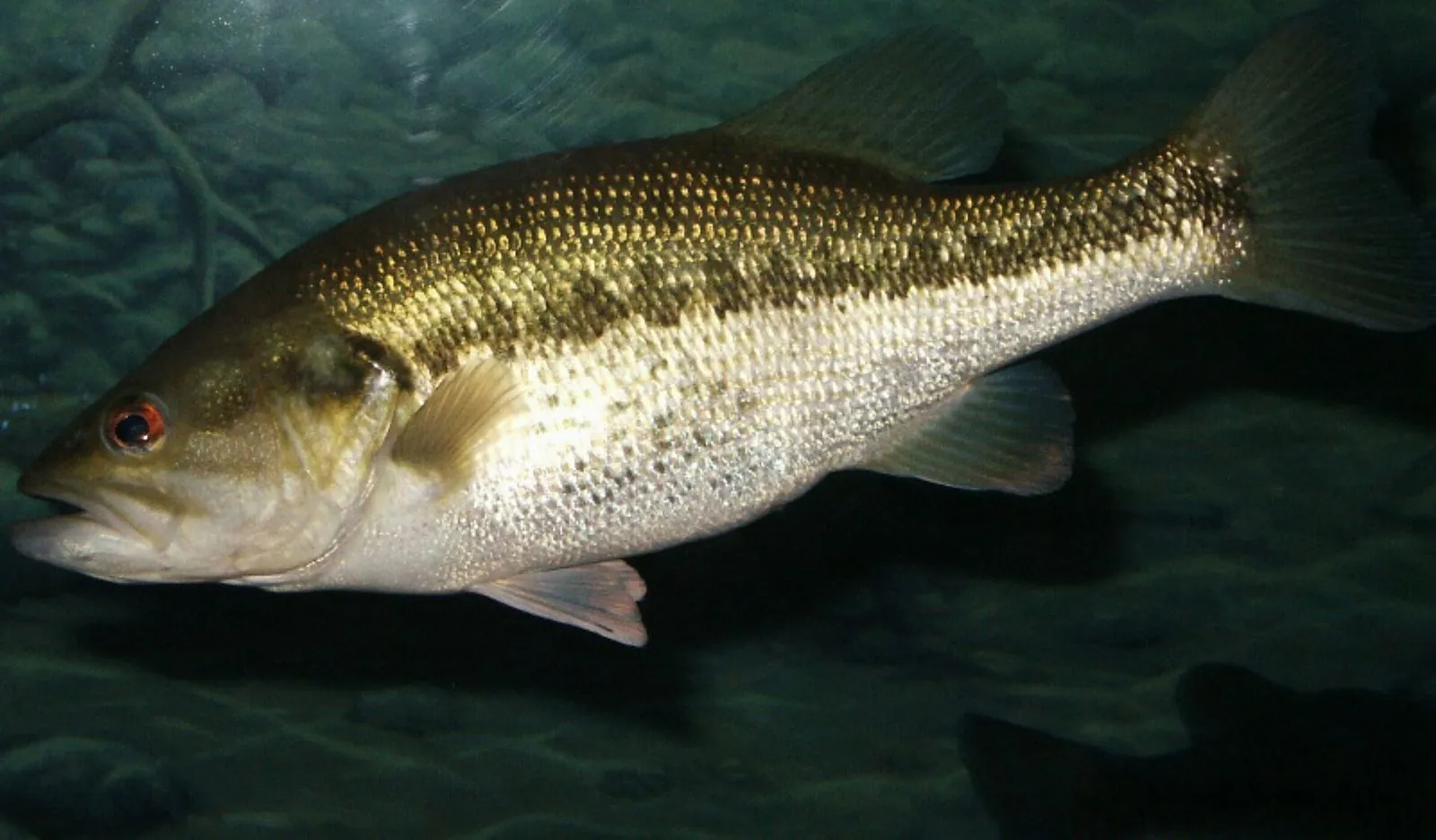
The world record largemouth bass weighs 22 lb 4 oz (10.1 kg), and two fish share it. A farm boy with a single lure caught the first in a Georgia oxbow in 1932. The second came from a Japanese lake in 2009, to an angler who missed beating the record by about an ounce. The biggest bass ever weighed is on neither line: a 25 lb 1 oz female from a small California reservoir, with a name, a following and a foul hook in her back.
Dottie weighed 25 lb 1 oz, more than any bass ever certified, and never counted: she was hooked in the back, not the mouth, and the rules do not bend for a famous fish.
How did George Perry catch the record in 1932?
On June 2, 1932, George Washington Perry was twenty years old and farming outside Helena, Georgia. Rain had made plowing impossible, so he took a day off from the fields. He went fishing with his friend Jack Page on Montgomery Lake, an oxbow of the Ocmulgee River. They had one lure between them, a Creek Chub Fintail Shiner, and they took turns sculling the boat.
The fish that took it was measured at a general store in Helena: 32½ in (83 cm) long, with a girth of 28½ in (72 cm). It was weighed on the certified scales at the post office at 22 lb 4 oz, and the figures were recorded and notarized. Perry entered it in Field & Stream’s annual big-fish contest and won first prize: a shotgun, shells and clothing worth $75 in all. Then his mother fried one side of it for dinner for the family of six, and the other side the next night.
Field & Stream recognized the fish as the world record in 1934. The magazine later lost Perry’s entry papers, and no photograph of the fish was submitted. That is the root of every doubt since.
In 2005 a photograph surfaced of a man and a boy holding a big bass outside Helena’s post office. A descendant of Perry’s companion sent it to Bill Baab, the historian who wrote the book on the catch. Baab was not sure the fish in it was a 22-pounder. Skeptics have pointed at the four-pound gap between Perry’s fish and Georgia’s next-largest bass, and some have even suggested a striped bass. None of that has moved the record. Perry died in 1974, when his plane hit a mountain near Birmingham, Alabama.
Why is Manabu Kurita’s 2009 bass only a tie?
On July 2, 2009, Manabu Kurita caught a largemouth of 22 lb 4.97 oz (10.12 kg) at Lake Biwa, Japan’s largest lake. American largemouth were introduced there in the 1920s. On a diet of native fish they grew to sizes the United States rarely sees.
The IGFA certified the fish in January 2010 as a tie rather than a new record, because its rules are exact. In its words, “to replace a record for a fish weighing less than 11.33 kilograms (25 pounds), the replacement must weigh at least 56.69 grams (2 ounces) more.” A fish that matches the old weight, or beats it by less than that, is a tie. Kurita’s bass was about an ounce short. The IGFA also investigated whether he had fished legally in a restricted area, and cleared him. Two names have stood on the line since.
Who was Dottie, the biggest bass that never counted?
The biggest largemouth ever put on a scale never held the record. San Diego County has small, clear, trout-stocked reservoirs, and in the early 2000s a group of anglers there spent years hunting one fish. She was a female, recognizable by a black dot on her right gill plate: Dottie.
Mike Long caught her at 20 lb 12 oz in 2001. Jed Dickerson caught her at 21 lb 11 oz in May 2003. On March 19, 2006, Mac Weakley was fishing a jig he could barely see in the murk. He set the hook on a flash and landed her at 25 lb 1 oz (11.4 kg), almost three pounds over the record.
She was hooked in the back. The IGFA rules disqualify a fish that is intentionally foul-hooked and require a fair-hooked fish for a record. Weakley weighed her, photographed her and released her. He did not submit an application that would have been refused and, he said, doubted forever. In early 2008 Dixon Lake staff found her floating, dead of age. Her weights across seven years are the best growth record any wild largemouth has.
The biggest largemouth on record
| Fish | Weight | Water | Date | Status |
|---|---|---|---|---|
| George Perry | 22 lb 4 oz (10.1 kg) | Montgomery Lake, Georgia | June 2, 1932 | All-tackle world record |
| Manabu Kurita | 22 lb 4.97 oz (10.12 kg) | Lake Biwa, Japan | July 2, 2009 | Tied record, certified January 2010 |
| “Dottie”, Mac Weakley | 25 lb 1 oz (11.4 kg) | Lake Dixon, California | March 19, 2006 | Foul-hooked; not submitted |
| “Dottie”, Jed Dickerson | 21 lb 11 oz (9.8 kg) | Lake Dixon, California | May 2003 | Certified catch, below the record |
| Mac Weakley | 19 lb 7 oz (8.8 kg) | Lake Dixon, California | May 2003 | Certified catch |
| Frederick Friebel | 20 lb 2 oz (9.1 kg) | Big Fish Lake, Florida | 1923 | Predates record-keeping |
| Florida state record | 17.27 lb (7.83 kg) | Florida | – | State record; heavier fish documented but not certified |
Do 30-pound bass exist? Nothing near it has ever been weighed. The largest verified largemouth is Dottie at 25 lb 1 oz, and claims of 30 and 50 lb bass are stories.
Has there ever been a 20-pound bass? Yes, a handful, almost all from Southern California’s trout-stocked reservoirs and Lake Biwa. A 20-pounder is rarer than a 10-pounder by a very long way. Florida’s TrophyCatch program has verified more than 16,000 bass of 8 lb or heavier since 2012. It has approved 168 of 13 lb or more, and none of 20.
What does a bass need to count as a record?
The IGFA’s rules are the standard every state and magazine follows. An all-tackle record has to clear five bars.
- The catch. Rod and reel, one angler, a fair-hooked fish, tackle that meets the rules.
- The scale. It must be “certified for accuracy by government agencies or other qualified and accredited organizations within the past 12 months.”
- The witnesses. Disinterested witnesses, “whenever possible.”
- The margin. The fish must beat the standing record by 2 oz under 25 lb, or by half of one percent above that.
- The species. The fish must be identified to species.
That last clause acquired teeth in June 2024. A 2022 genomic revision had separated the Florida bass, Micropterus salmoides, from the largemouth, now M. nigricans. The IGFA then created new record categories and ruled that any new all-tackle largemouth record must be genetically verified. The reason: the biggest bass in Florida, California and Japan are Florida bass or hybrids. The fish most likely to beat Perry is therefore not, by the new rules, a largemouth at all.
Where could the next record come from?
The candidates are the waters that produced the list. Southern California’s small, clear reservoirs grow Florida-strain bass fat on stocked trout. Then there is Lake Biwa, and there are the trophy lakes of Texas, where the state’s ShareLunker program collects and breeds bass over 13 lb.
Does any of them hold a fair-hooked, genetically pure largemouth over 22 lb 6 oz? That is the question the record has asked for ninety years. The largemouth bass page has the growth and age data behind the odds. The bass hub has the season pattern, and how to catch bass the outfit, for the anglers who keep trying.
Related
Section guide
Bass Fishing: Where the Bass Are, What to Throw, and the Three Bass You Will MeetBass fishing from the angler's side: where largemouth, smallmouth and spotted bass are at each water temperature, what to throw first, how to tell them apart.
 Best Lures for Largemouth Bass: Seven That Cover Every Season
The best lures for largemouth bass by what they do: a Texas rig for cover, a jig for big fish, a spinnerbait and chatterbait for grass, a frog, a squarebill.
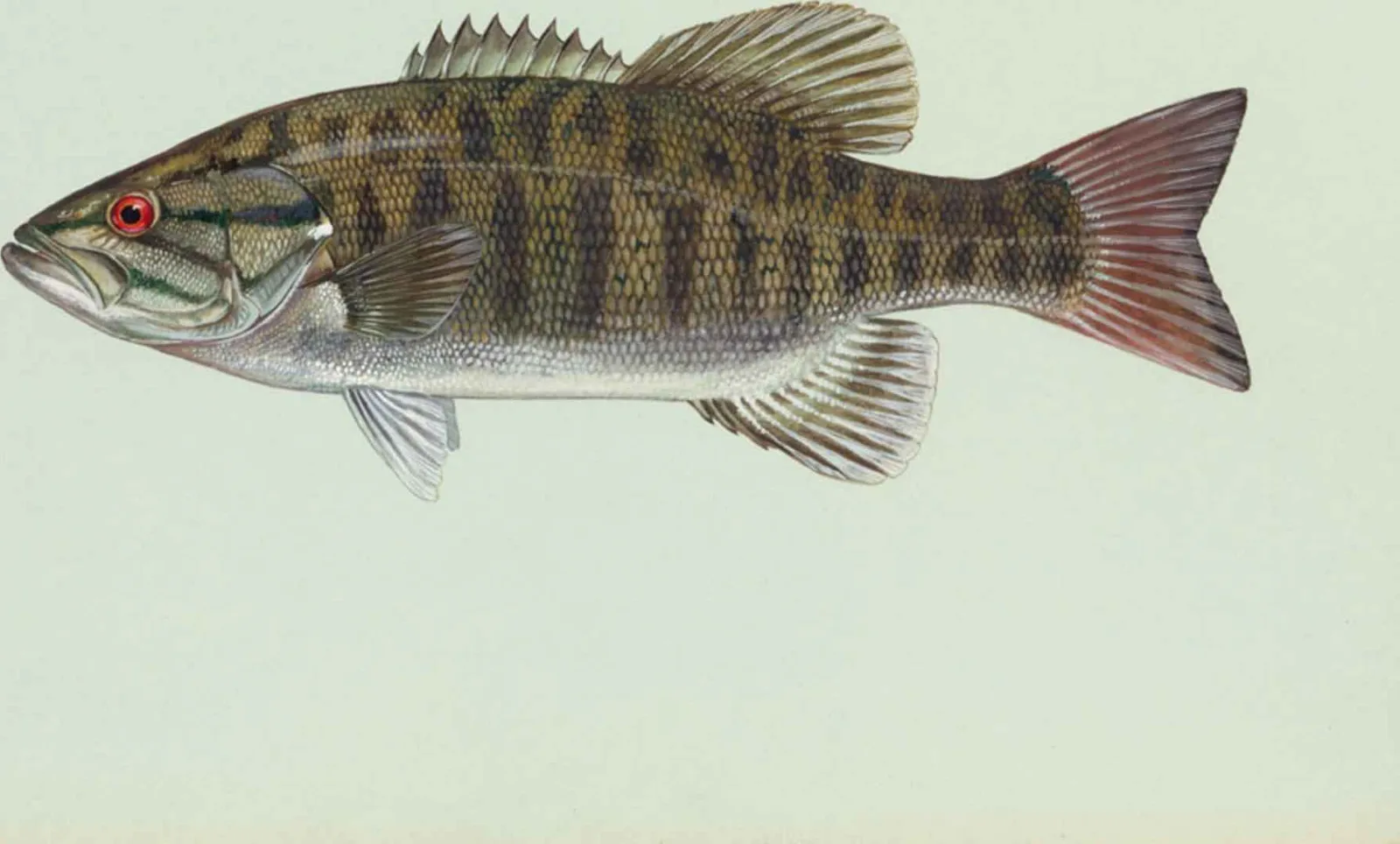 Smallmouth vs Largemouth Bass: How to Tell Them Apart
Smallmouth vs largemouth bass: the jaw, the stripe and the dorsal fin settle the identification in seconds. Then habitat, size, records and how each one fights.
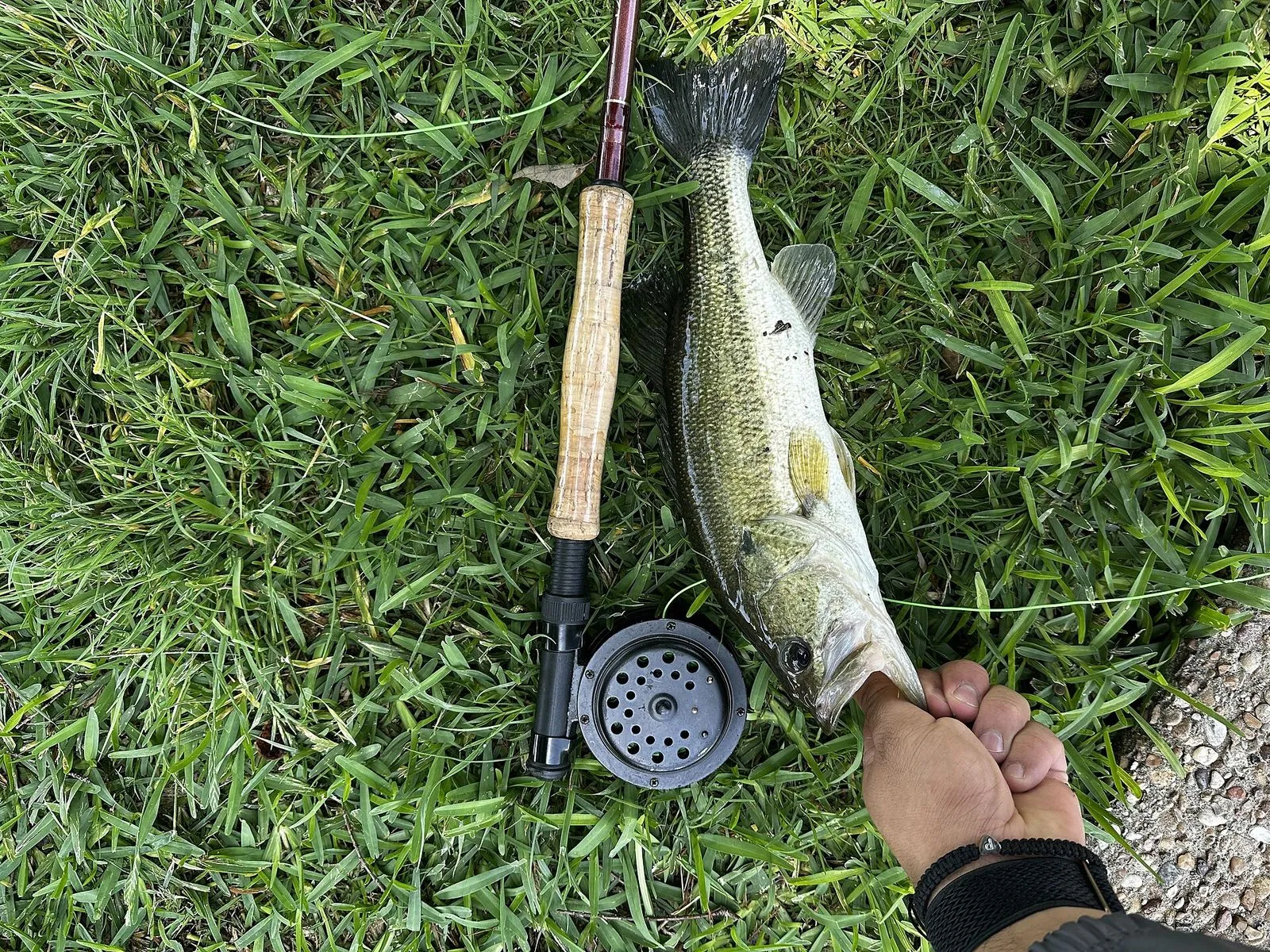 How to Fish for Bass: A Beginner's Season-by-Season Guide
How to fish for bass from the first cast: one rod and reel, five lures, where bass are at each water temperature, and a numbered method for a day on the water.
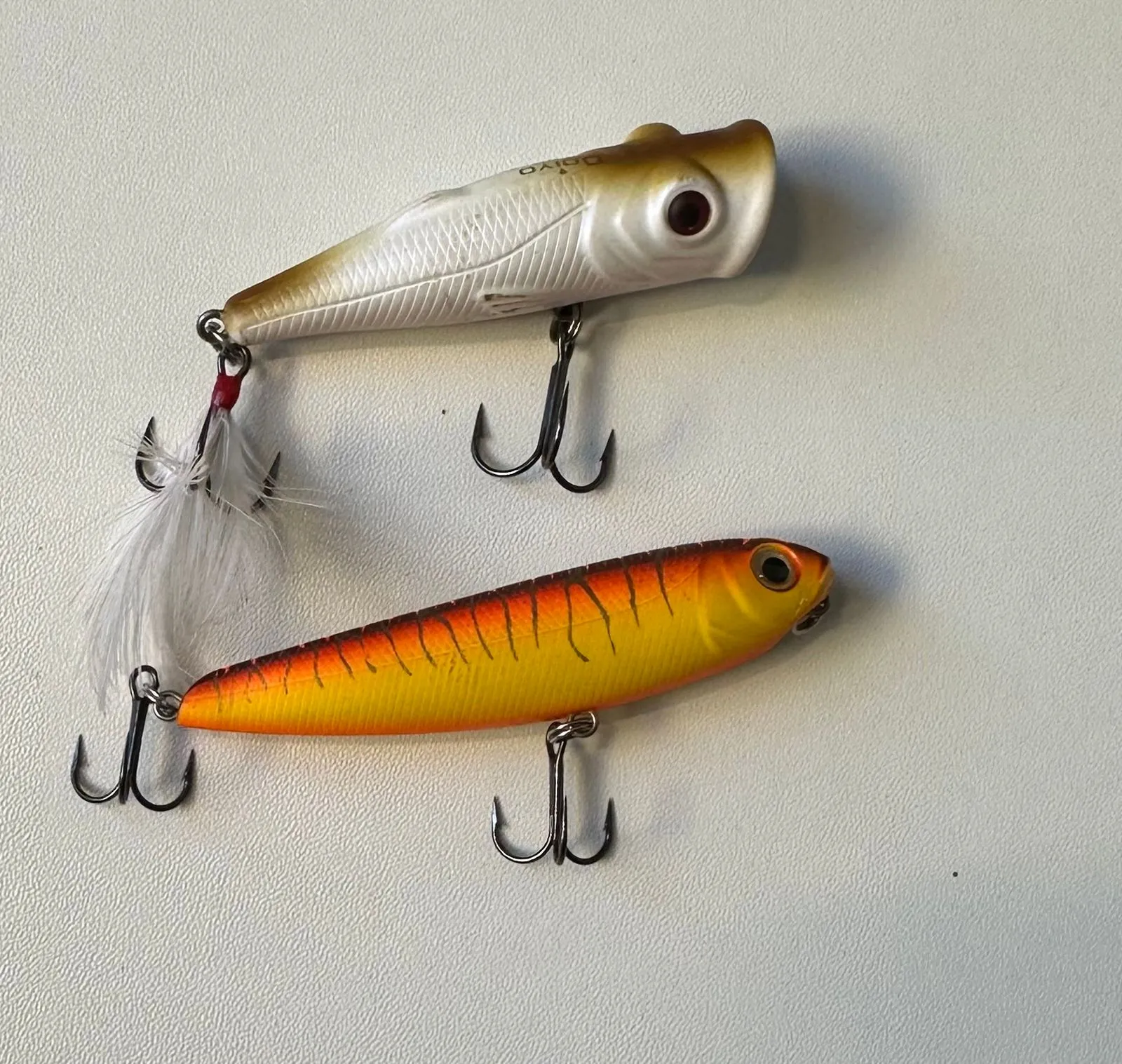 Best Bass Lures: What Won the 2025 and 2026 Elite Series, Season by Season
Best bass lures from two seasons of Elite Series winning baits: a lure for each water color, depth, cover and season, with smallmouth and spotted bass picks.
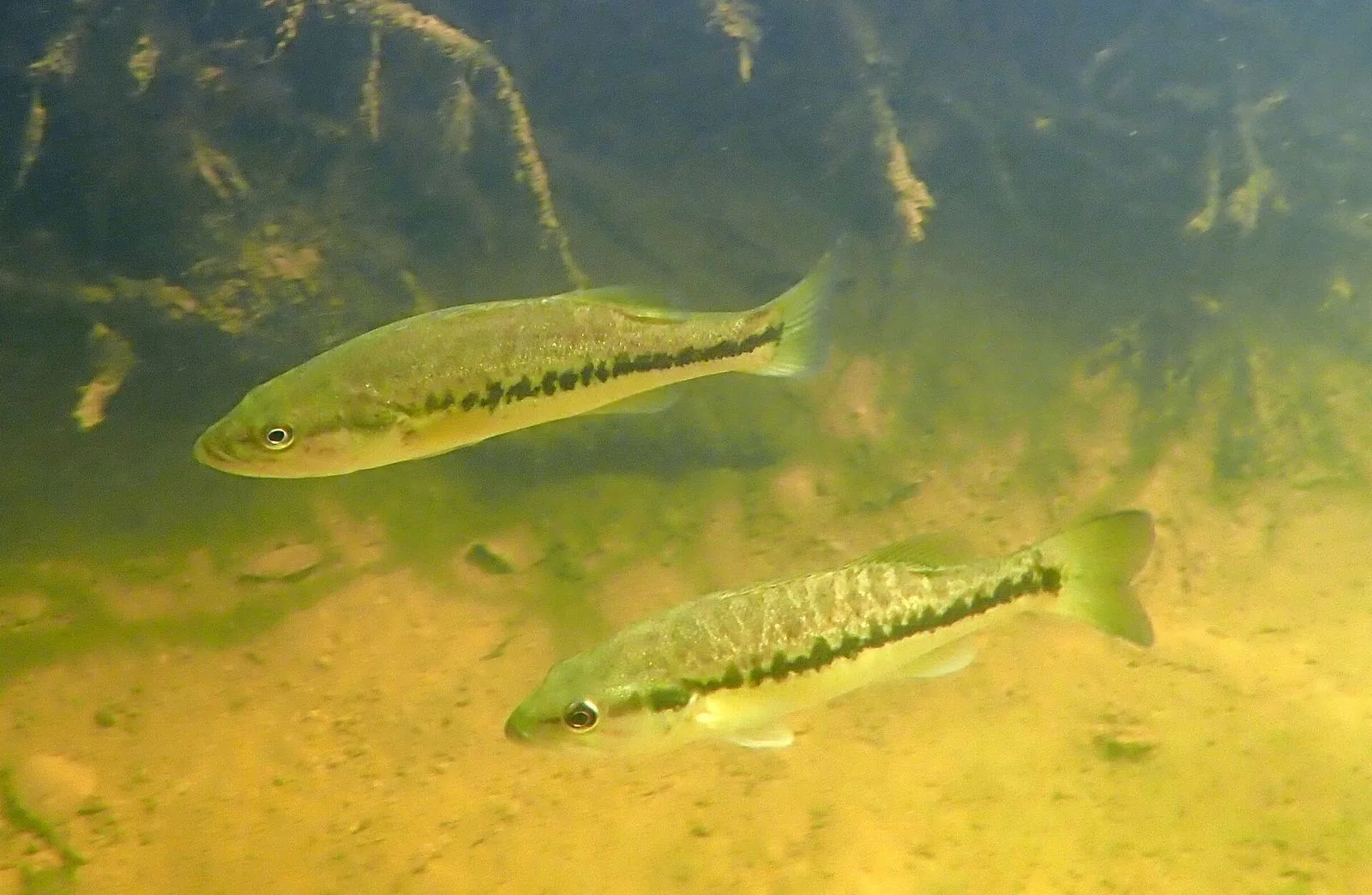 Spotted Bass: How to Tell It From Largemouth and Alabama Bass
Spotted bass from the agency data: the tooth patch, jaw and scale counts that separate it from largemouth and Alabama bass, habitat, spawning, and records.
- Smallmouth Bass: Identification, Habitat, Spawning and Records
Smallmouth bass from the agency data: the marks that separate them from largemouth, the cool rocky water they need, spawning at 60–64 °F, and the 1955 record.
Sources
- Bassmaster, George Perry's world record bass
- Bassmaster, World record bass (photo history)
- IGFA, International angling rules and world record requirements
- Outdoor Life, The real story of the world record bass (Dottie)
- Outdoor Life, IGFA adds seven bass record categories and a genetics rule (June 2024)
- FWC news, TrophyCatch Hall of Fame milestones