 By
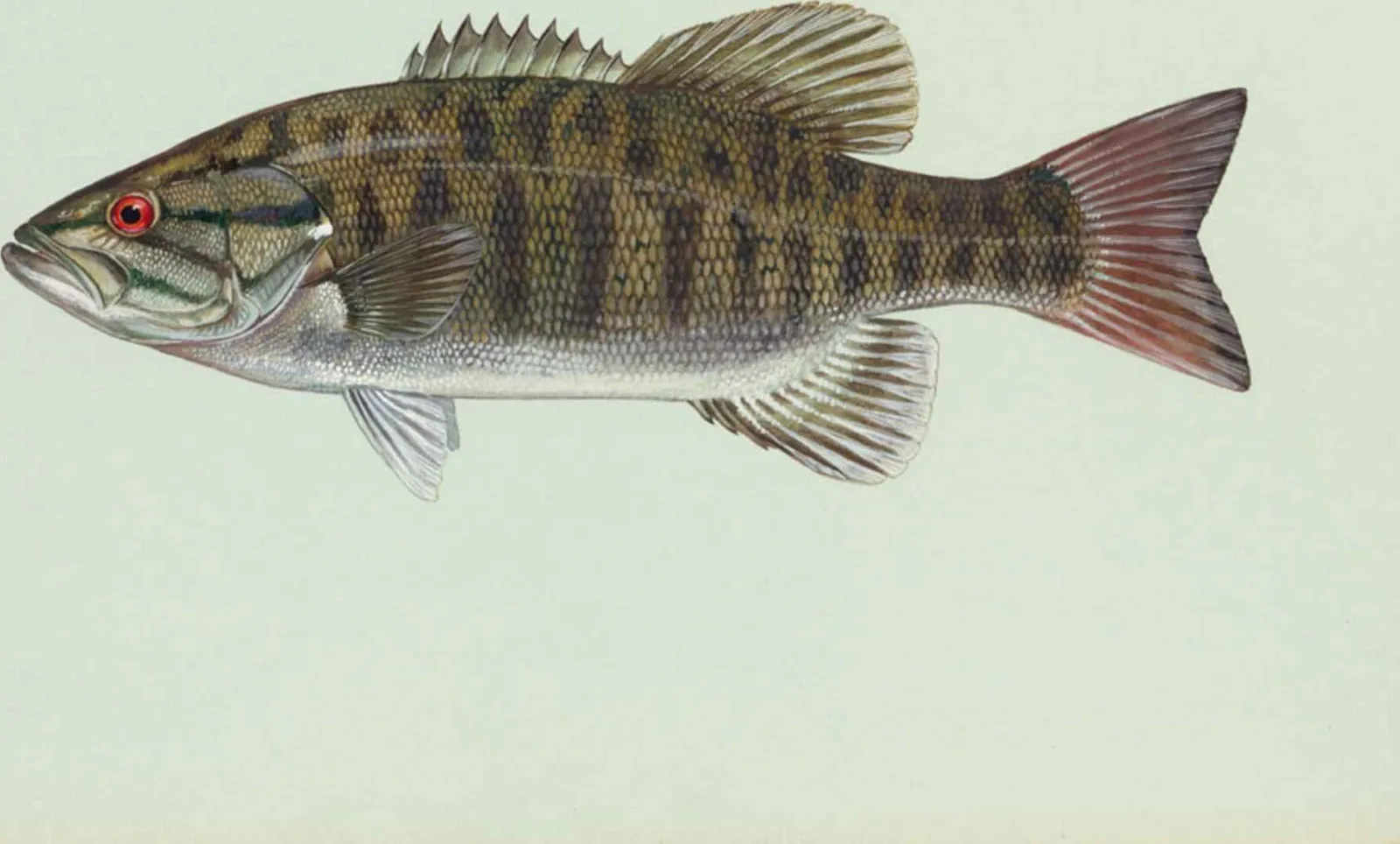
A meanmouth bass is a hybrid of a smallmouth bass and another black bass: in most waters a spotted or Alabama bass, more rarely a largemouth. The name was coined in a lab in the 1960s, but today most meanmouths come from reservoirs where someone stocked a second bass species. Picture a smallmouth that borrowed parts from a spotted bass or a largemouth. On Southern smallmouth lakes they now turn up often enough that you’ll want to know what you’ve got.
The IGFA keeps four hybrid black bass records, and the heaviest isn’t the one it calls a meanmouth. It’s an 11 lb 1 oz smallmouth × largemouth from O.H. Ivie Reservoir, Texas, in 2022.
What is a meanmouth bass, and where does the name come from?
The meanmouth started as an experiment. In the mid-1960s, Dr. William Childers of the Illinois Natural History Survey began crossing members of the sunfish family to see which could interbreed. Largemouth eggs fertilized with smallmouth milt gave him live young. He got the name from what he saw. A school of the largemouth × smallmouth hybrids attacked a swimmer, and meanmouths went after a dog in the shallows.
The word has moved since then. Fish Missouri, Tennessee or the Southeast and “meanmouth” means the smallmouth × spotted bass cross. Anglers there use the name for how hard the fish fights, In-Fisherman says. The IGFA goes with that usage: its “Bass, meanmouth” category is smallmouth × spotted bass. Childers’ original largemouth × smallmouth cross has its own category. So when you and a buddy argue about whether a fish is a “real” meanmouth, you can both be right.
All of these fish are black bass. You’ll find which basses are which on the types of bass page. This one is about what happens when two of them spawn together.
How do you identify a meanmouth bass?
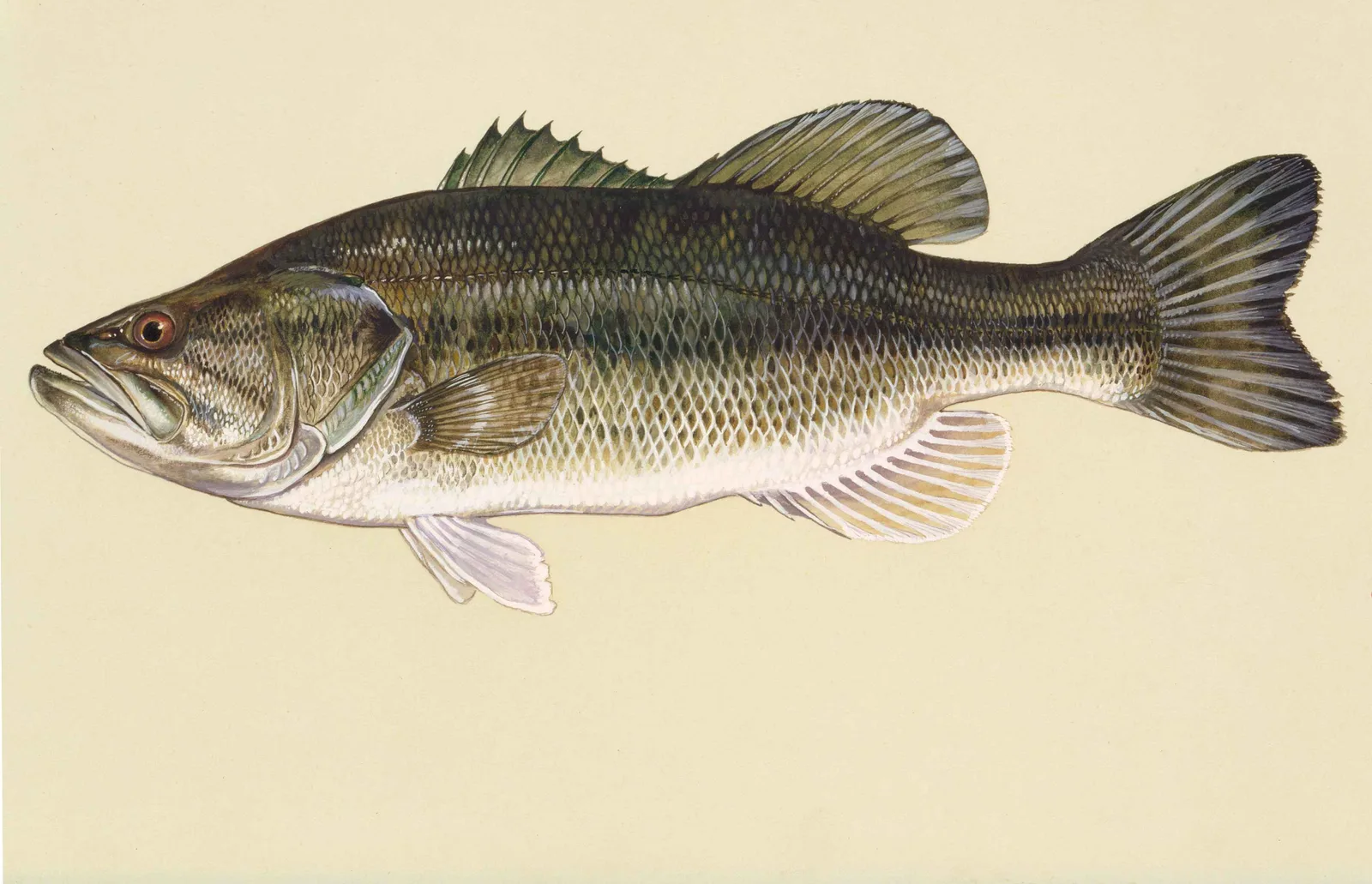
Look for a fish that’s neither one parent nor the other. A hybrid mixes its parents’ marks, and no two look the same. Start with the jaw, the flank and the dorsal fin, the three marks that separate the parents. Then look for the in-between version.
| Mark | Smallmouth | Spotted bass | Largemouth | What a meanmouth tends to show |
|---|---|---|---|---|
| Upper jaw | Never past the eye | Stops at the rear edge of the eye | Well past the eye | Ends about at the back of the eye (largemouth cross) |
| Flank | Brown or bronze, vertical bars, no stripe | Dark side stripe, rows of spots below it | Blotchy side stripe | Bars and a broken stripe, often both |
| Dorsal fin | Shallow notch | Shallow notch | Nearly split in two | Between the two (largemouth cross) |
| Tongue | No tooth patch | Tooth patch | No tooth patch | Sometimes a tooth patch |
On a largemouth cross, check the jaw and the fin. Those are the two marks a New York fishing guide used in 2025 to call a client’s fish a meanmouth by eye, writing it up for Wired2Fish. The jaw lines up with the back of the eye, and the dorsal fin shows “a subtle, almost-connected link” between its two parts. Both marks only work on the largemouth cross. A spotted bass already has a jaw that stops at the rear of the eye and a shallow notch, like a smallmouth. On the spotted bass cross, look for smallmouth bars with spotted bass spots along the belly. Against a pure smallmouth, the giveaways are a broken stripe or rows of spots under the bars.
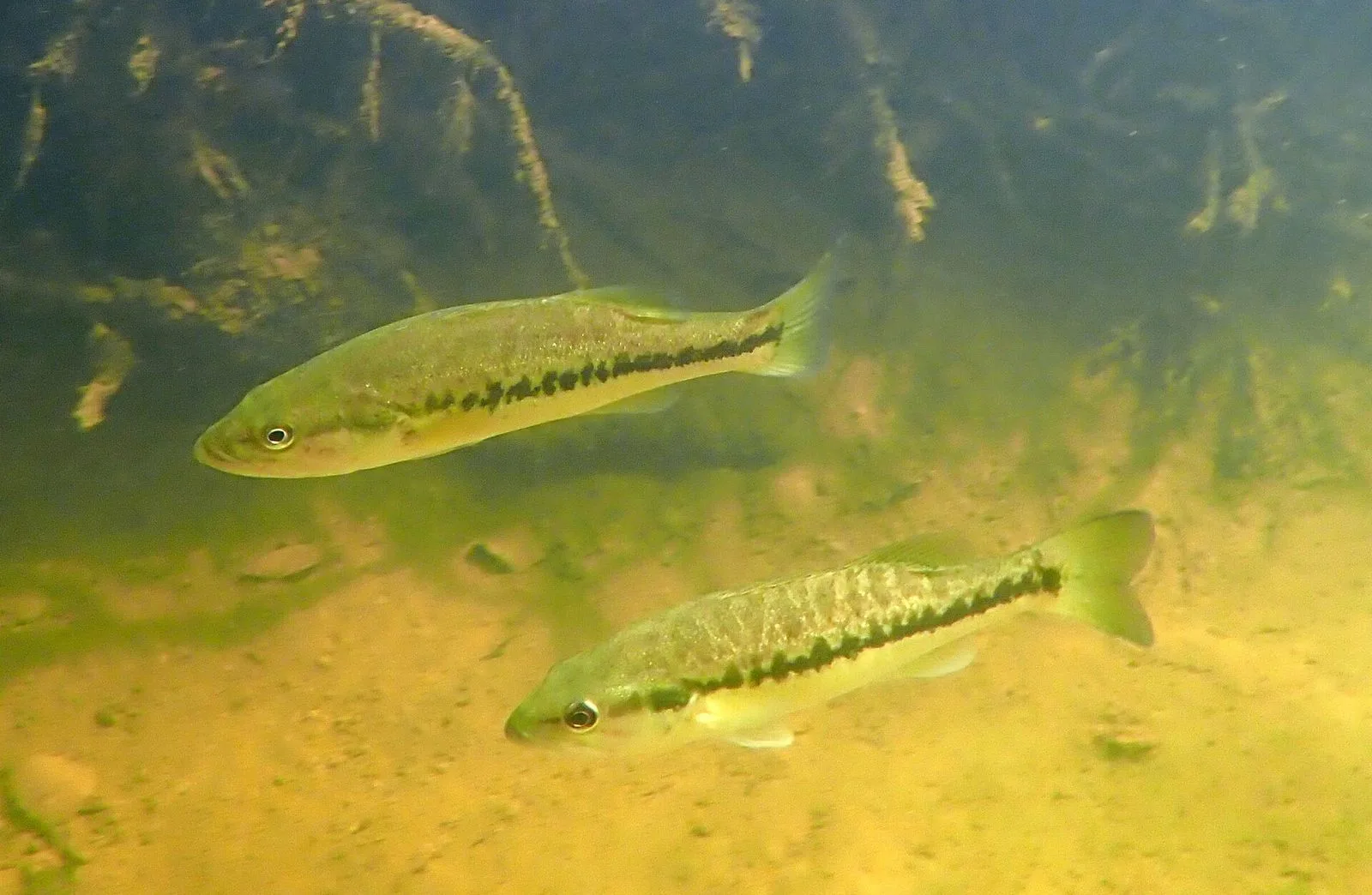 The other parent: a spotted bass. Photo: stephen, iNaturalist (CC BY 4.0)
Don’t lean on the tooth patch, the rough spot on the tongue that usually marks a spotted bass. The Tennessee Wildlife Resources Agency (TWRA) doesn’t recommend it for telling black bass apart, because some meanmouths carry one too. The honest answer: only a genetic test confirms a hybrid. Both O.H. Ivie record fish for the largemouth cross, described below, went to Texas Parks and Wildlife for one.
You’ll find the parent marks in detail at smallmouth vs. largemouth bass and in the spotted bass identification table.

Free PDF · Water temperature chart When do bass bite?
One reading, and the 16-page chart shows which of 26 fish are spawning, feeding hard or slowing down; for bass, crappie, bluegill and walleye, where they sit and what to throw. Every number sourced.
No card, nothing to buy, and the PDF is yours to keep. Confirm with one click and it's on its way. Then a few short emails and one a week on what's biting. Unsubscribe anytime. Privacy.
How rare are meanmouth bass, and where do they turn up?
It depends on the cross. A wild largemouth × smallmouth is genuinely rare. The two share many lakes and were long thought not to cross in the wild. A 2010 genetic paper in Copeia showed how it happens. A smallmouth male was guarding a nest with two sizes of eggs, one batch from a smallmouth female, one from a largemouth female. The authors suggested that with very few adult largemouth in that water, the female had no mate of her own kind.
The known big largemouth × smallmouth hybrids come from waters where one of the two was new. Smallmouth stocked in Texas’ Squaw Creek Reservoir crossed and backcrossed with its largemouth. A Pennsylvania mine pit gave up a genetically confirmed 8 lb 3 oz first-generation hybrid in 1993. O.H. Ivie Reservoir in Texas has produced both world records for the cross.
The smallmouth × spotted or Alabama bass cross is common where Alabama bass were stocked into smallmouth lakes. In Lake Chatuge, on the Georgia–North Carolina line, a 1997 count found hybrid genes in 77 of 276 bass. Only 2 fish were still pure smallmouth. That smallmouth you just landed may not be one. North Carolina later tested fish that looked like smallmouth. It found Alabama bass hybrids in 38 of 50 at Fontana Lake and 16 of 49 at Lake James.
Hybrids have also been documented in Thurlow Reservoir in Alabama, W. Kerr Scott Reservoir in North Carolina, Table Rock Lake in Missouri, and Tennessee River reservoirs. It’s costing you smallmouth. In 2023, the Alabama bass “invasion and hybridization” was causing smallmouth declines in almost every reservoir it had reached in Tennessee, North Carolina, Georgia and Virginia, B.A.S.S. Conservation Director Gene Gilliland said.
How do you catch one?
Fish for smallmouth where spotted or Alabama bass have moved in, and the hybrids come with them. Nobody targets a meanmouth on purpose. There’s no separate pattern for you to learn.
The catches on record came on ordinary smallmouth tackle, so bring what you’d use anyway. The 2025 New York fish, 4.68 lb, took a drop shot with a live minnow over a rock crib in about 25 ft (7.6 m) of water. The 2021 Texas record ate a swimbait on a 3/4 oz jighead. Start with the seasonal pattern on the smallmouth bass page: rock, clear water and baitfish.
Meanmouth bass records
The IGFA lists four hybrid black bass categories, each an all-tackle record for a single cross. The smallmouth × Alabama cross has its own category, apart from the meanmouth. The IGFA has kept Alabama bass separate from spotted bass since 2024.
| IGFA category | Cross | All-tackle record | Where and when |
|---|---|---|---|
| Bass, smallmouth x largemouth | M. dolomieu × M. nigricans | 11 lb 1 oz (5.02 kg), Brady M. Stanford | O.H. Ivie Reservoir, Texas, Feb 22, 2022 |
| Bass, meanmouth | M. dolomieu × M. punctulatus (smallmouth × spotted) | 8 lb 8 oz (3.88 kg), Dru Clayton Kinslow | Veterans Lake, Oklahoma, Mar 27, 2006 |
| Bass, smallmouth x Alabama | M. dolomieu × M. henshalli | 6 lb 5 oz (2.86 kg), Joel Ross | Pickwick Lake, Tennessee, Oct 8, 2020 |
| Bass, Guadalupe x smallmouth | M. treculi × M. dolomieu | 4 lb 3 oz (1.9 kg), John Weaver | Blanco River, Texas, Jun 18, 1995 |
The Oklahoma fish stood as the largest black bass hybrid on record for years. In 2016 In-Fisherman still listed it as the biggest. Then O.H. Ivie took over, in two steps. Wyatt Frankens’ 7 lb 9 oz hybrid of March 1, 2021, was lighter. But it became the IGFA all-tackle record for the smallmouth × largemouth cross, a category of its own. Texas Parks and Wildlife confirmed it from tissue samples. Less than a year later, Stanford’s 11 lb 1 oz fish from the same lake replaced it. That one went to the agency’s ShareLunker program for genetic testing first.
Texas also keeps its own state record for the smallmouth × spotted bass cross: 6.42 lb, caught by Casey Bowsher at Ray Roberts in March 2019.
The Guadalupe × smallmouth record comes from a conservation problem too. More than 6.8 million smallmouth stocked into central Texas rivers from 1974 to 1980 crossed with the native Guadalupe bass. Texas detected hybrids in 1978. For the pure-species records, see the world record smallmouth bass.
Can you keep a meanmouth?
It depends on your state, and Tennessee rewrote its rules because of these fish. Since August 1, 2025, smallmouth, spotted and Alabama bass fall under the same regulations on each reservoir. TWRA says that’s meant “to reduce confusion over identification of hybrids of these species.” On Fort Loudoun, Watts Bar, Tellico, Pickwick and Chilhowee, the limit is now five black bass a day in combination, all 15 in (38 cm) or longer. A meanmouth counts the same as either parent. “You can’t manage specifically for smallmouth anymore,” TWRA fisheries chief Jason Henegar said after the vote.
Before that change, TWRA’s advice was to treat a possible meanmouth as the parent with the strictest limit. That still makes sense wherever a state has no rule for hybrids. Check the current Tennessee fishing guide for your lake, since other reservoirs got different limits.
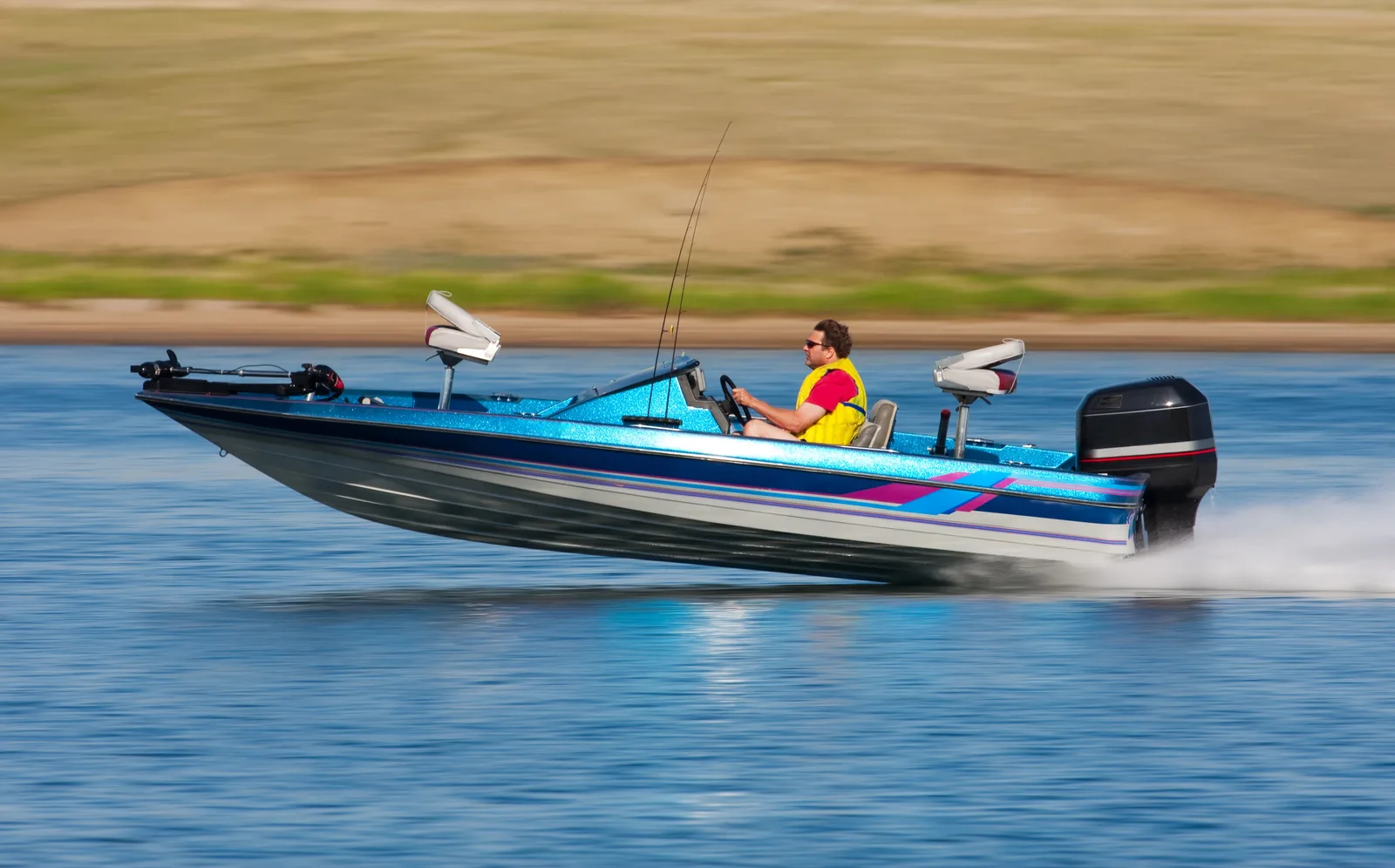
A bass boat on the run. Photo: songbird839 / Depositphotos.
Where Alabama bass are the problem, North Carolina wants them gone. It removed all size and creel limits on Alabama bass on August 1, 2020. It asks anglers to keep every one they catch and never to move fish between waters. The agency’s Alabama bass page says nothing about hybrids. So check the black bass limits for your lake before you keep a fish that looks like a smallmouth.
If you think you have a record, keep the fish whole and call the state fisheries agency before you clean it. The O.H. Ivie records went to Texas Parks and Wildlife for a genetic test, and a filleted fish is hard to weigh or test.
Are meanmouth bass fertile?
Yes, and that’s the problem. In Childers’ lab, the largemouth × smallmouth hybrids reproduced with each other and with both parent species. Too many fish in the hybrid lines died and too few reproduced, and that ended the work in the 1980s. Childers warned that hybrids breeding back into the parent species would lower a population’s fitness.
In the wild, the smallmouth × Alabama bass cross shows what he meant. Hybrids backcross with the parents, so each generation carries more Alabama bass genes. In the end so few smallmouth genes remain that the fish “essentially become pure Alabama Bass,” North Carolina’s wildlife agency says. That’s why Lake Chatuge had 2 pure smallmouth left in 276 fish.
So a meanmouth is a curiosity on the end of your line and a warning about the lake it came from. To tell the parents apart at a glance, the bass hub has every black bass species side by side.
Gear for bass
Gear guide
Best Bass Lures: What Won the 2025 and 2026 Elite Series, Season by SeasonBest bass lures by season: 18 Elite Series events were won on 10 kinds of bait. The pick for each water temperature, color and cover, plus smallmouth.
Gear guide
Bass Fishing Rods: The Six to Own, in the Order to Buy ThemThe first bass fishing pole is a 7 ft medium-heavy fast casting rod. The five to add after it, the lures each one throws, and a model at $100 and $200.
Gear guide
Best Fishing Line for Bass: The Setup for Every TechniqueThe best fishing line for bass is four setups: 10 lb braid to a 6–8 lb leader for finesse, 12 lb fluoro, mono for topwater, 50–65 lb braid for cover.

Free PDF · 16 pages
Stop guessing. Know what's biting before your first cast
A whole Saturday on the water with nothing to show for it. One reading tells you who's feeding.
The Water Temperature Fishing Chart. Take one water temperature reading, find it on the chart, and see which of 26 freshwater fish are spawning, feeding hard or slowing down.
- Where bass, crappie, bluegill and walleye sit, and what to throw. Trout: the reading where you stop.
- Why a 3 ft drop beats a cold front, and what to throw each day of the front
- The three thermometer mistakes that make a reading lie
The chart's numbers come from state fish and wildlife agencies and fisheries research: 61 sources, each listed on the site.
No card, nothing to buy. Confirm with one click and the PDF is on its way, one version for your phone and one to print, yours to keep. Then a few short emails and one a week on what's biting, with an unsubscribe link in every one. Privacy.
Related
Section guide
Bass Fishing: Where the Bass Are, What to Throw, and the Three Bass You Will MeetBass fishing by water temperature: where largemouth, smallmouth and spotted bass sit from 48 to 90 °F, what to throw first, and how to tell them apart.
 Florida Bass: How to Tell It From a Largemouth, Range, Records
The Florida bass looks just like a largemouth. Only DNA tells them apart. Where it's native, who stocks it, how to fish it, and its 22 lb 4 oz record.
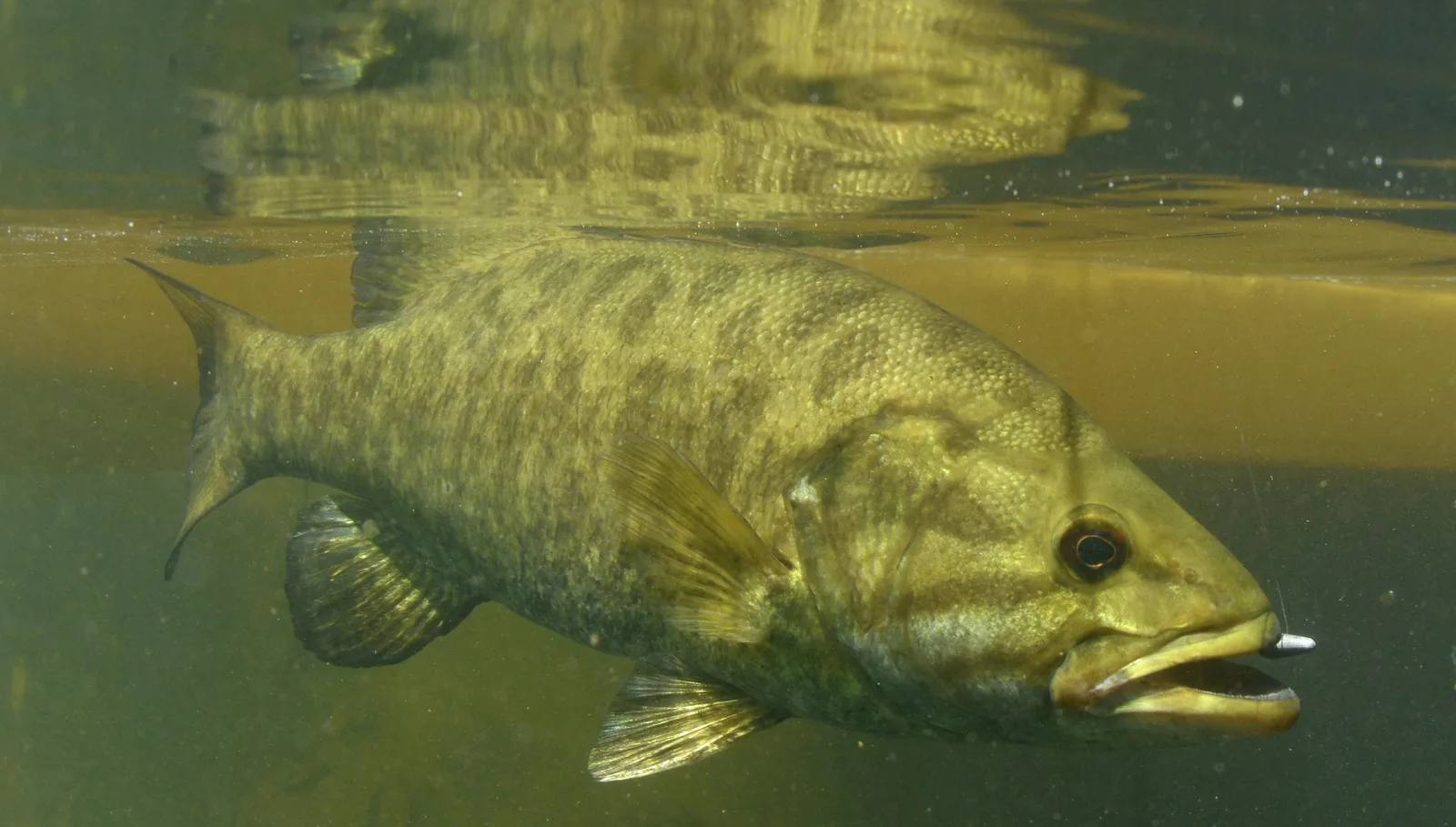 Smallmouth Bass Lures: 7 Picks and When to Throw Each
The best smallmouth bass lures by season: a Ned rig first, then a tube, a jerkbait and a drop shot, with the size, weight and color for each.
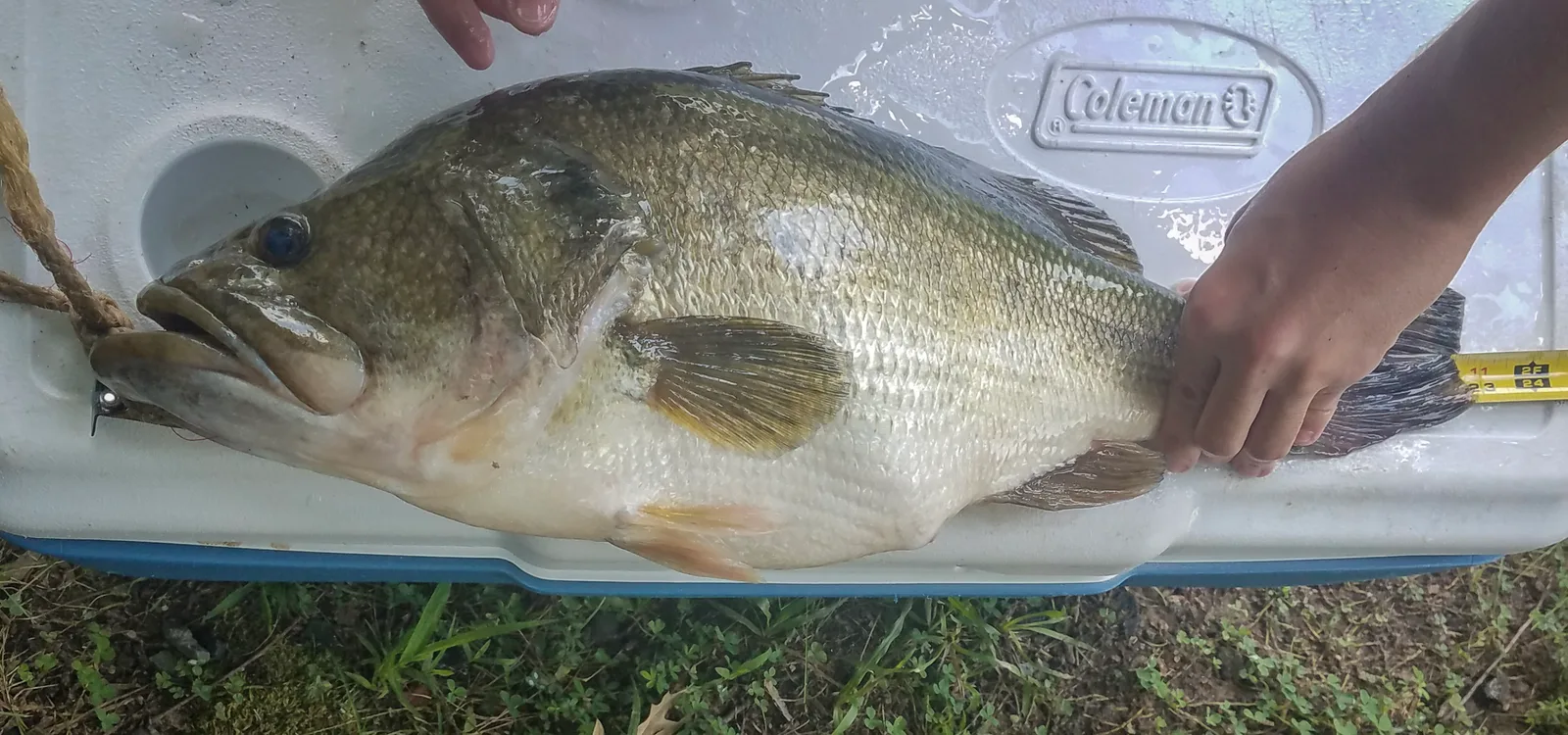 10 Pound Bass: How Rare, How Old, and Where They Are Caught
A 10 pound bass is about 25 in long and close to ten years old. How rare it is, which states hold them, and what Florida's trophy data says.
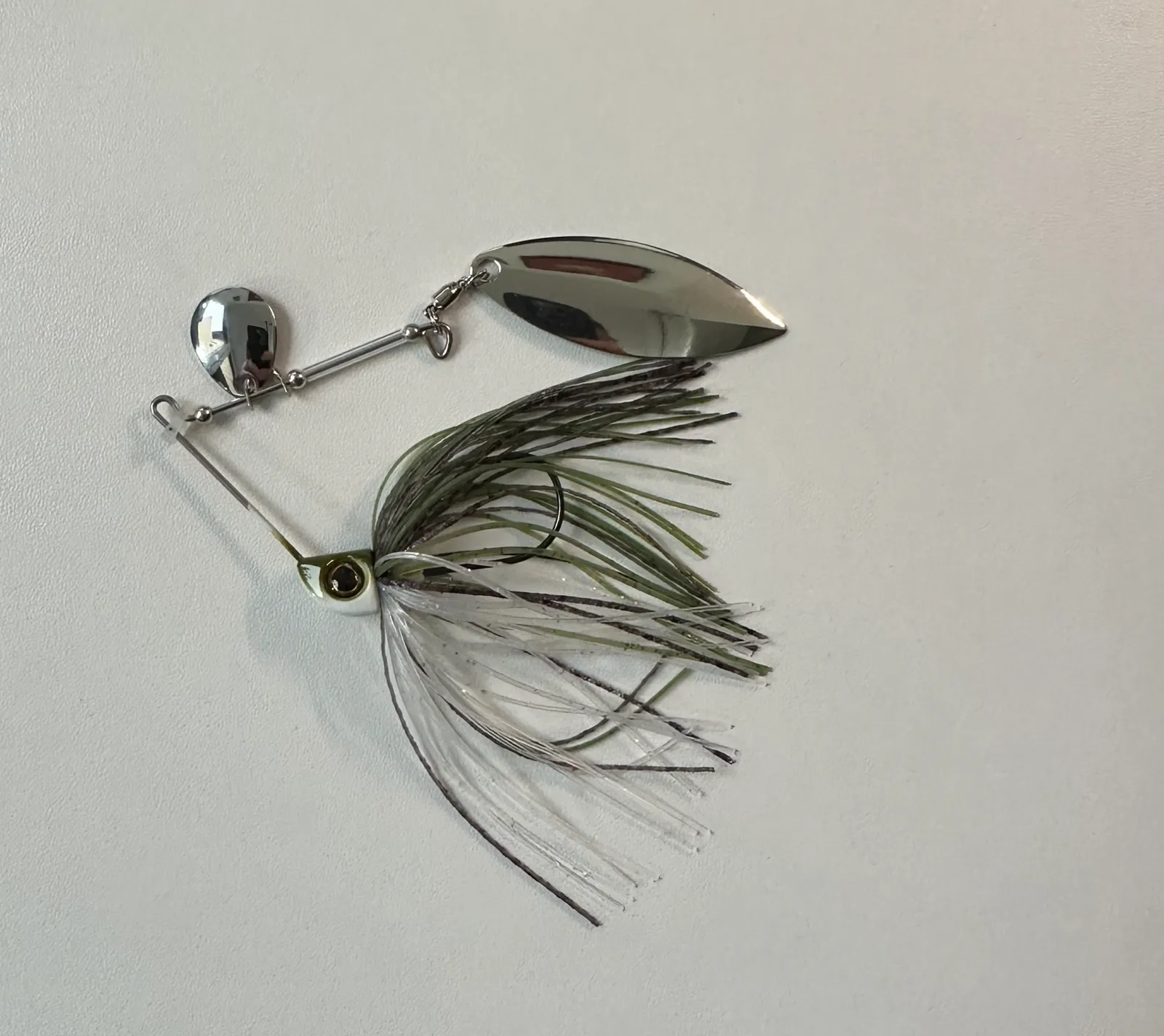 Spinnerbait for Bass: Blades, Weights, Colors and Six Retrieves
How to fish a spinnerbait for bass: Colorado, Indiana or willow blades, the weight for the depth, skirt colors, and six retrieves by water temperature.
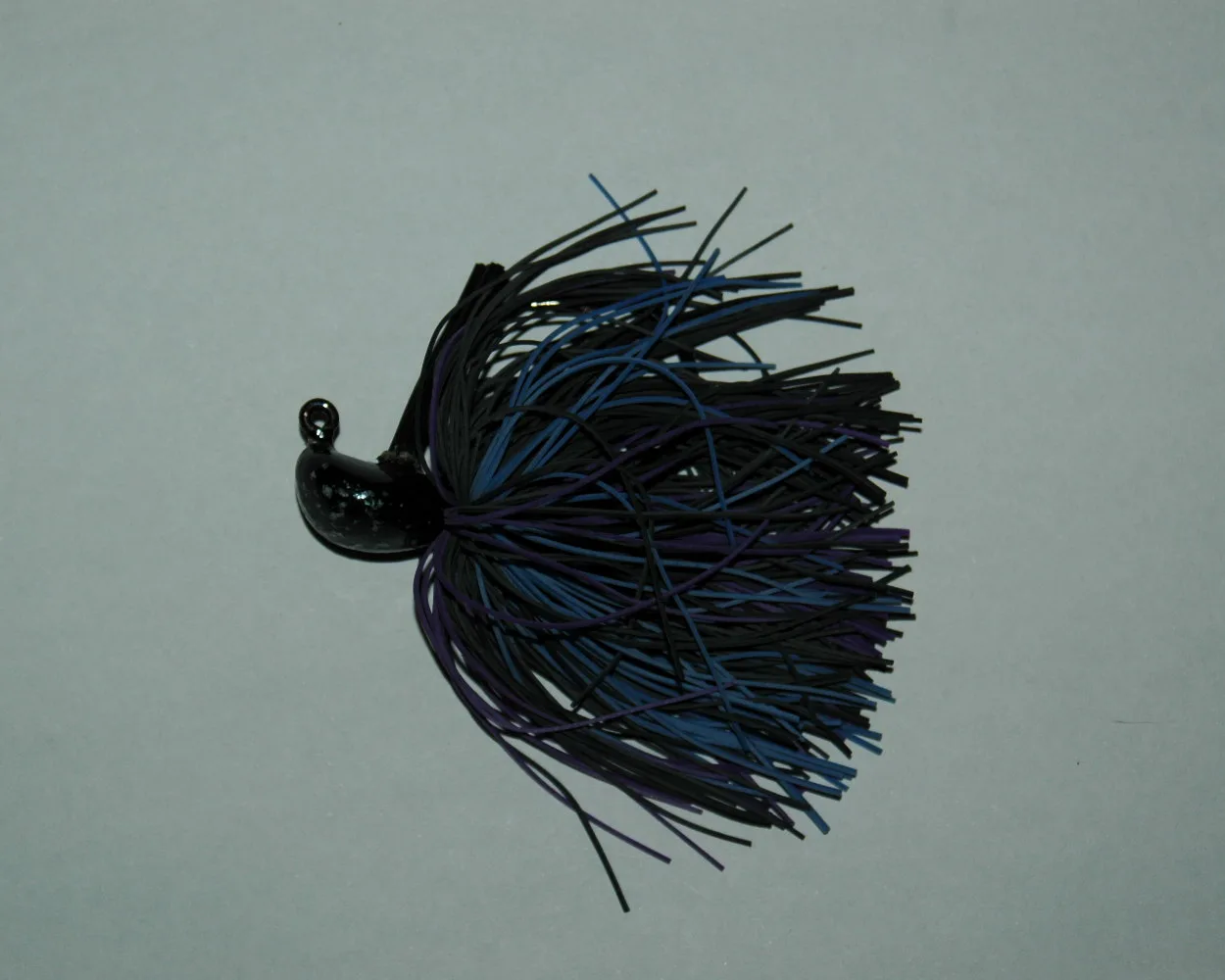 Bass Jigs: The Nine Types, Which Weight and Trailer, How to Fish Them
Bass jigs explained: football, flipping, casting, skipping, swim, grass, finesse, hair and bladed jigs, with weights, trailers and how to fish each.
- Types of Bass: Every Fish Called Bass and How to Tell Them Apart
The types of bass, from largemouth and smallmouth to striped and black sea bass: which family each is, where it lives, its record and how to tell them apart.
Sources (21)
- IGFA world records, Bass, meanmouth (Micropterus dolomieu × M. punctulatus)
- IGFA world records, Bass, smallmouth x largemouth
- IGFA world records, Bass, smallmouth x Alabama
- IGFA world records, Bass, Guadalupe x smallmouth
- In-Fisherman, Hybrid black bass (Steve Quinn, 2016)
Show all 21 sourcesShow fewer sources
- Pierce & Van Den Avyle 1997, Hybridization between introduced spotted bass and smallmouth bass in reservoirs, Transactions of the American Fisheries Society 126:939–947
- Barthel, Dorothy & Philipp 2010, Molecular Genetic Confirmation of Hybridization between Largemouth and Smallmouth Bass (Micropterus) in the Wild, Copeia 2010(4):671–675
- North Carolina Wildlife Resources Commission, Alabama bass
- Wired2Fish, Small Hybridized Bass Are Taking Over North Carolina Waters (Bob McNally, May 6, 2025)
- Bassmaster, Will meanmouth bass impact Classic? (Shaye Baker, March 23, 2023)
- Wired2Fish, Smallmouth x Largemouth Hybrid Bass Certified as World Record by IGFA (Wired2fish Editors, May 20, 2021)
- Wired2Fish, Possible World Record Mean Mouth Caught in Texas (Wired2fish Editors, Feb 22, 2022)
- Wired2Fish, New York Angler Catches Once-In-A-Lifetime Fish: A Meanmouth Bass (Nick Petrou, Aug 26, 2025)
- Texas Parks and Wildlife, smallmouth bass species profile
- Texas Parks and Wildlife, Guadalupe Bass Restoration Initiative: 30-year summary 1991–2021 (PWD RP T3200-2079)
- Texas Parks and Wildlife, Texas freshwater state records (rod and reel)
- North Carolina Wildlife Resources Commission, Biological Notes and Data related to Alabama Bass Invasion in North Carolina (PDF)
- Game & Fish, Angler sets world record for rare bass hybrid (2021)
- Tennessee Wildlife Resources Agency, Fishing Regulations Set, Outgoing Commissioners Honored, New Officers Elected (February 21, 2025)
- Tennessee Wildlife Resources Agency, Comment Period Open for Sport Fish Regulation Changes (January 17, 2025)
- Fox 17, Dramatic change in smallmouth bass limits in Tennessee passes on unanimous vote (Richard Simms, February 21, 2025)