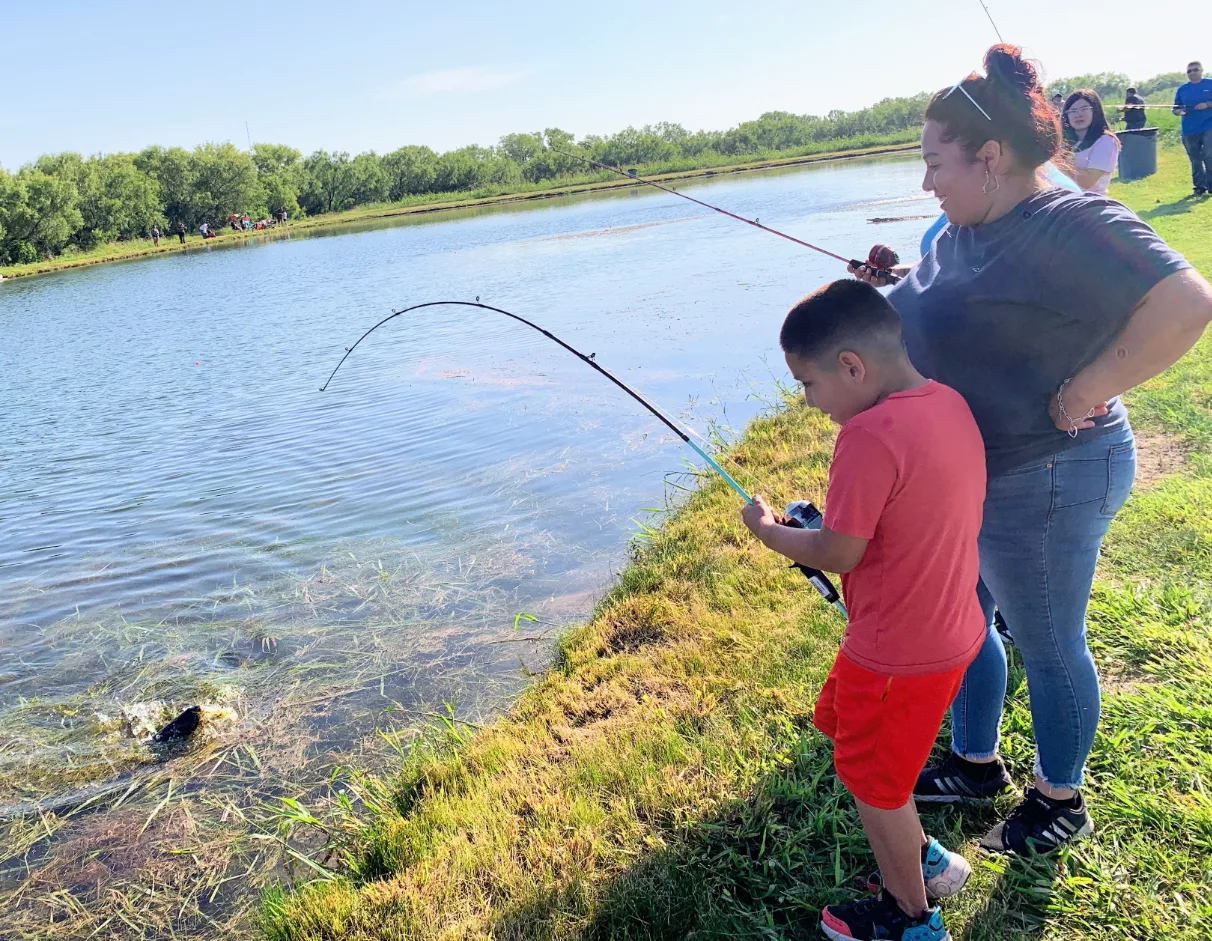
You catch catfish by putting a bait that smells of fish on the bottom where the fish are feeding, and letting them hook themselves. That means fresh cut shad for blue catfish, punch bait or a nightcrawler for channel catfish, a live bluegill for flatheads, on a slip-sinker rig with a circle hook. By day the bait goes into the deep hole or beside the drift pile; after dark it goes onto the flat or the riffle the fish have moved onto to feed. Water temperature decides the rest: channel catfish stop eating near 50 °F (10 °C), and the whole family feeds hardest at 75–85 °F (24–29 °C).
Missouri’s field guide has the channel catfish in deep water or under a drift pile by day, and at night it moves “onto riffles or into the shallows of pools to feed.” Every catfish trip is a decision about which of those two places you are fishing.
Which catfish are you after?
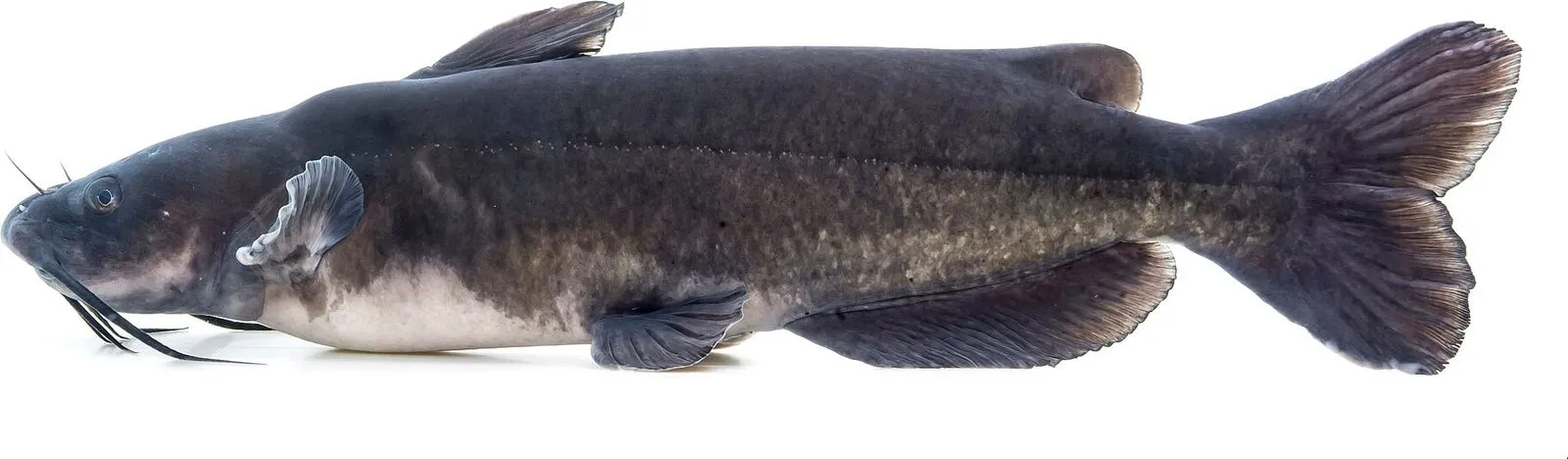
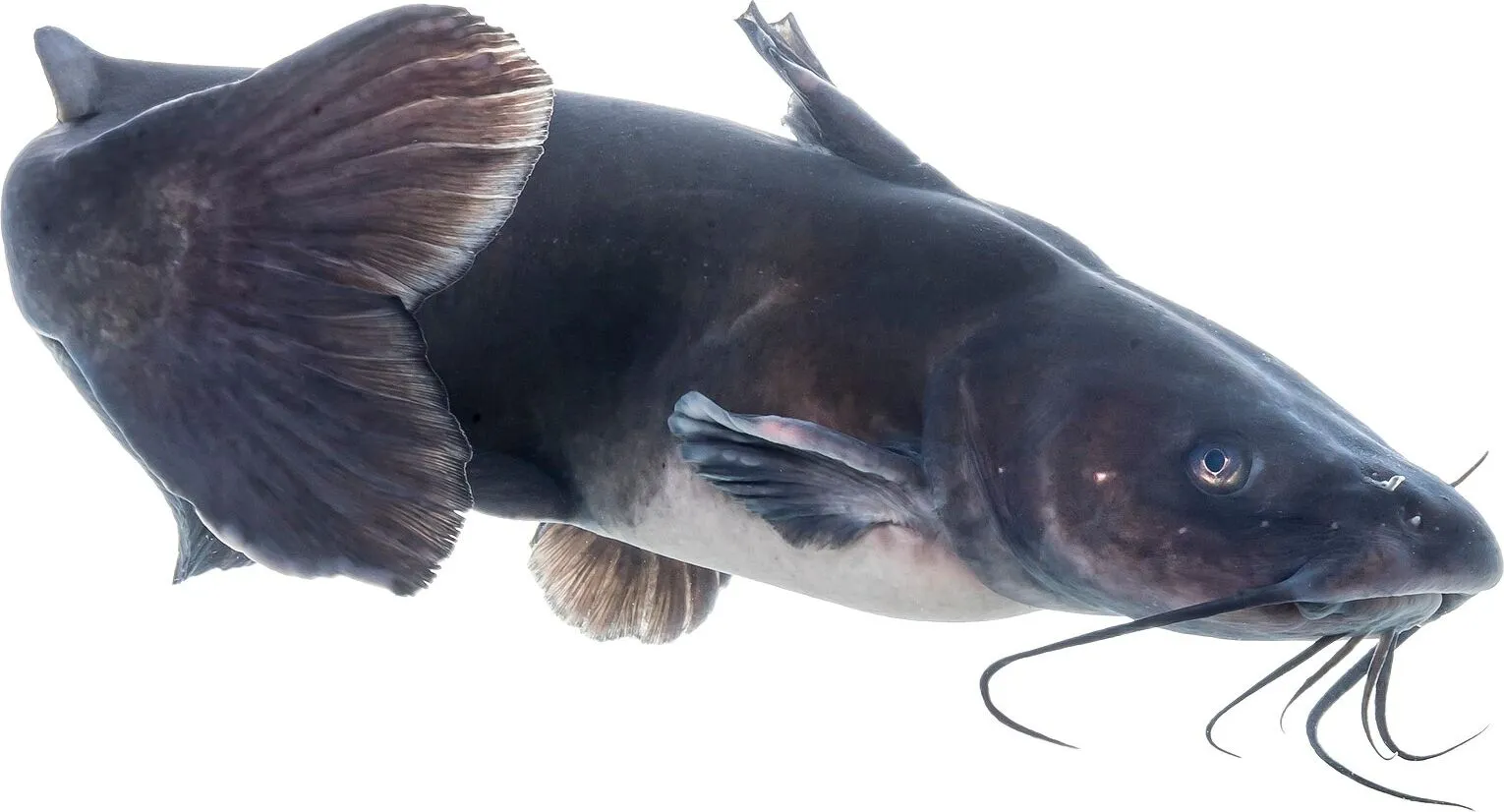
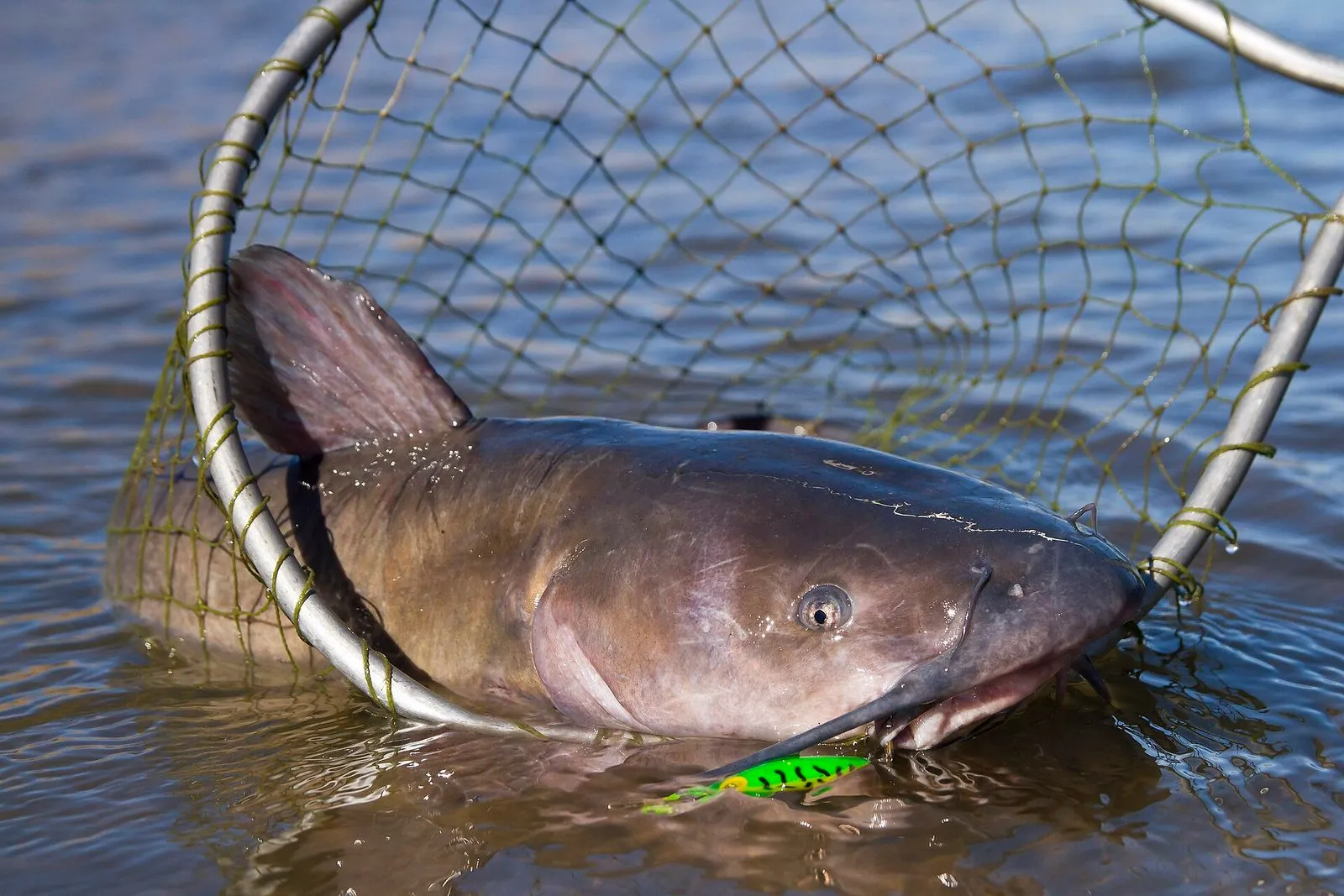
Three species make up nearly all American catfishing, and they do not eat the same thing. The channel catfish is the fish in the pond, the creek and the city lake, an omnivore that finds food by taste and smell; it is the fish most beginners catch first. The blue catfish is the giant of rivers and big reservoirs. It eats mostly fish once it passes 8–13 in (20–33 cm), and the 143 lb world record came from a Virginia reservoir in 2011. The flathead catfish is the predator: above 10 in (25 cm) its diet, in Texas Parks and Wildlife’s words, “consists entirely of fish,” and it wants that fish alive.
Which one lives in your water decides the bait, the hook and the hour. On a doubtful fish, the anal fin settles channel catfish vs blue catfish: Missouri’s field guide gives a channel a rounded fin of 24–29 rays and a blue a straight-edged fin of 30–35. The small square-tailed catfish of farm ponds are bullheads, the whiskered pest on a Gulf pier is a saltwater catfish, and the catfish hub sets the family side by side.
The short version, by species
| Catfish | Bait | Rig and hook | Where | When |
|---|---|---|---|---|
| Channel | Punch or dip bait for numbers; nightcrawler, chicken liver; fresh cut shad for size | Slip-sinker rig, 1/0–4/0 circle hook; #4–#6 treble for punch bait | Ponds, creeks, rivers: deep hole by day, shallows and riffles at night | From 65 °F (18 °C); pre-spawn at 70–75 °F the easiest fishing of the year; summer nights |
| Blue | Fresh cut shad or skipjack, the oilier the better; live shad from April into July, best in June | Slip-sinker or Santee Cooper rig, 5/0–8/0 circle hook, 8/0–10/0 on heads | Big rivers and reservoirs: channel bends, ledges, current | All year; the biggest fish December to March |
| Flathead | Live bluegill, green sunfish or bullhead, 4–7 in (10–18 cm), hooked behind the dorsal fin | Slip-sinker or bottom rig, 7/0–10/0 circle hook | Deep pools with logs and drift piles by day; the flat beside them at night | Feeds actively above 50 °F (10 °C); September and October for the biggest; nothing below 43 °F (6 °C) |
| Bullhead | Half a nightcrawler | Split shot and a #4–#2 hook under a bobber | Ponds, quiet backwaters | Spring to fall, evenings |
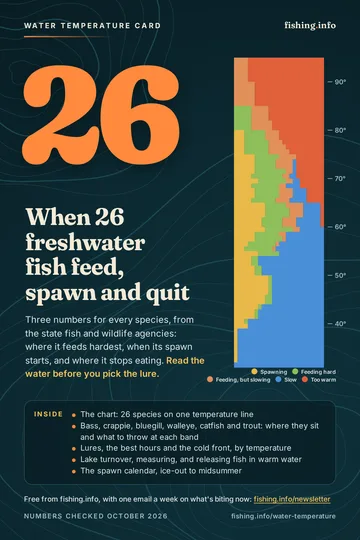
Free card: what 26 species do at your water temperature
Plus one email a week on what's biting now. No sales pitches. Privacy.
What bait catches catfish?
A catfish finds your bait by smell and taste before it sees it. A channel catfish carries taste buds over its whole body, densest on the barbels, and detects amino acids, the building blocks of flesh, at about one part per 100 million in the water. So the bait has to leak scent, and fresh bait leaks most. A chunk that has soaked for an hour has given its scent away; rebait often.
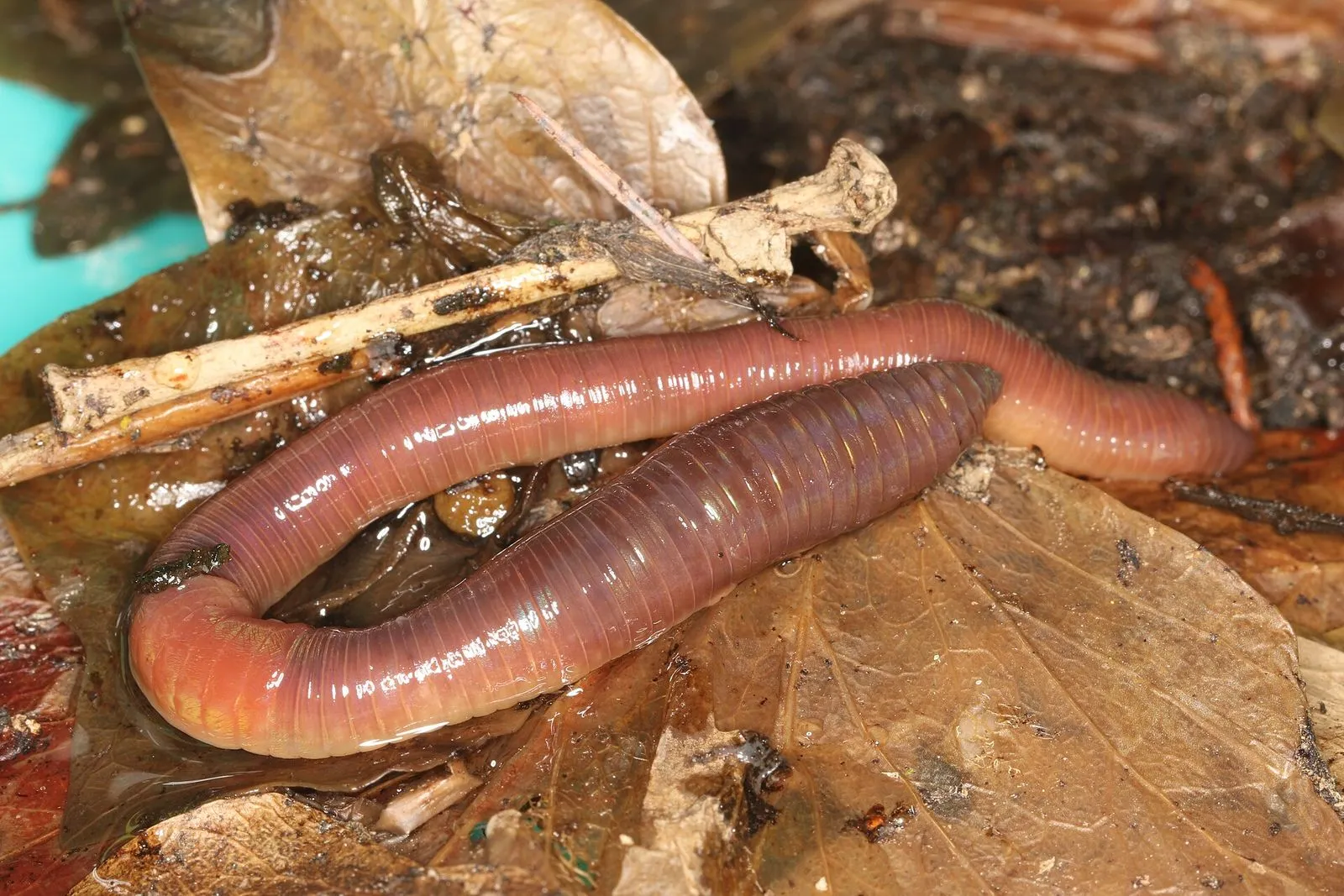
The species picks the bait. For channel catfish, Chad Ferguson’s rule is prepared punch or dip bait for numbers and fresh cut bait for size. Chicken liver, nightcrawlers and hot dogs catch fish too, though Ferguson rates the grocery-store baits below punch bait and fresh cut bait. For blue catfish it is fresh cut bait, shad or skipjack herring first, and fresh beats frozen every time. For flatheads the bait is alive, because the flathead’s diet is alive: a bluegill or green sunfish hooked through the back so it keeps swimming.
Two cautions. Live sunfish and cut game fish are legal bait in some states and not in others; the best catfish bait page sets three state codes side by side. And keep gasoline, sunscreen and insect repellent off your hands; the nose that finds a bluegill in the dark finds those too. The baits in the table follow what catfish eat in the wild.
Which rig, and how do you tie it?
One rig catches most catfish: the slip-sinker rig, the catfish version of the bass angler’s Carolina rig. An egg or no-roll sinker slides on the main line above a bead and a barrel swivel. From the swivel, a 12–36 in (30–90 cm) leader of 40–60 lb monofilament runs to a circle hook. The sinker holds the bait on the bottom, and the fish picks the bait up and swims off without feeling the weight, because the line slides through the sinker.
The weight follows the current, and the rule is the lightest sinker that holds bottom. Jim Moyer, a Cumberland River catfish guide in Tennessee, runs a 3–5 oz sliding sinker on steep banks in winter and up to 8 oz in fast current. In the tidal rivers of the Chesapeake, Virginia’s wildlife agency suggests ¾–1½ oz. A farm pond takes less than an ounce.
Four more rigs cover the rest of catfishing. A Santee Cooper rig adds a peg float to the leader for drifting over timber, and a three-way rig holds bait in river current. A slip float works the spawning banks in May; a bell-sinker bottom rig carries live bait at night. The catfish rigs page ties all five step by step.
What rod, reel, line and hook do you need?
| Target | Rod | Reel and line | Sinker |
|---|---|---|---|
| Channel catfish, ponds and creeks | 7 ft (2.1 m), medium to medium-heavy | 4000–5000 spinning reel; 12–20 lb mono | 1/2–3 oz (14–85 g) |
| Blue catfish, rivers and reservoirs | 7–8 ft 6 in (2.1–2.6 m), medium-heavy to heavy, soft tip on a stiff butt | Round baitcaster with a bait clicker or a 6000 spinning reel; 30–50 lb braid or 20–30 lb mono | 3–8 oz (85–227 g) |
| Flathead, live bait in timber | 7 ft 6 in to 8 ft, heavy | Baitcaster with a clicker; 50–65 lb braid to a 40–60 lb mono leader | 2–6 oz (57–170 g) |
The catfish rods page compares the blanks and their sinker ratings, and the baitcaster page explains the clicker. Monofilament is the default line because it stretches: a catfish takes the bait and moves off, and a stiff rod on a no-stretch line pulls the bait back out. Braid earns its place in deep water and on long casts into a tailrace. Whatever the line, the reel should hold at least 100 yards of 20 lb test, Steve Quinn’s floor in the Wired2Fish guide.
The hook is a circle hook, and what size hook for catfish depends on the bait more than the fish. Channel catfish on worms, liver and small chunks take a 1/0–4/0; blues on cut shad a 5/0–8/0; a live bluegill a 7/0–10/0; punch bait a #4 treble. Those sizes are what most catfish anglers use, not a rule. A rod holder for every rod is not optional. A blue catfish takes hard enough to pull a rod off a bank.
Where are catfish in a river, a lake and a pond?
A stream is a sequence of riffles, holes and runs, and catfish live in the holes. The current digs a hole just below each riffle, and the adults hold near cover in it: drift piles, undercut banks, the water below logs. Feeding fish move to the upstream end of the hole to meet what the current brings, which makes the head of the hole the highest-percentage cast on any creek. Below a dam, the tailrace pulls in catfish and baitfish alike.
In a big river, blue catfish want current: swift chutes, pools with noticeable current, and clean bottoms of sand, gravel and rubble. Fish the outside bends, the ledges and the channel edges. Flatheads want the deep, slow pool with the biggest log jam in it, and by Missouri’s count a single log jam usually gives up one adult, at most two or three. After a good fish, move to the next drift pile.
A pond or reservoir has no current to read, so depth and the edges do the work. Channel catfish cruise shorelines, weed edges and other transitions at night, so walk the bank in daylight and mark them. In a reservoir the fish feed on the deeper channels and drop-offs once the water warms, which is where a boat starts to matter. Rising water pulls catfish shallow everywhere; fishing in the rain covers where they go when the creek comes up.
When do catfish bite?
Yes, catfish bite in cold weather, but only one species does it well: blue catfish feed all winter, while channel catfish stop near 50 °F (10 °C) and flatheads near 43 °F (6 °C). Catfish feed by the thermometer. Channel catfish grow best at 75–85 °F, slowly below 65 °F (18 °C), and stop feeding below about 50 °F. Flatheads barely eat below 43 °F (6 °C), and their biggest fish of the year come in September and October, before the cold shuts them down. Blue catfish never stop: Ferguson’s calendar puts the trophy blues in December to March and the toughest fishing in late summer. The catfish water temperature page has every band for all three species and how to fish each one.
The spawn explains the early-summer lull. Catfish are cavity nesters: the male picks a hole in a bank, a hollow log or a rock pile and, in Keith Sutton’s words, male catfish “take little or no food while protecting the nest.” Channel catfish spawn when the water reaches about 75 °F (24 °C), blues at 70–75 °F, flatheads at 75–80 °F. The weeks just before are the easiest channel catfishing of the year; during the spawn, fish the banks for the fish between nests.
Day or night?
Both, in different places. By day catfish retire to the deep water and the cover; at night channel catfish move onto the riffles and shallows, and adult flatheads leave their logs to hunt the flats. That is why summer catfishing is night fishing: the water is warm enough to feed hard, and the fish leave the deep holes for the riffles and the shallows of the pools.
In cold water the rule flips: a winter blue catfish is caught in the afternoon, once the sun has had a chance to warm the water, in the deepest water the bank reaches. A daytime trip in any season is a trip to the hole rather than the flat. Best time of day has the hours by species.
Bank or boat?
Most catfish are caught from the bank. It is enough for channel catfish anywhere, and for blues wherever deep water comes close to shore: the outside of a river bend, a bridge hole, the tailrace below a dam, a creek mouth in high water. Bridges help twice over: the right-of-way gives public access, and the construction left rock and dredged holes that catfish use. From the bank you tightline: cast, wind the line tight to the sinker, set the rod in a holder with the tip up, and put the reel in free spool with the bait clicker on. A glow stick or a bell on the tip watches the rod after dark.
A boat earns its place where the fish are stacked on a spot you cannot cast to, or scattered over a flat you have to cover. Anchored on a channel bend, a hole or a ledge from October to March, you give the spot 60–90 minutes, Moyer’s December routine, then move. Over a flat in spring and fall you drift at 0.5–0.9 mph on a Santee Cooper rig; blues roam flats and chase a moving bait, flatheads do not. The catfish rigs page has the anchor, drift or tightline table.
A catfish trip, step by step
- Pick the species from the water. A pond or small creek is channel catfish; a big river or reservoir with current is blue catfish; a slow river pool full of logs is flathead water. Bait, hook and hour follow.
- Check the water temperature where the bait will sit. Below 50 °F is blue-cat water; 50–70 °F (10–21 °C) is cut-bait water for all three as the feed builds; above 75 °F is the night bite. Lower a thermometer to the bottom.
- Get fresh bait. Cast-net shad the same day for blues, buy punch bait or dig nightcrawlers for channels, catch bluegill where the law allows it for flatheads. Keep cut bait cold on ice.
- Find the spot in daylight. The head of the hole, the outside bend, the drift pile, the bridge rock, the shoreline a channel cat will cruise after dark.
- Tie the slip-sinker rig. Sinker, bead, swivel, a 12–36 in leader, a circle hook sized to the bait with the point clear. Lightest sinker that holds bottom.
- Cast, tighten, and set the rod in a holder. Line tight to the sinker, tip up, clicker on. A second rod with a different bait tells you what the fish want tonight.
- Let the bait soak, then move it. The scent has to travel. Give a bait a quarter of an hour or so before you lift it to a new spot, and an anchored spot an hour or more in cold water.
- Reel when the rod loads; do not strike. The circle hook turns into the corner of the jaw as the fish swims off. A hard jerk pulls the bait out before the hook can turn.
- Land it, hold it behind the spines, and decide. Net a big fish, unhook it in the water, photograph it with both hands under it. A fish for the table goes on ice at once.
What does a bite feel like, and when do you reel?
A catfish rarely slams a bait. It mouths it, picks it up and moves off, and on a tight line that shows as a tap or two, then the rod tip pulling down and staying down. Hayden Sammak’s rule for channel cats on an octopus hook is to count to ten before setting; a bigger fish is usually hooked and running before the count is up. On a circle hook the count takes care of itself: leave the rod in the holder until it loads, then lift it and reel steadily. Quinn’s picture is exact. A catfish that feels the rod tip will “keep pulling to get their food, like a dog with a bone.”
Watch for slack as well: a fish that swims toward you shows as a line gone limp, and that is the cue to reel. Set the drag light enough that a hard run takes line instead of breaking it, and keep the fish away from the wood.
How do you hold, unhook and release a catfish?
Keep your hand off three spines: one at the front of the dorsal fin, one at the front of each pectoral fin behind the head. The whiskers are soft feelers and cannot hurt you. A channel catfish under about 2 lb (0.9 kg) is the dangerous one, with needle-sharp spines; grip it from above with your fingers behind one pectoral spine and your thumb behind the other. From about 8 lb (3.6 kg) up the spines are blunt: net the fish and hold it with a lip grip. The grips by size, and the first aid for a sting, are on how to hold a catfish.
Unhook with long-nosed pliers; a circle hook sits in the corner of the mouth and makes this easy. A fish you release goes back nose-first, never hung by the jaw alone, and catch and release has the ten steps. Where blue catfish are invasive, as in every Virginia tributary of the Chesapeake, the agency asks you to keep the small ones. Limits and seasons are set by each state; the state pages carry the rules.
Mistakes to avoid
- Striking with a circle hook. The most common way to lose a catfish. Reel until the rod loads and let the hook turn itself.
- Fishing the hole at night and the flat by day. The fish moved. Fish the place that matches the hour.
- Old bait. Frozen shad, a liver that has sat in the sun, a bluegill that has stopped swimming. Fresh is the biggest single lever in catfishing.
- Grabbing a small catfish like a bass. The 1 lb channel cat is the one that sends anglers home with a swollen hand.
When do lures or noodling beat a bait?
When catfish are chasing shad in a summer river, below a dam or on rock, catfish lures such as a crankbait or a jig tipped with cut bait catch them. The channel catfish world record was caught on a bucktail jig. In seventeen states a spawning flathead can be pulled from its hole by hand, which is noodling, a summer tradition with its own rules and its own injuries. And the world record catfish page has every certified weight anglers measure themselves against.
Gear for catfish
Gear guide
Best Catfish Bait: What Channel, Blue and Flathead Catfish EatThe best catfish bait by species: cut shad for blues, punch and dip baits for channels, live bluegill for flatheads, and which prepared baits to buy.
Gear guide
Catfish Rods: Length, Power, the Soft Tip, and the Reviewers' PicksCatfish rods explained: 7–10 ft, medium-heavy, a soft glass tip on a strong butt, sinker ratings by species, and the reviewers' picks with maker specs.
Free download
The water temperature card
Read your water temperature and the card tells you who is spawning, who is feeding and what to throw. 26 species, 16 pages, for your phone and the tackle box.
Plus one email a week on what's biting now. No sales pitches. Privacy.
Related
Section guide
Catfish: Species Identification, Baits, Seasons and RecordsThe catfish species anglers catch most, channel, blue and flathead first: how to tell them apart by the anal fin, when they spawn, what bait each wants.
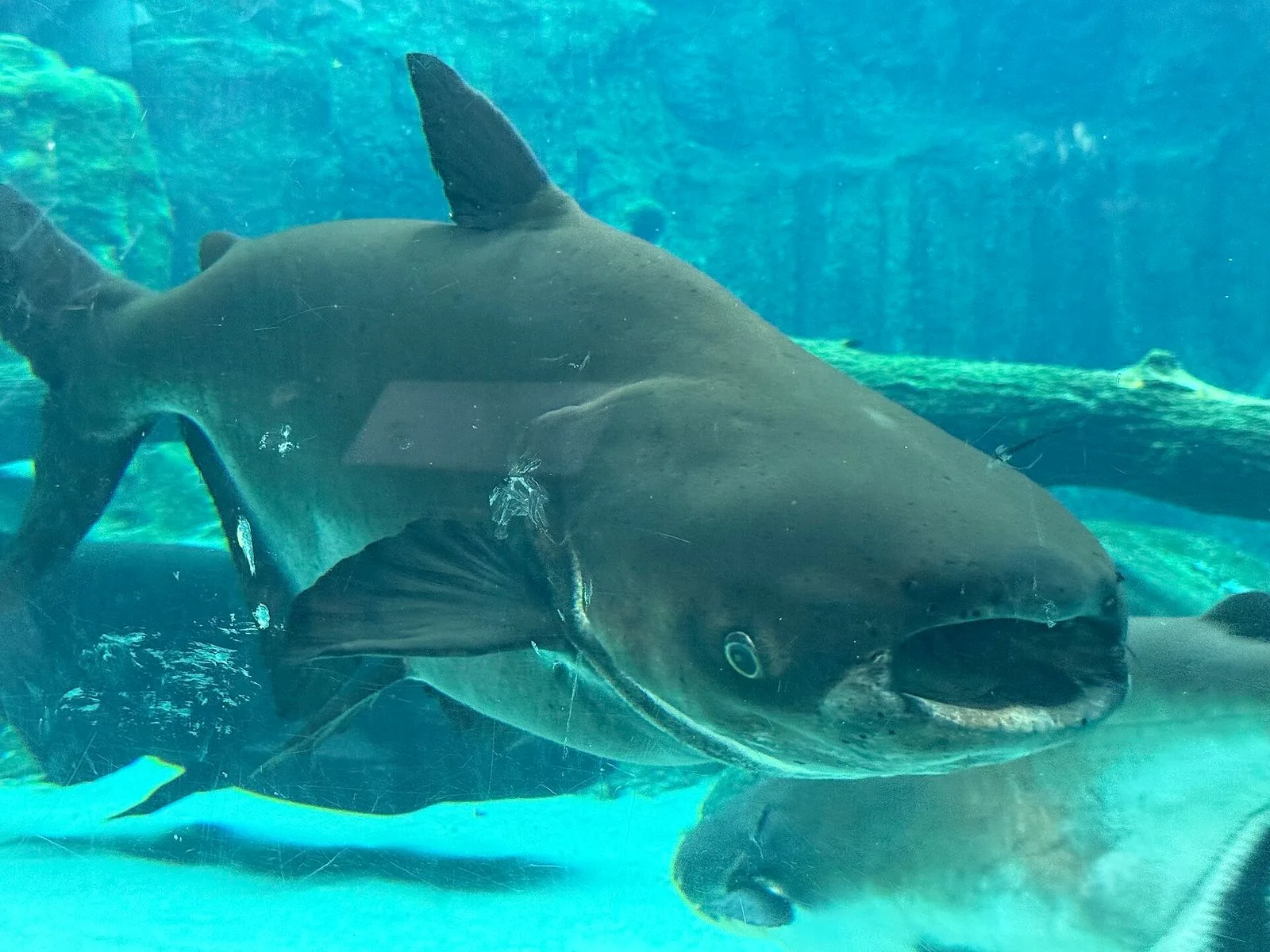 Mekong Giant Catfish: The 646 lb Record, and Where You Can Legally Catch One
The Mekong giant catfish: how to recognize the toothless giant, the 646 lb fish of 2005, how many are left, and the one legal way an angler catches one.
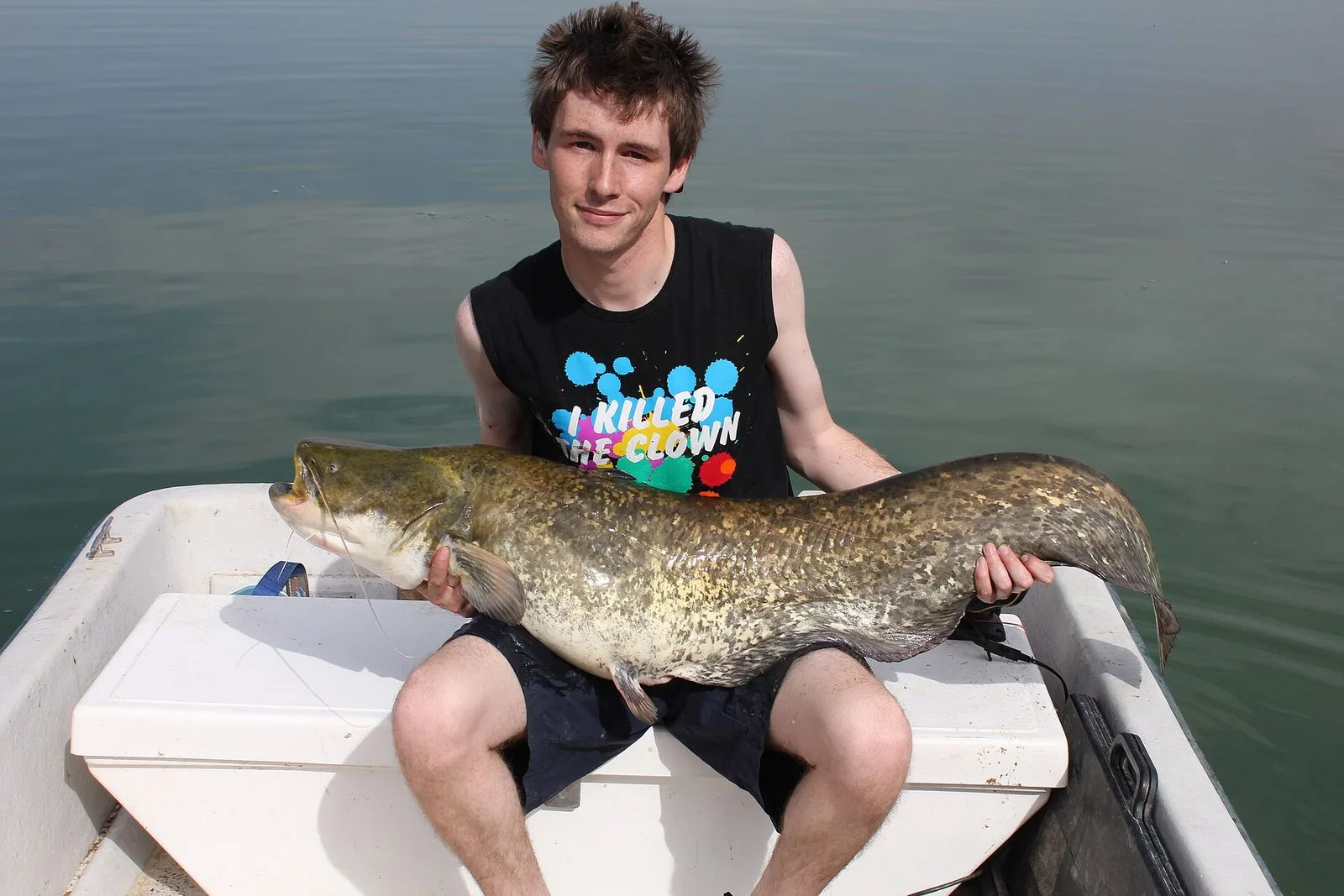 Wels Catfish: Europe's Giant, Its Records, and Why It Is Banned in the US
Wels catfish: Europe's giant, 297 lb 9 oz on record and banned from US import since 2016. How to recognize it, the Ebro record book, how anglers catch it.
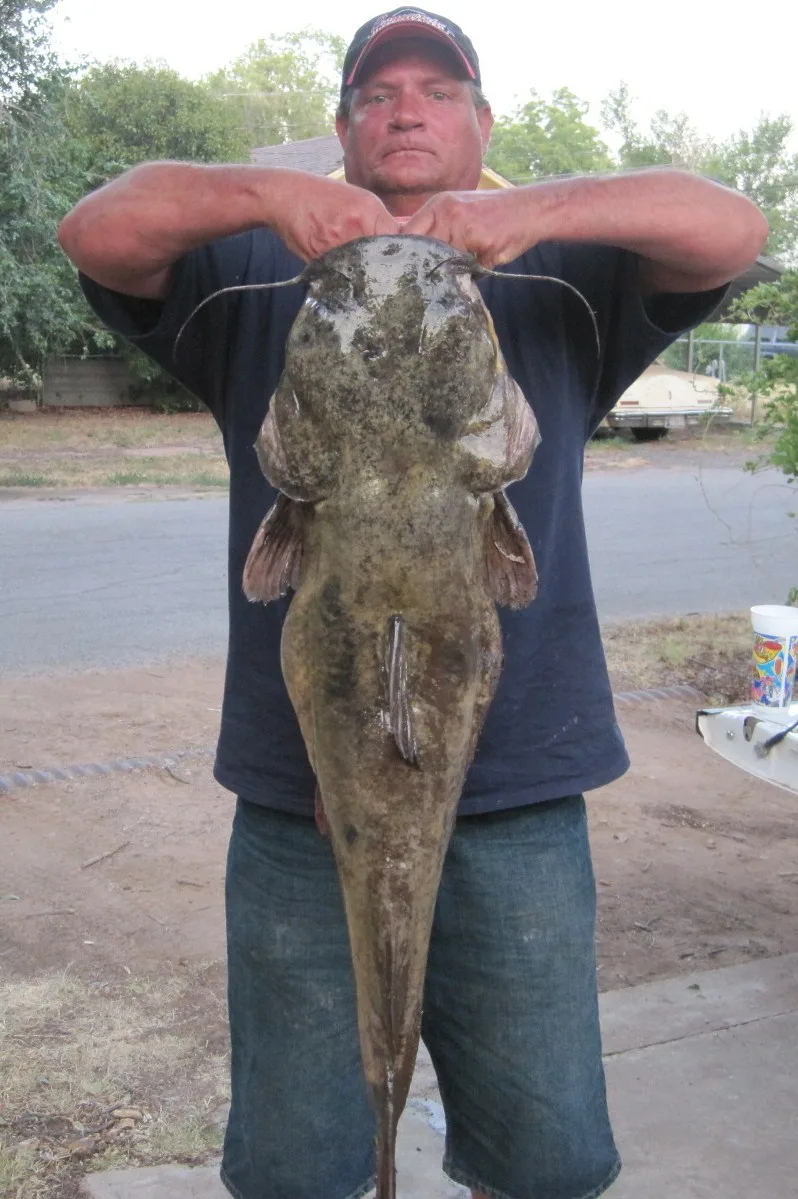 Noodling Catfish: How It Works, Where It Is Legal, Staying Safe
Noodling catfish means pulling a nest-guarding flathead from its hole by hand. How it is done, every state's season and rules, and what hurts people.
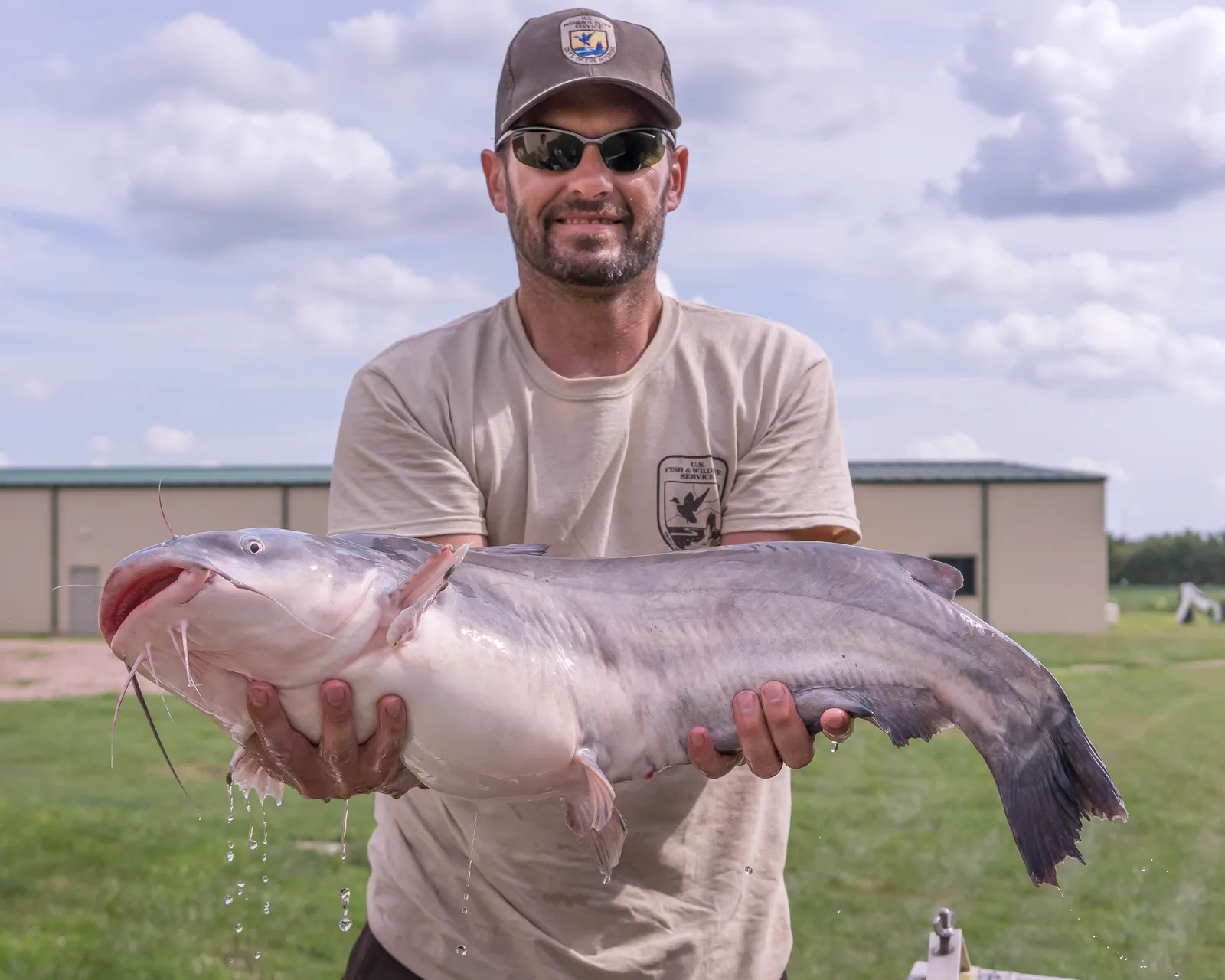 World Record Catfish: Blue, Flathead, Channel, Wels, Mekong Giant
The biggest catfish on record: the 646 lb Mekong giant, the 297 lb wels, the 143 lb blue, 123 lb flathead and 58 lb channel, and how a record is certified.
 How to Hold a Catfish Without Getting Stung, Small to Big
How to hold a catfish safely: where the three spines are, the grip behind the pectoral fins for small fish, the lip grip for big ones, and first aid for stings.
 Catfish Rigs: The Five That Matter and When to Use Each
The five catfish rigs the guides use, slip sinker, Santee Cooper, three-way, slip float and bottom rig, with sinker weights, hook sizes and when to use each.
Sources
- Missouri Department of Conservation, Channel catfish (field guide): habitat, day and night movement, diet
- Missouri Department of Conservation, Blue catfish (field guide): current and bottom preference, diet above 8–13 in
- Missouri Department of Conservation, Flathead catfish (field guide): pools, logs and drift piles; night foraging
- Texas Parks and Wildlife, Flathead catfish: diet above 10 in, spawn at 75–80 °F
- Virginia Department of Wildlife Resources, Blue catfish: spawning temperature, tidal-river sinker weights, harvest of small fish
- Mississippi State University Extension, Biology of catfish: growth 75–85 °F, feeding stops below about 50 °F
- Keith Sutton, Spawning time facts, CatfishNow: cavity nests, male catfish take little or no food while protecting the nest
- In-Fisherman, Blue catfish seasons (Jim Moyer, as told to Don Wirth): sinker weights, June live bait, 60–90 minutes per spot
- In-Fisherman (Don Wirth, 2025), Grocery store catfish baits: Jim Moyer, Cumberland River catfish guide
- Catfish Edge (Chad Ferguson), Best time to catch catfish: the species calendar
- Catfish Edge (Chad Ferguson), Best catfish bait: cut shad, punch bait, live bait by species
- Catfish Edge (Chad Ferguson), How to hold a catfish: the three spines, small fish sting worst
- FishUSA, Best hooks for catfish: circle hook sizes by species
- Wired2Fish (Steve Quinn), How to catch a catfish (March 2026): reading a stream, bank access, line capacity, sinker range
- MeatEater (Hayden Sammak), How to catch channel catfish in lakes and ponds (2021): scouting in daylight, the count before the hookset
- Wisconsin DNR (2016), Distribution, biology and management of Wisconsin's ictalurids: flatheads very lethargic below 6 °C (43 °F)
- FishUSA, Drift fishing for catfish: 0.5–0.9 mph, blues on the flats, flatheads on structure
- Wikipedia, Channel catfish: taste buds over the body, amino acids at one part per 100 million
- Outdoor Life, The biggest North American catfish of all time: the 143 lb blue catfish record