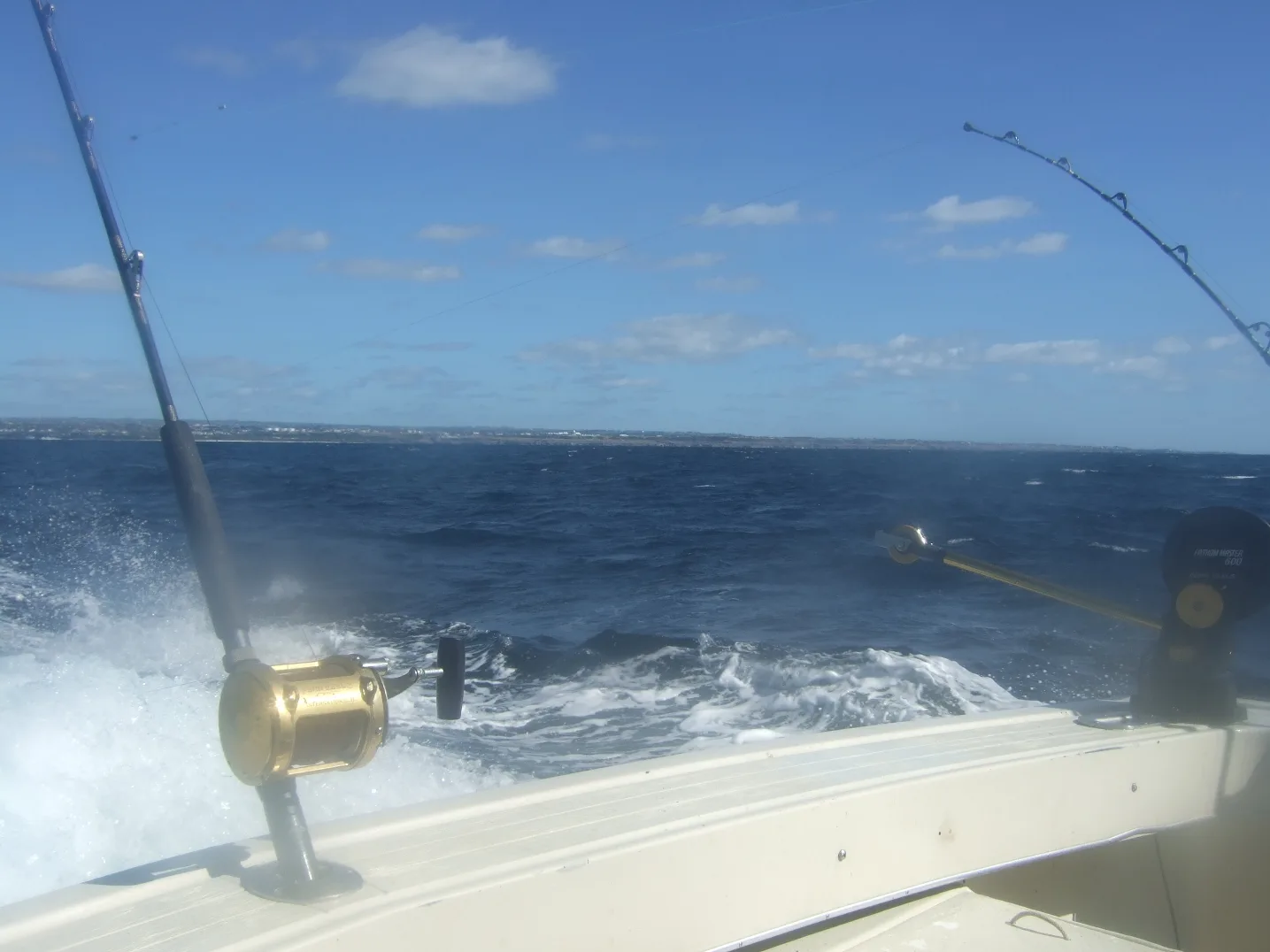
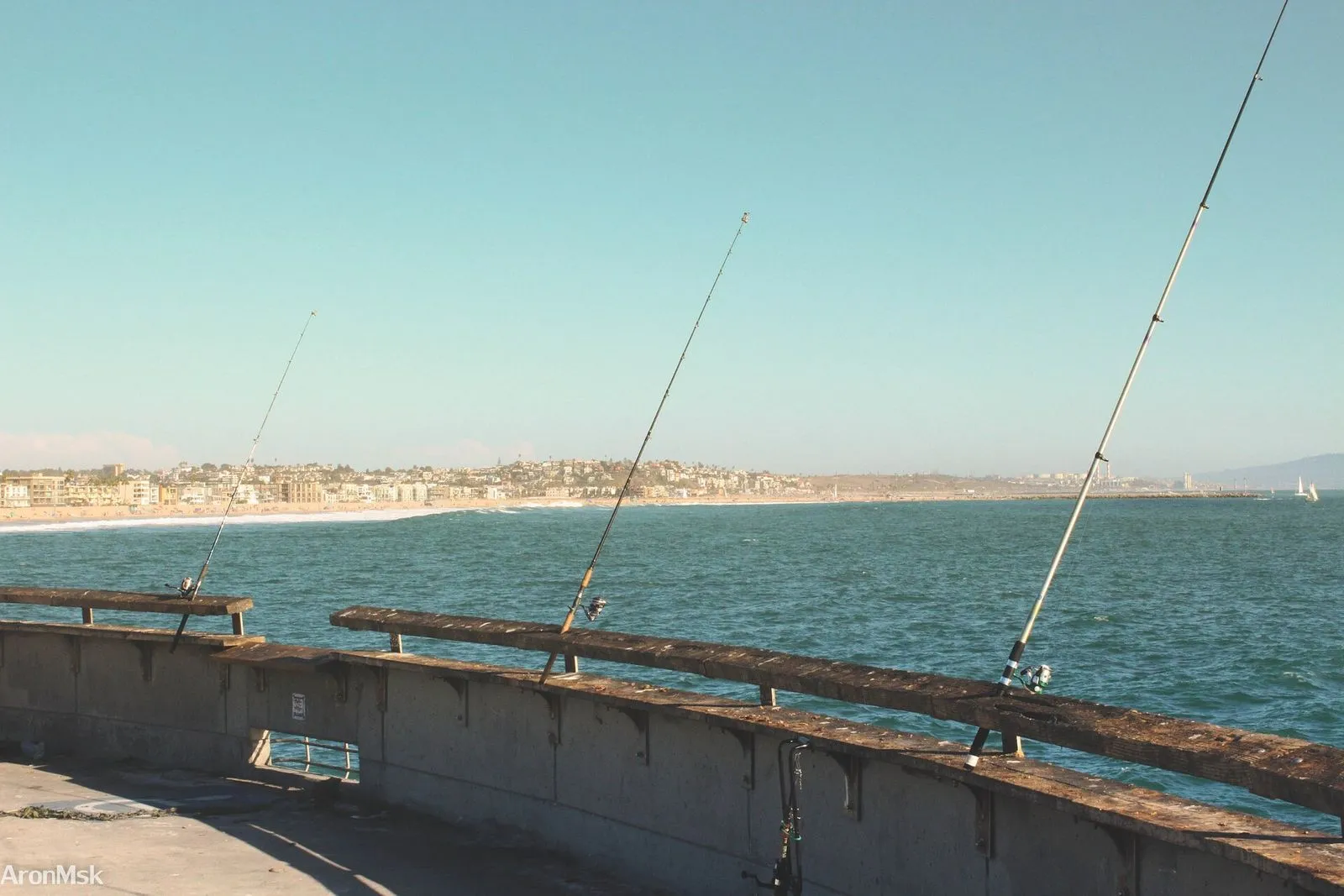
The right rod holder depends on where the rod waits: a steel stake on a hard bank, a sand spike on the beach, a clamp or a flush mount on a boat. On a kayak it is a track mount, and at home a rack on the wall. Every holder has the same two jobs: keep a catfish or a striper from pulling a $150 outfit into the water, and give the rod up the instant you grab it. The picks come from maker specifications, buyer’s guides and owner reviews; none were tested by this site.
Set the holder for the hook. A clicker and a J-hook want the reel in free spool; a circle hook wants a locked reel and a holder that will not let go.
Which holder for which fishing?
| Situation | Holder | Mount | Price (listed) |
|---|---|---|---|
| Bank, hard ground (catfish, carp) | Steel stake with an adjustable head | Driven 12 in (30 cm) or more | $29.95 (Whisker Seeker PowerLock) |
| Surf and beach | PVC or aluminum sand spike, 22–50 in (56–127 cm) | Pushed into the sand | $8.99 (Sea Striker, 36 in) |
| Jon boat, rental, boat with a rail | Clamp-on or rail-mount holder | Rail clamp or small deck base, no tube hole | $31.99 (Scotty 230) |
| Your own boat, permanent | Flush mount at 0°, 15° or 30° | Hole cut through the gunwale, sealed | $53–68 (Attwood 15°) |
| Trolling, many lines out | Rocket launcher or multi-rod rack | Often fitted at the factory on tournament boats | Priced per frame |
| Kayak | Track-mount holder; molded flush mounts | Gear track, one bolt | $39.95 (YakAttack Omega Pro) |
| Car or truck | Locking rod vault | Roof crossbars | $549.95 (Thule RodVault ST) |
| Home or garage | Wall or ceiling rack | Screwed into the studs | $19.99–34.99 (Rush Creek) |
Prices are the listings on the maker’s or a retailer’s page in October 2026.
How hard should the holder grip?
That depends on what happens when a fish takes the bait, and catfish anglers fish it two opposite ways.
Clicker and J-hook. The reel sits in free spool with the bait clicker on, so a fish runs off with the bait and the ratchet sounds the alarm. Brad Durick, a catfish guide and the author of Cracking the Channel Catfish Code, fishes it this way. His routine: pick the rod out of the holder, engage the reel, set the hook. He insists on a plain J-hook for clicker fishing, because a circle hook given a hard hookset is far more likely to pull out of the fish’s mouth. The holder here takes almost no load. It only has to keep the rod from tipping over and let it lift out in one move.
Locked reel and circle hook. The reel is in gear and the line nearly tight. The fish hooks itself against the bend of the rod as it swims off; the catfish rigs page sets up the slip-sinker rig for it. Now the holder carries the whole pull of a big fish, a blue catfish pulling hardest of all, until you get there.
That setup needs a stake driven deep, or a locking cup or a strap on a boat. It also needs a drag loose enough that a run takes line instead of the rod. The circle hook page explains why you reel rather than strike.
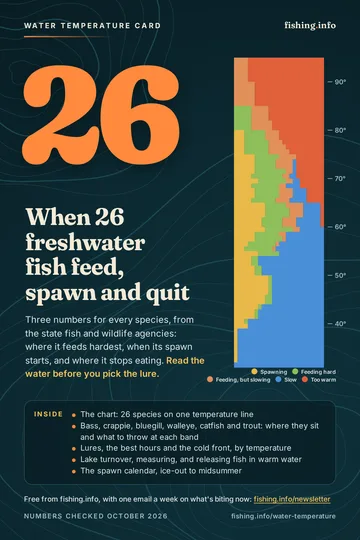
Free card: what 26 species do at your water temperature
Plus one email a week on what's biting now. No sales pitches. Privacy.
How to choose, step by step
- Name the situation from the table: hard bank, sand, a boat you own, a boat you do not, kayak, car or home.
- Name the hook. Clicker and J-hook: a light holder the rod lifts out of. Locked reel and circle hook: a deep stake, a locking cup or a strap.
- Pick the angle. Three positions on a bank stake; 0° tubes to carry rods upright on a boat, 15° or 30° tubes for trolling.
- Match the material to the job. On a boat, reinforced plastic or corrosion-resistant stainless. On a hard bank, strength matters more than weight, and steel is the strongest.
- Check the mount before the money. A flush mount in a gunwale with wiring behind it is a hole in the boat, and a clamp on a good rail is a holder.
- Count the rods, then add one. A spare holder covers the day one breaks.
What holds on a bank or a beach?
A forked stick works until the fish does. For bait fishing from a bank for catfish and carp, a steel stake with an adjustable head holds the rod at the angle the water calls for. The catfish rods page covers the rods that sit in it.
Whisker Seeker, the maker of the PowerLock, gives three angles. Set 60–70° with the tip high for cut bait and punch bait, 30–40° for live bait, and 45–50° as the place to start. Drive the stake at least 12 in (30 cm) into the ground, pull hard on it, and drive it deeper if it moves. Space holders 6–8 ft (1.8–2.4 m) apart and vary the angles so the lines do not cross.
On the beach the stake becomes a tube. Sand spikes run from about 22 in to almost 50 in (56–127 cm), in PVC or aluminum; Sea Striker’s PVC spike is white plastic with an aluminum stop pin. Sand spikes suit soft sand and loose soil, not hard ground; on gravel or hard-packed soil a plain metal stake holds better, and a rubber mallet helps drive it.
Clamp, flush mount or rocket launcher on a boat?
Clamp-on and rail-mount holders need no hole for a tube, so they suit a jon boat, a rental or a boat you do not own. Scotty’s 230 Powerlock is the common one: a nylon cradle with a front locking ring. Its 241 base screws to the top or side of the gunwale. Through Scotty’s 242 adapter it clamps to a 7/8–1 in (22–25 mm) round rail instead. Buy a holder with a lock or a strap; an open tube does not hold a rod against a fish.
Flush mounts are tubes set into the gunwale, and Field & Stream’s buyer’s guide calls them the sturdiest and least intrusive holder there is. They come in three fixed angles, 0°, 15° and 30°. A 0° tube stands the rod straight up. For trolling, Southern Boating sets the 15° and 30° tubes 22.5–45° to the gunwale, angled so the rods do not interfere with each other.
Before cutting, check the spot for wiring and plumbing. Use a hole saw matched to the tube, and expect an elongated hole for an angled one. Bed the flange in sealant and bolt it through a backing plate where you can; without one, seal the screw holes as well.
Water is the problem nobody plans for. Spray and wash-water pour down rod tubes into the gunwale, soaking the foam, adding weight and growing mildew. Jim Hendricks of Boating Magazine fixes it with a drain cup on the bottom of the tube and a 3/8 in hose out through the inner wall.
Rocket launchers hold several rods at once, for boats that fish many lines. Boats rigged for tournament fishing often get them at the factory, along with outriggers.
Where does a holder go on a kayak?
Some fishing kayaks come with flush-mount holders molded into the hull. Adding one means drilling a large hole, so measure first: the whole tube has to fit below the deck.
Most anglers add holders to the gear track instead. A track-mount holder slides along the rail, so it can sit in front of you for fishing and behind you for paddling. It comes off without leaving a hole. On a kayak or a small boat an elevated holder keeps the reel out of the spray, and the YakAttack Omega Pro adds an extension arm for exactly that. The same track carries a kayak fish finder, so plan where each one goes before you buy.
How do you carry and store rods?
The trip to the water is the likeliest time to damage or lose a rod. A roof vault such as Thule’s RodVault ST carries six fully rigged rods up to 8 ft (2.4 m) in aluminum tubes, with locks for the rods, and is listed at $549.95. Shorter two-piece and telescopic rods travel inside the car.
At home, never prop a rod in a corner for long: it puts constant pressure on the tip. Vertical racks are the safest because gravity pulls straight down the blank. A horizontal rack needs supports 3–4 ft (0.9–1.2 m) apart so the blank does not sag.
Keep rods out of hot cars and uninsulated sheds in summer, because heat weakens epoxy and loosens guide wraps. Store them clean, with the line slack, and back off the drag so the washers do not compress.
The rest of the rod lineup is on the rods hub, and the other tackle that does the waiting for you is under fishing accessories.
Free download
The water temperature card
Read your water temperature and the card tells you who is spawning, who is feeding and what to throw. 26 species, 16 pages, for your phone and the tackle box.
Plus one email a week on what's biting now. No sales pitches. Privacy.
Related
Section guide
Fishing Rods: Power, Action and Length, and Which Rod for Which LureHow a fishing rod is rated: power, action and length explained, the line and lure ranges for each power, and the rod each bass and catfish technique wants.
 Fishing Pole: Pole or Rod, the Six Kinds, and What a First One Costs
A fishing pole and a fishing rod are the same thing. The six kinds, from a bamboo cane pole to a fly outfit, who each one suits, and what a first one costs.
 Catfish Rods: Length, Power, the Soft Tip, and the Reviewers' Picks
Catfish rods explained: 7–10 ft, medium-heavy, a soft glass tip on a strong butt, sinker ratings by species, and the reviewers' picks with maker specs.
 Rod and Reel Combo: The Best Picks by Fishing, and When Not To
The best rod and reel combos by fishing, from maker specs and owner ratings: first spinning, bass baitcast, inshore, surf, catfish, kids; where separates win.
 Spinning Fishing Rod: How It Differs From a Casting Rod, Which to Buy
A spinning fishing rod hangs the reel below the blank and casts light lures on light line. Its parts, how to read the label, and which length and power to buy.
 Fishing Rod for Beginners: The One Setup, and Eight Combos That Deliver It
A fishing rod for beginners is a 6 ft 6 in to 7 ft medium spinning combo. Eight combos from the 2026 guides compared on rod, reel, price and verdict.
 Best Fishing Rods: The Reviewers' Picks by Technique and Budget
The best fishing rods by what you fish: bass casting and spinning, trout, panfish, walleye, catfish, inshore and surf, with the makers' specs and prices.
Sources
- Field & Stream (Ric Burnley), the best fishing rod holders
- Outdoor Empire, how to choose the best fishing rod holder
- Southern Boating (Steve Davis), how to install rod holders
- Boating Magazine (Jim Hendricks), how to install rod- and cup-holder drains
- MidWest Outdoors (Brad Durick), catfishing with bait clickers
- Whisker Seeker, PowerLock bank fishing rod holder specifications
- Whisker Seeker, best fishing rod holders for bank fishing
- TackleDirect, Sea Striker 36 in sand spike
- Scotty, 230 Powerlock rod holder
- Scotty, 242 rail mount adapter
- Joe's Sporting Goods, Scotty 230 Powerlock with 241 mount (price and specs)
- Powerboat Supply, Attwood 15° stainless flush mount rod holder
- NRS, YakAttack x NRS Omega Pro rod holder
- FishTalk (John Veil), adding rod holders to your kayak
- Rack Warehouse, Thule RodVault ST
- Rush Creek Creations, 12-rod 2-in-1 fishing rod storage rack
- Scheels, how to store fishing rods