 By
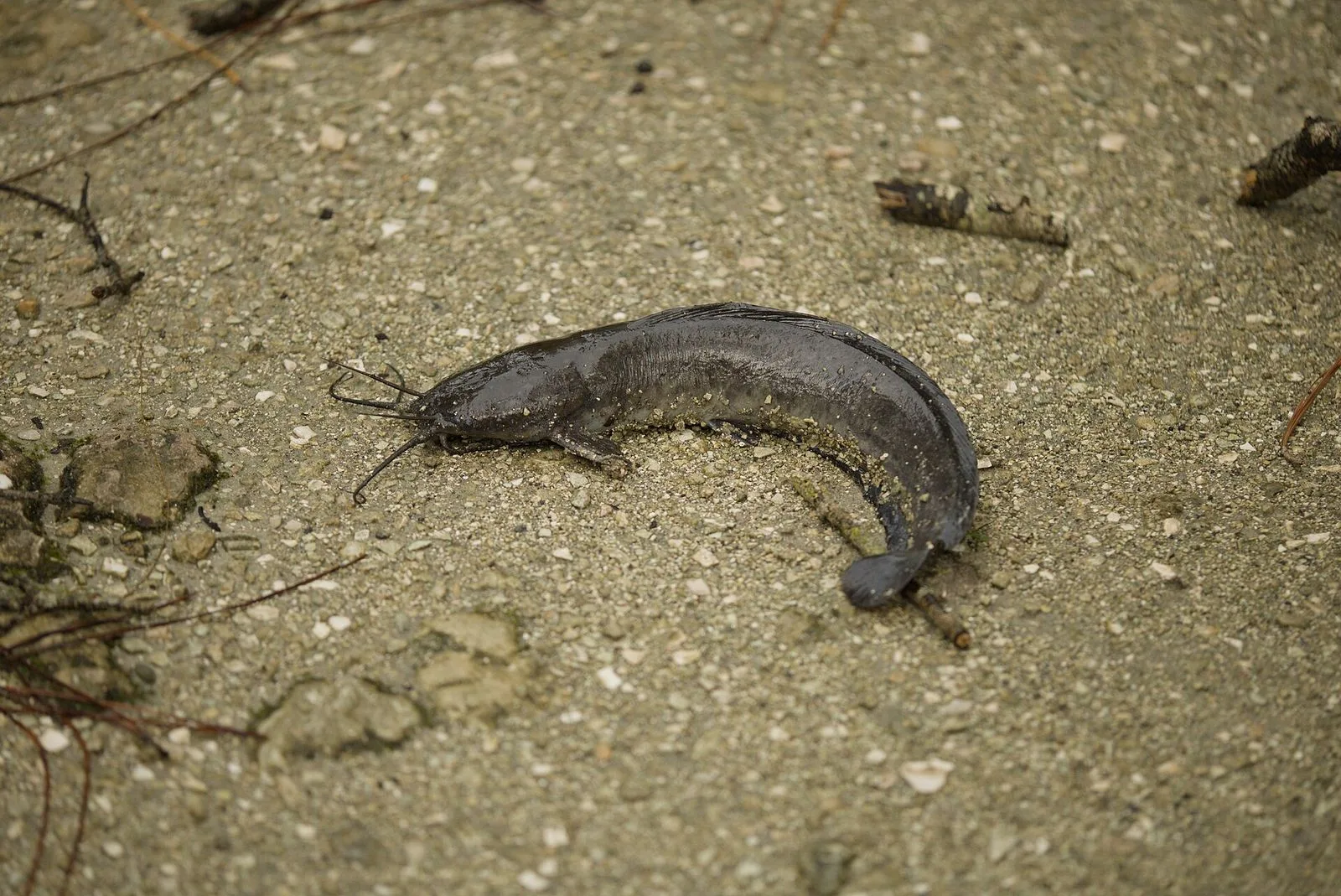
The walking catfish is a gray, eel-shaped Asian catfish that breathes air and crosses land on wet nights, and since the 1960s it has lived wild in South Florida. Most are about 12 in (30 cm) or less. It reached the state through the aquarium and fish-farm trade, spread through the canals, and brought one of the first federal bans on a fish. Florida’s wildlife commission rates its sporting quality as “None”; it is still a fish any canal angler in the south of the state may hook.
On March 15, 1967, a Florida angler caught a walking catfish and handed it to federal officials. Less than three years later, on January 1, 1970, the federal ban on the whole family took effect.
How do you tell a walking catfish from a native catfish?
Look at the back. A walking catfish has no adipose fin and no dorsal spine, and its dorsal fin runs most of the length of the back, with 60–76 soft rays. A channel cat or a bullhead has a short, spined dorsal fin and a small fleshy adipose fin behind it. Florida’s wildlife commission (FWC) describes an “elongated, gray, and scaleless catfish-type body with a large mouth, sharp pectoral spines, and four pairs of barbels”.
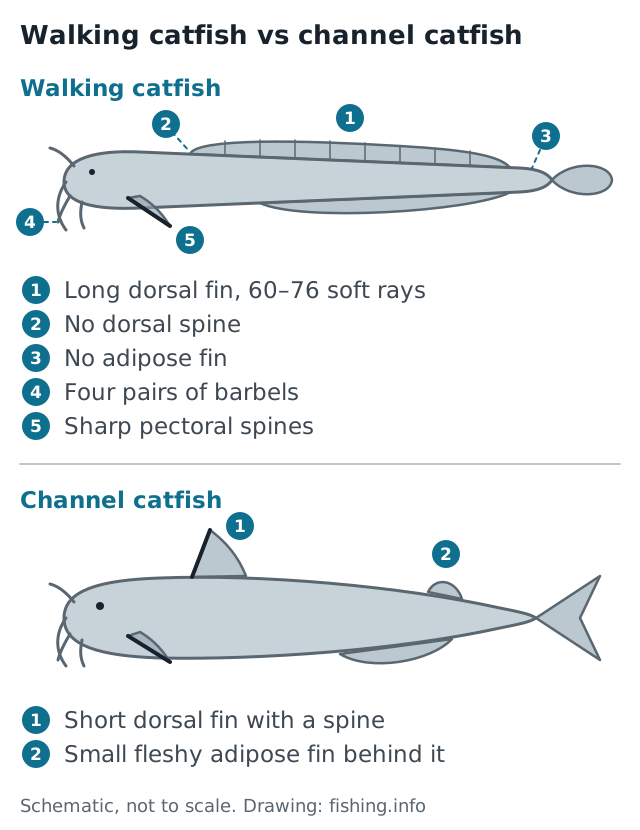
Check the back first: on a walking catfish the soft dorsal fin runs almost to the tail, with no spine in front and no adipose fin behind. Drawing: fishing.info.
The Florida Museum adds the color: “a uniform shade of gray or gray-brown with many minute white spots laterally”. The head is flat and broad, and the body tapers “in a manner that calls to mind the shape of a slender tadpole”. Albinos were once popular in the aquarium trade. The U.S. Geological Survey notes that the first Florida imports were all albinos, yet albinos are now rare in the wild, “probably a result of natural selection by predators”.
The fish has a naming problem. USGS writes that “the identity of the fish introduced into the USA is in doubt” since a 2008 revision restricted the name Clarias batrachus to fish from Java. Robert Robins, then the Florida Museum’s ichthyology collection manager, wrote in 2017 that a 2008 study makes Clarias batrachus “likely a species complex of up to four species”. The fish in Florida’s canals is the one Florida calls Clarias batrachus.
How does a walking catfish walk?
It plants a spine and pushes. Biologists Pace, Gibb and Van Wassenbergh compared walking catfish, an African sharptooth catfish and a channel catfish on land. The walking catfish places “a pectoral fin spine” on the ground, and “the axial musculature and tail push against the ground to elevate the catfish over the spine”. On land the pectoral fin sweeps an arc of more than 70 degrees, against under 30 degrees when swimming, and the tail beats twice per stride. The channel catfish, a non-walker, was “ineffective” at moving forward on land. FWC’s image is the best: the fish pulls itself along “much like an infantry-man scooting under barbed wire”.
The breathing makes the walking possible. Above the gills sits the suprabranchial arborescent organ, a tree-like extension of the gill supports. It props up gill filaments that would collapse out of water, and the Florida Museum says it “functions much like a lung”. FishBase classes the species as a facultative air breather: it can live on water oxygen alone but does not have to. That is why, as the Florida Museum puts it, it thrives in “warm, stagnant, often hypoxic waters” and can cross a road on a rainy night. Cars kill many on those crossings: the Florida Museum says stretches of U.S. 41, the Tamiami Trail, can become “hazardously slick” with them.
How long it can survive out of water is not measured. The Florida Museum says it can leave the water “as long as it stays moist”. The figure of 18 hours that circulates online has no study behind it, as the do fish drown page explains.
Free PDF · Catfish cheat sheet When do catfish bite, and what do they want on the hook?
One reading, and the 16-page cheat sheet tells you which catfish is feeding, where it sits and what to put on the hook. Five rigs drawn, a trip step by step.
Enter your email, confirm it with one click, and the PDF is in your inbox. Plus one email a week on what's biting. Unsubscribe anytime. Privacy.
Where do walking catfish live in the United States?
Only Florida holds a population. USGS’s Nonindigenous Aquatic Species database records the species in six states and Guam; every mainland population outside Florida failed.
| State | First seen | Last seen | Status |
|---|---|---|---|
| Florida | 1965 | 2026 | Established, in 31 watersheds from the Everglades to the St. Johns, Withlacoochee and Tampa Bay |
| California | 1973 | 1986 | Failed (Salton Sea, San Joaquin Delta) |
| Massachusetts | 1971 | 1971 | Failed |
| Nevada | 1980 | 2001 | Failed (Lake Mead) |
| Georgia | 1980 | 1992 | Failed |
| Connecticut | 1996 | 1996 | Failed |
| Guam | 2004 | 2010 | Recorded |
USGS dates the first Florida record to 1965, the escape years; FWC dates the first report to 1967, in Broward County.
Cold is the limit. “Populations suffer periodic die-offs from cold temperatures and subsequent bacterial infection,” USGS writes; “consequently, northward dispersal is limited”. The 1969 federal release put the threshold at “waters much below 60 degrees” (60 °F, 16 °C). Later lab work puts the lower lethal temperature at 49–55 °F (9.4–12.8 °C), depending on the water the fish is used to, the Florida Museum says. Burrowing into the mud may carry some through a short cold spell, and the museum warns that the warm springs of north central Florida could shelter the species.
In Florida the fish wants shallow, weedy water. FWC lists the Everglades and their canals first, then central and south Florida generally. It can “dominate small Everglades pools during the dry season” and turns up in road storm drains, “from which they emerge during flooding events”. In big lakes and canals it is much less common. It tolerates brackish water too: the Florida Museum reports fish caught in Palm Beach County stretches of the Intracoastal Waterway.
How did walking catfish get loose in Florida?
Through the trade, in the 1960s, according to USGS, and the dates show how fast it went:
| When | What happened |
|---|---|
| Early 1960s | Walking catfish imported, reportedly from Thailand, for the aquarium trade |
| Mid-1960s | Adult broodstock escapes, either from a fish farm in northeastern Broward County or from a truck carrying fish between Dade and Broward counties (the Florida Museum places the farm in Palm Beach County) |
| March 15, 1967 | A Florida angler catches one and hands it to officials at the Loxahatchee National Wildlife Refuge, the catch the 1969 federal release records |
| Late 1967 or early 1968 | More fish released around Tampa Bay, “supposedly” by fish farmers after Florida banned their import and possession |
| May 25, 1968 | A specimen nearly a foot long is captured alive at night “finning along on bare ground” near Boca Raton |
| 1968 | The fish is confined to three south Florida counties |
| August 19, 1969 | The federal import and acquisition ban is proposed in the Federal Register; about 3,000 fish had been collected in southern Florida by then |
| January 1, 1970 | The ban takes effect for the whole family Clariidae, 118 species |
| Mid-1970s | Established in Everglades National Park and Big Cypress National Preserve |
| 1978 | Spread to 20 counties in the southern half of the peninsula, by canals and “overland migration, typically during rainy nights” |
| 2008 | A taxonomic revision puts the name of the Florida fish in doubt |
The 1969 release has a detail worth repeating. Publicity drove the price of a walking catfish in the aquarium trade “from 39 cents to almost 9 dollars”, and rotenone, the poison used to clear ponds, often failed because the fish “are able to crawl out of treated water”.
Was it the disaster predicted? Not quite. FWC says “early accounts that this fish would eliminate native fishes were erroneous, and it has not had major detrimental effects”. USGS calls the impacts “largely unknown”. Walking catfish do invade fish farms, which have had to put up fences, and they prey heavily on native fish in drying pools. FWC adds that abundance “has decreased since 1970”. The “aggressive” in its reputation is about the invasion, not people: the Florida Museum says it has been “labeled an aggressively invasive species”. For an angler the danger is the spines.
Are walking catfish illegal?
Live ones are. Federal law, 50 CFR 16.13, prohibits “the importation, transportation, or acquisition” of “live fish or viable eggs of walking catfish, family Clariidae” without a permit. That covers all 118 species of the family, including the African sharptooth catfish. It is the injurious species listing that later caught the wels catfish.
Florida adds its own rule. FWC lists the walking catfish as a conditional species under rule 68-5.002 of the Florida Administrative Code, and it is on the agency’s Conditional Nonnative Species List. FWC: “Possession and transportation of live walking catfish is illegal without special state and federal permits; can only be possessed dead.” The Florida Museum puts it the same way: owning, buying, selling, trading or transporting a live one without a permit is illegal. A “walking catfish for sale” listing for a live fish in Florida is an offer to break that law.
Can you eat a walking catfish?
Yes. Florida sets no bag or size limits, and FWC calls the fish “still considered undesirable”. FWC’s advice for anglers who want to try one is to “immediately put them on ice”, since the fish may only be possessed dead. It notes the fish is “not commonly eaten in western societies, but prized in native range”, where it is farmed across Southeast Asia.
Handle it like any catfish. FWC describes the pectoral spines as sharp, and the fish is coated in slippery mucus. Is it venomous? Possibly. A 2009 survey of venom glands in the pectoral spines of 158 catfish (Wright, BMC Evolutionary Biology) did not sample the walking catfish. It did find venom glands in another Clarias species, C. theodorae, and counts the family Clariidae among those with venomous members. Treat a puncture as you would a catfish sting; the how to hold a catfish page has the grip and the first aid.
How big do walking catfish get?
Small, by catfish standards. The sources disagree on the maximum, and the IGFA record sits in the middle:
| Source | Maximum it gives | For which fish |
|---|---|---|
| Florida Museum, species profile | 61 cm (24 in) native; South Florida fish “rarely exceed 36 cm (14 inches)” | Native range and Florida |
| FWC | About 20 in (51 cm) and 3 lb (1.4 kg); commonly to about 12 in | Florida |
| Florida Museum, Five Facts | About 20 in and 2.5 lb (1.1 kg) | Florida |
| FishBase | 47 cm (18.5 in) and 1.2 kg (2 lb 10 oz) | Species-wide |
| IGFA all-tackle record | 2 lb 10 oz (1.19 kg) | Delray Beach, Florida, July 15, 2001, Patrick Keough |
The record weighs almost exactly FishBase’s maximum. It is also the whole record book for the species: the IGFA lists no line-class or junior records. For the other end of the catfish scale, see world record catfish.
What do walking catfish eat?
Almost anything on the bottom. The fish feeds at night, sifting detritus and soft bottom with its barbels, and takes small fish, insects, plant matter, fish eggs and larvae, and dead fish. The Florida Museum quotes one researcher’s estimate of “as great as 3,000 pounds of walking catfish per acre” in parts of South Florida. Wading birds, in turn, take many that are stranded in shallow drying pools.
How do walking catfish breed?
In the rainy season. Males build nests of detritus or submerged vegetation and guard the adhesive eggs and then the free-swimming young, the Florida Museum writes. USGS suggests that care “may enhance survivorship over that of native species”. The fish matures at one year; beyond that, the museum says, “little is known regarding the age and growth” of the species. Across its native range the IUCN Red List rates it Least Concern (assessed January 2019, per FishBase). More catfish of every kind are on the catfish hub.
Gear for catfish
Gear guide
Best Catfish Bait: What Channel, Blue and Flathead Catfish EatThe best catfish bait by species: cut shad for blues, punch and dip baits for channels, live bluegill for flatheads, and which prepared baits to buy.
Gear guide
Catfish Rods: Length, Power, the Soft Tip, and the Reviewers' PicksCatfish rods explained: 7–10 ft, medium-heavy, a soft glass tip on a strong butt, sinker ratings by species, and the reviewers' picks with maker specs.
Free PDF · 16 pages
Know what the catfish want tonight before you leave the house
The Catfish Cheat Sheet. Tired of sitting all night next to a rod that never moves? Take one water temperature, find your season on the two-page sheet, and it tells you which catfish is feeding, where it sits and what goes on the hook. Thirteen more pages behind it: each catfish, the rigs drawn, the bait, the trip and how to hold one without getting stung.
- The temperature that shuts channel cats down while blue cats keep biting all winter
- Five rigs drawn, three tied step by step, and why you never strike with a circle hook
- The bait and hook for each catfish, from punch bait on a #4 treble to a live bluegill on a 7/0 circle
- A catfish trip in nine steps, with the "Before you go" checklist and what a bite feels like on a tight line
Every line from the catfish pages on fishing.info and the 151 sources behind them, Missouri and Texas wildlife agencies among them.
Enter your email, confirm it with one click, and the PDF is in your inbox. Plus one email a week on what's biting. Unsubscribe anytime. Privacy.
Related
Section guide
Catfish: Species Identification, Baits, Seasons and RecordsThe catfish species anglers catch most, channel, blue and flathead first: how to tell them apart by the anal fin, when they spawn, what bait each wants.
 What Do Catfish Like? What They Eat, Smell and Avoid, by Species
What catfish like, by species: anything for channels, cut fish for blues, live fish for flatheads. The diet data, the senses and the baits.
 Saltwater Catfish: Hardhead vs Gafftopsail, the Sting, the Eating
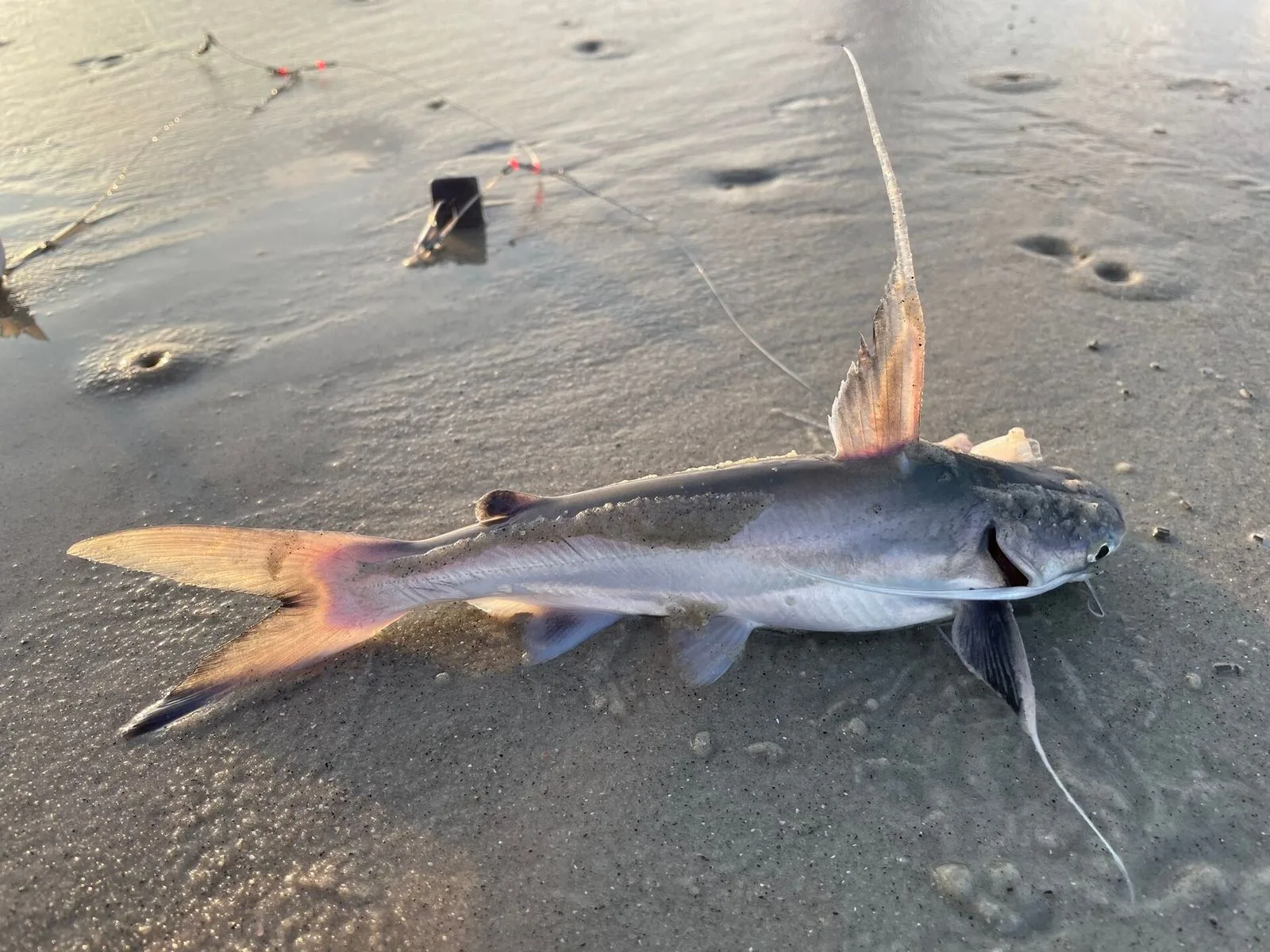
The two saltwater catfish: how to tell a hardhead from a gafftopsail, sizes and records, the sting and its first aid, and which one to eat.
- How to Catch Catfish: Bait, Rigs, Where and When, by Species
How to catch catfish: the bait, rig, hook and water for channel, blue and flathead catfish, where they are by day and night, and a trip step by step.
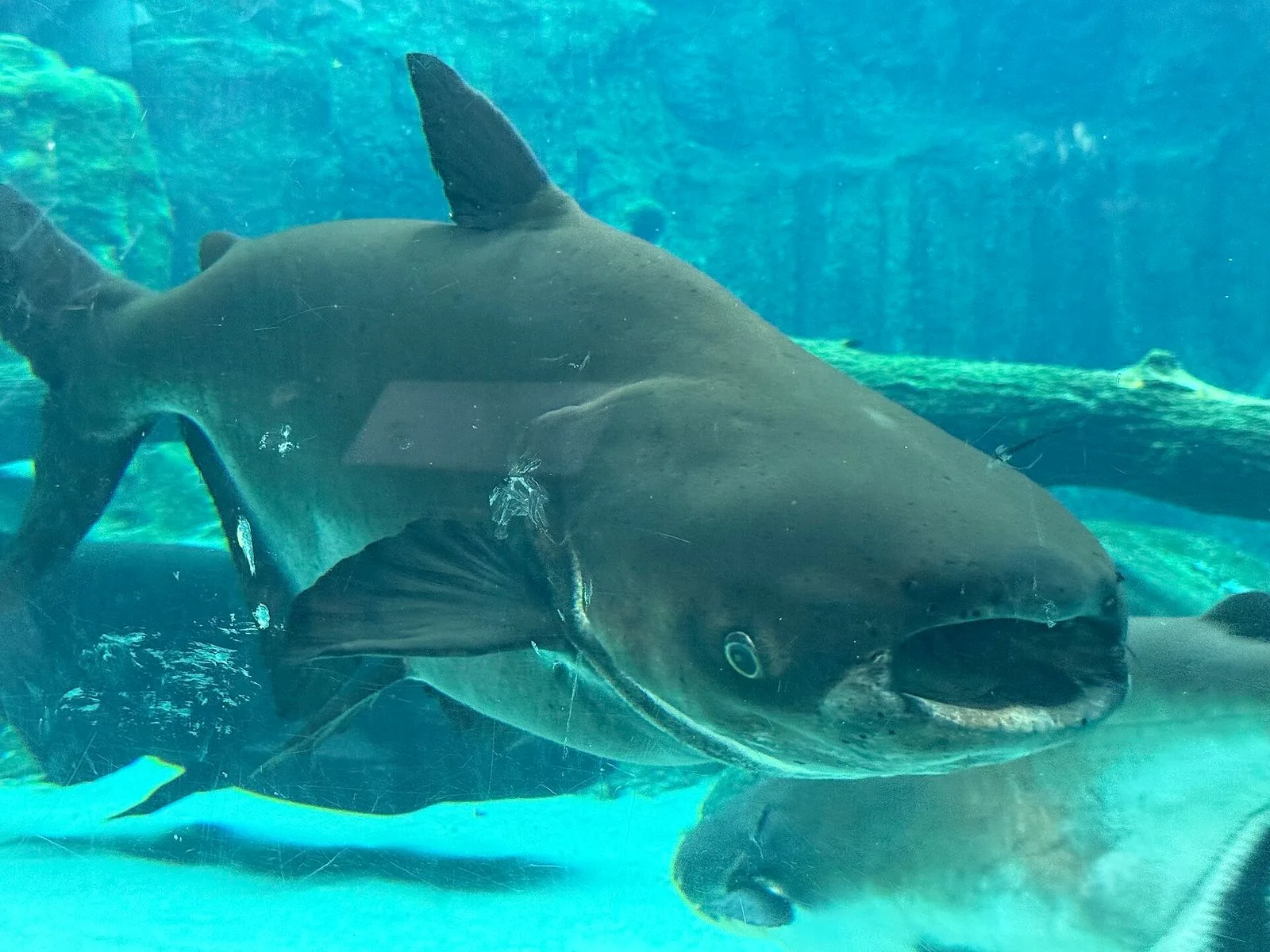 Mekong Giant Catfish: The 646 lb Record, and Where You Can Legally Catch One
The Mekong giant catfish: how to recognize the toothless giant, the 646 lb fish of 2005, how many are left, and the one legal way an angler catches one.
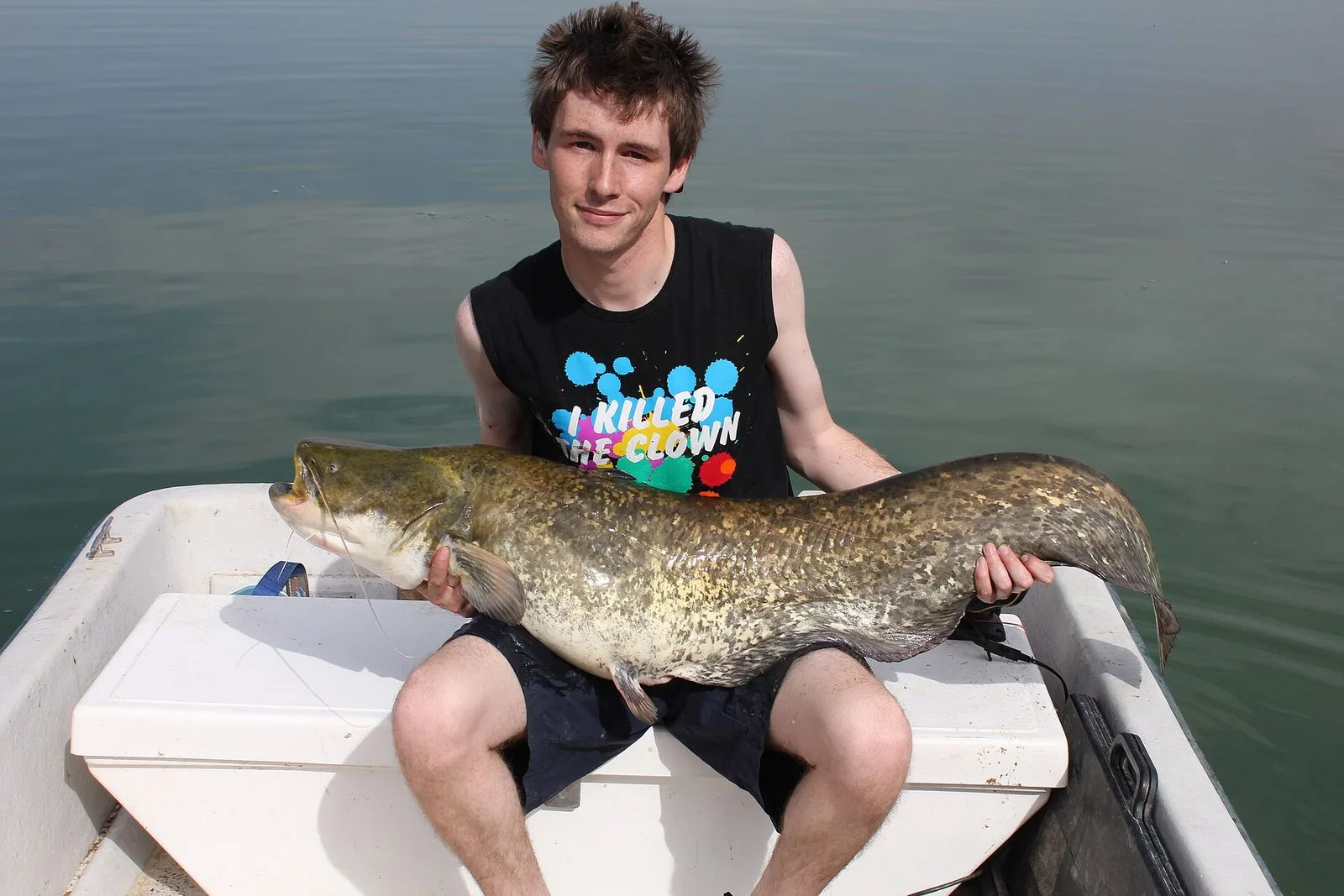 Wels Catfish: Europe's Giant, Its Records, and Why It Is Banned in the US
Wels catfish: Europe's giant, 297 lb 9 oz on record and banned from US import since 2016. How to recognize it, the Ebro record book, how anglers catch it.
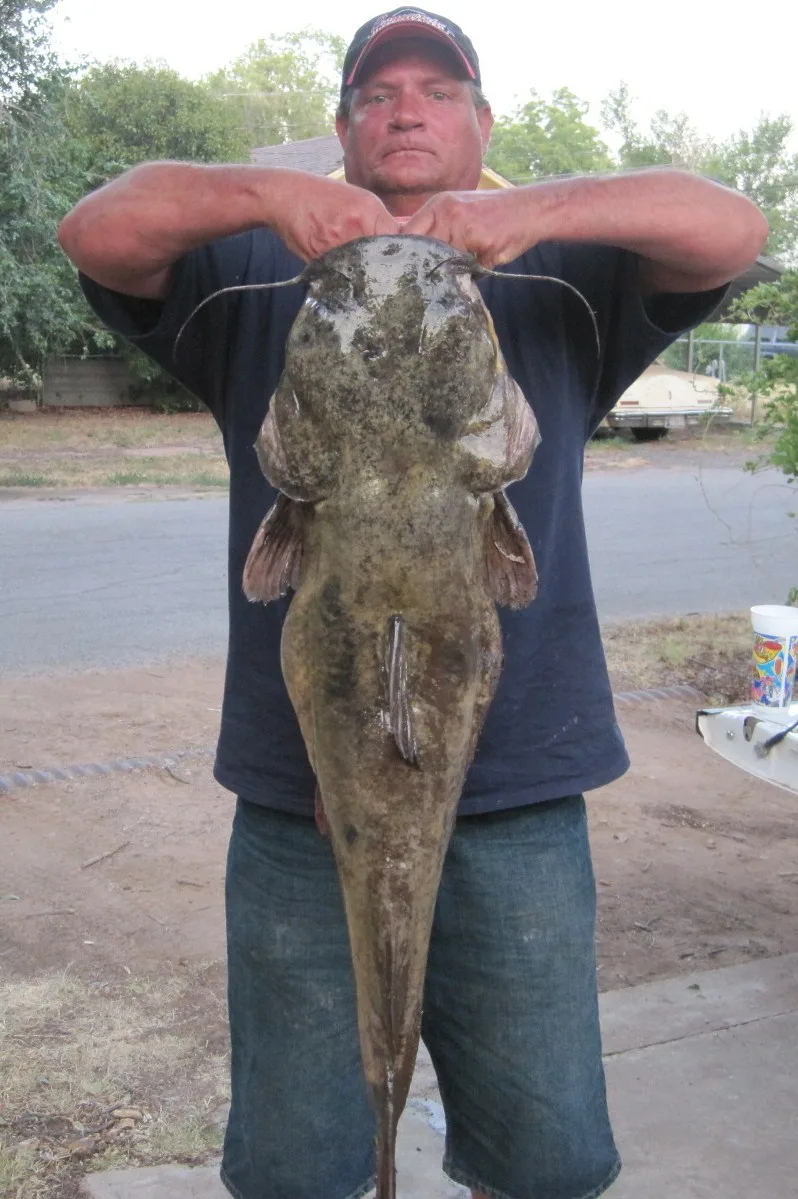 Noodling Catfish: How It Works, Where It Is Legal, Staying Safe
Noodling catfish means pulling a nest-guarding flathead from its hole by hand. How it is done, every state's season and rules, and what hurts people.
Sources
- USGS Nonindigenous Aquatic Species, Clarias batrachus fact sheet
- Florida Fish and Wildlife Conservation Commission, Walking catfish profile
- Florida Museum, Walking catfish species profile
- Florida Museum, Five facts: walking catfish in Florida (October 2017)
- Florida Museum (Robert Robins), Walking catfish, 100 Years exhibit
- Florida Fish and Wildlife Conservation Commission, Conditional Nonnative Species List
- FishBase, Clarias batrachus summary
- U.S. Fish and Wildlife Service, Bureau of Sport Fisheries and Wildlife, Interior Bureau proposes ban on walking catfish (news release, September 1, 1969)
- Electronic Code of Federal Regulations, 50 CFR 16.13, importation of live or dead fish
- U.S. Fish and Wildlife Service, Summary of species currently listed as injurious wildlife
- Pace, Gibb and Van Wassenbergh, Locomotion in catfishes: are catfishes exapted for walking on land? (SICB abstract)
- Wright (2009), Diversity, phylogenetic distribution, and origins of venomous catfishes, BMC Evolutionary Biology 9:282
- IGFA world record search: walking catfish (read October 17, 2026)