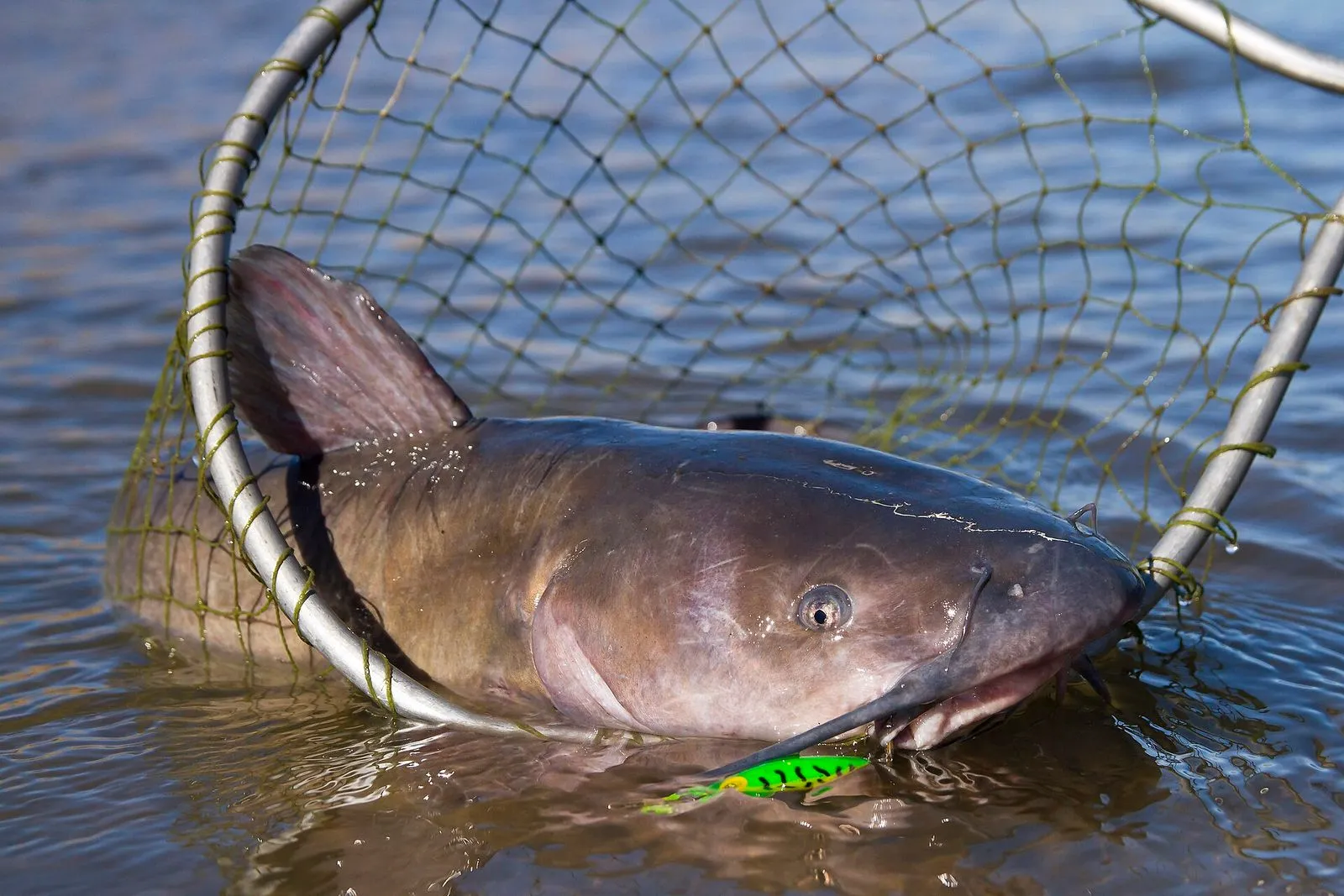
Five rigs cover catfishing: a slip-sinker rig when anchored, a Santee Cooper rig for drifting, a three-way rig in river current, a slip float over spawning banks and a bell-sinker rig for live bait at night. They are simpler than the tackle aisle suggests. Each one holds a bait where a catfish can find it by smell, and lets the fish take it without feeling the weight. Which one you tie depends on whether you are anchored or drifting, in still water or current, with cut bait or live bait, by day or at night.
Use the lightest sinker that holds bottom, and never strike with a circle hook: reel until the rod loads and the hook turns itself into the corner of the jaw.
Which rig for which water?
The slip-sinker rig is the catfish version of the bass angler’s Carolina rig. The other four are either that rig with a float added or a fixed sinker on a dropper.
| Rig | Build | Sinker | Leader | Use it for |
|---|---|---|---|---|
| Slip-sinker (Carolina) rig | Sinker sliding on the main line, bead, swivel, leader, circle hook | Egg or no-roll, 1–3 oz (28–85 g) still water, 3–5 oz (85–142 g) river bends, up to 8 oz (227 g) in fast current | 12–36 in (30–91 cm) | Anchored bottom fishing; the default rig |
| Santee Cooper rig | Slip-sinker rig plus a peg float on the leader above the hook | Egg, line-through bank sinker or slinky weight, 1–3 oz (28–85 g) | 18–30 in (46–76 cm) of 20–40 lb fluorocarbon; 3–4 ft (0.9–1.2 m) on the drift | Drifting reservoirs and timber; keeps the bait off the bottom and out of snags |
| Three-way rig | Three-way swivel: main line on one eye, 6–24 in (15–61 cm) dropper to a bell sinker on the second, leader to the hook on the third | Bell, 1/2 oz (14 g) still water to 8 oz (227 g) on wing dams | 2–3 ft (0.6–0.9 m) | Slip-drifting big rivers, wind-blown flats, vertical fishing |
| Slip-float rig | Float on the line above a stop, small weight, leader, hook | Split shot or 1/4–1/2 oz (7–14 g) egg sinker | 12–24 in (30–61 cm) | Spawning banks in May, live bait over schooling fish in summer, snaggy bottoms |
| Bell-sinker bottom rig | Sinker tied to the end of the line, hook on a dropper loop or short leader above it | Bell or bank, 1–4 oz (28–113 g) | 6–12 in (15–30 cm) dropper | Night live-bait fishing on steep banks; catfish from piers and surf |
The sinker weight follows the current. Jim Moyer runs 3–5 oz on Tennessee River channel bends and 8 oz in fast current. Doug Stange needs 3–8 oz to drift the tips of Mississippi River wing dams. For the tidal rivers of the Chesapeake, Virginia’s wildlife agency suggests ¾–1½ oz (21–43 g). Wherever you fish, the rule is the lightest sinker that holds bottom.
Anchor, drift or tightline?
Where the catfish are decides how you fish the rig. The month-by-month calendar behind these rows is on the catfish hub, with more on the blue catfish and flathead catfish pages.
| Situation | Do this | Rig |
|---|---|---|
| Fish stacked on one spot: a channel bend, a hole, a ledge, October to March | Anchor and give the spot 60–90 minutes, Moyer’s December routine | Slip-sinker |
| Fish scattered over a flat, spring and fall at 55–75 °F (13–24 °C) | Drift at 0.5–0.9 mph; blues roam flats and chase a moving bait, flatheads do not | Santee Cooper or slinky drift rig |
| Big river with current and holes 30 ft (9 m) deep | Slip-drift with the boat moving at the speed of the current | Three-way |
| Bank fishing, no boat | Tightline: rod in a holder, clicker on, line tight to the sinker | Slip-sinker or Santee Cooper |
| Spawning banks in May; blues under white bass schools in July | Suspend the bait at the depth of the fish | Slip float |
| Night, live bait for flatheads against wood | Hold the bait where it cannot swim into the cover | Bottom rig, or a big float |
Free card: what 26 species do at your water temperature
Plus one email a week on what's biting now. No sales pitches. Privacy.
What you need
- Sinkers: egg and no-roll (flat) sinkers from 1/2 to 8 oz (14–227 g), bank or bell sinkers for the three-way and bottom rigs, a slinky weight or two for drifting over timber, and a few slip floats and 2–3 in (5–8 cm) peg floats. Tungsten is unnecessary; lead is fine on the bottom of a river.
- Barrel swivels rated well above the main line, sizes 8 to 5, and 5 mm plastic beads to protect the knot.
- Circle hooks from 2/0 for channel catfish to 10/0 for flatheads on live bait, and a #4–#6 treble for punch bait. The circle hook and what size hook for catfish pages match the size to each bait.
- Leader material: 40–60 lb monofilament, or 20–40 lb fluorocarbon on the Santee Cooper rig, stiffer than the main line so it does not tangle.
- A 7–8 ft 6 in medium-heavy catfish rod with a moderate tip, a round baitcaster with a clicker or a 4000–6000 spinning reel, and 20–30 lb mono or 50–65 lb braid.
- A rod holder for every rod; a blue cat takes hard enough to pull a rod off a bank.
- Bait: the best catfish bait page covers it by species.
What size hook, leader and swivel?
| Part | Size |
|---|---|
| Circle hook, channel catfish | 2/0–4/0; a 6/0 covers every channel cat to the mid-teens |
| Circle hook, blue catfish | 5/0–8/0 on chunks, 7/0 the floor once 20 lb (9 kg) fish are possible, 8/0–10/0 on heads and trophy fish |
| Circle hook, flathead | 7/0–8/0 on a 4–6 in (10–15 cm) bluegill, 9/0–12/0 on hand-sized live bait |
| Leader | 40–60 lb mono; 20–40 lb fluorocarbon on the Santee Cooper rig |
| Swivel | Barrel swivel size 8 to 5, rated 50–120 lb; a three-way swivel of the same class |
| Bead | 5 mm, between the sliding sinker and the swivel knot |
| Peg float | 2 in (5 cm) foam crappie-style float; 2–3 in (5–8 cm) above the hook when tightlining, midway down the leader on the drift |
| Slinky weight | 6 in (15 cm) of paracord filled with 00 buckshot, both ends heat-sealed, a snap swivel through one end; about 1 oz (28 g) |
| Bobber stop | A five-turn uni knot of the same line, or a rubber stop, then a bead |
Which knots tie the rigs?
Three knots tie every rig on this page. The Palomar joins leader to swivel and hook to leader, in mono and braid alike. The uni knot, tied in five turns around the main line with a short piece of the same line, is the adjustable bobber stop for the slip-float rig. The improved clinch is fine on mono leaders and slips on braid. Whisker Seeker’s rig guide picks a slightly different three to learn: the Palomar, the snell and the dropper loop.
How do you tie the slip-sinker rig?
- Thread the sinker onto the main line, an egg sinker for still water or a no-roll sinker for current, which lies flat and does not tumble.
- Thread a bead below it, so the sinker cannot hammer the knot.
- Tie on a barrel swivel with a Palomar or improved clinch, wetted before it is drawn tight. The swivel is the stop the sinker slides against.
- Cut the leader, 12–36 in of 40–60 lb mono: short for current and for catfish that swallow bait, long for still water and a bait that should move. In heavy current Wired2Fish goes to 2–6 in, and Stange slides the sinker almost against the bait.
- Tie the leader to the swivel and the hook to the leader, both with a Palomar. A circle hook needs no snell, though many anglers use one; the snell knot page covers why.
- Bait it: a chunk of cut shad hooked once through the skin with the point clear, or a live bluegill through the back behind the dorsal fin. Punch bait goes on a treble instead.
- Fish it in a rod holder, line tight, and when the rod loads, reel; do not strike. The circle hook turns into the corner of the mouth as the fish moves off, and a strike pulls it out.
How do you tie the Santee Cooper rig?
The rig is named for South Carolina’s Santee Cooper lakes. KC Nelms added a peg float to a Carolina rig there in the 1980s, so his bait would ride above the flooded timber.
- Build the slip-sinker rig to the swivel: sinker, bead, swivel. For drifting over timber, swap the egg sinker for a slinky weight or a line-through bank sinker.
- Cut the leader: 18–30 in of 20–40 lb fluorocarbon for casting from the bank or tightlining; 3–4 ft (0.9–1.2 m) for drifting, the length Lake Marion guide Spencer Edmonds runs. The longer the leader, the higher the bait rides.
- Tie on the hook first, a 5/0–8/0 circle or octopus circle, so the float goes on from the open end of the leader.
- Slide on a 2 in peg float and set it: 2–3 in above the hook for a bait held just off the bottom, Whisker Seeker’s setting, or midway down the leader when drifting, Chris Simpson’s. Push the peg in with its point away from the weight.
- Tie the leader to the swivel, Palomar again.
- Bait it with a chunk of cut shad or herring; the float holds the chunk clear of the algae and leaf litter that bury a bait on the bottom within minutes.
- Cast, let it settle, then drift or hold. Watch for slack as well as a pulled-down rod: a catfish that swims toward the boat with the bait shows as a line gone limp, and that is the cue to reel.
How do you tie the three-way rig?
Stange calls it a fulcrum rig. Drop the rod tip and the bait drifts back with the current; lift it and the bait comes forward. The sinker never moves.
- Tie the main line to one eye of a three-way swivel.
- Tie the dropper to the second eye: 6–24 in of lighter line than the main line, so a snag costs the sinker and nothing else. Stange runs a 6 lb dropper on 20 lb main below a lowhead dam; FishUSA uses 6–10 in tight to structure and 18 in on open bottom to lift the bait.
- Tie a bell sinker to the dropper: 1/2 oz in still water, 2–4 oz over broken rock below a dam, 3–8 oz around the tips of wing dams.
- Tie the leader to the third eye: 2–3 ft of 40–60 lb mono, slightly longer than the dropper, to a circle hook.
- Fish it with 30–90 degrees of line angle from rod tip to sinker, anchored upstream of the head of a hole or slip-drifting down a channel.
- On a snag, snap the rod tip: the dropper breaks, the sinker stays on the river bottom and the rig comes back.
How do you drift with a slinky weight?
A slinky weight is a length of cord filled with shot, and it slides over wood and rock that would hold an egg sinker forever. Chris Simpson fills 6 in of nylon paracord with 00 buckshot, heat-seals both ends and punches a snap swivel through one end. The main line runs through that swivel.
Keith Sutton’s drift rig in Game & Fish puts an 8/0 circle hook on a split ring, with a 36 in leader of 50 lb mono. A 2 in cigar float is pegged 10 in above the hook, and a 1 oz slinky rides on the snap swivel ahead of a barrel swivel.
Speed decides whether it works. FishUSA’s drift guide puts the window at 0.5–0.9 mph, read on the GPS and not by eye, because 0.7 mph feels slower than it is from the seat. Simpson runs a trolling motor at 0.5–0.7 mph on a windless day, and a drift sock off the bow when the wind pushes harder. When a rod goes down, Sutton leaves it in the holder, cranks 10–15 turns and then lifts; the circle hook has already done its work.
What changes at night?
Moyer calls June “the best month to fish with livebait, and nighttime is the right time.” The rig does not change after dark; what changes is how you know a fish has it. The rod goes in a holder with the tip up at about 45 degrees. The reel sits in free spool with the clicker on, so a run is heard before it is seen. For catfish at night, the Missouri Department of Conservation suggests a bell clamped on the rod tip, which jingles when a fish pulls. A glow stick or LED clipped to the tip shows the rod loading from across the bank.
For flatheads, Stange hangs a big live bait under a float about 5 ft (1.5 m) down, even over 10 ft of water, because flatheads hunt near the surface at night. His rig is a 1–4 oz egg sinker above a swivel, the swivel 20 in above a 3/0–7/0 hook, under a float big enough to carry it.
Jug lines, bank lines and trotlines: what is legal?
Jugs with a baited line below, limb lines tied to a branch and trotlines strung across a channel are catfish rigs too. The three states in the table allow them with conditions. Those conditions differ enough that the regulation booklet in your pocket is the only source that counts.
| State | Jug lines | Limb, bank and trotlines | Tags and attendance |
|---|---|---|---|
| Missouri | Count toward a total of 33 hooks per angler at any time, 50 on the Mississippi | Same 33-hook total; trotline hooks at least 2 ft (0.6 m) apart | Durable tag with full name and address or Conservation Number; anchored jugs checked within 24 hours, free-floating jugs attended at all times on streams and hourly on lakes |
| Texas | Five hooks or fewer on a free-floating device; catfish and nongame fish only; not on community fishing lakes or in state parks | Trotline up to 50 hooks, 600 ft (183 m) of main line, hooks 3 ft (0.9 m) apart | Gear tag within 6 in of the float, valid six days; float at least 6 by 3 in (15 by 8 cm), any color but orange |
| Oklahoma | Up to 20 jug lines per person, five hooks each, drifting or anchored | Up to 20 limb lines with two hooks each; trotlines up to three lines and 100 hooks per person | Every line attended at least once every 24 hours |
Mistakes to avoid
- Striking with a circle hook. Reel until the rod loads; a jerk pulls the hook out of the mouth before it turns.
- Too much weight. A bait pinned under 8 oz in still water gets no scent trail and no movement. Use the lightest sinker that holds.
- A long leader in current. It flails, snags and wraps the main line; two to six inches is enough in heavy current, because catfish do not care how far the bait sits from the sinker.
- An egg sinker cast across current. It rolls until it snags. Use a no-roll or a bell sinker, and keep the egg for casts straight downstream of the anchor.
- Leaving the bait too long. Stange moves a bait that has sat five minutes; Whisker Seeker lifts the rig every five to ten. A bait that has settled into a crevice or under a log is a bait no catfish finds.
- Burying the hook in the bait. The point has to be clear, especially on a circle hook.
- A fixed sinker for a tentative biter. The slip rig exists so the fish feels no weight when it picks up the bait; a fixed sinker drops the bite.
When does something else win?
For catfish on lures, an occasional summer river technique, the crankbaits and jigs on the catfish lures page do the work. Bullheads need no more than a split shot and a small hook. Inshore, the same slip-sinker rig with a shrimp catches redfish and flounder. And the Carolina rig for bass is the freshwater version of the same idea, with a lighter weight and a plastic worm.
Free download
The water temperature card
Read your water temperature and the card tells you who is spawning, who is feeding and what to throw. 26 species, 16 pages, for your phone and the tackle box.
Plus one email a week on what's biting now. No sales pitches. Privacy.
Related
Section guide
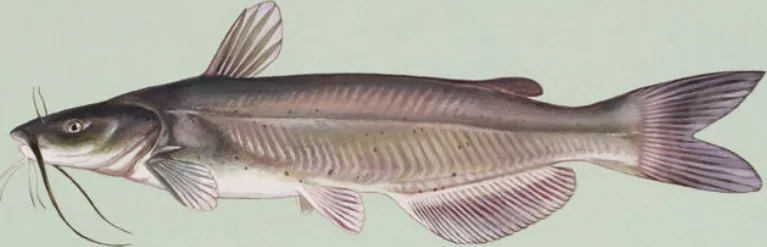
Catfish: Species Identification, Baits, Seasons and RecordsThe catfish species anglers catch most, channel, blue and flathead first: how to tell them apart by the anal fin, when they spawn, what bait each wants.
 Noodling Catfish: How It Works, Where It Is Legal, Staying Safe
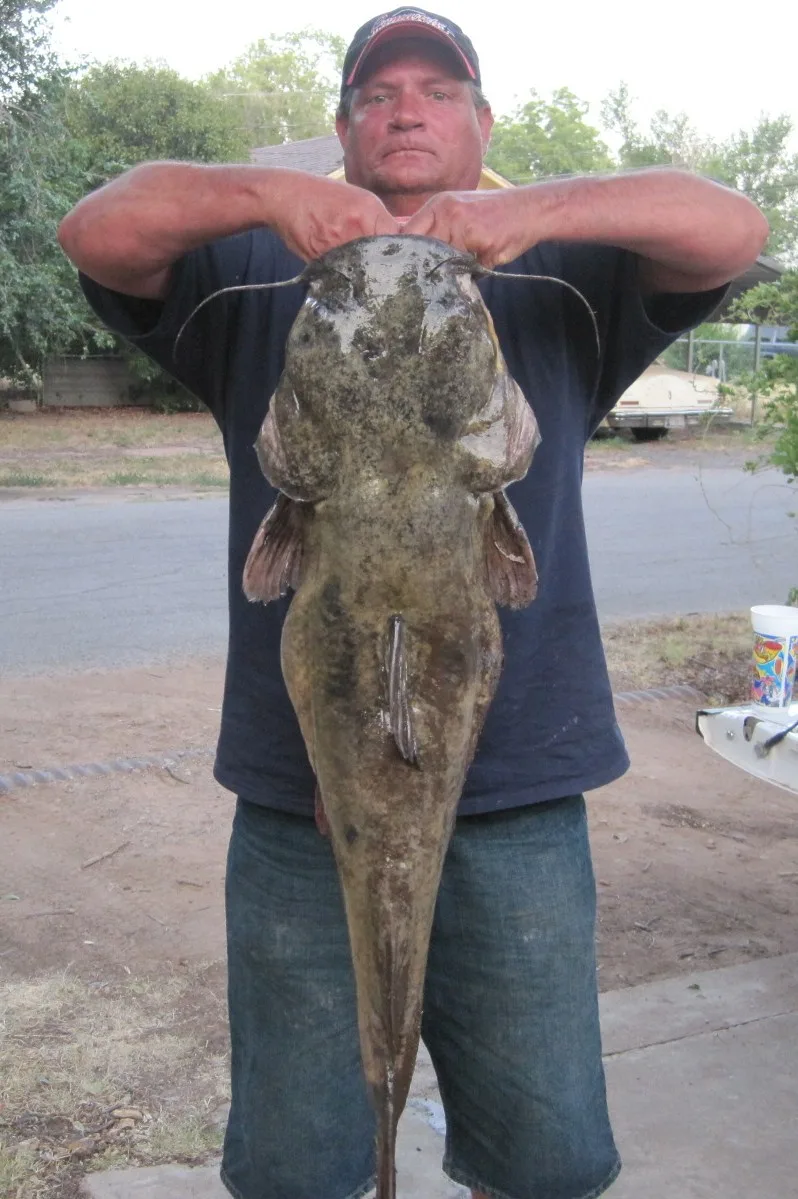
Noodling catfish means pulling a nest-guarding flathead from its hole by hand. How it is done, every state's season and rules, and what hurts people.
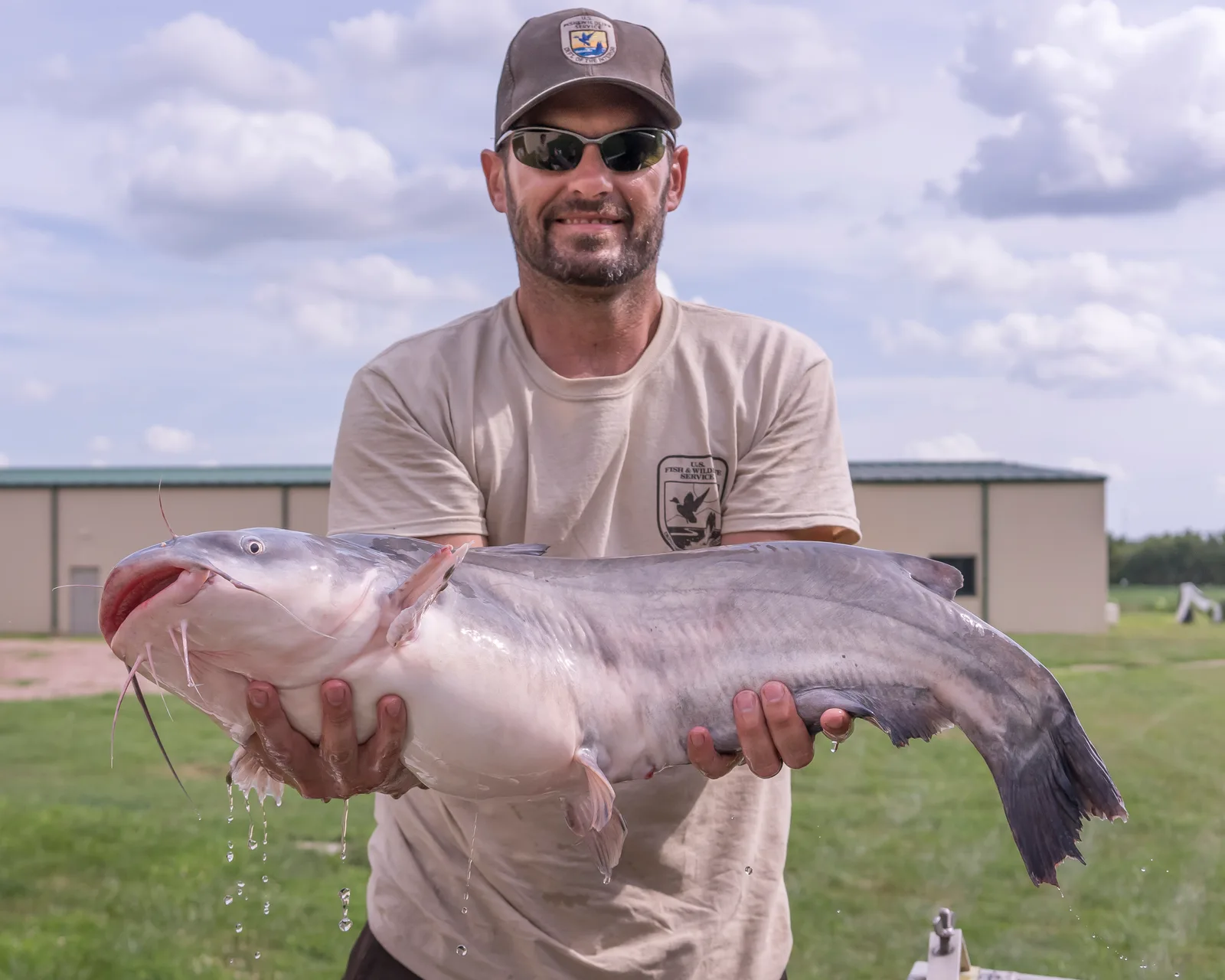 World Record Catfish: Blue, Flathead, Channel, Wels, Mekong Giant
Every world record catfish: the 143 lb blue, 123 lb flathead, 58 lb channel of 1964, 297 lb wels and 646 lb Mekong giant, and how a record is certified.
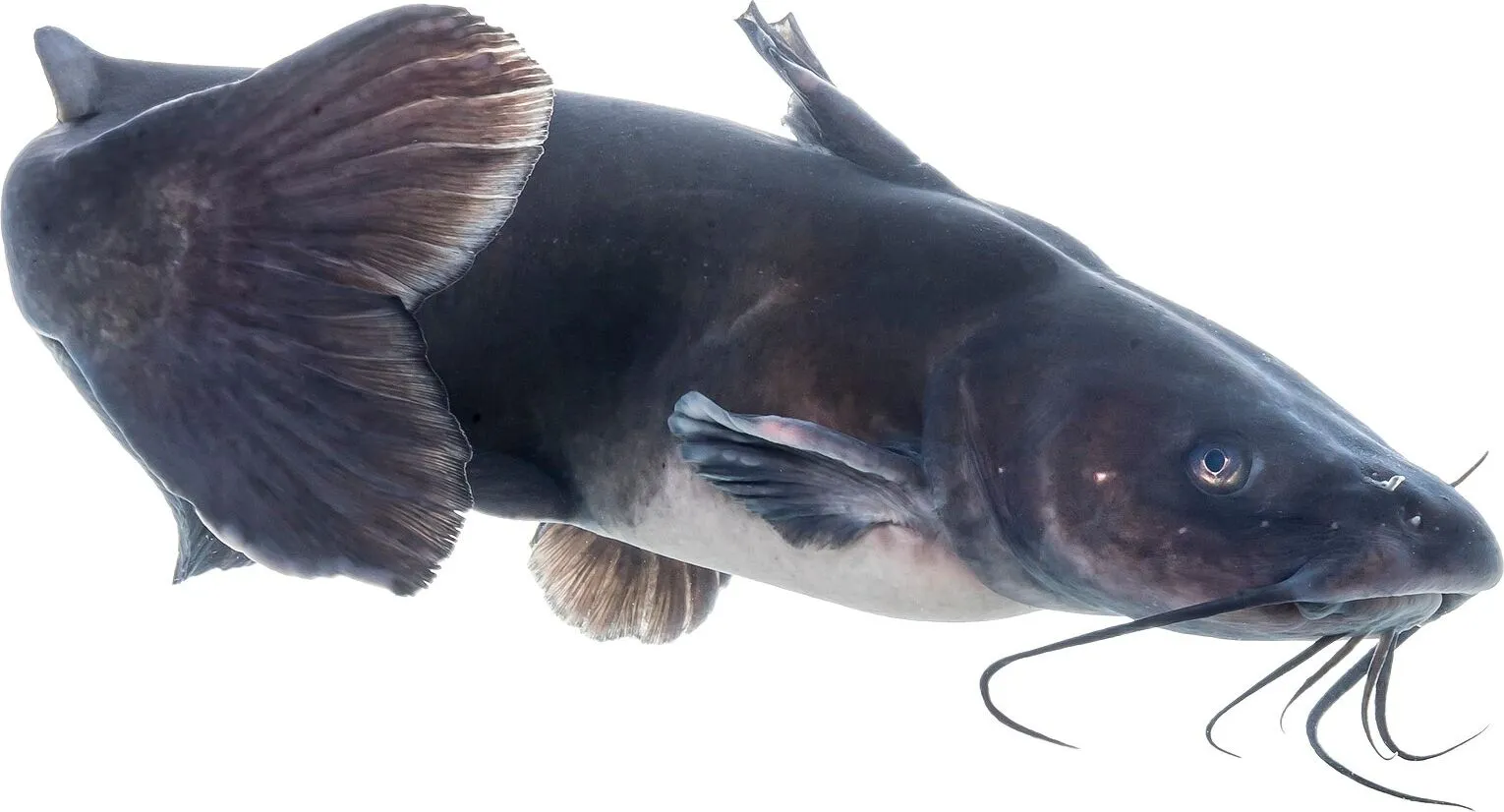 How to Hold a Catfish Without Getting Stung, Small to Big
How to hold a catfish safely: where the three spines are, the grip behind the pectoral fins for small fish, the lip grip for big ones, and first aid for stings.
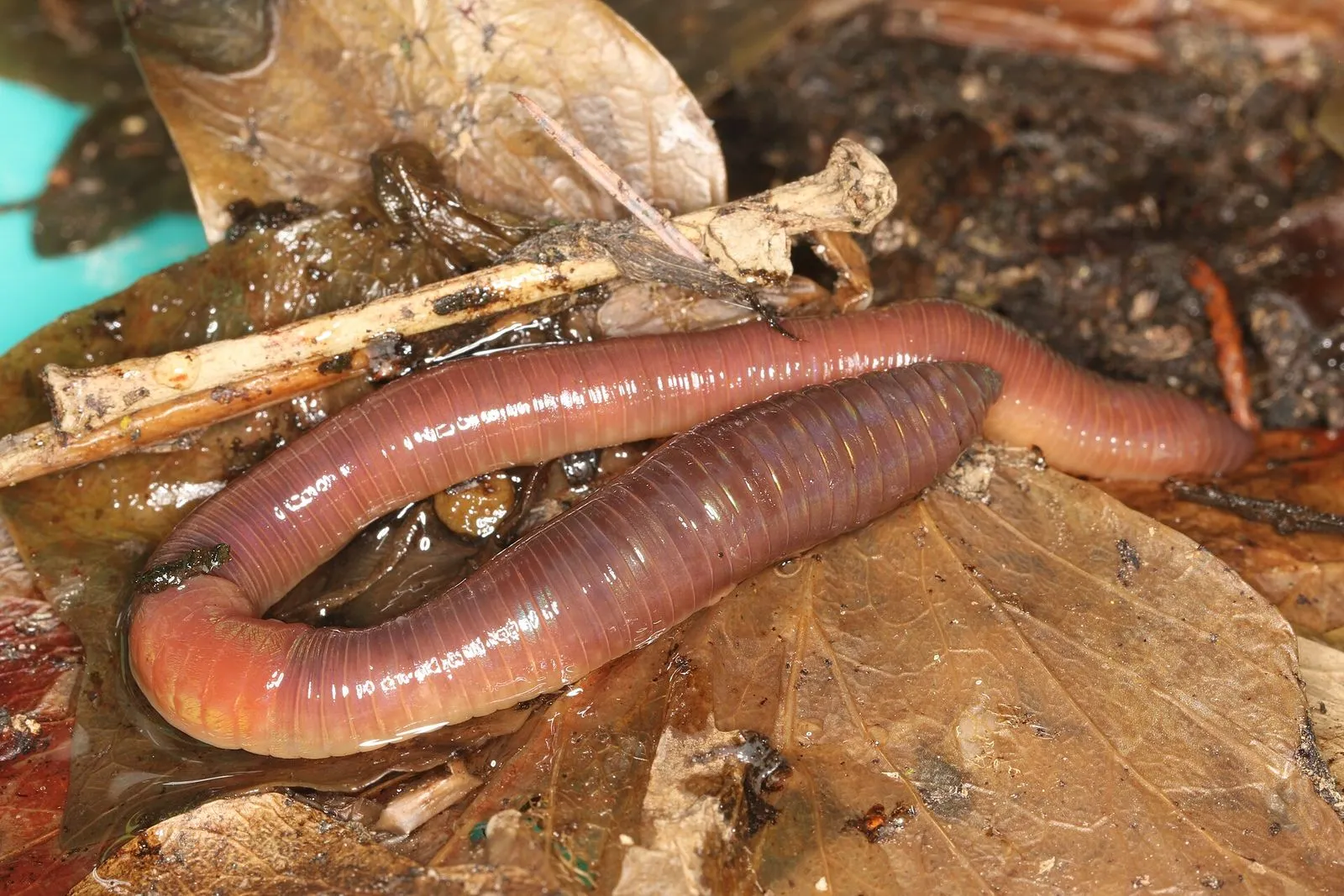 Best Catfish Bait: What Channel, Blue and Flathead Catfish Eat
The best catfish bait by species: cut shad for blues, punch and dip baits for channels, live bluegill for flatheads, and which prepared baits to buy.
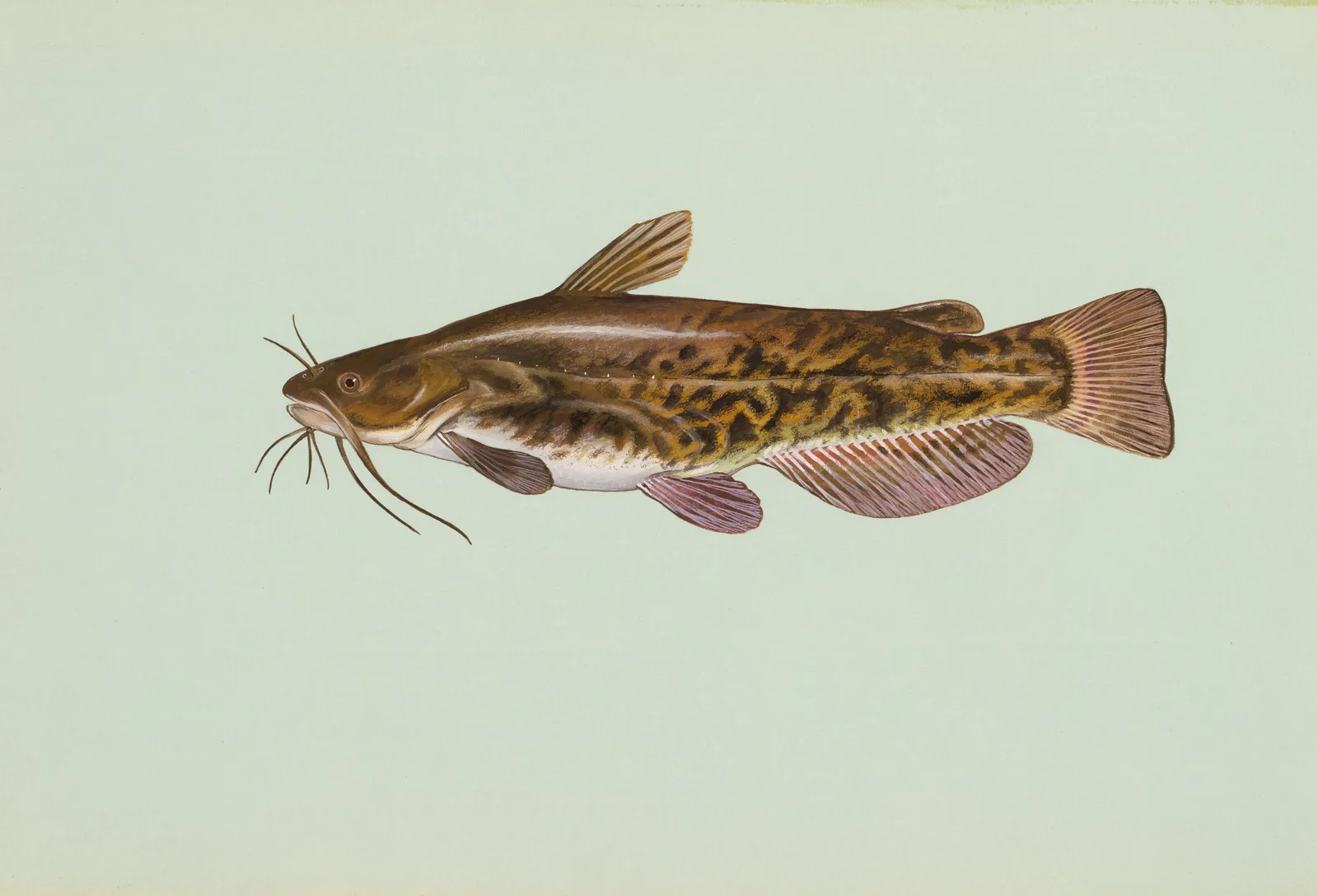 Bullhead Catfish: Black, Brown and Yellow Bullheads Compared
Black, brown and yellow bullheads told apart, a season table on water temperature, the worm rig, the sting, skinning in three cuts, and the state records.
 Blue Catfish: Identification, Size, Season and the Chesapeake Invasion
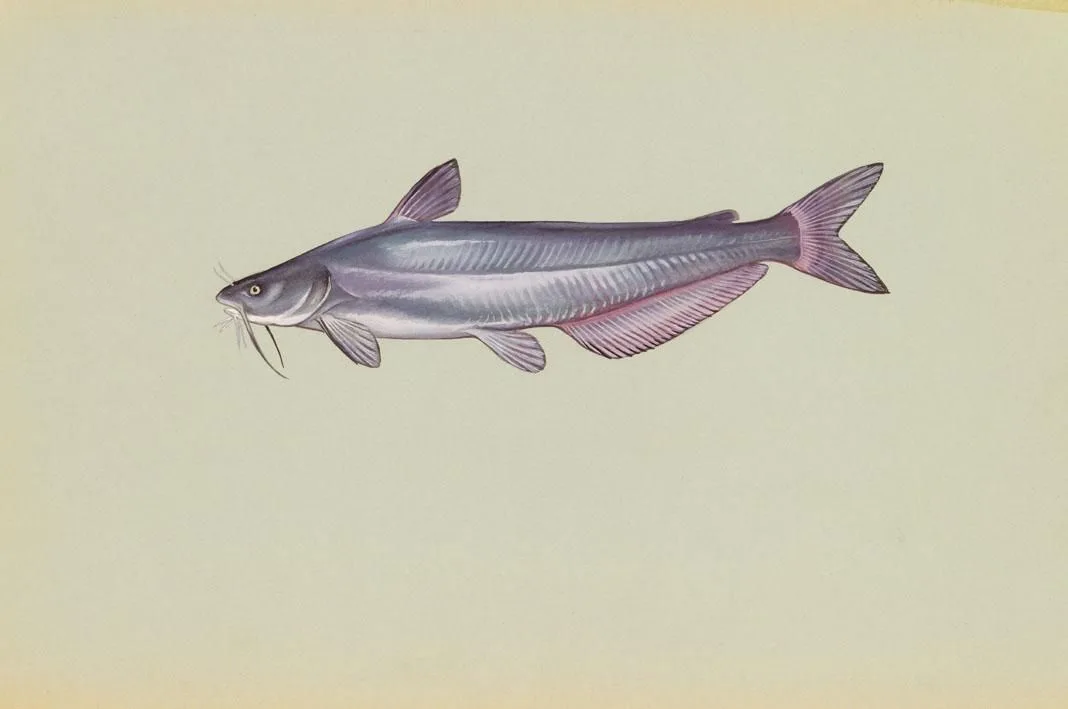
Blue catfish from the agency data: the 30-ray anal fin, how big and old they get, a month-by-month season from a river guide, and the Chesapeake invasion.
Sources
- Wired2Fish (Kade Gewanter), The Santee Cooper rig: how to tie and fish
- Wired2Fish, Best rigs for catfish fishing
- In-Fisherman (Doug Stange), Classic catfish rigs
- In-Fisherman, Blue catfish seasons (Jim Moyer)
- Virginia DWR, blue catfish (rig weights for tidal rivers)
- Whisker Seeker, Seven catfish rigs
- Game & Fish (Keith Sutton), Catfish rigs: finesse and drift tactics for big cats
- Mississippi Sportsman, Trolling for catfish: slinky weight is key (Chris Simpson)
- Mississippi Sportsman, How to fish the Santee catfish rig (Spencer Edmonds)
- FishUSA, Drift fishing for catfish: rigs, speeds, boat control
- FishUSA, Best hooks for catfish
- Catfish Pro, What size circle hook for catfish
- SPRO Power Swivels, sizes and ratings (Tackle Warehouse)
- Take Me Fishing, How to catch catfish
- Missouri Department of Conservation, General fishing rules and methods
- Missouri Department of Conservation, Jug line regulations
- Texas Parks and Wildlife, Legal devices, methods and restrictions
- Oklahoma Department of Wildlife Conservation, Methods of take
- Missouri Conservationist (Andrew Branson), Fishing in the dark