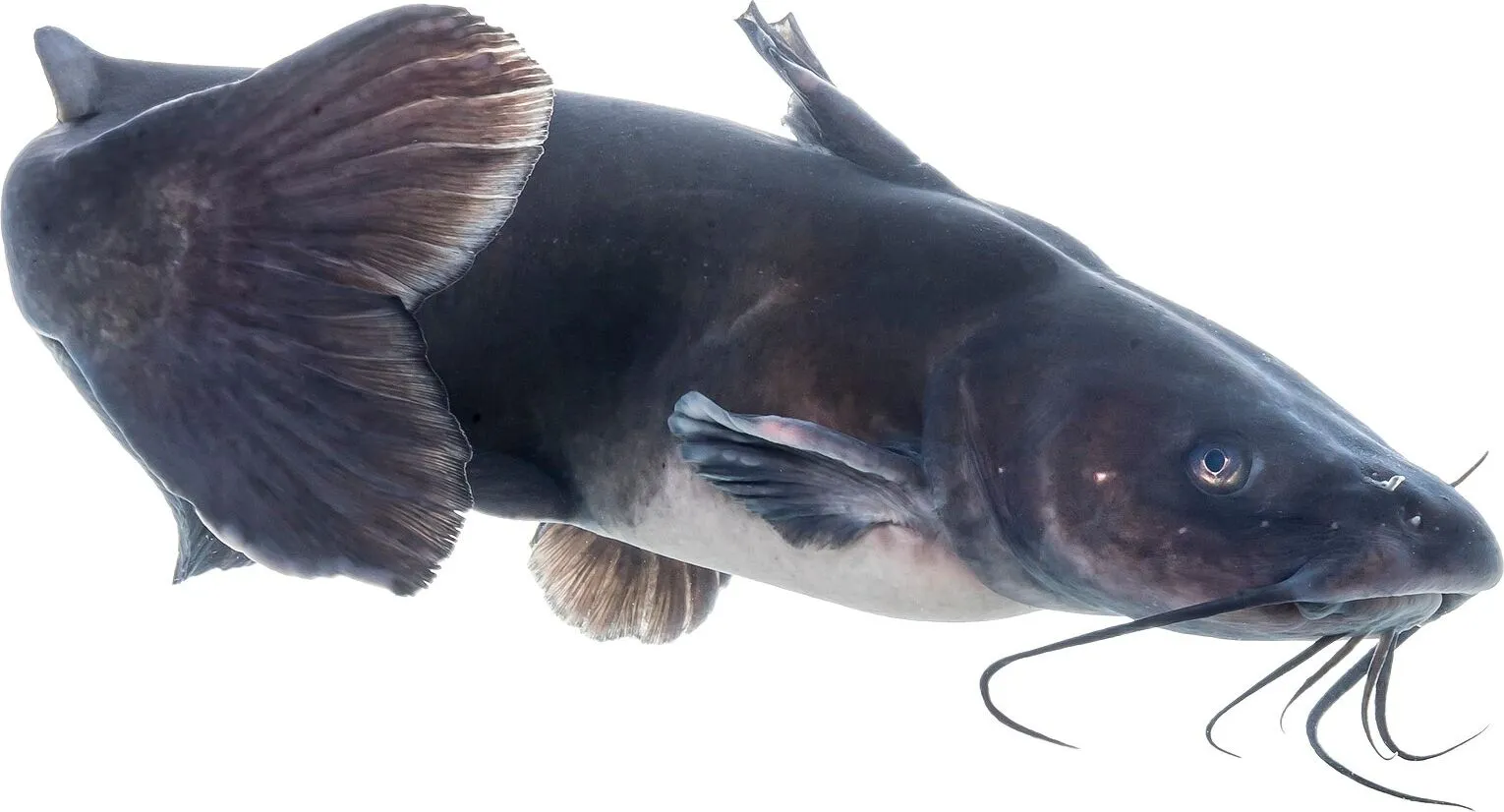
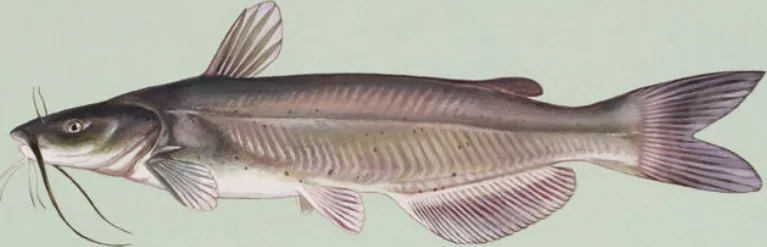
To hold a catfish safely, keep your hand off three spines: one at the front of the dorsal fin on its back, and one at the front of each pectoral fin, just behind the head on either side. The whiskers, which frighten more beginners than the spines do, are soft feelers and cannot hurt you. A channel catfish under 2 lb (0.9 kg) has needle-sharp spines and is the fish that sends anglers home with a swollen hand. A 30 lb blue has thick, blunt spines and is held by the jaw like a bass.
Whiskers cannot hurt you. Three spines can: one on the back, one behind each side of the head. Everything about holding a catfish is keeping your hand off those three.
Where are the spines, and which catfish sting?
Each spine is a hard ray at the leading edge of the fin, and the fish controls it. When a catfish or bullhead is alarmed, it locks all three straight out, and they pierce skin easily. That is why every grip on this page puts the pectoral spines behind your hand rather than under it.
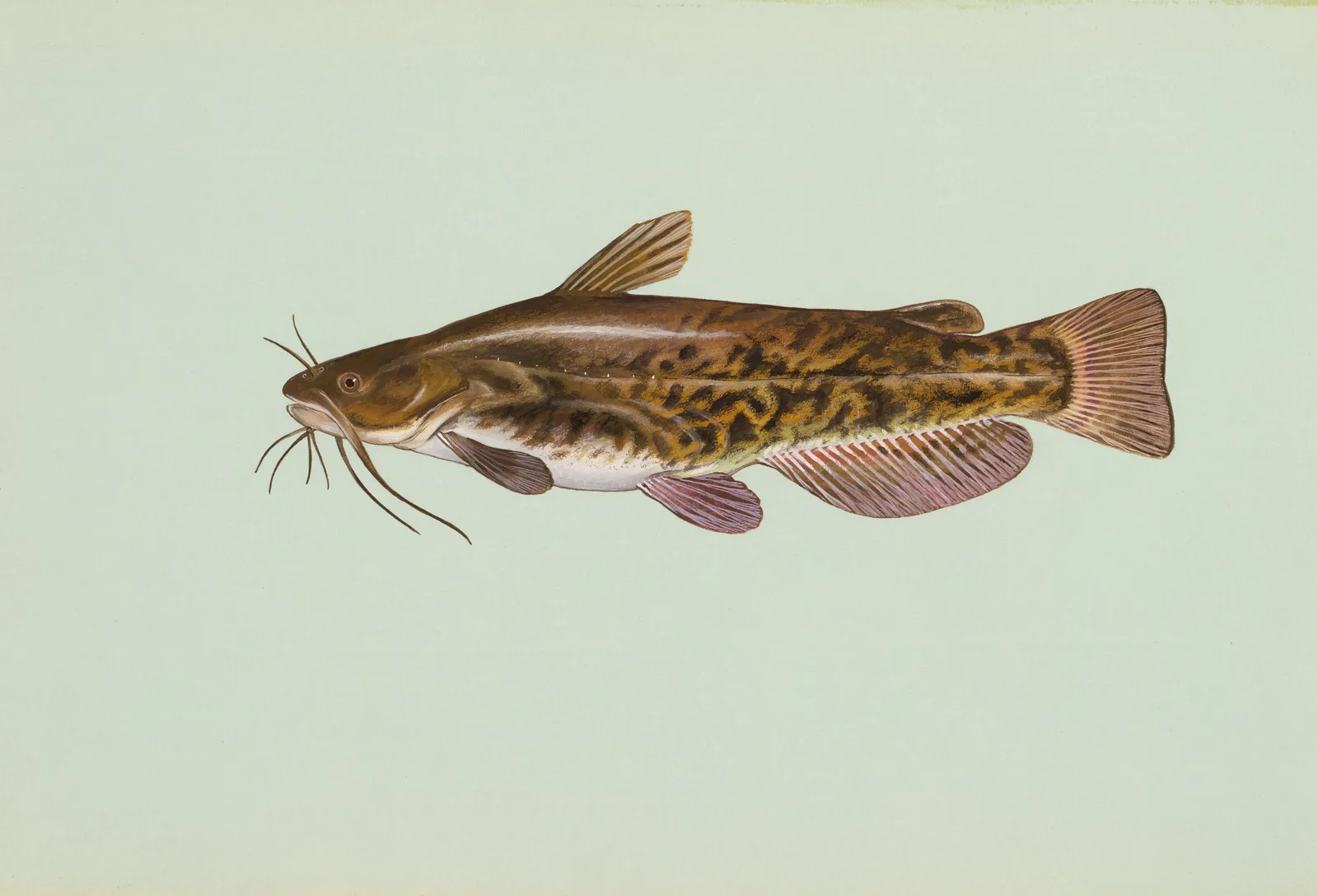
The rear edge of a pectoral spine is often serrated. A brown bullhead carries five to eight large sawlike teeth there, so its sting tears as well as punctures. The same teeth tell a brown bullhead from a black one on the bullhead page.
The pectoral spine has one more job. A channel catfish grinds it in its socket to make, in the Missouri Department of Conservation’s words, “a sudden, loud sound to startle predators.” The croak you hear from a catfish in the boat is that spine.
Size is the rule. Chad Ferguson of Catfish Edge puts the line at about 16–18 in (40–45 cm), or 2–3 lb: “once the fish reach about sixteen to eighteen inches the spines are much duller.” Below that, the spines are needle-sharp and the fish is small enough to squirm out of a grip. Above it, a big fish is held differently anyway.
| Species | Spines | Extra hazard |
|---|---|---|
| Channel catfish | Dorsal and two pectorals, very sharp under 2 lb (0.9 kg) | The most-caught catfish and the one that stings most anglers |
| Blue catfish | Same three, dulling with size | Big fish are heavy; support the belly or you damage the fish |
| Flathead catfish | Same three; a wide, flat head with a strong jaw | A flathead’s lower jaw projects and its mouth is full of sandpaper; the lip grip is safe but rasps skin |
| Bullheads | Same three, with sawlike teeth on the rear of the pectoral spines | Small, hard to grip, and the sting tears |
| Madtoms | Same three, on a fish the size of a finger | The most venomous of the family; a sting is “equivalent to a bee sting” (Florida Museum) |
| Hardhead and gafftopsail (saltwater) | Same three, with toxic slime and a barbed spine | Severe pain and swelling, by Texas Parks and Wildlife’s account; handle with a tool |
Which grip for which size?
Under about 2 lb you lock the spines behind your hand. Over 8 lb you hold the jaw and carry the weight with your other hand.
| Fish | Hold | Hand position | Risk |
|---|---|---|---|
| Small, under about 2 lb (0.9 kg), under 16 in (40 cm) | Hand over the top or up from the belly | Fingers behind one pectoral spine, thumb behind the other, dorsal spine against the web of the thumb; the spines are locked behind your hand, not under it | Sharpest spines and the fullest venom glands; the fish twists, so grip firmly and keep the wrist stiff |
| Medium, 2–8 lb (0.9–3.6 kg) | Same grip, or the lip grip | Hand from below with the pectorals behind your fingers; or thumb inside the lower jaw, fingers under the chin | A medium fish can thrash a loose grip onto a spine; the mouth pad rasps a bare thumb |
| Big, over 8 lb (3.6 kg) | Lip grip plus belly support | Thumb in the lower jaw, four fingers under the chin, other hand flat under the belly; or a lip-gripping tool and a net | Spines are blunt and the venom is mostly gone; the risk now is to the fish, because hanging it by the jaw alone strains its spine |
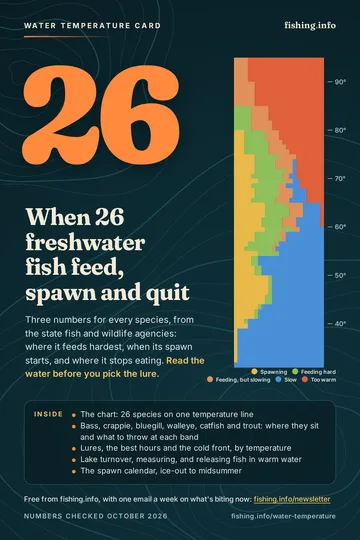
Free card: what 26 species do at your water temperature
Plus one email a week on what's biting now. No sales pitches. Privacy.
How do you grip a small catfish?
- Let the fish stop flapping. A catfish held in the net or on wet grass for a few seconds settles.
- Come at it from the belly side or straight over the top, behind the head. Never come from the front, where all three spines point at you.
- Slide your palm up the belly so the two pectoral spines end up behind your first finger and your thumb, one on each side. MassWildlife describes the same hold from above: “place your thumb and forefinger over the fish’s head in a V-shape, making sure the pectoral spines are straight out.”
- Close your hand so the fish’s head sits in your palm and the dorsal spine lies back against the web between thumb and finger, pointing away from you.
- Hold it firmly. A loose grip is the one that gets stung, because the fish twists and drives a spine into the hand that let go.
- For the photo, turn the fish so the spines face the camera and your free hand supports the tail. Keep it horizontal, the way it swims, and out of the water no longer than you can hold your own breath.
That is the grip for channel catfish, bullheads and small blues, and for cleaning them. At the cleaning table, Minnesota’s DNR adds that “work gloves will protect you from the sharp spines”: there the glove only has to stop a spine, not hold a live fish. The bullhead page has a three-cut skinning method.
How do you hold a big catfish?
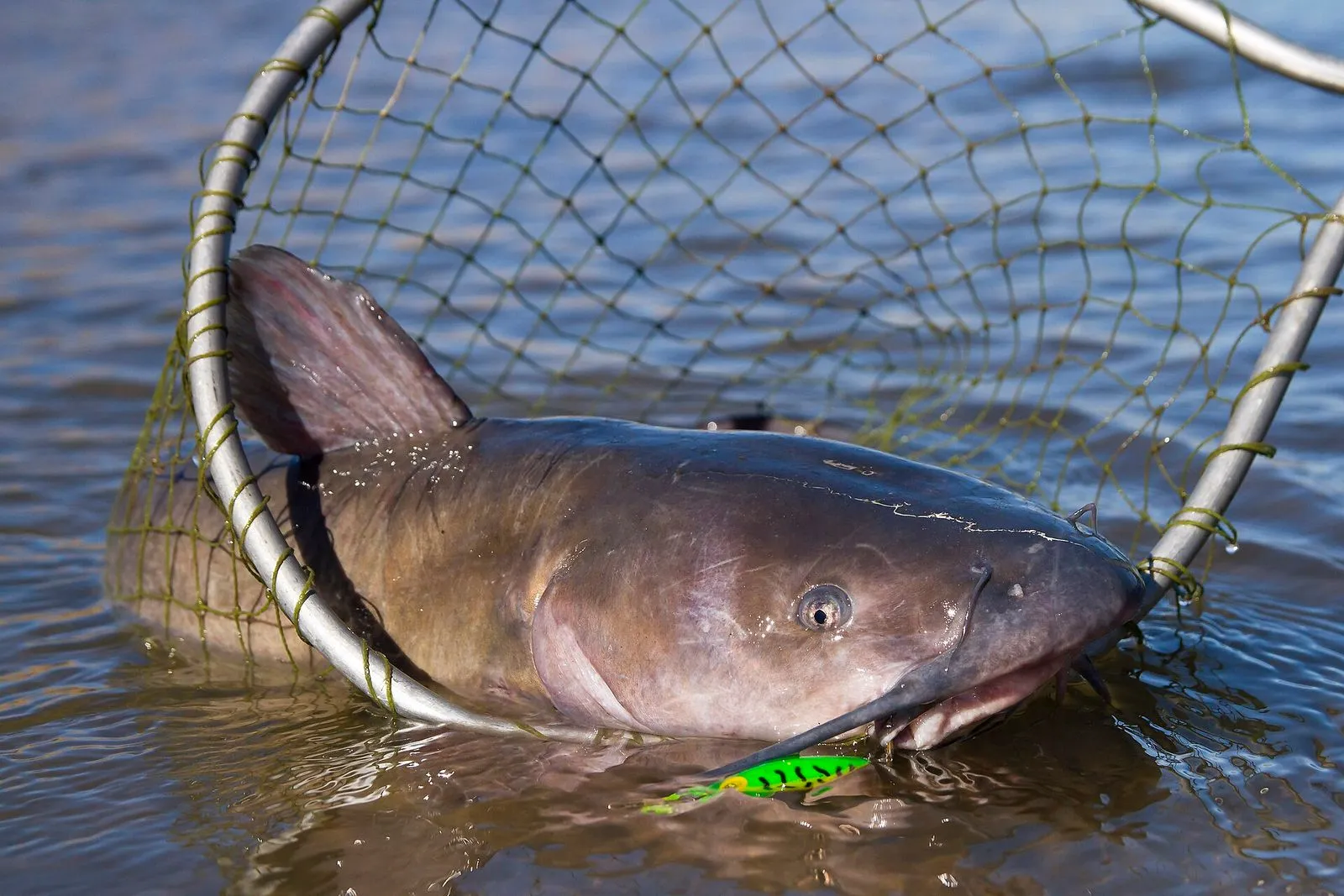
From a few pounds up, hold a catfish the way you hold a bass: thumb inside the lower jaw, fingers under the chin. Catfish have no fangs, only rough pads of tiny teeth, so the grip is safe. On a big flathead that pad rasps like sandpaper. Catfish Edge blames the “very abrasive” mouth for the raw knuckles anglers call catfish knuckles, and a glove or a lip-gripping tool spares the skin.
Over 8 lb, put the other hand flat under the belly. A lip grip is a handle for the head, not for the weight. The accessories hub explains why a scale with a jaw clamp is read with the fish supported rather than hanging.
Two kinds of glove do two jobs. A thin cotton or rubber glove stops the rasp of the jaw and gives grip on slime. It does not stop a spine, because a spine that goes through skin goes through cloth. A cut-resistant glove, the kind noodlers wear, stops both, at the cost of feel.
A hand in the mouth is also how noodlers land flatheads of 40 lb and more. The fish clamps down on the wrist and the noodler hooks fingers through the lower jaw. That works because a flathead has no teeth and, by the venom researcher Jeremy Wright’s account, no venom to speak of. It is not a way to hold a channel catfish.
How do you unhook a catfish without touching the mouth?
Use long-nosed pliers or a hook remover; they keep your hand out of the mouth entirely. Hold the fish by the grip above and turn the hook out with the pliers. If it is deep, cut the line as close as you can rather than digging; a hook rusts out.
For a big fish you will release, keep it in the net in the water while you unhook it. Lift it for the photo with both hands and put it back nose-first. The catch and release page has the ten-step release and the survival numbers. Circle hooks set in the corner of the mouth and make unhooking easy; the catfish rigs page explains why.
What do you do if a catfish stings you?
Put the hand in water as hot as you can stand without scalding, about 113 °F (45 °C), for 30 to 90 minutes. It hurts more than a hook, and it swells. A 2012 clinical review of catfish stings in the Journal of Research in Medical Sciences gives that treatment: the hand “immersed immediately in nonscalding hot water (45 °C/113 °F) for 30–90 min.” It adds that “recurrent pain may respond to repeated hot-water treatment,” and rules out ice in two words: “cryotherapy is contraindicated.”
Tap, thermos or kettle water mixed down to where you can hold your hand in it is right. Water that scalds is not, because a burn on a puncture is two wounds.
| Step | What to do | Why |
|---|---|---|
| 1. Heat | Hand in water as hot as you can stand without scalding, about 113°F (45°C), for 30–90 minutes; repeat if the pain comes back | Heat relieves the pain and may inactivate some of the venom; cold is contraindicated |
| 2. Clear the wound | Pull out any spine fragment with tweezers; scrub the puncture and rinse it with clean water | A broken-off spine is the usual cause of an infected sting, and catfish spine shows up on an X-ray if it is deep |
| 3. Leave it open | Do not tape, glue or sew the puncture shut; cover it loosely | A closed puncture from a river fish traps bacteria; the wound heals from the inside |
| 4. Pain | Acetaminophen every 4 hours or ibuprofen every 6–8 hours | What WebMD’s reviewed guidance recommends for the first day |
| 5. Watch it | Doctor if the redness spreads, the hand throbs or swells a day later, a fragment is still in, or you cannot remember your last tetanus shot | Infection is the dangerous complication; a tetanus booster and oral antibiotics are routine treatment |
For a sting from a saltwater hardhead or gafftopsail, or any sting the hot water does not ease, see a doctor the same day. If you are unsure, call Poison Control (1-800-222-1222, poison.org); it is free and answers around the clock. A catfish sting is a puncture from a spine that has been in a muddy river. The puncture, not the venom, is what puts people in the hospital.
Why does a small catfish sting worse than a big one?
Because the venom glands shrink as the fish grows, while a small fish’s spines are still needle-sharp. A catfish sting is a venom, not dirt and not the whiskers. Jeremy Wright of the University of Michigan examined 158 catfish species for his 2009 study in BMC Evolutionary Biology. He found the venom glands sit “in association with sharp, bony spines along the leading edge of the dorsal and pectoral fins.” When a spine goes into skin, “the membrane surrounding the venom gland cells is torn, releasing venom into the wound.”
There is no duct and no injection; the spine tears its own gland open on the way in. Wright put the number of venomous catfish species worldwide at 1,250 or more. He called the venom “strictly defensive”: a catfish never uses it to hunt.
Two of his findings matter at the water. First, North American catfish venom is mild. In his words it causes “about the same amount of pain as a bee sting,” and the Florida Museum uses the same comparison for the madtoms, the finger-sized Noturus catfish whose venom glands are the best developed in the family.
Second, “the venom glands appear to get smaller as the fish gets bigger and bigger.” In the species that reach 60–80 lb he found “no evidence of remaining venom glands at all,” and he told National Geographic the flathead is not venomous at all. The clinical review says it in medical language: the potency of catfish venom “is largely inversely proportional to the fish size.” A 12 in channel catfish or a bullhead has sharp spines and full venom glands. A 40 lb blue or flathead has blunt spines and, in all likelihood, nothing left in them.
What a freshwater sting does, by the same review: swelling, redness and local pain around the puncture, out of proportion to the size of the hole. Saltwater catfish are a step up. Texas Parks and Wildlife calls the hardhead’s slime “mildly toxic,” causing “severe pain and swelling,” and its spine “sharp, slime-covered” and barbed. The saltwater catfish page covers that pair.
Five myths that get anglers stung
The whiskers sting. They do not; the eight barbels are organs of taste and touch, as soft as a dog’s. Anglers who grab a catfish by the body to avoid the whiskers put their hand straight onto a pectoral spine.
Big catfish are the dangerous ones. The reverse. The spines dull and the venom glands shrink as the fish grows. The fish that stings is the 10 in channel catfish or the bullhead, which is also the fish a child is most likely to be holding.
Rub the wound on the belly slime. An old bank cure. The belly carries the same river bacteria as the spine that made the hole; pressing a fresh puncture into it is how a sting becomes an infected sting. Hot water does what the slime is supposed to do.
Hold it by the tail. A catfish held by the tail hangs head-down with its spines free. It twists, and a pectoral spine finds your wrist. It is also a bad hold for a fish you plan to release.
Gloves make you safe. A glove is for the jaw and the slime. A spine that pierces skin pierces a glove, and a glove that costs you grip costs you the firm hold that is the real protection.
For the rest of the family, start at the catfish hub.
Gear for catfish
Gear guide
Best Catfish Bait: What Channel, Blue and Flathead Catfish EatThe best catfish bait by species: cut shad for blues, punch and dip baits for channels, live bluegill for flatheads, and which prepared baits to buy.
Gear guide
Catfish Rods: Length, Power, the Soft Tip, and the Reviewers' PicksCatfish rods explained: 7–10 ft, medium-heavy, a soft glass tip on a strong butt, sinker ratings by species, and the reviewers' picks with maker specs.
Free download
The water temperature card
Read your water temperature and the card tells you who is spawning, who is feeding and what to throw. 26 species, 16 pages, for your phone and the tackle box.
Plus one email a week on what's biting now. No sales pitches. Privacy.
Related
Section guide
Catfish: Species Identification, Baits, Seasons and RecordsThe catfish species anglers catch most, channel, blue and flathead first: how to tell them apart by the anal fin, when they spawn, what bait each wants.
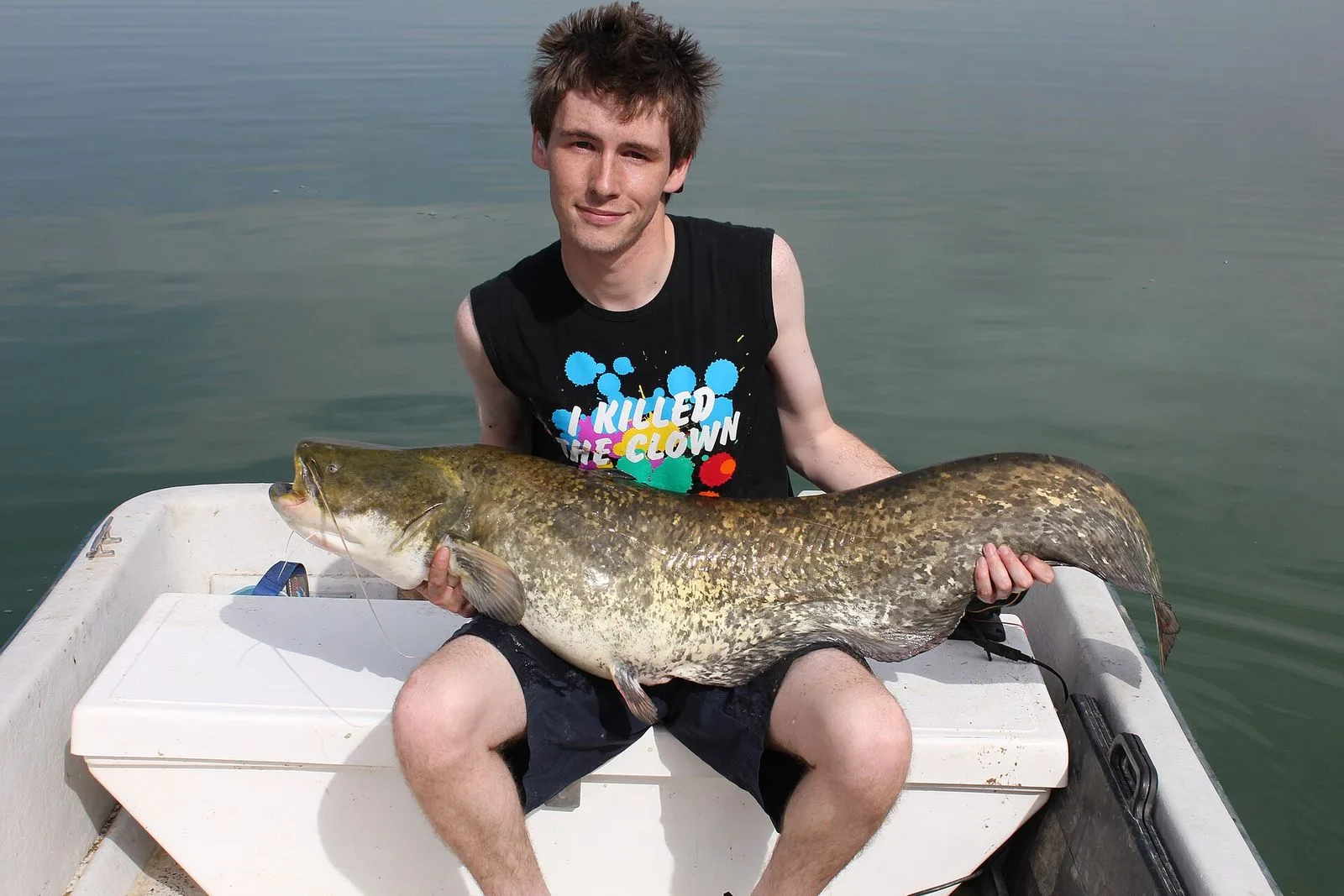 Wels Catfish: Europe's Giant, Its Records, and Why It Is Banned in the US
The wels catfish: how to recognize it, the 297 lb record, the Ebro line-class book, how anglers fish for it, and why it is an injurious species in the US.
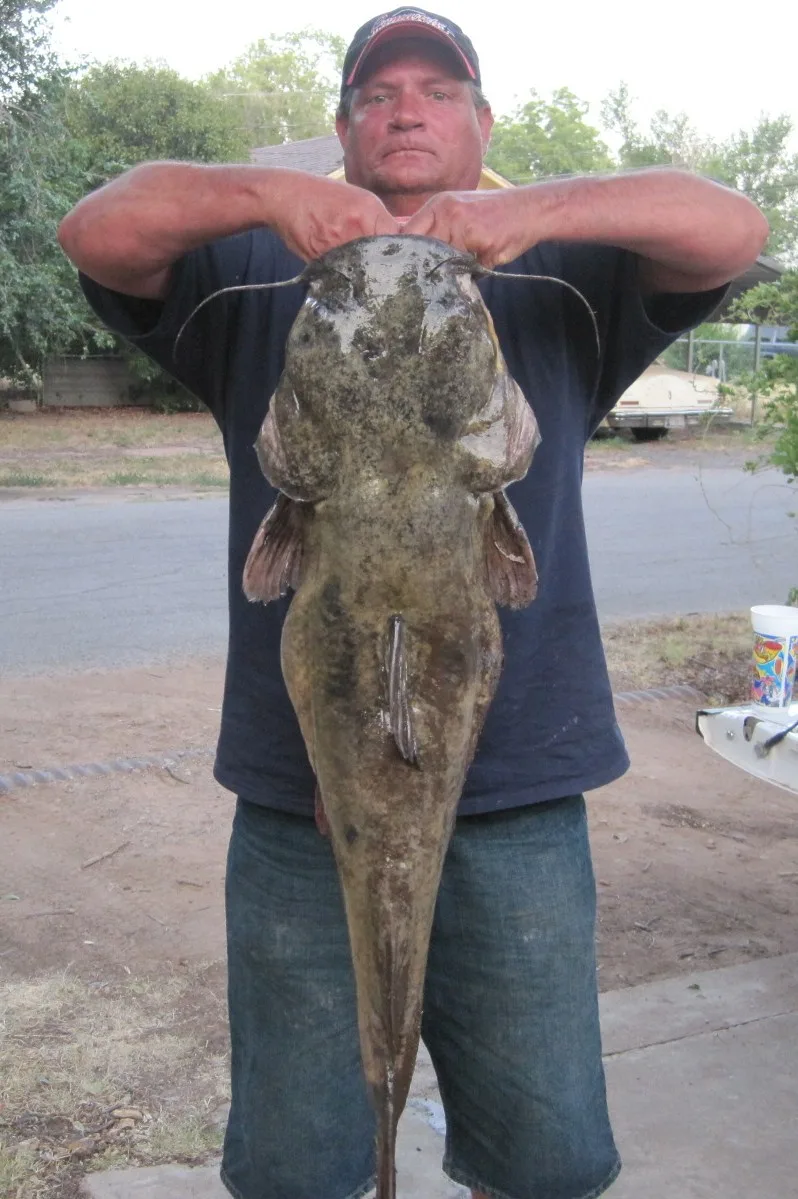 Noodling Catfish: How It Works, Where It Is Legal, Staying Safe
Noodling catfish means pulling a nest-guarding flathead from its hole by hand. How it is done, every state's season and rules, and what hurts people.
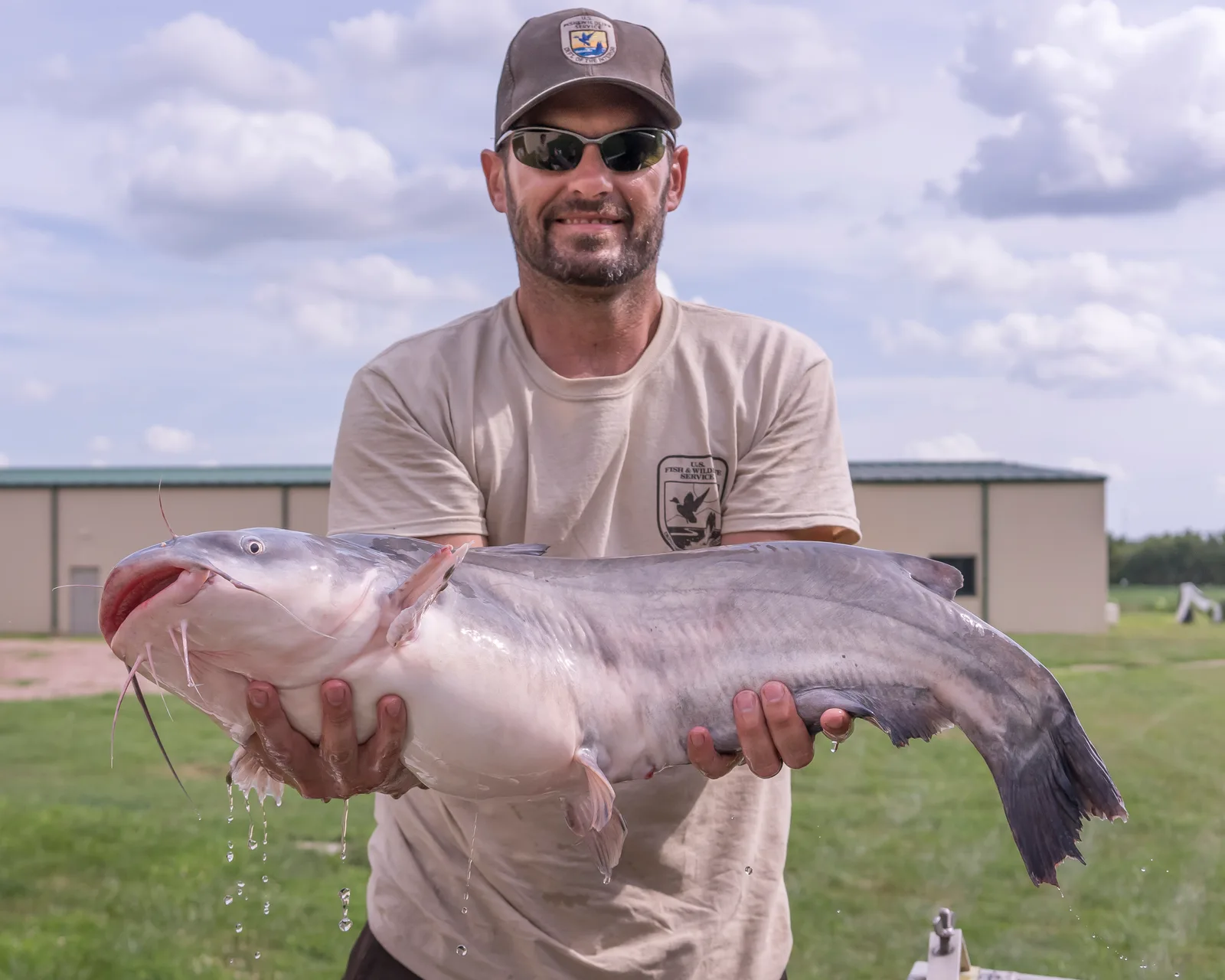 World Record Catfish: Blue, Flathead, Channel, Wels, Mekong Giant
Every world record catfish: the 143 lb blue, 123 lb flathead, 58 lb channel of 1964, 297 lb wels and 646 lb Mekong giant, and how a record is certified.
 Catfish Rigs: The Five That Matter and When to Use Each
The five catfish rigs the guides use, slip sinker, Santee Cooper, three-way, slip float and bottom rig, with sinker weights, hook sizes and when to use each.
- Best Catfish Bait: What Channel, Blue and Flathead Catfish Eat
The best catfish bait by species: cut shad for blues, punch and dip baits for channels, live bluegill for flatheads, and which prepared baits to buy.
 Bullhead Catfish: Black, Brown and Yellow Bullheads Compared
Bullhead catfish come in three kinds: black, brown and yellow. Tell them apart by chin barbels and spine teeth; catch them after dark on half a nightcrawler.
Sources
- Catfish Edge (Chad Ferguson), how to hold a catfish, and do catfish sting
- Wright, J. J. (2009), Diversity, phylogenetic distribution, and origins of venomous catfishes, BMC Evolutionary Biology 9:282
- BioMed Central release on Wright 2009 (ScienceDaily): venom glands on the leading edge of the dorsal and pectoral spines
- National Geographic, 1,200-plus venomous catfish species uncovered (Wright on flatheads, bee stings and shrinking glands)
- Florida Museum, North American (or bullhead) catfishes, Ictaluridae
- Dorooshi, G. (2012), Catfish stings: a report of two cases, Journal of Research in Medical Sciences 17(6): 578–581
- WebMD, what to do if you are stung by a catfish (medically reviewed 2026)
- Poison Control (America's Poison Centers), 1-800-222-1222
- Minnesota DNR, MinnAqua: catching and handling bullheads and catfish (Michelle Kelly, 2012)
- MassWildlife, after the catch: how to handle freshwater fish
- Texas Parks and Wildlife, hardhead catfish (spines and toxic slime)
- Missouri Department of Conservation, channel catfish
- Missouri Department of Conservation, flathead catfish
- Florida Museum, black bullhead (pectoral spine teeth)