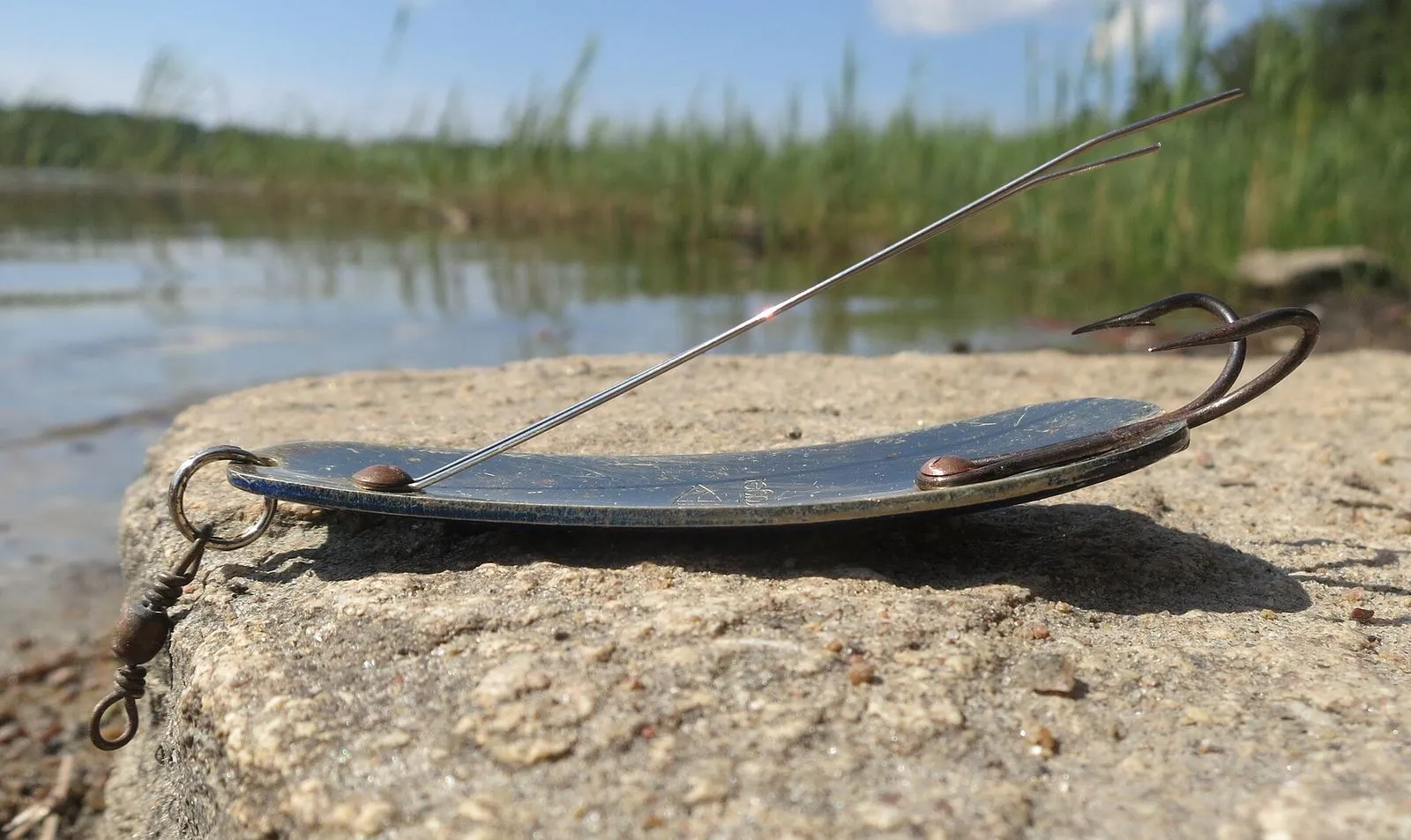
To catch northern pike, cast or troll big spoons, spinners and plugs along weed beds in daylight, on a wire leader. Wisconsin DNR counts about eight hours of fishing per pike hooked. The catch is the season: pike move through the year, and the big ones leave the weeds in summer.
Wisconsin DNR’s count: about eight hours of fishing to hook a northern pike, nearly 100 to see a muskie. About half the pike in a lake end up on a hook every year.
What do you need?
The kit is short. Wisconsin DNR’s list for open water is a sturdy rod, medium-weight line with a wire leader, spoons and streamer flies. For bait anglers it adds small suckers and chubs up to 8 in (20 cm).
- Lures. Large spoons, spinners, spinnerbaits and buzzbaits, diving and topwater plugs, poppers and stick baits. Every one of the five agency lists has spoons. The pike lure picks name the models.
- Bait. Suckers and chubs, large minnows, golden shiners and small suckers fished dead or alive, herring under a bobber, and dead smelt under the ice.
- A leader. Minnesota, Wisconsin, Michigan and Alaska name wire or steel; Maine asks for “highly abrasion resistant leaders”. The section on wire or fluorocarbon has the argument.
- Long-nosed pliers. Minnesota DNR: remove hooks “with long-nosed pliers, not your fingers”.
Where are the pike, season by season?
| Season | Water | Where the pike are | What to throw | Who says so |
|---|---|---|---|---|
| Ice-out | 35–50 °F (2–10 °C) | Shallow weedy bays, spawning | Spoons, slow spinnerbaits, dead or live bait | Maine IFW, Wired2Fish |
| After the spawn | Low 60s °F (about 17 °C) | Big fish linger in the spawning bays, then shallow weed flats | Spoons, plugs, spinnerbaits worked faster | In-Fisherman, Minnesota DNR, Wired2Fish |
| Early summer | 65 °F (18 °C) and up | Weed lines; bigger pike start to slide deeper | Cast or troll the weed edge; crankbaits on lead-core | Maine IFW, Wired2Fish |
| High summer | Surface over 77 °F (25 °C) | Small pike in weeds; big pike in cool depths, springs, inlets | Deep: trolled crankbaits, spoons. Weeds: spinnerbaits, topwaters | Wisconsin DNR, In-Fisherman |
| Fall | Cooling | Shallow again | Spoons trolled along weed lines | Maine IFW, Wired2Fish |
| Ice | Under ice | Mouths of big bays early, then into the bays | Tip-ups with dead smelt or live shiners; jigged spoons | North Dakota G&F, Alaska DF&G |
The two ends of the open-water year are the easy ones. Maine’s fisheries department writes that “trophy-size adult pike concentrate in shallow water areas” as the spawn approaches. At ice-out, it adds, anglers do best on big pike in “shallow weedy areas where pike are spawning”.
After the spawn the fish do not leave at once. In-Fisherman’s Cory Schmidt, with guide Jeff Gustafson, describes big pike on lakes such as Rainy and Lake of the Woods lingering in the spawning bays with water in the low 60s. Then they move to shallow weed flats. Walleyes on beach spots become food for big pike in late May and June.
In fall, Maine again: “shallower water areas again offer productive fishing.” Wisconsin DNR lists late summer and early fall among the best times of the year.
Why do big pike vanish in August?
The August slump is real. Trautman and Hubbs confirmed it from Michigan creel records in 1935: “the catch of northern pike per hour does fall off very notably in the summer”. They guessed at two causes, plentiful food and warm water. Wisconsin DNR gives the same two today: the pike is “well-fed and less inclined to bite”, and it seeks “cooler, deeper waters in very hot weather”.
The temperature half now has numbers behind it. A telemetry study followed pike in three Minnesota lakes. In August, fish over 28 in (71 cm) chose water of 61 to 70 °F (16–21 °C), with water up to 82 °F (28 °C) on offer. Small pike in the same lakes stayed in warm, shallow lily pads. For them, the study found, temperature came second to cover.
Michigan’s pike plan, citing an Ohio reservoir study, adds the threshold. Once the surface passes 77 °F (25 °C), pike hold in the coolest water that still has 3 mg of oxygen per liter, and stay there for two to three months.
So where is that? Wisconsin DNR points to inlet streams, springs and, in deep lakes, “the cooler depths near the bottom”. In-Fisherman’s Dan Johnson quotes biologist Bruce Carlson: in a deep lake with oxygen below the thermocline, by mid to late August “virtually all big pike are below the thermocline”. His targets are 55 to 60 °F (13–16 °C) water and structure at 35 ft (11 m) or more.
A Canadian federal review says the opposite, that pike rarely go below the thermocline. Oxygen settles it. In a lake with breathable water down deep, big pike use it. Where the deep water is dead, they follow the thermocline or look for a spring or an inlet. The water temperature chart sets the pike’s numbers beside other species.
How do you work a lure in open water?
The agency advice fits on a card.
- Fish the edges of cover. Minnesota DNR: “casting or trolling around beds of aquatic vegetation and stumps in shallow water”.
- Keep it moving. Wisconsin’s phrase is “keep the bait moving”. Alaska’s is “Try a fast retrieve”.
- Finish the cast. Wisconsin again: a pike “may strike a lure repeatedly, or follow a lure right to the boat before charging”.
- Go over the top in weeds. Alaska recommends topwater lures and weedless hooks where the vegetation is thick.
- Match speed to temperature. Wired2Fish’s sequence: spoons in cold water, spinnerbaits rolled slowly, then faster as the water warms.
- Fish in daylight. Pike “bite best during the daylight hours” (Wisconsin); Minnesota calls the pike “a daytime feeder”. A Canadian review describes dawn and dusk peaks in summer.
How fast to troll? The one figure in these sources is Wired2Fish’s for fall: spoons at 2.8 to 3.5 mph (4.5–5.6 km/h) along weed lines. For deep summer fish, In-Fisherman lists trolled crankbaits and spoons. For pike still in shallow cover, it lists half-ounce spinnerbaits and topwaters.
Fly anglers get a paragraph from Alaska: salmon rods, smolt, frog or mouse patterns, and a wire tippet of 20 or 40 lb test.
Why is ice the big-pike season?
Wisconsin DNR writes that pike are “caught more easily in winter than in summer”. The harvest figures agree. At Houghton Lake, Michigan, the ice fishery took 82% of all pike harvested. Wisconsin researchers found more pike kept in winter and some evidence that larger ones are caught then.
The standard tool is the tip-up with a live or dead baitfish under it. A biologist, a magazine editor and an agency say how to use it.
Paul Bailey, North Dakota Game and Fish biologist. Early in the ice season he fishes “deeper depths, sometimes 20 feet or more, near the mouths of large bays”. As winter goes on he moves into the bays and shallower. He sets dead baits “about 18 inches off the bottom” (46 cm), and 3 ft (0.9 m) or more in clear water, “as pike are accustomed to attacking prey above them”. His bait is the largest vacuum-sealed rainbow smelt he can find. For pike of 40 in (102 cm) and up, a 10 in (25 cm) smelt is “not out of the question”. He spools 40 lb braid.
Doug Stange, In-Fisherman. Lively 6 in (15 cm) shiners or chubs on tip-ups; a dead sucker of 6 to 8 in for jigging; bigger dead baits at late ice; line of at least 14 lb. Morning, he writes, is “almost always more productive than late afternoon”.
Alaska Department of Fish and Game. Fresh herring where bait is legal, a flasher fished above a baited hook, and spoons or jigs worked in shallow water.
How do you tie and fish a quick-strike rig?
The old way with bait was to let the pike run and swallow. A quick-strike rig ends the wait. In-Fisherman’s Rob Neumann explains the name: two small trebles mean “you can set instantly, rather than letting the pike run”. His build:
- Take 15 to 20 in (38–51 cm) of wire. “The standard wire is 18- to 27-pound uncoated stranded.”
- Fix one treble at the end. Use a #4 or #6. Stange found those sizes “have better hooking and landing rates than larger sizes”.
- Add a second treble “riding a few inches above” the first.
- Hook the bait in two places. “Insert the end hook near the dorsal fin of a baitfish, and the upper hook in or near the tail.”
- Hang it under the tip-up or float at the depth for the day; Bailey’s 18 in off bottom is a start.
- Set the hook at once. That is the whole idea of the rig.
The point is the release. In Neumann’s words, “since pike are hooked shallower in the mouth, hook removal is made easier, increasing chances for survival.” Wisconsin DNR backs him: anglers who release should “use quick-strike rigs” and “not let the fish completely swallow the bait”.
You will also read the opposite. The same Wisconsin leaflet tells minnow anglers to wait for the swallow, and Alaska says to wait “until you are sure the pike has swallowed the bait”. That is advice for a fish going home. Alaska wrote it for waters where releasing a pike is illegal.
Wire or fluorocarbon?
| Who | Leader | For |
|---|---|---|
| Minnesota, Wisconsin, Michigan, Alaska agencies | Wire or steel | All pike fishing |
| Doug Stange, In-Fisherman | 20 lb fluorocarbon | Live and dead bait rigs |
| Jack Ballard, MeatEater | Wire; 50 lb fluorocarbon, about a foot | Lures; flies |
| Paul Bailey, North Dakota G&F | 100 lb fluorocarbon | Dead bait for big pike under ice |
Minnesota DNR states the case for wire: without it “those sharp teeth will easily cut through your mono-filament line”. Stange states the case against. By his own count he has landed well over 100 pike on 20 lb fluorocarbon without a cut-off, one of them over 20 lb (9 kg). That is one writer’s tally on bait rigs with small trebles. Nobody has published a controlled test of wire against fluorocarbon.
Wire is the only material no source here reports a pike cutting. A lure bitten off stays in the fish, so when in doubt, wire. The leader guide covers materials and knots, and the pike teeth page shows what the leader is up against.
How do you unhook a pike?
Minnesota DNR’s rules fit in five lines.
- Keep “fingers well away from the fish’s mouth”, and use pliers.
- “If a hook is deeply set, cut the line and leave the hook in place.”
- “Never put your fingers in the gills or eyes to lift or hold the fish.”
- “Always hold a fish horizontally. Holding vertically places stress on the vertebrae.”
- Keep the fish in the water as much as possible, and use a net of “soft nylon or cotton”.
Wisconsin DNR goes one step further for a fish to be released: do not land it at all. Bring it alongside the boat and take the hook out with pliers, or cut the hook with a wire cutter. The catch and release guide has the rest. For a weight without a scale, the fish weight calculator works one out from length and girth before the release.
Are pike hard to catch?
No, and that is their weakness. Wisconsin DNR estimates that about half the pike present at the start of a season get hooked during it. In a few Alaskan lakes, anglers have been able to catch 80 to 90% of the pike over 12 in (30 cm).
Big fish go first. A Minnesota DNR report worked out that on a 100-acre lake, keeping one 35 in (89 cm) pike removes a full year’s production of large fish. Keep small pike for the pan and let the big ones go. The small ones are also the better meal: see are northern pike good to eat. The northern pike page has size by age and weight by length.
And muskie?
Much of the same water, and a different clock. Wisconsin DNR’s figure is nearly 100 hours of fishing to get a glimpse of one muskie, against eight to hook a pike. The pike family page and muskie vs pike tell the two fish apart.
For what to throw at one, start with the muskie lure picks.
Related
Section guide
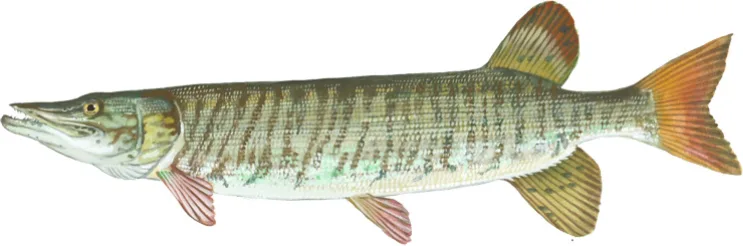
Pike Fish: Northern Pike, Muskie, Tiger Muskie and Pickerel Told ApartThe pike family in North America: northern pike, muskie, tiger muskie and chain pickerel, how to tell each one apart, and the record for each.
 World Record Pike: The 55 lb German Fish, the 46 lb American One and the State Records
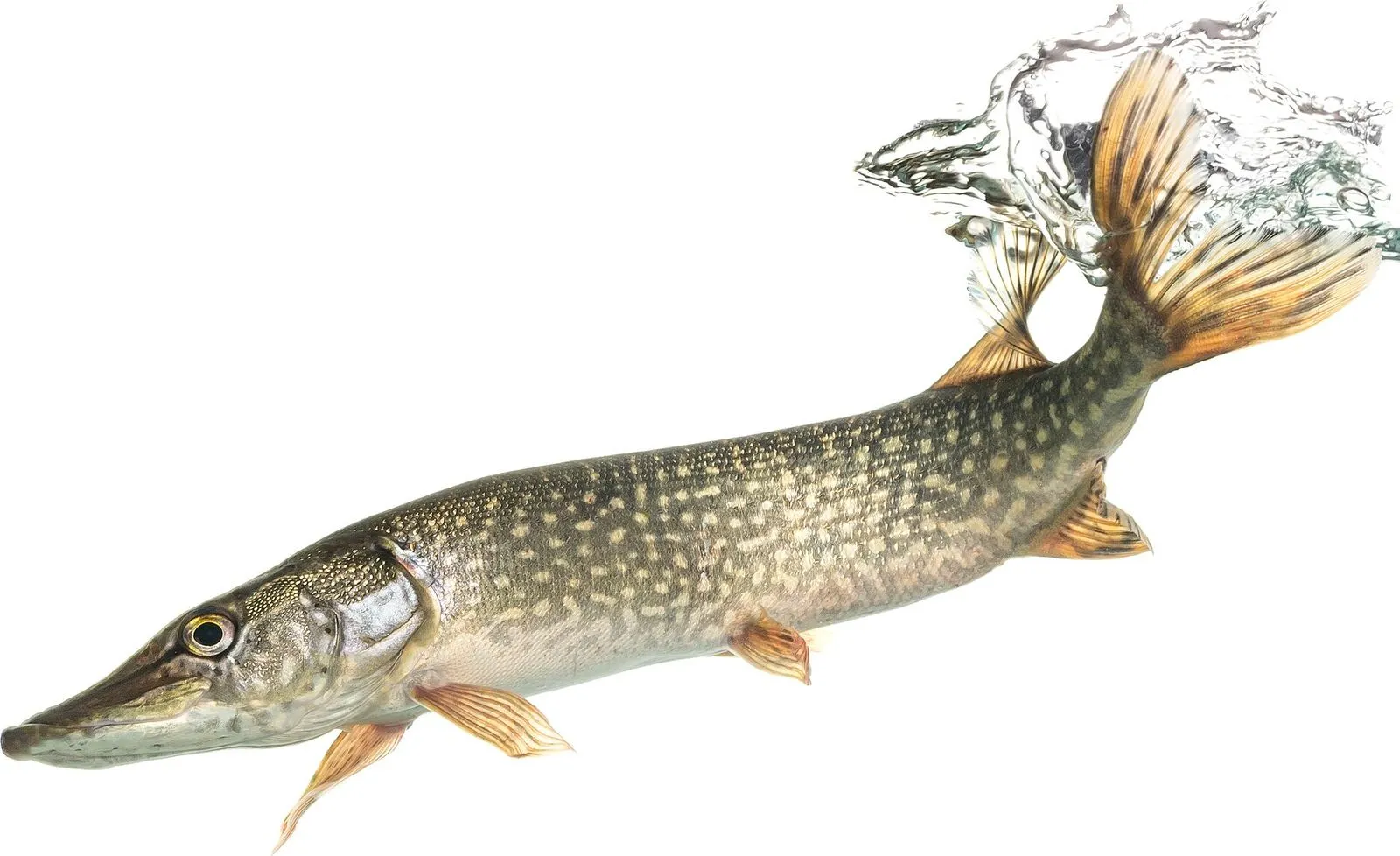
The world record pike is 55 lb 1 oz, caught in Germany in 1986. North America's best is 46 lb 2 oz from New York in 1940, a fish its captor never mounted.
 World Record Muskie: Three Claims, Two Record Books and the Biggest Fish Nobody Disputes
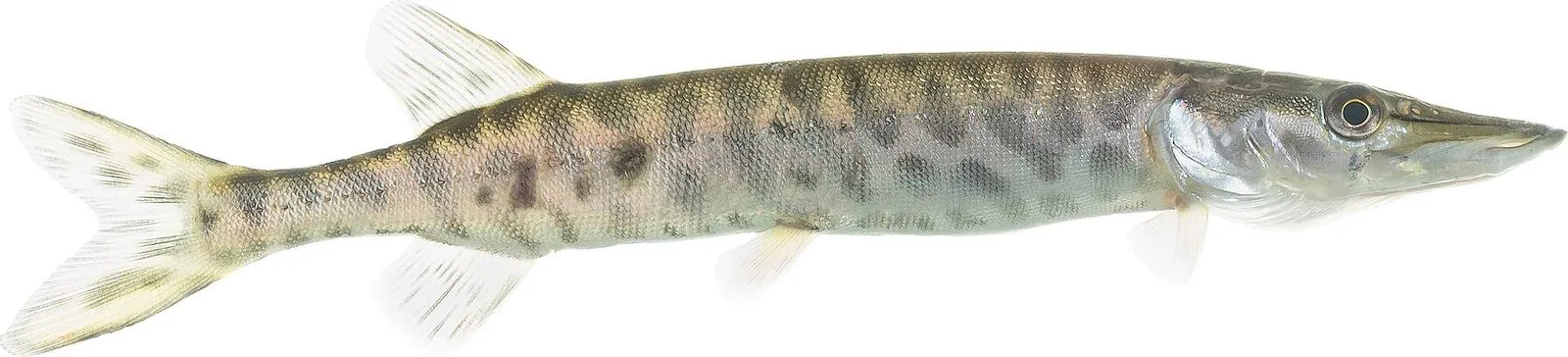
The world record muskie is 67 lb 8 oz to the IGFA and 69 lb 11 oz to the Hall of Fame. Both date from 1949, both are disputed, and a 65 lb fish is not.
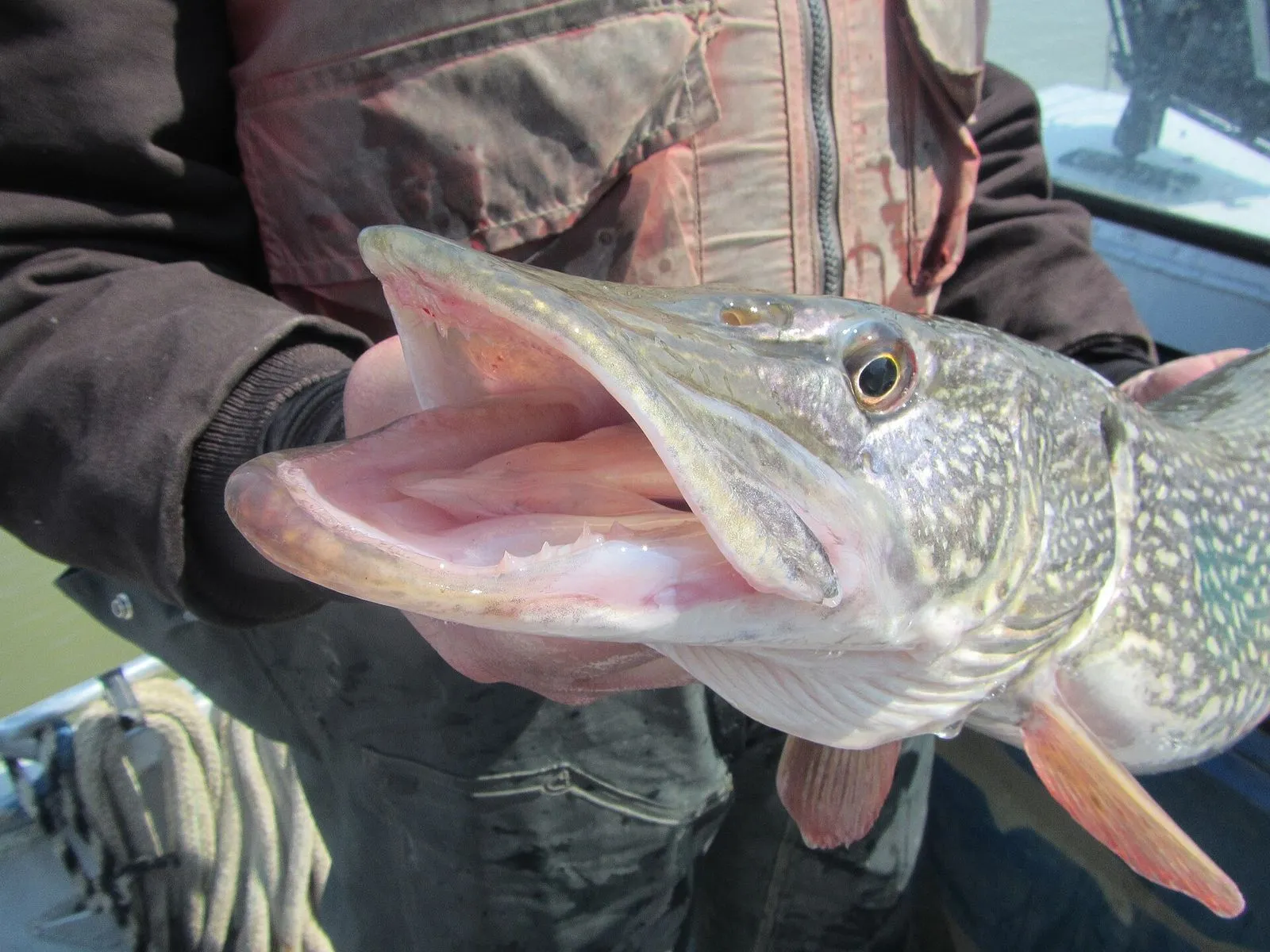 Northern Pike Teeth: How Many, How Sharp, the Summer Myth, and How to Unhook One
Northern pike teeth: about 16 knife-edged canines on each side of the lower jaw, hundreds more on the roof and tongue, and how to unhook one safely.
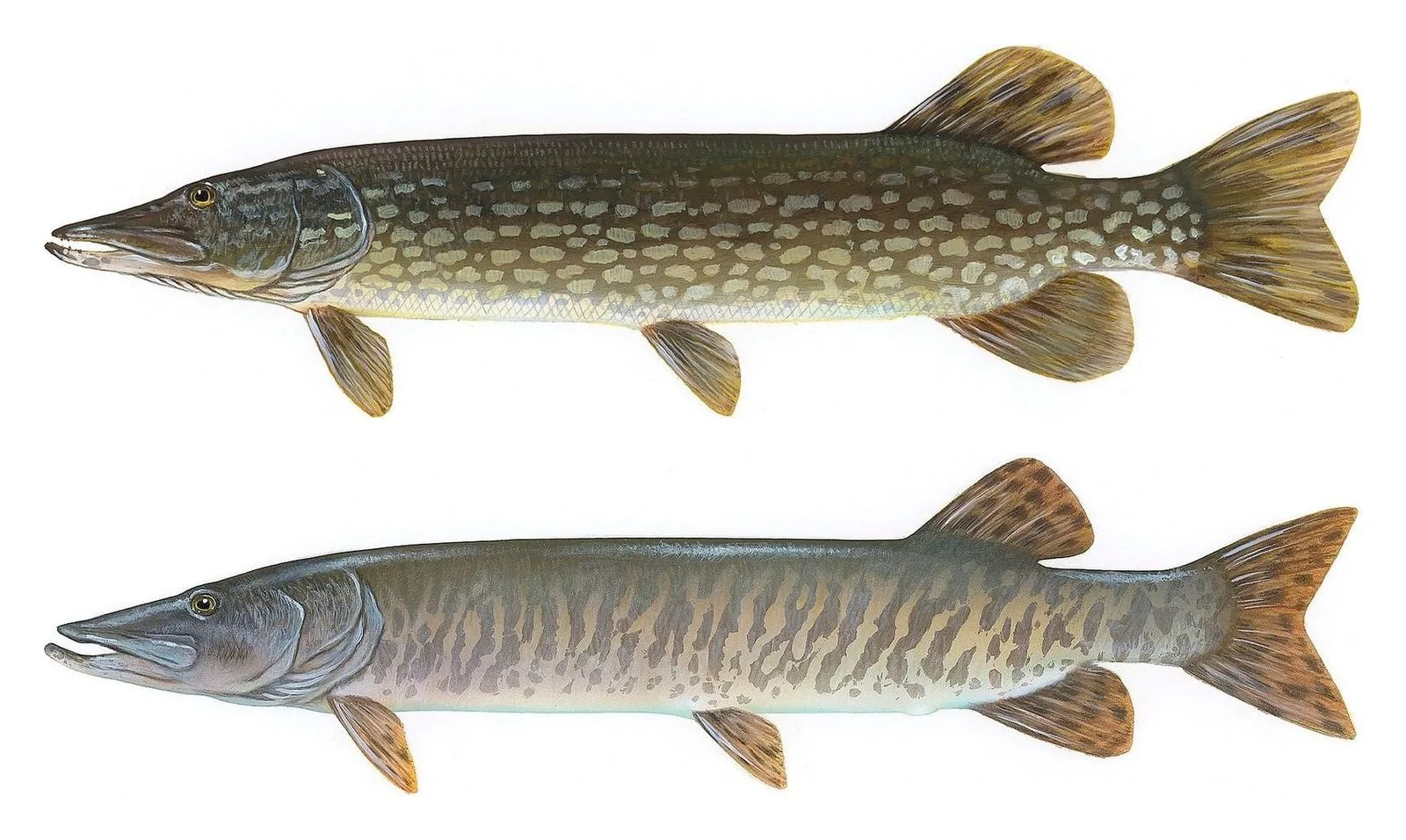 Muskie vs Pike: How to Tell Them Apart, and How the Two Fish Really Differ
Muskie vs pike: markings, tail tips, jaw pores and cheek scales side by side, plus size, age, numbers per acre, and pike against pickerel and walleye.
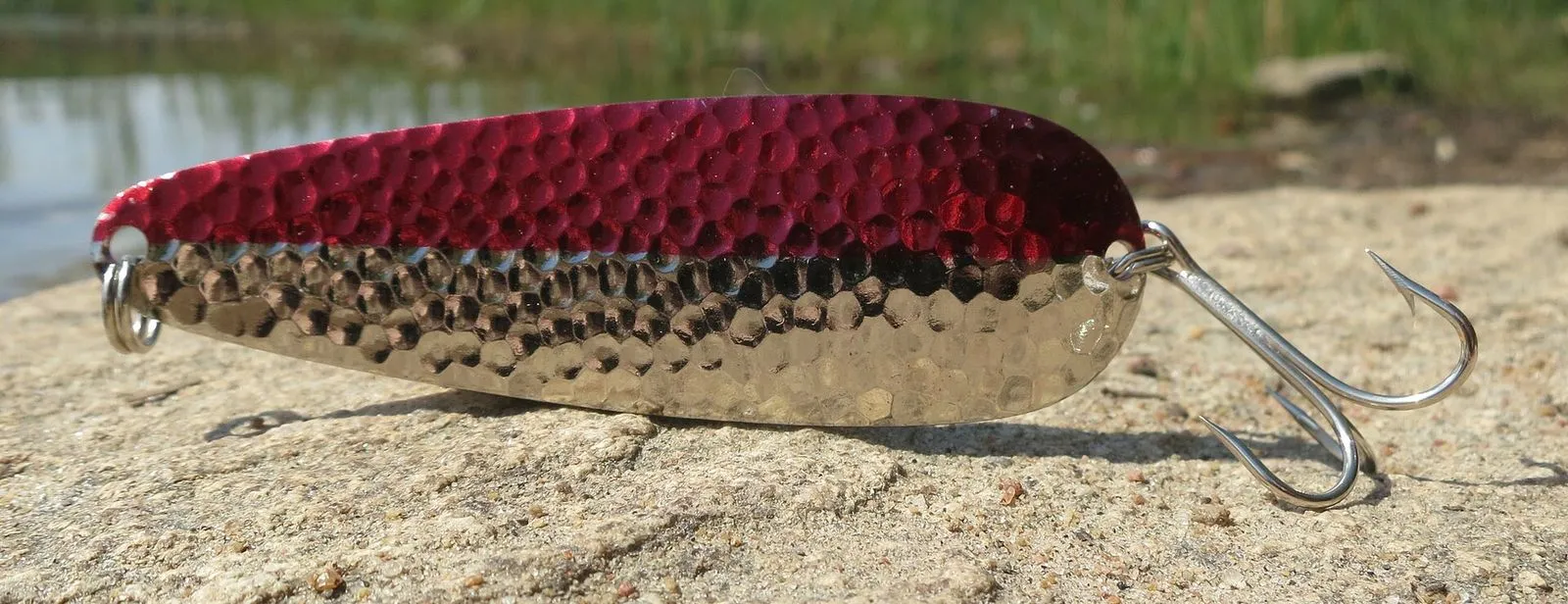 Best Northern Pike Lures: Six Classics the Agencies and Guides Agree On, and When to Throw Each
The northern pike lures that state agencies, In-Fisherman guides and the magazines agree on, with sizes checked at the maker and the water each one is for.
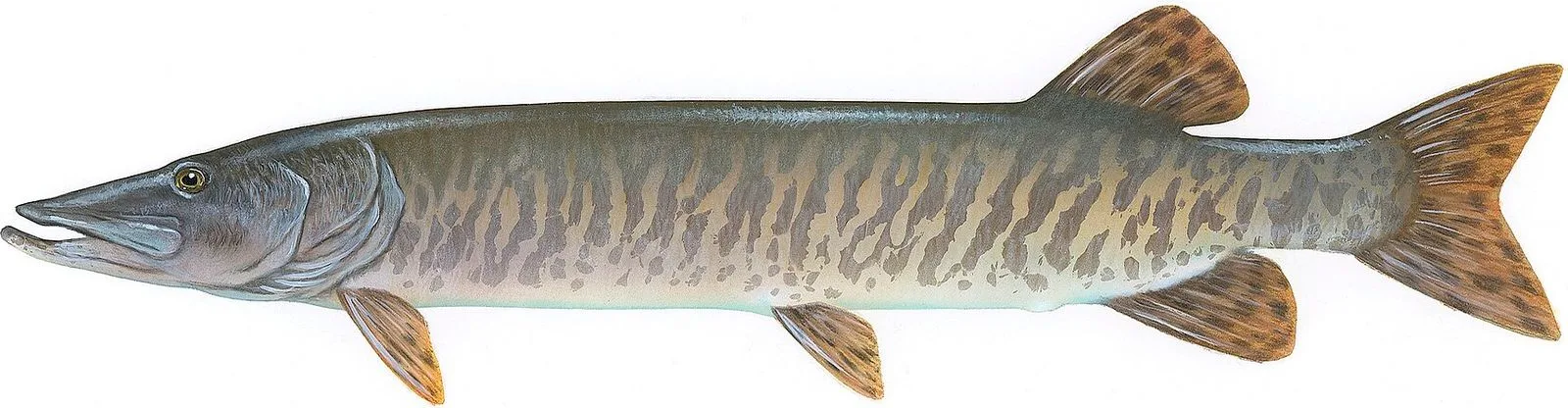 Best Muskie Lures: The Classic in Each Class, and the Water Temperature to Throw It
The muskie lures guides and magazines keep naming, one per class, with maker-checked sizes and the water temperature each is for, from 40 °F to 75 °F.
Sources
- Wisconsin DNR, Northern Pike (Esox lucius), PUBL-FM-707 (2008): catch rates, tackle, seasons, quick-strike advice
- Minnesota DNR, MinnAqua species profile: northern pike
- Minnesota DNR, Catch and release
- Pierce and others (2013), Depths and thermal habitat used by large versus small northern pike in three Minnesota lakes, Transactions of the American Fisheries Society 142(6)
- Pierce, Long-term evaluations of northern pike experimental regulations in Minnesota lakes, Minnesota DNR Investigational Report 556
- Smith, Kovacs and others (2016), Management Plan for Northern Pike in Michigan, Michigan DNR Fisheries Report 15: summer temperature, Houghton Lake ice harvest
- Michigan DNR, Northern pike species page
- Trautman and Hubbs (1935), When do pike shed their teeth?, Michigan Institute for Fisheries Research Report 310: the summer drop in catch per hour
- Maine Department of Inland Fisheries and Wildlife, Northern pike assessment: seasons, lures, bait
- Alaska Department of Fish and Game, Northern Pike in Southcentral (brochure): lures, bait, ice methods
- Alaska Department of Fish and Game, Northern pike handout (2013)
- Paul Bailey, Targeting big pike in winter, North Dakota Outdoors (November 2016)
- Harvey (2009), A biological synopsis of northern pike, Fisheries and Oceans Canada: temperature, activity
- Rob Neumann, Pike quick strike rigs, In-Fisherman (2014)
- Doug Stange, Pike fishing system, In-Fisherman (2010)
- Doug Stange, Fluorocarbon secrets for pike, In-Fisherman (2017)
- Dan Johnson, Big pike don't disappear in summer. They move here, In-Fisherman (2026)
- Cory Schmidt, Pike patterns spring-to-summer, In-Fisherman (2016)
- Wired2Fish, The best pike lures of all time (2025)
- Jack Ballard, Northern pike fishing part two: hook up and hold on, MeatEater (2019)