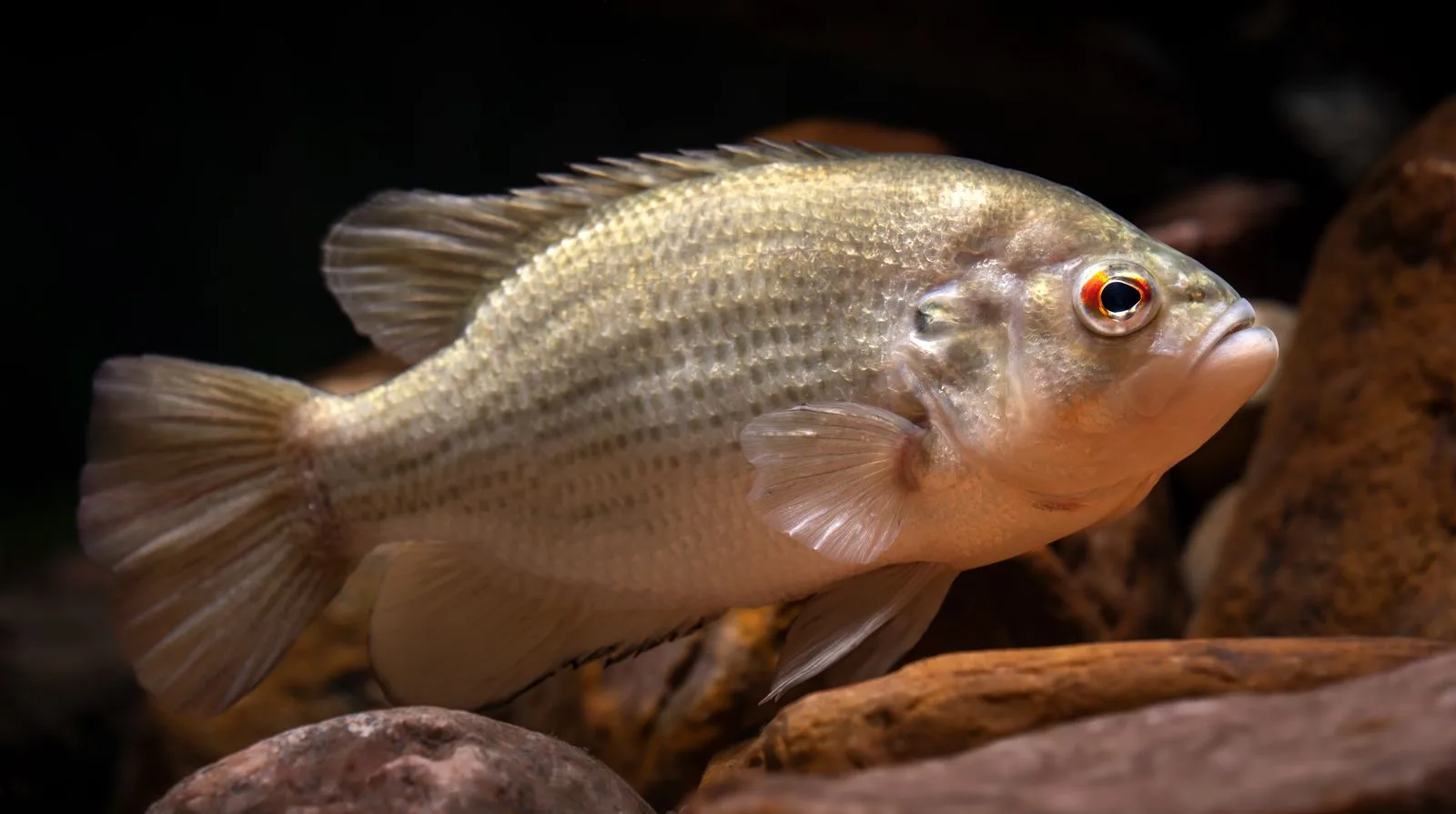
A rock bass is a thick, red-eyed sunfish of clear, rocky water, and it rarely grows past 11 in (28 cm) or a pound. It lives from Ontario and Quebec through the Great Lakes and down the Mississippi basin, in creek pools and along boulder shorelines. Drop a worm, a minnow or a small jig near the rocks and it usually bites. Despite the name it is not one of the black bass: it is a sunfish, a cousin of both the bluegill and the smallmouth.
The world-record rock bass is a tie at exactly 3 lb 0 oz (1.36 kg). Peter Gulgin’s 1974 fish from Ontario’s York River measured 13.5 in; Herbert Ratner Jr.’s 1998 fish from Lake Erie measured 16.25 in.
How do you tell a rock bass from a warmouth or a green sunfish?
Count the spines. A rock bass has six spines at the front of its anal fin, the fin on the belly between the vent and the tail. The warmouth and the green sunfish, two fish it is often mixed up with, have three, like every true sunfish. That one count settles it in the hand, and Missouri’s field guide uses it for exactly this pair.
The rest of the picture helps from a distance. A rock bass is heavy-bodied with a big mouth and very large red eyes. Its dark spots line up in horizontal rows along the sides. It can also change color rapidly, so color alone proves little.
| Mark | Rock bass | Warmouth | Green sunfish |
|---|---|---|---|
| Anal fin spines | 6 | 3 | 3 |
| Dorsal fin spines | 12 | Usually 10 | — |
| Eye and cheek | Large red eye | Red eye with 4–5 red-brown streaks fanning back over the cheek; teeth on the tongue | Blue streaks on the cheek |
| Sides | Dark spots in horizontal rows | Mottled olive-brown | Bluish green with turquoise flecks; faint bars |
| Mouth | Jaw past the middle of the eye | Jaw to or past the middle of the eye | Jaw to about the middle of the eye |
| Typical size | To 11 in (28 cm), 1 lb (450 g) | To 8 in (20 cm), 7 oz (200 g) | 6–8 in (15–20 cm) |
All rows come from the Missouri and Illinois agency descriptions in the sources. The full nine-species key for the sunfish is on the panfish hub, and the green sunfish page covers the third fish in the table.
Is a rock bass a smallmouth, a crappie or a bluegill?
None of the three. A young smallmouth bass is the commonest mix-up on a river where both live. Look at the sides: Missouri’s guide gives the smallmouth separate vertical bars and says it “lacks rows of dark spots”, the opposite of a rock bass. A smallmouth is also long and torpedo-shaped, where a rock bass is deep and thick like a bluegill.
A crappie is silver and speckled, with 5 to 8 dorsal spines against the rock bass’s 12. A bluegill has a small mouth that stops short of the eye and a solid black ear flap. All of them belong to the sunfish family, which is why “is a rock bass a real bass?” has a twist: the largemouth and the smallmouth are sunfish too.
Where do rock bass live?
Rock bass want what the name promises. The Illinois DNR describes a fish of streams with permanent flow, clear water, plenty of hiding places and a silt-free bottom. In lakes they hold on boulders, rock reefs, riprap, bridge pilings and gravel bars. Missouri finds the larger fish around boulders, logs and weed beds in the deep pools of Ozark streams, and rarely in its reservoirs.
They also go deep when the rock does. Bryan LaBelle, a Lake Champlain guide interviewed by Wired2Fish, has rock piles in 82 ft (25 m) of water that hold “a ton of them”. What they avoid, in his words, is the weeds: “They don’t get in the grass.”
That makes a farm pond the wrong water for them. A muddy pond bottom is the opposite of the silt-free stream Illinois describes, and the pond fish are the bluegill, the redear and the hybrid. Rock bass live in water from about 50 to 84 °F (10–29 °C).
Time matters as much as place. Missouri’s biologists find rock bass most active at dawn, dusk and through the night, and Illinois says they feed hardest in late evening and early morning. In winter they gather in schools, and Virginia calls them a schooling species, often found near hard structure. Where you catch one, there are usually more.
Free card: what 26 species do at your water temperature
Plus one email a week on what's biting now. No sales pitches. Privacy.
How do you catch rock bass?
Get a bait near the rocks and keep it there. LaBelle’s rig on Champlain is a double dropper: two size 6 long-shank Aberdeen hooks above a bell sinker heavy enough for the depth, baited with minnows or nightcrawlers. Because rock bass compete for food in a school, a two-hook rig often brings up two fish at once. It also lets you test two baits until the fish show which one they want.
On artificials, rock bass take the same small lures as other panfish:
- Small jigs. LaBelle fishes a Trout Magnet, a light jig head with a split-tail grub body, and keeps it moving. “If they don’t bite right away, I let the bait fall to the bottom.”
- Inline spinners. Gulgin’s 1974 world record took a Mepps No. 2 inline spinner on 10 lb line.
- Live bait. A crayfish tail, a minnow or a piece of nightcrawler matches what rock bass eat: crayfish and aquatic insects first, small fish now and then.
The hook should match the mouth, which is bigger than a bluegill’s. A size 6 is the large end of the panfish sizes on the hook size chart, a step above the bluegill’s 8 to 12. Light spinning tackle is all you need. LaBelle calls them “pretty good fighters” for their size.
How big do rock bass get?
Most are 6–8 in (15–20 cm) in Virginia, and Missouri gives 11 in (28 cm) and a pound as the usual top. The largest Missouri describes reach about 17 in (43 cm) and 2 lb 12 oz (1.25 kg). Growth is steady: about 2 in (5 cm) in the first year, 4 in (10 cm) in the second and 7 in (18 cm) by the third. Illinois gives five to six years as typical, Missouri seven to nine, and Virginia records fish of ten.
Fisheries biologists judge a fish’s condition against its standard weight, the weight of a well-fed fish of that length. For rock bass, Bister and colleagues published the equation in 2000; the weights below are computed from it.
| Length | Standard weight | What it means |
|---|---|---|
| 6 in (15 cm) | 2.7 oz (76 g) | A year-two or year-three fish |
| 8 in (20 cm) | 6.5 oz (185 g) | A good Virginia rock bass |
| 10 in (25 cm) | 13 oz (370 g) | Over 10 in is a big one in Virginia |
| 11 in (28 cm) | 1.09 lb (490 g) | Missouri’s usual ceiling: a pound |
| 13.5 in (34 cm) | 2.04 lb (925 g) | Gulgin’s record, at 3 lb 0 oz, was 147 percent of this |
| 16.25 in (41 cm) | 3.61 lb (1.64 kg) | Ratner’s record, at 3 lb 0 oz, was 83 percent of this |
The equation comes from ordinary-sized fish, so for the two records it is an extrapolation and the percentages are rough.
The two world records weigh the same and could hardly be more different. Gulgin’s was short and fat, with an 11 in (28 cm) girth on a 13.5 in fish. Ratner’s was nearly 3 in longer and lean for its length.
Most state records sit below them: Vermont’s is 2 lb 0 oz, from Lake Champlain in 1981, and Georgia’s 1 lb 0 oz from South Chickamauga Creek in 2024. The exception is Michigan, whose list carries a 3.62 lb, 20 in fish from Holloway Reservoir in 1965 that the IGFA book does not hold. A 2 lb rock bass would tie Vermont’s record.
Can you keep and eat rock bass?
Yes. Vermont Fish & Wildlife counts rock bass among its panfish and calls the group “excellent eating”. Animal Diversity Web notes that it is not a fish many people prefer to eat, so opinion is split rather than settled. Fillet them like any sunfish; on a fish under a pound the fillets are small.
Limits vary by state and change yearly. In Wisconsin’s general inland waters rock bass are open all year with no daily limit; county rules differ, and the Wisconsin fishing page has the rest of the state’s rules. Check your own state’s booklet before you keep a bucketful.
How do rock bass spawn?
Rock bass spawn in spring at 55–59 °F (13–15 °C), weeks before the bluegill. In Missouri the season runs from the first week of April to early June, timed with the smallmouth in the same Ozark streams. Unlike bluegill, they do not nest in colonies: each male fans a saucer of his own, 8–12 in (20–30 cm) across, on sand or gravel.
The female lays 500 to 5,000 eggs, depending on her size, and leaves; she may spawn again with another male. The male guards the nest, fanning it with his pectoral fins and circling it, and does not feed while he does. The eggs hatch in three to four days and the fry leave the nest nine to ten days after that. About a third of nests are lost to predators anyway, according to Animal Diversity Web. Rock bass mature at two to three years.
What else is a rock bass called?
Goggle-eye and redeye are the common names, for the big red eye; Vermont adds rock perch, and the IGFA lists black perch and rock sunfish. “Goggle-eye” is slippery, though: in parts of the South it means a warmouth, as the slang list notes. Texas Parks and Wildlife records “rock bass” as a local name for both the green sunfish and the warmouth. So a Texan’s rock bass may have three anal spines.
The scientific name is Ambloplites rupestris: Ambloplites means “blunt shield”, and rupestris means “among the rocks”. Missouri now splits its rock bass into three species, the northern rock bass, the shadow bass and the Ozark bass, told apart mainly by where they live. The panfish they share the water with start on the panfish hub.
Free download
The water temperature card
Read your water temperature and the card tells you who is spawning, who is feeding and what to throw. 26 species, 16 pages, for your phone and the tackle box.
Plus one email a week on what's biting now. No sales pitches. Privacy.
Related
Section guide
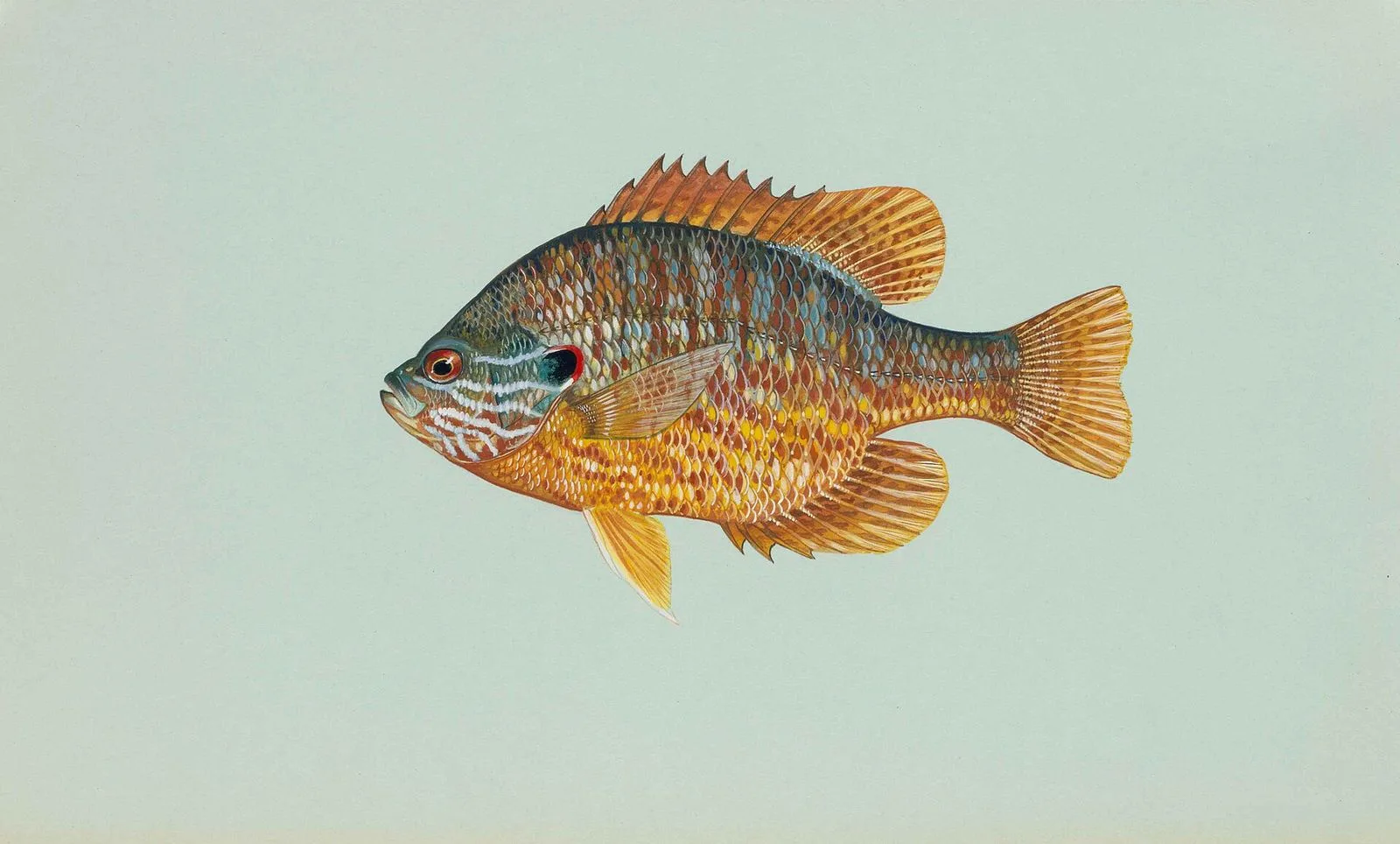
Panfish: Which Fish Count and How to Tell Them ApartPanfish are bluegill, the sunfish, crappie and yellow perch. Tell 9 sunfish apart by the ear flap, plus records and limits from 50 a day to none in Texas.
 Bluegill: How to Identify It, How Big It Gets and How It Spawns
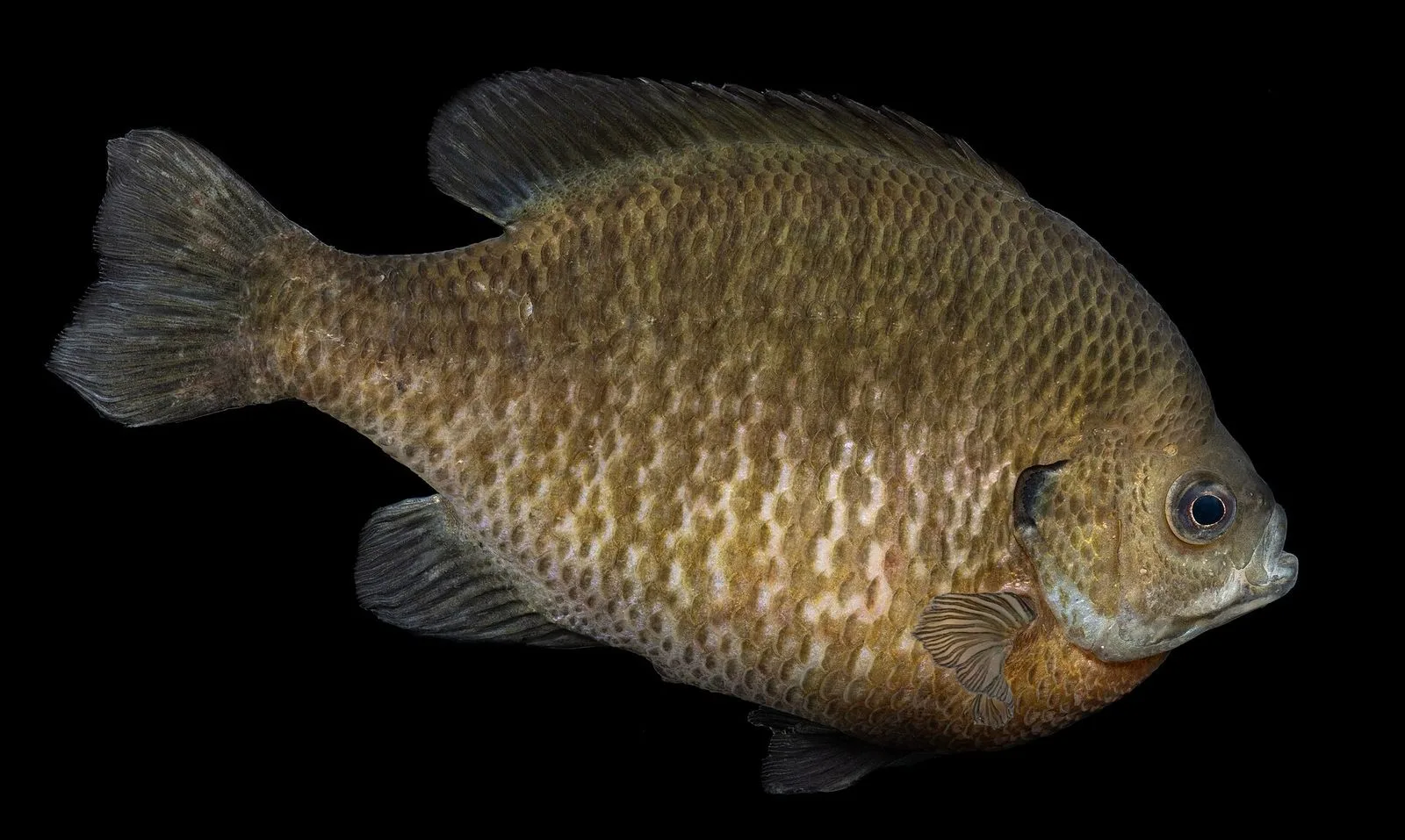
How to identify a bluegill, how old an 8- or 10-inch fish is, why a pound is a trophy, the 4 lb 12 oz record and the sneaker males on the beds.
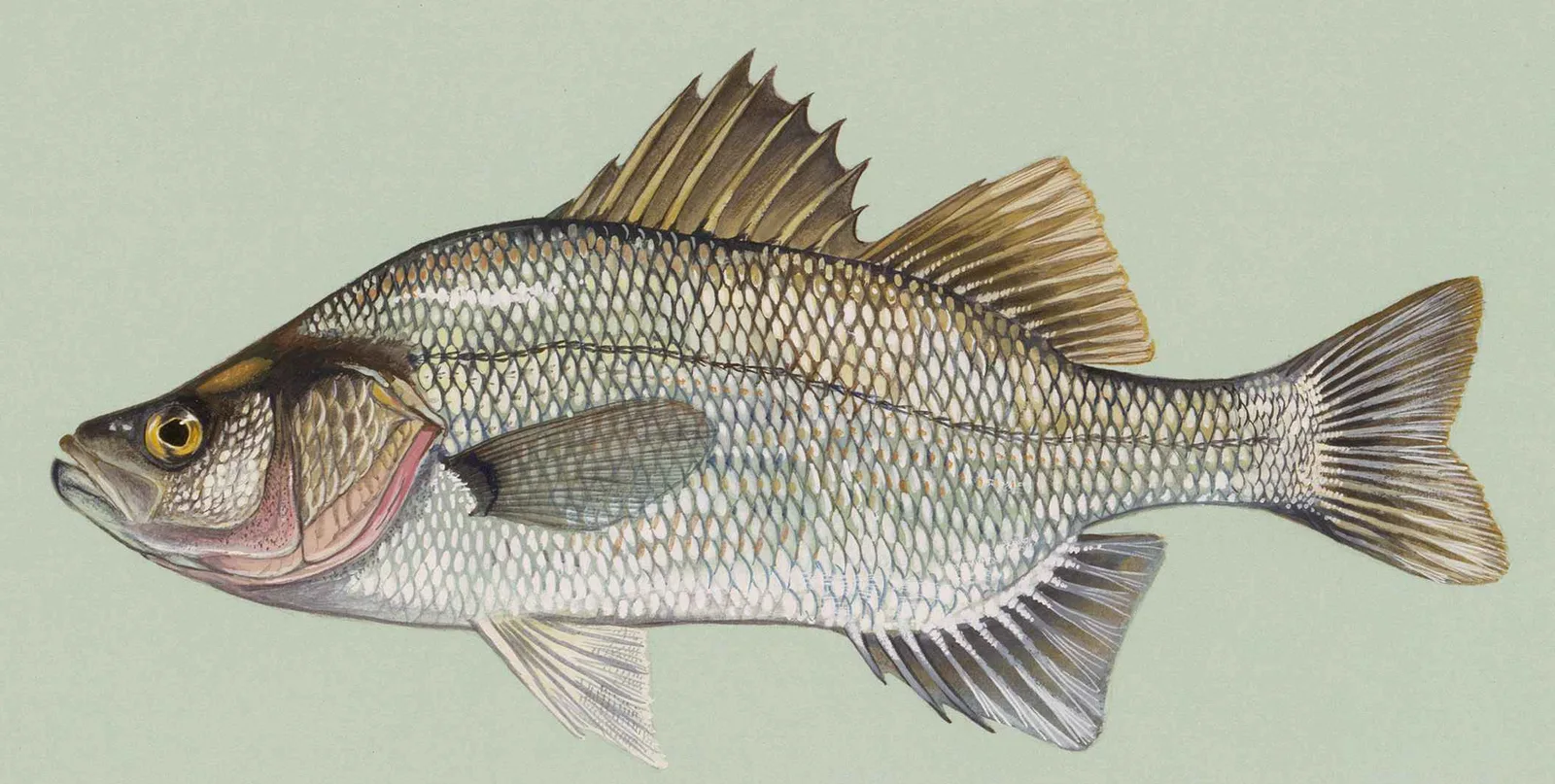 White Perch: The Striped Bass Cousin That Is Not a Perch
The white perch is a temperate bass, not a perch: how to tell it from yellow perch and white bass, its Great Lakes invasion, spawning and the record.
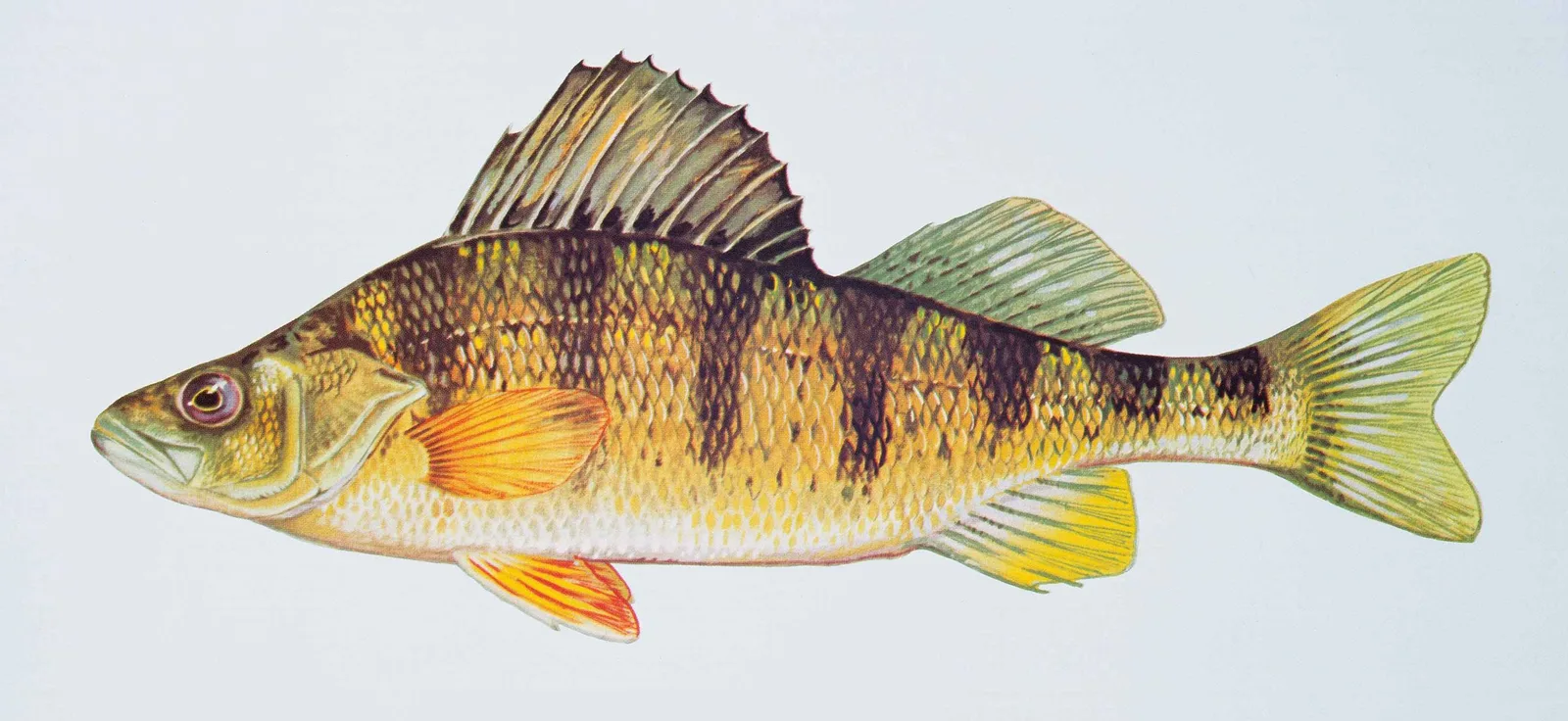 Yellow Perch: Identification, Size by Age, and the 1865 Record
Yellow perch (Perca flavescens): how to tell it from walleye, how old a 10-inch perch is, whether it is a bottom feeder, and the 1865 record.
Sources
- Missouri Department of Conservation, northern rock bass (description, size, habitat, spawning, lifespan)
- Illinois DNR, rock bass (jaw, spines, habitat, solitary nests, color change)
- Missouri Department of Conservation, warmouth (three anal spines, tongue teeth, size)
- Missouri Department of Conservation, green sunfish
- Missouri Department of Conservation, smallmouth bass (key identifiers)
- Virginia DWR, rock bass (size, lifespan, habitat, schooling)
- Animal Diversity Web, Ambloplites rupestris (growth, spawning, eggs, nest success)
- IGFA world record search, rock bass (all-tackle tie)
- Outdoor Life, the biggest panfish of all time (IGFA all-tackle records with lengths and tackle)
- Wired2Fish, rock bass: a light tackle blast (David A. Brown, with Lake Champlain guide Bryan LaBelle)
- Vermont Fish & Wildlife, panfish (state records, eating)
- Georgia DNR, state record freshwater fishes (rev. March 2026)
- Texas Parks and Wildlife, green sunfish (regional names)
- Texas Parks and Wildlife, warmouth (regional names, the anal-spine difference)
- Michigan DNR, Master Angler minimum entry lengths and state records
- Wisconsin DNR, rock bass season
- Wisconsin DNR, daily bag limits
- FSA WSlit standard-weight table (Bister et al. 2000 rock bass equation)