 By
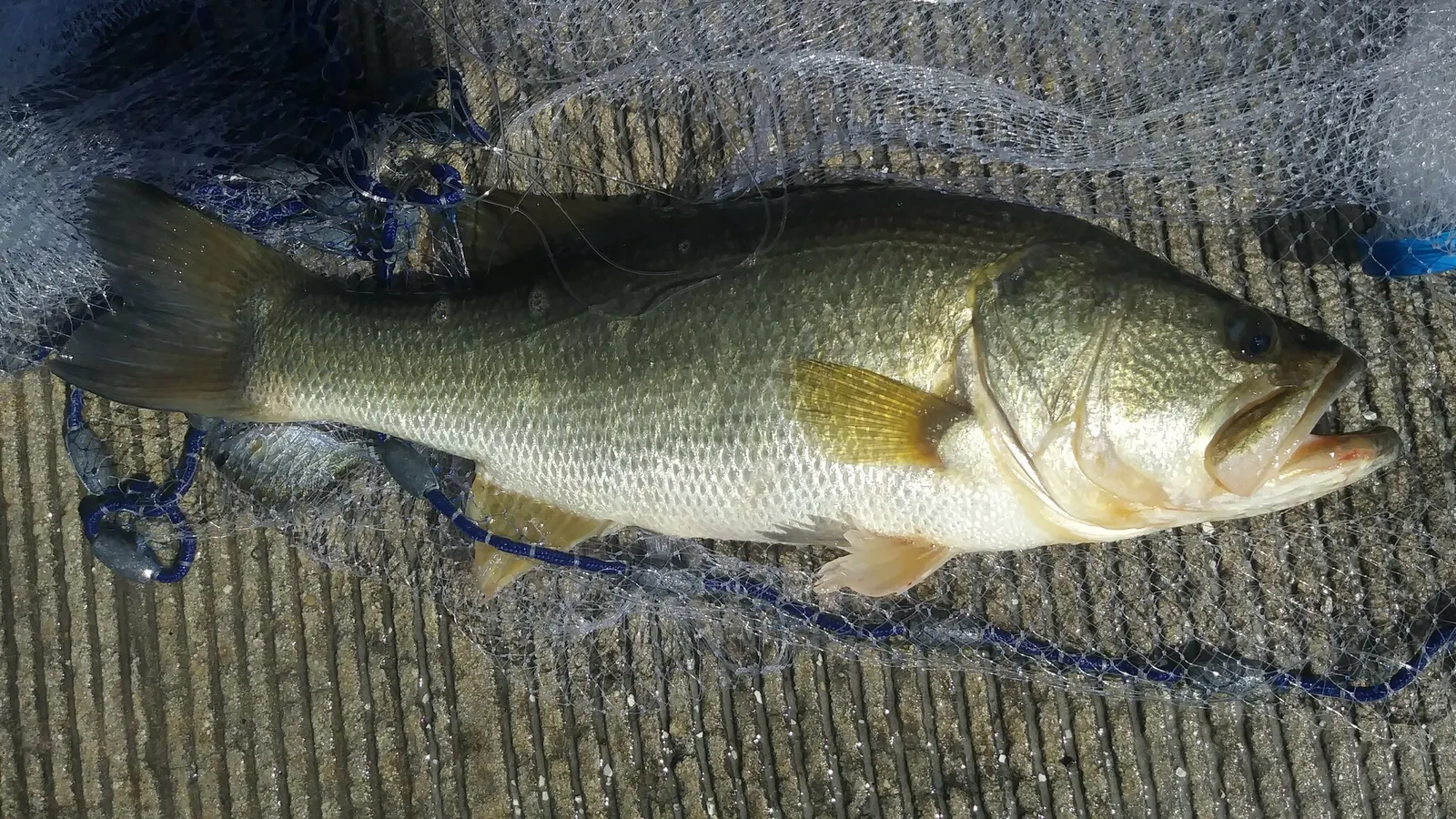
The Florida bass is the largemouth’s southern twin, and it grows the giants: the IGFA’s Florida bass record is 22 lb 4 oz (10.12 kg). You can’t tell one from a largemouth by eye. Only a DNA test settles it. It’s native from peninsular Florida up the Atlantic coast to North Carolina. Texas and California stocked it to grow bigger bass.
George Perry’s 1932 world record was most likely a Florida bass, not a northern largemouth, says Eric Peatman of Auburn University, whose lab has DNA-tested tens of thousands of Southern bass.
What is a Florida bass?
It’s a black bass, a close cousin of the largemouth bass, and now a species of its own. For decades it was filed as a subspecies, the “Florida-strain largemouth.” Carl Hubbs and Reeve Bailey first proposed the split in 1949, on scale counts and the color pattern along the side. Genetics backed them up nearly 75 years later. In 2022 a Yale team read the DNA of 394 black bass, from every species in the group. The bass of Florida and coastal Georgia stood apart from the largemouth of the rest of the US. The American Fisheries Society then recognized the Florida bass as a species.
The names then swapped. The old scientific name of the largemouth now belongs to the Florida bass, and the northern fish took a new one. Florida’s FWC dropped “Florida-strain largemouth” for “Florida bass” in 2024. The same year the state renamed its official freshwater fish, the Florida largemouth bass of 1975, to “Florida Bass.” In 2024 the IGFA gave the Florida bass its own all-tackle record too.
None of this changes the rules on the water. FWC still treats the two “within the same species for regulations since they are visually indistinguishable.” The black bass page has the full family tree, all 19 species.
Florida bass vs largemouth: how do you tell them apart?
You can’t, not with confidence. Both have the long upper jaw that runs past the rear of the eye, the deep notch between the two back fins and the dark, blotchy stripe down the side. Maryland’s DNR puts it plainly: the two “remain visually indistinguishable, requiring genetic testing to confirm their identity.”
The counts differ on average, but they overlap. Here’s what the U.S. Geological Survey lists:
| Count | Florida bass | Northern largemouth |
|---|---|---|
| Scales along the lateral line | 65–77, typically 69–73 | 58–69, typically 59–67 |
| Scales around the tail stem | 27–34, typically 29–31 | 24–32, typically 27–28 |
| Branches on the pyloric caeca (second stomach) | 31 or more | Fewer than 28 |
A bass with 70 scales down its side leans Florida. One with 68 could be either, and you’d need a knife for the stomach count. That’s why the agencies use DNA. Catch a big one in Texas and the state asks you to pull three scales and mail them to its genetics lab. The test tells a pure Florida bass from a northern fish or a mix of the two.
The mix is common. A first-generation cross of the two, an F1 hybrid, goes by “tiger bass.” In Texas reservoirs and in Virginia, most bass you catch are some blend of the two.

Free PDF · Water temperature chart When do bass bite?
One reading, and the 16-page chart shows which of 26 fish are spawning, feeding hard or slowing down; for bass, crappie, bluegill and walleye, where they sit and what to throw. Every number sourced.
No card, nothing to buy, and the PDF is yours to keep. Confirm with one click and it's on its way. Then a few short emails and one a week on what's biting. Unsubscribe anytime. Privacy.
Where do Florida bass live?
Farther north than the old maps said. The 2022 genetics put the native range from peninsular Florida and the Apalachicola River in the west to the Cape Fear River of North Carolina, along the Atlantic coastal plain. The old story, from the 1940s, had pure Florida bass only on the peninsula and a mixed zone across the Panhandle and Georgia.
Georgia shows how far the genes run. In the St. Marys River the bass are “essentially 100% Florida bass,” Peatman says. Around Montgomery Lake, where Perry caught his record, Georgia’s fisheries chief Scott Robinson sees 80% to 90% Florida genes.
So if you fish the coastal rivers of Georgia or the Carolinas, you may already be catching Florida bass. Inside that range they live where a largemouth would: lakes, rivers, reservoirs, swamps and ponds. They’re most common in warm, weedy, fertile water, around logs, rock and weed beds. Adults eat fish, crustaceans and bigger insects. Young ones start on tiny drifting animals and switch to small fish at about an inch long.
Who stocks Florida bass, state by state
Outside its range, the Florida bass is there because an agency or an angler put it there. Some states stock it hard. Others won’t touch it. Before you wish your lake had them, see where they stand, with the year the state said so.
| State | Florida bass there? | What the state does | As of |
|---|---|---|---|
| Florida | Native | State fish, renamed “Florida Bass”; TrophyCatch rewards releasing bass of 8 lb (3.6 kg) or more | 2024–26 |
| Georgia | Native in the coastal rivers | Selective breeding from its fastest-growing bass | 2021 |
| North Carolina | Native to the Cape Fear; mixed inland | 130,000 F1 fish a year into Lake Norman, a five-year plan | 2021 |
| Virginia | Mixed, 40–60% Florida genes | F1 “tiger bass” in Smith Mountain, Claytor, Anna and Chesdin | 2021 |
| Tennessee | Stocked | 300,000 Florida fingerlings into Kentucky Lake | 2021 |
| Arkansas | Stocked in the south | 2 million Florida fry a year into 15 lakes, Millwood among them | 2021 |
| Texas | Stocked since the 1970s | 6–8 million fingerlings a year with ShareLunker genes | 2025 |
| Oklahoma | Stocked | Advice to stop north of a southwest-to-northeast line | 1992 |
| California | Stocked since 1959 | Florida fish replaced northern bass in nearly all of Southern California | current |
| Maryland | Stocks its own largemouth | Tidal waters get Potomac River broodstock or fish identified as largemouth | 2025 |
| Kentucky | Not stocked | “The risk is too great for us to take a chance” | 2021 |
Texas is the big one. In 1971 its fisheries director, Bob Kemp, brought in pure Florida bass for the new reservoirs. In 1974 the state switched to pure Florida bass as the parent fish for stocking public waters. The state record went from 13.5 lb in 1943 to 14.1 lb in 1980. Then it fell again and again, up to Barry St. Clair’s 18.18 lb from Lake Fork in 1992.
Texas then tested its biggest fish. Most bass in its reservoirs are mixed, and only a few are pure Florida or pure northern. Yet nearly half of the really big fish tested were pure Florida bass, and most of the rest carried mostly Florida genes, TPWD geneticist Dijar Lutz-Carrillo says. In 2022 Texas began stocking Lone Star Bass, pure Florida fish bred only from the offspring of 13 lb-plus ShareLunkers. That lets the state stock 6 to 8 million fingerlings with ShareLunker genes a year.
California started in 1959. San Diego set up its Upper Otay Reservoir that year as a hatchery for Florida-strain bass. In 1972 Lake Miramar gave up the state’s first bass over 20 lb. Here’s the twist. Upper Otay is now catch-and-release, artificial lures only, to protect “the last significant population of northern-strain largemouth black bass in the area.”
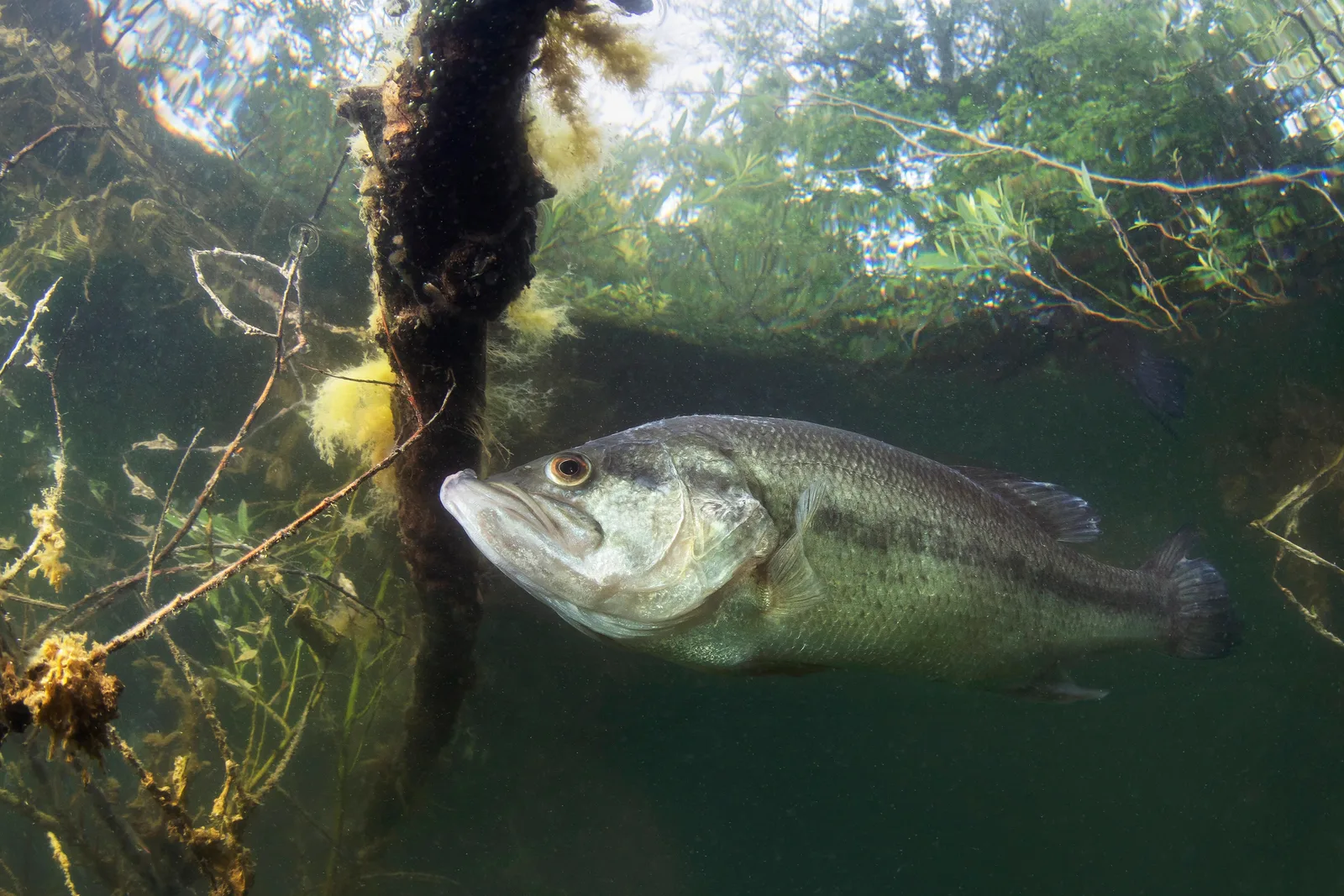
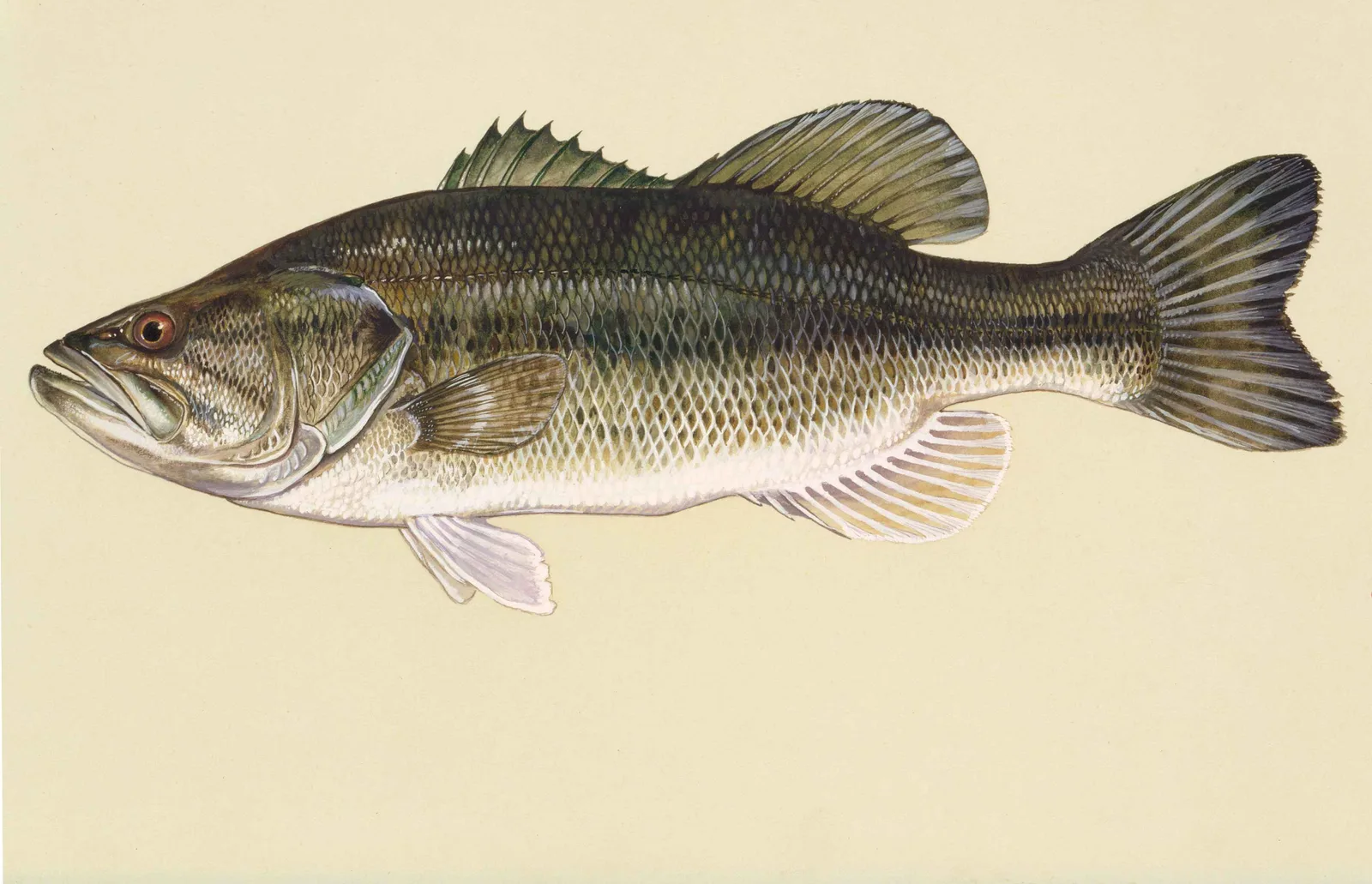
A largemouth bass near cover. Photo: Depositphotos.
Why do Florida bass get so big, and why not up north?
Warm water and a long growing season. Maryland’s DNR ties its trophy size to the warm water and long growing seasons of its native South. Even Auburn’s black bass expert Steve Sammons names only one sure reason a stocking works or fails: “the obvious winter temperature limitation.”
Oklahoma ran the test. Florida bass went into 13 small lakes for three years. They were longer than the native bass at ages 0 and 1, but thinner for their length (a lower relative weight). They survived, grew and filled out worst in the north and west of the state. The advice was to stop stocking them north of a line running from southwest to northeast. A second Oklahoma test, in Boomer Lake at Stillwater, went worse. After two years under 1% of the stocked Florida fish were alive, against about 10% of the northern fish. Cold wasn’t the cause there, and in a third lake the Florida fish did fine. The largemouth bass page has that story.
Up north, Maryland says, the fish “may not achieve the same trophy sizes” and could catch worse or spawn worse. Arkansas splits the state: Florida bass in the warm south, largemouth in the cold north. Kentucky won’t stock them at all. Its native fish “evolved over a long period of time under Kentucky’s climate,” and it doesn’t want their genes diluted.
Where it is warm, a big one takes years. Florida aged 822 trophy bass over 4.5 kg (about 10 lb): the youngest was 4 and the oldest 16.5. The 10-pound bass page runs those numbers.
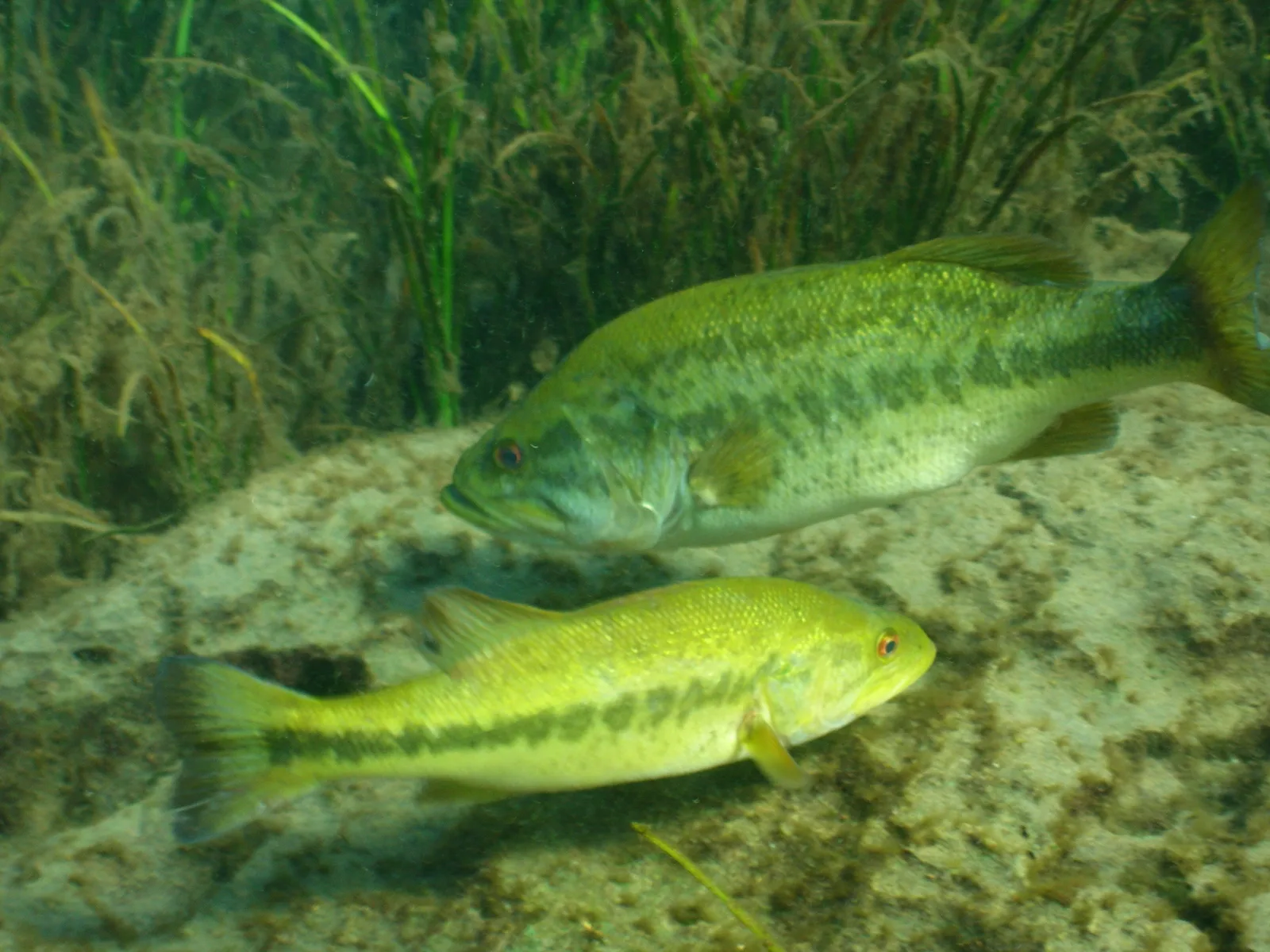
Two Florida bass over sand and eelgrass in Florida’s Rainbow River, the warm, weedy water they grow best in. Photo: henrya, iNaturalist via Wikimedia Commons (CC0).
How do you catch Florida bass?
Slow down, and watch the weather. Fish them like any largemouth, with more patience.
- Fish after the weather settles. “They don’t like cold fronts,” says Elite pro Chris Johnston. “When it gets cold, they shut down and go dormant.”
- Soak a soft plastic. Where he fishes stocked Florida bass, Elite pro John Garrett slows down. He’s often “soaking the area shallow” with a soft plastic. FWC sorted the lures behind its first 100 TrophyCatch bass of 13 lb or more. Plastic worms came out at 41%, all soft plastics at 71%.
- Look shallow in summer. On Kentucky Lake, Garrett finds more big Florida bass shallow in the hot months, chasing warm water. In fall, cooling water pushes them out to the main river channel. Native largemouth do the reverse.
- Bring live bait. Of all of Florida’s TrophyCatch bass of 13 lb or more, 47% came on natural bait and 53% on lures. Shiner fishing on Lake Okeechobee is a Florida classic.
- Switch speeds when they quit. “Florida bass are either on or off,” says John Crews, who won Elite events on the St. Johns River and the California Delta. He switches between power and finesse.
For the rest of the outfit, how to catch bass covers the rod, line and first lures. The bass spawn page has the spring timing, when the big females come shallow.
Florida bass record and trophy waters
The all-tackle Florida bass record is 22 lb 4 oz (10.12 kg), caught by Manabu Kurita at Lake Biwa, Japan, on July 2, 2009. It’s the only Florida bass record the IGFA lists. Line-class and length records for Florida bass go in the largemouth category, with no gene test needed. George Perry’s 22 lb 4 oz (10.09 kg) from 1932 stays the largemouth record. Since the IGFA’s 2024 split, any new all-tackle largemouth record needs a gene test to count. The world record largemouth page tells both stories.
Florida’s own record is 17.27 lb (7.83 kg). FWC notes that “several larger fish have been documented but not certified.” TrophyCatch, its program for bass of 8 lb or more, had approved 17,166 fish by July 2026. Only 178 weighed 13 lb (5.9 kg) or more. Of the 168 of those counted in January 2026, Alachua County gave 28 and Clay County 23.
These stocked and native waters are behind the Florida bass’s name for size:
| Water | State | What it produced |
|---|---|---|
| Orange Lake and Kingsley Lake | Florida | The most approved TrophyCatch bass of 13 lb (5.9 kg) or more among named waters |
| Lake Fork | Texas | Ethel, 17.67 lb (8.0 kg), in 1986; the state record, 18.18 lb (8.2 kg), in 1992 |
| Lake Miramar | California | The state’s first bass over 20 lb (9.1 kg), in 1972 |
| Castaic Lake | California | A 21 lb 12 oz (9.9 kg) bass in 1991, and Bob Crupi’s 22 lb 0 oz (9.98 kg) IGFA 16 lb line-class record the same year |
| Lake Biwa | Japan | The all-tackle Florida bass record, 22 lb 4 oz (10.12 kg), in 2009 |
Texas has its own trophy count. ShareLunker takes any bass of 8 lb or 24 in, and asks you to loan a 13 lb-plus fish between January and March for spawning.
Can you eat Florida bass?
Yes, where the rules let you keep one. In Florida the daily limit is five black bass, all kinds combined, with only one 16 in (41 cm) or longer. There’s no minimum length for Florida bass. Think twice about keeping a big one. Florida’s bass of 10 lb or more averaged 9.7 years old. The is bass good to eat page covers the taste, how to clean one, and the mercury advice to check before you keep a bigger fish. The bass hub has every other bass species.
Gear for bass
Gear guide
Best Bass Lures: What Won the 2025 and 2026 Elite Series, Season by SeasonBest bass lures by season: 18 Elite Series events were won on 10 kinds of bait. The pick for each water temperature, color and cover, plus smallmouth.
Gear guide
Bass Fishing Rods: The Six to Own, in the Order to Buy ThemThe first bass fishing pole is a 7 ft medium-heavy fast casting rod. The five to add after it, the lures each one throws, and a model at $100 and $200.
Gear guide
Best Fishing Line for Bass: The Setup for Every TechniqueThe best fishing line for bass is four setups: 10 lb braid to a 6–8 lb leader for finesse, 12 lb fluoro, mono for topwater, 50–65 lb braid for cover.

Free PDF · 16 pages
Stop guessing. Know what's biting before your first cast
A whole Saturday on the water with nothing to show for it. One reading tells you who's feeding.
The Water Temperature Fishing Chart. Take one water temperature reading, find it on the chart, and see which of 26 freshwater fish are spawning, feeding hard or slowing down.
- Where bass, crappie, bluegill and walleye sit, and what to throw. Trout: the reading where you stop.
- Why a 3 ft drop beats a cold front, and what to throw each day of the front
- The three thermometer mistakes that make a reading lie
The chart's numbers come from state fish and wildlife agencies and fisheries research: 61 sources, each listed on the site.
No card, nothing to buy. Confirm with one click and the PDF is on its way, one version for your phone and one to print, yours to keep. Then a few short emails and one a week on what's biting, with an unsubscribe link in every one. Privacy.
Related
Section guide
Bass Fishing: Where the Bass Are, What to Throw, and the Three Bass You Will MeetBass fishing by water temperature: where largemouth, smallmouth and spotted bass sit from 48 to 90 °F, what to throw first, and how to tell them apart.
 Smallmouth Bass Lures: 7 Picks and When to Throw Each
The best smallmouth bass lures by season: a Ned rig first, then a tube, a jerkbait and a drop shot, with the size, weight and color for each.
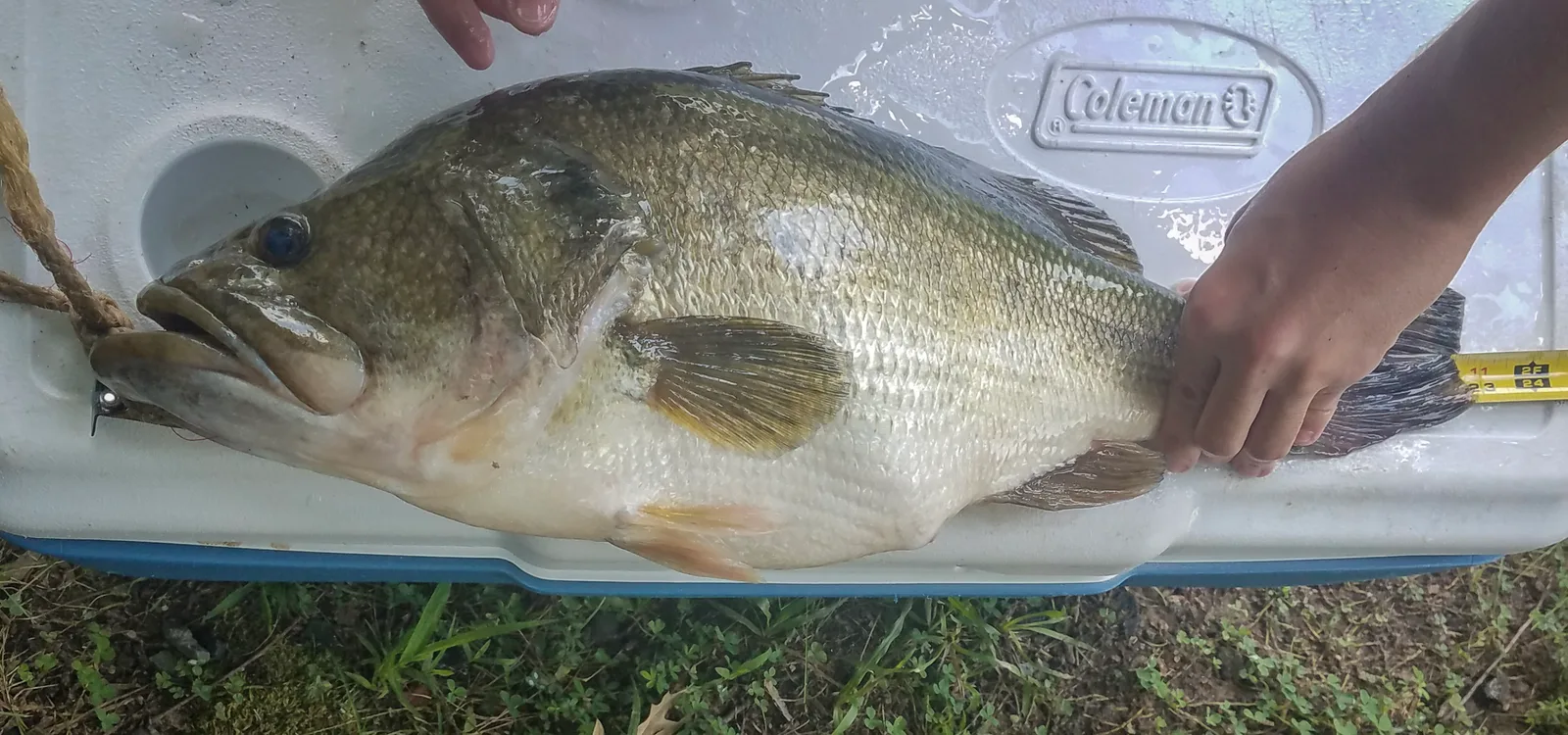 10 Pound Bass: How Rare, How Old, and Where They Are Caught
A 10 pound bass is about 25 in long and close to ten years old. How rare it is, which states hold them, and what Florida's trophy data says.
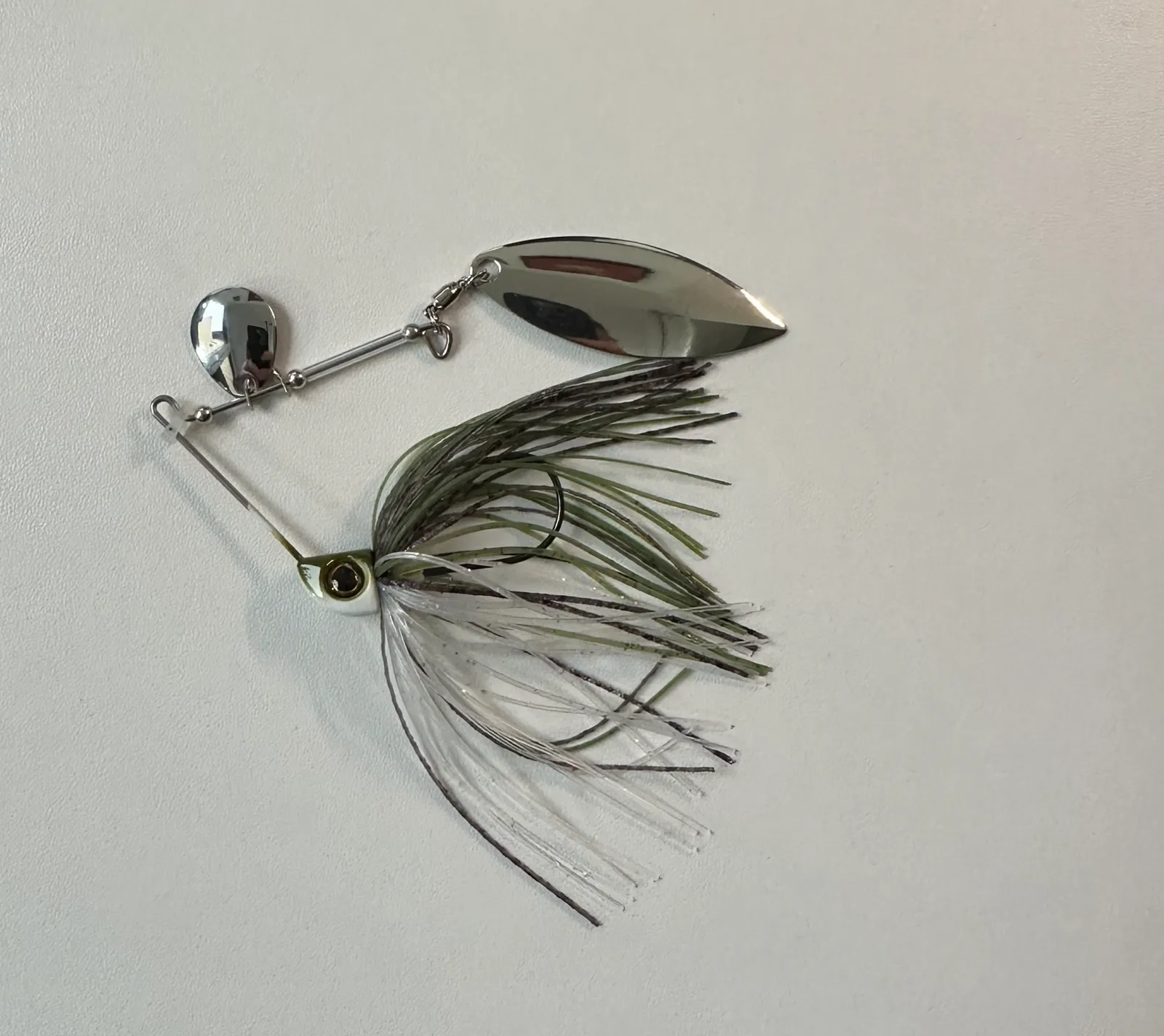 Spinnerbait for Bass: Blades, Weights, Colors and Six Retrieves
How to fish a spinnerbait for bass: Colorado, Indiana or willow blades, the weight for the depth, skirt colors, and six retrieves by water temperature.
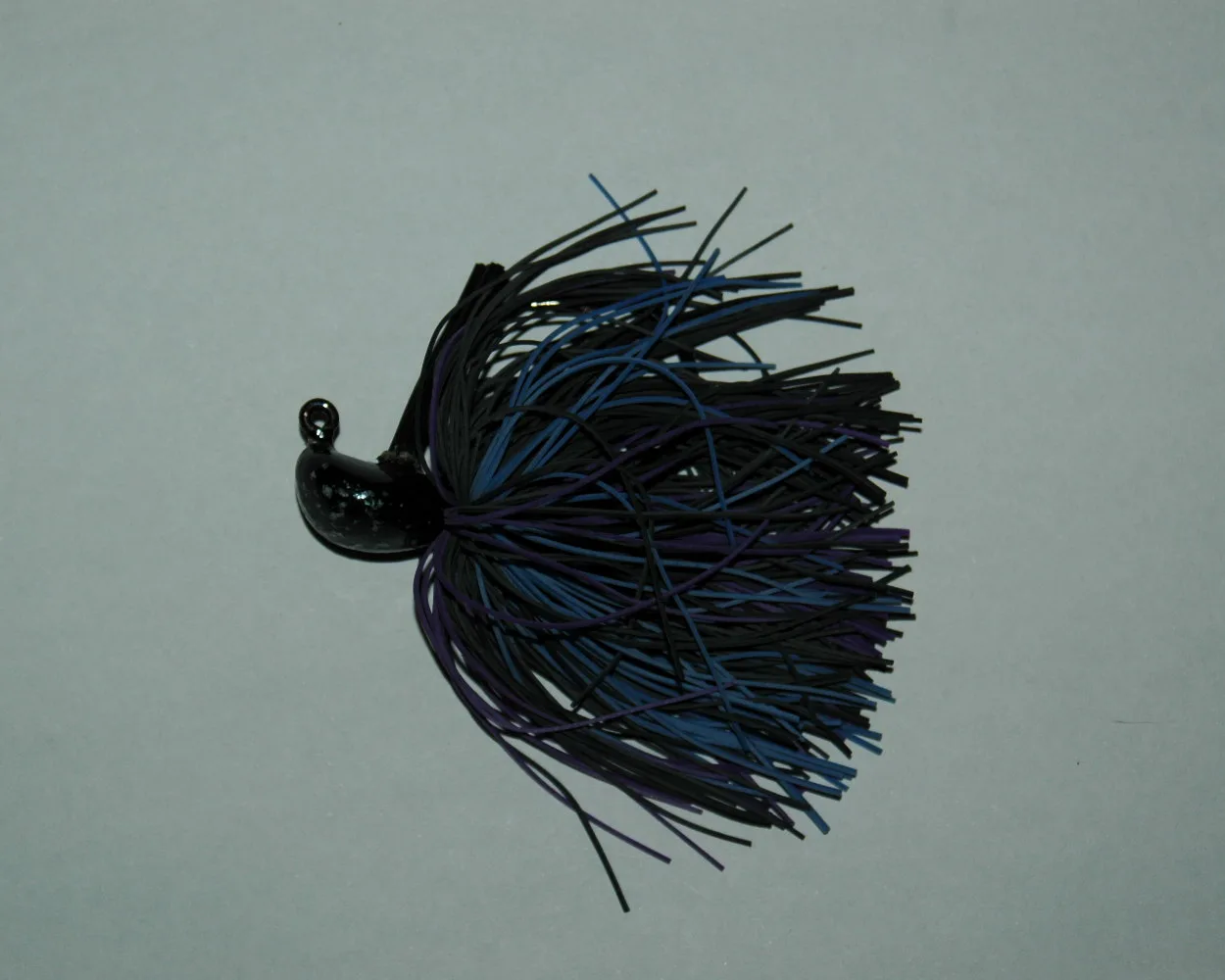 Bass Jigs: The Nine Types, Which Weight and Trailer, How to Fish Them
Bass jigs explained: football, flipping, casting, skipping, swim, grass, finesse, hair and bladed jigs, with weights, trailers and how to fish each.
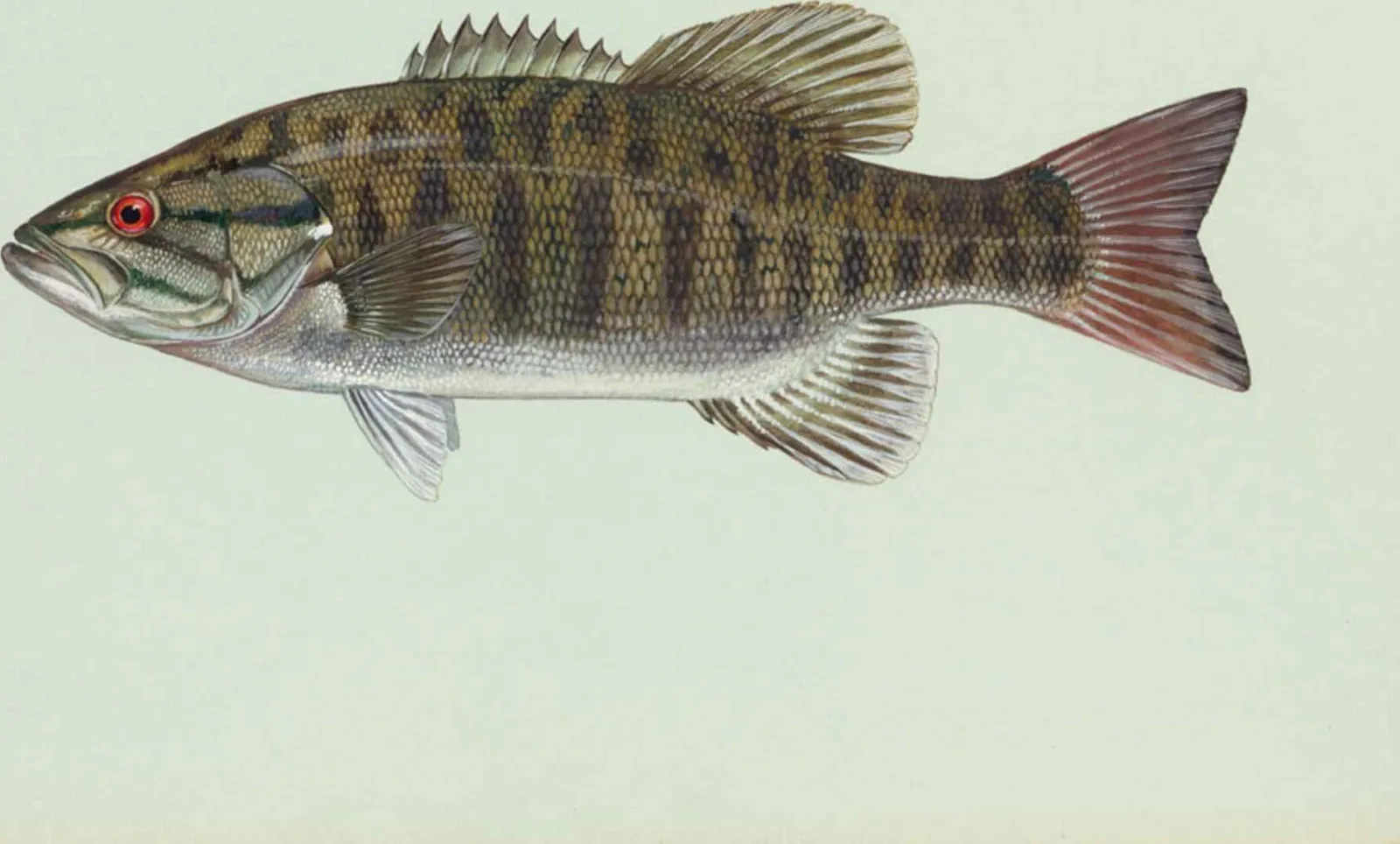 Meanmouth Bass: How to Identify the Hybrid, and the Records
A meanmouth bass is a smallmouth crossed with a spotted or largemouth bass. How to identify one, where they turn up, and the IGFA records.
- Types of Bass: Every Fish Called Bass and How to Tell Them Apart
The types of bass, from largemouth and smallmouth to striped and black sea bass: which family each is, where it lives, its record and how to tell them apart.
Sources (21)
- Kim, Taylor & Near 2022, Phylogenomics and species delimitation of the economically important Black Basses (Micropterus), Scientific Reports 12: 9113
- Maryland DNR, Some Largemouth Bass Are Now Florida Bass: Science Confirms a 1949 Theory (May 22, 2025)
- Florida FWC, Florida bass / largemouth bass profile
- Florida Department of State, State freshwater fish
- U.S. Geological Survey, Nonindigenous Aquatic Species database: Florida bass fact sheet (Procopio, revised June 21, 2019)
Show all 21 sourcesShow fewer sources
- David A. Brown, 'Florida' bass — Micropterus salmoides, Bassmaster (June 28, 2025)
- Robert Montgomery, Biologists refine the native range of Florida bass, Bassmaster (December 17, 2021)
- Texas Parks & Wildlife magazine, ShareLunker (March 2025)
- Texas Parks and Wildlife, Toyota ShareLunker program
- Larry D. Hodge, A fish called Ethel, Texas Parks & Wildlife magazine (April 2008)
- California Department of Fish and Wildlife, Black bass
- City of San Diego, Upper Otay Reservoir
- Gilliland, E. R. (1992), Experimental stocking of Florida largemouth bass into small Oklahoma reservoirs, Proceedings of the Annual Conference of SEAFWA
- IGFA world records: bass, Florida (all-tackle)
- IGFA world records: bass, largemouth (all-tackle)
- FWC, The Florida Freshwater Angler, Issue 45 (July 2026), TrophyCatch totals
- Florida Specifier, Lindelien and Cimbaro (FWC), Want fishing tips? Consult the data (January 19, 2026)
- Crawford, S., Porak, W. F., Renfro, D. J. and Cailteux, R. L. (1996), Age and growth of trophy largemouth bass in Florida, Proceedings of the Annual Conference of SEAFWA 50:212–220
- Florida FWC, General freshwater fishing regulations
- Bob McNally, 7 new bass species just became eligible for world records, including Florida and Alabama bass, Outdoor Life (June 15, 2024)
- Nieman, D. A. and Clady, M. D. (1979), Florida and northern largemouth bass: growth and survival in a heated reservoir, Proceedings of the Oklahoma Academy of Science 59:47–50