 By
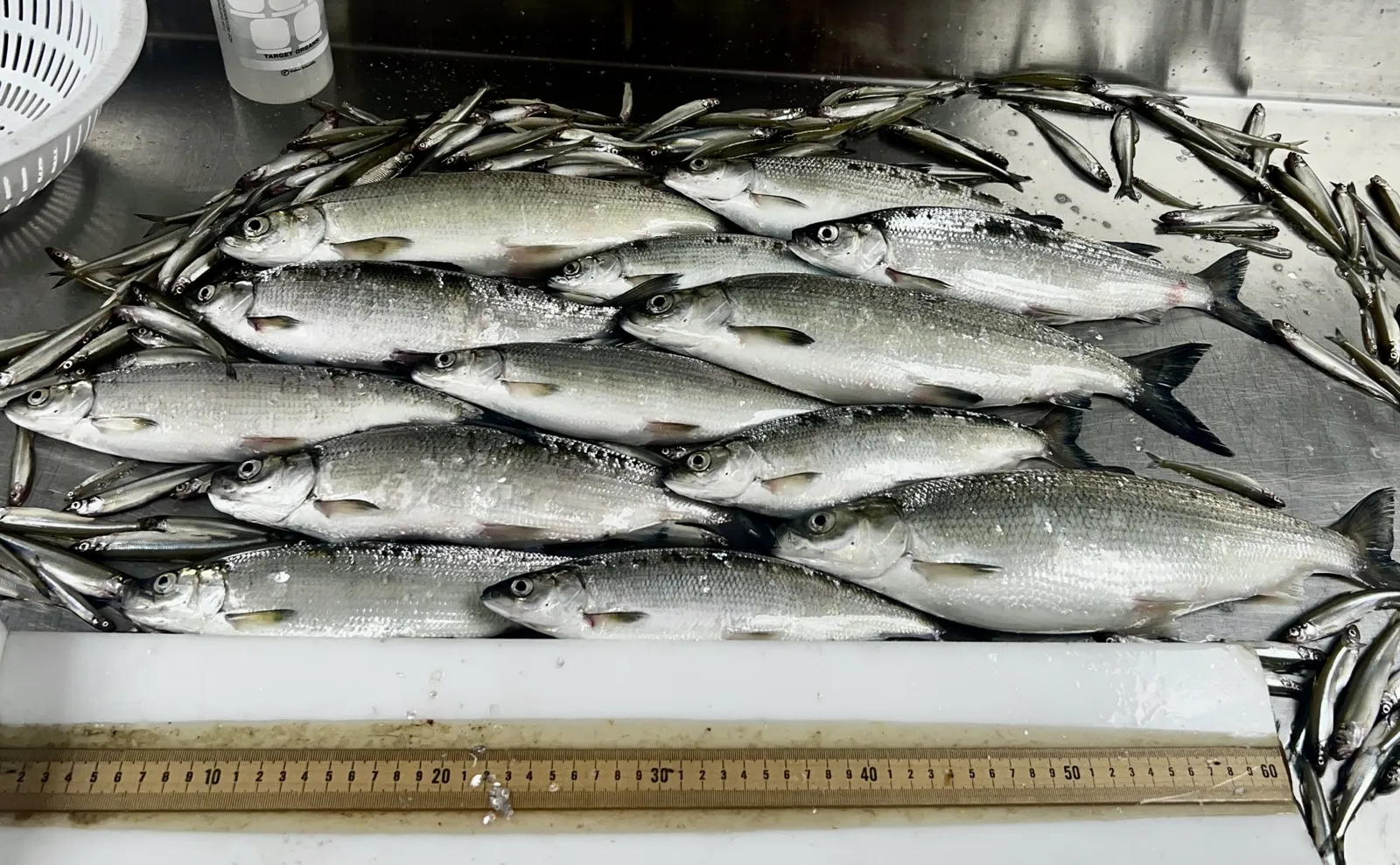
A cisco is a slim, silver fish of the trout and salmon family, also called lake herring or tullibee. Most run 12 to 15 in (30–38 cm) and weigh 1 to 1.5 pounds. It lives in cold, deep northern lakes and in the Great Lakes, and it’s a common catch through the ice. Find the school suspended over deep water, then drop a small spoon with a waxworm to it.
In 1916, Lake Erie gave up more than 48 million pounds of cisco. Ohio says they were so thick that a single ice fisherman could catch 300 lb of them in a day.
What is a cisco fish?
It’s one fish with three common names. Cisco, tullibee and lake herring all mean Coregonus artedi. Minnesota DNR writes tullibee next to cisco, and the Lake Superior catch is sold as lake herring, fresh, smoked or frozen.
Lake herring is the misleading one. A cisco is no herring at all. It’s a cousin of the lake whitefish, the trout and the char. Ocean herring belong with the alewife and the shad. Wisconsin Sea Grant says fish scientists settled on “cisco” in 2004 to clear that up.
Like every fish in its family, a cisco has the small adipose fin on its back near the tail. It has big scales, a bright silver body and a deeply forked tail. No spines in any fin.
Cisco or whitefish? Look at the jaw
If the lower jaw reaches the tip of the snout or goes past it, you’ve got a cisco. If the snout hangs over the lower jaw, you’ve got a lake whitefish. That’s the key Minnesota DNR gives. You need it there, because both fish live in Lake of the Woods and other Minnesota lakes.
| Mark | Cisco | Lake whitefish |
|---|---|---|
| Mouth | Lower jaw reaches or passes the snout tip | Snout overhangs a small mouth |
| Body | Slim and slender | Deeper-bodied |
| Typical size | 12–15 in (30–38 cm), 1–1.5 lb | Larger, 17–22 in (43–56 cm) |
| World record | 7 lb 6 oz (3.35 kg) | 14 lb 6 oz (6.52 kg) |
| Where it feeds | Up in open water | Near the bottom |
Ohio puts it another way. A cisco’s mouth ends at the tip of the snout, and a whitefish’s smaller mouth ends below it. The whitefish is also the deeper-bodied fish, and it grows much bigger.
Minnesota DNR says cisco are commonly caught by ice anglers, while whitefish come up only now and then. So when a slim silver fish comes up through the ice in Minnesota, odds are it’s a cisco. Check the jaw anyway.
Free PDF · Freshwater fish identification chart Which fish is that? Tell the look-alikes apart.
Print the free 4-page chart: 28 freshwater fish in 8 families, each with its picture and the two to four marks that tell it from the fish beside it.
No card, nothing to buy, and the PDF is yours to keep. It's in your inbox a minute later. Then a few short emails and one a week on what's biting. Unsubscribe anytime. Privacy.
Where do cisco live?
Cisco need cold water with plenty of oxygen in it. That’s the whole story of where they live. Look for deep, clear lakes across the northern states, Canada and the Great Lakes. They generally need lakes at least 33 ft (10 m) deep. In inland lakes they rarely sit in water warmer than 63 to 64 °F (17–18 °C).
Summer is the hard time. When a lake stratifies, the top layer gets too warm. The cold layer below the thermocline can run short of oxygen. The cisco get pinched between the two. Minnesota DNR calls it the squeeze. In a bad summer they die off. That’s why cisco work as a test of a lake’s health. A lake that still holds them has deep water that stays cold and keeps its oxygen. In fall, lake turnover mixes the layers of a lake again.
Minnesota sits at the southern edge of their range, and cisco live across the northern two-thirds of the state. Ohio calls Lake Erie the southern edge of the native range. There the cisco crashed by the late 1950s or early 1960s and is now very rare.
Where cisco are through the year
Cisco change depth with the seasons. Here’s where they are, with who says it:
| Season | Where they are | Who says it |
|---|---|---|
| Summer | Deep and cold, below the thermocline. The depth MNFI gives for most schools is 90–150 ft (27–46 m) | Michigan Natural Features Inventory |
| Late fall | Shallow to spawn, late November to mid-December. Inland, 3–10 ft (1–3 m) as ice forms along shore | Michigan Natural Features Inventory |
| Midwinter (ice) | Suspended over deep basins, 3 ft off the bottom to halfway up. On Shead’s favorite lake, over mud flats of 30–40 ft (9–12 m) | Joe Shead, Minnesota guide |
| February–March, Lake Superior | Herring and whitefish bite in February. In March they’re part of the shallow ice fishery | Wisconsin DNR |
| Spring | Back to deep water after the ice goes out | Ohio DNR |
The winter row is the one to fish. The late-fall row is when Minnesota opens its sport netting.
How do you catch cisco through the ice?
Find the school first. Cisco roam open water on big lakes and almost always hang suspended, so you need a flasher. That’s from Joe Shead, a Minnesota guide who writes about them. He looks for deep, soft-bottomed holes next to drop-offs, best of all a deep trough between two humps. Cisco often share those spots with mid- and late-winter perch, but perch sit right on the bottom.
Then work it like this:
- Drill a line of holes over the basin. On his favorite tullibee lake, Shead fishes mud flats that bottom out at 30 to 40 ft (9–12 m).
- Ignore the marks on the bottom. Those are usually perch. Watch for fish that come through suspended.
- Give each hole a few minutes. Cisco seem to be always on the move. If nothing comes through, hop.
- Drop to them fast. When a school shows up, you may get only a few seconds before it’s gone. Get your lure to their depth right away and jig hard.
- Fish a spoon with a dropper. Shead’s rig is a jigging spoon with a small dropper jig a few inches below it. He swaps the treble for a dropper chain and tips it with a waxworm.
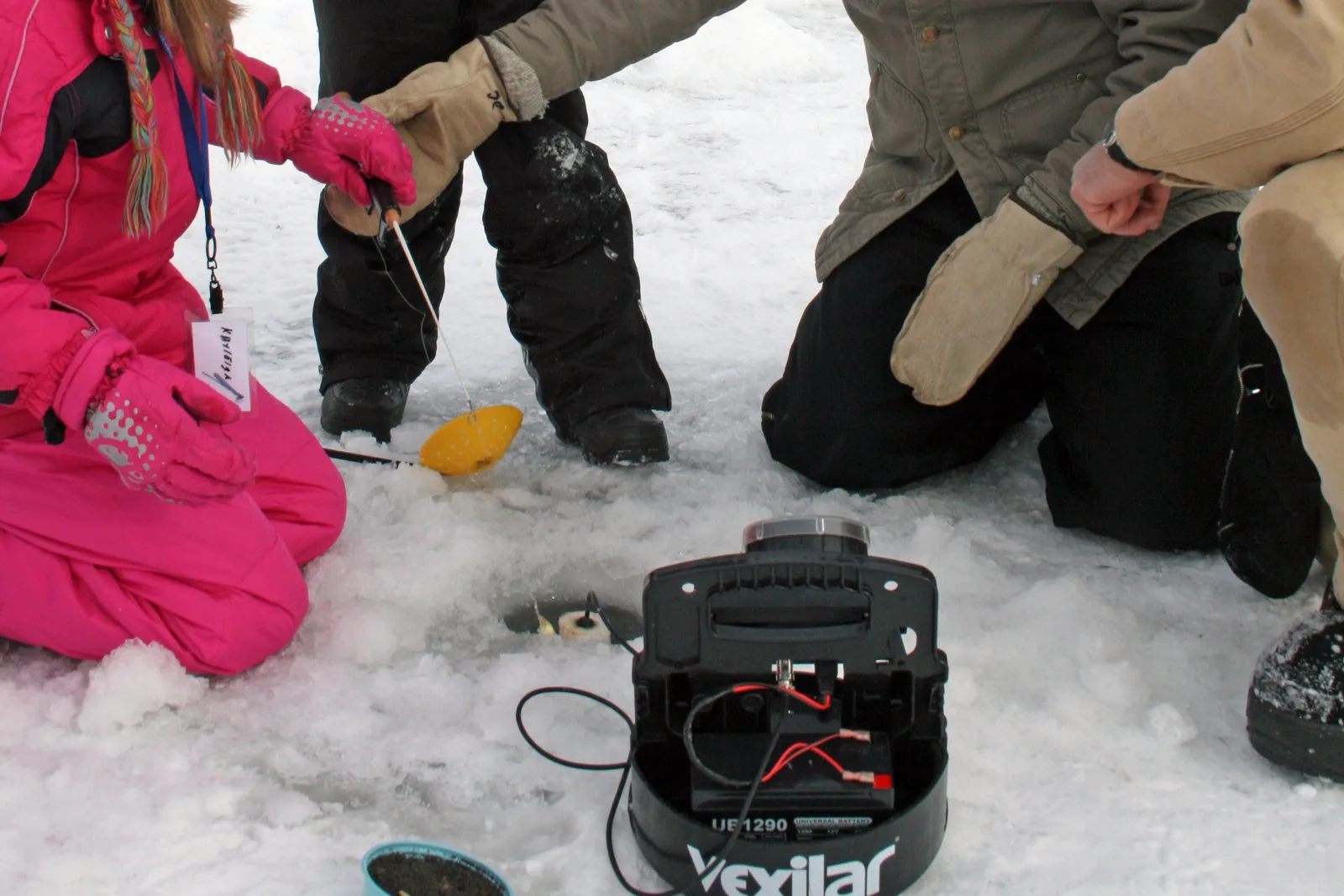
A volunteer shows a family how to read the lights on a flasher. Photo: Mary Stefanski, U.S. Fish and Wildlife Service (public domain).
You want a lure that gets down fast and shows up on your electronics, Shead says. The small hook fits a cisco’s small mouth. Shead also caught them on small jigging Rapalas, which surprised him for a fish that mostly eats bugs. Our ice fishing lures page covers jigging spoons, and the ice fishing hub has the rest of the winter gear.
The upside: cisco don’t seem to go into the midwinter slump walleye do. Once you’re on them, they’re generally pretty cooperative, Shead says.
Why walleye, pike and lake trout anglers care
Cisco feed the fish you came for. Minnesota DNR’s Brett Nagle calls them “a really fatty and nutrient-rich” food for walleye, northern pike and lake trout. They’re a main food of lake trout, and pike, burbot and walleye eat them too. Even the stunted 6 to 10 in cisco of a poor lake are great high-fat food for pike, muskies and big walleye, Shead says.
So a cisco lake is a big-fish lake. Pair this page with walleye ice fishing and pike ice fishing if those are what you’re after. Before you put a dead cisco under a tip-up, read your state’s bait rules. Minnesota counts cisco of 7 in or less as bait.
How big do cisco get?
Most adults are 12 to 15 in and 1 to 1.5 lb. Now and then they reach 20 in and 3 lb, Ohio says. It depends on the lake. Some lakes only grow stunted fish of 6 to 10 in, Shead says, and the good ones give 15 in fish.
| Record | Weight | Where and when |
|---|---|---|
| IGFA all-tackle | 7 lb 6 oz (3.35 kg) | Randy Huff, Cedar Lake, Manitoba, April 11, 1986 |
| Michigan | 6.36 lb (2.88 kg) | Lake Ottawa, Iron County, 2017, on a jig |
| Minnesota | 5 lb 13 oz (2.64 kg) | Sybil Lake, Otter Tail County, March 9, 2015 |
Michigan’s record measured 21.8 in and was caught stillfishing with a jig. Minnesota’s measured 20¾ in.
How many cisco can you keep?
The limits differ by state, and in two of them cisco count together with whitefish:
| State | Daily limit | Counts with |
|---|---|---|
| Minnesota | 15 over 7 in, open all year | Cisco alone |
| Wisconsin | 10 in total, inland and outlying waters | Whitefish and hybrids |
| Michigan | 10 on the Great Lakes, connecting waters and Type F lakes. 5 on other inland waters | Lake and round whitefish |
Minnesota’s legislature moved cisco from rough fish to game fish in 2019. Fish of 7 in or less don’t count, because the state treats them as bait.
Minnesota also opens some lakes to sport gill netting for cisco and whitefish in fall, for residents only. You need an angling license plus the $10 netting license. You get one net, no more than 100 ft long and 3 ft wide, set in water no more than 6 ft deep. Some lakes open on fixed dates between October 16 and December 13, others on 48 hours’ notice.
Are cisco good to eat?
Yes. Wisconsin Sea Grant says they’re more buttery than lake whitefish, with a mild flavor and flaky flesh. They carry about as much omega-3 per ounce as sockeye salmon. You can buy them fresh, smoked or frozen, and Shead says you can pickle, smoke or fry them. The roe is sold as bluefin caviar. Mercury is the contaminant to watch, so check your state’s advisory for your lake.
The biology behind the fishing
Cisco spawn in late fall. They arrive on the spawning grounds when the water is around 41 to 43 °F (5–6 °C). Spawning peaks below 39 °F (4 °C). They usually drop their eggs at night over rock, and the parents don’t guard them. The eggs sit all winter and hatch in late April or early May, after the ice goes out.
They eat small stuff: zooplankton, the tiny animals that drift in open water, plus insect larvae and now and then a small fish. That diet keeps them up in open water, and it’s why Shead goes small on the hook. At night they rise to feed right under the ice. They mature at 1 to 4 years. Michigan’s fish inventory puts the oldest at 13 years, and Wisconsin Sea Grant says up to 20.
Before the 1940s, cisco were Lake Superior’s biggest commercial fishery, up to 19 million pounds a year. Overfishing and rainbow smelt knocked them down. After the smelt crashed in the late 1970s, cisco did better. Then came 2022. That year’s hatch is likely more than double the 1984 class, the old high mark, says Minnesota DNR’s Cory Goldsworthy. “It’s going to change things for a long time to come in Lake Superior,” he said.
For the other cold-water fish that share the cisco’s lakes, see the other freshwater fish page.

Free PDF · 4 pages
Bluegill or redear? Walleye or sauger? Tell them apart at the net
Color is a poor guide, and the limits differ by fish. Know which one is in your net before you keep it.
The Freshwater Fish Identification Chart. Print the four pages for the tackle box or the cabin wall. Each family starts with the one thing to check, and the look-alikes sit side by side.
- 28 freshwater fish in 8 families, each with a picture and the marks that tell it apart
- The one check to do first, family by family: the jaw, the ear flap, the spots, the tail
- A tick box beside every fish for the first time you catch one
Every mark from the species pages on fishing.info and the 168 sources behind them, state wildlife agencies among them. Pictures: U.S. Fish and Wildlife Service paintings by Duane Raver and Timothy Knepp, and USFWS photos.
No card, nothing to buy. The PDF is in your inbox a minute later, one version for your phone and one to print, yours to keep. Then a few short emails and one a week on what's biting, with an unsubscribe link in every one. Privacy.
Related
Section guide
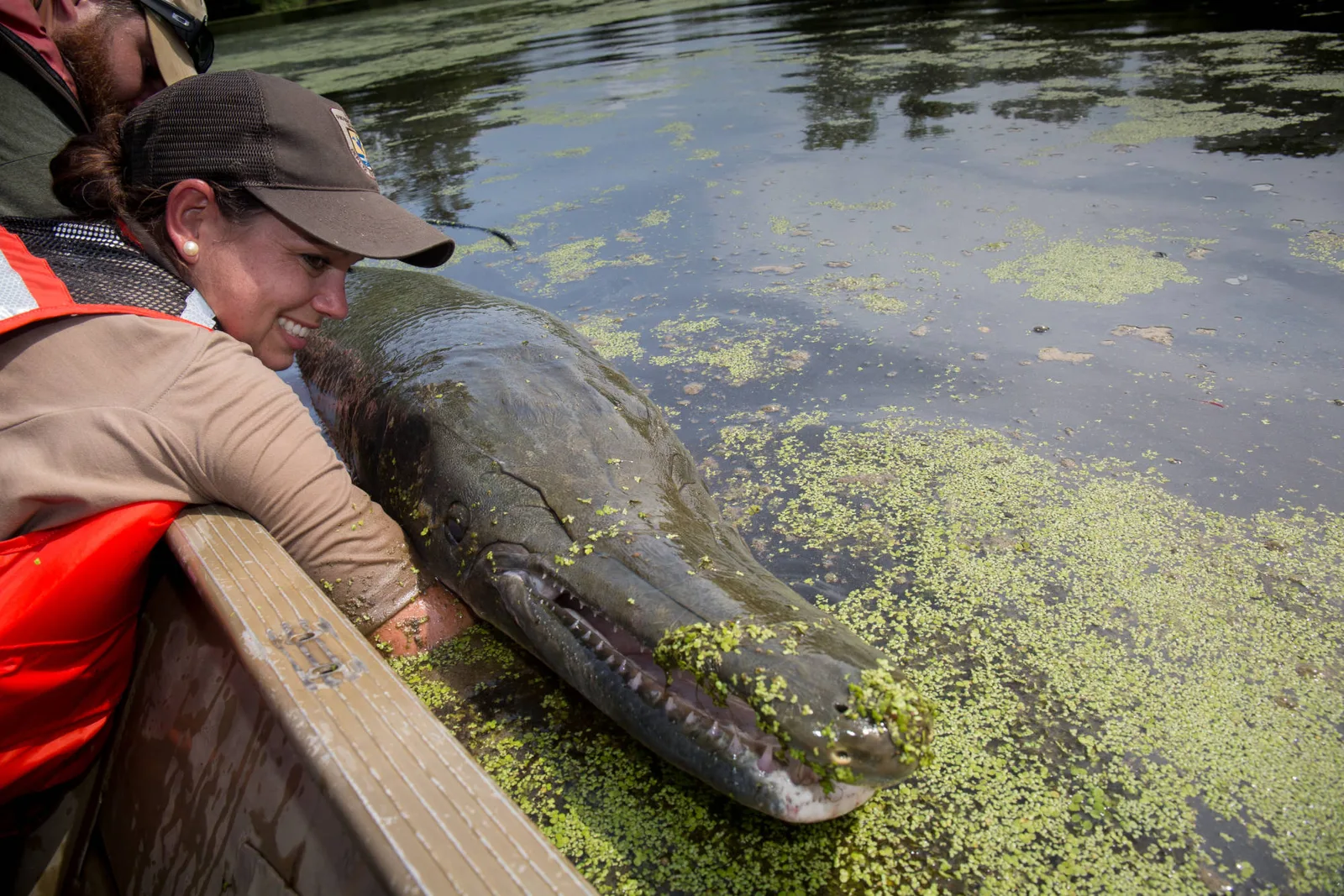
Freshwater Fish Species Outside the Big Families: Sturgeon, Gar, Bowfin, BurbotThe freshwater fish species outside the bass, trout, catfish and pike families: sturgeon, gar, bowfin, burbot, drum, eel and paddlefish, with records.
 Arctic Grayling: Where to Catch One in the US, Best Flies, Size and Records
Arctic grayling in the US: Alaska, Montana and stocked lakes in Wyoming, Utah and Colorado. How to ID one, what to throw, the records and the rules.
 White Sturgeon: Size, Age, Where They Live and the Rules by State
The white sturgeon is North America's largest freshwater fish. The 468 lb record, how to tell it from a green, and where you may keep one, state by state.
 American Eel: How to Catch One at Night, and the Rules
The American eel grows to 4 ft and 9 lb. The night bait and hook that catch one, where to cast, the limits state by state, and how to skin it.
 Pacu Fish: Human-Like Teeth, and How to Tell One From a Piranha
A pacu fish is a piranha cousin with flat teeth like human molars. How to tell it from a piranha, how big it gets, and what to do if you catch one.
 Mooneye and Goldeye: How to Tell Them Apart and Catch Them
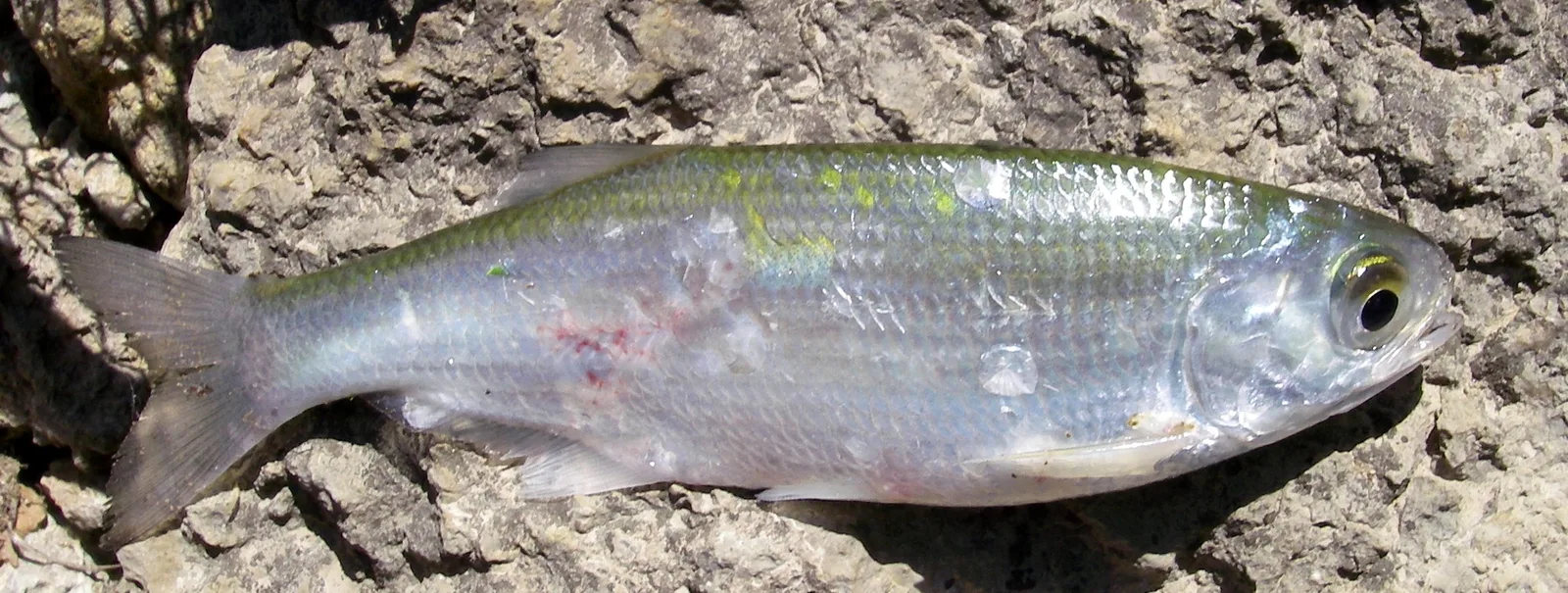
A mooneye is a silvery, big-eyed river fish with teeth on its tongue. How to tell it from a goldeye, where both live, how to catch them, and how they eat.
 Round Goby: How to Identify It, Why It Matters, and the Bait Rules
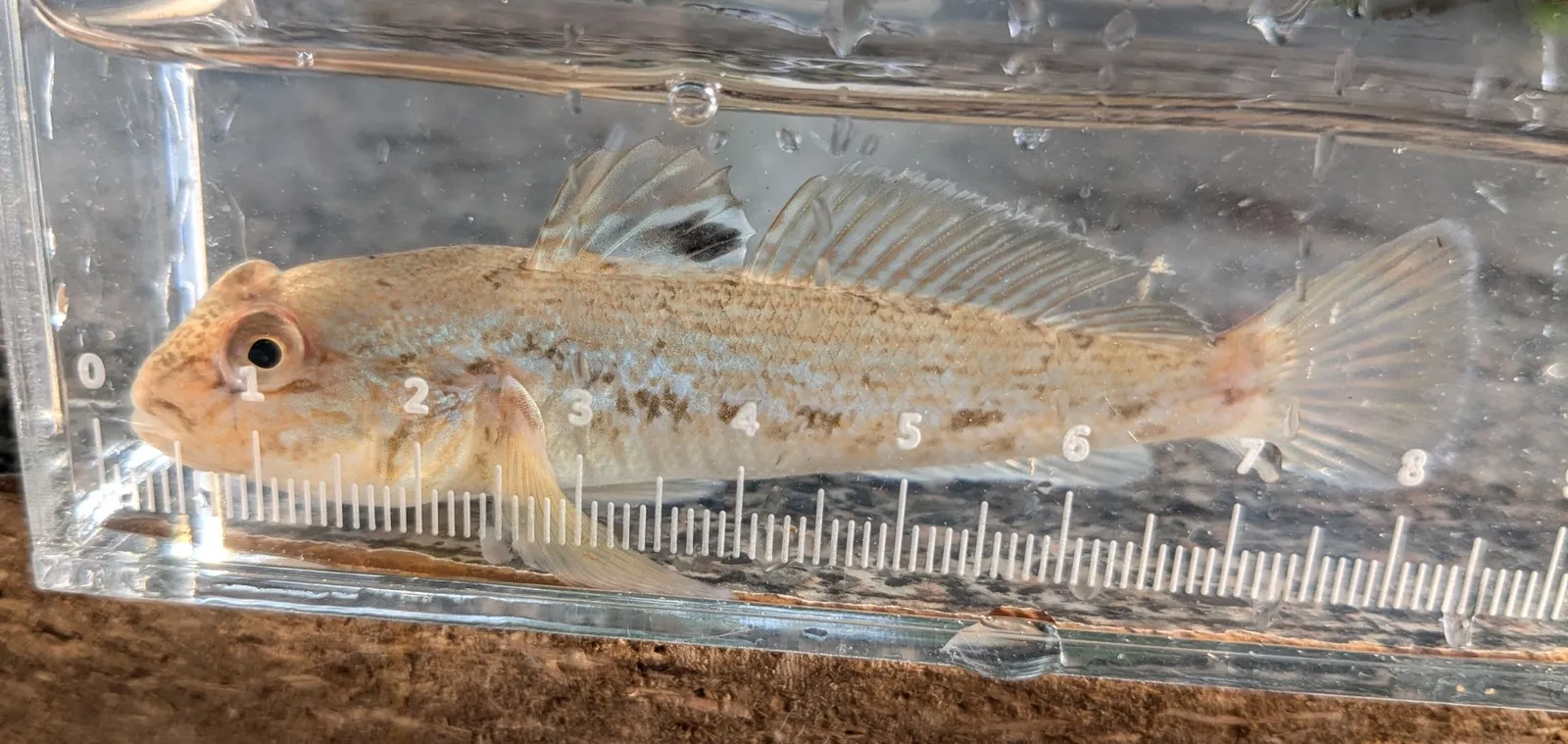
The round goby is a small invasive bottom fish of the Great Lakes. How to ID one, what each state says about goby bait, and why smallmouth love them.
Sources (17)
- Minnesota DNR, Tell the difference: Cisco, Lake Whitefish, and Mooneye
- Ohio DNR, Cisco
- Wisconsin Sea Grant, Eat Wisconsin Fish: Lake Herring (cisco)
- Keith Goetzman (2026), Dispatch: The Cisco Squeeze, Minnesota Conservation Volunteer, Minnesota DNR
- Derosier (2007, updated 2009), Special Animal Abstract for Coregonus artedi (cisco, lake herring), Michigan Natural Features Inventory
Show all 17 sourcesShow fewer sources
- Joe Shead (2025), Ice Fishing for Ciscoes: Tips for Catching and Cooking These Hard-Fighting Winter Fish, Sports Illustrated
- Wisconsin DNR, Lake Superior fishing calendar
- Joe Friedrichs, WTIP (2023), Record number of herring thriving in Lake Superior as winter arrives to the North Shore
- Minnesota Rules 6262.0200, Inland waters: possession limits and seasons
- Laws of Minnesota 2019, 1st Special Session, chapter 4, article 3, sections 44–45 (game fish and rough fish definitions)
- Minnesota DNR, Fishing regulations for inland waters: rule rationale
- Minnesota DNR, Whitefish and cisco sport gill netting
- Wisconsin DNR, Daily bag and total daily bag limits
- eRegulations, Michigan general fishing regulations: cisco, lake whitefish and round whitefish limits
- IGFA World Record Search: cisco
- Minnesota DNR, State record fish (certified weight)
- Michigan DNR, State record fish