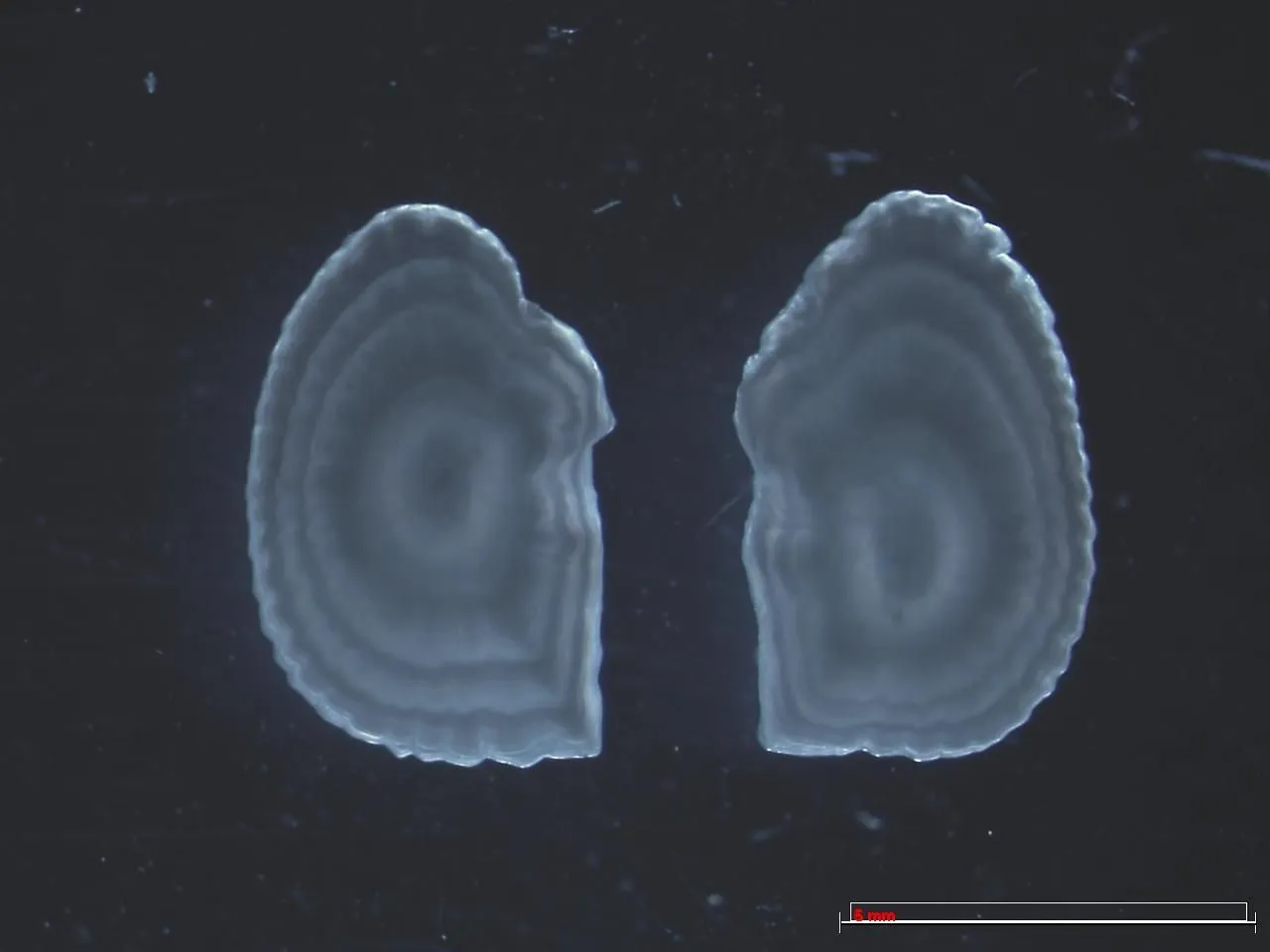
Yes, fish hear. Every fish has a pair of inner ears inside its skull, just behind the eyes, and some hear far better than you would guess. What no fish has is an ear hole or an eardrum. It does not need one: a fish’s body is about as dense as water, so sound passes straight through it and the ear reads the vibration from the inside.
In a hearing test, a brown bullhead picked up a whistle from 213 ft (65 m) away. Your voice, meanwhile, loses about 99.9% of its energy at the surface before it ever gets wet.
Do fish have ears? Yes, but on the inside
Look at a bass and you will not find an ear. It is there, one on each side of the skull. Inside each ear sit three small, hard lumps called otoliths, or ear stones, each resting on a bed of hair cells. When a sound wave passes, the whole fish moves with the water, but the heavier stone lags a fraction behind. That tiny lag bends the hair cells, and the bending is what the fish hears.
The ear stones do a second job. They grow a new ring every year, like a tree trunk, so a biologist can slice one and count a fish’s birthdays. NOAA’s Alaska laboratory reads more than 30,000 otoliths a year. A fish carries its age inside its head.
Do fish have eardrums? No, and they do not need one
You have an eardrum because you live in air. Air is thin and your body is thick, so sound has to be caught by a membrane and passed inward. A fish is made mostly of water and lives in it. Sound goes through it as if it were not there, so the fish ear reads particle motion, the back-and-forth wiggle of the water itself.
Some fish added a drum anyway, on the inside. The swim bladder, the air-filled balloon a fish floats with, pulses with every sound wave. In carp, goldfish, minnows and catfish, a chain of tiny bones called the Weberian ossicles links that bladder to the inner ear. It turns the swim bladder into an eardrum and lets these fish hear notes ten times higher than a bass can.
Free card: what 26 species do at your water temperature
Plus one email a week on what's biting now. No sales pitches. Privacy.
How well do fish hear? Bass and trout against carp and catfish
Fish fall into two camps. The generalists, with an inner ear and nothing more, hear the low end of the world. Bass, trout, walleye, pike and perch pick up sounds from below 50 Hz to about 300–500 Hz. A largemouth hears best around 100 Hz and nothing above about 600 Hz. Atlantic salmon hear from 100 to 380 Hz. For these fish the world is thuds, rumbles and hums. A whistle does not exist.
The specialists, with the Weberian ossicles, hear to 3–5 kHz: a reel’s click, a lure’s rattle, the splash of a small bait. The bullhead that heard the whistle at 213 ft (65 m) is a catfish, and every catfish shares the same bone chain.
| Species | Hearing range | How it hears | What reaches it |
|---|---|---|---|
| Largemouth and smallmouth bass | Below 50 Hz to about 600 Hz; best near 100 Hz | Inner ear only | Footsteps, hull slap, a trolling motor; a lure’s thump, not its rattle |
| Trout and salmon | About 100–380 Hz (Atlantic salmon) | Inner ear only | Footsteps on gravel, a boot scraped on rock, a dropped box |
| Walleye, pike and perch | Below 50 Hz to about 300–500 Hz | Inner ear only | The same low thuds; a rattle only at very close range |
| Carp, goldfish and minnows | Up to 3–5 kHz | Swim bladder linked to the ear by Weberian ossicles | All of the above, plus rattles, reel clicks and bait splashes |
| Catfish (channel, bullhead, flathead) | Up to 3–5 kHz; a whistle at 213 ft (65 m) | Weberian ossicles | All of the above, at long range |
The last column is our reading of the ranges in the table; nobody has run a scare test on each species.
Can fish hear with their whole body?
Yes, in a way: fish have a second sense of hearing that you do not. Along each flank runs a line of tiny pores with more hair cells beneath them. This lateral line feels water moving at 4 to 200 Hz, but only close by, within roughly a body length. Scientists call it distance touch. It is how a bass feels a minnow flick its tail in muddy water at night, and how a school turns as one fish.
It also stays switched on. A resting fish ignores a leaf drifting past, yet reacts the moment something lands within reach. Your lure works the same way: a wobbling crankbait pushes water, and a fish that cannot see it feels it coming.
Can fish hear you talk? Almost not at all
Hardly at all, because the surface of the water acts as a wall. Below it, sound travels about 4.3 times faster than in air: roughly 4,900 ft/s (1,500 m/s) against 1,100 ft/s (340 m/s). It carries a long way too. That sounds like bad news for anyone who talks on the bank, but the wall keeps the talk out. When a sound wave in air hits water, about 0.1% of its energy passes through, and the rest bounces back up. Your voice, the radio, a kid’s laugh: fish get almost none of it.
What does get in is anything that skips the wall by touching the ground or the boat. Footsteps travel through the soil into the water. A tackle box dropped on the deck, a wave slapping the hull, a trolling motor’s prop: all are made in the water or in something joined to it. They go straight in, right in the thud range every fish hears best.
So the ten-year-old’s version is this: yelling at the fish does not scare it. Stomping toward it does.
What should you keep quiet, and what can you forget about?
- Walk softly, and stop short of the edge. Step on grass rather than gravel, set heels down slowly, and make the first casts from a few steps back. The ground carries every footfall into the shallows.
- Wade like a heron. In a trout stream, a boot scraped over rock is a bell to every fish downstream. Slide the foot forward and settle it before the next step.
- Pad the boat. Carpet or foam on the deck, pliers in a pocket, the tackle box lid closed with a hand, not a bang. A dropped box goes through the hull straight into the water.
- Ease the anchor down and kill the hull slap. Lower the anchor, never toss it. Drift or run the trolling motor on its lowest speed for the last stretch; a prop is heard, a drifting hull is not.
- Leave the sonar on. A fish finder pings far above the top of even a catfish’s range, so the picture is free. It is the motor that fish notice, not the ping.
- Talk, sing, tell the story again. With 0.1% of your voice crossing the surface, conversation costs you nothing. Save the shushing for feet and gear.
- Match the noise to the fish. Bass barely hear a rattle; carp and catfish hear it loud and clear.
Which fish hear a lure’s rattle?
Carp and catfish hear a rattle loud and clear; a bass barely hears it. A lipless crankbait’s rattle chamber shakes metal balls at a pitch near or above the top of a bass’s hearing. What the bass gets is the low pulse of the lure’s body and the pressure wave on its lateral line. Fish it for those, and do not worry that it is too loud.
A carp is different. It hears to 3–5 kHz, and a rattle, a reel’s click or a lead splashing down all land inside that range. Carp anglers lower rigs gently and sit still for a reason. A catfish that can hear a whistle from 213 ft (65 m) certainly hears your sinker hit bottom. Whether that thud calls it in or sends it off, nobody has tested. What is certain is that it heard you arrive.
More of the ways fish sense the world are in the fish facts collection.
Free download
The water temperature card
Read your water temperature and the card tells you who is spawning, who is feeding and what to throw. 26 species, 16 pages, for your phone and the tackle box.
Plus one email a week on what's biting now. No sales pitches. Privacy.
Related
Section guide
Fish Facts: The Questions Kids Ask About Fish, Answered With the ScienceFish facts with a number and a source for each: how fish sleep, breathe, hear and feel, and what every answer means when you hook and release one.
 Do Fish Drink Water? Freshwater Fish, Saltwater Fish and Sharks
Do fish drink water? Freshwater fish barely do, saltwater fish drink all day, sharks cheat with urea. The numbers, and what it means for bait and livewells.
 Do Fish Drown? How Fish Suffocate, and How to Revive a Tired One
Do fish drown? Not by the dictionary, but they suffocate three ways: low oxygen, damaged gills, no water flow. How long a fish lasts in air, how to revive one.
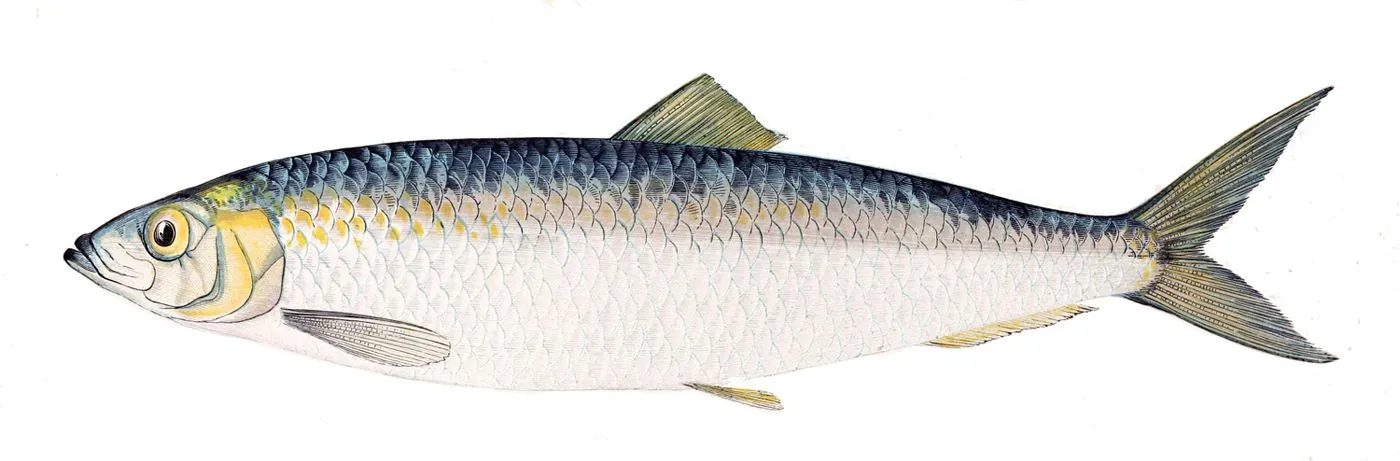 Do Fish Fart? Yes, Herring Do It on Purpose, and a Bloated Bass Needs Help
Do fish fart? Herring do, on purpose, and scientists won a prize for proving it. Which fish pass gas, where it goes, and what to do with a bloated bass.
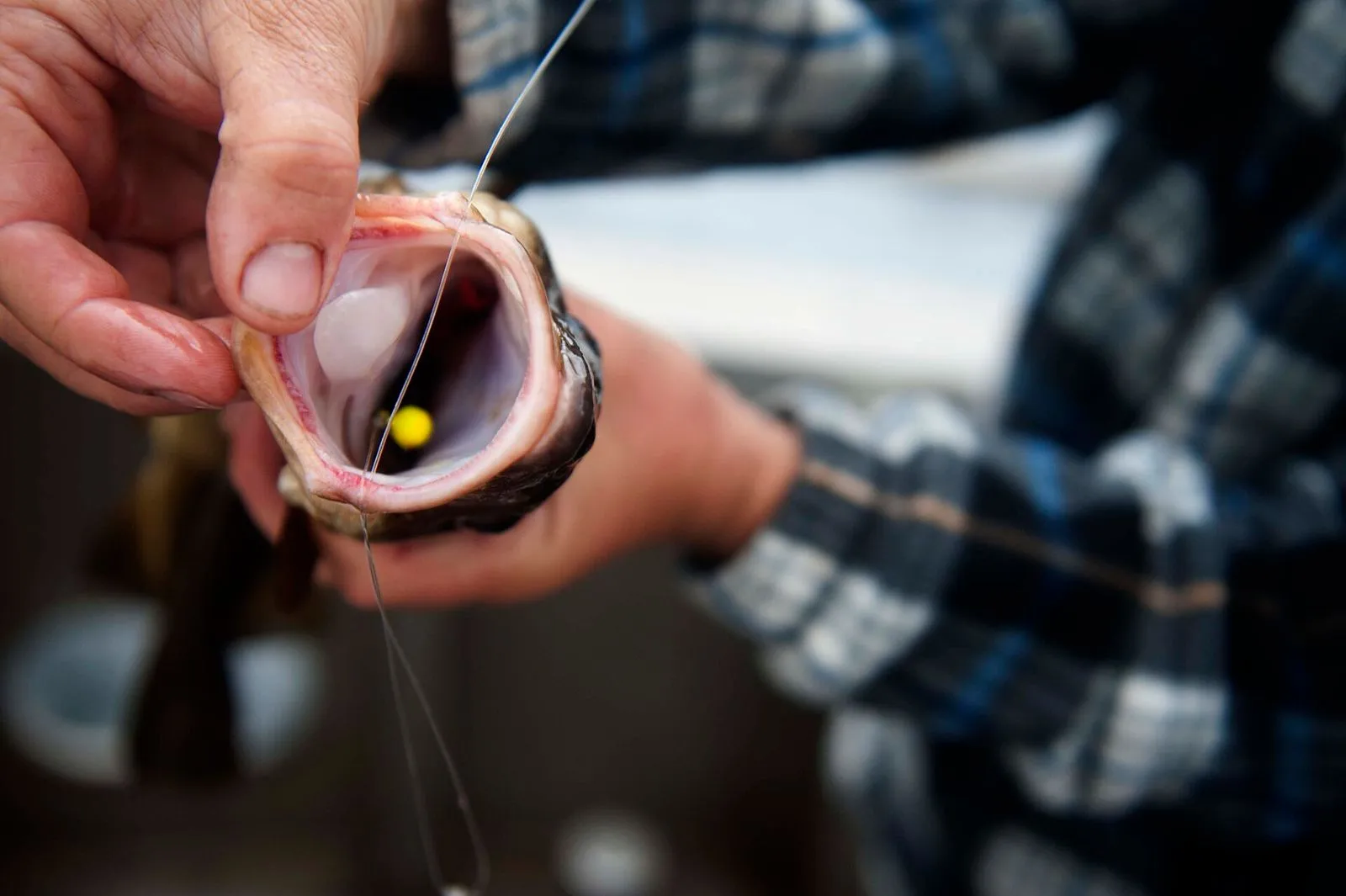 Do Fish Feel Pain? What the Studies Found, and What Decides Whether a Released Fish Lives
Do fish feel pain? They sense damage and react; whether they suffer is contested. The trout study, both camps, and what decides if a released fish lives.
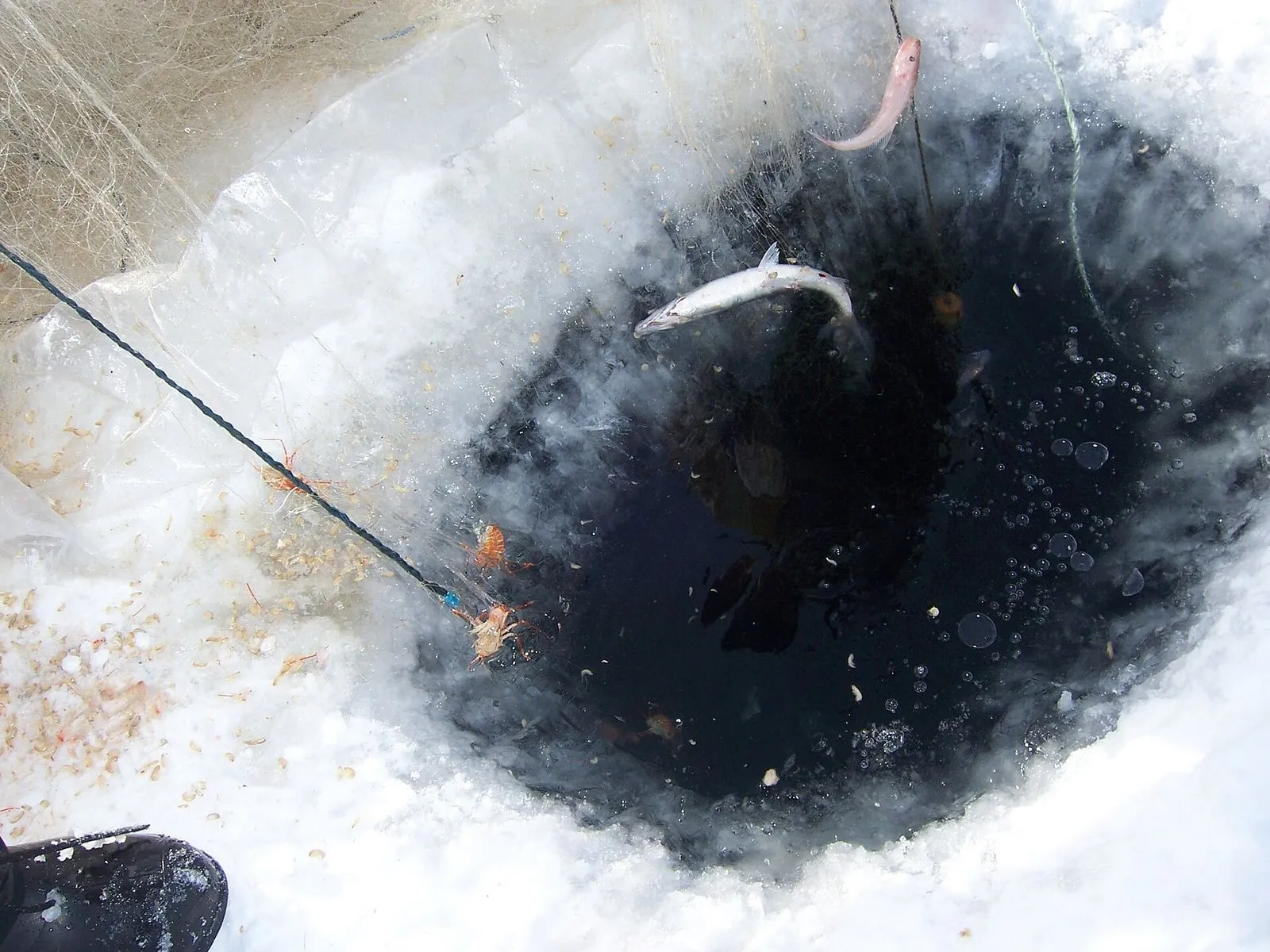 Do Fish Get Cold? What Winter Does to a Fish, and the Ones With Antifreeze in Their Blood
Do fish get cold? Yes: a fish is as cold as its water and feels it as slowness. What fish do in winter, who carries antifreeze, and how to fish cold water.
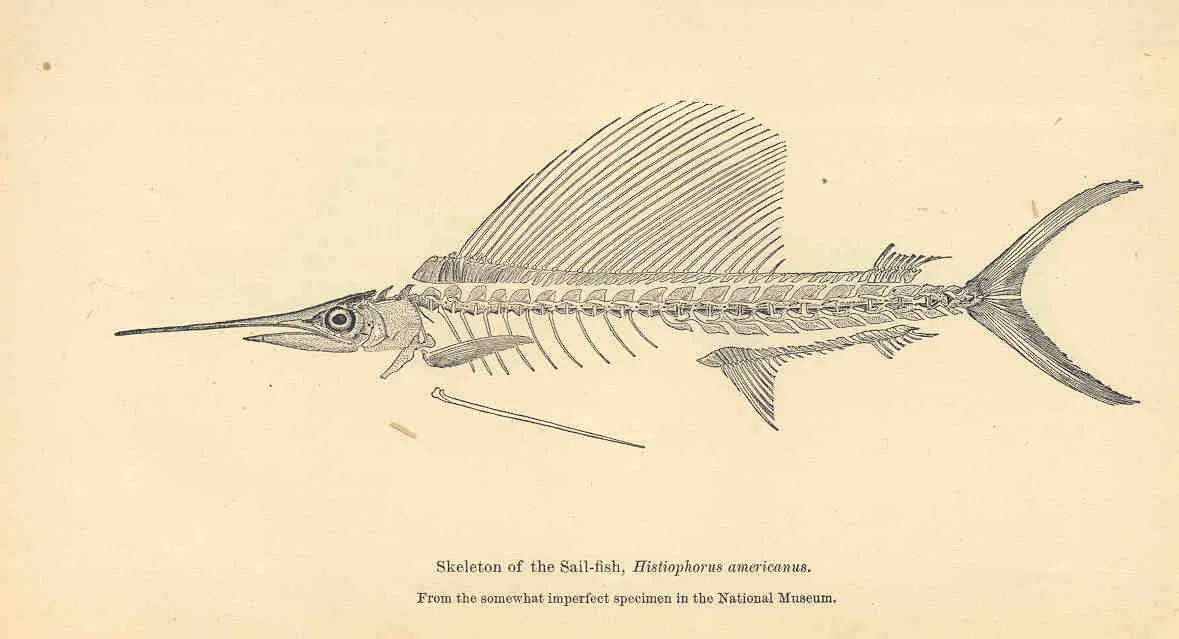 Do Fish Have Bones, Hearts and Blood? What Is Inside a Fish
Do fish have bones? Most do; sharks run on cartilage and 16 icefish have clear blood. How skeleton, heart and blood work, and what it means for your fillets.
Sources
- Popper, A. N. and Hawkins, A. D. (2019), An overview of fish bioacoustics and the impacts of anthropogenic sounds on fishes, Journal of Fish Biology
- Popper, A. N. and Hawkins, A. D. (2018), The importance of particle motion to fishes and invertebrates, Journal of the Acoustical Society of America
- Ladich, F. (2023), Hearing in catfishes: 200 years of research, Fish and Fisheries
- Hawkins, A. D. and Johnstone, A. D. F. (1978), The hearing of the Atlantic salmon, Journal of Fish Biology
- IGFA (2021), Hearing in the underwater world
- NOAA Fisheries, Age and growth: reading otoliths
- NOAA Ocean Service, How far does sound travel in the ocean?
- DOSITS (Discovery of Sound in the Sea), How do fish detect sound?
- Sound transmission through the water–air interface (2012)
- WSU Ask Dr. Universe (2023), How do fish hear?