 By
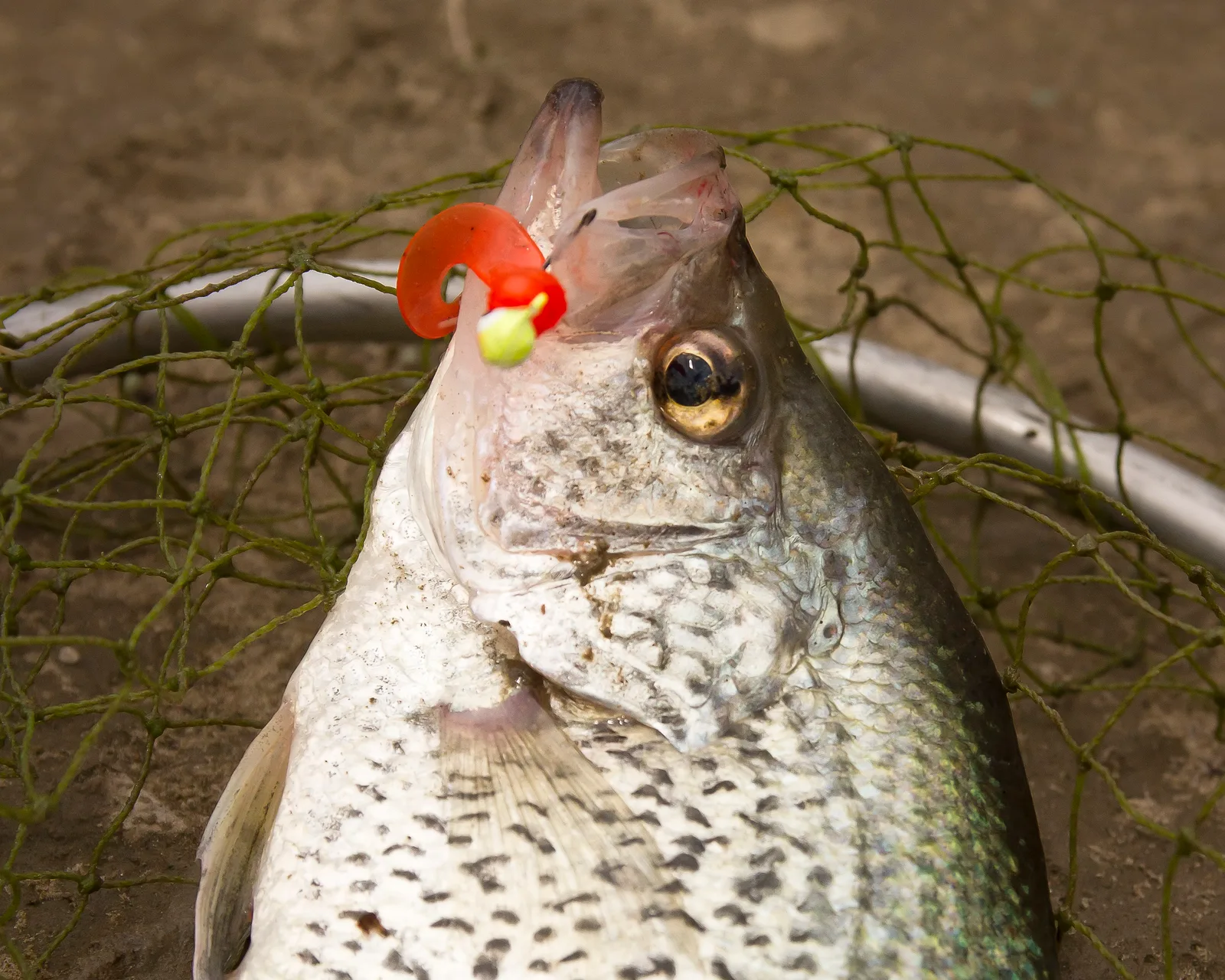
A crappie jig is a small lead head on a light-wire hook, 1/32 to 1/4 oz, dressed with a 1.5–3 in soft plastic or a tuft of hair. The 1/16 oz head is the everyday weight, and 1/8 oz is the step up for deeper water or active fish. Pick the body for how you will fish it, the head for the depth, and keep the jig at or just above the school.
The world-record black crappie, 5 lb 7 oz, ate a jig and grub on 6 lb line. Lionel Ferguson caught it in a Tennessee pond in 2018; Acme Tackle, whose brands include Kalin’s, says the grub was a green 2 in Triple Threat on a 1/8 oz head.
Why a jig catches so many crappie
Crappie eat small fish and insects, and a jig looks like either one. It fishes at any depth from 1 ft to 40 ft, it can hang still under a float or swim on a slow retrieve, and its single hook is far less of a nuisance than a crankbait’s trebles. Jason Sealock of Wired2Fish believes more than 90 percent of regular crappie anglers use either a jig or a minnow.
A jig also covers water. You can cast it, count it down and swim it back through a school, which a minnow under a float cannot do. That makes the jig the search tool and, often, the catching tool too.
Which body: tube, grub, shad, paddle or spade?
Sealock counts roughly six crappie jig bodies, plus hybrids; spade and fork tails are close enough to treat as one, which leaves five. They differ in what makes them move, and that decides how you fish each one.
| Body | What moves | Best for | Examples Sealock names |
|---|---|---|---|
| Tube | A skirt of cut tassels that flare on every drop | Vertical jigging, long-poling, spider rigging, under a float | Mr. Crappie Crappie Thunder, Jenko Big T Fringe Fry |
| Curly-tail grub | A curled tail that kicks only while moving forward | Casting and a slow, steady retrieve | Bobby Garland Stroll’R, Z-Man GrubZ |
| Shad body | A slim body and a small tail that quivers | Vertical jigging, casting and dock shooting alike | Bobby Garland Baby Shad, Mr. Crappie Shad Pole |
| Paddle tail | A small paddle that kicks the tail subtly on the retrieve | Casting to fish from a distance | Mr. Crappie Slabalicious, Crappie Magnet Tiny Dancer |
| Spade or fork tail | A flat, pointed tail on a round body | Vertical jigging, casting and dock shooting; a bulkier look | Bobby Garland Slab Slay’R, Minnow Mind’R |
Hair jigs are the older branch: a head dressed with marabou feathers or bucktail instead of plastic. Oklahoma’s fisheries staff list 1/16–1/8 oz hair and feather jigs among their picks, and a 2 in, 1/8 oz marabou-tail Fuzz-E-Grub as the guide’s hair-jig pick. Marabou moves in the slightest current, so a hair jig looks alive even when it hangs still under a float.
Sealock’s own routine shows how the bodies fit together. He casts a small paddle tail first to pick off the aggressive fish from a distance. Then he moves in and vertical-jigs a shad body for the stubborn ones.
Mississippi Sportsman sorts the bodies by presentation. Curly and paddle tails need forward motion, so they suit casting and long-line trolling. Tubes, straight tails and hair jigs suit still presentations such as single-pole jigging and tight-lining.

Free PDF · Water temperature chart When do crappie bite?
One water temperature reading, and the 16-page chart tells you who's spawning, who's feeding hard, where they sit and what to throw. 26 fish, every number sourced.
Enter your email, confirm it with one click, and the PDF is in your inbox. Plus one email a week on what's biting. Unsubscribe anytime. Privacy.
How heavy should the jig head be?
As light as the depth, wind and line allow. A light head falls slower and looks more natural, and crappie often take a jig as it falls. Each row names the source that uses that weight at that depth.
| Situation | Depth | Head weight | Line | From |
|---|---|---|---|---|
| Spawning banks, flipped to shallow cover or under a float | 1–2 ft (0.3–0.6 m) in stained water, deeper in clear | 1/32–1/16 oz (0.9–1.8 g) | 4–6 lb | Missouri DOC |
| Casting to staging fish, riprap and points | 8–12 ft (2.4–3.7 m) near staging areas | 1/32–1/8 oz (0.9–3.5 g) with a 2–2.5 in body | 4–8 lb | Oklahoma DWC |
| Shooting docks | Under the dock; fall fish in the upper 10 ft (3 m) | 1/32–1/16 oz | 4–6 lb | Sealock; Missouri DOC |
| Vertical jigging over brush and timber | Brush in 15–20 ft (4.6–6 m), fish 10–15 ft down | 1/16 oz; 1/8 oz when fish are active | 4–8 lb | Sealock; Missouri DOC |
| Deep open water, or wind | 20–40 ft (6–12 m) in winter | 1/4 oz (7.1 g) | 4–8 lb | Sealock; Missouri DOC |
The line column is Oklahoma’s 4–8 lb, narrowed by us to 4–6 lb where the head is 1/16 oz or lighter. Lurenet’s dock-shooting guide goes lighter on the head, 1/24–1/32 oz, and heavier on the line, 6–10 lb. Pennsylvania’s Fish and Boat Commission gives the same frame for the whole sport: line of 4–8 lb for black crappie and 2–6 lb for white, and lures of 1/32 to 1/8 oz. Go heavier only when you lose feel of the jig, when wind bows the line, or when the fish are deeper than you can reach in a reasonable count.
The label is not exact, either. Rod Wall, a former guide, has weighed jigs marked 1/16 oz at anywhere from 1.5 to 2.1 grams. That is why he carries a gram scale.
Which hook and head shape?
The No. 2 hook is the crappie staple, Sealock writes, with a No. 4 for very small heads and plastics. Crappie Magnet pairs a long-shank #6 with its 1/32 oz head and a #4 with 1/16 oz; the hook size chart shows how those sizes compare. Light wire is the point. Jenko designed a hook that bends out of cover and bends back by hand; Sealock replaces it after four or five bends, because the metal weakens.
Head shape follows the body. A round ball head is the all-rounder: it casts, jigs vertically and skips the best of all jig heads for dock shooting, in Sealock’s view. Narrow pill and minnow heads suit slim bodies; a mushroom head fits a bulky plastic. A spinner head adds a small blade for flash, the idea behind several of the best crappie lures beyond the plain jig. Sealock calls the Blakemore Road Runner, with its horse-head shape and belly blade, perhaps the most iconic jig head in crappie fishing.
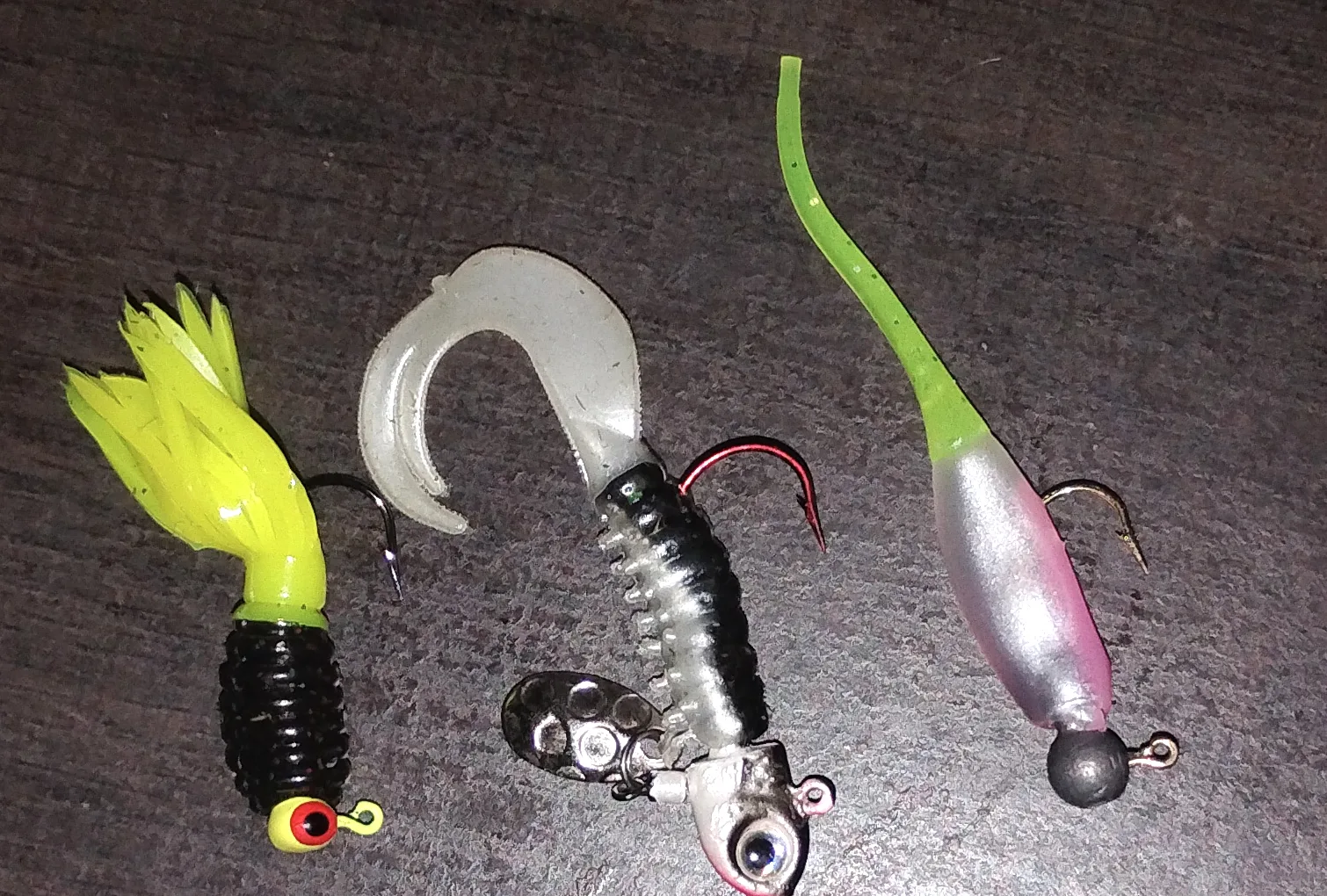
Three bodies, three heads: a tube on a painted round head, a curly-tail grub on a spinner head, a shad body on a plain ball head. Photo: Milknuggets (CC0)
The keeper decides how long one plastic lasts. A barb or double barb holds a bulky body. A thin plastic does better on a small wire keeper, like the one on the Kalin’s head that Sealock reviews. His trick: put a dab of super glue under the head and push the plastic onto the keeper. He has caught a limit of crappie on one plastic that way.
How to fish a crappie jig, step by step
- Tie the right knot. For vertical jigging, a loop knot lets the jig swing and dart freely. For casting, Sealock ties a tight San Diego jam knot for a direct connection.
- Rig it straight. Thread the plastic so it hangs in line with the hook. Oklahoma’s guide suggests cutting about 1/4 in off the front of a soft plastic to move the hook point farther back in the bait.
- Count it down. Cast, let the jig sink and count the seconds. When a fish bites, repeat the count on the next cast; the count is your depth.
- Retrieve slowly and steadily. A curly tail or paddle tail needs forward motion to work. Reel just fast enough to feel the tail kick and keep the jig at the school’s depth.
- Watch the fall. Many bites come as the jig drops. At docks in fall, Missouri suggests letting the jig sink 2–3 seconds before a slow retrieve.
- Fish it vertically over cover. Lower the jig straight down beside a brush pile or tree, stop it just above the fish and hold it still, or lift it only slightly; crappie feed upward and come to it.
- Hang it under a float in the shallows. In spring, set a 1/32 or 1/16 oz jig under a float at bed depth and let the waves work it.
Most bites feel like nothing more than extra weight, a tick or a slack line. Set the hook with a smooth sweep, not a jerk; the crappie’s thin papermouth tears easily.
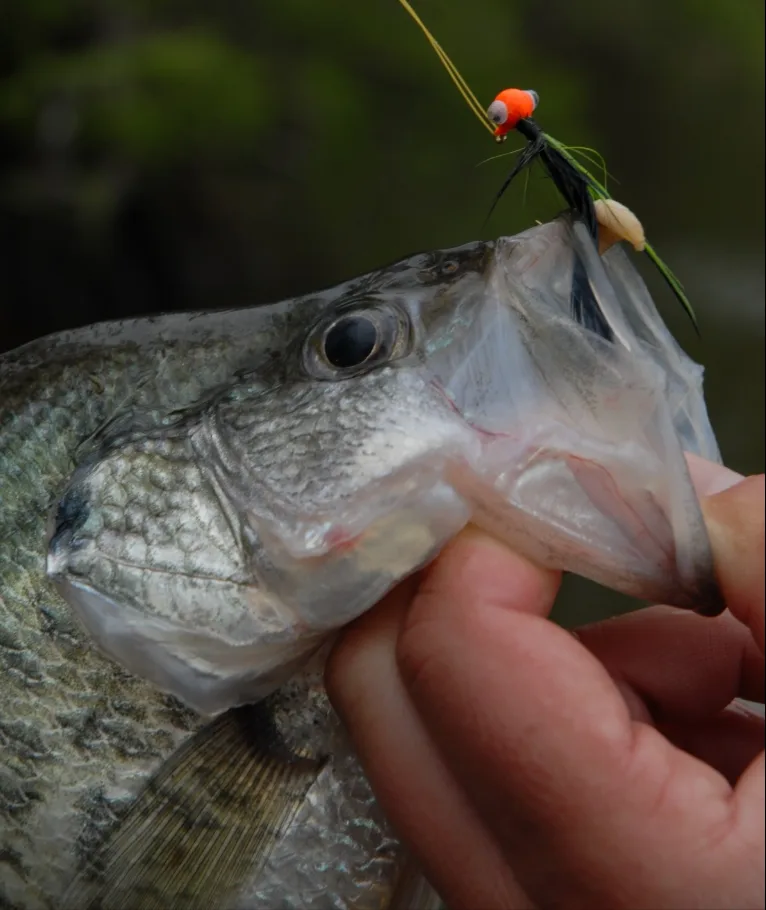
A crappie on a small hair jig. The thin membrane around the mouth is the papermouth that a hard hookset tears. Photo: U.S. Fish and Wildlife Service (public domain)
Jigs behind a moving boat
Crappie anglers also troll jigs. In long-line trolling, several jigs are pulled on long lines behind the boat; in spider rigging, long rods fanned from the bow push jigs or minnows slowly ahead of it. In his spider-rigging guide for Bass Pro, Keith Sutton calls jigs and live minnows the choice of most anglers. His rig uses 4, 6 or 8 lb monofilament: the lighter line in clear water, the heavier in muddy water.
Behind a boat, head weight sets the depth, so small differences matter more than in casting. Rod Wall weighs every jig. By Phillip Gentry’s account in Carolina Sportsman, that turns three or four marked weights into about a dozen and sets the running depth to within about a foot. He calls stained water the best for long-line trolling, because it means reduced visibility.
What color crappie jig?
Start with a few colors, not dozens. Sealock’s core colors are chartreuse, white, Monkey Milk (a hologram pearl), black, junebug, pink, orange, red and blue, usually two of them in one bait. Chartreuse has been a staple for a long time, and he notes smoke and silver glitter have become go-to colors on lakes that have cleared.
Oklahoma’s guide adds two rules a beginner can use. Chartreuse works well in murky water. Around the spawning areas, the brighter pinks, oranges and neons are the pick. Its biologists name their own lake colors too: Electric Chicken and Monkey Milk plastics on white, black or pink heads at Lake Carl Blackwell.
Our reading of those sources: one bright, one natural and one dark color, each in two body styles, covers most water. Change color only after you have changed depth and speed.
Mistakes to avoid
- Too heavy a head. It falls past the fish and drags in brush. Start at 1/16 oz and go up only for depth or wind.
- Fishing below the school. Crappie feed upward; keep the jig at or just above them.
- A crooked plastic. A body that hangs off the hook spins and twists the line. Re-rig it or glue it.
- A painted eye full of paint. Cheap painted heads often need the line-tie eye cleared, Sealock notes; poke it open before you tie.
- Twitching a curly tail in place. It needs a steady forward retrieve to swim; for a still presentation, use a tube or a hair jig.
When a minnow beats a jig
After a cold front, in muddy water or under heavy pressure, a natural presentation is often the only one that keeps bites coming, David Schlake writes for Wired2Fish. That means a live minnow, the classic crappie bait. You do not have to choose: tip the jig with a minnow or a small scent bait and fish both at once. The crappie fishing guide sets out where the fish are in each season, and the crappie hub covers both species and their records.
Free PDF · 16 pages
Know what's biting before your first cast
The Water Temperature Fishing Chart. Take one water temperature reading, find it on the chart, and you know which of 26 freshwater fish are feeding today, where they are and what to throw. For your phone and the tackle box.
- The 26-fish chart: who's spawning, feeding hard or shut down at your reading
- Where they sit and what to throw at every band: bass, crappie, bluegill, walleye, catfish and trout
- The best hours at your reading, the cold front day by day, and the spawn calendar from ice-out to midsummer
- The three thermometer mistakes that make a reading lie (the first one is the surface)
Every number from state fish and wildlife agencies and fisheries research: 61 sources, all on the site.
Enter your email, confirm it with one click, and the PDF is in your inbox. Plus one email a week on what's biting. Unsubscribe anytime. Privacy.
Related
Section guide
Crappie: Black or White, Where They Are Each Season, How to Catch ThemCrappie fish, black and white: how to tell them apart, where they hold each season, the spawn by water temperature, how to catch them, the limits.
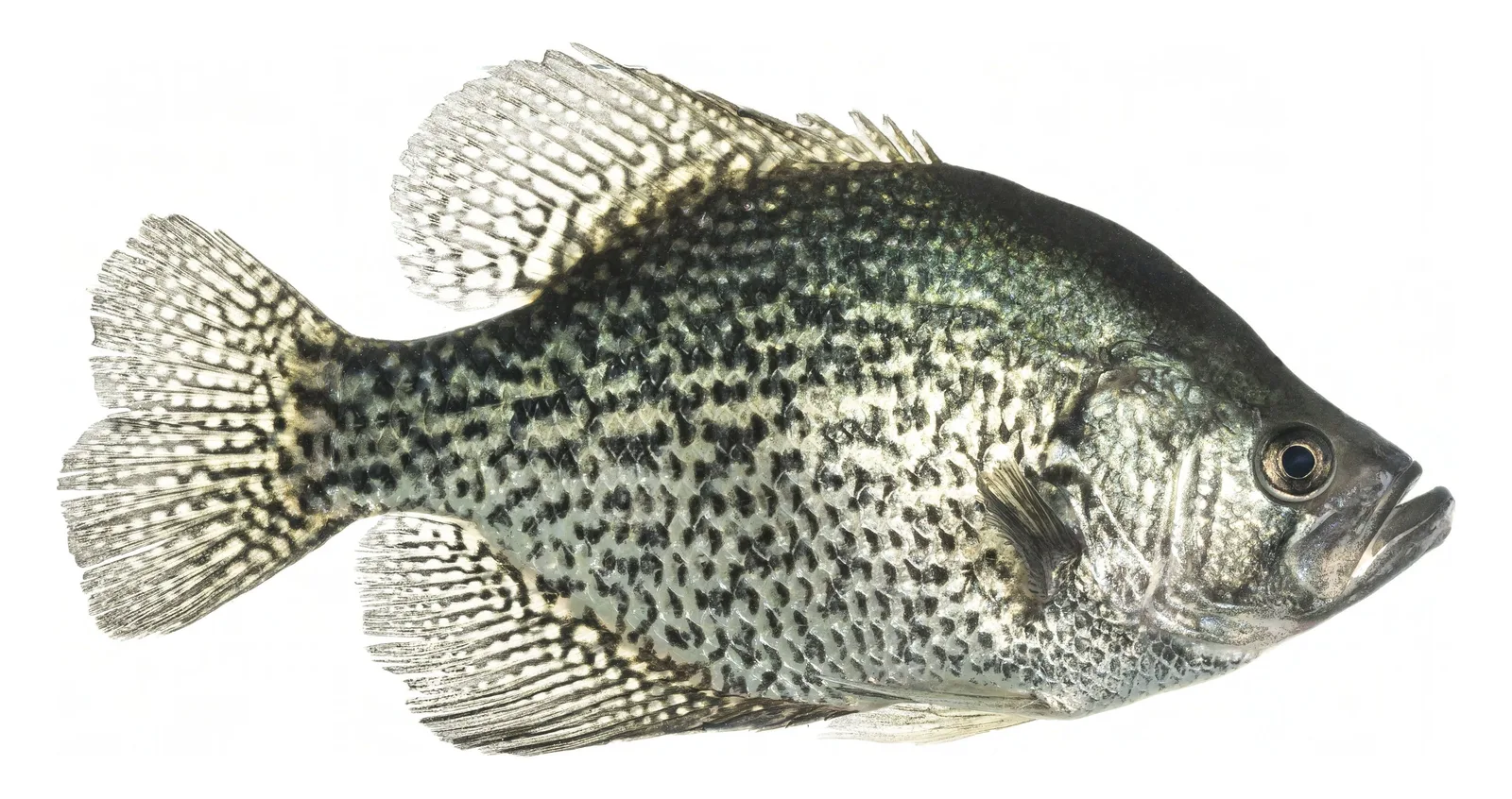 Black Crappie: How to Identify One, Where It Bites, How Old It Is
How to tell a black crappie from a white, where it holds each season, how old a 12- or 13-inch fish is, the 5 lb 7 oz record and whether to keep it.
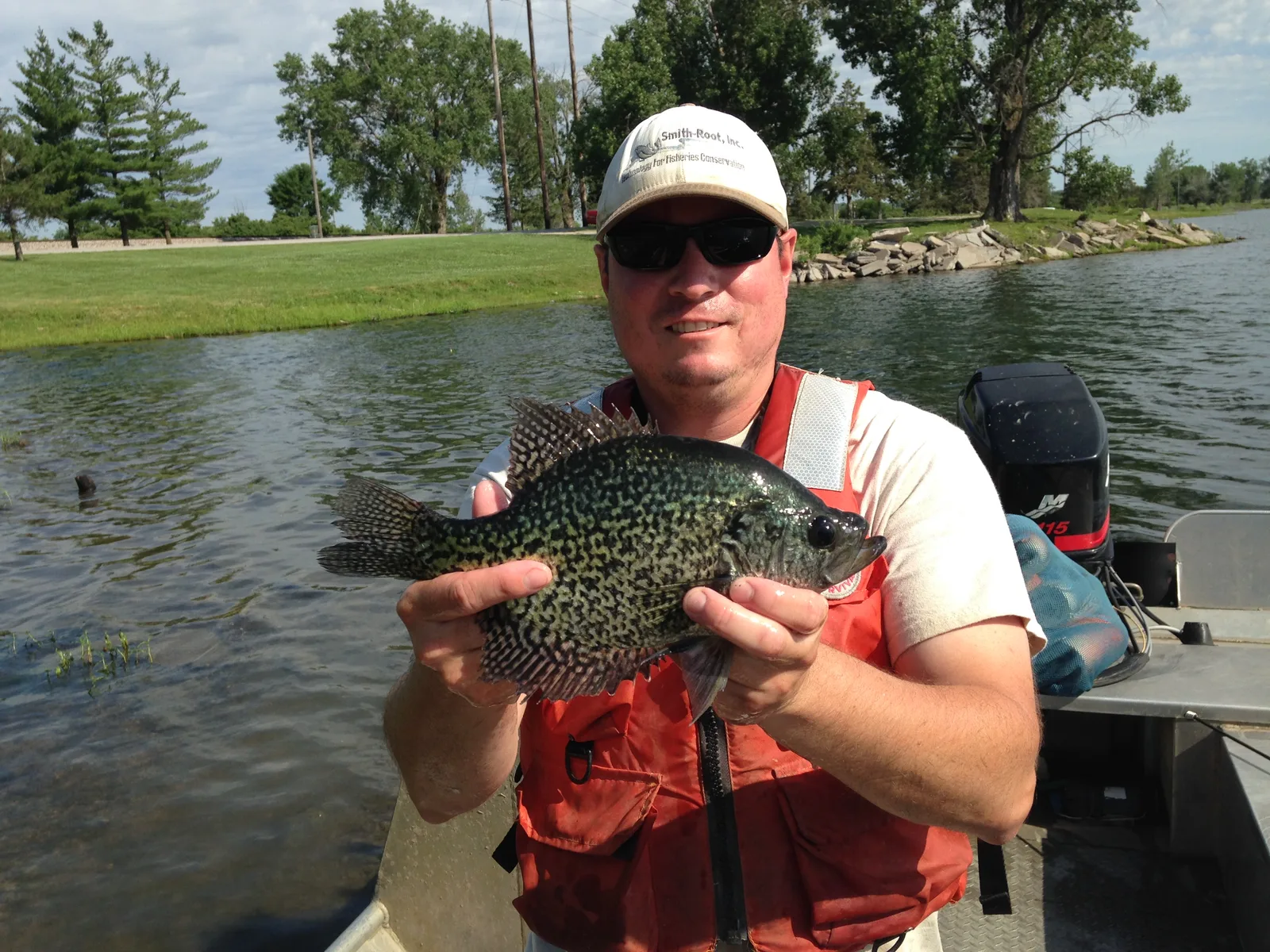 Crappie Fishing: Where They Are Each Season and How to Catch Them
Crappie fishing season by season: how deep the fish sit, what to throw, the light tackle that works, and why a jig a foot too low gets ignored.
Sources
- Wired2Fish (Jason Sealock), best crappie jigs: buying and fishing guide
- Wired2Fish (Jason Sealock), best crappie fishing rods (1/16 oz the norm, 1/8 oz when active, 1/4 oz in deep wind)
- Wired2Fish (Jason Sealock), best crappie baits and how to fish them
- Wired2Fish (Jason Sealock), Kalin's Triple Threat crappie jigs review
- Missouri Department of Conservation, crappie: tips for fishing
- Oklahoma Department of Wildlife Conservation, crappie angler guide: top tips and area highlights
- Pennsylvania Fish and Boat Commission, catch PA fish: crappie
- Leland's Lures, Crappie Magnet jig heads (weights and hook sizes)
- Wired2Fish (David Schlake), best crappie rigs
- Lurenet, your guide to shooting docks for crappie
- Mississippi Sportsman (Phillip Gentry), the jig is up, but which one? (moving and static presentations)
- Bass Pro Shops 1Source (Keith Sutton), spider rigging for crappie
- Carolina Sportsman (Phillip Gentry), what does your jig weigh? (Rod Wall)
- IGFA world record search: crappie, black (Lionel Ferguson, 2018)
- Chicago Sun-Times, Lionel Ferguson's 5-pound, 7-ounce black crappie is IGFA's official world record
- Acme Tackle, catching the world record crappie: the full story